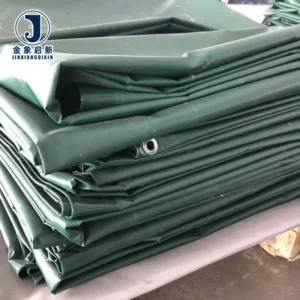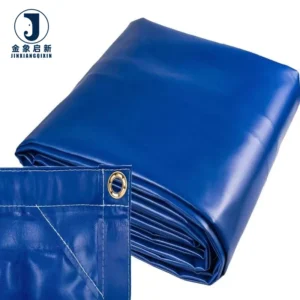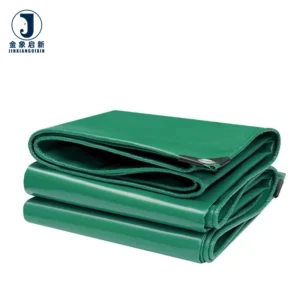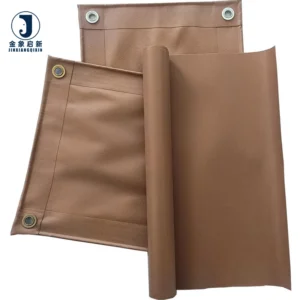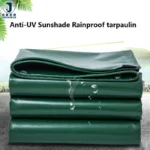
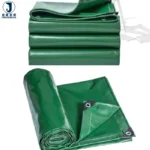

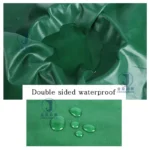
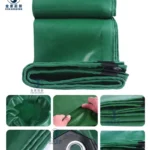
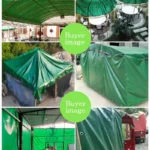
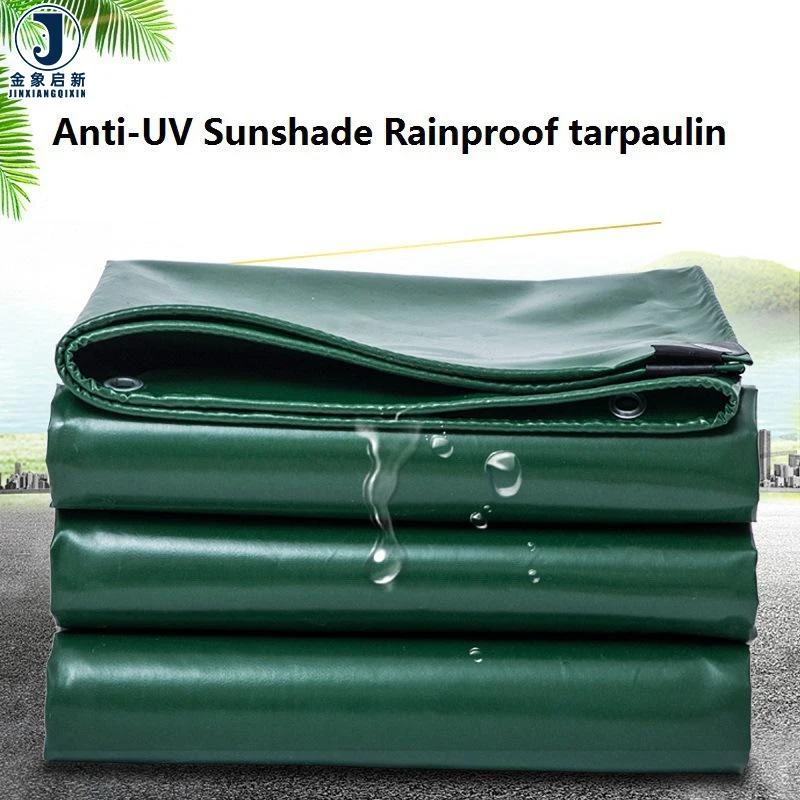
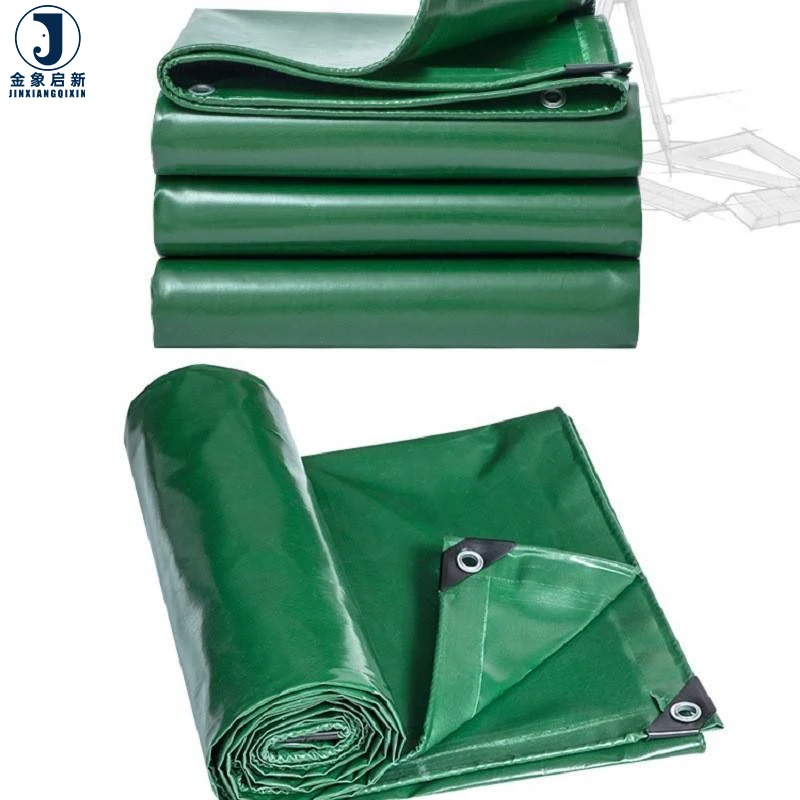
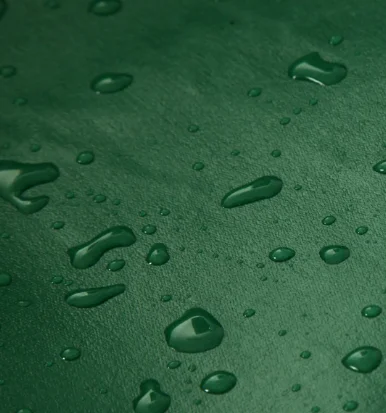
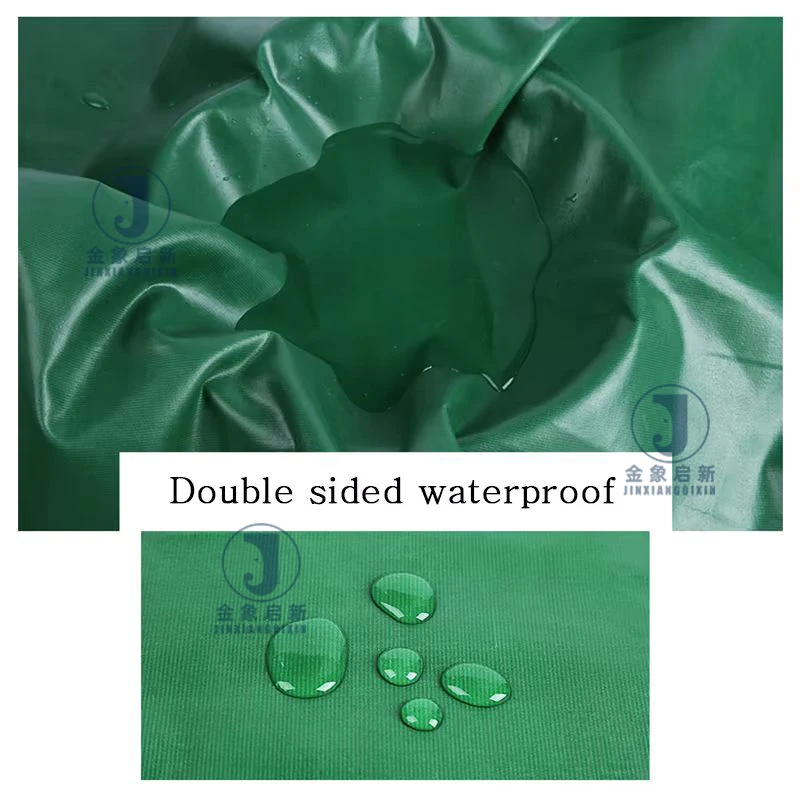
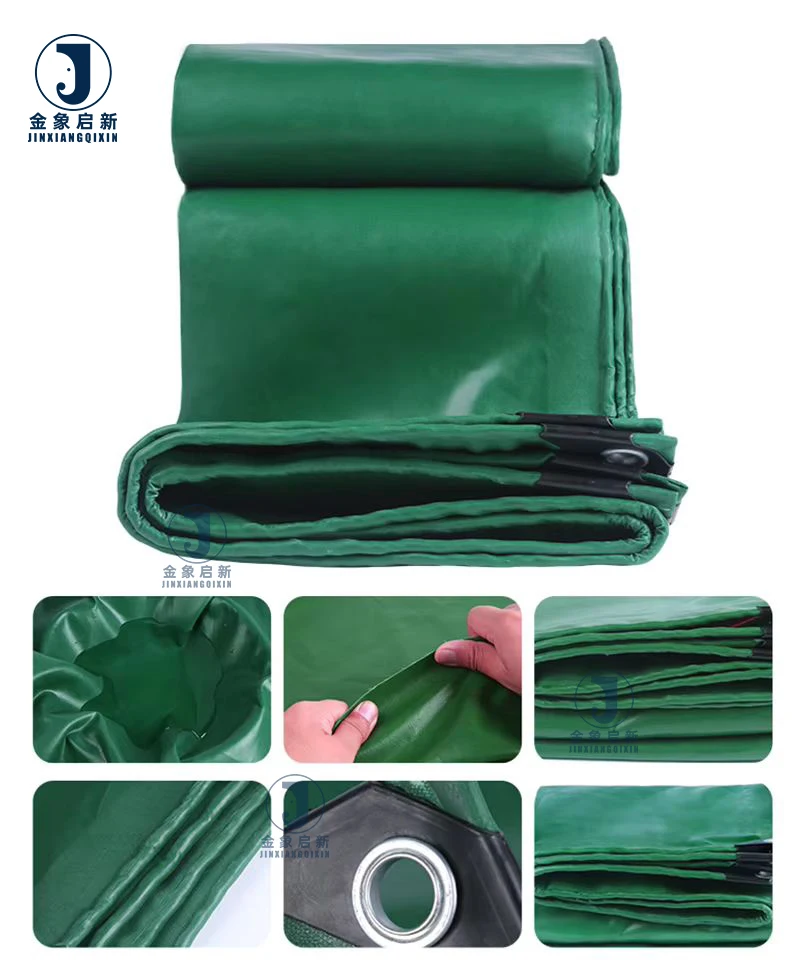
Coating process control — Our dedicated QA/QC team verifies coating weight and adhesion at every production stage, ensuring the PVC layer performs consistently across every roll of fire retardant fabric shipped.
Technical Specifications
| Parameter | Value |
|---|---|
| Product Type | PVC Coated Tarpaulin |
| Material | Polyester Base Fabric + Double-Sided PVC Coating |
| Yarn Count | 500D-500D |
| Weight Range | 450-900 g/m² (specific grade to be confirmed per project) |
| Surface Characteristics | Smooth and soft surface with a leather-like texture |
| Features | Water Resistant, Waterproof, Abrasion Resistant |
| Flame Retardancy | Flame-retardant type customizable (grade not stated in source — confirm required standard) |
| UV Resistance | Anti-UV treatment available (test basis not stated in source — request report) |
| Repairability | Repairable by hot air welding |
Application Suitability
| Application | Exposure & Requirement |
|---|---|
| Mining and Tunnelling Ventilation Ducts | Continuous airflow, high humidity, strict fire safety compliance, and mechanical abrasion from installation. |
| Aviation and Industrial Air Ducts | Airflow management, anti-static specification for dust environments, and structural integrity under pressure. |
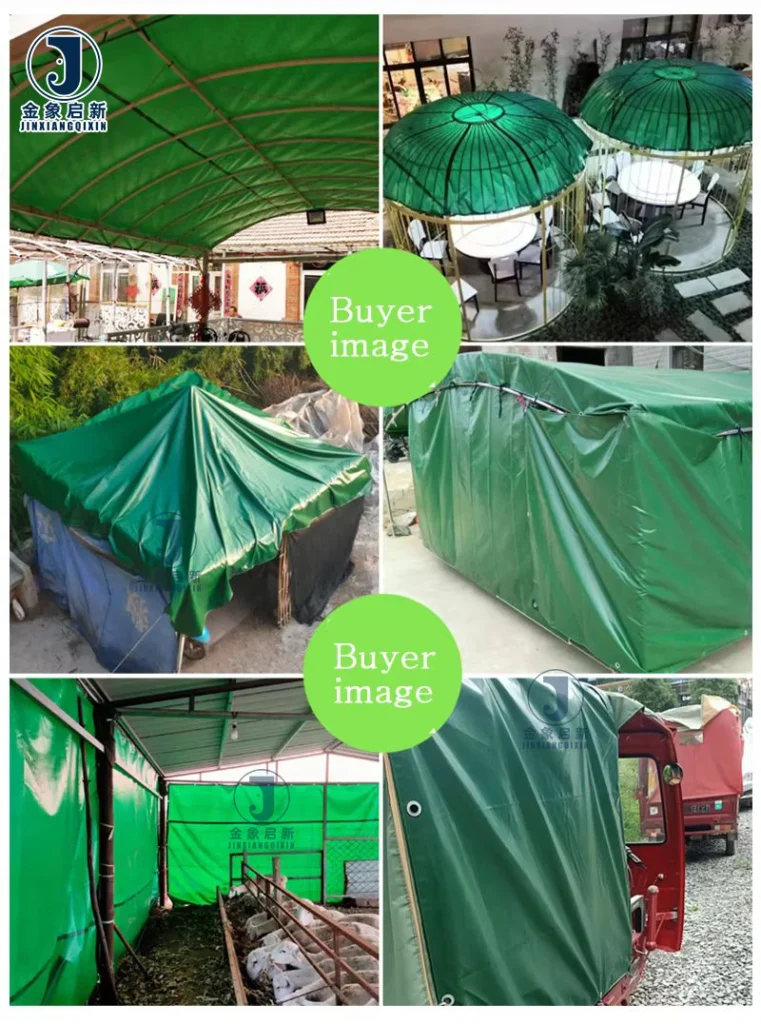
| Membrane and Inflatable Structures | Wind loading, tension stress at anchor points, UV exposure, and requirement for durable welded seams. |
| Heavy Equipment and Site Covers | Outdoor weather exposure, mechanical impact, and requirement for flame retardant compliance on site. |
What "Certified" Means When Sourcing Fire Retardant PVC Coated Tarpaulin
A flame retardant claim is only as valuable as the test report that backs it up.
Many buyers have faced the situation where a ventilation duct or site cover arrives on a project site, only for the safety inspector to reject it because the supplier cannot provide a valid test certificate matching the local building or mining code. [NEED_CITE: fire safety compliance standards for temporary industrial structures]. The cost is not just the replacement material; it is the project delay and the safety risk of operating without compliant protection. We provide the documentation matched to your target market standard before production begins.
Compliance-Driven Material Selection for Technical Fabric
Specifying the correct PVC coated tarpaulin fire retardant certified grade is a technical decision, not a commercial one. The required performance level depends entirely on the application: a mining ventilation duct requires a different standard than a temporary event marquee. Our role is to match the base fabric and coating formulation to the specific test method your project demands, whether that is a European, North American, or regional standard.
The Role of Coating Adhesion in Duct and Membrane Fabrication
For inflatable structures and ventilation ducts, the bond between the polyester base and the PVC coating is critical. If the adhesion is weak, the layers can separate at the welded seams or under the tension required for an inflated membrane. [NEED_CITE: peel strength test methods for coated technical textiles]. Our double-sided coating process is engineered to maintain this bond, ensuring the fabric behaves as a single, durable unit during fabrication and in service.
Decoding the Specifications: Denier, Weight, and Surface Finish
The 500D-500D polyester base provides the fundamental tear and tensile strength of the fabric. The denier refers to the thickness of the yarns, and this construction balances handling ease with mechanical durability. The weight range of 450-900 g/m² covers various duty levels; a heavier grade offers more coating material for abrasion resistance, while a lighter grade reduces the overall weight of a large duct or structure. The smooth, leather-like surface is not just aesthetic; it facilitates cleaning and allows for consistent, high-strength hot air welds, which is essential for fabricating leak-free air ducts.
The Hidden Cost of Incorrect Technical Fabric Specification
Selecting a fabric based solely on price or a generic "fire retardant" label leads to failures that are expensive to rectify. A membrane structure that sags or a ventilation duct that splits at the seam often traces back to a material that was not specified for the actual mechanical load or environmental exposure. [NEED_CITE: tensile and tear test methods for coated fabrics per ISO 1421]. Batch inconsistency in coating weight can also cause visible and performance differences across a large installation, forcing costly rework.
Engineering and Supply Consistency for Specialist Contractors
Our focus on technical fabrics is supported by nearly 30 years of specialised production experience in coated materials. We operate three full production lines with 36 sets of professional equipment, which gives us the capacity to handle bulk orders for large-scale mining or construction projects with reliable on-time delivery. Our 10-person R&D team handles material selection and can develop samples within days for your custom requirements, allowing you to verify weld parameters and colour before committing to the full order. We maintain dedicated QA/QC at every stage with 100% inspection before shipment.
Documentation & Verification
- Material specification sheet stating confirmed GSM, 500D base fabric, and coating weight.
- Fire retardant test report matched to your specific project or market standard.
- Anti-UV treatment verification report where applicable for long-term outdoor exposure.
- Pre-shipment inspection record confirming 100% QC and roll consistency.
- Certificate of origin and full customs documentation for export compliance.
Fabrication, Handling & Storage
- Hot air welding is recommended for seams, using the smooth PVC surface for strong, leak-proof joins on ducts.
- Store rolls horizontally in a cool, dry place to prevent permanent creasing in the 450-900 g/m² fabric.
- Allow cold rolls to acclimatise to workshop temperature before unrolling to avoid coating damage.
- Use compatible PVC repair patches and hot air for field repairs on membrane structures or ducts.
- Plan cutting patterns to maximise yield from the roll width and minimise transverse seams.
Initiating Your Technical Fabric Inquiry
To receive an accurate specification and quotation, please provide the intended application (e.g., mining duct, inflatable dome), the specific fire retardant or anti-static standard your project requires, and the total square meterage. We also need to know your required roll width and any colour specifications. This information allows our R&D team to recommend the exact grade from our range and prepare a compliant sample for your approval.
Frequently Asked Questions
Q: What fire retardant grade do you offer and which test standard does it meet?
A: We supply flame-retardant grades customisable to various international standards. You must specify the exact test method required for your project (e.g., for mining or construction). We then provide the corresponding PVC coated tarpaulin fire retardant certified material with a matching test report for compliance verification.
Q: Can you supply anti-static fabric with surface resistance test documentation?
A: Yes, for applications like aviation or mining ventilation ducts where static dissipation is critical. We can formulate the PVC coating to meet anti-static specifications. Please provide your required surface resistance range, and we will supply a test report with the batch.
Q: How do you verify coating weight and adhesion strength before shipment?
A: Our QA/QC team conducts in-process checks and a 100% pre-shipment inspection. We verify the GSM against the agreed specification and perform peel strength tests to ensure the double-sided PVC coating maintains its bond with the 500D polyester base, guaranteeing the integrity of your fabricated welds.
Q: Do you provide samples with full specification and test reports for project approval?
A: Yes. Our R&D team can develop and dispatch a sample of the proposed PVC coated fabric within days. The sample is accompanied by a full specification sheet and any available test reports for your requested fire retardant or anti-UV properties, allowing you to secure project approval before the main production run.