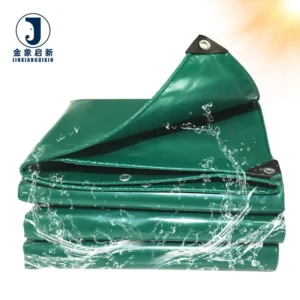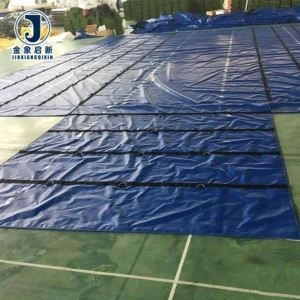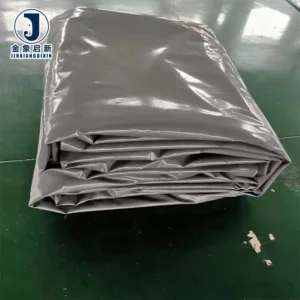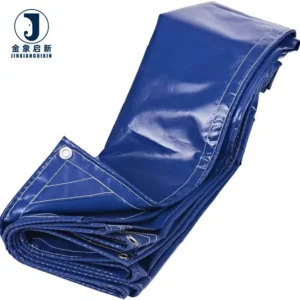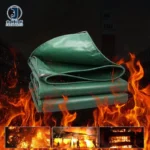
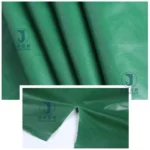
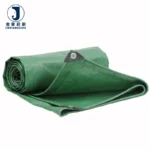
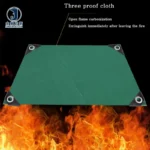
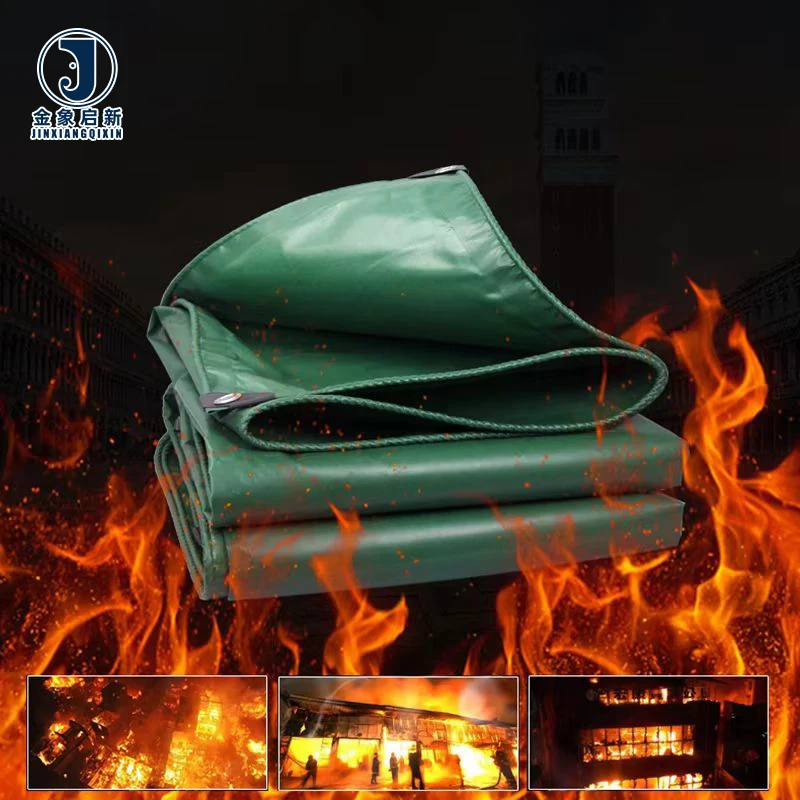
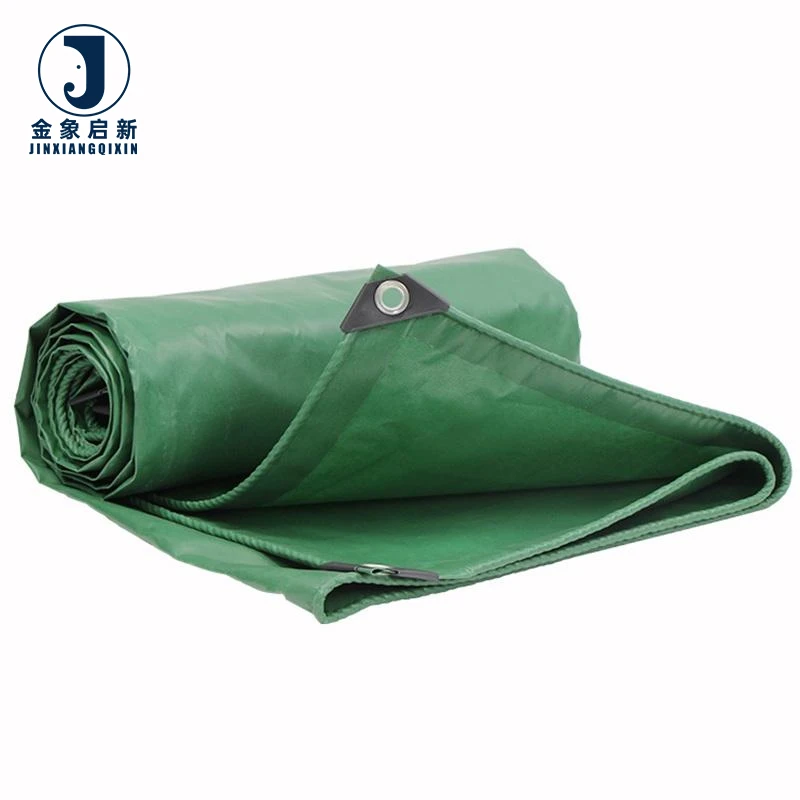
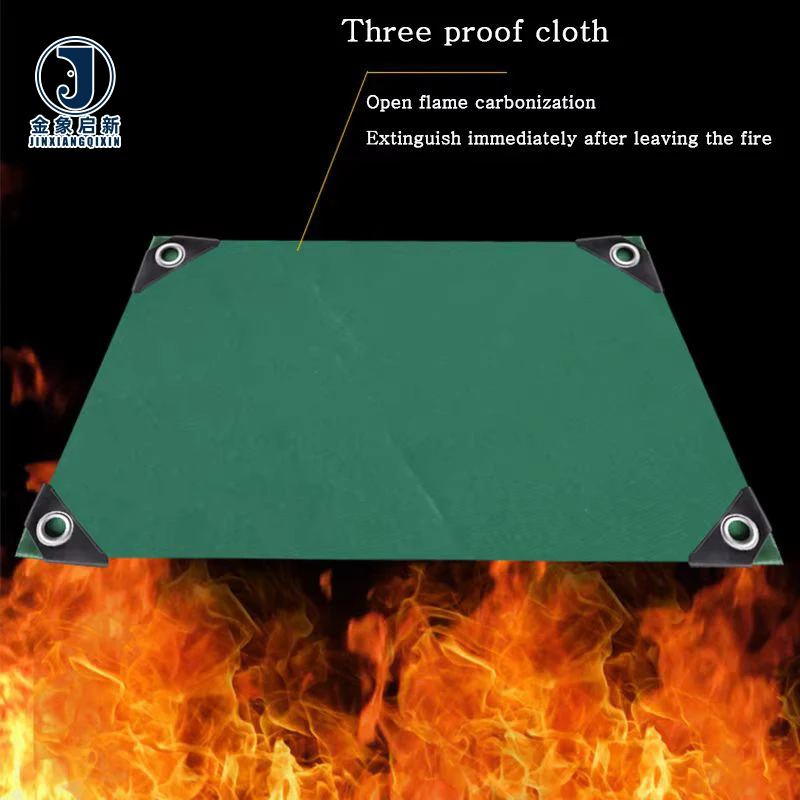
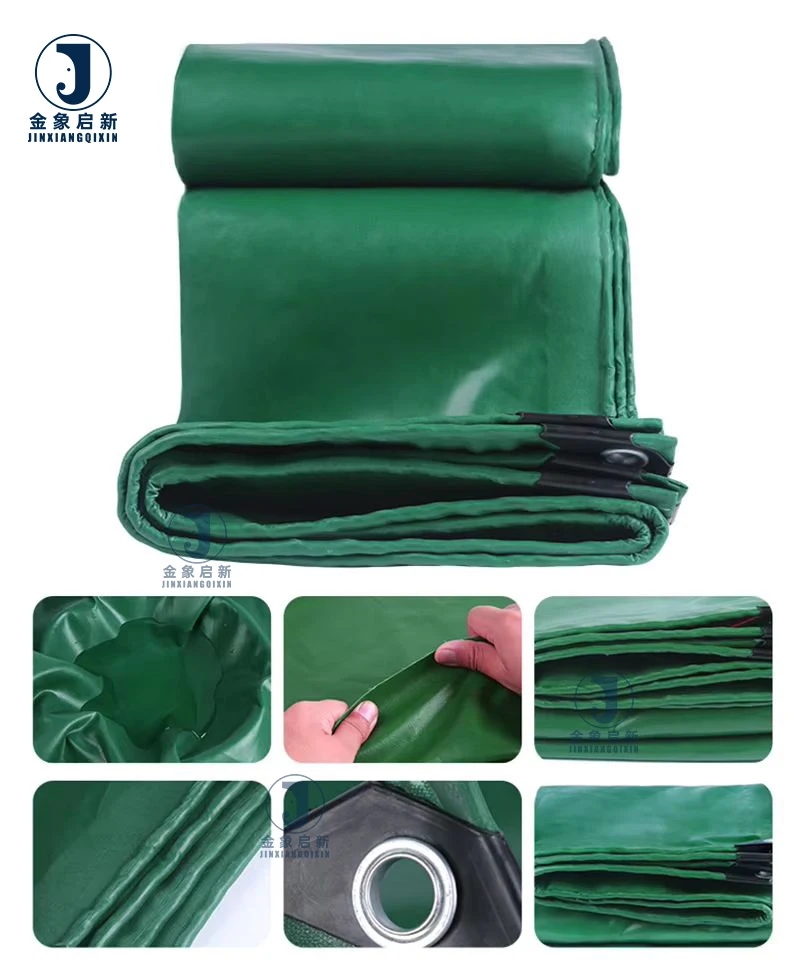
Deep Process Control Over Coating Weight — Our three full production lines and 36 sets of equipment maintain strict adhesion and thickness consistency across every roll of fire retardant PVC coated tarpaulin fabric certified for ventilation and technical use.
Technical Specifications
| Parameter | Value |
|---|---|
| Product Type | PVC Coated Tarpaulin |
| Base Fabric Material | Polyester |
| Base Fabric Denier | 500D-500D |
| Coating Material | PVC (double-sided) |
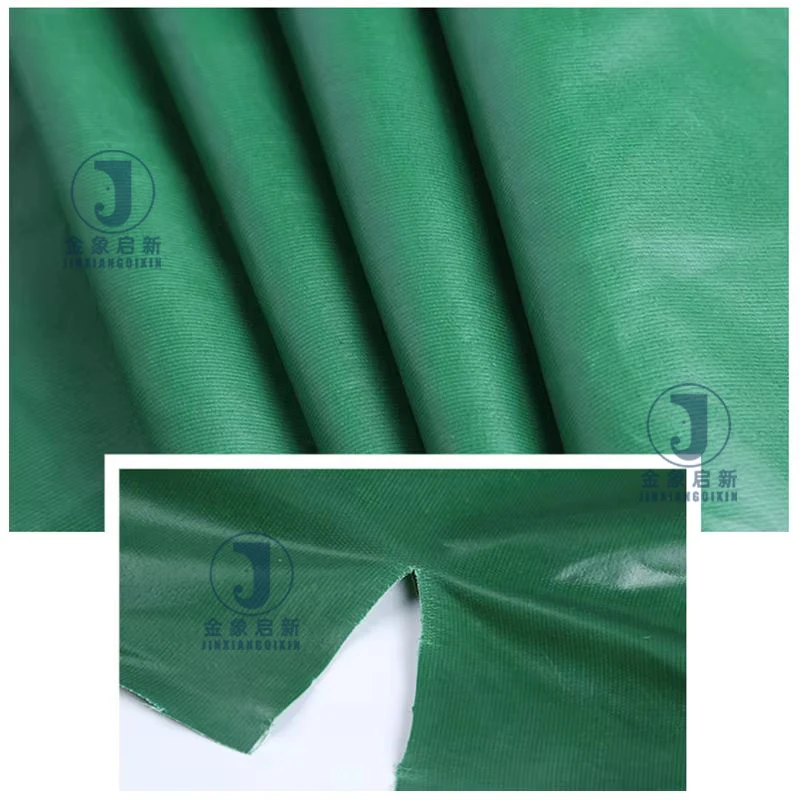
| Surface Characteristics | Smooth, soft, leather-like texture |
| Water Resistance | Waterproof |
| Flame Retardancy | Available in flame retardant grades — confirm the grade required for your market |
| Anti-Static Treatment | Available for underground mining and specialist use — confirm surface resistance requirement |
| UV Resistance | Anti-UV treatment available — test basis to be confirmed per batch |
| Repairability | Hot air weldable |
| Package Options | Roll packing, bale packing, carton |
| Certifications | ISO, CE |
Application Suitability
| Application | Exposure & Requirement |
|---|---|
| Mine and tunnelling ventilation duct | Continuous airflow pressure, flex cycling, underground fire safety and anti-static compliance |
| Aviation ground support air duct | Inflation stress, rapid deployment and packing, temporary outdoor UV exposure |
| Membrane and inflatable structure skin | Wind loading, inflation tension, weather exposure, visual appearance consistency across panels |
| Construction site temporary enclosure | Abrasion from scaffolding contact, wind-driven rain, UV degradation over extended project timelines |
Why Ventilation Duct Fabric Fails Compliance on Arrival
Every roll of fire retardant PVC coated tarpaulin fabric certified for specialist use ships with the documentation your safety auditor demands.
Ventilation duct supplied without the fire-retardant or anti-static certification the site requires is a recurring issue across mining and tunnelling projects. [NEED_CITE: underground mining ventilation duct fire safety standards]. Fabric arrives on site, the safety inspector asks for the test report, and the supplier cannot produce one — or the certificate does not match the batch delivered. This halts installation and exposes the contractor to compliance risk. We treat documentation as part of the product, not an afterthought.
Dimensional Stability Under Duct Inflation Pressure
The 500D-500D polyester base fabric provides the dimensional stability needed when duct sections are inflated and flex repeatedly under airflow. This denier grade balances weight with structural integrity, preventing the fabric from stretching or distorting at connection points where pressure concentrates. For fire retardant PVC coated tarpaulin fabric certified to meet technical specifications, base fabric consistency is the foundation.
Double-Sided Coating and Weld Integrity
The double-sided PVC coating seals the polyester core from moisture ingress at every point, including welded joints where single-coated fabrics can delaminate. Hot air welding joins duct sections in the field without workshop return, and the coating formulation is designed to fuse cleanly at standard welding parameters. [NEED_CITE: hot air welding parameters for PVC coated polyester fabrics]. This matters for inflatable structures where seam failure means total loss of inflation pressure.
Reading the Specification Sheet Beyond GSM
Coating weight alone does not determine how the fabric performs under duct inflation or wind loading. The 500D-500D denier defines the tensile skeleton, while the PVC coating weight and adhesion method determine how well that skeleton is protected and how reliably seams weld. Knife-coated fabrics typically achieve higher adhesion strength than laminated constructions, which directly affects whether the weld line or the base fabric fails first under stress. The leather-like surface finish also influences how dust and particulate matter interact with the duct exterior in mining environments, affecting cleaning intervals.
The Hidden Cost of Undocumented Flame Retardancy
A ventilation duct installed underground without verifiable fire-retardant certification creates liability that extends far beyond material replacement cost. When the grade is claimed but not documented with a batch-specific test report, the entire installation may be rejected at audit — forcing removal, re-procurement, and project delay. [NEED_CITE: fire-retardant compliance documentation requirements for underground ventilation systems]. Colour variation between rolls compounds this: if panels from different batches are installed side by side on a membrane structure, the visual inconsistency is immediately visible and may trigger rejection even when performance is adequate.
Why Technical Buyers Source This Fabric Here
Nearly 30 years focused exclusively on coated fabric gives us process control over coating weight and adhesion that directly affects weld reliability in duct construction. Three full production lines with 36 sets of equipment support the volume requirements of large-scale ventilation and membrane projects without sacrificing batch consistency. A 10-person R&D team handles material selection and sample development, producing samples within days when custom width, colour, or treatment is needed. Dedicated QA/QC at every production stage with 100% pre-shipment inspection means coating adhesion, colour consistency, and weld seam integrity are verified before any roll leaves the facility. Documentation — including test reports matched to the specific batch — ships with every order.
Documentation & Verification
- Material specification sheet stating base fabric denier, coating material, and flame retardant grade with applicable test standard
- Batch-specific test report for UV and flame retardant performance issued against the production run delivered
- ISO and CE certificates available for review before order confirmation
- Pre-shipment inspection record covering coating adhesion, colour consistency, and weld seam integrity
- Roll packing list with individual roll weights and dimensions for receiving verification
Fabrication, Handling & Storage
- Hot air welding at manufacturer-recommended temperature and speed for 500D double-sided PVC coating to ensure seam strength
- Store rolls horizontally on pallets to prevent creasing that can weaken the PVC coating at fold lines
- Allow fabric to acclimatise before unrolling in cold conditions to avoid coating micro-cracking on the polyester base
- Use mild detergent for cleaning the smooth leather-like surface; avoid solvents that degrade the PVC coating layer
- Field repair of duct sections by hot air welding without returning the entire assembly to the workshop
What We Need to Specify Your Fabric Correctly
Provide the ventilation or structure application, operating pressure range, and whether anti-static treatment is required for your site. Specify the fire-retardant standard your jurisdiction mandates so we match the grade and include the correct test report. Confirm roll width, colour, and annual volume to determine production scheduling and batch consistency planning.
Frequently Asked Questions
Q: Which fire-retardant standards can this fabric meet, and is a test report included with shipment?
A: The fabric is available in flame retardant grades aligned with standards such as M2, B1, NFPA 701, and DIN 4102. Confirm the specific standard required for your market or project specification. A batch-specific test report documenting the achieved grade ships with every roll, so your compliance documentation is complete upon delivery.
Q: Is anti-static treatment available with certified surface resistance for underground mining use?
A: Anti-static treatment is available for applications requiring it, including underground mining ventilation duct. The surface resistance value is measured and documented for your specific batch. Confirm the resistance range required by your site safety standard so we can match the formulation and include the test data with shipment.
Q: How is batch-to-batch colour consistency controlled across multiple rolls for a single installation?
A: Colour consistency is managed through controlled pigment batching and verified during the 100% pre-shipment inspection. For large duct or membrane installations requiring multiple rolls, all fabric for a single project is produced in a coordinated batch run. This prevents the visible panel-to-panel variation that occurs when rolls from different production dates are installed side by side.
Q: What documentation package ships with each roll for site safety and compliance audit?
A: Each shipment includes a material specification sheet, batch-specific test reports for flame retardant and UV performance where applicable, ISO and CE certificates, a pre-shipment inspection record, and a detailed roll packing list. This documentation package is designed to satisfy site safety auditors without requiring follow-up requests after delivery.
Q: What hot air welding parameters are recommended for joining this 500D PVC coated fabric?
A: Recommended temperature, speed, and pressure settings depend on the specific coating formulation and ambient conditions at the fabrication site. We provide a welding parameter guide with sample approval, and our R&D team supports parameter adjustment if field conditions differ. Proper parameters ensure the weld seam matches the fabric strength rather than failing first.