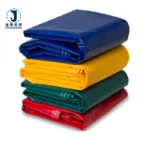
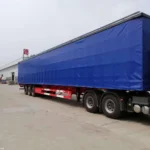
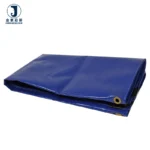
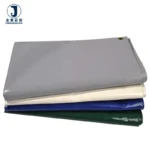
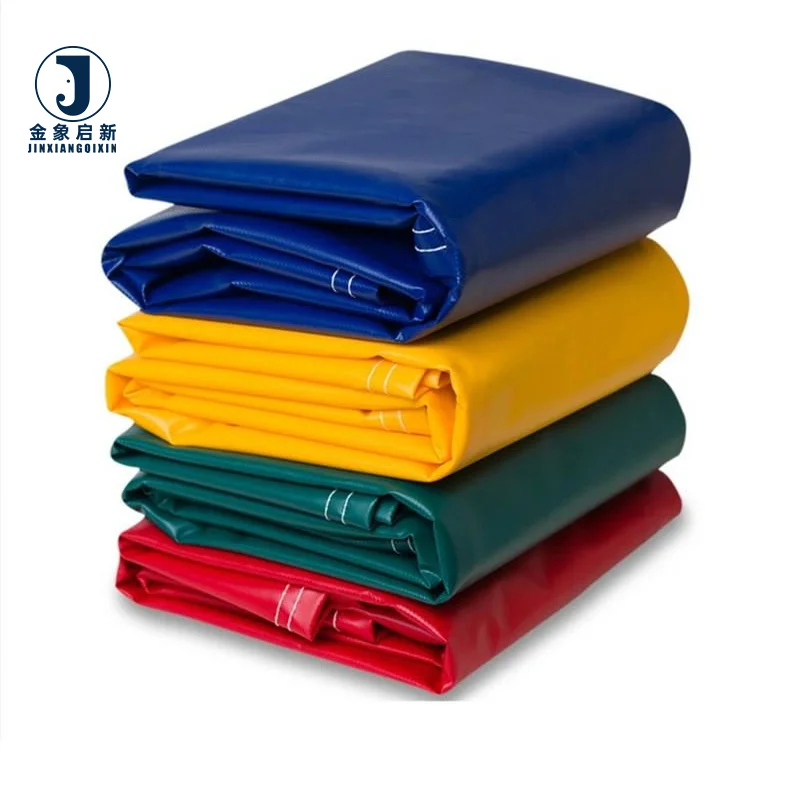
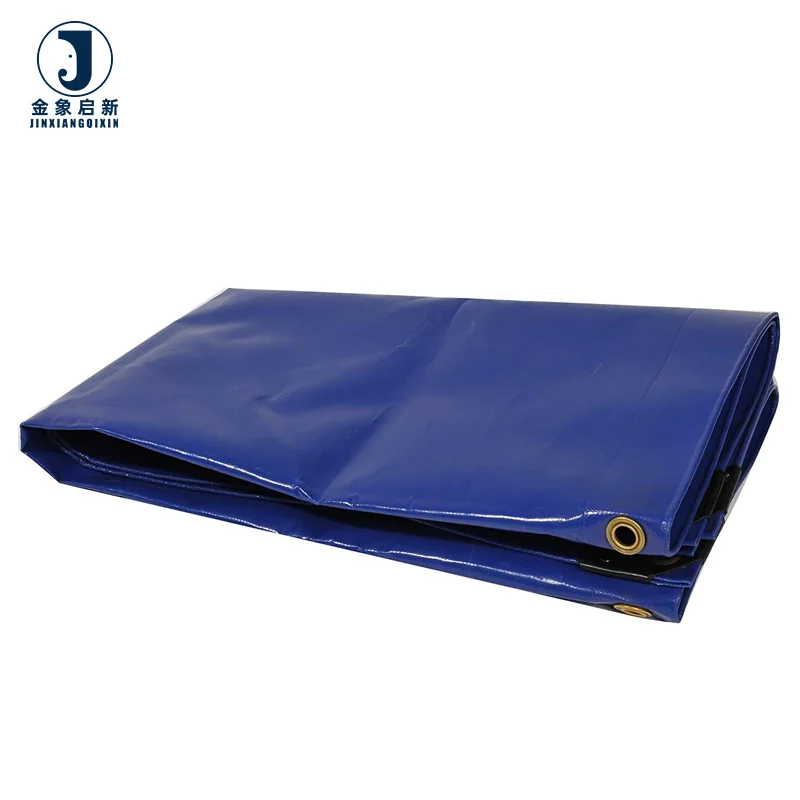
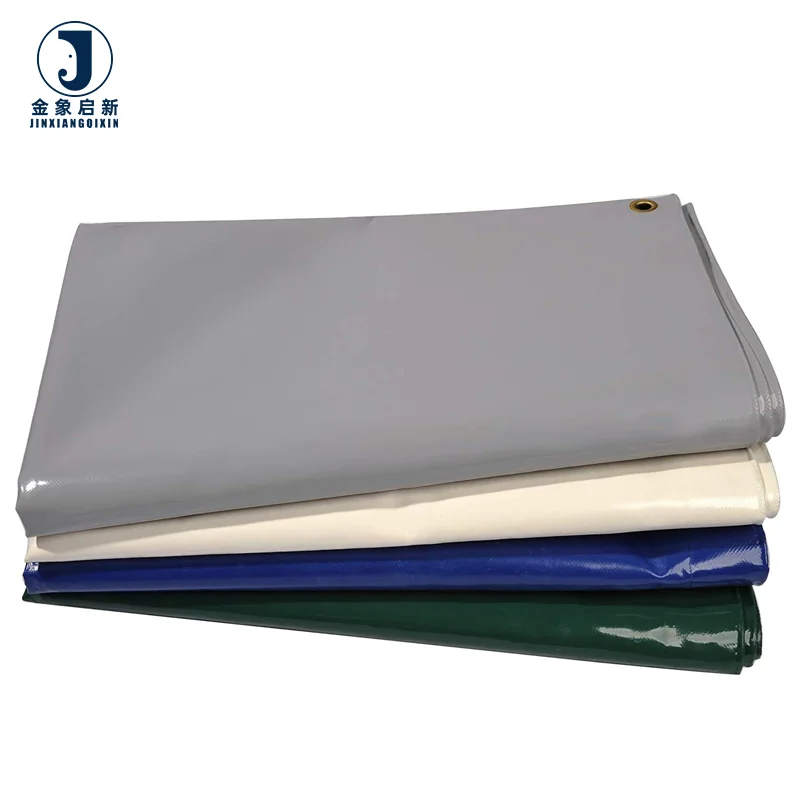
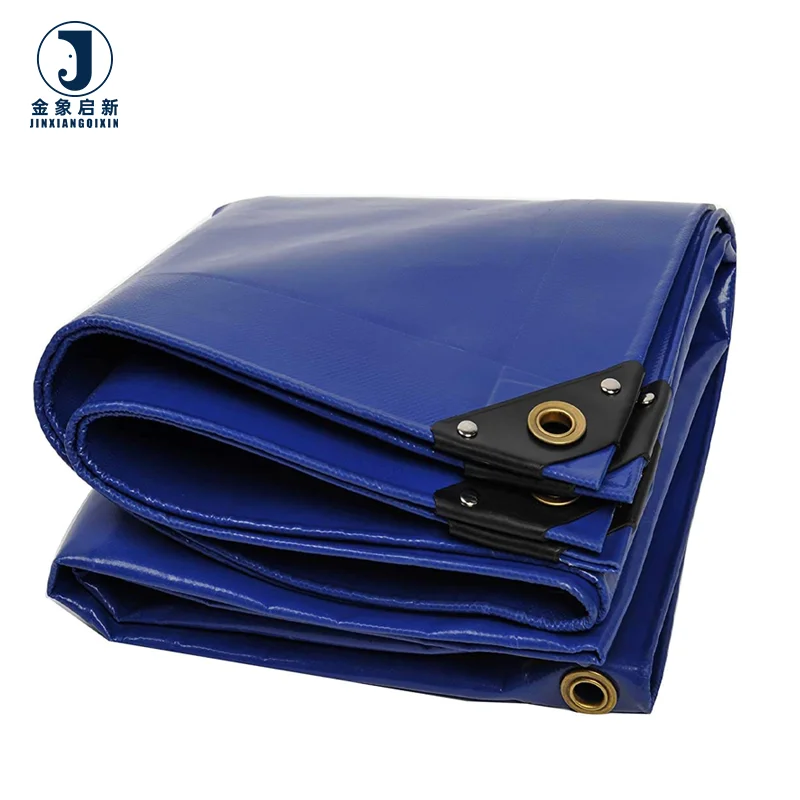
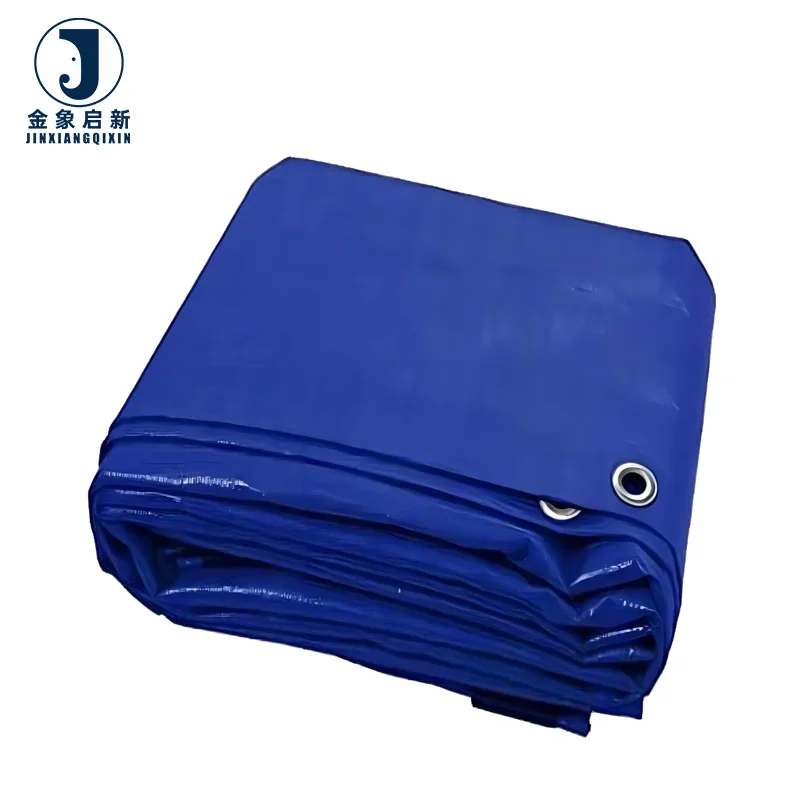
Specification Integrity — Every roll of 1000D PVC coated tarpaulin ships with a material specification sheet stating base fabric denier, coating weight, and verified GSM, matching the quotation line by line.
Technical Specifications
| Parameter | Value |
|---|---|
| Product Type | PVC Coated Tarpaulin |
| Base Fabric | Polyester 1000D1000D, 1000D1300D, 1000D*2000D options |
| Coating | Double-sided PVC on polyester base |
| Weight (GSM) | 350gsm, 400gsm, 420gsm, 500gsm, 600gsm, 650gsm, 750gsm, 900gsm (confirm the grade for your application) |
| Total Thickness | 0.29mm, 0.32mm, 0.38mm, 0.44mm, 0.46mm, 0.55mm, 0.65mm |
| Tensile Strength (Warp/Weft) | 1650/1600 N up to 3900/3500 N depending on grade (test standard not stated in source) |
| Density (Mesh Count) | 30×19, 20×20, 30×15 |
| Flame Retardant | Flame retardant treatment available — confirm the grade required for your market |
| UV Treatment | Anti-UV treatment available — test basis to be confirmed per order |
| Anti-Mildew | Yes |
| Key Features | Waterproof, heavy metal free, flexible, self-cleaning surface |
| Joining Methods | High-frequency hot melt, hot air welding, sewing |
| Temperature Range | Brittle ≤ -50 to -60 °C; softening ≥ 80 °C; melting point 212 °C |
| Material Density | 1.15–2.00 g/cm³ |
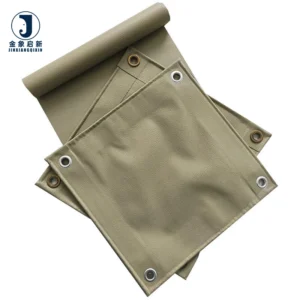
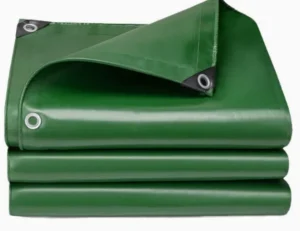
| Edge & Hem Options | 3cm enlarged aluminum alloy buttonhole, reinforced corners, 5mm rope without splicing, heat-sealed seamless edge wrapping |
Application Suitability
| Application | Exposure & Requirement |
|---|---|
| Mining and tunnelling ventilation ducts | Continuous airflow pressure, underground moisture, mandatory fire-retardant and anti-static compliance |
| Aviation hangar air duct systems | Large-diameter duct spans, high static pressure, strict flame classification for enclosed spaces |
| Membrane and inflatable structures | Biaxial tension loading, prolonged UV and weather exposure, welded seam integrity under flex |
| Temporary industrial enclosures | Wind loading on large surface areas, repeated installation and removal, abrasion at frame contact points |
| Construction ventilation tubing | Dust-laden air, mechanical impact from site equipment, drag along rough surfaces |
Why Ventilation Duct Fabric Fails Site Inspection — and What to Verify Before You Order
A duct that lacks the fire-retardant or anti-static certificate your site demands will be rejected before it is ever installed.
Specifying a PVC coated tarpaulin for industrial ventilation involves more than selecting a heavy GSM. Site safety officers check for documented flame classification and surface resistivity. When these documents are missing or do not match the installed material, the entire duct run may need to come down, causing project delays and rework costs. [NEED_CITE: underground mine ventilation duct fire safety requirements and anti-static thresholds]
Fire-Retardant and Anti-Static Grades for Technical Compliance
Industrial ventilation ducts in mining, tunnelling, and aviation environments must meet specific fire classification standards. This 1000D PVC coated fabric is available in flame retardant grades — confirm the grade required for your market before placing an order. Anti-static treatment is also available where site regulations mandate controlled surface resistivity. The key is ensuring that the test report supplied with your shipment references the exact specification you ordered, not a generic product family certificate. Our 10-person R&D team works with you during sample development to match the correct treatment package to your compliance documentation requirements.
High-Frequency and Hot Air Welding for Duct Fabrication
Duct fabrication demands reliable seam integrity. This PVC coated tarpaulin supports high-frequency hot melt welding and hot air welding, both of which create seams where the PVC coating fuses into a continuous bond across the join. For heavy-duty grades such as 1000D×2000D base fabric, proper welding temperature and dwell time must be matched to the total thickness — a 0.65mm material behaves differently under the weld bar than a 0.38mm grade. Sewing remains an option for sections that require mechanical fastening or field-repairable joints. [NEED_CITE: high-frequency welding parameters for PVC coated polyester by thickness range]
How Base Fabric Denier and Mesh Count Drive Duct Performance
The 1000D polyester base fabric provides the structural backbone of this coated material. Denier alone, however, does not determine performance — mesh count and weave density work together with the coating to set the final tensile and tear characteristics. A 1000D×1000D fabric at 30×19 mesh count distributes load differently than the same denier at 20×20. Higher density weaves resist tear propagation more effectively, which matters when a duct section is dragged across a tunnel floor or flexes under pulsating air pressure. Double-sided PVC coating locks the yarns in place and adds abrasion resistance to both surfaces. Total thickness — ranging from 0.29mm to 0.65mm across available grades — correlates with coating weight, not base fabric alone, so a thicker specification does not automatically mean a stronger base cloth. Selecting the correct combination requires matching the mechanical demands of your duct diameter, operating pressure, and installation method. [NEED_CITE: relationship between base fabric mesh count and tear propagation resistance in coated technical textiles]
The Cost of Specifying the Wrong Duct Fabric Grade
Choosing a lighter grade than the application demands leads to predictable failures: seams splitting at flex points, coating delamination under sustained internal pressure, and surface abrasion wearing through to the base yarns within a single project cycle. Conversely, overspecifying a heavy 900gsm material for a short-run temporary duct wastes budget and adds unnecessary weight, making installation more difficult and increasing shipping costs per linear meter. Flame retardant grades selected without confirming the applicable test standard can result in a material that passes one certification scheme but fails the one your site inspector requires. Batch-to-batch colour inconsistency may seem secondary in underground ducting, but when sections from different rolls are joined in a visible location, mismatched panels undermine confidence in material traceability across the entire installation. [NEED_CITE: common causes of premature ventilation duct failure in underground construction environments]
Why Sourcing This PVC Coated Tarpaulin From Jinan Jinxiang Works for Technical Buyers
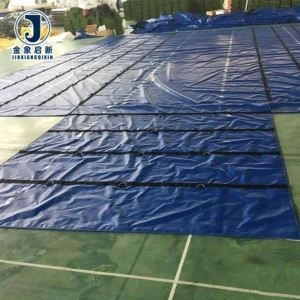
Three full production lines and 36 sets of professional equipment provide the capacity to run bulk duct fabric orders with consistent coating weight across every roll.
Dedicated QA and QC at every production stage, with 100% inspection before shipment, catches GSM deviation and coating adhesion issues before they leave the factory.
Sample development within days for custom width, treatment package, and colour lets you confirm weld parameters and compliance documentation before committing to a production run.
A 10-person R&D team handles material selection and pattern printing for projects requiring branded or colour-coded duct sections.
Deep process control over coating weight and adhesion, built across nearly 30 years of focused coated fabric production, means the PVC layer bonds reliably to the 1000D polyester base through repeated thermal cycling.
Documentation & Verification
- Material specification sheet stating exact GSM, base fabric denier, and coating type for each roll
- Test report for flame retardant grade matched to the specification you ordered
- Anti-static surface resistivity documentation where required by site regulations
- Pre-shipment inspection record confirming roll count, width, and visual quality
- ISO and CE certificates included with dispatch documentation package
- Certificate of origin and customs support paperwork for cross-border shipment
Fabrication, Handling & Storage
- Match high-frequency welder power and dwell time to the selected thickness grade, especially above 0.55mm
- Use 3cm enlarged aluminum alloy buttonholes at all tie-down points to prevent edge tearing under duct tension
- Store rolls upright on pallets to prevent permanent creasing through the PVC coating layers
- Allow cold-stored rolls to acclimatise above 10 °C before unrolling to avoid brittle cracking at low temperature
- Cut patterns should account for the 5mm rope hem allowance on all edges to maintain seam strength
- Clean with mild detergent only; solvent-based cleaners can degrade the PVC coating surface
Request a Specification Recommendation
To get an accurate material recommendation, share your duct diameter, operating static pressure, and the fire classification or anti-static standard your project requires. Let us know the total linear meters needed, preferred roll width, and whether you require finished fabricated sections or roll stock only. If your project involves membrane or inflatable structures rather than ducting, describe the span dimensions and expected biaxial loading so we can match the correct 1000D grade and treatment package to your engineering requirements.
Frequently Asked Questions
Q: What fire-retardant grade options are available for mining and tunnelling ducts?
A: This 1000D PVC coated fabric is available in flame retardant grades, and the specific classification depends on your market requirements. We supply test reports matched to the grade you order. Confirm with your site safety officer which standard applies — different jurisdictions reference different flame classification schemes — and share that requirement with us during the inquiry stage so the correct treatment is applied and documented.
Q: How do I verify the anti-static performance meets underground mining regulations?
A: Anti-static treatment is available on this PVC coated tarpaulin with supporting documentation. Surface resistivity values and the test method used are provided on the material specification sheet. Share your local mining authority’s threshold requirement when requesting a quotation, and we will confirm whether the available anti-static grade satisfies your compliance framework before production begins.
Q: What are the key considerations for welding this fabric into duct sections?
A: High-frequency hot melt and hot air welding are both suitable for this double-sided PVC coated polyester. Welding parameters must be adjusted to the total thickness of the grade selected — thicker grades above 0.55mm need higher energy input and longer dwell time. We recommend running test welds on sample pieces to dial in the correct settings before fabricating full duct sections.
Q: Can I order custom widths to reduce waste in duct fabrication?
A: Custom width is available, and our production lines can accommodate non-standard roll widths to improve your cutting yield. Share your finished duct circumference and fabrication layout so we can recommend a roll width that minimises offcuts. Lead times and minimums apply for non-stock widths, and we confirm these at the quotation stage.
Q: How is roll-to-roll consistency maintained across a large duct fabric order?
A: Every production run goes through in-process QA checks and 100% pre-shipment inspection. Coating weight, colour, and GSM are verified per roll against the agreed specification. The pre-shipment inspection record included with your documentation provides traceability for each roll, so you can confirm consistency before the material arrives at your fabrication facility.