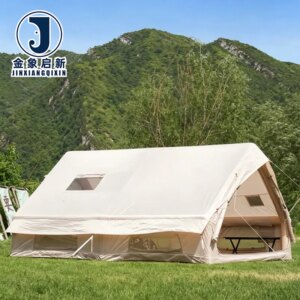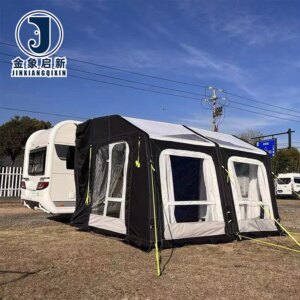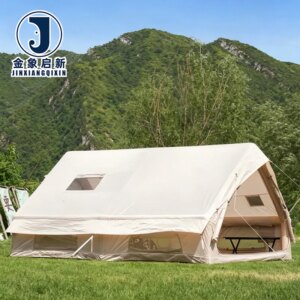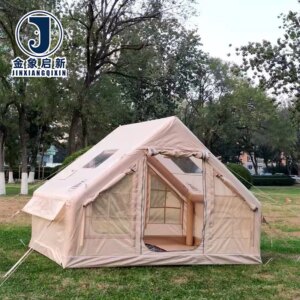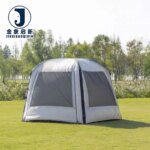

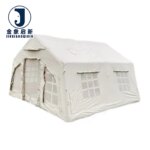
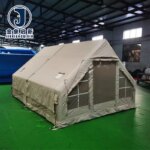
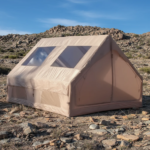

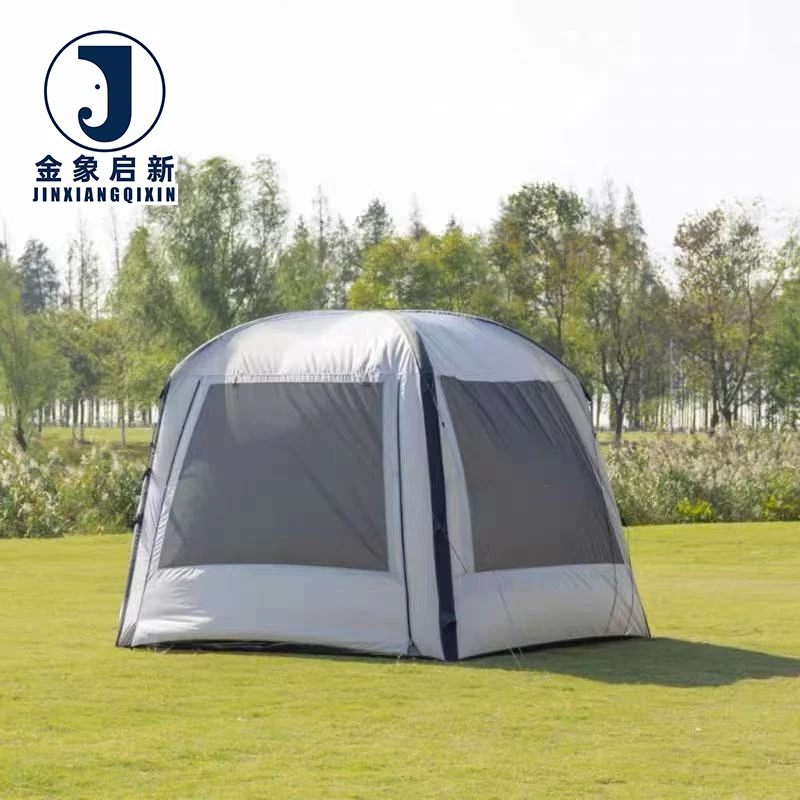
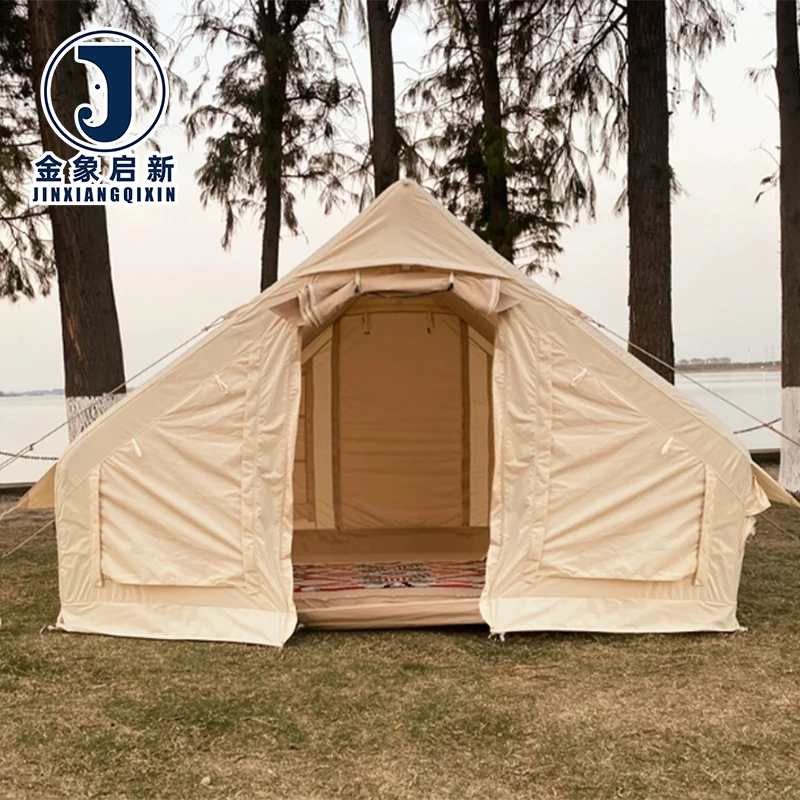
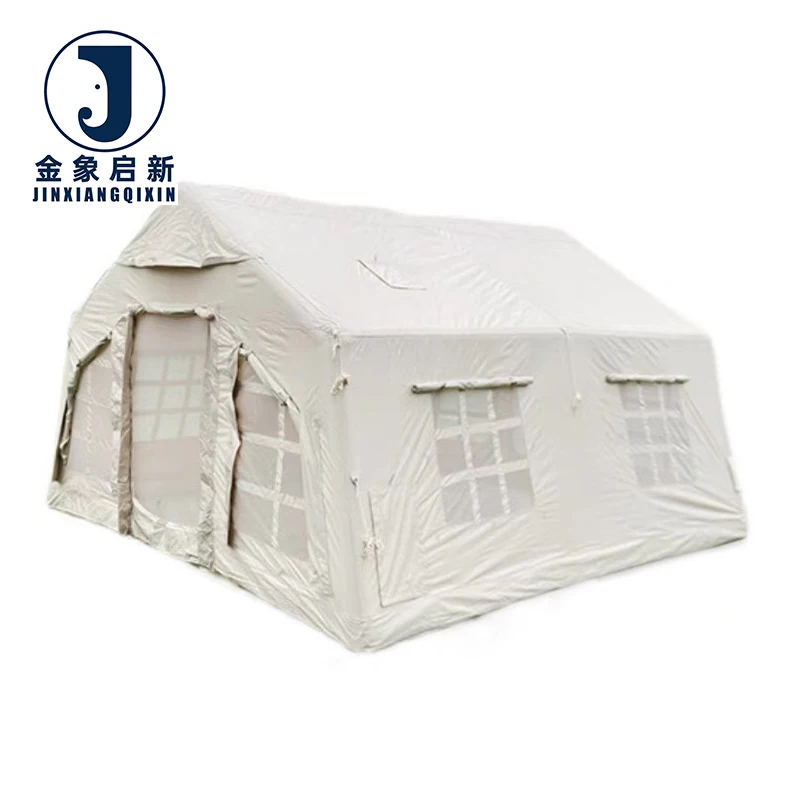
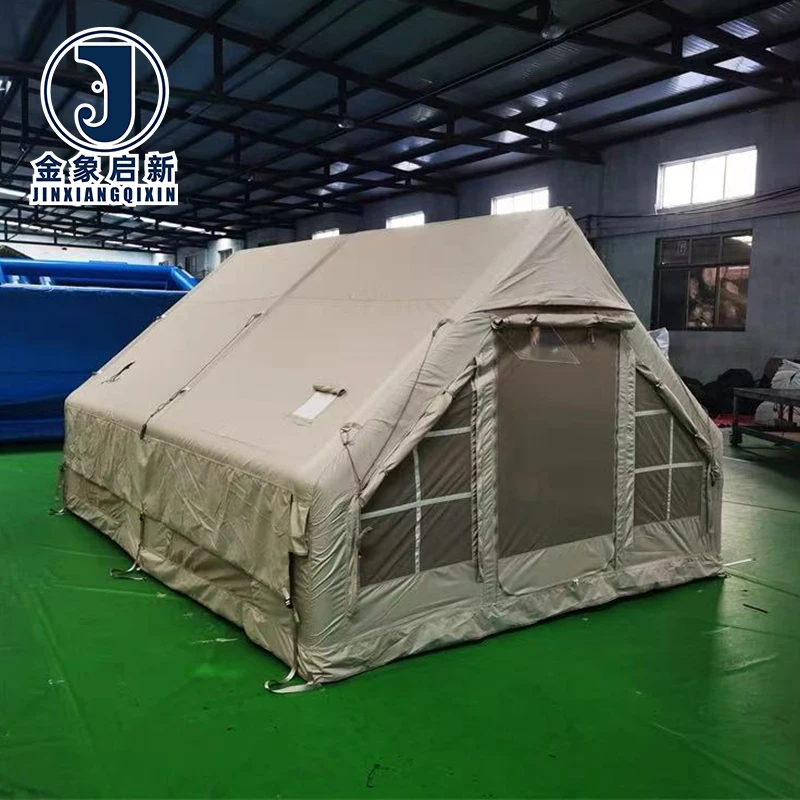
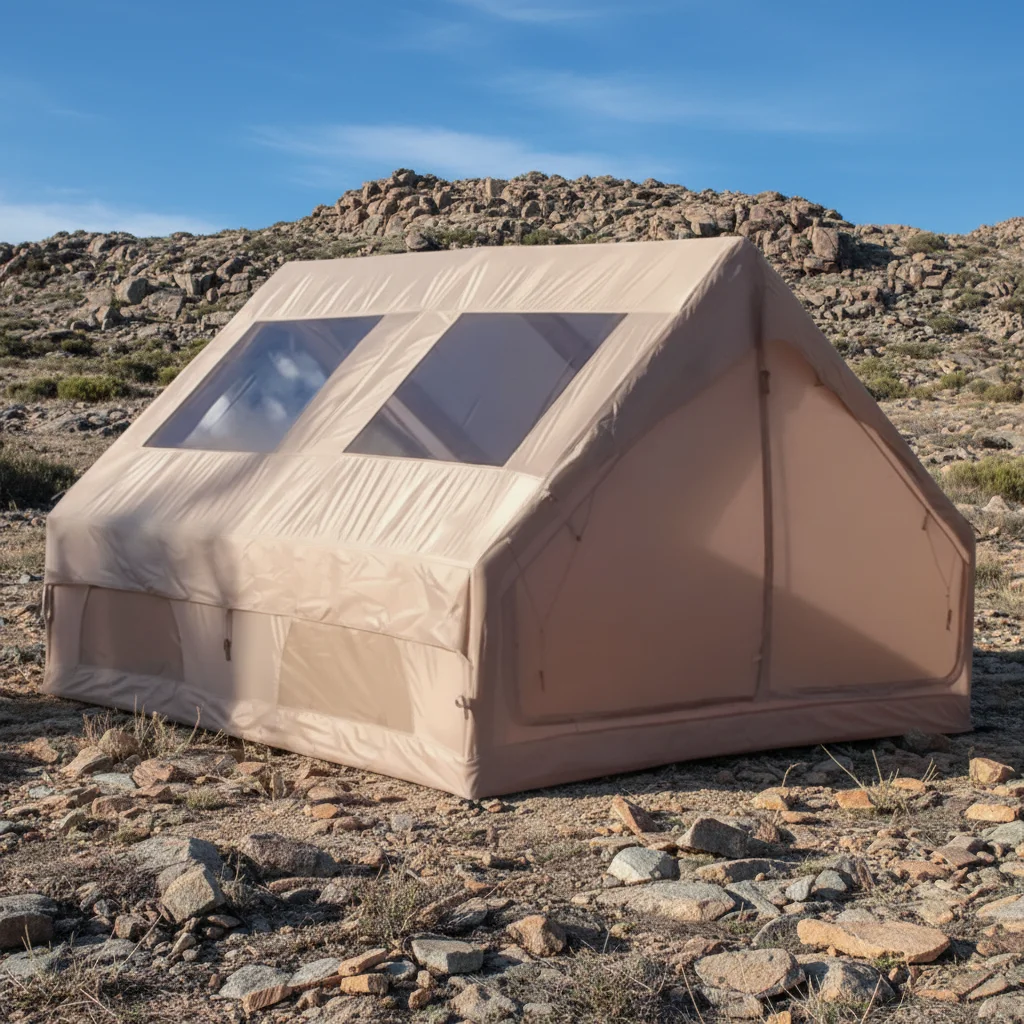

Industrial-grade air retention — three dedicated production lines with 36 sets of processing equipment ensure batch-to-batch coating consistency across every inflatable fabric order.
Technical Specifications
| Parameter | Value |
|---|---|
| Product Type | Inflatable tent |
| Core Material | PVC tarpaulin |
| Key Features | Waterproof, UV-resistant, tear-resistant, fire-retardant, anti-static |
| Customization | OEM & ODM (sample customization, pattern printing) |
| R&D Team | 10 technicians |
| Quality Control | Full-process inspection with dedicated QA & QC staff |
| Certifications | ISO9001, ISO14001, ISO45001, CE |
Application Suitability
| Application | Exposure & Requirement |
|---|---|
| Commercial glamping sites | Continuous inflation cycles, guest occupancy, four-season weather exposure |
| Outdoor hospitality setups | High UV exposure, frequent cleaning, public-use fire safety compliance |
| Event infrastructure | Rapid deployment and teardown, variable wind loads, visual appearance standards |
| Industrial temporary shelters | Dust, mechanical abrasion, chemical contact, documented safety certification |
| Tourism development projects | Remote site logistics, long-term outdoor exposure, low maintenance demands |
When Safety Certification Is Missing From the Shipment
Fire-retardant and anti-static treatments only matter when the test report arrives with the fabric.
Procurement teams sourcing material for inflatable structures often specify compliance requirements that disappear between quotation and delivery. A commercial glamping operator or mining contractor may face a site inspection demanding documented proof that the Inflatable Fabric fire retardant anti-static certified material actually meets the stated grade. Without batch-specific documentation, the entire installation faces rejection or forced removal [NEED_CITE: site safety audit requirements for temporary inflatable structures].
Air Retention Relies on Coating Adhesion, Not Just Thickness
The ability of an inflatable tent to hold pressure across extended deployment depends on how thoroughly the PVC coating penetrates and bonds with the base fabric. Our production process controls coating weight and adhesion at every stage, ensuring the membrane maintains structural rigidity under sustained internal pressure without delamination at stress points.
Static Discharge Hazards in Confined Inflatable Environments
Inflatable shelters used in mining, aviation maintenance, or industrial zones accumulate static charge through airflow friction against the internal membrane surface. Anti-static treatment reduces this risk, but the effectiveness depends on the surface resistance value achieved during coating [NEED_CITE: anti-static surface resistance standards for industrial fabric]. Always confirm the applicable standard before placing an order.
How Treatment Chemistry Affects Weld Integrity
Fire-retardant and anti-static additives alter the thermal behaviour of PVC during heat welding. A formulation designed purely for compliance may produce brittle weld seams that fail under inflation stress. Our 10-technician R&D team balances treatment chemistry with weldability, running inflation tests to verify seam performance before approval.
Reading the Specification Sheet Beyond Surface Claims
Waterproof integrity in inflatable tent fabric depends on complete coating coverage without pinholes or thin spots. UV-resistant treatment prevents surface chalking and embrittlement, but the long-term performance depends on the stabiliser package used — ask for the test basis if outdoor lifespan matters to your operation. Tear resistance originates from the base fabric denier and weave density; the PVC coating contributes surface protection but cannot compensate for a loosely woven substrate. Fire-retardant grades vary by market: confirm whether your site requires M2, B1, NFPA 701, or another standard before production begins.
The Real Cost of Undocumented Material Compliance
When flame retardant or anti-static treatment is claimed on the quotation but unsupported by a test report, the buyer absorbs the full risk. A glamping site may pass initial installation only to fail a seasonal fire marshal inspection, forcing replacement of every tent membrane on site. Mining operations face immediate shutdown if inflatable shelters lack the compliance paperwork required by site safety regulations. Weld seam failures under inflation pressure cause sudden structural collapse — a risk that increases when treatment additives interfere with thermal bonding parameters [NEED_CITE: coated fabric weld strength testing per ISO standards].
Why Technical Buyers Source Inflatable Fabric Here
Deep process control over PVC coating weight and adhesion, developed across decades of coated fabric production, directly translates to reliable air retention in inflatable structures. Three full production lines and 36 sets of processing equipment support volume orders without sacrificing batch consistency. The 10-person R&D team handles material selection, custom sizing, pattern printing, and sample development specific to inflatable applications. Dedicated QA and QC inspection at every production stage catches coating defects, treatment inconsistencies, and weld weaknesses before dispatch. Samples are developed within days, allowing buyers to verify material behaviour under their specific inflation and environmental conditions before committing to production volume [NEED_CITE: coated fabric quality inspection protocols].
Documentation & Verification
- Material specification sheet stating coating composition, treatment type, and performance data for each roll
- Batch-specific test reports covering fire-retardant and anti-static results where applicable
- ISO9001, ISO14001, ISO45001, and CE certification documents supplied with shipment
- Pre-shipment 24-hour inflation test record verifying air-holding integrity of finished units
- Roll packing list with weight verification against stated values before dispatch
Fabrication, Handling & Storage
- Heat-weld seams at manufacturer-recommended temperature to maintain fire-retardant treatment effectiveness across the joint
- Store PVC inflatable tent rolls upright on pallets to prevent permanent creasing in the coated membrane
- Avoid folding finished inflatable structures at the same crease line repeatedly to protect coating adhesion
- Use PVC-compatible cleaners only — solvent-based products may strip anti-static surface treatment
- Inflate to full operating pressure before marking and cutting openings to account for membrane tension
What We Need to Quote Accurately
Share your deployment environment, expected inflation cycle frequency, and the fire-retardant or anti-static standard your local authority requires. Specify whether you need fabric rolls for your own fabrication facility or finished inflatable units with welded seams and inflation ports. Include target dimensions, colour requirements, and whether pattern printing or branding is part of the project scope.
Frequently Asked Questions
Q: What fire-retardant certifications does the inflatable tent fabric carry?
A: Our PVC inflatable tent fabric is available in fire-retardant grades — the specific standard depends on your market requirement. Grades such as M2, B1, or NFPA 701 can be produced upon specification. We provide a batch-specific test report with each shipment documenting the achieved classification. Confirm your local compliance standard before ordering so we formulate the coating to match.
Q: Can dimensions and pattern printing be customised for branded glamping operations?
A: Yes. Our OEM and ODM service covers custom sizing, pattern printing, and material adjustments for inflatable tent projects. The 10-person R&D team develops samples within days, allowing you to approve colour, print registration, and inflation behaviour before full production begins. Provide your artwork files and dimensional drawings during the inquiry stage.
Q: What documentation ships with each batch for regulatory compliance audits?
A: Each shipment includes a material specification sheet, batch-specific test reports for fire-retardant and anti-static properties where applicable, ISO and CE certification documents, a pre-shipment inflation test record, and a roll packing list. This documentation package supports site compliance audits and safety inspections for commercial and industrial inflatable structure deployments.
Q: How does the anti-static treatment perform under continuous airflow conditions?
A: Anti-static treatment reduces surface charge accumulation caused by internal airflow friction against the PVC membrane. The specific surface resistance value depends on the formulation selected for your application. Request the test data sheet for your batch and confirm the applicable anti-static standard your site requires before we begin production.
Q: What is the sample development process for custom inflatable tent specifications?
A: Submit your material requirements, target dimensions, treatment standards, and any printing specifications. Our R&D team produces a sample within days for your evaluation of inflation behaviour, weld seam integrity, colour accuracy, and surface finish. Approval of the sample triggers full production with in-process QA monitoring at every stage through to pre-shipment inspection.