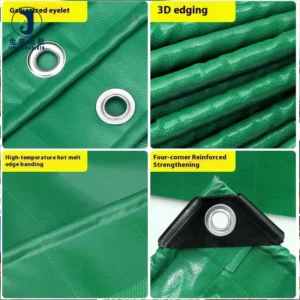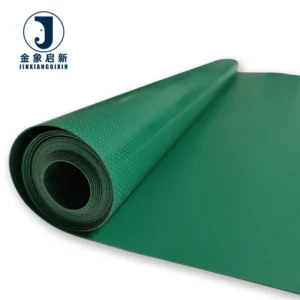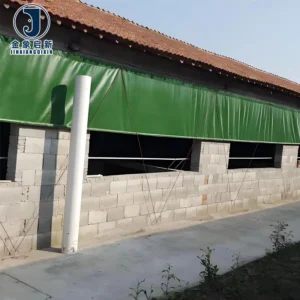
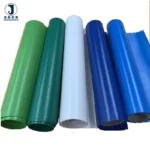
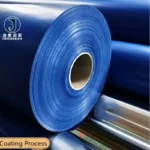
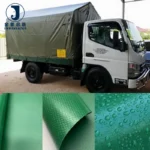
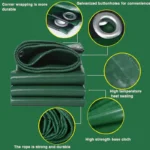
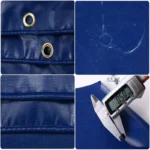
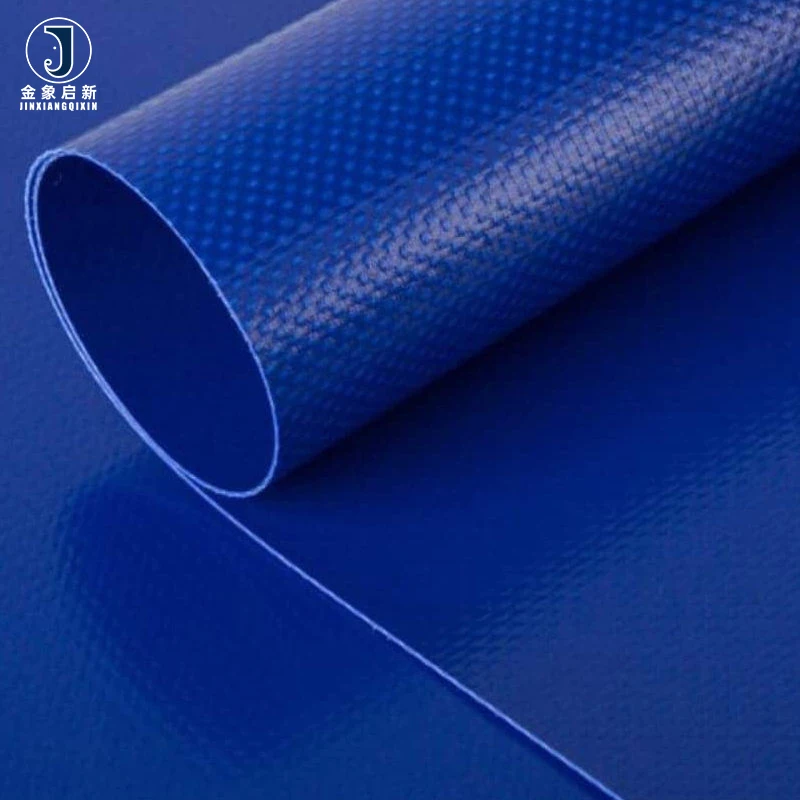
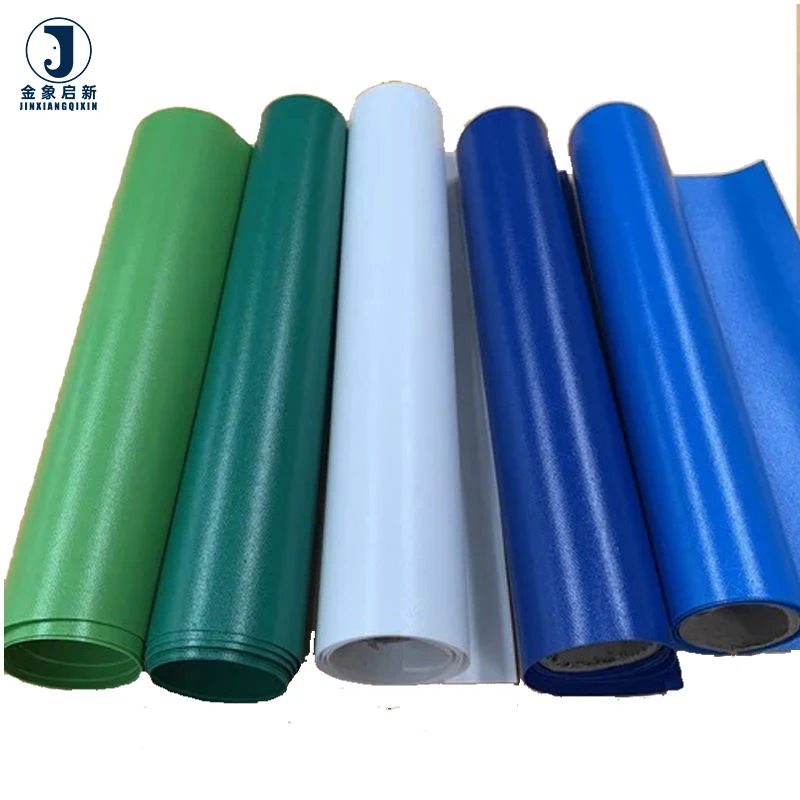
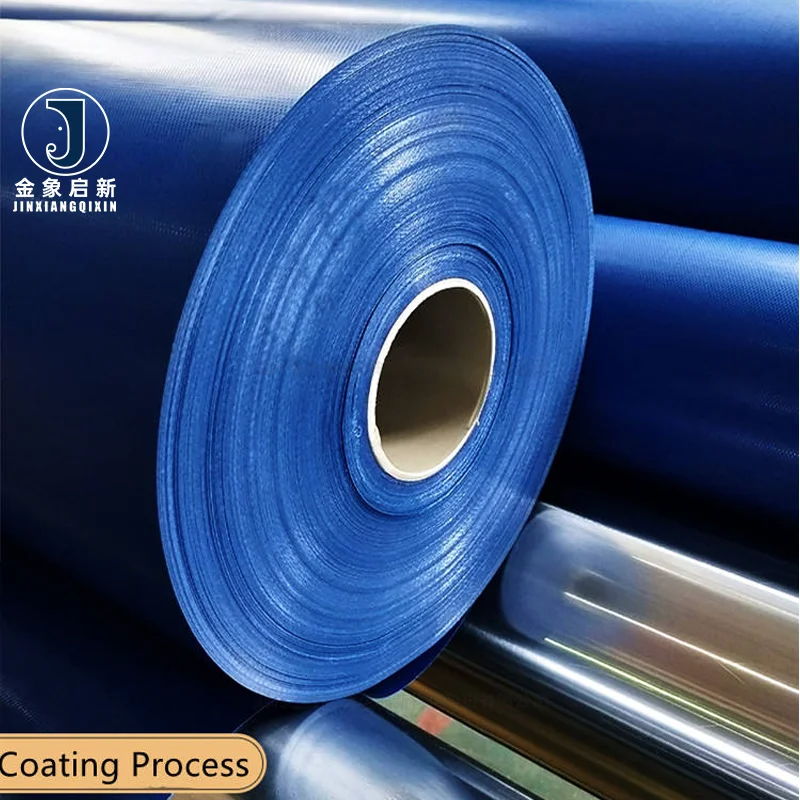
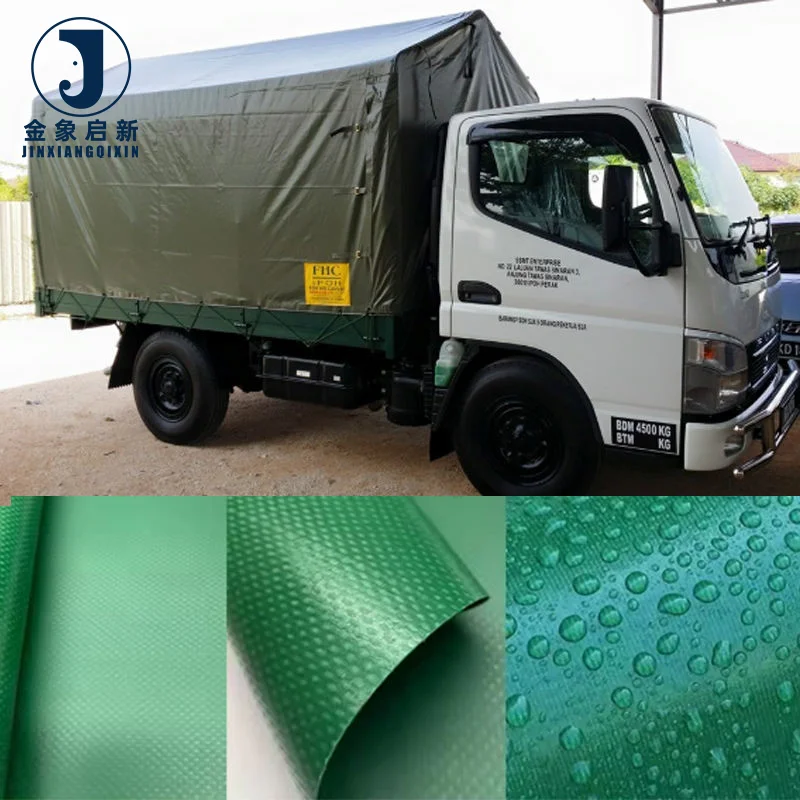
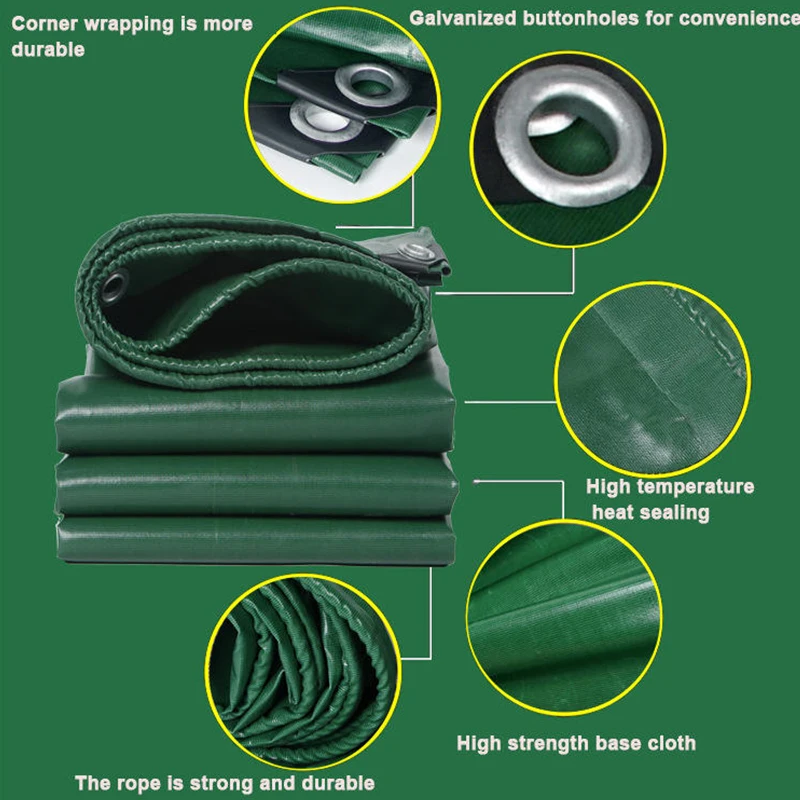
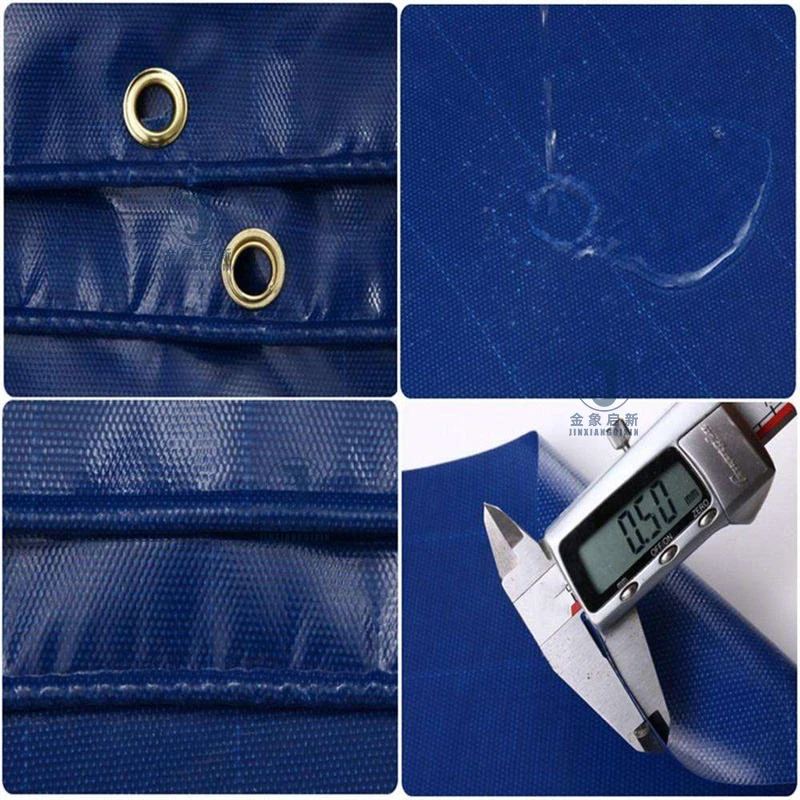
Coating process control — Nearly 30 years focused on PVC coated fabric production with strict weight and adhesion oversight at every stage of the coating line.
Technical Specifications
| Parameter | Value |
|---|---|
| Product Type | PVC Tarpaulin Roll |
| Material | Polyester base fabric with double-sided PVC coating |
| Weight (GSM) | 500gsm, 610gsm, 650gsm, 800gsm, 1000gsm available |
| Waterproof | Yes — fully sealed coating construction |
| Flame Retardant | Available in flame retardant grades — confirm the grade required for your market |
| UV Treatment | Anti-UV treatment available — test basis to be confirmed per project |
| Anti-Mildew | Yes |
| Heavy Metal Free | Yes |
| Surface Finish | Self-clean, smooth leather-like texture |
| Printing Option | Printable, customised branding available |
| Density | 1.15–2.00 g/cm³ |
| Tensile Strength | 50–80 MPa (test standard not stated in source) |
| Brittle Temperature | ≤ -50°C to -60°C |
| Softening Temperature | ≥ 80°C |
| Melting Point | 212°C |
| Repairability | Repairable by hot air welding |
| Processing Methods | High frequency hot melt, hot air welding, sewing |
| Service Life | 3–5 years (PVC tarpaulin category reference) |
| Certifications | ISO and CE certified manufacturing |
Application Suitability
| Application | Exposure & Requirement |
|---|---|
| Mining ventilation duct | Fire-retardant compliance, anti-static requirement, continuous airflow abrasion, confined underground environment |
| Aviation temporary enclosures | Flame-retardant specification, rapid deployment, wind loading, regulatory inspection |
| Inflatable and membrane structures | Tensile loading, UV exposure, seam integrity under positive pressure, architectural appearance |
| Construction site shelters | Weather exposure, mechanical damage risk, temporary fire safety compliance on regulated sites |
| Tunnelling ventilation systems | Particulate abrasion, moisture, fire-retardant mandate, duct flex under air pressure |
What Compliance Really Demands from a PVC Coated Tarpaulin
A certificate on the wall means nothing if the test report does not match the roll on your site.
Mining and tunnelling projects routinely reject ventilation duct at inspection because the fire-retardant grade stated on the quotation does not align with the certification the safety officer requires. Aviation contractors face the same problem when a membrane structure fabric arrives without surface resistance data the site auditor has asked for. These gaps are not material failures — they are documentation failures that halt work, trigger re-procurement cycles and push project timelines [NEED_CITE: fire classification and compliance testing standards for coated fabrics in mining and construction]. Specifying a PVC coated tarpaulin for regulated environments means the test report must travel with the shipment, not sit in a sales folder.
Polyester Base Fabric as the Structural Backbone
The polyester base fabric provides the tensile and tear resistance that holds a ventilation duct or membrane structure under load. Double-sided PVC coating bonds to this woven substrate, distributing stress across the weave rather than concentrating it at a single yarn. For technical applications such as mining duct or inflatable enclosures, the base fabric denier and weave density determine whether the material resists tearing when punctured or flexed repeatedly under air pressure. This PVC coated tarpaulin range starts from a structural polyester grid designed to maintain dimensional stability across long unsupported spans.
Hot Air Welding for Seam Integrity in Technical Fabrication
Ventilation ducts and inflatable structures rely on fabricated seams that must perform as well as the parent fabric. Hot air welding fuses the PVC coating layers together at the overlap, creating a bond that resists peeling under positive air pressure or mechanical flex [NEED_CITE: hot air welding parameters and seam strength testing for PVC coated polyester]. Unlike stitched seams that introduce needle holes through the waterproof barrier, welded joints maintain full coating continuity. The 212°C melting point and controlled softening behaviour of this PVC coated tarpaulin allow fabricators to dial in consistent weld temperatures without scorching or under-bonding the material.
Reading the Specifications Beyond GSM
GSM alone does not define performance — a 650gsm fabric with a dense polyester weave and thin coating behaves very differently from a 650gsm fabric with a loose weave and thick coating. The coating method, whether hot melt or knife-over-roll, determines how deeply the PVC penetrates the base fabric and therefore how well the layers resist delamination under flex. Tensile strength in the 50–80 MPa range reflects the combined contribution of base fabric density and coating adhesion, not coating thickness alone. The brittle temperature rating of ≤ -50°C to -60°C indicates the material retains flexibility in cold environments, which matters for ventilation duct installed in unheated tunnels or membrane structures in winter conditions. Anti-UV and flame retardant treatments should be confirmed with test reports specific to the grade ordered, as treatment levels vary across the product family [NEED_CITE: ISO 1421 tensile and tear test methods for coated fabrics].
The Cost of Specifying Without Verification
When a ventilation duct arrives underground without the fire-retardant certification the site safety plan mandates, the entire installation halts until compliant material is sourced — a delay measured in lost shift hours, not days. Batch colour inconsistency across rolls may not matter for buried duct, but it becomes visible and unacceptable in above-ground membrane structures where panels sit side by side. Weld seams that fail before the fabric itself are almost always the result of incorrect temperature settings or insufficient overlap, not a fabric defect, yet the material supplier typically receives the complaint [NEED_CITE: seam failure root cause analysis in coated fabric installations]. Ordering PVC coated tarpaulin without requesting roll-specific weight verification means you accept whatever GSM arrives, which may not be what was quoted.
Why Source This PVC Coated Tarpaulin Through Jinxiang
Three full production lines and 36 sets of professional coating and finishing equipment support consistent roll output across bulk orders, reducing lead time variability on custom widths and treatment grades. The 10-person R&D team handles material specification for compliance-driven projects, matching fire-retardant or anti-static treatment to the standard your market requires rather than shipping a generic grade. Dedicated QA/QC inspection runs at every production stage with full pre-shipment verification, so coating adhesion, GSM and treatment efficacy are checked before the roll leaves the facility. Custom sample development within days allows you to confirm weld behaviour, colour and surface finish before committing to a production run. ISO and CE certified manufacturing underpins the documentation package that ships with every order, giving your compliance team the paperwork they need at inspection.
Documentation & Verification
- Material specification sheet stating exact GSM, base fabric construction and coating weight per roll
- Fire-retardant or anti-static test report matching the treatment grade specified on your purchase order
- ISO and CE certification copies included in the shipment documentation set
- Pre-shipment inspection record confirming coating adhesion, colour consistency and surface quality
- Certificate of origin and customs documentation prepared for international shipment compliance
Fabrication, Handling & Storage
- Hot air weld temperature must match the PVC coating melting behaviour to avoid under-bonding or surface scorching on heavy-grade rolls
- Store PVC coated tarpaulin rolls upright on end caps to prevent flat-spotting and permanent creasing across the coating
- Clean self-clean finish surfaces with mild detergent only — solvent-based cleaners may degrade the topcoat layer
- Allow cold-stored rolls to acclimatise to workshop temperature before unrolling to prevent coating cracking at low temperature
- Repair field damage by hot air welding a PVC patch over the affected area, matching weld temperature to the parent coating
What to Include in Your Enquiry
Provide the application type, exposure conditions and any fire-retardant or anti-static standard your project mandates so the correct treatment grade is matched. Specify required roll width, colour and whether you need finished panels or raw roll stock. Indicate your annual volume and whether batch colour matching across multiple shipments is critical for visible installations. Request samples for weld testing and colour approval before placing a production order.
Frequently Asked Questions
Q: What fire-retardant standard does the fabric meet?
A: Fire-retardant treatment is available in multiple grades. The specific standard — whether DIN 4102, NFPA 701, M2 or B1 — depends on your market and application. State the required classification in your enquiry so the correct grade is matched and a corresponding test report is supplied with the shipment.
Q: Is anti-static treatment available with test data for mining ventilation duct?
A: Anti-static treatment can be applied to the PVC coating with surface resistance test data provided on request. Mining ventilation specifications vary by jurisdiction, so confirm the required surface resistance range with your site safety team before specifying the treatment grade.
Q: Can the PVC tarpaulin be hot-air welded for duct fabrication?
A: Yes, this PVC coated polyester is designed for hot air welding. The coating composition supports fused seam bonds suitable for ventilation duct and inflatable structure fabrication. Weld temperature and speed should be calibrated to the specific GSM and coating thickness of the grade ordered.
Q: How is the stated GSM verified before shipment?
A: Each roll undergoes weight verification as part of the pre-shipment inspection process. A weight test record can be included in the documentation package, allowing you to cross-check the delivered GSM against the specification stated on your purchase order.
Q: What is the MOQ for custom width or fire-retardant grade?
A: Minimum order quantities vary depending on the custom width, colour and treatment grade required. Custom fire-retardant grades and non-standard widths typically require a minimum production run to ensure coating line consistency. Submit your specification for a confirmed minimum and lead time.