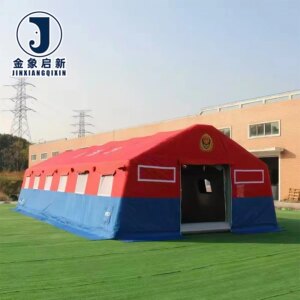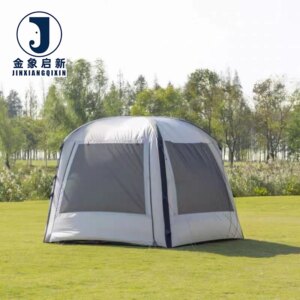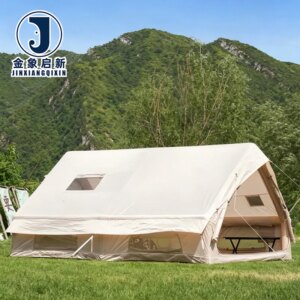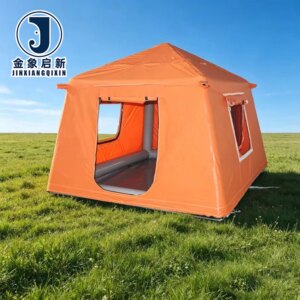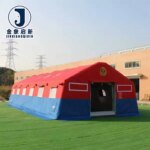
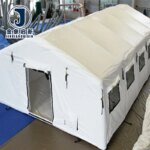

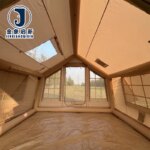

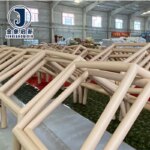
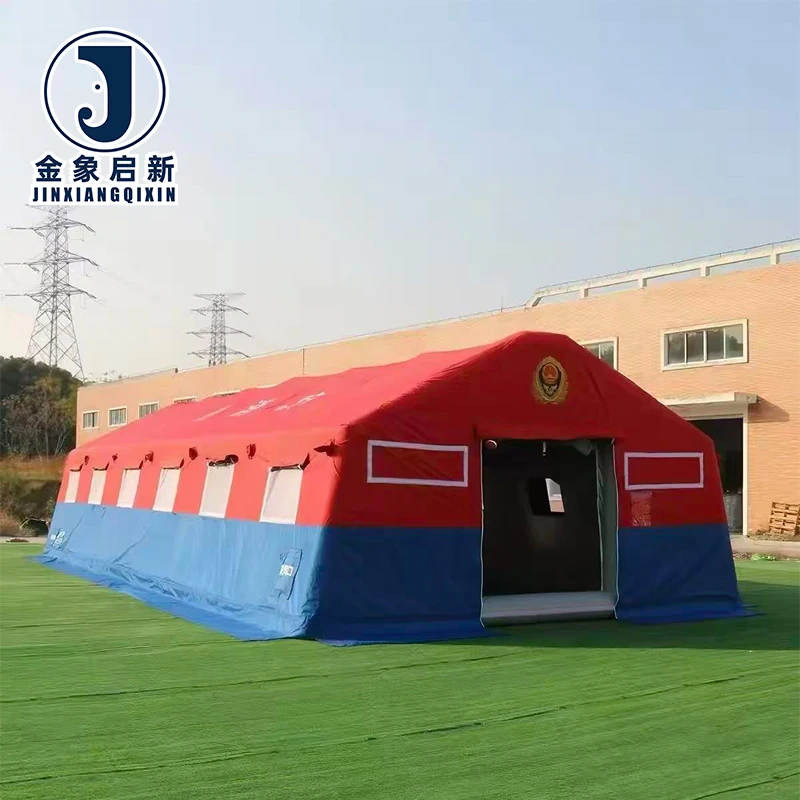
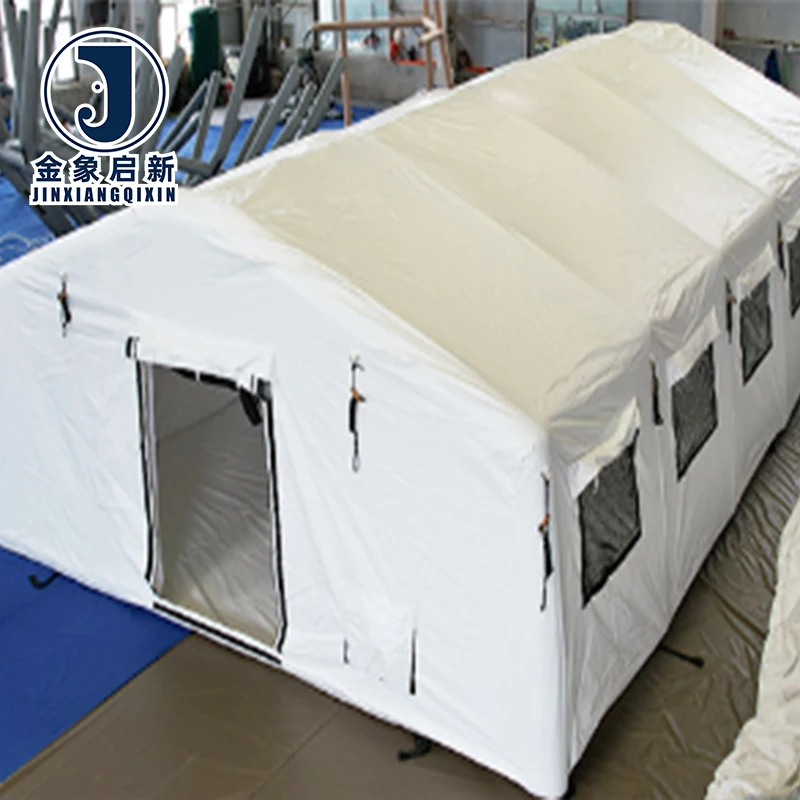
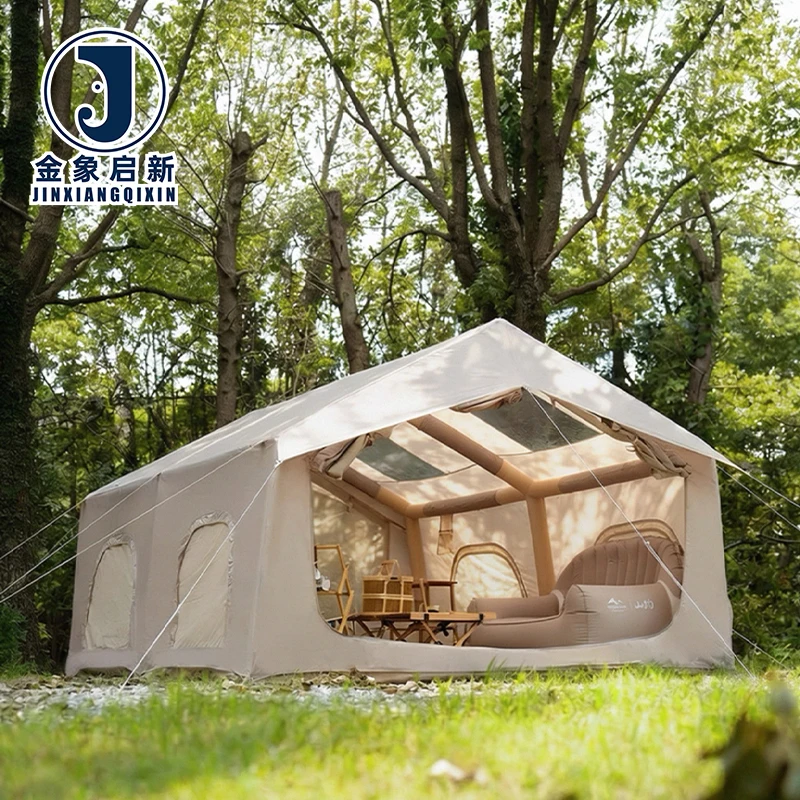
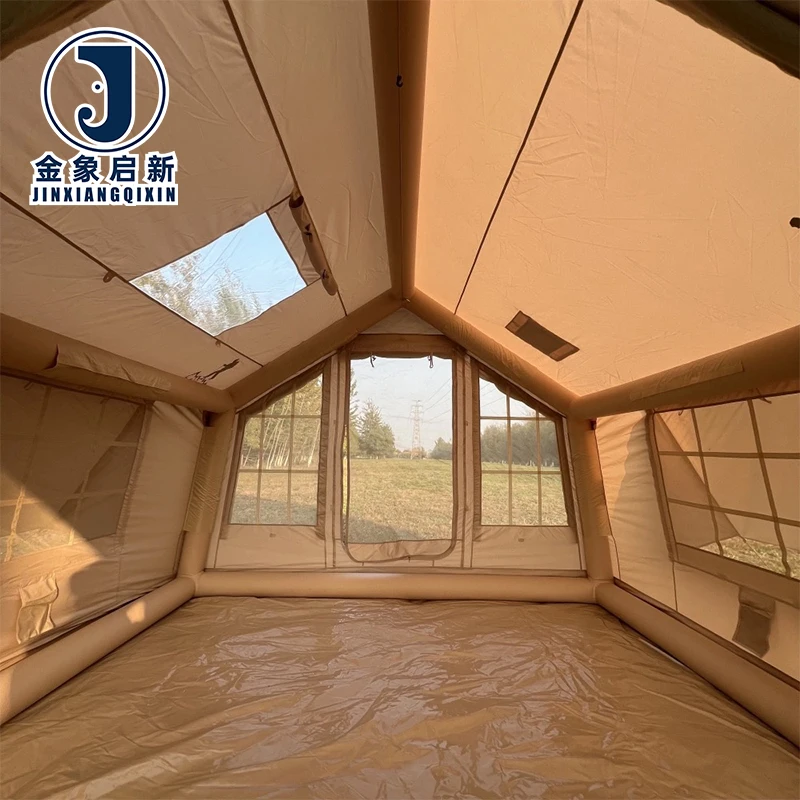
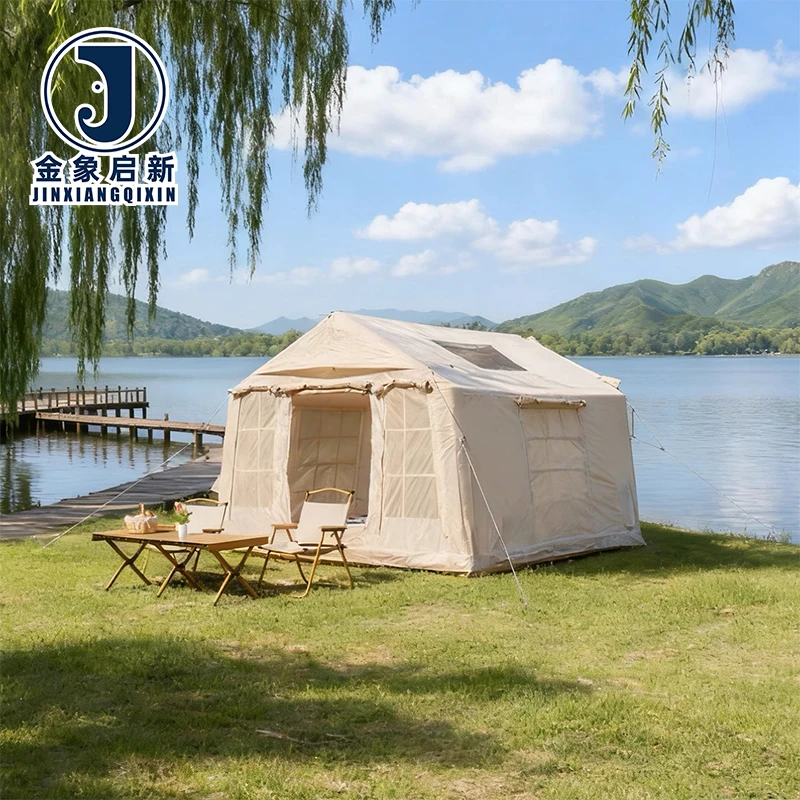
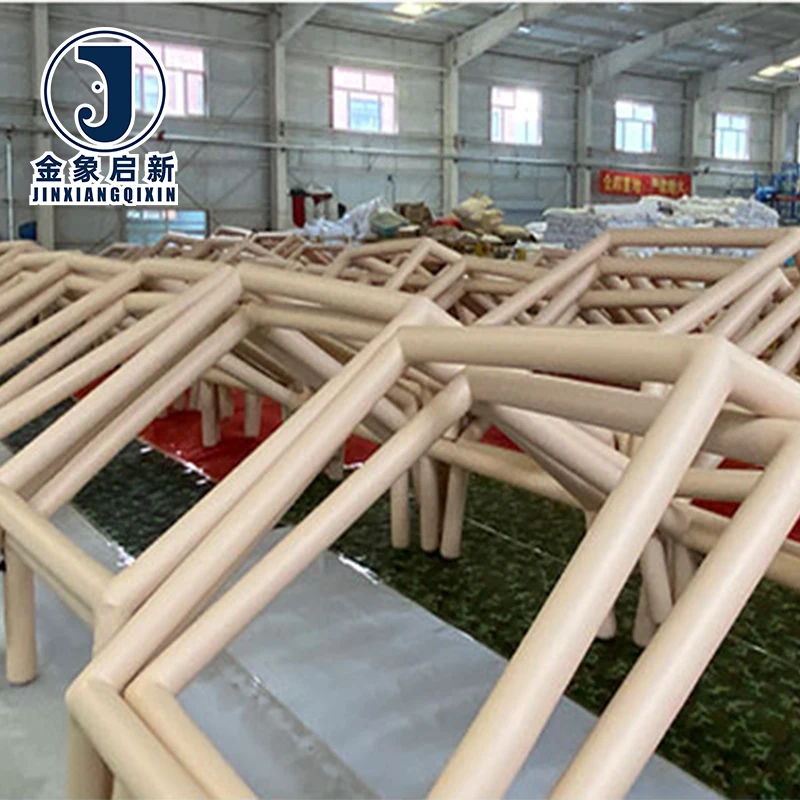
Proven deployment speed — Every inflatable PVC tent undergoes a 24-hour pressure retention test before dispatch, ensuring rapid automatic opening mechanisms function reliably when emergency shelters are needed on-site within minutes, not hours.
Technical Specifications
| Parameter | Value |
|---|---|
| Product Type | Inflatable Tent |
| Core Material | PVC Tarpaulin |
| Construction | Single Layer |
| Design | Four-Season, Extended Type |
| Waterproof Rating | 3000mm |
| Deployment Mechanism | Quick Automatic Opening |
| UV Treatment | UV-resistant PVC material (test basis not stated) |
| Customization Service | OEM & ODM |
| Quality Control | Full-Process Inspection with Dedicated QA&QC Staff |
| Standards | CE, ISO9001, ISO14001, ISO45001 |
Application Suitability
| Application | Exposure & Requirement |
|---|---|
| Disaster relief field hospitals | Immediate deployment under severe weather, waterproof integrity, rapid pressurization |
| Mining and tunnelling temporary shelters | Dust, moisture, ventilation ducting compatibility, fire safety compliance on-site |
| Aviation ground operations enclosures | Fuel-safe zones, wind load resistance, quick setup for mobile command or maintenance |
| Infrastructure project command centers | Extended outdoor exposure across seasonal temperature shifts, equipment storage capacity |
| Utility maintenance emergency units | Remote deployment, single-operator setup, protection for tools and personnel in the field |
What Happens When Your Inflatable Tent Lacks the Certification the Site Demands
A structure without documented compliance is a liability, not a shelter.
Mining operations and aviation ground teams specify fire-retardant and anti-static requirements before a single structure goes up on-site. When an inflatable tent arrives without traceable certification, work stops until procurement sources a replacement — costing days of project time. [NEED_CITE: fire safety compliance requirements for temporary structures in mining environments] The Inflatable Tent fire retardant specification must align with local regulatory frameworks, and that alignment must be provable at the point of inspection.
Rapid Pressurization for Critical Timelines
Conventional tent assembly demands multiple crew members and considerable time — resources that disaster relief and emergency response teams do not have. The quick automatic opening mechanism on this Inflatable Tent fire retardant structure reduces deployment from hours to minutes. A single operator can initiate pressurization and have a fully formed shelter standing and ready for occupancy while conditions are still developing around them.
Four-Season Structural Behaviour Under Temperature Variation
PVC-coated fabric responds to temperature differently than woven or laminated alternatives. In cold conditions, the material must remain pliable enough to inflate without cracking at fold lines or weld seams. During peak heat, the same fabric must resist softening to the point where structural rigidity drops. This Inflatable Tent fire retardant unit is designed as a four-season extended type, meaning the PVC tarpaulin formulation and seam construction account for the thermal range encountered across mining sites, remote infrastructure projects, and disaster zones where climate-controlled storage is unavailable. [NEED_CITE: PVC tarpaulin flexibility thresholds across operational temperature ranges]
Reading the Specifications That Actually Matter
The 3000mm waterproof rating indicates the hydrostatic head pressure the PVC tarpaulin surface can withstand before water penetration begins — a relevant metric for shelters deployed during heavy rainfall or in flood-response scenarios. However, waterproof rating alone does not determine field performance. The single-layer construction means every seam is a potential ingress point, which is why heat welding quality and seam overlap width matter as much as the coating itself. The four-season, extended type designation signals that the fabric weight and base fabric density have been selected to sustain internal air pressure across temperature-induced material stiffness changes. UV-resistant PVC material is specified in the material profile, though the test basis for UV performance should be confirmed with the supplier for your target exposure duration.
The Cost of Overlooking Seam Integrity in Inflatable Structures
Inflatable tents fail most often not through the fabric but at the welded seams, where internal pressure concentrates during inflation cycles and wind loading. When seam overlap is insufficient or heat welding parameters do not match the PVC formulation, the bond degrades under repeated pressurization — and the shelter deflates at the worst possible moment. [NEED_CITE: common failure modes in inflatable and membrane structure seams] For mining and tunnelling contractors operating in regulated environments, a deflated shelter is not just an inconvenience — it is a compliance incident that halts operations.
Why Procurement Teams Specify Here
The 10-person R&D team handles engineering drawings and custom modifications for project-specific inflatable shelter dimensions, not just catalogue sizes. Every unit undergoes full-process inspection with dedicated QA and QC staff — including the 24-hour pressure retention test that verifies seam and valve integrity before packing. CE, ISO9001, ISO14001, and ISO45001 certifications are not displayed as badges but provided as verifiable documentation matched to the production batch. OEM and ODM capability means the inflatable structure can be engineered to integrate ventilation duct penetrations, partition layouts, or equipment mounting points that standard catalogue tents cannot accommodate. Samples are developed within days when custom requirements need physical validation before bulk commitment.
Documentation & Verification
- CE certificate copy matched to the inflatable tent production batch
- ISO9001, ISO14001, ISO45001 process certification documents on file
- Waterproof integrity inspection report with batch-level traceability
- 24-hour pressure retention test record for each individual unit
- Material specification sheet stating PVC formulation and base fabric details
- Custom engineering drawings approved and archived per project reference
Fabrication, Handling & Storage
- Heat welding temperature and dwell time matched to the single-layer PVC tarpaulin formulation
- Valve and inflation port reinforcement verified against repeated pressurization cycles
- Store deflated tents flat or loosely rolled to prevent permanent crease marks in the PVC coating
- Deploy in temperatures above the material’s cold-flex threshold to avoid fold-line cracking
- Clean PVC tarpaulin surfaces with pH-neutral detergent to preserve UV-resistant treatment
- Inspect welded seams before each deployment cycle for signs of bond degradation
Requesting a Project-Specific Quotation
Provide the deployment environment, anticipated temperature range, and any fire safety or anti-static classification required by the site authority. Specify the internal dimensions and occupancy or equipment storage needs so the extended type configuration can be sized accurately. Indicate whether ventilation duct integration, partition walls, or specific access points are required — the R&D team will return engineering drawings and a sample for approval before production begins.
Frequently Asked Questions
Q: What flame retardant grades are available for inflatable tent structures?
A: Inflatable structures can be manufactured in flame retardant PVC tarpaulin grades matched to the regulatory requirements of your project site. The specific grade depends on whether local fire codes reference DIN 4102, NFPA 701, or equivalent standards. Confirm the classification required by your site safety authority so the correct formulation and test documentation can be prepared before production.
Q: How is UV resistance validated for extended outdoor deployment?
A: The PVC tarpaulin used in these inflatable tents incorporates UV-resistant treatment. The test basis and exposure duration rating should be confirmed during the specification stage, as requirements differ between short-term disaster relief deployments and multi-season mining or infrastructure installations. Request the applicable test data when defining your project exposure profile.
Q: What heat welding and seam construction methods are used?
A: Single-layer PVC tarpaulin seams are heat welded using temperature and dwell settings calibrated to the specific coating formulation. Seam overlap width and weld consistency are inspected as part of the full-process QA protocol, with a 24-hour pressure retention test confirming that no seam leakage occurs before the tent is cleared for shipment.
Q: Are anti-static specifications available for mining compliance?
A: Anti-static PVC formulations can be specified for inflatable structures deployed in mining and tunnelling environments where static discharge presents an ignition risk. The required resistivity range and test standard should be communicated during the inquiry stage so the correct material grade is sourced and certified documentation accompanies the shipment.
Q: What customization and minimum order considerations apply?
A: OEM and ODM services cover custom dimensions, ventilation duct penetrations, partition layouts, and access configurations. Minimum order quantities depend on the degree of customization and material grade selected. The R&D team provides engineering drawings and physical samples for approval, enabling bulk production to proceed only after the specification is confirmed on-site.