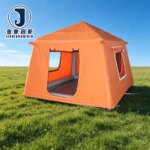


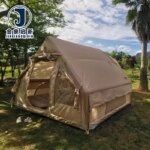
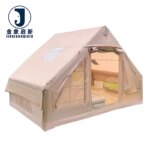
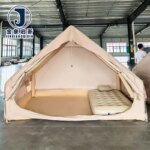
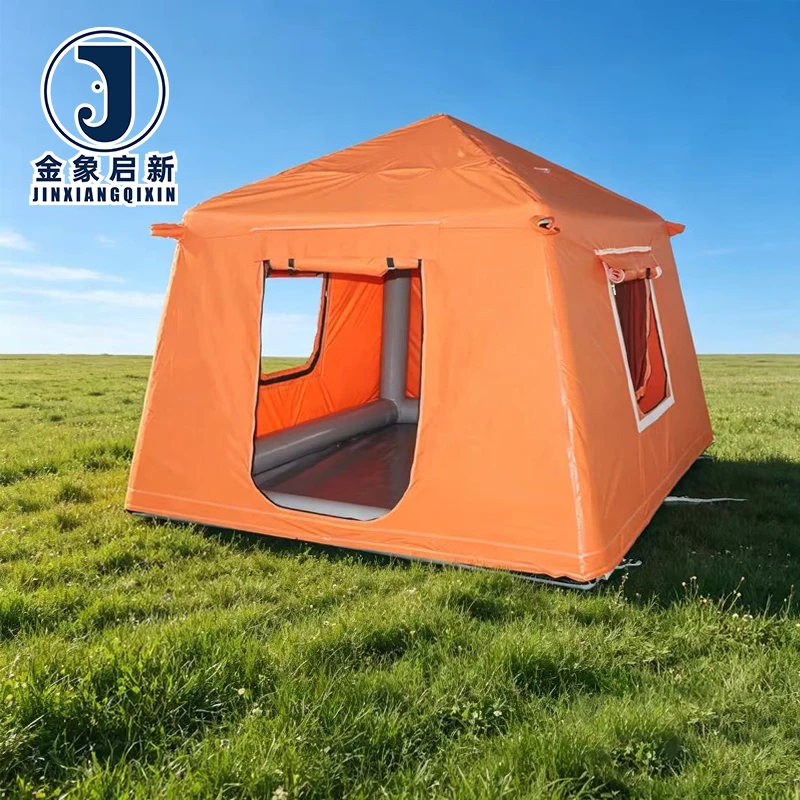
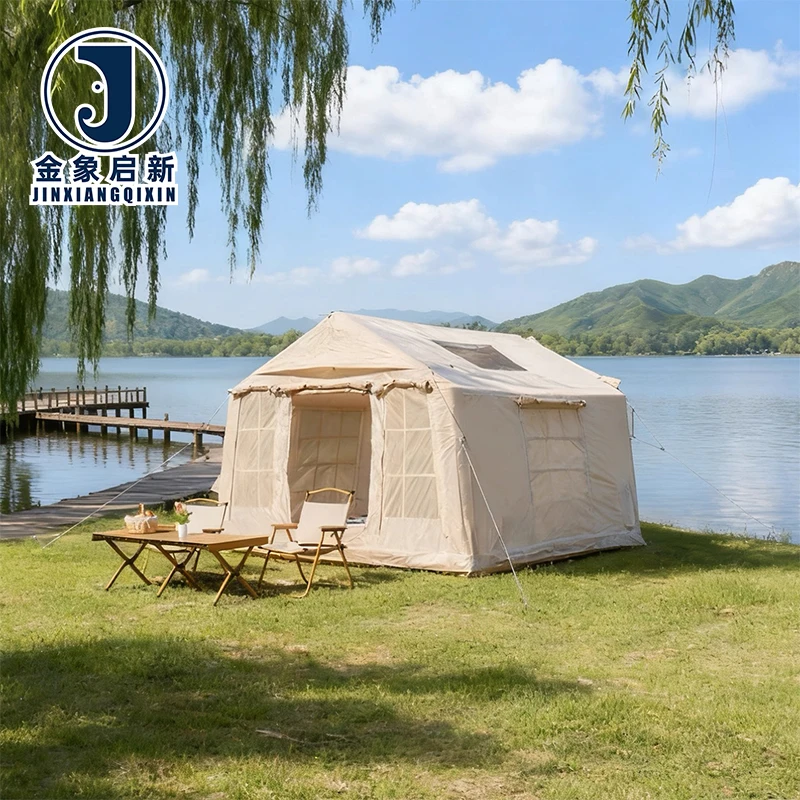
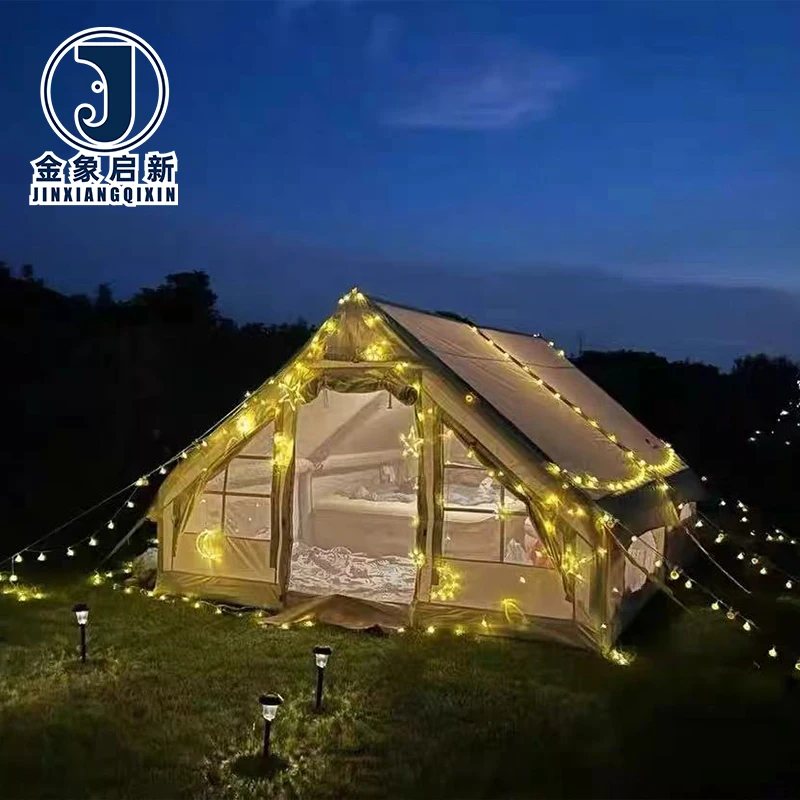
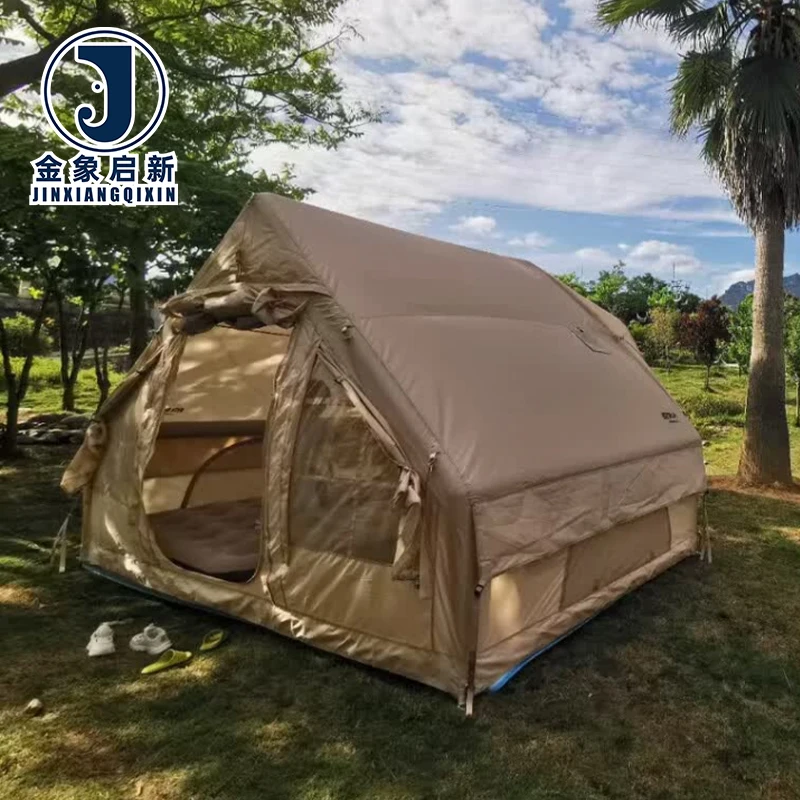
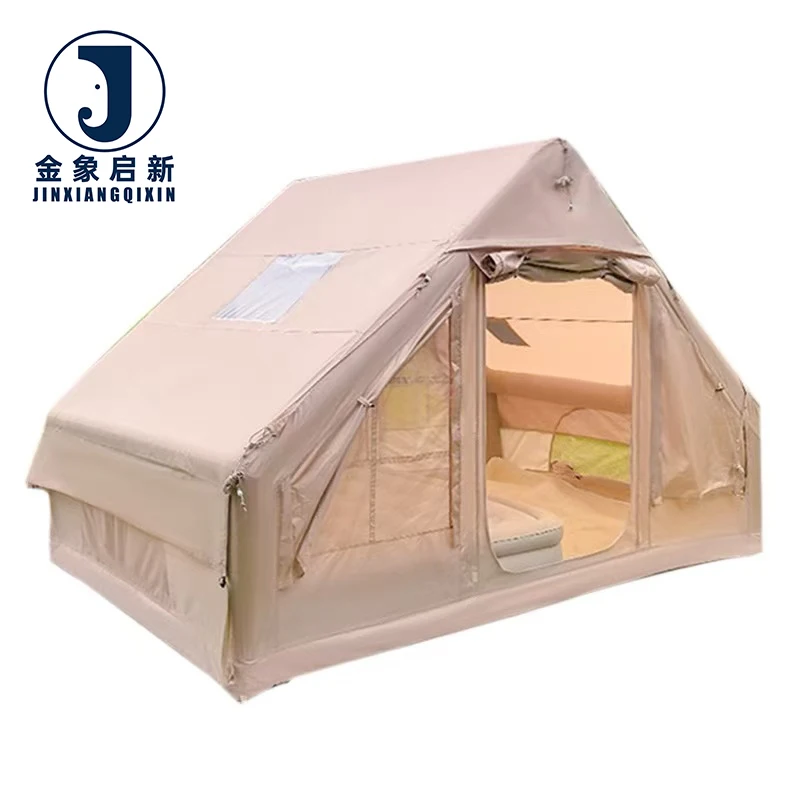
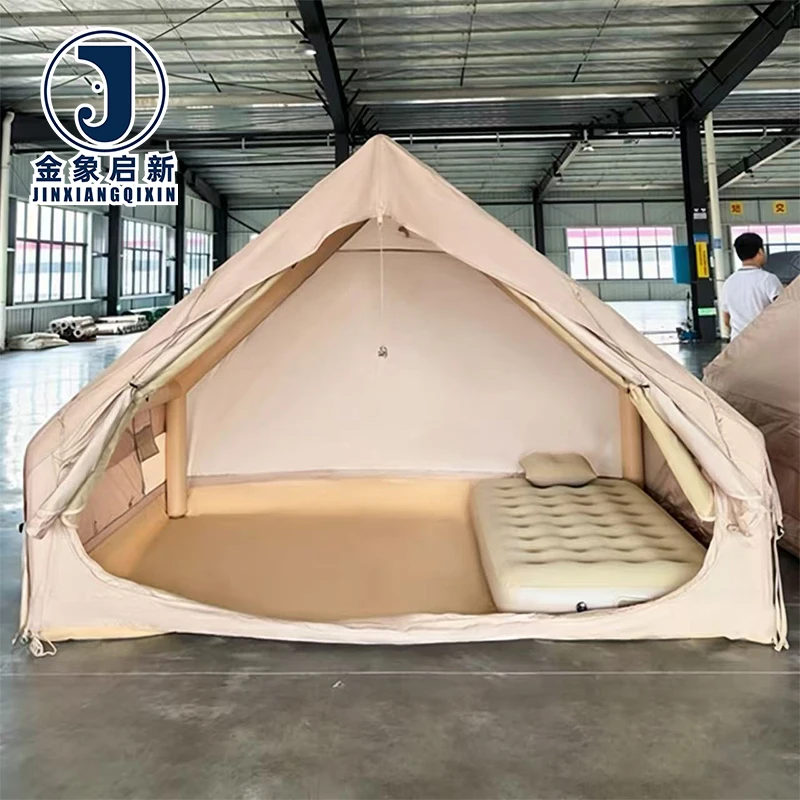
Coated Fabric Process Control — Deep expertise in PVC and Oxford coating weight and adhesion, ensuring batch-to-batch consistency across every industrial inflatable structure we produce.
Technical Specifications
| Parameter | Value |
|---|---|
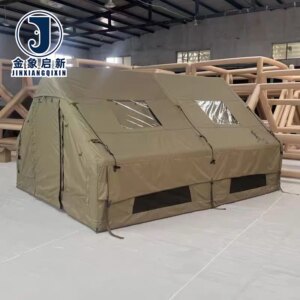
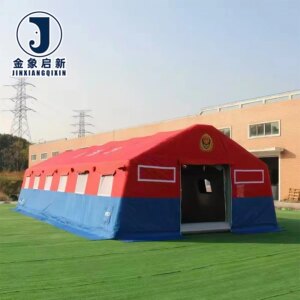
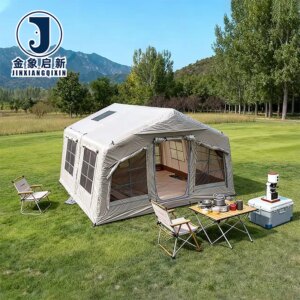
| Product Type | Inflatable Tent |
| Core Material | 420D Oxford |
| Capacity | 5-8 Person |
| Season Suitability | 4-Season |
| Opening Mechanism | Quick Automatic Opening |
| Construction Type | Single Layer |
| Design Type | Extended Type |
| Customization | OEM & ODM (Sample customization, pattern printing) |
| Standards | ISO9001, ISO14001, ISO45001, CE |
Application Suitability
| Application | Exposure & Requirement |
|---|---|
| Disaster Relief Staging | Rapid deployment, harsh weather, high visibility, certified fire safety |
| Mining & Tunnelling Shelters | Underground compliance, anti-static requirements, ventilation adjacency |
| Construction Site Command Posts | Abrasion resistance, temporary utility, frequent relocation |
| Emergency Response Facilities | Quick automatic opening, structural integrity under wind load |
What "Fire Retardant" Means Without a Grade Behind It
Generic inflatable tents often claim fire resistance without specifying the exact standard met, leaving industrial buyers exposed during site safety audits. Certified compliance requires batch-specific test reports, not just a catalog claim. When procurement teams specify an Inflatable Tent fire retardant / anti-static / certified, they need documentation that traces the fabric’s performance to the relevant regional or site-specific code. An unverified material claim can halt a mining operation or disqualify a disaster relief bid. [NEED_CITE: EN 13501-1 and DIN 4102 fire classification frameworks]
Structural Integrity Under Rapid Deployment Conditions
The 420D Oxford base fabric is selected for its tear resistance in field conditions where the inflatable structure must withstand handling, wind loading, and repeated inflation cycles. The quick automatic opening mechanism relies on the material’s ability to hold pressure without stretching excessively at the seams. This single-layer construction balances the need for lightweight portability with the structural demands of a 5-8 person capacity unit.
Compliance Documentation for Regulated Environments
For mining, aviation, and tunnelling applications, the Inflatable Tent fire retardant / anti-static / certified specification must align with site-specific safety protocols. The availability of ISO9001, ISO14001, and ISO45001 certifications alongside CE marking provides a baseline for audit trails. Technical buyers should request the material specification sheet confirming the base fabric denier, coating weight, and the specific flame-retardant or anti-static grade achieved. [NEED_CITE: ISO 1421 tensile and tear test methods for coated fabrics]
Understanding the 420D Oxford Weave and Coating Interaction
The denier of the base yarn and the weave density determine how well the fabric resists tear propagation once punctured. The 420D Oxford construction provides a substrate that, when combined with the appropriate coating weight, delivers the tensile strength needed for inflated beam or rib structures. The single-layer design simplifies the thermal welding process, as there is no inner lining to interfere with heat transfer at the seams. Proper coating adhesion is critical; if the coating delaminates under flexing, the air-holding integrity of the inflatable tubes is compromised. Buyers should verify that the coating method used provides sufficient peel strength for the intended inflation pressure and deployment frequency.
The Hidden Cost of Unverified Batch Documentation
When an inflatable structure arrives on a regulated site without the correct test reports, the entire deployment can be delayed while third-party testing is arranged. This is not merely a paperwork issue; using a fabric that lacks the required anti-static surface resistance in a mining environment poses a direct ignition risk. Similarly, a disaster relief organization receiving a batch with inconsistent flame-retardant treatment faces liability if the shelter is used in a public setting. The cost of re-procurement and project delay far exceeds the initial investment in a verified, documented supply chain. [NEED_CITE: surface resistivity testing methods for anti-static fabrics]
Why Source Inflatable Structure Fabric Here
Our 3 full production lines and 36 sets of professional processing equipment support the volume requirements of large-scale emergency response contracts and continuous industrial use. The 10-technician R&D team handles OEM pattern printing and custom sizing from initial sample development through to production approval. With nearly 30 years focused on coated fabric, our process control ensures that the 420D Oxford material meets the stated specification on every roll. A 100% pre-shipment inspection record is included with every dispatch, providing the verification that technical buyers and site safety officers require.
Documentation & Verification
- Material specification sheet stating base fabric denier, coating type, and weight.
- Test report for flame-retardant and anti-static grades where applicable, traceable by batch.
- ISO9001, ISO14001, ISO45001, and CE certificates available with shipment documentation.
- 100% pre-shipment inspection record included with every dispatch.
- Roll packing list and certificate of origin for customs clearance.
Fabrication, Handling & Storage
- Thermal welding parameters must be adjusted for the single-layer 420D Oxford coating weight to ensure seam integrity.
- Store rolls vertically in a cool, dry environment to prevent permanent creasing of the Oxford base fabric.
- Avoid dragging the material across abrasive surfaces during deployment to protect the coating layer.
- Clean with mild, non-solvent detergents to preserve any applied flame-retardant or anti-static treatment.
- Inspect welded seams at high-stress flex points before each inflation cycle.
Specifying Your Inflatable Structure Requirements
To ensure the fabric meets your operational and compliance needs, please specify the target market’s fire safety or anti-static codes, the required dimensions for the inflatable tubes or panels, and the intended deployment environment. If OEM pattern printing or specific branding is required, providing artwork files at the inquiry stage allows for accurate sample development. Confirm whether you require roll stock for in-house fabrication or finished, cut-to-size components.
Frequently Asked Questions
Q: What flame-retardant standard does the inflatable tent fabric meet for mining or aviation site compliance?
A: We supply Inflatable Tent fire retardant / anti-static / certified fabrics in grades suitable for industrial applications. The specific standard met (e.g., M2, B1, NFPA 701) depends on the treatment applied to the batch. You must specify the code required by your site safety officer, and we will provide the corresponding test report with your shipment.
Q: Is anti-static treatment available with surface resistance documentation for underground use?
A: Yes, anti-static treatment is available for 420D Oxford fabrics intended for hazardous environments. We can provide surface resistivity test data for the specific batch produced. Buyers must confirm the acceptable resistance range for their underground or explosive atmosphere regulations before production begins.
Q: What is the minimum order and lead time for custom-sized inflatable tents with OEM pattern printing?
A: Minimum order quantities and lead times vary based on the complexity of the custom size, the specific 420D Oxford treatment grade required, and the print pattern. Sample development for custom OEM printing typically takes a few days for approval before mass production scheduling is confirmed.
Q: How is the 420D Oxford fabric weight verified at shipment, and what documentation accompanies each batch?
A: Each roll undergoes inspection where the coating weight and base fabric specification are verified against the order requirements. A pre-shipment inspection record, material specification sheet, and relevant test reports are compiled and shipped with the documentation package for your audit trail.
Q: Are welded seams reinforced at high-stress flex points, and what testing validates seam integrity?
A: The single-layer 420D Oxford construction is welded using parameters optimized for its coating type. High-stress areas, such as tube junctions and valve mounts, require specific fabrication techniques. We recommend reviewing our fabrication guidelines and conducting peel tests on sample seams to validate the welding parameters for your specific production line.