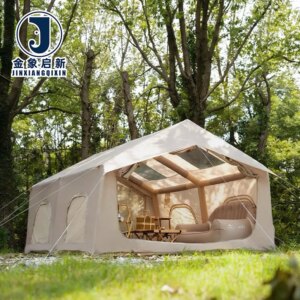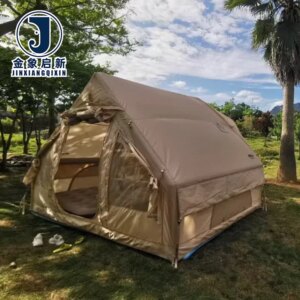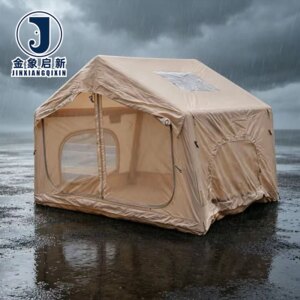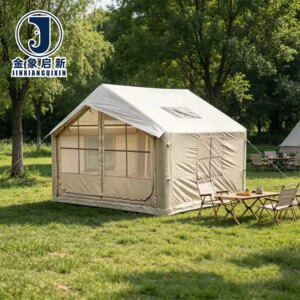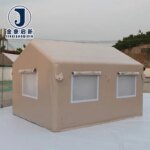
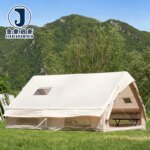
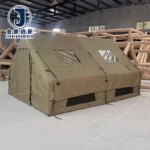
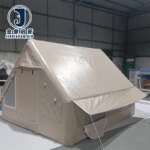
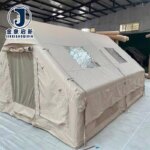
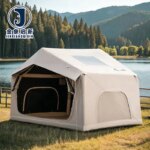
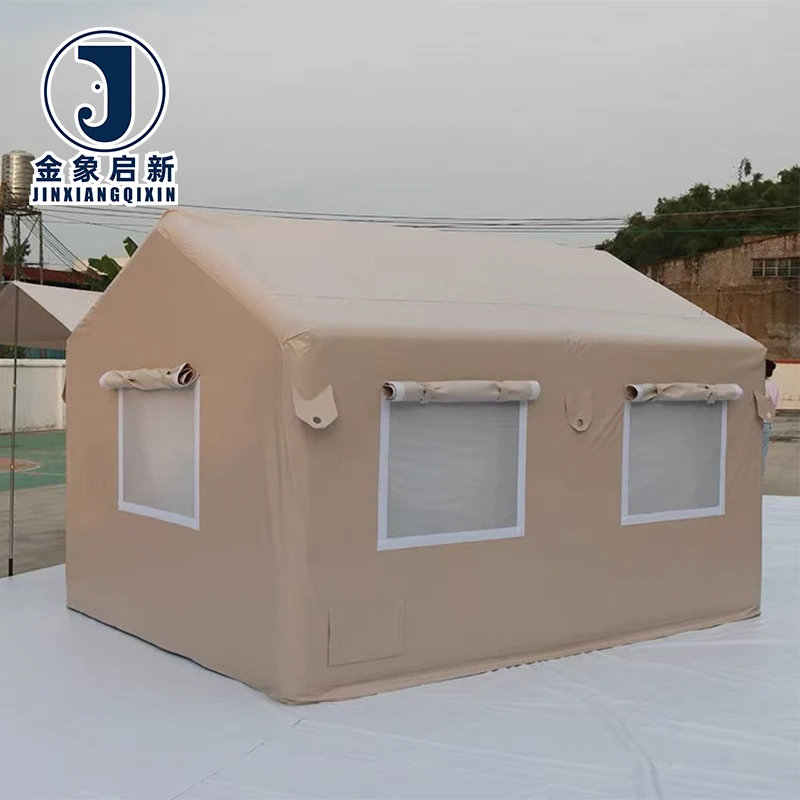
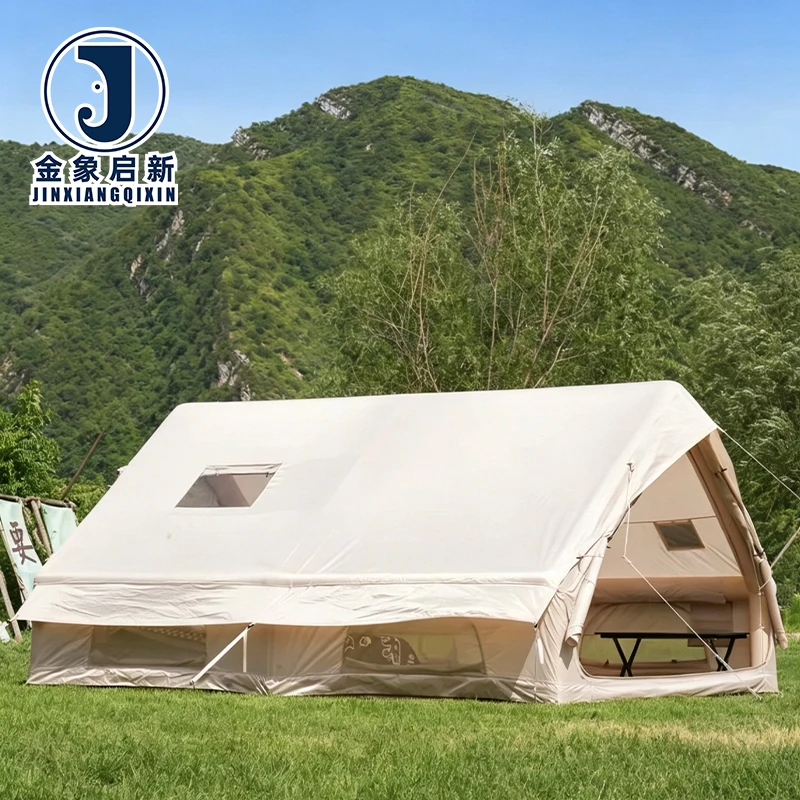
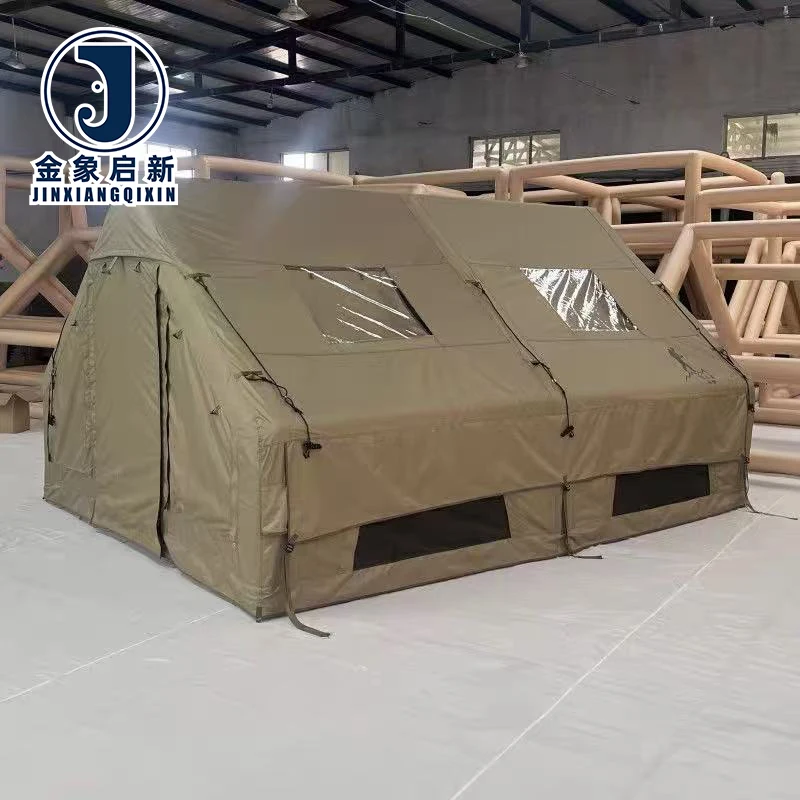
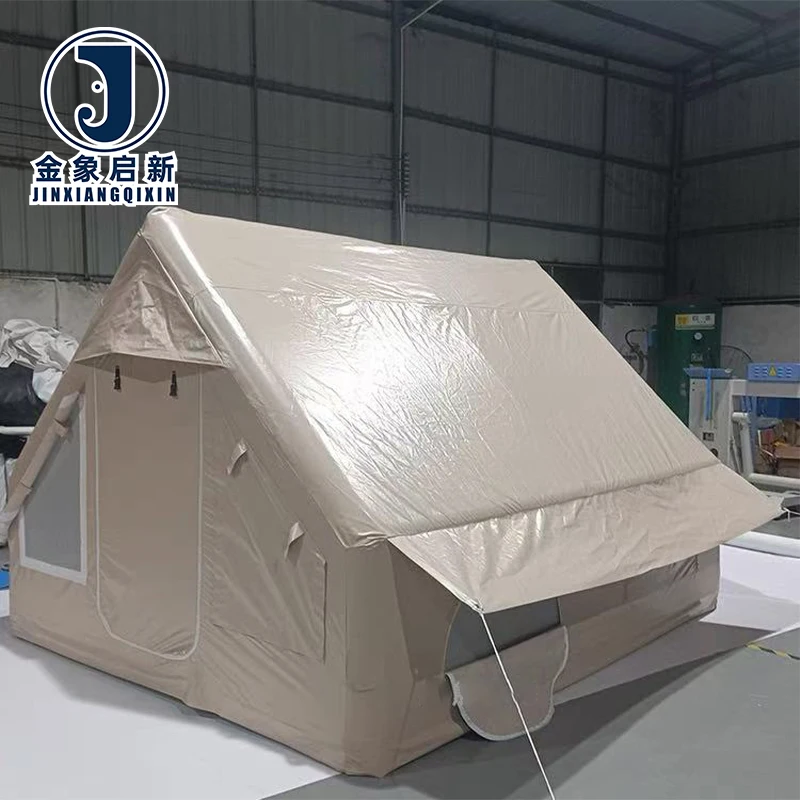
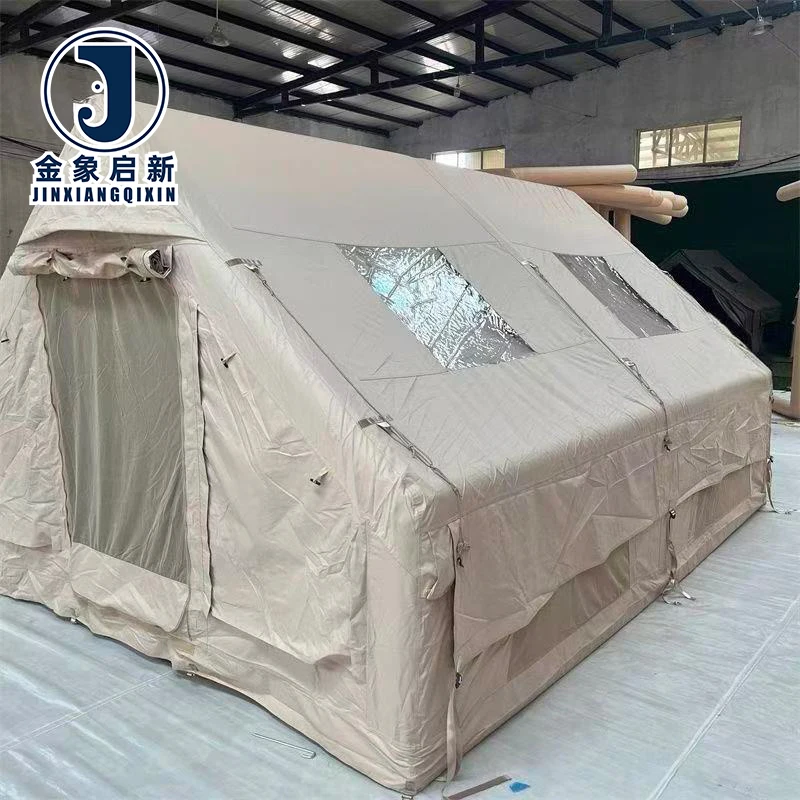
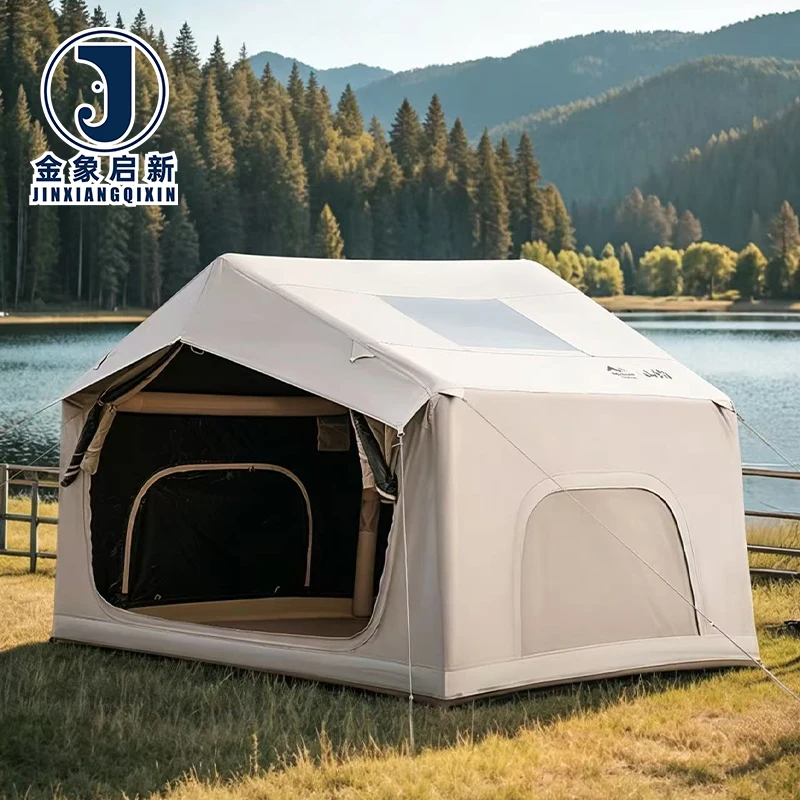
Proven Process Control — Three dedicated production lines handle this PVC inflatable shelter from coating through final inspection, maintaining consistency across every batch ordered for site deployment.
Technical Specifications
| Parameter | Value |
|---|---|
| Product Type | Inflatable Tent |
| Core Material | PVC Tarpaulin |
| Capacity | 6-8 persons |
| Deployment Feature | Quick Automatic Opening |
| Design Configuration | Four-Season, Single Layer Construction, Extended Type |
| Waterproof | Fully waterproof coated construction |
| UV Treatment | UV-resistant (test basis not stated in source — confirm the standard required for your region) |
| Tear Resistance | Tear-resistant (grade not stated in source — request test report to verify) |
| Flame Retardant | Available in flame retardant grades — confirm the grade required for your market |
| Anti-Static | Anti-static grades available upon confirmation of site compliance requirements |
| Customization Scope | OEM & ODM covering material selection, design, pattern printing |
| Standards Held | ISO 9001, ISO 14001, ISO 45001, CE |
Application Suitability
| Application | Exposure & Requirement |
|---|---|
| Temporary site offices during infrastructure projects | Continuous UV exposure, wind load, repeated inflation cycles, foot traffic abrasion at entry points |
| Emergency response command centers for disaster recovery | Rapid deployment demand, all-weather waterproofing, visibility and branding for multi-agency coordination |
| Equipment storage facilities in remote construction areas | Prolonged sun exposure, dust ingress prevention, tear resistance against sharp equipment contact |
| Temporary warehousing for logistics hubs | Large-volume coverage, wind stability, four-season thermal fluctuation tolerance |
Why "Certified" Inflatable Shelter Fabric Matters More Than Price Per Roll
Documentation closes the compliance gap that uncertified suppliers leave wide open.
Emergency shelter procurement often collapses at the inspection stage when the fire-retardant or anti-static certificate the site safety officer demands does not arrive with the shipment. Inflatable Fabric fire retardant requirements vary sharply between jurisdictions — a grade accepted at one mine site may fail the audit at another [NEED_CITE: fire classification standards for temporary industrial structures across different regions]. Without a verifiable test report tied to the specific batch, the entire deployment faces rejection.
Quick Automatic Opening for Time-Critical Deployment
The quick automatic opening mechanism embedded in this Inflatable Tent design removes the manual labour bottleneck that delays site setup during emergency mobilisation. When disaster recovery teams arrive at a location, every minute spent wrestling with poles and guy ropes reduces operational capacity. The inflation-based structure rises under air pressure alone, requiring only a blower connection and minimal ground anchoring.
Four-Season Single Layer Construction Under Environmental Stress
This extended type shelter operates across seasonal temperature swings without requiring an inner lining or secondary membrane. The single layer PVC tarpaulin construction keeps packed weight and transport volume manageable while the waterproof coating prevents rain ingress during prolonged outdoor standing. Site managers deploying these units in remote construction areas benefit from the reduced logistics footprint — fewer components mean fewer failure points and less inventory to track [NEED_CITE: performance variables for single versus double layer inflatable structures in field conditions].
What the Material Specifications Mean in Practice
The PVC tarpaulin core provides the structural membrane that must hold internal air pressure against external wind loads simultaneously. Tear resistance determines whether a small puncture from site debris propagates into a full panel failure or remains a localised repair. Waterproofing at the coating level ensures that hydrostatic pressure from driving rain does not force moisture through the fabric body, keeping the interior operational for command centre electronics and medical equipment. UV-resistant treatment, when verified by a recognised test standard, governs how long the fabric retains tensile integrity under direct sun before surface chalking and embrittlement begin.
The Cost of Skipping Pre-Shipment Material Verification
When the flame retardant grade stated on the quotation does not match the certificate delivered with the goods, the shelter may pass initial setup but fail the safety audit conducted weeks later. At that point the structure is already anchored, equipped and staffed — making replacement a far greater disruption than the initial procurement delay would have been. Similarly, tear resistance that was never tested against a stated standard leaves the buyer discovering weakness only when high winds hit a deployed unit [NEED_CITE: documented failures of temporary shelters due to unverified material properties]. Batch-to-batch consistency in coating weight also matters when a site orders multiple shelters months apart — visible colour variation or differing stiffness between units signals a process that lacks control.
What You Receive Beyond the Fabric Itself
A 10-person R&D team handles material selection and pattern printing customisation specific to your project identity and operational marking requirements. Full-process inspection with dedicated QA and QC staff at every production stage means the material leaving the facility has been checked against the stated specification before packing. Three full production lines and 36 sets of processing equipment support the volume demands of multi-unit procurement without extending lead times beyond reasonable boundaries. The OEM and ODM capability extends beyond basic sizing — design modifications covering ventilation port placement, access panel configuration and anchoring point reinforcement are addressed during the sample development phase. Certification to ISO 9001, ISO 14001, ISO 45001 and CE standards provides the documentation trail that procurement departments and site safety officers require before approving deployment.
Documentation & Verification
- Material specification sheet detailing PVC tarpaulin base fabric, coating weight and colour reference for this shelter
- Test report confirming UV-resistant and flame retardant grades where applicable to the order
- ISO and CE certificates matching the production batch and product category
- Pre-shipment inspection record verifying dimensions, inflation chamber integrity and seam quality
- Roll and finished unit packing list for customs and receiving verification
Fabrication, Handling & Storage
- Heat welding parameters must match the PVC tarpaulin coating thickness to prevent seam failure under inflation pressure
- Store the deflated shelter flat or loosely rolled to avoid permanent crease marks in the single layer membrane
- Inspect all anchoring attachment points after each deployment cycle for abrasion damage to the coated surface
- Use only PVC-compatible cleaning agents to preserve the waterproof coating and UV-resistant treatment layer
- Allow the four-season fabric to reach ambient temperature before inflation if stored in cold conditions
What to Specify When Requesting a Quotation
Provide the intended application environment, expected wind load conditions and any fire-retardant or anti-static grades your site safety protocol mandates. Specify whether the Inflatable Tent requires custom dimensions, printed identification markings or standard configuration. Indicate the quantity needed per shipment and whether ongoing batch supply for multi-site rollout is anticipated, as this affects production scheduling and sample approval sequencing.
Frequently Asked Questions
Q: What fire-retardant grade can be supplied for this inflatable shelter?
A: The shelter is available in flame retardant grades matched to your market requirements. Because compliance standards differ between mining, aviation and emergency response sectors, we confirm the specific grade needed during the inquiry stage and provide a corresponding test report with the shipment documentation.
Q: How does the automatic opening system function during field deployment?
A: The quick automatic opening feature relies on a connected blower unit that pressurises the internal air chambers within the PVC tarpaulin structure. The shelter rises to full dimensions without manual pole assembly, allowing a small team to complete setup rapidly once ground anchoring points are established.
Q: Can dimensions and markings be customised for specific project identification?
A: OEM and ODM customisation covers material selection, structural design adjustments and pattern printing. We develop samples reflecting your specified dimensions, colour references and identification markings before proceeding to production, ensuring the finished shelter matches operational and branding requirements.
Q: What documentation accompanies the shipment for import and compliance?
A: Each order ships with a material specification sheet, applicable test reports for UV and flame retardant performance, ISO and CE certificates, a pre-shipment inspection record and a detailed packing list. This package supports both customs clearance and on-site safety verification procedures.
Q: How is consistency maintained when ordering multiple shelters across different batches?
A: Dedicated QA and QC staff conduct inspections at every production stage, comparing coating weight, colour reference and dimensional accuracy against the approved sample. Pre-shipment records document these checks, providing traceability across separate orders placed over extended project timelines.