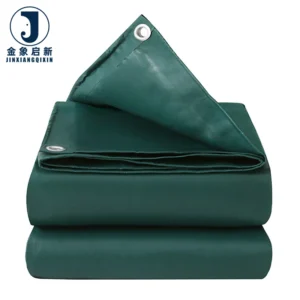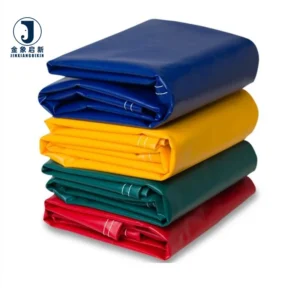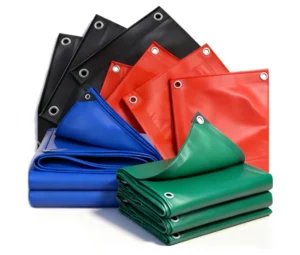
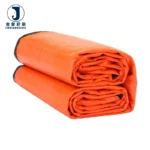
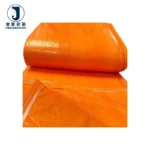
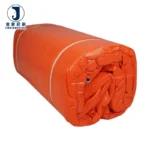
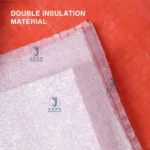
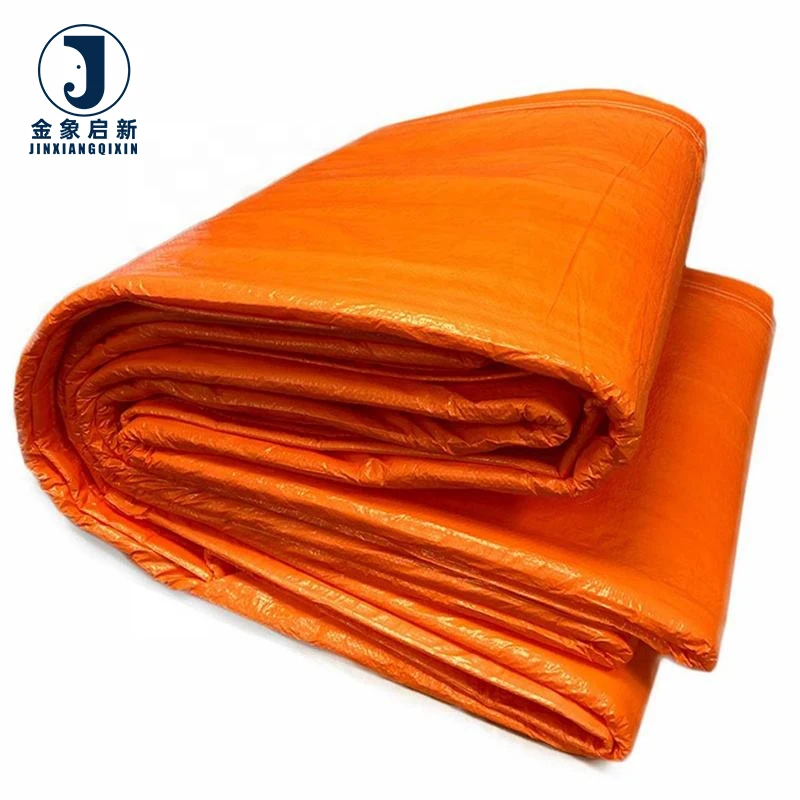
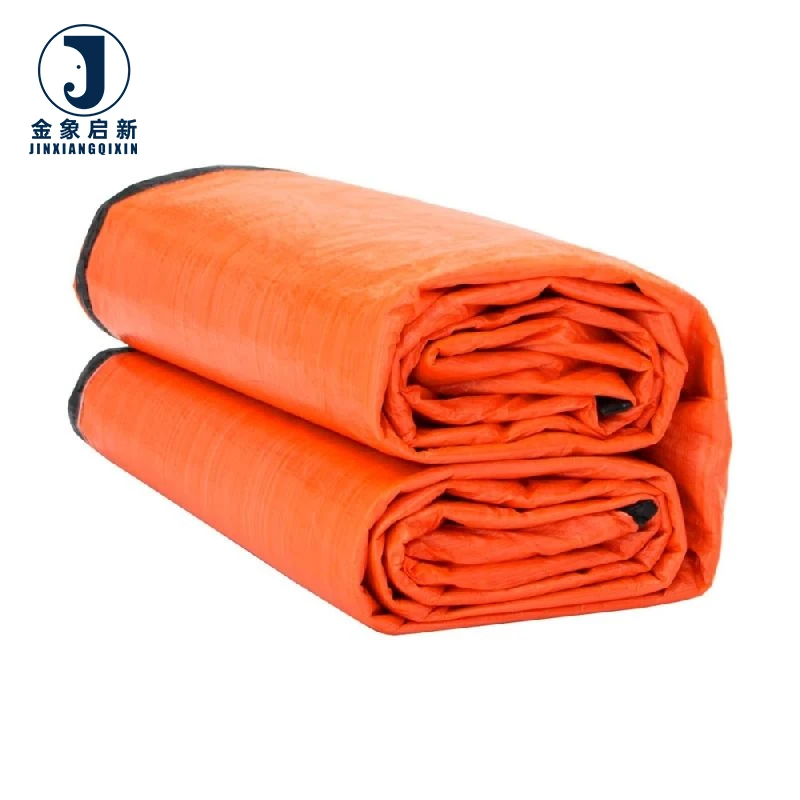
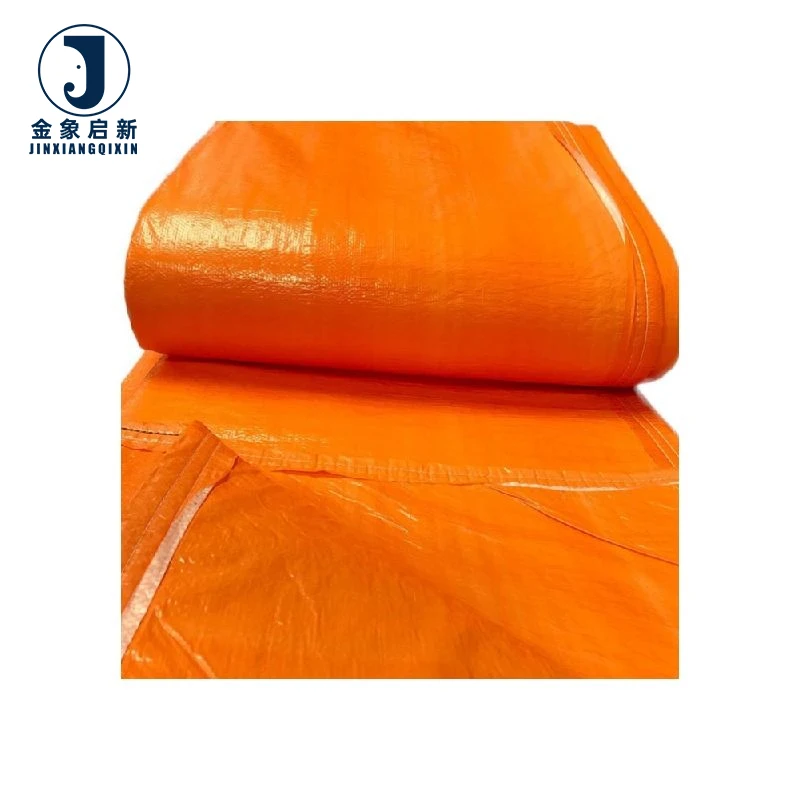
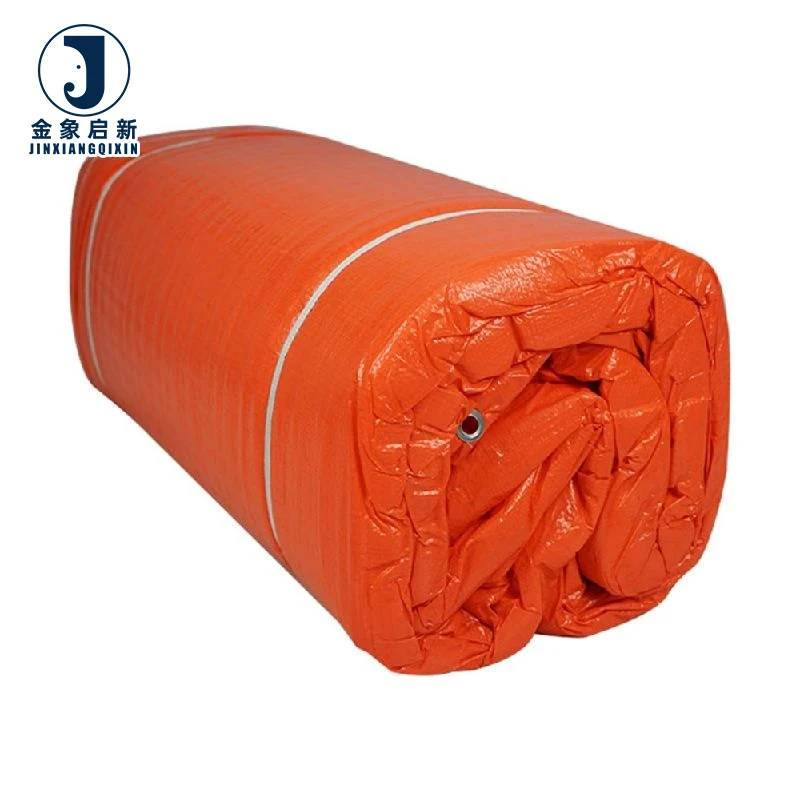
Deep Process Control Over Coating Weight — Every insulated tarpaulin we produce undergoes 100% inspection at each coating and lamination stage, ensuring the closed-cell PE foam core maintains consistent thermal performance across every blanket shipped to your site.
Technical Specifications
| Parameter | Value |
|---|---|
| Product Type | Insulated Tarpaulin |
| Dimensions | 6ftx24ft, 8ftx25ft, 12ftx20ft, 12ftx24ft |
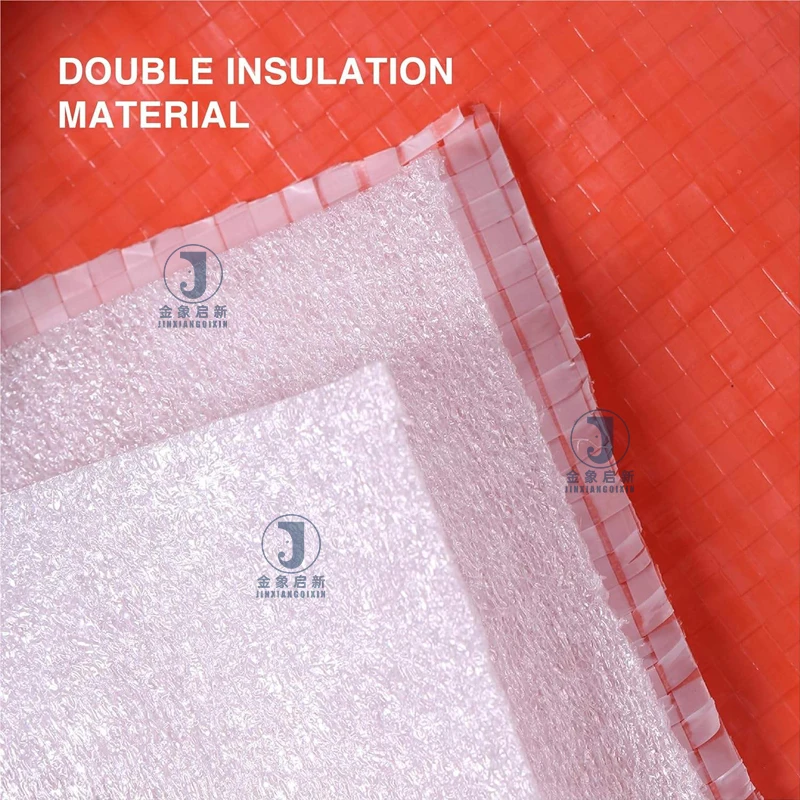
| Core Structure | PE cloth + closed cell PE foam core + PE cloth |
| Thickness Options | 2x2mm, 3×1.5mm, 1x4mm, 5mm, 6mm, 8mm, 12mm |
| Grommet Configuration | Aluminum holes, hole distance 61cm and 91.5cm |
| Color Options | Orange, Black, White, Silver, Customized color |
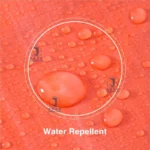
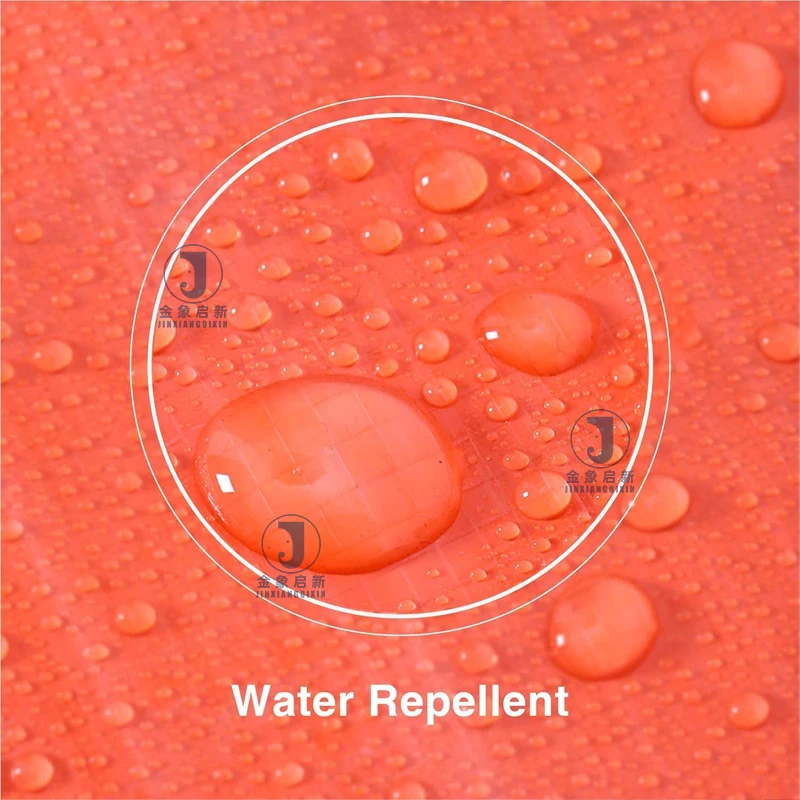
| Surface Property | Waterproof, mildew resistant |
| Edge Treatment | Reinforcement stitch, rust-proof brass grommets |
| UV Treatment | (test basis not stated in source — confirm grade required) |
| Flame Retardant | (grade not stated in source — verify certification for heated enclosures) |
Application Suitability
| Application | Exposure & Requirement |
|---|---|
| Concrete curing in winter pours | Ground contact, sub-zero ambient temperatures, sustained moisture exposure, thermal retention demand |
| Heated temporary enclosures | Internal radiant heat, positive pressure from heaters, repeated installation and takedown cycles |
| Vertical wind blocks on scaffold | Lateral wind load, abrasion against scaffold tubes, grommet pull-through stress |
| Equipment and pipe insulation wrap | Contact with metal surfaces, condensation, requirement to prevent freeze damage |
Why Thickness Claims Fail When the Foam Core Density Is Not Verified
A thicker insulated concrete curing blanket does not guarantee better thermal performance if the closed-cell foam density varies from batch to batch.
When site managers order insulation blankets for heated enclosures, they often specify the overall thickness in millimetres without verifying the cell structure of the core. A blanket measured at 8mm on the warehouse table can compress to half that thickness once it is hung vertically against a scaffold frame, because the closed cells are collapsing under their own weight or under wind pressure. The result is a heated enclosure that loses temperature faster than the heating equipment can compensate, forcing the contractor to run heaters continuously and burn through fuel budgets. We have seen insulated concrete curing blanket installations where thermal loss was blamed on the heaters, when in reality the foam core was inconsistent across the batch [NEED_CITE: thermal compression behaviour of closed-cell PE foam under sustained load].
How the Three-Layer PE Construction Retains Heat on Active Sites
The insulated concrete curing blanket relies on a specific sandwich structure: a PE cloth outer face, a closed-cell PE foam core, and a PE cloth back face. This configuration traps still air within the foam cells, creating a thermal barrier that slows heat transfer between the heated interior and the cold exterior. The waterproof PE cloth layers on both sides protect the foam from moisture ingress, which would otherwise degrade insulation performance over time when the blanket is used in rain or snow exposure.
Grommet Spacing and Wind Load on Vertical Enclosures
When the insulated tarpaulin is hung vertically as a wind block or enclosure wall, the aluminum grommets spaced at 61cm and 91.5cm intervals distribute the tie-down load across the hem. This spacing prevents localized stress concentrations that would otherwise tear the PE cloth at the attachment point during gusting conditions. The reinforcement stitch along all finished edges works in conjunction with the rust-proof brass grommets to maintain structural integrity when the blanket is subjected to sustained lateral wind pressure on exposed construction sites [NEED_CITE: wind load distribution across grommet-reinforced tarpaulin edges].
Reading the Thickness Options for Your Temperature Range
The available thickness range from 1x4mm to 12mm corresponds to different thermal resistance requirements. Thinner profiles such as 2x2mm or 3×1.5mm serve applications where moderate temperature differentials exist, such as frost protection over freshly poured slabs in above-zero daytime conditions. The heavier options at 8mm and 12mm address situations where the enclosure must hold elevated temperatures against sustained sub-zero ambient air. The choice depends not on a single number but on the relationship between the heater output, the enclosure volume, and the lowest expected overnight temperature.
The Hidden Cost of Ignoring Batch Consistency in Foam Core Density
When multiple insulated concrete curing blankets are installed side by side across a large enclosure, variation in foam density between rolls becomes visible through uneven heat retention. Some sections of the enclosure wall will feel warm to the touch while adjacent panels remain cold, indicating that the foam core in those panels has compressed or degraded during transit. This inconsistency forces the contractor to add supplementary heating to the weakest sections, increasing fuel consumption and delaying the concrete curing schedule. We have documented cases where an entire heated enclosure had to be re-skinned because the insulation value dropped below the engineer’s specification after the first week of use [NEED_CITE: thermal performance variability in multi-panel insulated enclosure systems].
What Our Production Process Brings to Your Insulation Blanket Order
Our three full production lines handle the lamination of PE cloth to closed-cell PE foam with dedicated tension control, preventing the delamination that causes insulation failure at the edges. The 10-person R&D team develops custom sizes and colour matches for site-specific branding requirements, with sample approval before bulk production begins. Every roll undergoes 100% pre-shipment inspection where grommet spacing is measured against the 61cm and 91.5cm specification, and edge stitching is checked for skipped stitches that would unravel under load. We maintain dedicated QA at each production stage, from foam core extrusion through to final cutting and packing. Samples for custom dimensions and colours are developed within days, allowing site managers to verify fitment and thermal performance before committing to full order quantities.
Documentation & Verification
- Material specification sheet stating PE cloth grade, foam core thickness, and lamination method for each blanket size ordered
- Pre-shipment inspection record confirming grommet spacing at 61cm and 91.5cm intervals and reinforcement stitch count per linear metre
- Test report for UV treatment and flame retardant grade where applicable to your local building code requirements
- Colour reference sample retained against production batch to verify consistency across multiple blanket shipments
- Roll packing list detailing dimensions, thickness, and grommet configuration for each unit in the consignment
Fabrication, Handling & Storage
- Heat-sealing parameters must account for the closed-cell PE foam core thickness to achieve full seam adhesion without crushing the insulation layer.
- Store rolled blankets horizontally on pallets to prevent permanent compression marks that reduce thermal performance at the fold lines.
- Avoid dragging the PE cloth surface across abrasive concrete surfaces during installation to preserve waterproof integrity.
- Clean with mild detergent and soft brush only; solvent-based cleaners may degrade the PE surface and compromise mildew resistance.
- Field repairs to torn edges require PE-compatible adhesive tape applied to both faces to maintain the moisture barrier.
Preparing Your Insulated Tarpaulin Inquiry
To specify the correct insulated concrete curing blanket for your project, provide the lowest expected ambient temperature, the heater output capacity, and the enclosure dimensions so we can recommend the appropriate foam core thickness. If your site requires flame retardant certification for heated structures, state the standard required by your local authority. Confirm whether you need standard sizes from the available range or custom dimensions, and whether colour coding is required for different zones on your site.
Frequently Asked Questions
Q: How is the insulation performance of the closed-cell PE foam core verified before shipment?
A: Each production batch is sampled for thickness measurement and compression recovery testing. The QA team records the foam core density and compares it against the specification sheet for the ordered thickness. Pre-shipment inspection includes a visual check for delamination between the PE cloth and foam layers, ensuring the thermal barrier remains intact across the entire blanket surface.
Q: What flame-retardant grade is available for heated enclosure applications?
A: Insulated tarpaulins can be produced with flame retardant treatments appropriate to your market requirements. The specific grade must be confirmed at inquiry stage, as different jurisdictions require different certifications for materials used inside heated temporary structures. Request the test report that corresponds to your local building code before approving the production sample.
Q: Can custom sizes beyond the listed options be produced, and what is the sample lead time?
A: Custom dimensions are developed based on your site enclosure drawings. The R&D team produces a sample blanket for fitment verification and thermal performance confirmation before bulk production is scheduled. Sample development is completed within days of specification approval, allowing you to test the insulated concrete curing blanket in actual site conditions before committing to the full order.
Q: How is batch colour consistency maintained across multiple blankets for the same site?
A: Colour reference samples are retained from the approved production sample and compared against each blanket during the final inspection. The PE cloth is sourced from controlled dye lots to minimize variation between panels. If your installation places blankets side by side on a visible enclosure wall, we can arrange for all panels to be cut from the same production run to ensure visual uniformity.
Q: What documentation confirms the UV treatment and waterproof performance?
A: The material specification sheet lists the UV treatment type and the waterproof rating of the PE cloth surface. Where UV test reports are applicable to your project specification, these are included in the documentation package. Request the specific test standard required by your engineer at the inquiry stage so the correct documentation is prepared alongside your order.