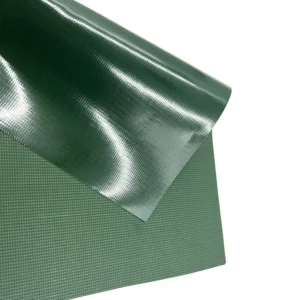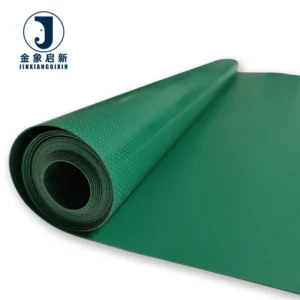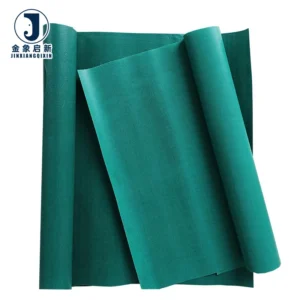
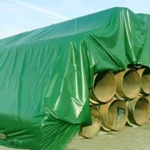
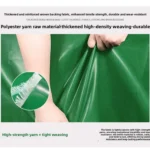
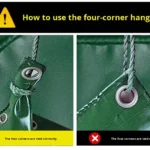
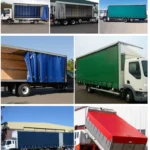
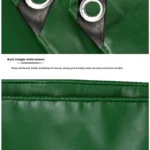
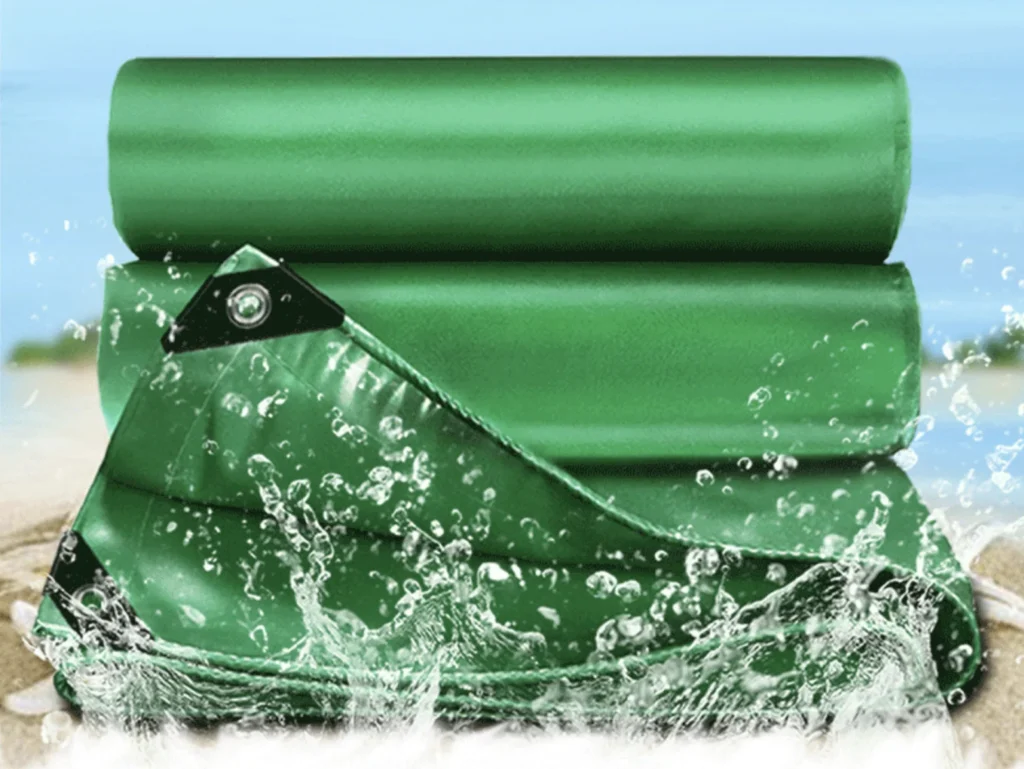
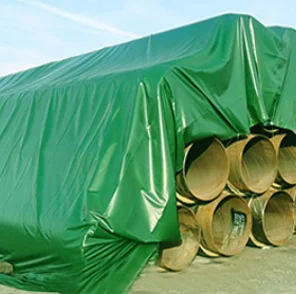
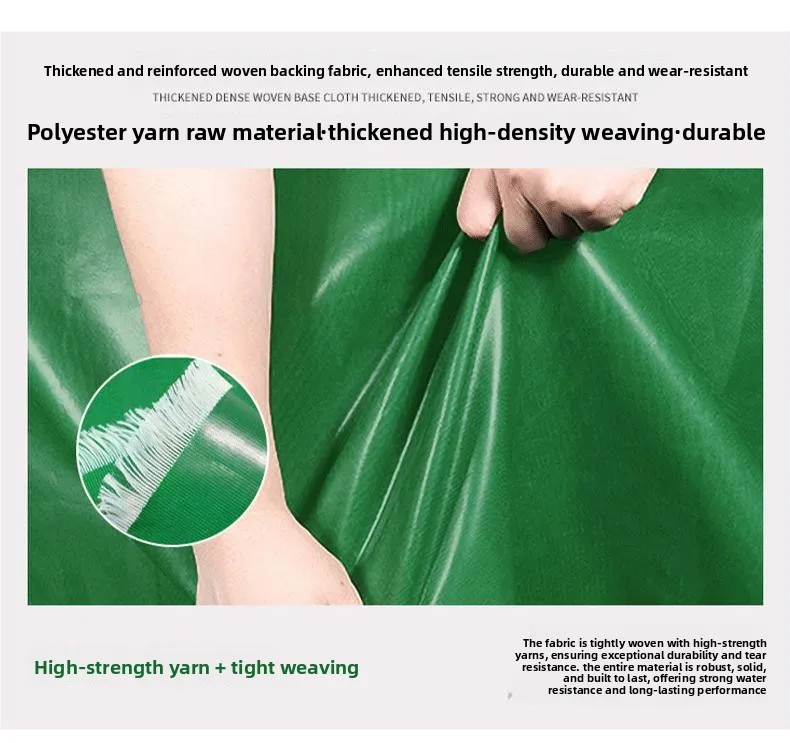
Process-Controlled Coating — every roll of knife coated tarpaulin passes dedicated QA/QC at each production stage, ensuring consistent coating adhesion and weight across the full batch for structural membrane and duct applications.
Technical Specifications
| Parameter | Value |
|---|---|
| Product Type | PVC Coated Tarpaulin |
| Coating Method | Knife coated |
| Coating Material | PVC |
| Fire Retardant | Available in flame retardant grades — confirm the grade required for your market (e.g., M2, B1, NFPA 701) |
| UV Treatment | Available with UV stabilisation — request test report at inquiry stage |
| Anti-Mildew | Mildew proof formulation |
| Antibacterial | Yes |
| Oil & Stain Resistance | Yes |
| Acid & Alkali Resistance | Yes |
| Temperature Resistance | High temperature and cold resistant (confirm range for project site) |
| Anti-Oxidation | Yes |
| Weather Resistance | Yes |
| Flexibility | Highly flexible, resistant to cracking |
| Surface Finish | Self-cleaning surface |
| Welding Compatibility | HF welding, hot air welding, sewing |
Application Suitability
| Application | Exposure & Requirement |
|---|---|
| Tensile membrane structures | Constant pre-stress tension, cyclic wind loading, UV exposure, weld seam integrity under load |
| Airport hangar enclosures | Fuel and hydraulic fluid exposure, wind-driven rain, fire code compliance, large-span span |
| Stadium architectural roofs | Permanent outdoor UV, thermal expansion and contraction, fire safety for public assembly venues |
| Portable storage structures | Repeated assembly and disassembly, abrasion at frame contact points, weather sealing |
| Shade systems and shadings | Direct solar radiation, wind uplift forces, colour consistency across adjacent panels |
| Mining ventilation ducts | Fire-retardant and anti-static certification, airborne particulate abrasion, flex fatigue |
Why "Fire Retardant" Without a Certified Grade Is a Project Risk
Specifying a knife coated tarpaulin as simply "fire retardant" without naming the test standard leaves compliance verification to chance at the job site.
Architectural membranes and industrial ventilation ducts must meet local fire codes — B1 per DIN 4102, M2 in certain European jurisdictions, or NFPA 701 for North American temporary structures. A material certificate that only says "flame retardant" without referencing the test method and classification provides no basis for building inspector sign-off. I have seen entire duct installations rejected at commissioning because the fabric supplier provided a generic certificate rather than the grade-specific test report the engineer specified [NEED_CITE: DIN 4102 fire classification for building materials].
The remedy is straightforward: state the required grade on the inquiry, obtain the matching test report before sample approval, and keep that documentation on file for inspection.
Coating Method and Structural Integrity
Knife coated PVC construction deposits a controlled PVC layer directly onto the base fabric, building coating weight in a single pass or through successive layers. This method produces a smooth, uniform surface on both sides of the fabric and creates strong mechanical adhesion between the coating and the yarn. For tensile structures and ventilation ducts, that adhesion determines whether the coating delaminates at the weld line when the material flexes under load — a failure mode that ends a project’s service life well before the base fabric itself reaches its limit.
Welding Compatibility Across Fabrication Methods
This knife coated tarpaulin supports high-frequency welding, hot air welding, and industrial sewing. HF welding produces the strongest and most consistent seam for PVC-coated fabrics because it fuses the coating layers at the molecular level, creating a joint that is often stronger than the parent material. Hot air welding suits curved seams and field repairs on duct or membrane installations. Sewing remains the choice for applications requiring mechanical fastening or where the fabric must be disassembled and reassembled, such as portable storage structures [NEED_CITE: tensile and tear test methods for coated fabrics per ISO 1421].
How Coating Weight and Base Fabric Work Together
The tensile and tear performance of any PVC knife coated fabric depends on the interaction between coating weight and base fabric construction — neither value alone predicts field behaviour. The base fabric’s denier and weave density govern tensile strength and tear propagation resistance, while the coating weight adds puncture resistance, UV shielding, and weld-seam integrity. A lighter coating on a dense base fabric may outperform a heavier coating on a loose weave in tear resistance. When evaluating material for architectural membranes or duct applications, request the full specification sheet showing base fabric denier, weave count, and coating weight rather than relying on GSM alone. The self-cleaning surface formulation further reduces particulate buildup that can accelerate coating degradation under prolonged UV exposure [NEED_CITE: relationship between base fabric density and tear resistance in coated technical textiles].
The Hidden Cost of Unverified Material Claims
When anti-UV or flame-retardant treatment is claimed on a quotation without a corresponding test report, the risk surfaces at the worst possible moment — during building inspection, mine safety audit, or after months of outdoor exposure when premature colour fading or coating breakdown appears. Welded seams that fail before the fabric body do typically trace back to either a coating formulation incompatible with the specified welding method or a coating adhesion value too low for the cyclic stress at that joint. Batch-to-batch colour variation becomes visible the moment two adjacent panels are tensioned side by side on a stadium canopy or shade structure, forcing either a costly panel replacement or a compromised visual result that the end client rejects [NEED_CITE: common causes of weld failure in PVC coated architectural fabrics].
Why Source This Knife Coated Tarpaulin Here
Deep process control over coating weight and adhesion comes from nearly three decades focused exclusively on coated fabric manufacturing, giving the production team the experience to hold tight tolerances across long production runs.
Three full production lines and 36 sets of professional equipment provide the capacity to fulfil large duct and membrane orders with reliable on-time delivery rather than extended back-order periods.
A dedicated 10-person R&D team handles material selection, custom colour matching, and sample development — typically delivering project-specific samples within days so you can confirm weld parameters and colour before committing to bulk.
Dedicated QA/QC at every production stage with 100% pre-shipment inspection means every roll is checked for coating weight consistency, colour uniformity, and surface defects before it leaves the facility.
Full documentation accompanies each dispatch, including material specification sheets and test reports, so your compliance file is ready before the material arrives on site.
Documentation & Verification
- Material specification sheet stating coating method, base fabric denier, GSM, and coating weight per roll
- Fire-retardant test report matched to your target standard (M2, B1, NFPA 701, DIN 4102) — confirm grade at inquiry
- UV stabilisation test documentation available upon request for architectural and outdoor membrane projects
- Pre-shipment inspection record with coating weight and colour consistency verification
- ISO and CE certificates included with every dispatch for international compliance files
Fabrication, Handling & Storage
- HF welding parameters must be tuned to the knife coated PVC layer thickness; test on scrap before production runs
- Hot air welding suits field repairs and curved duct seams; confirm temperature and speed settings on this self-cleaning surface
- Store rolls upright on end cores to prevent flat-spot creasing that affects tension uniformity during membrane installation
- Allow cold-stored rolls to reach ambient temperature before unrolling to avoid coating cracking at low flexibility
- Clean the self-cleaning surface with mild detergent only; solvent-based cleaners can compromise the coating finish
- Plan cutting layouts to minimise offcuts and place weld seams away from highest-stress tension points
Starting Your Enquiry
To receive an accurate specification recommendation and sample, share the application type, the fire-retardant or anti-static grade your local code requires, the roll width and approximate annual volume, and whether you need the material in roll form or as pre-cut panels. Colour references or Pantone codes help the R&D team prepare a matched sample. If your project demands anti-static performance for mining ventilation, state the target surface resistance value so the correct treatment formulation is selected from the outset.
Frequently Asked Questions
Q: Which fire-retardant grades are available for architectural membrane and duct applications?
A: The knife coated tarpaulin can be produced with flame-retardant treatments aligned to standards including M2, B1 per DIN 4102, and NFPA 701. State the specific grade required by your building code or mine safety regulation at the inquiry stage so the correct formulation is applied and the matching test report is prepared with your sample.
Q: What anti-static surface resistance values can be achieved for mining ventilation ducts?
A: Anti-static treatment is available for this PVC knife coated fabric to meet mining and tunnelling ventilation requirements. Provide the target surface resistance value specified by your project’s safety standard at the inquiry stage so the R&D team can formulate and test accordingly before bulk production.
Q: How should I choose between HF welding, hot air welding, and sewing for membrane fabrication?
A: HF welding produces the strongest and most consistent seam for factory fabrication of tensile membranes and ducts. Hot air welding is preferred for on-site repairs and curved seams. Sewing is suitable where panels must be disassembled or where mechanical fasteners are required. Request a sample to validate your chosen method before committing to full production.
Q: How do I verify UV treatment performance for long-term outdoor architectural installations?
A: Request the UV test report at the inquiry stage, specifying the test method and exposure duration relevant to your climate zone. The report documents performance data for the knife coated tarpaulin batch, allowing your engineer to confirm the material meets the project specification before approval and procurement.
Q: What roll widths and minimum order quantities apply to custom duct and structure projects?
A: Roll width, length, and minimum order depend on the specific colour, treatment grade, and width you require. Share your project dimensions and annual volume at inquiry so the team can confirm available widths, lead time, and any tooling requirements for non-standard specifications.