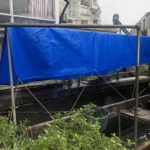
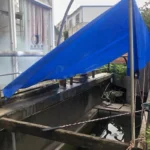
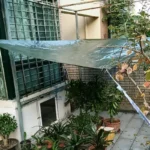


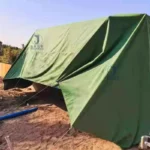
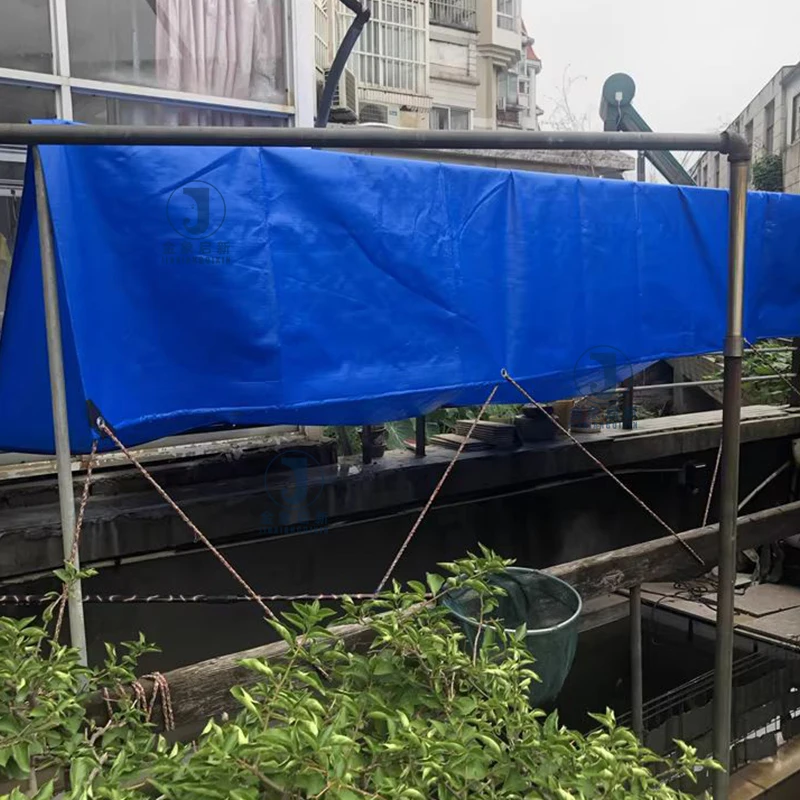
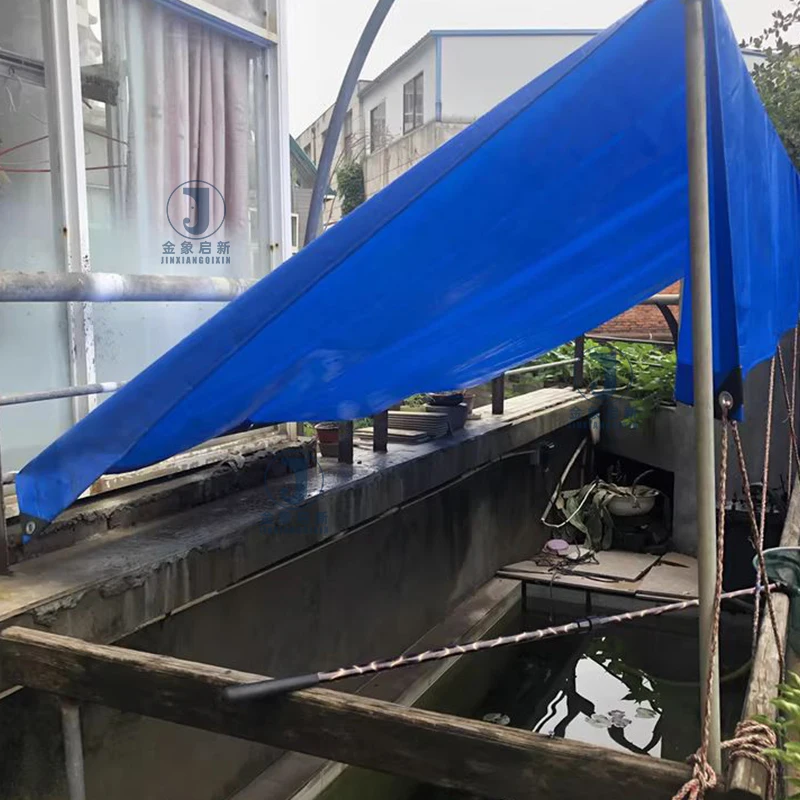
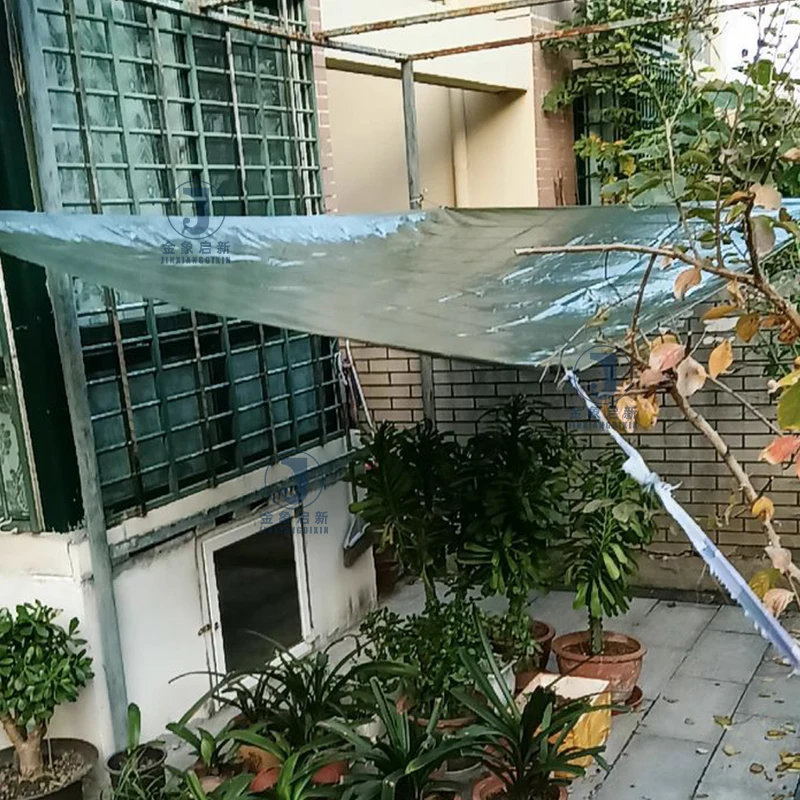
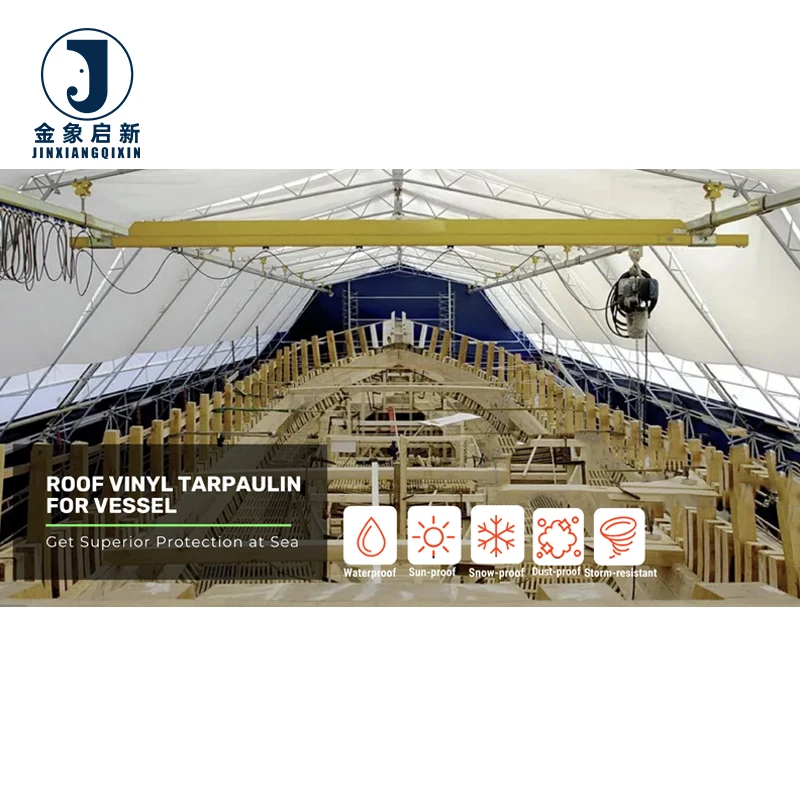
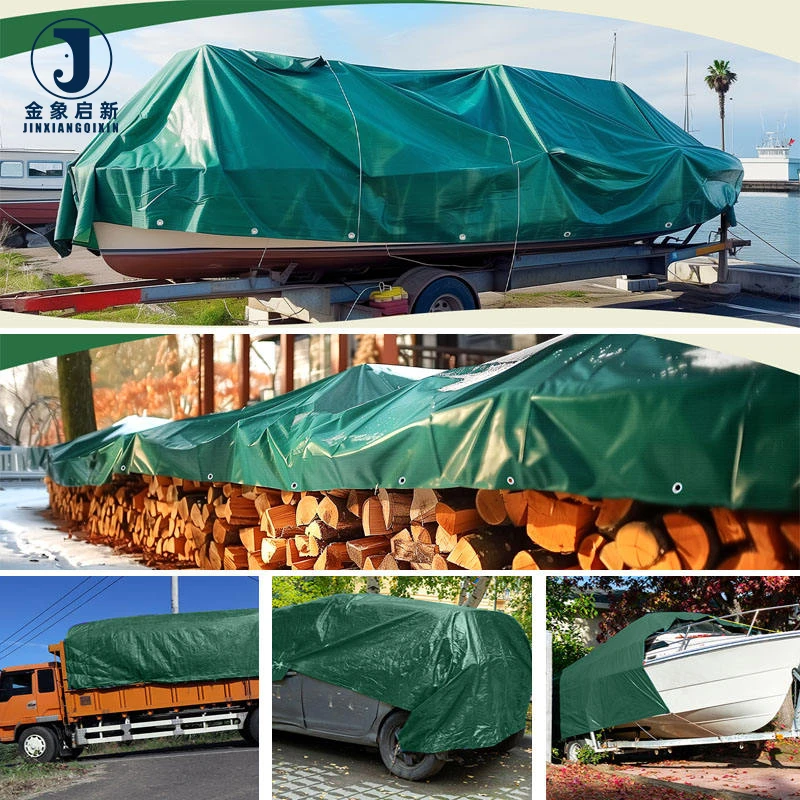
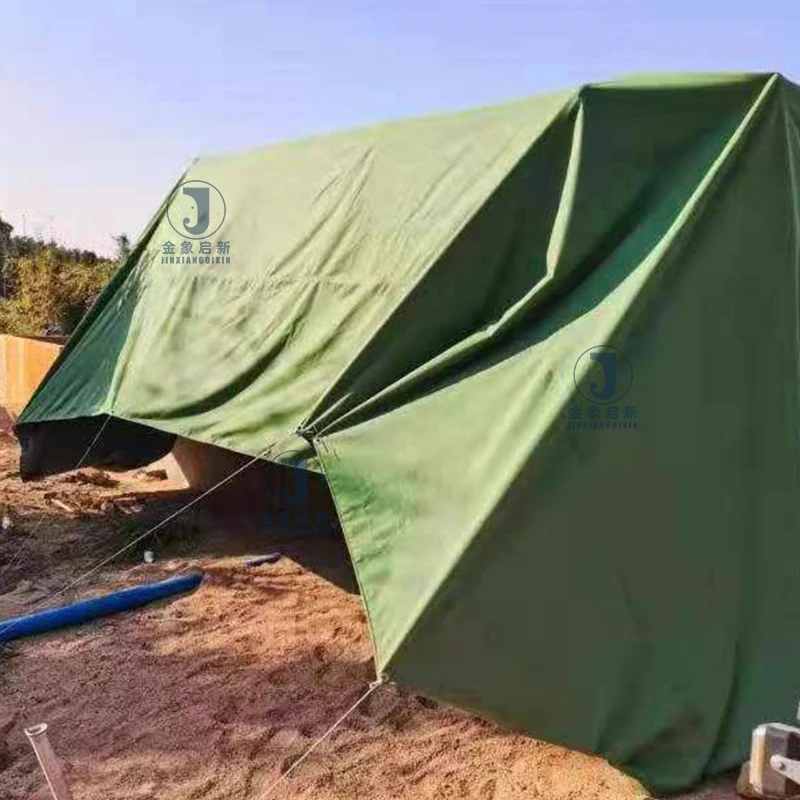
Specialist-Grade Material Control — Deep process control over coating weight and base fabric adhesion ensures the PE Blackout Tarpaulin for Agriculture you specify is the material that arrives on site.
Technical Specifications
| Parameter | Value |
|---|---|
| Product Type | PE Tarpaulin |
| Base Fabric | HDPE woven |
| Coating Material | LDPE laminated on both sides |
| Weight (GSM) | 50 g/m² ~ 220 g/m² |
| Total Thickness | 0.2 mm – 0.4 mm |
| Knitting Density | 8×8, 10×10, or 12×12 (depends on grade) |
| Tensile Strength | Meridian 300–1200 N/5cm / Latitude 250–1000 N/5cm (depends on grade) |
| Roll Width | 6 ft, 8 ft, 10 ft, 12 ft or 2 m, 4 m, 6 m |
| Roll Length | 100 yards, 100 meters, or custom |
| Finished Sizes | 2×2 m to 8×10 m available; custom cut sizes on request |
| Color Options | Blue, Blue/Orange, Green, Grey, Black, Clear, Grey/Green, Orange, or custom |
| Edge Finish | All four edges reinforced with PP rope in hem |
| Eyelets | Galvanized eyelets every 3 ft or 1 m interval |
| Corners | Reinforced plastic corners |
| UV Treatment | Available (test basis not stated in source) |
| Anti-Mildew | Yes |
| Waterproof | Yes |
| Finish | Matte surface |
| Printing Option | Custom printing available |
| Standards | ISO, CE |
Application Suitability
| Application | Exposure & Requirement |
|---|---|
| Organic poultry and livestock farm sunshade | Constant UV exposure, high humidity, total light exclusion for bird health cycles |
| Agricultural warehouse and stockpile cover | Rain ingress, wind uplift, abrasion from stacked goods, mildew in humid storage |
| Greenhouse shading and light-deprivation structures | Thermal buildup under direct sun, tension stress at eyelet points, seasonal installation and removal |
| Temporary specialist site enclosures | Light exclusion requirements, rapid deployment, exposure to dust and moisture |
Why Documentation Matters More Than Claims for Agricultural PE Covers
A material specification sheet that travels with the roll is worth more than a verbal guarantee on GSM.
When agricultural operators order blackout tarpaulin for poultry houses or greenhouse shading, the fabric often arrives looking correct but performing differently once installed. The quoted weight may not match what is measured on the receiving dock, and UV treatment claims lack a test report to reference when the material degrades earlier than expected under continuous sun exposure [NEED_CITE: standard test methods for UV exposure of polyethylene laminates]. For specialist applications where light exclusion and structural tensioning are non-negotiable, the absence of traceable documentation turns a routine procurement into a site-level problem.
Coating Integrity in High-Humidity Agricultural Environments
The dual-side LDPE lamination on an HDPE woven base creates a fully waterproof barrier that resists moisture penetration from both rain and ground-level humidity. In poultry farm environments where ammonia vapour and moisture are constant, the matte-finish PE Blackout Tarpaulin for Agriculture prevents mildew formation that would otherwise compromise the fabric from the inside. The lamination process bonds the coating to the woven substrate rather than sitting on the surface, which affects how the material handles repeated washing and chemical exposure common in livestock operations.
Light Exclusion and Thermal Behaviour Under Direct Sun
Blackout performance depends on both the opacity of the base weave and the coating thickness applied to each side. The matte surface finish reduces glare and heat reflection compared to glossy alternatives, which matters when the fabric is installed over animal enclosures where thermal buildup affects livestock welfare [NEED_CITE: agricultural ventilation standards for light-controlled poultry housing]. The available weight range from 50 g/m² to 220 g/m² allows buyers to select a grade that balances light-blocking density with the structural load the supporting frame can handle.
Understanding Weight, Knit Density, and Tensile Performance Together
GSM alone does not predict how a tarpaulin will perform under tension at the eyelet line or resist tear propagation once a puncture occurs. The knitting density — 8×8 for lightweight grades, 10×10 for medium, and 12×12 for heavy-duty — determines how load distributes across the woven base before the LDPE coating even enters the equation. A 160 g/m² fabric with a 12×12 knit will resist tear spread differently than the same weight with a looser weave, because the yarn crossover points per square centimetre act as mechanical stops. Tensile values in both meridian and latitude directions reflect this interaction, which is why specifications should always be read as a system rather than a single number.
The Cost of Specifying on Weight Alone
Ordering blackout tarpaulin based only on a GSM figure leaves critical variables uncontrolled. A lighter grade may meet the weight target but fail at the welded seam where the fabric flexes under wind load, because the coating adhesion was insufficient for the installation tension. Colour variation between rolls in the same shipment becomes visible once panels are installed side by side on a long poultry house, forcing partial replacement. UV treatment claimed without a documented test basis means the buyer has no reference point when the material becomes brittle after one season of continuous agricultural sun exposure [NEED_CITE: accelerated weathering test protocols for PE tarpaulins].
What Process Control Delivers at the Roll Level
Three full production lines with 36 sets of equipment give consistent coating weight across the roll width, which matters when a 6 m wide blackout panel must perform identically from edge to centre. A dedicated 10-person R&D team develops samples within days when buyers need to verify colour, weight, and lamination quality before committing to container quantities. QA checks at every production stage catch adhesion failures and knit defects before the roll reaches the packing stage. The 100% pre-shipment inspection means the roll packing list matches what arrives, not what was planned.
Documentation & Verification
- Material specification sheet stating GSM, HDPE base fabric knit density, and LDPE coating type per roll
- UV treatment test report provided where applicable, with stated test basis for your market
- Pre-shipment inspection record confirming weight and visual check on every roll or finished panel
- Roll packing list with net weight and dimensions for container loading calculations
- Certificate of origin and customs documentation for agricultural import compliance
Fabrication, Handling & Storage
- Heat welding parameters must match the LDPE lamination thickness to avoid delamination at seam lines
- Galvanized eyelets at 1 m intervals distribute tension evenly across reinforced PP rope hems
- Store rolls on flat pallets away from direct sun to prevent premature UV exposure before installation
- Unroll in moderate temperatures to avoid stiffness-related cracking in heavier GSM grades
- Clean with mild detergent only; solvents degrade the LDPE lamination bond on the HDPE base
- Field repairs using compatible PE tape preserve blackout integrity at puncture points
What to Include in Your Enquiry
Specify the agricultural structure type, whether you need total blackout or partial shading, and the expected wind load at your installation site. Confirm the target GSM grade and whether UV treatment documentation is required for your local compliance framework. Provide finished panel dimensions with eyelet spacing preferences, and indicate whether you need rolls for on-site fabrication or pre-cut sizes with reinforced hems and corners.
Frequently Asked Questions
Q: How can I verify the GSM matches what was quoted when the rolls arrive?
A: Every shipment includes a pre-shipment inspection record documenting the measured weight per roll. We recommend buyers conduct their own spot-check using a calibrated scale and a known-area sample cut. The material specification sheet supplied with the order states the target GSM and acceptable tolerance range, giving you a clear reference point for any discrepancy discussion.
Q: Is a test report available for UV treatment on this PE tarpaulin?
A: UV treatment is available across the weight range, and a test report can be provided — confirm the specific standard your market or end-use requires before production begins. Without a documented test basis, a UV claim remains unverifiable, which is why we tie treatment documentation to the grade and exposure duration you specify in your enquiry.
Q: What minimum order applies to custom widths or colours?
A: Custom width, colour, and printed branding options are available with minimums that depend on the grade and roll length selected. The 10-person R&D team develops physical samples within days so you can confirm colour match, lamination quality, and blackout density before committing to bulk production, reducing the risk of batch-level mismatches.
Q: How do you ensure colour consistency across multiple rolls in one order?
A: All rolls in a single production run are coated from the same batch of LDPE compound and monitored through in-process QA checks for colour drift. The pre-shipment inspection includes a visual comparison of panels from the first and last rolls. If your installation places panels side by side on a long agricultural structure, state this requirement so we prioritise within-batch matching.
Q: What documentation is required for agricultural import compliance?
A: Each shipment includes a certificate of origin, a material specification sheet, and a roll packing list. For markets requiring evidence of UV or anti-mildew treatment, the relevant test reports accompany the dispatch documentation. Confirm your destination country’s specific agricultural import requirements at the enquiry stage so the correct certificates are prepared before production.