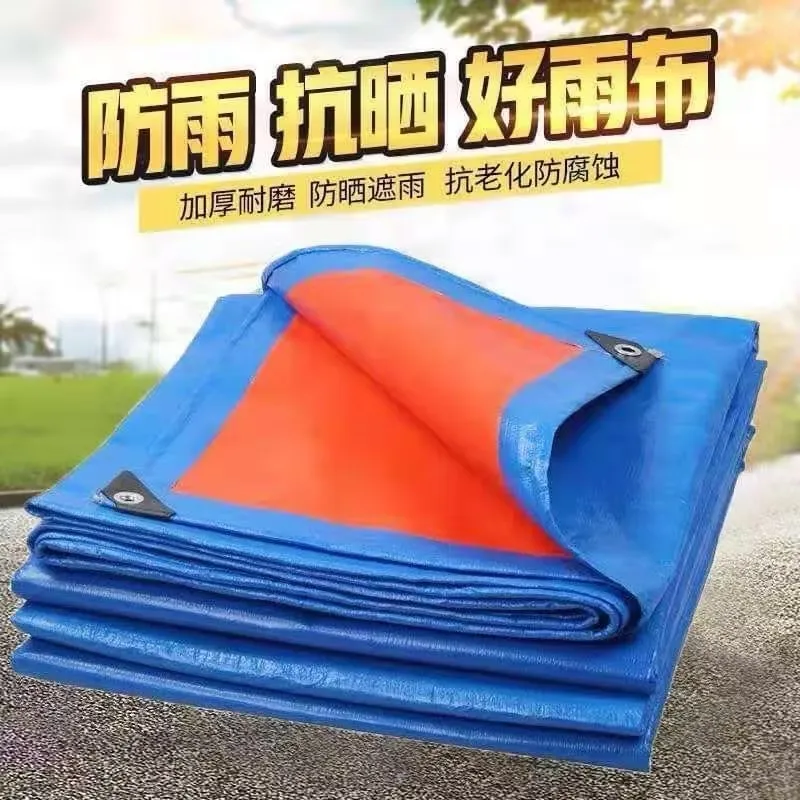
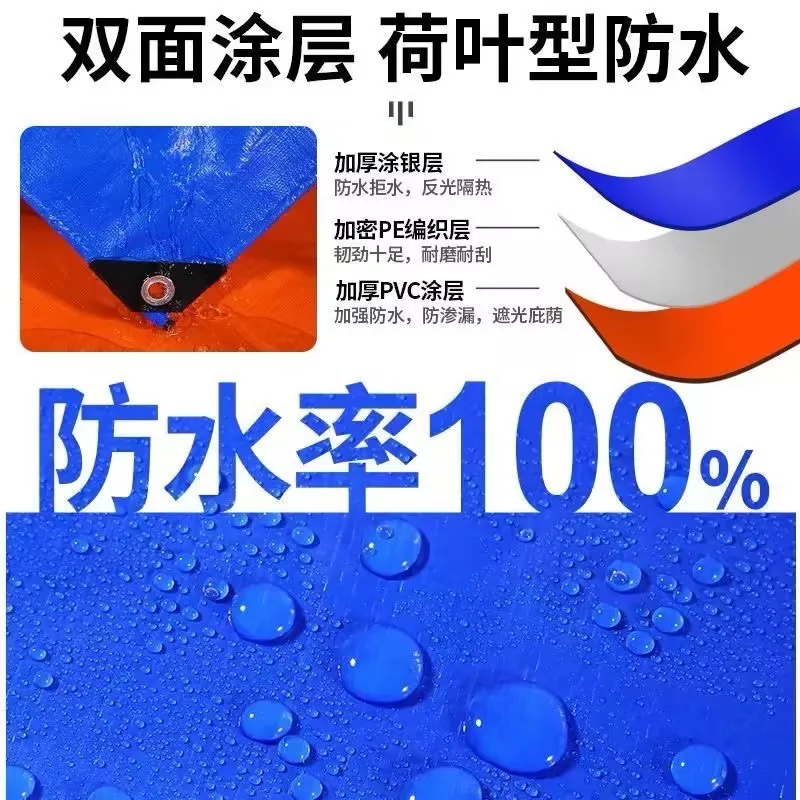
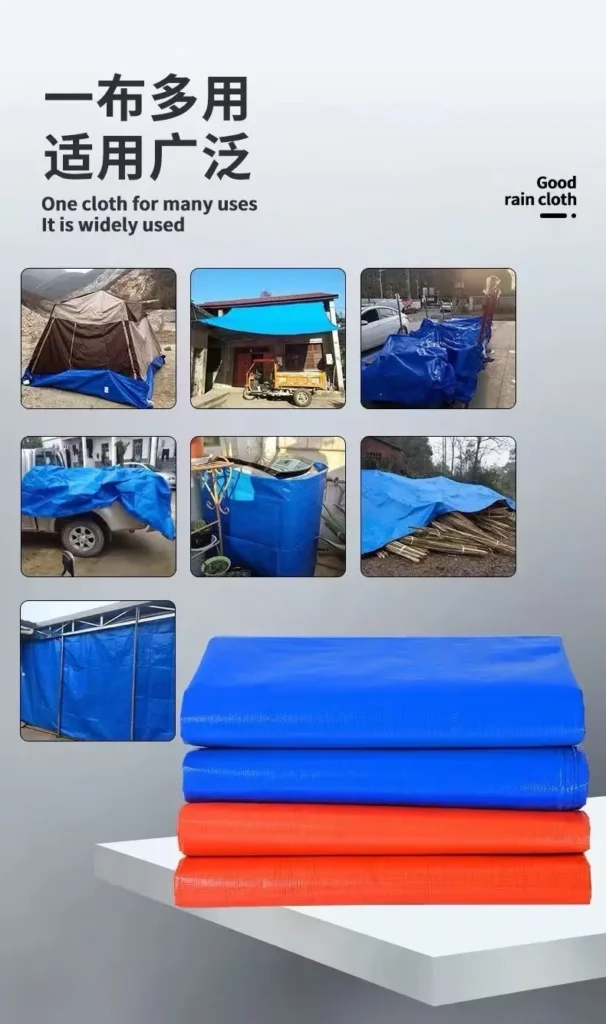
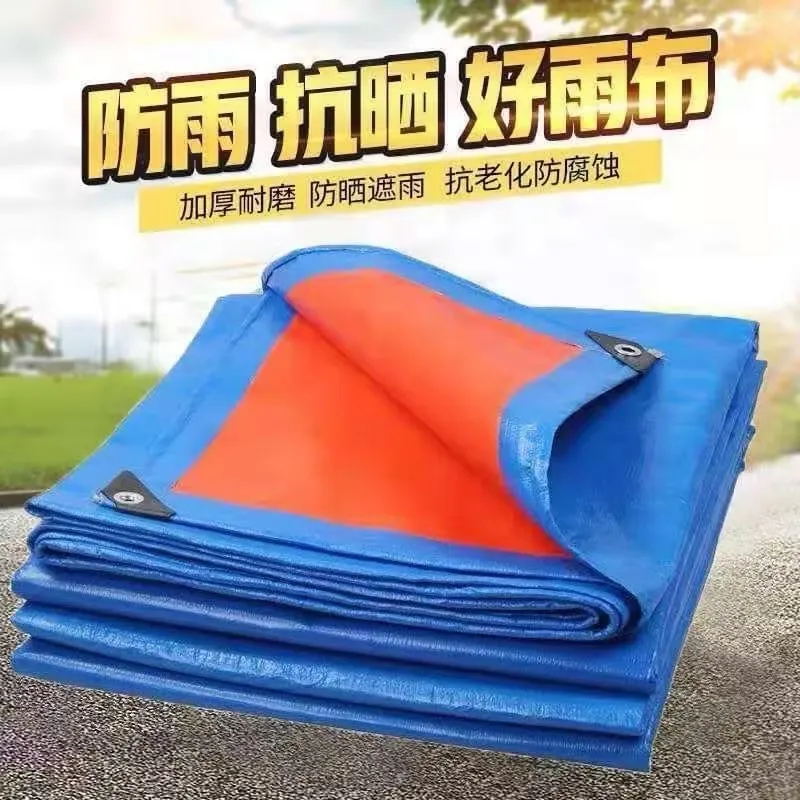
Process-Controlled Coating — nearly three decades of PE coating experience applied to every roll, with dedicated QA checkpoints verifying adhesion and weight consistency before dispatch.
Technical Specifications
| Parameter | Value |
|---|---|
| Product Type | PE Tarpaulin |
| Coating Material | PE (Polyethylene) |
| Waterproof | Yes |
| UV Treatment | Anti-UV (test basis not stated in source) |
| Weight Grade | Medium Weight (GSM not stated in source) |
| Weather Resistance | Waterproof, Rainproof |
| Custom Sizing | Available in custom width and length |
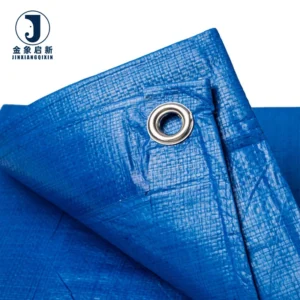
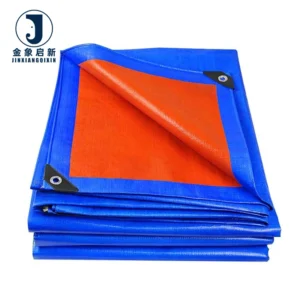
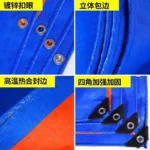
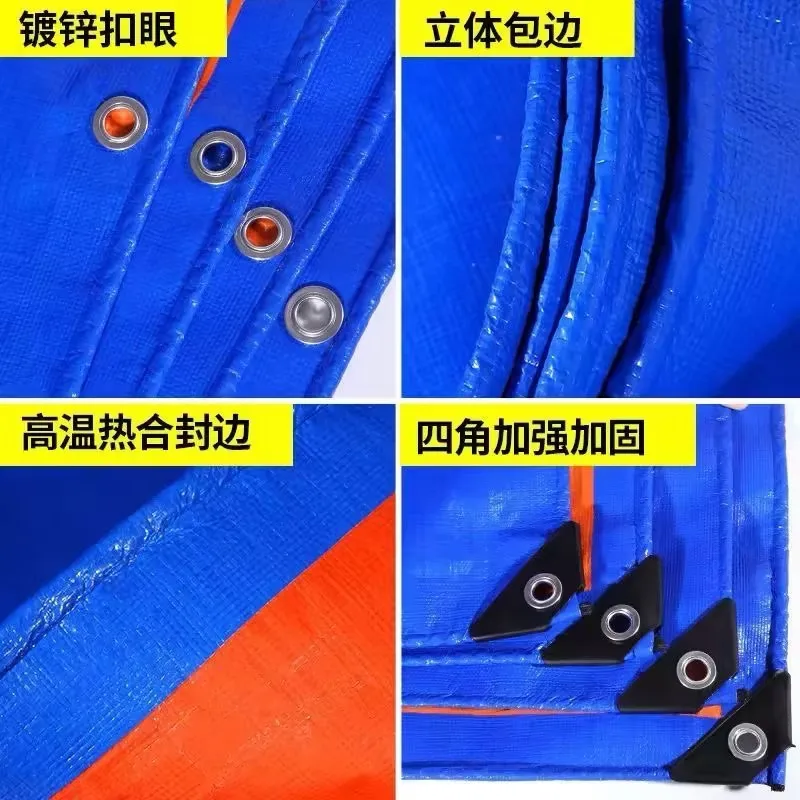
| Reinforcement Options | Eyelets and reinforced hems available on request |
Application Suitability
| Application | Exposure & Requirement |
|---|---|
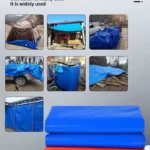
| Outdoor awning | Prolonged sun exposure, rain, wind load — requires documented UV treatment and waterproof integrity |
| Shade sail fabrication | Sustained tensile load, UV degradation risk, colour consistency across panels |
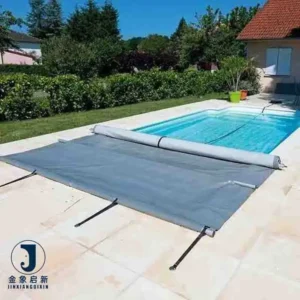
| Canopy and shelter cover | Direct rainfall, pooling water, thermal cycling — demands reliable coating adhesion |
| Pet dog house cover | Abrasion from contact, moisture exposure, lightweight handling for end user |
| Specialist inflatable or membrane structure | Air pressure load, flex fatigue, compliance documentation for site acceptance |
Why "Anti-UV" Without a Test Report Is a Procurement Risk
Every anti-UV claim must be backed by a named test standard and exposure duration, otherwise the buyer carries the entire performance risk.
PE Tarpaulin fire retardant / anti-static / certified buyers know that outdoor fabric failure rarely starts with water penetration — it starts with UV breaking polymer chains until the coating becomes brittle and flakes away. When a supplier states "anti-UV treated" on the quotation but provides no test report, there is no way to verify whether the treatment survives one season or several. The cost of replacing an installed awning or shade sail far exceeds the price difference of sourcing documented material upfront [NEED_CITE: standard test methods for UV resistance of coated fabrics]. This PE tarpaulin is offered with anti-UV treatment — confirm the specific test basis required for your market before committing to volume.
Coating Adhesion and Waterproof Integrity
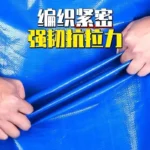
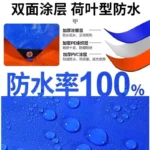
The waterproof performance of any PE coated fabric depends as much on coating adhesion as on the coating material itself. When adhesion is uneven, micro-channels form between the PE layer and the base fabric, allowing moisture to migrate through under hydrostatic pressure. Our coating process controls the temperature and pressure at the point of application, producing a consistent bond across the full width of each roll. This matters most for canopy and awning applications where water can pool on low-slope sections after heavy rain.
Roll-to-Roll Consistency Across Large Installations
Shade sail and canopy projects often require multiple panels joined side by side, making colour and weight variation between rolls immediately visible once installed. Batch inconsistency is one of the most common complaints from fabricators who source PE tarpaulin from suppliers without in-process quality checkpoints. Our production lines run dedicated QA inspections at each stage, checking coating weight and colour reference against the order specification before the roll is released for packing. This reduces the risk of panel mismatch on site and avoids costly rework [NEED_CITE: colour fastness and batch consistency standards for coated textiles].
Reading the Specification Sheet Beyond the GSM Number
Medium weight is a useful starting category, but it tells you nothing about how that weight is distributed between the base fabric and the PE coating. A heavier coating on a lighter base fabric may feel substantial in hand yet tear easily under the point loads typical of shade sail corners. Conversely, a dense base fabric with a thinner coating delivers better tear resistance but requires careful seam sealing to maintain waterproof integrity. When reviewing any PE tarpaulin specification, request the base fabric denier and weave density alongside the total GSM — these three values together predict how the material will behave under tension, abrasion and repeated folding. The coating method also influences thermal welding behaviour; PE coatings generally require lower heat-seal temperatures than PVC, which affects fabrication speed and energy cost on the shop floor.
The Hidden Cost of Undocumented Performance Claims
When PE tarpaulin arrives on site without a verifiable specification sheet, the first problem is usually discovered during fabrication: the material does not weld at the expected temperature, or the eyelets pull through under lower load than planned. If the anti-UV treatment was never tested to a recognised standard, the installed shade sail or awning may show embrittlement and colour shift within the first season of direct sun exposure. For specialist structure contractors, undocumented material can also mean failed site inspections, where the main contractor demands certification that the fabric supplier cannot produce. These downstream costs — rework, replacement, project delay — are rarely factored into the original purchasing decision [NEED_CITE: coated fabric failure modes related to specification gaps].
Why Fabricators Source PE Tarpaulin Through This Channel
Three full production lines with 36 sets of professional equipment support volume orders without sacrificing the coating consistency that awning and shade sail makers depend on. A 10-person R&D team handles custom width, colour matching and sample development, turning around prototypes within days so you can validate the material before committing to a full container. Dedicated QA/QC runs at every production stage, with 100% pre-shipment inspection catching adhesion defects and colour drift before the rolls leave the factory. Nearly 30 years of focused coated fabric production means the process parameters for PE coating are established and repeatable, not adjusted by trial and error on your order.
Documentation & Verification
- Material specification sheet stating base fabric denier, coating type and total weight per roll
- Anti-UV test report provided on request — verify the test standard before ordering
- Pre-shipment inspection record confirming coating adhesion and colour consistency
- Roll packing list detailing quantity, weight and dimensions per roll for customs clearance
- Certificate of origin issued per shipment for import documentation
- ISO and CE certificates available to confirm management system compliance
Fabrication, Handling & Storage
- Heat-seal PE coating at lower temperature settings than PVC to avoid burn-through on medium-weight grades
- Reinforce eyelet zones with additional PE patch layers to distribute point loads on awning corners
- Store rolls upright on pallets in shaded, dry conditions to prevent flat-spot deformation of the coating
- Unroll and allow PE tarpaulin to relax before cutting to minimise dimensional shift during fabrication
- Use mild detergent and soft brush for cleaning — solvent-based cleaners can degrade the PE surface
- Plan cutting layout to maximise yield from each roll width and reduce the number of welded seams
What to Include in Your Inquiry
Provide the intended application — whether awning, shade sail, canopy or specialist structure — along with the environmental exposure conditions your project will face. Specify the roll width, colour reference and total quantity required so we can confirm availability and batch consistency. If your market or site demands fire-retardant or anti-static certification beyond standard PE tarpaulin performance, state the required standard so we can confirm whether the grade is available and provide the supporting documentation with the quotation.
Frequently Asked Questions
Q: How is the weight of PE tarpaulin verified on arrival against the quotation?
A: Each roll ships with a packing list stating the recorded weight. On receipt, cut a measured sample from the roll edge and weigh it on a calibrated scale to calculate the actual GSM. Compare this figure to the material specification sheet supplied with the order. Any discrepancy beyond normal tolerance should be reported immediately with photographs before fabrication begins.
Q: What test basis supports the anti-UV claim for outdoor awning use?
A: Anti-UV treatment is applied during the coating process, and a test report is available on request. The specific test standard and exposure duration should be confirmed at the inquiry stage so you can verify that the treatment meets the solar exposure conditions of your installation site and any local regulatory requirements for outdoor structures.
Q: How consistent is colour and weight between different rolls in one order?
A: Our QA process checks coating weight and colour reference at each production stage and during 100% pre-shipment inspection. Rolls within a single order are produced from the same coating batch where possible. For large projects requiring absolute panel-to-panel consistency, request that all rolls be cut from consecutive production runs and state this requirement in your inquiry.
Q: What reinforcement options are available for canopy and shade sail fabrication?
A: Eyelets and reinforced hems are available as custom options. Specify the eyelet spacing, diameter and hem fold width in your inquiry so the reinforcement can be matched to the expected wind load and tie-down configuration of your installation. Samples with reinforcement details can be produced for approval before bulk production.
Q: What documentation ships with each PE tarpaulin order?
A: Every shipment includes a material specification sheet, roll packing list, certificate of origin and pre-shipment inspection record. Anti-UV test reports, ISO and CE certificates are provided on request. Confirm which documents your customs broker or site inspector requires at the order stage so everything is prepared before dispatch.