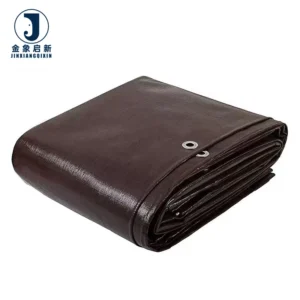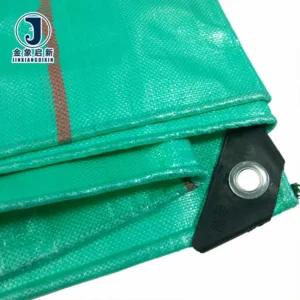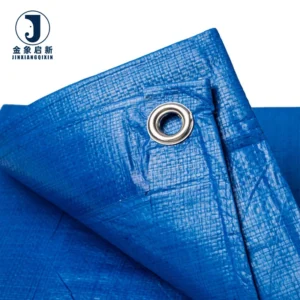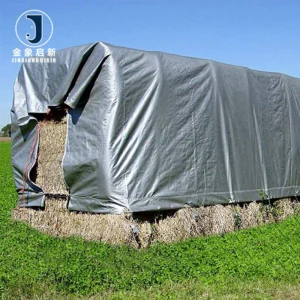
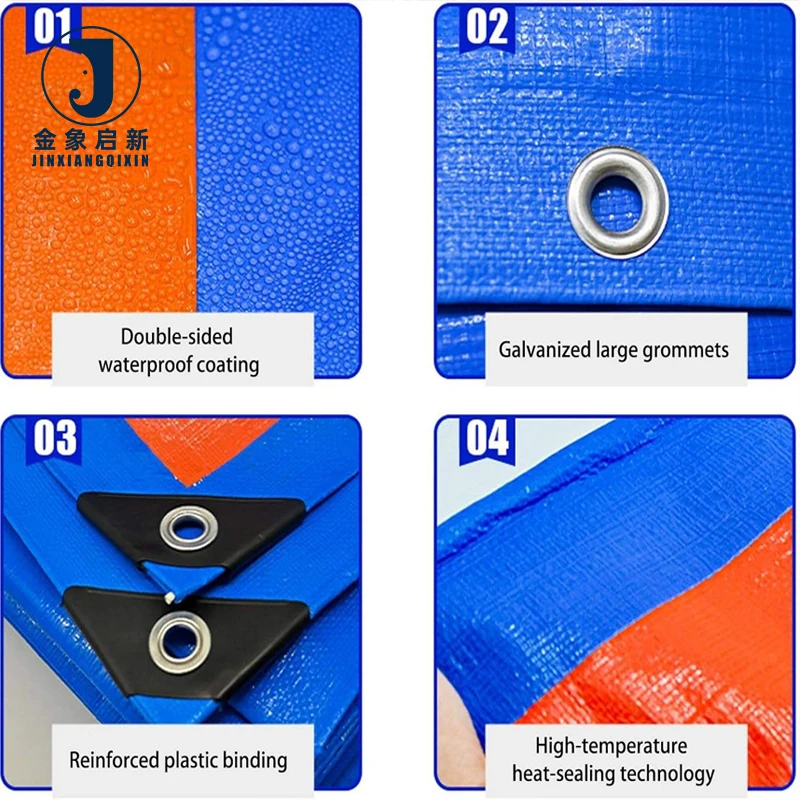
Deep Process Control Over Coating Weight and Adhesion — HDPE woven base with LDPE double-side coating, verified through 100% pre-shipment inspection to match quoted GSM and mesh density on every roll dispatched for specialist ventilation and technical structure fabrication.
Technical Specifications
| Parameter | Value |
|---|---|
| Product Type | PE Tarpaulin Roll |
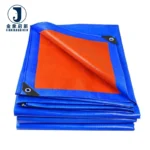
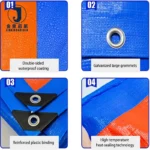
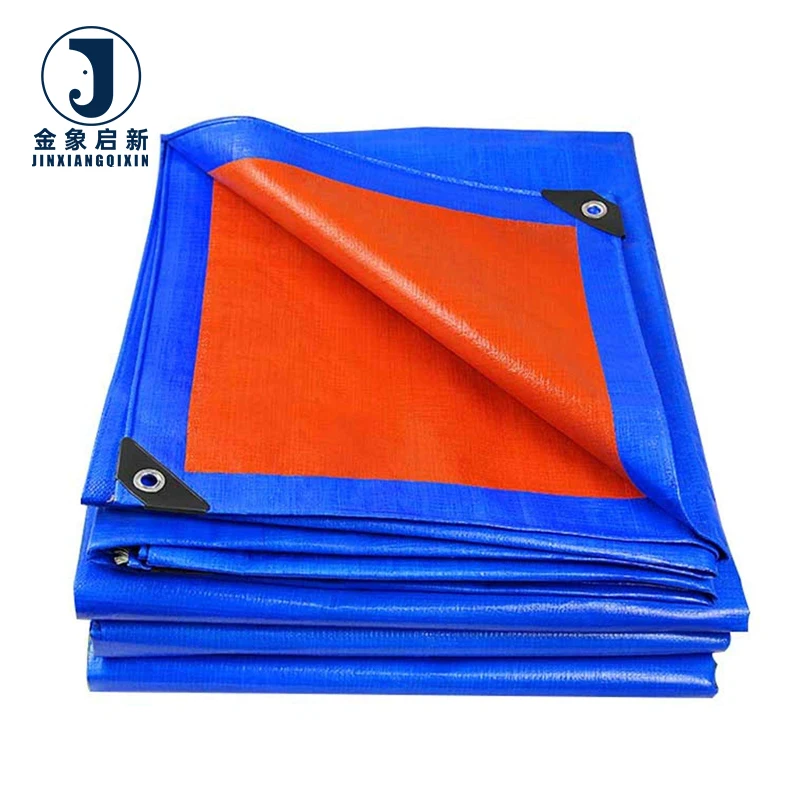
| Material | HDPE woven fabric with LDPE coating on both sides |
| Density (Mesh Count) | 6×6 to 16×16 mesh |
| Weight (GSM) | 50 g/m² to 300 g/m² (confirm the grade required for your project) |
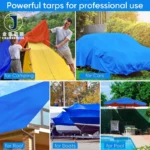
| Color Options | Blue, Orange, White, Black, Grey, Yellow, Green, Red, or any custom color |
| Roll Size | 100m per roll or as customers’ requirements |
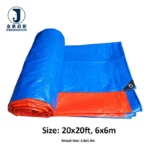
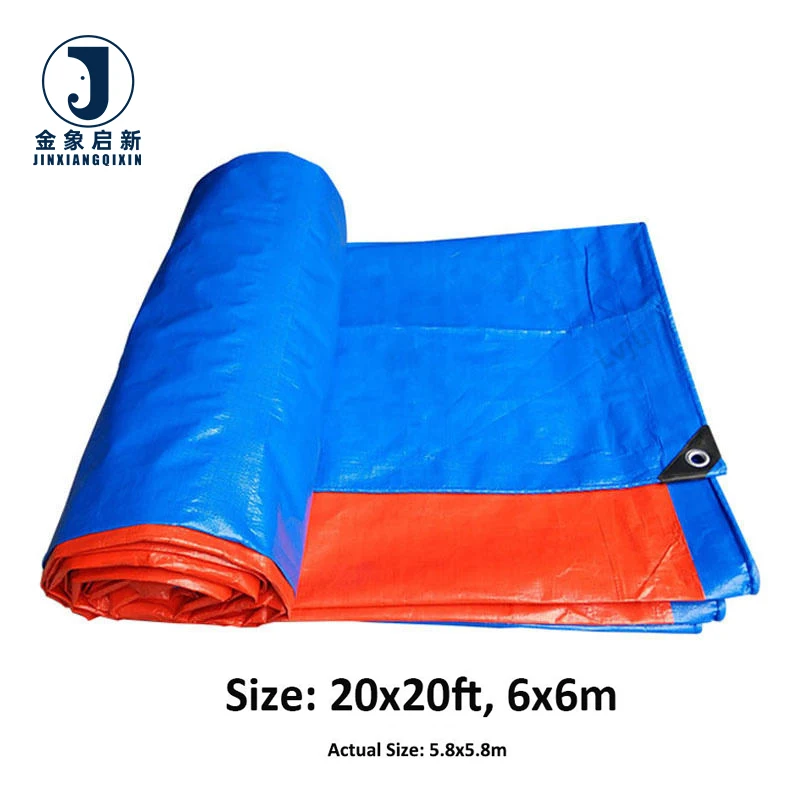
| Sheet Sizes | 2×3, 3×4, 3×5, 4×5, 5×6, 6×8, 10×10, 10×12, 12×14, or custom dimensions |
| Edge Reinforcement | PP ropes in hem on all edges |
| Corner Reinforcement | Black plastic triangle at all corners |
| Eyelets | Rustproof aluminum, spaced every 1m or 1.5m or as specified |
| Special Treatment | Fire resistant and UV protection available (grade not stated — confirm applicable standard for your jurisdiction) |
| Anti-Aging | Anti-oxidants added (test basis not stated) |
| Corrosion Resistance | Acid and alkali resistance claimed (test basis not stated) |
| Printing | Custom logos or company information; reinforced strip available |
Application Suitability
| Application | Exposure & Requirement |
|---|---|
| Mining ventilation duct | Continuous airflow, particulate abrasion, fire-retardant compliance on underground sites |
| Tunnelling temporary enclosure | High humidity, chemical exposure, certified flame performance for confined workspaces |
| Aviation ground ventilation | Fuel vapour proximity, anti-static surface requirement, regulatory fire classification |
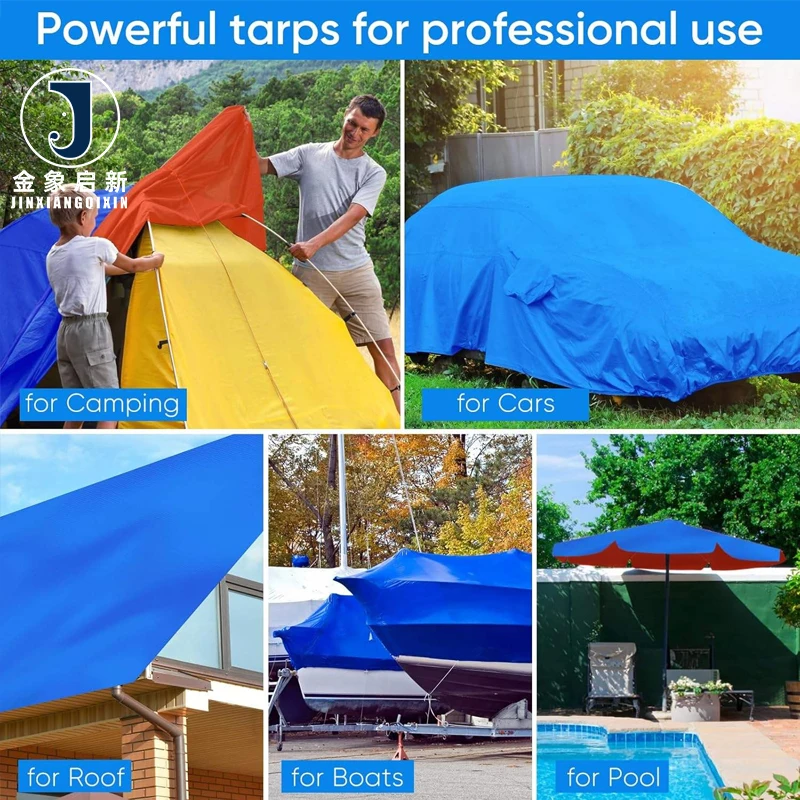
| Inflatable membrane structure | Biaxial tension, UV exposure, air-holding seam integrity over extended deployment |
| Construction site partitioning | Wind load, weather cycling, site fire-safety audit compliance |
What "Fire Retardant" Means Without a Grade Behind It
A PE tarpaulin fire retardant claim on a quotation carries no weight on a mining or tunnelling site until a recognised test standard is named alongside it. Specifying the grade before production is the only way to ensure the fabric passes the site safety audit on arrival.
When ventilation duct or enclosure fabric arrives without documentation tied to a known classification — M2, B1, NFPA 701, or DIN 4102 — the contractor faces an immediate compliance gap. The site inspector rejects the installation, the duct stays uninstalled, and the project schedule absorbs the delay. We have seen entire shipments held at port while the buyer scrambled to source replacement material that matched the fire classification the project specification demanded [NEED_CITE: DIN 4102 fire classification for building materials]. The cost of the fabric itself becomes secondary to the cost of the standstill.
Ventilation Duct Fabric Compliance Starts With the Specification Sheet
The PE tarpaulin fire retardant grade you require depends entirely on the jurisdiction and the application — underground mining in one region may mandate a different classification than above-ground tunnelling in another. Confirming the exact test standard before sampling ensures the material developed matches what the site auditor will ask to see. Our R&D team works from your stated compliance requirement backward to the coating formulation and base fabric selection.
Anti-Static Performance for Fuel and Particulate Environments
In aviation ground ventilation and certain mining applications, static charge accumulation on duct surfaces presents an ignition risk that fire retardancy alone does not address. Anti-static treatment must be specified as a separate requirement with a defined surface resistance value and applicable standard. We confirm both parameters with you before production begins, so the test result shipped with your rolls matches what your site safety plan requires [NEED_CITE: anti-static surface resistance standards for ventilation ductwork in mining].
Reading the Mesh Count and GSM Together
Mesh density — from 6×6 through to 16×16 — determines the base fabric’s structural grid, while GSM reflects the total weight of woven HDPE plus LDPE coating combined. A higher mesh count delivers more yarn intersections per square inch, improving tear propagation resistance. However, GSM alone does not tell you whether that weight sits in a heavier base yarn or a thicker coating layer, and each contributes differently to tensile versus tear performance. For duct fabrication where biaxial loads are constant, specifying both the mesh count and the GSM together gives a clearer picture of how the fabric will behave under tension [NEED_CITE: tensile and tear test methods for coated fabrics per ISO 1421].
The Cost of Specifying Blind
Ordering PE tarpaulin by GSM alone, without pinning down the fire-retardant grade, the mesh density, or the anti-static requirement, leaves too many variables open for interpretation. The fabric that arrives may weigh what was quoted yet fail the fire test the site demands. A duct fabricated from material without the correct anti-static certification cannot be installed in a classified zone, regardless of how well it performs mechanically. We have watched projects lose weeks while replacement material was sourced and re-fabricated — time that a complete specification at inquiry stage would have protected [NEED_CITE: coated fabric compliance failures in mining ventilation installations].
Why Technical Buyers Source This Fabric Here
Nearly 30 years of coated fabric production gives us process control over coating adhesion and weight distribution that shows up in roll-to-roll consistency. Three full production lines and 36 sets of professional equipment mean bulk duct-fabrication orders ship on schedule without capacity bottlenecks. A 10-person R&D team handles the material selection and sample development when your project calls for a specific fire classification or anti-static value. Dedicated QA/QC runs at every production stage, with 100% inspection before dispatch so the GSM on the roll matches the GSM on the quotation. Samples for custom requirements — specific mesh count, colour, width, or treatment — are developed within days, not weeks.
Documentation & Verification
- Material specification sheet stating GSM, base fabric denier, mesh count, and LDPE coating weight per roll
- Fire-retardant test report matched to the grade specified for your jurisdiction and application
- Anti-static surface resistance certificate where applicable to your site classification requirements
- Pre-shipment inspection record confirming weight, colour, and dimensions against your purchase order
- Certificate of origin and full customs documentation for cross-border dispatch
- Roll packing list with individual roll weights and dimensions for container loading verification
Fabrication, Handling & Storage
- Heat welding parameters must be matched to the LDPE coating thickness — request our recommended temperature and dwell time settings for your specific GSM grade
- Rustproof aluminum eyelets at 1m or 1.5m spacing distribute rigging loads across the PP rope hem, reducing point stress at duct suspension anchors
- Store rolls horizontally on pallets in covered, ventilated areas to prevent flat-spot deformation of the HDPE woven core under prolonged standing weight
- Unroll and allow the fabric to relax at ambient temperature before fabrication, especially after cold transport, to avoid crease memory in the coating layer
- Cut patterns for duct sections should account for the fabric’s mesh direction to align the higher-tensile axis with the primary airflow load path
Request a Specification Match, Not Just a Quote
Tell us the fire-retardant grade your site requires, the applicable test standard, and whether anti-static certification is needed for your installation environment. Share your duct diameter, fabrication method, and the roll widths that suit your production line. If colour consistency across a multi-roll order matters for visible enclosure sections, let us know so we plan batch production accordingly.
Frequently Asked Questions
Q: What fire-retardant grade and test standard does the PE tarpaulin carry for my jurisdiction?
A: Fire-retardant treatment is available across multiple classification systems, but the specific grade must be matched to your local regulation and application — mining, tunnelling, and aviation each reference different standards. Provide the classification your site auditor requires, and we develop the formulation and test documentation to match before production begins.
Q: Can anti-static treatment be applied and certified for mining ventilation duct use?
A: Yes. Anti-static treatment can be incorporated during the LDPE coating stage, and surface resistance values can be measured and certified to the standard your site safety plan references. Confirm the required resistance range and test method at inquiry stage so the correct additive loading is applied and documented.
Q: How is GSM verified on arrival against the quoted specification?
A: Every roll undergoes weight verification during our 100% pre-shipment inspection, and the results are recorded on the inspection report shipped with your order. We recommend you conduct a receiving check using a calibrated scale against the documented roll weight to confirm alignment with the quoted GSM.
Q: What roll widths and lengths are available for duct fabrication, and what are the minimums?
A: Standard roll length is 100m per roll, with custom lengths available. Roll width and minimum order quantities depend on the specific mesh count, GSM grade, and treatment combination you require. Share your fabrication dimensions and annual volume so we can confirm available widths and production minimums for your specification.
Q: How do I specify eyelet spacing, hem reinforcement, and custom sheet sizing for site installation?
A: Eyelets are available in rustproof aluminum at 1m or 1.5m intervals, with PP rope hem reinforcement and black plastic corner triangles as standard. For custom sheet sizes, provide exact dimensions rather than generic references — this ensures cut pieces fit your specific framework or enclosure opening without on-site trimming.