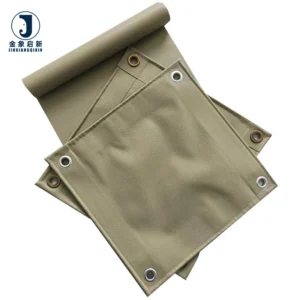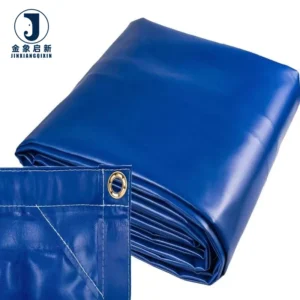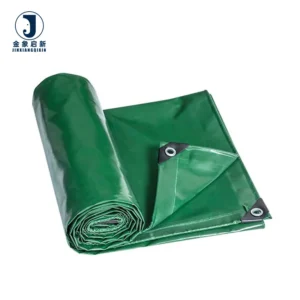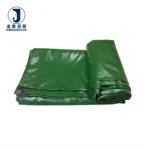
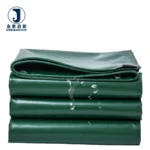
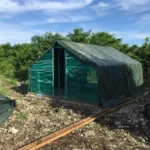
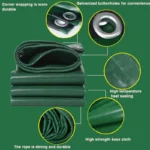
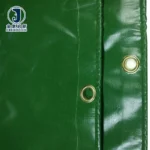
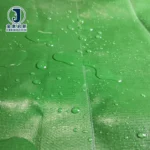
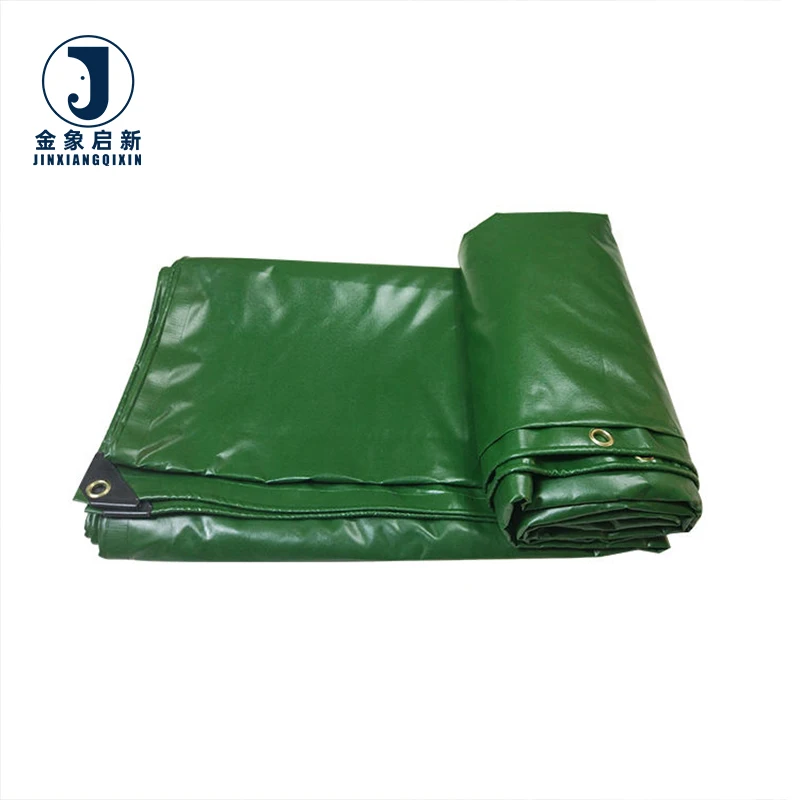
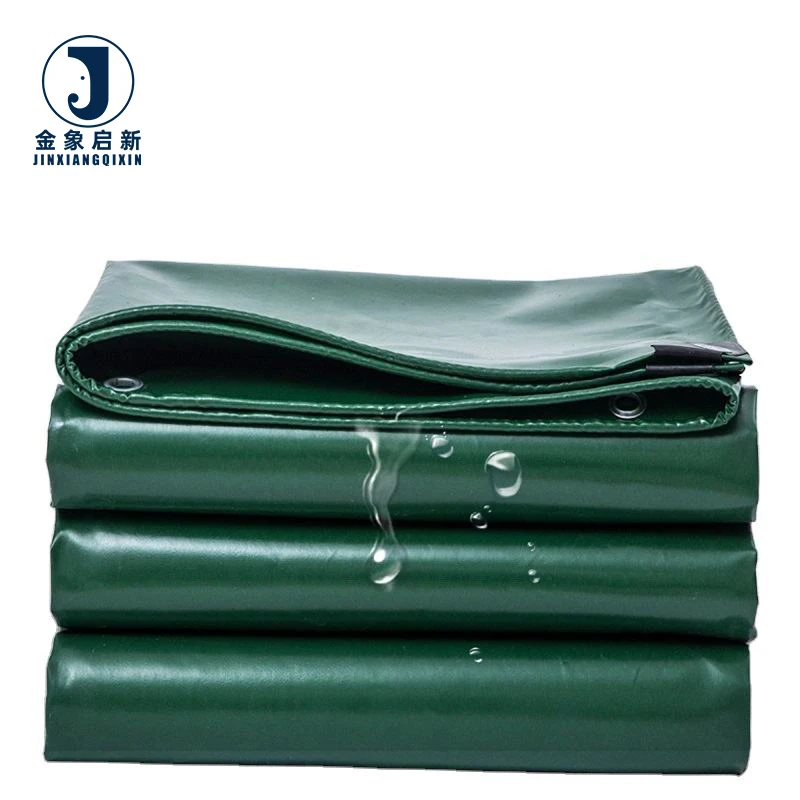
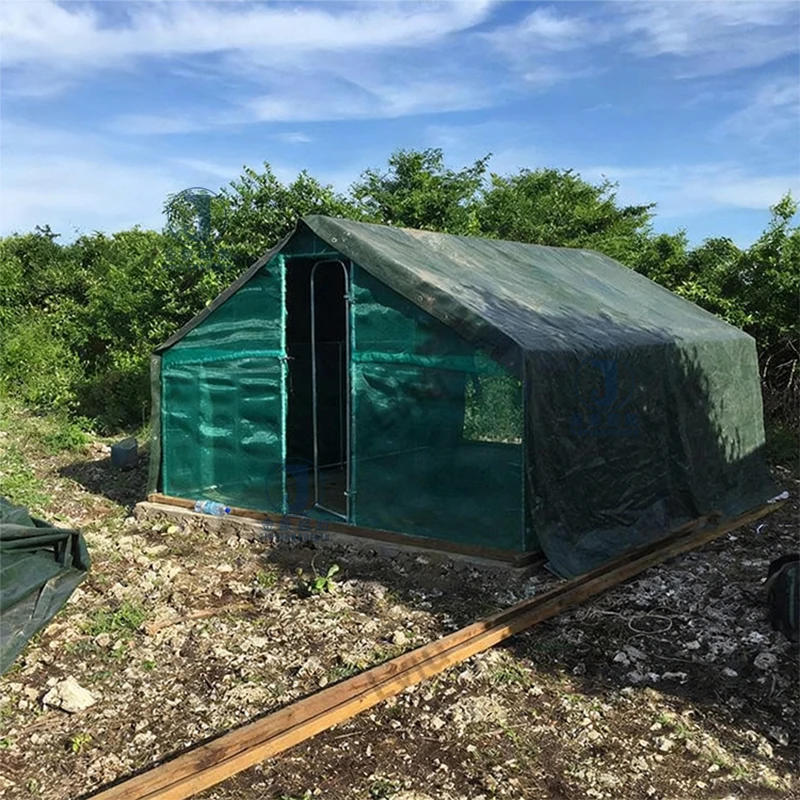
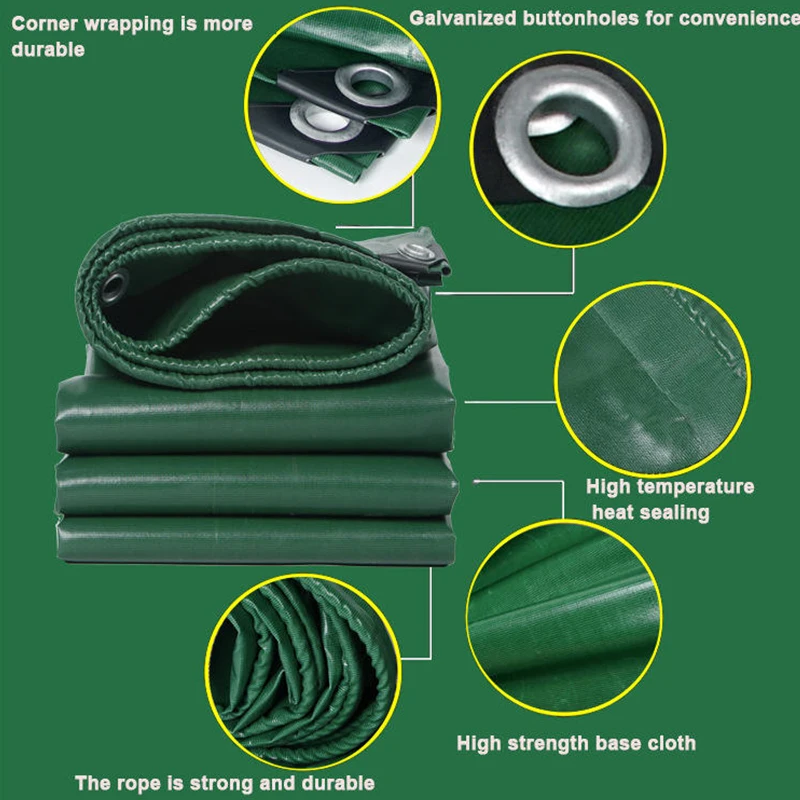
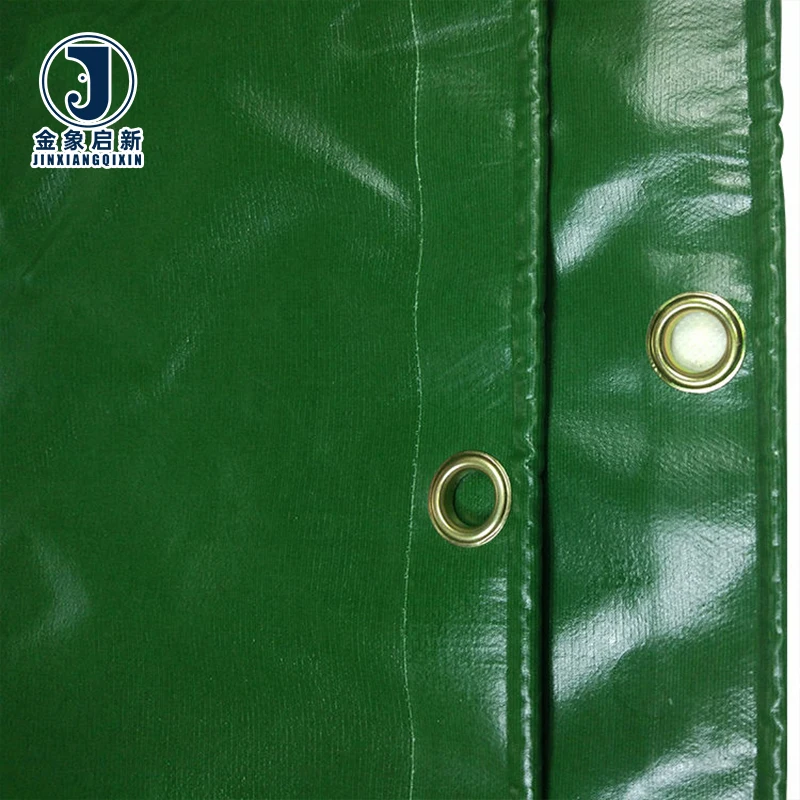
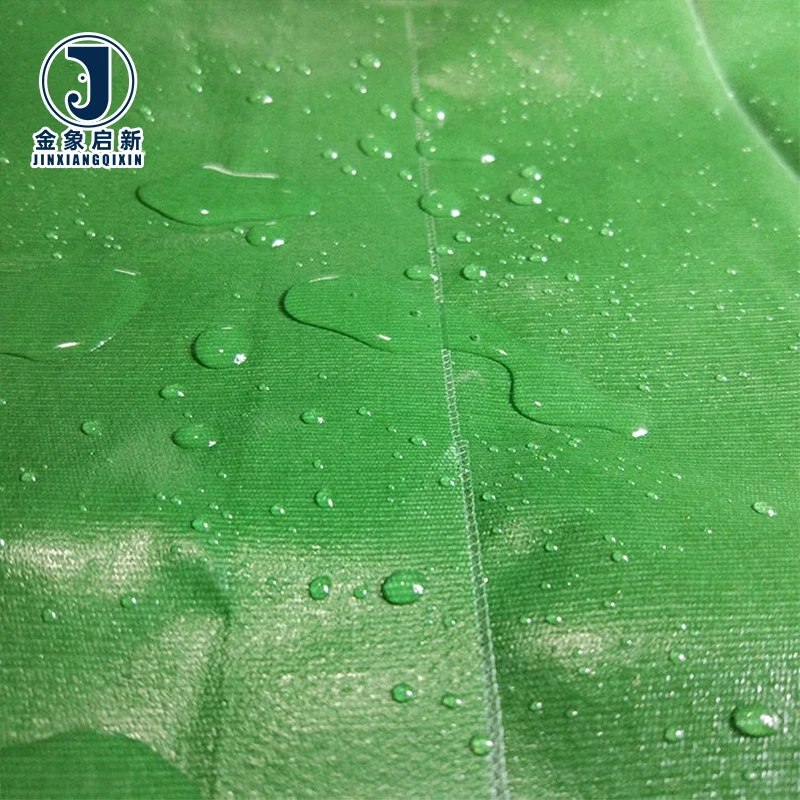
Coating Process Control — Hot-melt and laminated coating technology delivering consistent 500gsm weight and strong PVC-to-polyester adhesion, verified at every production stage for industrial shelter and duct applications.
Technical Specifications
| Parameter | Value |
|---|---|
| Product Type | PVC Coated Tarpaulin Roll |
| Material | PVC + High-strength polyester mesh fabric |
| Weight | 500gsm |
| Total Thickness | 0.4mm |
| Coating Method | Laminated technology & Hot-melt Coating technology |
| Roll Width | 2m / 2.1m |
| Roll Length | 75m (2m width) / 50m (2.1m width) |
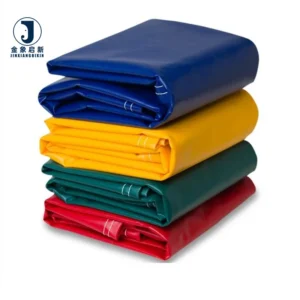
| Color | Green; Blue / Red / Yellow / Light blue / Grey available as customized options |
| Waterproof | Fully waterproof coated construction |
| UV Treatment | UV Stable — confirm test basis required for your application |
| Flame Retardant | Available in flame retardant grades — confirm the grade required for your market |
| Anti-Static | Anti-Static treatment available — surface resistance values and certification on request |
| Anti-Mildew | Yes |
| Cold Crack Resistance | Yes |
| Tear Resistance | High — test standard on request |
| Welding Repair | Easy to repair by welding |
| Finish Product Size | Custom items as per customer’s needs, or sold by inventory roll |
| Printing Option | Custom printing / brand printing available |
| Certification | ISO 14001, ISO 45001, CE, RoHS |
Application Suitability
| Application | Exposure & Requirement |
|---|---|
| Mining and tunnelling site shelters | Fire-retardant and anti-static compliance, constant dust, mechanical abrasion, confined-space safety regulations |
| Aviation ground support equipment covers | Outdoor weathering, fuel and hydraulic fluid exposure, anti-static requirements, rapid deployment and removal |
| Emergency rain shelters and disaster-relief covers | Prolonged rain and wind, field installation without heavy machinery, multi-season reuse, flame-retardant standards for public assembly |
| Industrial ventilation ducts and temporary enclosures | Continuous airflow, positive or negative pressure flex, fire-code compliance in underground or enclosed workspaces |
| Heavy equipment and machinery covers | UV exposure, chemical splash, abrasion from repeated fitting and removal, dimensional stability over large spans |
What "Fire-Retardant PVC Coated Tarpaulin" Means Without a Test Report Behind It
A flame-retardant claim is only as defensible as the test certificate that accompanies it.
When procurement teams specify fire-retardant fabric for mining shelters or aviation enclosures, they often receive material described generically as "flame retardant" with no reference to a test standard or grade. The fabric arrives, the site safety officer requests documentation, and the paperwork never matches the regulatory framework enforced at that location. A PVC coated tarpaulin intended for an underground tunnelling shelter in the EU must satisfy different criteria than one deployed at an open-pit mine in Australia or a disaster-relief camp in Southeast Asia. The absence of a stated grade does not mean the material fails — it means the supplier has not matched the product to the buyer’s regulatory environment [NEED_CITE: fire classification standards for coated textiles in mining and construction environments]. Specifying the target standard at the inquiry stage, rather than after shipment, eliminates rework and compliance delays.
Coating Adhesion and Weld Integrity in Field Conditions
The laminated and hot-melt coating technology used in this PVC coated tarpaulin produces a bond between the PVC layer and the high-strength polyester mesh that resists delamination under repeated flexing. When field crews weld seams on-site to join panels or repair punctures, the heat-activated PVC surfaces fuse together — and the strength of that weld depends directly on the consistency of the coating weight across the roll. Inconsistent coating thickness creates hot spots where the PVC burns through before bonding, or cold spots where the weld peels under tension. This is why coating process control matters more than the nominal GSM figure alone.
Anti-Static Treatment for Hazardous Environments
Static charge accumulation on synthetic-coated fabrics is a documented ignition risk in environments with combustible dust or flammable vapours [NEED_CITE: anti-static requirements for textile materials in explosive atmospheres]. The anti-static treatment option available on this PVC coated tarpaulin addresses that risk, but the specific surface resistance value and the test method used to verify it must align with the site’s safety management plan. Buyers in mining and aviation ground-support roles should request the test report alongside the material specification sheet to confirm that the treatment level meets their internal or regulatory threshold before committing to a production run.
Reading the Specification Sheet Beyond the GSM Number
A 500gsm weight tells you the mass per square metre, but not how that mass is distributed between the polyester base fabric and the PVC coating. A heavier base fabric with more denier per yarn yields higher tear propagation resistance — critical when a puncture in a shelter wall must not spread into a catastrophic rip. The 0.4mm total thickness at this grade reflects the combined build of mesh and coating, and influences how the fabric behaves under heat welding: too thin and the weld burns through; too thick and the heat cannot penetrate to fuse the interface. The cold crack resistance rating determines whether the material can be unfolded and tensioned in sub-zero deployment scenarios without the coating shattering at the fold line. Anti-mildew treatment prevents biological degradation when the fabric is stored damp or deployed in high-humidity environments such as tropical relief camps or underground mine portals.
The Cost of Undocumented Compliance on Site
A shelter or enclosure that fails a fire-safety audit after installation forces the contractor to strip and replace the entire structure — a cost measured in downtime, not just material. When flame-retardant grade is not confirmed before production, the buyer may discover at arrival that the material satisfies a standard irrelevant to their jurisdiction. Similarly, anti-static treatment applied at a level below the site’s required surface resistance threshold may not be detected until an incident investigation. Colour inconsistency across rolls in a multi-panel shelter creates visible patchwork that signals poor quality control to the end user, even if the technical performance is sound [NEED_CITE: batch colour variation tolerance for architectural and industrial coated fabrics]. Welded seams that fail before the body fabric are almost always traceable to coating-weight inconsistency or incorrect welding temperature settings for the specific GSM.
Why Procurement Teams Source This PVC Coated Fabric Here
Three full production lines and 36 sets of professional equipment provide the capacity to run dedicated batches for industrial shelter projects without cross-contamination between colour runs or treatment formulations. A 10-person R&D team with expertise in material selection and ventilation engineering can advise on which flame-retardant or anti-static grade matches your regulatory environment before production begins. Dedicated QA and QC at every production stage means coating weight is checked during the run, not only at the final roll — catching drift before it becomes a full batch of non-conforming material. One hundred percent pre-shipment inspection with documented records means every roll leaving the facility has been verified against the purchase specification. Custom sizing, colour, and printing options are developed with samples within days, allowing field teams to confirm fitment and appearance before the full order enters production.
Documentation & Verification
- Material specification sheet stating 500gsm weight, base fabric type, and coating method verified against production records
- Test report for flame-retardant grade and anti-static treatment provided where specified in the purchase order
- ISO 14001, ISO 45001, CE, and RoHS certificates included with shipment documentation package
- Pre-shipment inspection record confirming roll dimensions, colour consistency, and coating integrity before dispatch
- Roll packing list with individual roll identification for traceability on multi-panel shelter projects
Fabrication, Handling & Storage
- Heat-weld at temperatures matched to 0.4mm thickness and 500gsm coating weight to avoid burn-through or cold welds
- Allow laminated PVC rolls to acclimate to ambient temperature before unrolling in cold conditions to prevent coating micro-cracking
- Store 2m or 2.1m width rolls upright on cores to avoid flat spots that distort the polyester mesh weave
- Cut panels from the same production batch for multi-panel shelters to maintain colour consistency across visible seams
- Field-repair punctures by hot-air welding compatible PVC patch material onto the hot-melt coated surface
- Plan panel layout from 75m or 50m roll lengths to minimize transverse welds in high-tension zones
Preparing Your Enquiry for Technical-Grade PVC Coated Fabric
To move from general specification to a production-ready quote, share the regulatory fire-safety and anti-static standards enforced at your deployment site or by your project’s governing authority. Specify whether you require material supplied in roll form for your own fabrication facility, or finished panels cut to shelter dimensions with welded seams and reinforcement details. Indicate the deployment environment — underground, open-air, coastal, or high-altitude — so the appropriate treatment combination can be recommended and sampled before the main order is committed.
Frequently Asked Questions
Q: How do I specify the correct flame-retardant standard for my site?
A: Identify the regulatory framework enforced at your project location — common standards include DIN 4102, NFPA 701, or local mining codes. State the required grade in your initial enquiry so the R&D team can match the treatment formulation and provide a test report with the shipment. Confirming this at inquiry stage prevents compliance failures on site.
Q: What anti-static documentation is available for mining applications?
A: Anti-static treatment can be applied to this PVC coated tarpaulin, and test reports documenting surface resistance values are available on request. Mining and tunnelling contractors should share their specific threshold requirements from their safety management plan so the treatment level can be verified against the applicable standard before production begins.
Q: How is the 500gsm weight verified before shipment?
A: Coating weight is monitored during production on the laminated and hot-melt coating lines, and every roll undergoes pre-shipment inspection against the stated specification. The inspection record documents actual GSM readings and is included in the shipment documentation, allowing you to cross-check on arrival against your purchase order.
Q: What are the welding guidelines for field repair and fabrication?
A: Hot-air or wedge welding works well with this 500gsm, 0.4mm material thanks to the hot-melt coating technology. Set welding temperature and speed appropriate to the coating thickness and test on offcuts before committing to structural seams. Welded repairs in the field should use compatible PVC patch stock of similar grade for consistent adhesion.
Q: Can I order custom colours and printed branding for shelter panels?
A: Custom colours beyond the standard green, and brand printing, are available with sample development completed within days. Provide your colour reference and artwork at the enquiry stage so samples can be approved before the full production run, ensuring colour consistency across all rolls allocated to your project.