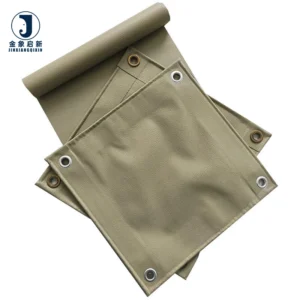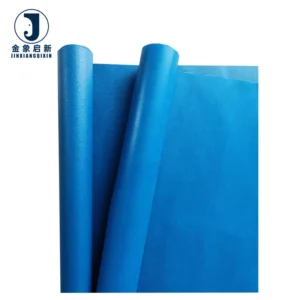
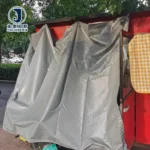
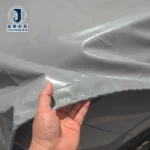
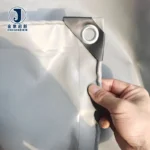

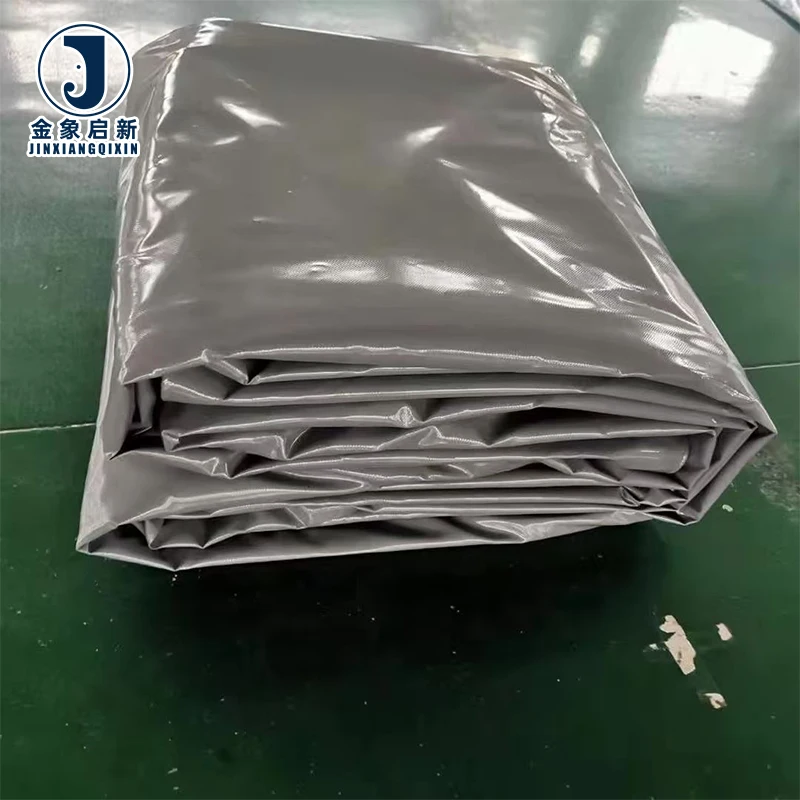
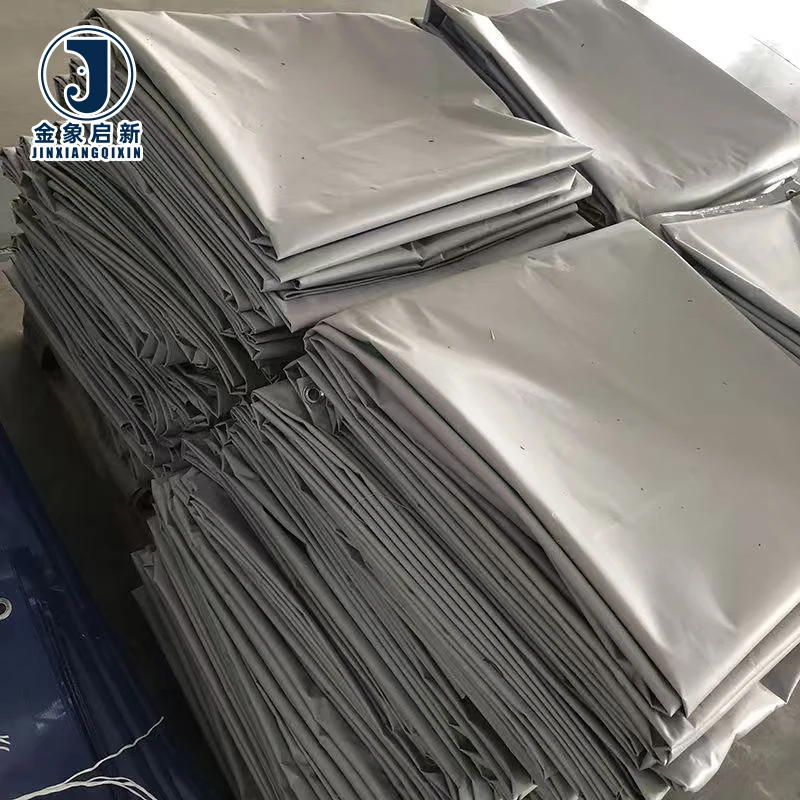
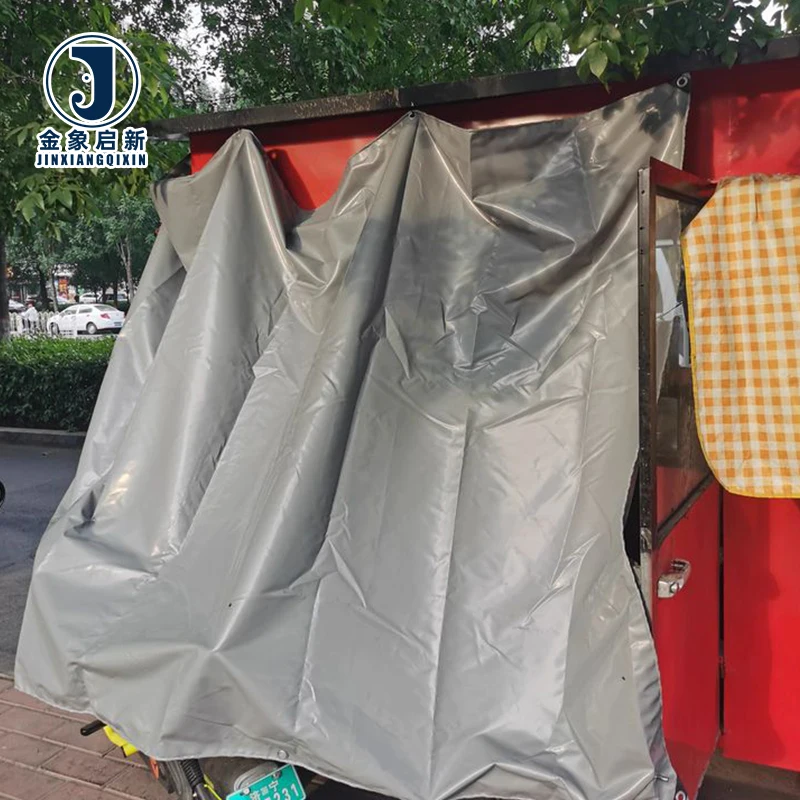
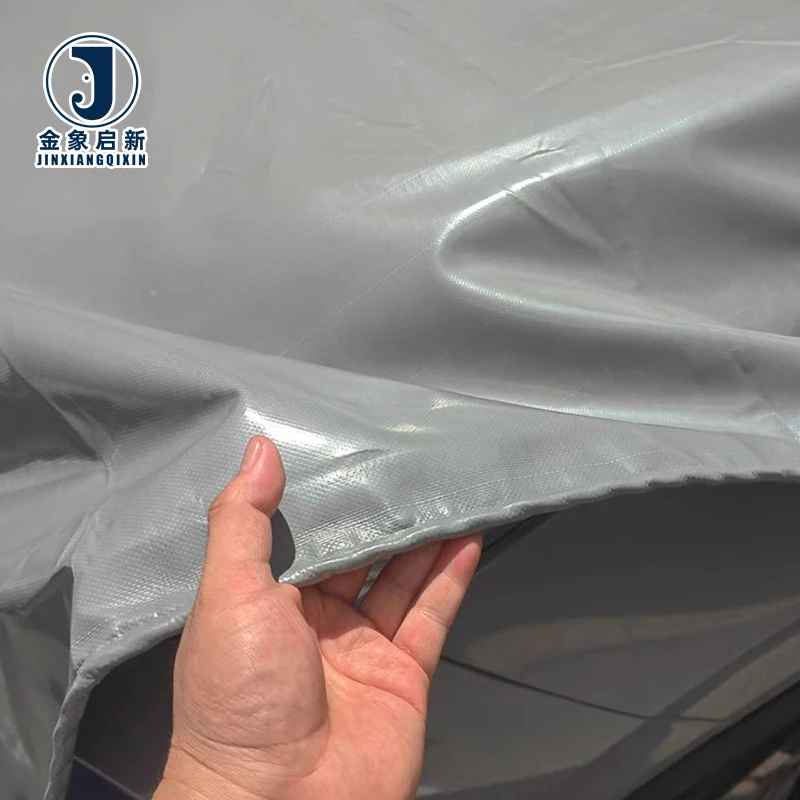
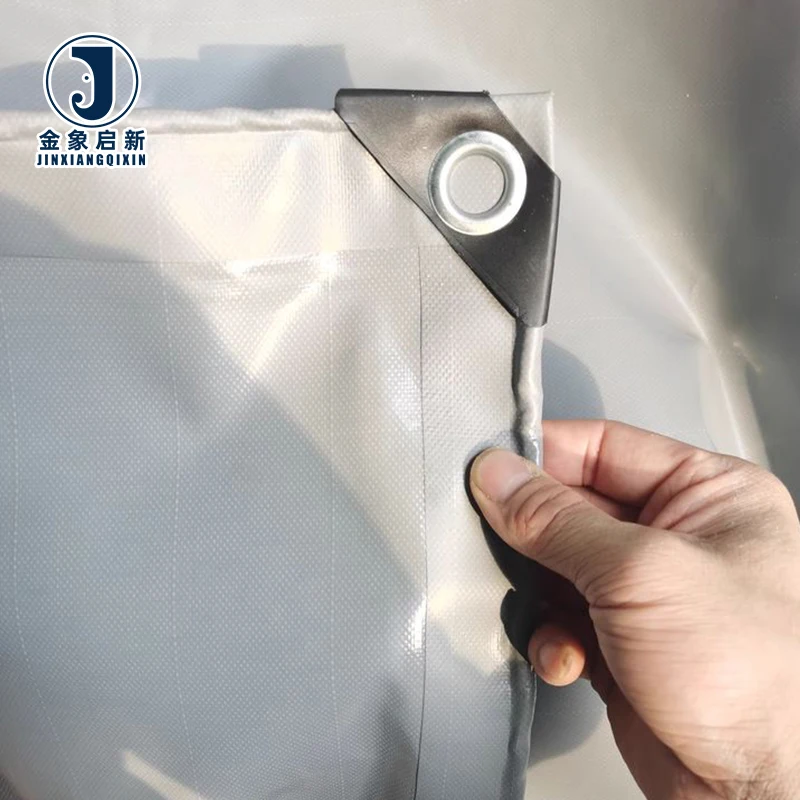
Verified Treatment Data — Every roll of this PVC coated fabric ships with a material specification sheet stating GSM, base fabric denier and confirmed treatment grade, eliminating the guesswork when fire-retardant or anti-static certification is required on site.
Technical Specifications
| Parameter | Value |
|---|---|
| Product Type | PVC Coated Tarpaulin Roll |
| Base Fabric Denier | 200D×300D / 500D×500D / 840D×840D / 1000D×1000D (confirm grade for project requirement) |
| Weight Range | 250 gsm – 1500 gsm (confirm the grade required for your application) |
| Coating Material | PVC |
| Surface Finish | Available in glossy or matte finish |
| Temperature Range | -15 °C to 70 °C |
| Treatment Options | Waterproof, UV, flame retardant, anti-fungal (confirm grade and test standard per project requirement) |
| Colour Options | Blue, yellow, black, green, white and additional colours on request |
| Sizing | 3×4 m / 6×8 m / 8×10 m / 10×12 m or custom made |
| Working Life | 3–10 years depending on usage environment (source value — verify against project conditions) |
| OEM / ODM | Accepted |
| Standards | ISO, CE |
Application Suitability
| Application | Exposure & Requirement |
|---|---|
| Mining and tunnelling ventilation duct | Continuous airflow flex, particulate abrasion, mandatory fire-retardant and anti-static certification for underground site entry |
| Aviation ground-support ducting | Fuel-vapour environment, temperature cycling, anti-fungal treatment required for compliance with aviation authority standards |
| Inflatable and membrane structures | Biaxial tensile load, UV exposure, weld integrity at seam lines under internal pressure |
| Temporary site enclosures and shelters | Wind load, rain ingress, rapid deployment and repeated strike/pack cycles |
| Specialist industrial covers | Chemical splash contact, mechanical abrasion from equipment movement, thermal stability within the rated range |
What Happens When Ventilation Fabric Arrives Without the Certificate Your Site Demands
A missing test report does not mean the fabric fails — it means you cannot prove it passes.
Ventilation duct and specialist structure fabric is regularly supplied with a datasheet that claims flame retardant or anti-static performance, yet the documentation package contains no test report matching the standard enforced at your project gate. The site safety officer rejects the material, the duct remains uninstalled, and the critical path stalls. This PVC coated tarpaulin fire retardant and anti-static grade is supplied with treatment data tied to a verifiable test standard — but only when the required standard is stated at inquiry stage. Too often, the purchase order says "FR treated" without naming M2, B1, NFPA 701 or DIN 4102, and the fabric that arrives carries a generic certificate that satisfies no one. [NEED_CITE: fire classification standards for coated fabrics used in underground and enclosed environments]
Coating Weight and Treatment Verification for Technical Applications
Selecting PVC coated fabric for ventilation ducts or membrane structures starts with confirming that the coating weight and treatment chemistry match the mechanical and regulatory demands of the installation. This PVC Coated Tarpaulin Roll is available across a denier range from 200D×300D through 1000D×1000D, allowing the base fabric selection to align with the tensile and tear loads expected in service. The coating process controls GSM consistency across the full roll length, which matters when long duct runs or large membrane panels are fabricated from a single batch.
Fire-Retardant and Anti-Static Compliance in Regulated Environments
For mining ventilation, tunnelling duct and aviation ground-support applications, the fire-retardant grade must correspond to the standard adopted by the jurisdiction or the site operator’s safety management system. The flame retardant treatment options available with this fabric should be confirmed against M2, B1, NFPA 701 or DIN 4102 as applicable to your destination market before production begins. Anti-static surface resistance requirements for explosive-atmosphere duct installations similarly need a stated test method so that the delivered roll can be verified on receipt. [NEED_CITE: anti-static testing methods for ventilation duct fabrics in explosive atmospheres]
How Base Fabric Denier, Coating Weight and Finish Interact in Service
The relationship between base fabric denier and coating weight determines how the material behaves under the biaxial tension of an inflated membrane or the continuous flex of a ventilation duct. A 1000D×1000D base fabric provides higher tensile and tear resistance than a 200D×300D weave, but the coating weight must be sufficient to encapsulate the heavier yarn structure and maintain adhesion under thermal cycling. Glossy finish supports heat-welded seam construction typical in duct fabrication, while matte finish may be specified where surface reflection must be minimised or where adhesive bonding is preferred. The stated temperature range of -15 °C to 70 °C defines the operational envelope; below this range the PVC coating becomes increasingly brittle, and above it the material softens, reducing dimensional stability at seam lines. Coating adhesion — the bond between PVC layer and polyester base — directly affects weld behaviour: poor adhesion causes delamination at the heat-weld interface before the fabric itself reaches its tensile limit. [NEED_CITE: tensile and tear test methods for coated fabrics per ISO 1421]
The Real Cost of Specifying the Wrong Treatment Grade
When a ventilation duct is installed underground with a flame retardant certificate that does not match the site-adopted standard, the entire run may need to be removed and replaced — not because the fabric failed, but because the paperwork did not comply. Similarly, a membrane structure fabricated from rolls with inconsistent treatment levels can show visible variation once panels are tensioned side by side in sunlight. Weld seams on duct sections flex continuously under airflow pulsation, and if the coating weight or denier is under-specified for that duty, the seam fails at the point of maximum flex before the field fabric shows any degradation. These outcomes are avoidable when the treatment grade, base fabric denier and coating weight are all confirmed and documented before the order enters production. [NEED_CITE: common failure modes in welded seams of coated ventilation duct fabric]
Why Source This PVC Coated Tarpaulin Roll Here
Three full production lines and 36 sets of professional equipment support bulk roll output with consistent coating weight control, which is critical when a single duct or membrane project consumes multiple rolls that must match. A 10-person R&D team handles material selection, treatment specification and sample development, enabling confirmation of fire-retardant grade and colour before the main production run. Dedicated QA and QC at every production stage with 100 percent pre-shipment inspection ensures that the GSM stated on the material specification sheet is the GSM on the delivered roll. Nearly 30 years of focused coated-fabric production provides the process knowledge to match denier, coating weight and treatment chemistry to the specific demands of ventilation duct and membrane structure applications. Samples for custom treatment and colour requirements are developed within days, keeping project timelines on track.
Documentation & Verification
- Material specification sheet stating GSM, base fabric denier and coating weight for the confirmed grade
- Test report for fire-retardant grade matched to M2, B1, NFPA 701 or DIN 4102 as required by your market
- Anti-static surface resistance test data where explosive-atmosphere compliance is mandated
- Pre-shipment inspection record confirming treatment consistency across every roll in the order
- Certificate of origin and customs documentation for cross-border project supply
Fabrication, Handling & Storage
- Heat-weld parameters must be adjusted to the selected coating weight and glossy or matte finish to achieve full seam adhesion
- Store rolls horizontally on pallets to prevent edge compression marks on the PVC coating surface
- Allow rolls to acclimatise above 10 °C before unrolling to avoid low-temperature coating brittleness and cracking
- Clean with pH-neutral detergent only; solvent-based cleaners may degrade the flame retardant or anti-fungal treatment layer
- Repair minor field damage with compatible PVC adhesive patches matched to the coating weight and colour of the installed panel
- Plan cutting layouts to minimise transverse seams on long duct runs, as each weld is a potential flex-fatigue point
Requesting a Specification Proposal
To receive a material recommendation that matches your project compliance requirements, provide the ventilation duct or membrane structure application details, including the fire-retardant or anti-static standard enforced at the installation site. Specify the required roll width, target colour and whether you need the PVC Coated Tarpaulin Roll supplied in stock lengths or custom-cut panels. If your project demands batch-matched colour across multiple rolls, state the total quantity so that production can be scheduled from a single coating run. Sample development is available to confirm treatment, colour and weld behaviour before you commit to full production volume.
Frequently Asked Questions
Q: Which fire-retardant standards can this PVC coated fabric be tested to?
A: The fabric is available in flame retardant grades that can be tested to standards including M2, B1, NFPA 701 and DIN 4102. The specific standard required depends on your destination market and the site safety regulations in force. State the applicable standard at inquiry stage so that the correct treatment chemistry is applied and a matching test report is included in the documentation package with your shipment.
Q: How is anti-static performance verified for mining ventilation duct applications?
A: Anti-static treatment is applied to the PVC coating surface to achieve the surface resistance level required by the mine or tunnel operator’s safety standard. The test method and acceptable resistance range must be confirmed at the specification stage so that the delivered roll carries a test report recognised by your site safety authority. Without this confirmation, generic anti-static claims cannot be validated at the project gate.
Q: What determines the correct denier and coating weight for a ventilation duct project?
A: The duct diameter, internal operating pressure and flex frequency all influence the base fabric denier and coating weight selection. Larger diameter ducts operating under higher pressure require heavier denier base fabric to resist hoop stress and longitudinal tension. The coating weight must encapsulate the base fabric fully to maintain adhesion at weld seams. Provide your duct dimensions and operating conditions so that a matched specification can be proposed.
Q: Can custom roll widths be supplied for large membrane or duct panels?
A: Custom widths are available to reduce the number of weld seams in large membrane panels or long ventilation duct sections. Fewer seams mean fewer flex-fatigue points and a cleaner finished appearance. The minimum order quantity and lead time for non-stock widths depend on the selected denier, coating weight and treatment grade. Confirm your required width and total linear metres at the inquiry stage.
Q: How long does sample development take for a custom treatment and colour?
A: Samples confirming the specified treatment grade, base fabric denier and colour are typically developed within a short turnaround once the requirements are finalised. This allows you to verify weld behaviour, colour match and treatment certification before authorising full production. Requesting samples early in the project timeline avoids delays when the approved specification enters bulk manufacturing.