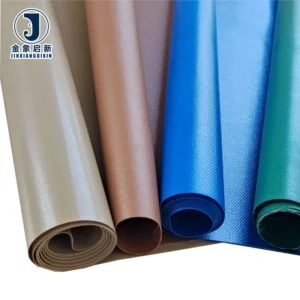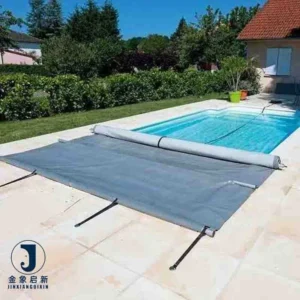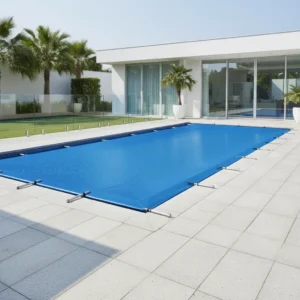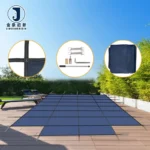
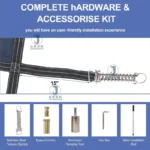
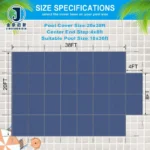

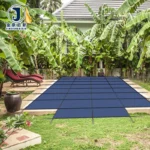
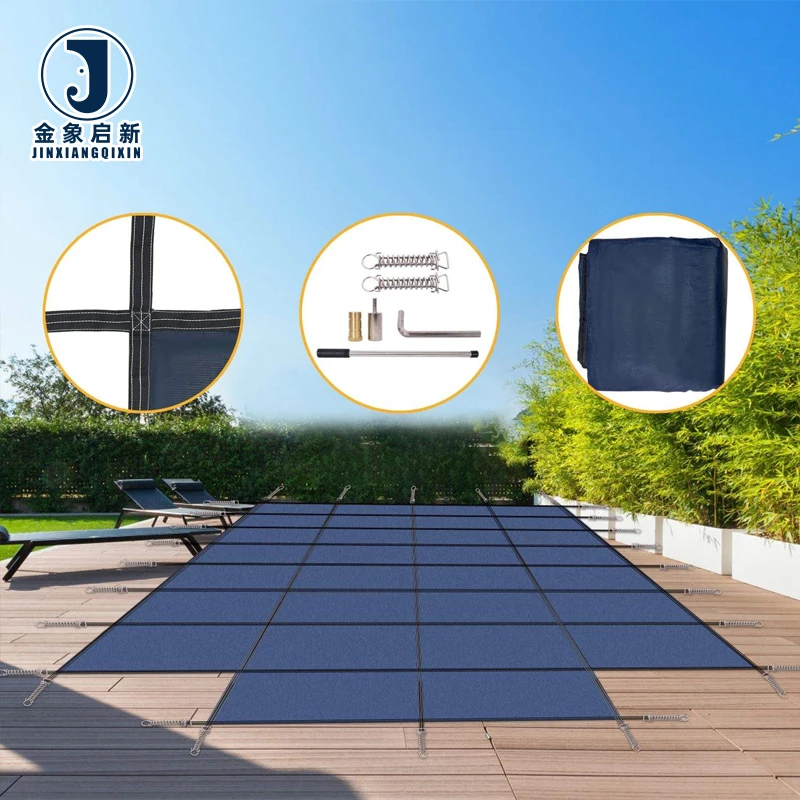
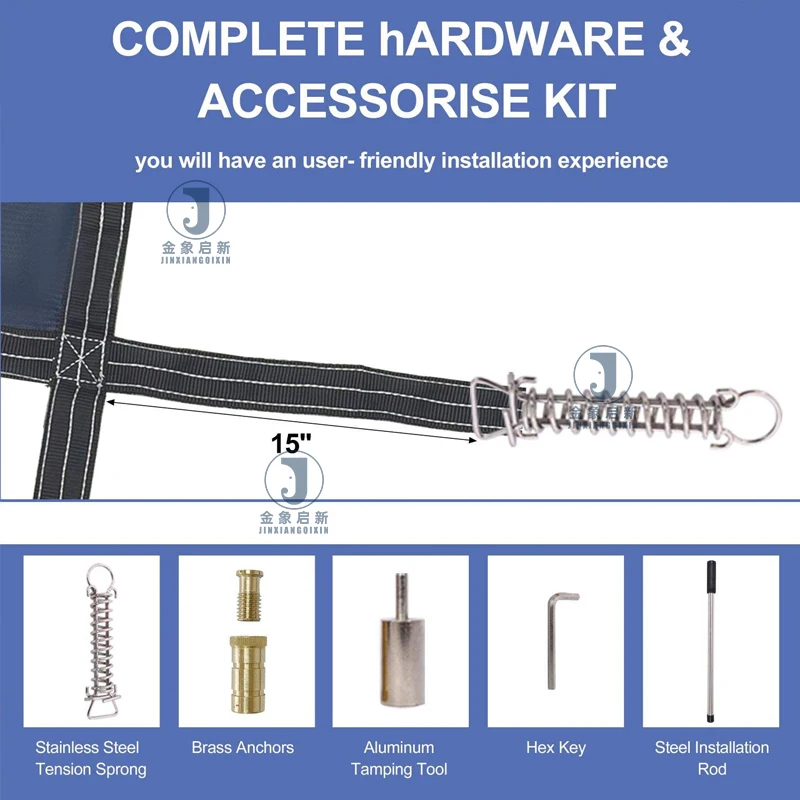
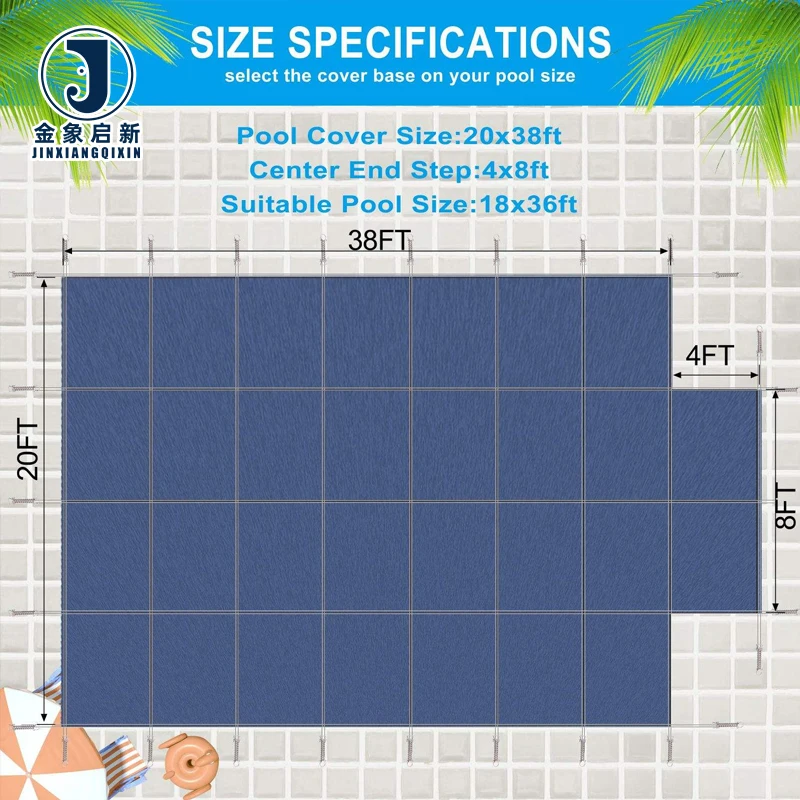
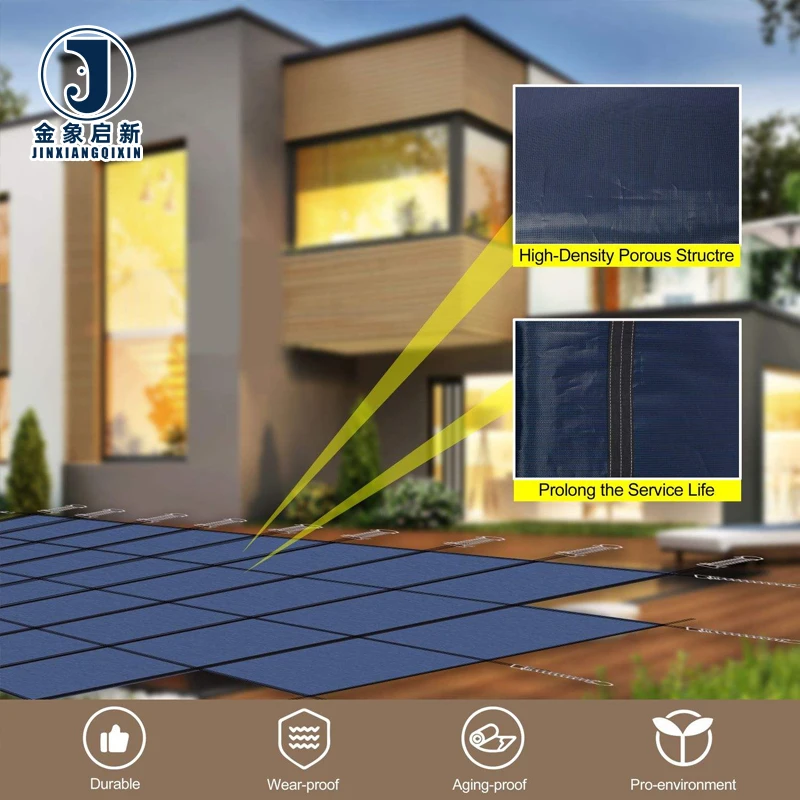
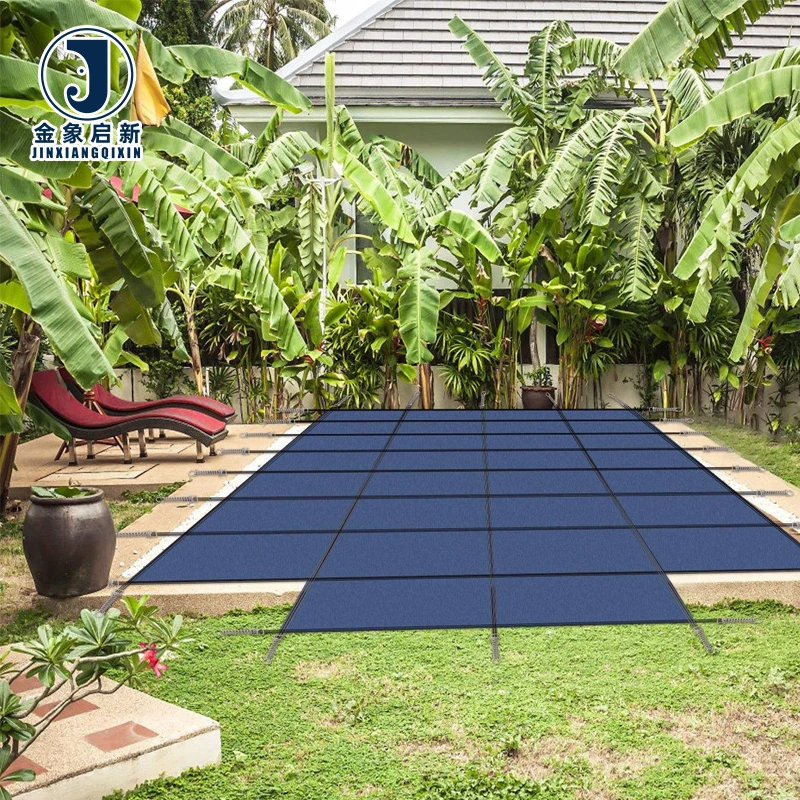
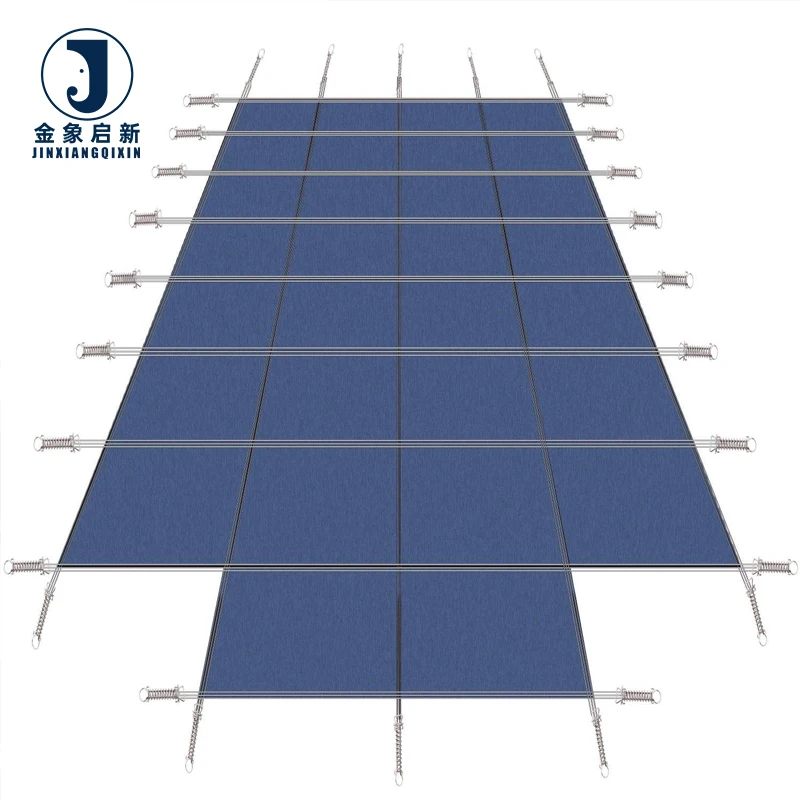
Coating Weight Integrity — every roll of PVC pool cover fabric is checked against the quoted GSM before dispatch, ensuring technical buyers receive the exact material data required for compliance documentation.
Technical Specifications
| Parameter | Value |
|---|---|
| Product Type | PVC Coated Tarpaulin / Pool Cover |
| Base Fabric | High-strength polyester mesh |
| Coating Method | Laminated technology & Hot-melt coating technology |
| Weight (GSM) | 350gsm / 420gsm / 500gsm / 550gsm / 600gsm / 750gsm (confirm grade for your project) |
| Total Thickness | 0.32mm / 0.35mm / 0.4mm / 0.45mm / 0.5mm / 0.65mm (confirm grade for your project) |
| Roll Width | 2m / 2.1m |
| Roll Length | 50m / 75m |
| Color Options | Blue / Red / Yellow / Light blue / Grey (customized) |
| Waterproof | Fully waterproof coated construction |
| Cold Crack Resistance | Available — confirm grade required for your market |
| Anti-Mildew | Treated |
| Anti-Static | Treatment available — confirm surface resistance standard required |
| Flame Retardant | Available as special treatment — confirm grade required for your market |
| Sunproof | Treatment available — confirm test basis for your market |
| Service Life | Suited to extended outdoor exposure under normal conditions |
| Certification | ISO, CE |
Application Suitability
| Application | Exposure & Requirement |
|---|---|
| Inground and above-ground pool covers | Permanent water contact, UV exposure, wind uplift at edges, flexing under debris load |
| Aquaculture pond and reservoir liners | Continuous water immersion, soil chemistry contact, puncture risk from substrate |
| Fish tank and hatchery covers | Humid enclosed environment, anti-mildew demand, frequent handling and cleaning |
| Mining site water containment covers | Heavy abrasion, certified flame-retardant and anti-static compliance on site |
| Inflatable and membrane structure enclosures | Structural tension, welding at seam junctions, fire safety audit requirements |
Why a Flame-Retardant Claim Without a Grade Fails the Site Audit
A PVC pool cover marketed as fire-safe means nothing to a mining safety officer or aviation facility inspector if the accompanying paperwork does not reference a recognised test standard. Fabricators and contractors routinely receive material described as flame retardant, only to discover at site inspection that no test certificate backs the claim. The consequence is project delay, rejected delivery, or worse — a cover installed over a water containment area that cannot pass the facility’s fire safety audit.
We supply flame-retardant and anti-static PVC pool cover fabric with test reports matched to your project’s compliance standard — confirm the grade required before ordering.
The gap between a supplier’s marketing language and a site auditor’s checklist is where most coated fabric procurement breaks down [NEED_CITE: fire classification standards for coated fabrics in industrial and mining environments]. Buyers specifying PVC pool cover fabric for safety-critical containment need documentation that names the test method, the grade achieved, and the issuing laboratory. Without that chain of evidence, the material is simply unverified.
Coating Adhesion and Seam Integrity for Wet-Environment Covers
Pool covers and water containment liners fail most often at the welded seam, not across the body of the fabric. Hot-melt coating technology bonds the PVC layer to the polyester mesh base at high temperature, producing peel strength that holds when the cover flexes under wind load or debris weight. For fabricators welding panels to fit large or irregular pool dimensions, this adhesion quality determines whether the seam survives repeated stress cycles or delaminates before the fabric itself shows wear.
Anti-Static and Flame-Retardant Compliance for Regulated Sites
Mining contractors, aviation maintenance facilities, and construction sites operating under strict safety audits require pool and containment covers that meet specific fire and static discharge standards. PVC pool cover fabric treated for flame retardancy and anti-static performance must be delivered with test documentation that names the standard, the result, and the test body [NEED_CITE: anti-static surface resistance test methods for industrial coated textiles]. Sourcing fabric without this paperwork forces the contractor into costly re-testing or replacement after the cover is already fabricated and installed.
Reading GSM and Thickness Together — Not in Isolation
GSM tells you the total weight per square metre but says nothing about how that weight is distributed between the polyester base and the PVC coating. A 500gsm fabric with a heavy coating but a light base fabric will have different tensile and tear behaviour than a 500gsm fabric built on a denser mesh with a thinner coat. Hot-melt coating adds to coating adhesion and weld performance, while laminated construction offers a different cost-to-performance balance. Thickness readings across the 0.32mm to 0.65mm range correlate with both coating build and base fabric denier, and both influence how the material handles puncture and abrasion in pond liner or pool cover use. Roll widths of 2m and 2.1m determine panel layout efficiency — wider stock reduces the number of welded seams on large rectangular covers.
The Cost of Ordering Unverified Material for Safety-Critical Covers
Contractors who accept PVC pool cover fabric without checking the delivered GSM against the quotation specification risk installing a lighter material than the project was engineered for. Thinner coating or a lower-density base fabric reduces puncture resistance and accelerates wear at stress points. Where flame-retardant or anti-static treatment is specified but not documented, the installed cover becomes a compliance liability the moment a site inspector asks for the test report [NEED_CITE: pre-shipment inspection practices for coated fabric orders]. Batch colour variation between rolls in the same order creates visible inconsistency once the cover panels are welded and laid side by side, forcing rework on projects where appearance matters.
Procurement Advantages for Technical Buyers
Dedicated QA/QC at every production stage includes weight verification per roll against the quoted GSM, so the material you receive matches the specification you approved. A 10-person R&D team develops custom-compliance samples within days, allowing you to confirm flame-retardant grade, anti-static treatment, and colour match before committing to a full production run. Three full production lines with 36 sets of professional equipment support bulk roll orders with consistent batch-to-batch output, reducing the colour variation risk across a multi-roll shipment. Pre-shipment inspection covers every roll, and full documentation — including material spec sheet, test reports, and certificates of origin — ships with the consignment. ISO and CE certification is maintained at facility level, supporting your own compliance chain when you submit material data to a project engineer or site auditor.
Documentation & Verification
- Material specification sheet stating GSM, base fabric, coating method, and all treatments applied
- Test reports for flame-retardant and anti-static grades matched to your target compliance standard
- Pre-shipment inspection record with roll-by-roll weight and thickness verification
- Certificate of origin and customs support documentation included with every export shipment
- Colour reference and batch consistency record for multi-roll orders
Fabrication, Handling & Storage
- Hot-melt coated rolls weld cleanly at seams — confirm temperature and dwell time settings for the specific GSM grade ordered
- Laminated PVC construction requires adjusted heat settings to avoid base fabric scorch during high-frequency welding
- Store rolls horizontally on pallets to prevent compression creasing across the 2m or 2.1m width
- Allow cold-stored rolls to reach ambient temperature before unrolling to prevent coating crack in cold-crack resistant grades
- Cut panels with allowance for welded hem reinforcement where eyelet or tie-down loads concentrate stress
What to Include in Your Enquiry
To specify the correct PVC pool cover fabric for your project, provide the target GSM and thickness range, the fire-retardant or anti-static standard your site requires, and the roll width and colour you need. If the end use is a mining or aviation containment cover, state the compliance standard the finished installation must pass so the correct treatment and documentation can be matched from the outset. Confirm whether you need full rolls for your own fabrication line or cut-to-size finished covers with edge reinforcement.
Frequently Asked Questions
Q: What fire-retardant grades and test standards are available for PVC pool cover fabric?
A: Flame-retardant treatment is available as a special option. The specific grade and test standard must be confirmed against your site’s compliance requirement — whether that is a mining safety regulation or a building fire code. Request the test report matched to your target standard before placing a bulk order so the documentation aligns with your project audit.
Q: How is anti-static performance measured and what surface resistance values can be supplied?
A: Anti-static treatment can be applied during coating, and the resulting surface resistance value depends on the treatment formulation used. Buyers should specify the surface resistance range required by their site safety standard. Test documentation confirming the measured value is provided with the shipment to support compliance verification at the installation site.
Q: Can you provide certification documentation that satisfies mining or aviation site safety audits?
A: ISO and CE certificates are maintained at facility level, and project-specific test reports for flame-retardant and anti-static grades are supplied when the required standard is confirmed at enquiry stage. Pre-shipment inspection records and material specification sheets ship with every consignment, giving your site auditor a complete documentation trail.
Q: How do you verify GSM and coating weight on arrival against the quotation specification?
A: Every roll undergoes weight verification against the quoted GSM during pre-shipment inspection, and the inspection record accompanies the shipment. On arrival, buyers can cross-check roll weight and thickness against the documentation provided to confirm the material matches the original specification before fabrication begins.
Q: What is the process for developing a custom-compliance sample before bulk production?
A: Submit your target GSM, treatment requirements, colour, and compliance standard at enquiry stage. The R&D team develops a sample within days, allowing you to test weld performance, verify treatment grades, and confirm colour before committing to full production. Sample approval triggers the bulk run with the same material formulation locked in.