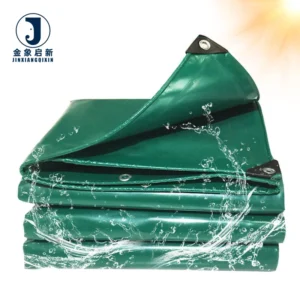
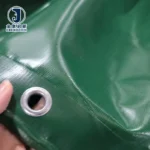
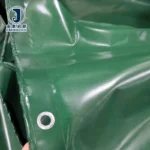
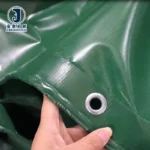
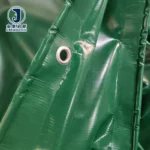
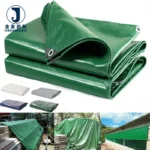
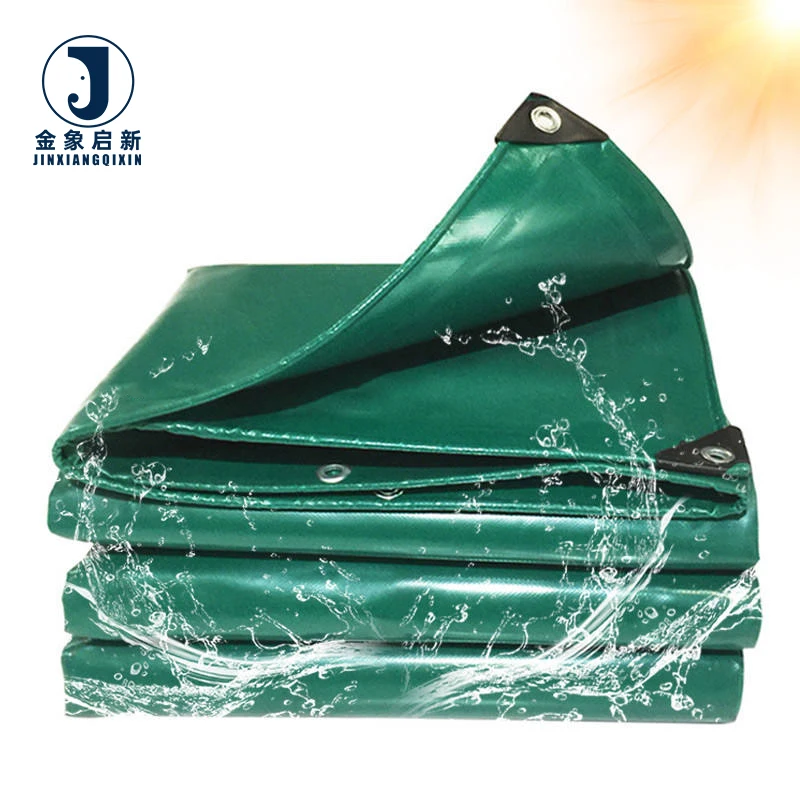
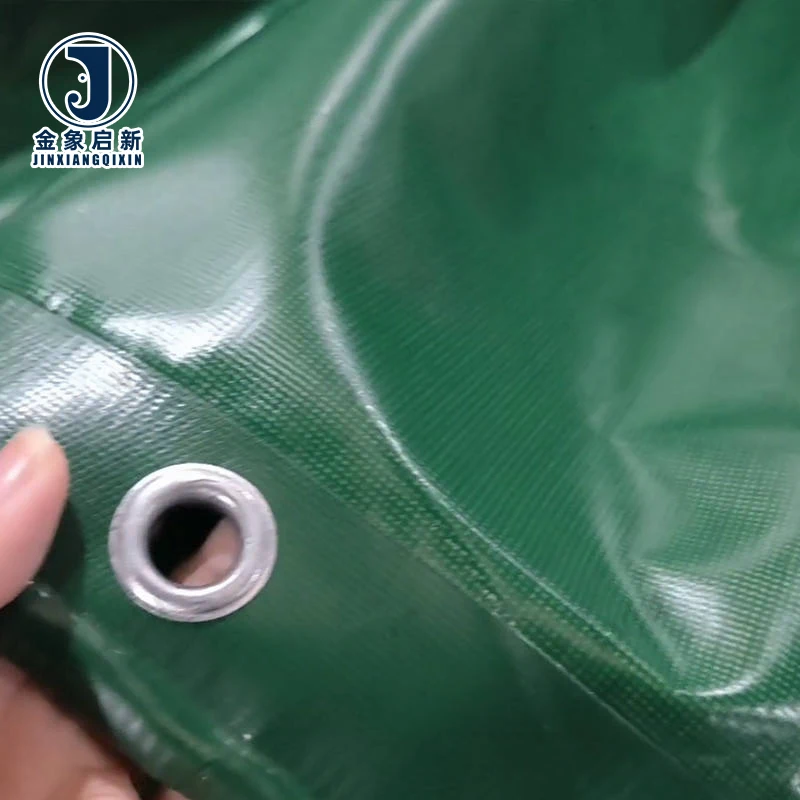
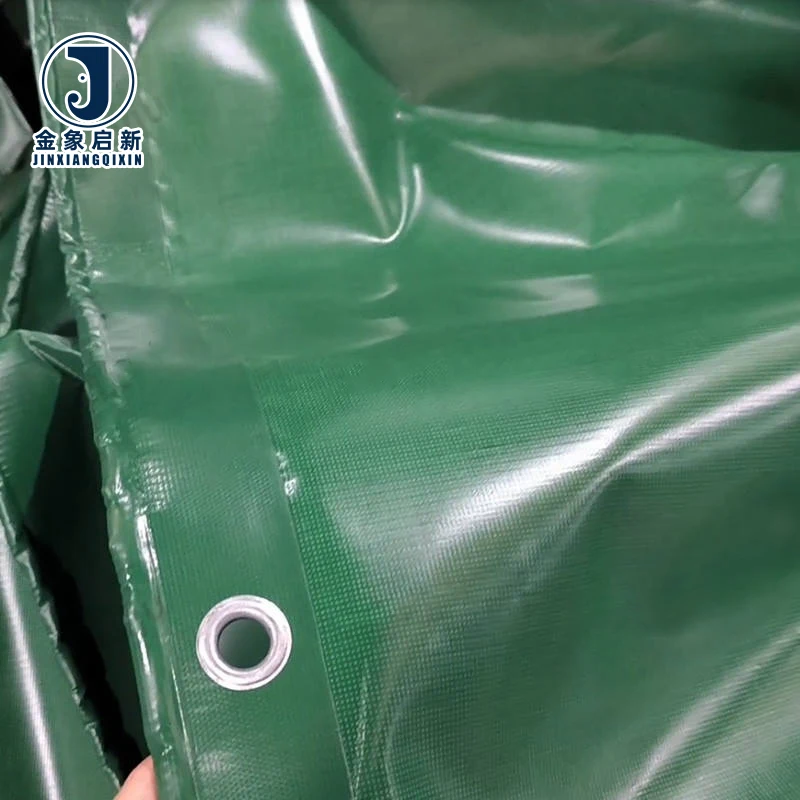
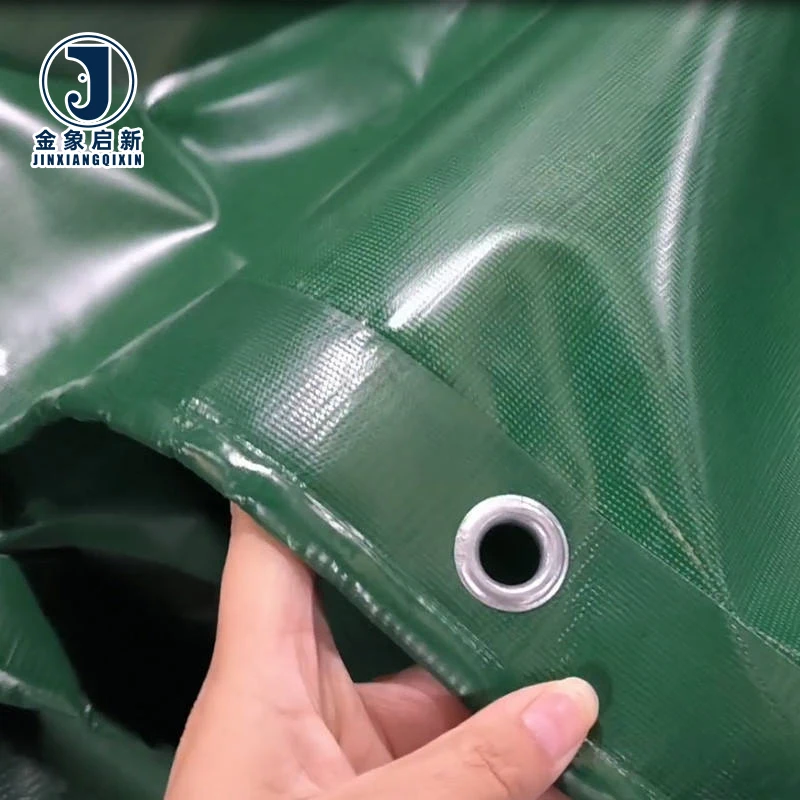
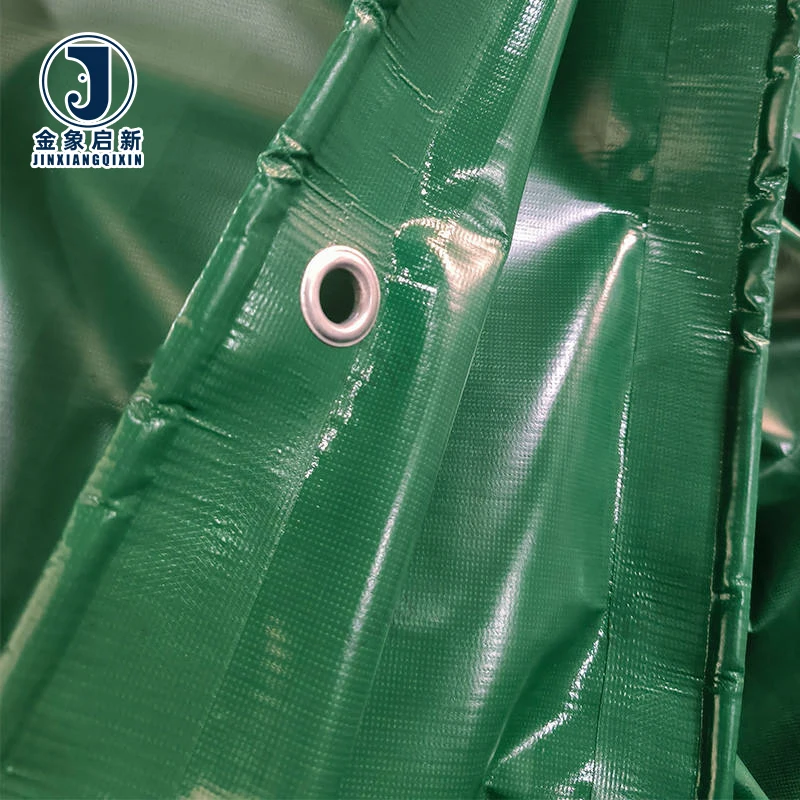
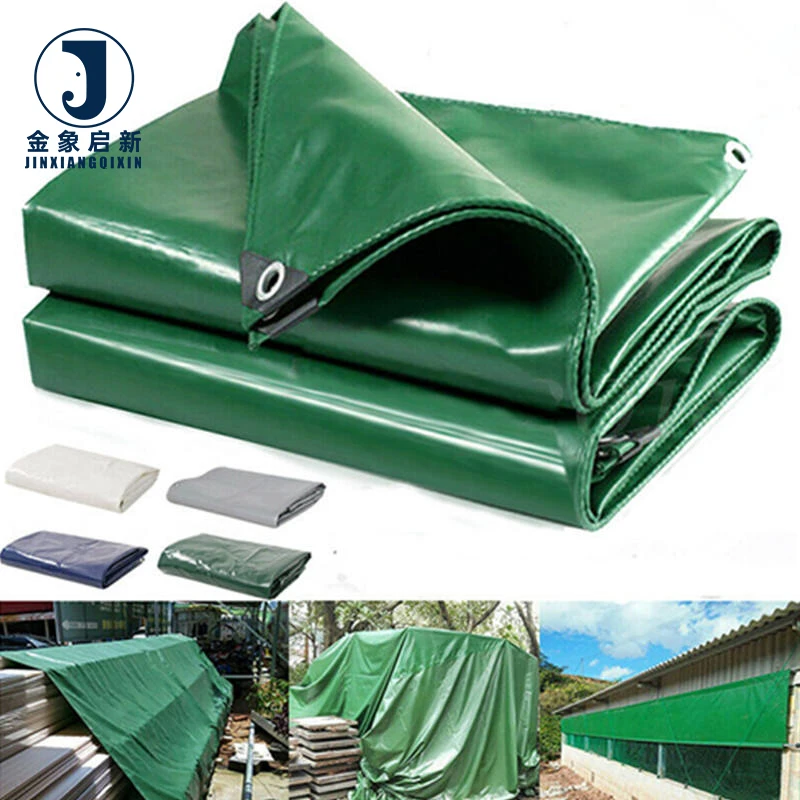
Coating Process Control — Every roll undergoes dedicated QA at each production stage, ensuring the PVC adhesion and weight consistency required for industrial ventilation ducts and membrane structures.
Technical Specifications
| Parameter | Value |
|---|---|
| Product Type | PVC Coated Tarpaulin |
| Weight Options | 350 / 400 / 420 / 500 / 600 / 650 / 750 / 900 GSM |
| Base Fabric Denier | 500D×840D (350/400/420); 500D×1000D (500); 1000D×1000D (600); 1000D×1300D (650); 1300D×1300D (750); 1000D×2000D (900) |
| Mesh Count | 30×19 (350–500); 20×20 (600–750); 30×15 (900) |
| Total Thickness | 0.29 mm (400); 0.32 mm (420); 0.38 mm (500); 0.44 mm (600); 0.46 mm (650); 0.55 mm (750); 0.65 mm (900) |
| Tensile Strength – Warp | 1650 N (350); 1800 N (400); 1850 N (420); 2050 N (500); 2500 N (600); 2550 N (650); 2750 N (750); 3900 N (900) |
| Tensile Strength – Weft | 1600 N (350); 1700 N (400); 1750 N (420); 1900 N (500); 2200 N (600); 2250 N (650); 2850 N (750); 3500 N (900) |
| Coating Material | PVC |
| Welding Compatibility | High-frequency hot melt, hot air welding, sewing |
| Flame Retardant | Available in flame retardant grades — confirm the grade required for your market |
| Anti-Static | Available in anti-static grades — confirm the surface resistance or standard required |
| UV Treatment | Anti-UV treatment available — request test report for your exposure conditions |
| Anti-Mildew | Treated |
| Finish | Self-clean, heavy metal free |
| Brittle Temperature | ≤ −50 to −60 °C |
| Softening Temperature | ≥ 80 °C |
| Melting Point | 212 °C |
| Density | 1.15–2.00 g/cm³ |
| Printing | Printable, customised |
| Certifications | ISO, CE |
Application Suitability
| Application | Exposure & Requirement |
|---|---|
| Mining and tunnelling ventilation duct | Continuous forced airflow, suspended spans, fire-risk zones, anti-static compliance underground |
| Construction and infrastructure air duct | Outdoor UV exposure, abrasion from handling, temporary fire-code demands on site |
| Aviation ground-support air duct | Fuel-adjacent environment, anti-static and flame-retardant certification, frequent relocation |
| Membrane and inflatable structures | Permanent tensile load, UV and weather exposure, weld integrity at panel seams |
| Specialist event and architectural fabric | Visual consistency across panels, heavy metal free finish for public contact, fire classification for assembly venues |
What Certification Gaps Mean for Your Ventilation Duct or Membrane Project
Ordering PVC coated tarpaulin without written test documentation leaves compliance to chance.
Ventilation duct installed on a tunnelling site can be rejected at inspection if the fire-retardant grade is not backed by a test certificate matching the project specification. Anti-static performance matters equally underground, where static discharge poses ignition risk, yet many suppliers ship fabric with a generic claim and no measured surface resistance. Buyers who have sourced PVC coated tarpaulin for compliance-driven projects know that the gap between "stated flame retardant" and "certified to the standard your site requires" is where delays and reorders happen [NEED_CITE: fire classification standards for coated fabrics in underground and aviation environments]. Specifying the exact grade and requesting the test report before production starts is the only reliable path to acceptance.
Matching the Grade to the Airflow Environment
Selecting PVC coated tarpaulin for an air duct begins with the environment it will serve. Mining and tunnelling operations demand documented anti-static and flame-retardant properties because the duct operates near combustible dust and gas. Aviation ground-support ducts require similar documentation but may follow a different classification standard. Surface finish matters too: a self-clean finish reduces dust accumulation inside the duct over extended service, while a heavy metal free composition is necessary when the fabric contacts sensitive environments such as healthcare or public assembly inflatable structures.
Welding Methods That Hold Under Duct Pressure
Industrial ventilation ducts are fabricated by joining long panels, and the seam must withstand continuous positive or negative pressure without peeling. High-frequency hot melt welding produces a bond that fuses the PVC layers, creating a seam that can match or exceed the parent fabric strength. Hot air welding offers portability for field repairs and on-site duct modifications. Sewing remains relevant for certain membrane structures where mechanical fastening is preferred. Each method interacts differently with the coating thickness and base fabric denier, so confirming the fabrication method against the selected GSM and denier ensures seam integrity throughout the duct service life [NEED_CITE: high frequency versus hot air weld strength on PVC coated polyester].
How Denier, Mesh Count and Coating Weight Interact
The eight weight grades in this range pair specific base fabric deniers with corresponding mesh counts and coating weights. A 1000D×2000D base at 900 GSM delivers high tensile figures in both warp and weft, suited to large-span membrane structures where the fabric carries permanent tensile load. Moving to lighter grades, the 500D×840D base at 350 GSM suits applications where duct weight must be minimised for handling, yet still requires a continuous PVC coating for airtightness. Mesh count influences how much coating penetrates the weave: a tighter 30×19 mesh at lower GSM holds a thinner coating evenly, while a more open 20×20 mesh at higher GSM allows deeper PVC penetration, improving peel strength at welds. Thickness alone does not predict performance; the relationship between denier, weave density and total coated weight determines how the fabric behaves under sustained load and repeated flexing.
When a Specification Mismatch Reaches the Job Site
A ventilation duct that fails inspection because the flame-retardant certificate references a different standard than the site specification halts the project until replacement fabric arrives. Anti-static fabric that was not measured against the required surface resistance threshold can force a tunnelling contractor to pull installed duct and start over. Colour variation between rolls used on the same membrane structure becomes visible once panels are welded side by side, triggering rework on a finished installation. Welds that separate before the fabric itself shows wear usually trace back to a coating formulation or thickness that does not suit the welding parameters used — a mismatch that could have been caught with a sample test before bulk production [NEED_CITE: common seam failure causes in PVC coated fabric duct systems].
Why Fabrication-Ready Documentation Matters Here
Production lines dedicated to coated fabric allow tight control over coating weight and adhesion across each of the eight GSM grades, so the roll you receive matches the specification you approved. A 10-person R&D team handles material selection, weld compatibility trials and sample development, providing a physical sample cut from the grade you specified before you commit to a bulk order. Every roll passes through inspection at each production stage, with a pre-shipment check against the stated GSM, colour reference and treatment grade. ISO and CE certifications underpin the quality system, and customs documentation including certificate of origin supports smooth import clearance. Sample development within days means you can validate weld parameters and colour accuracy without waiting for the full production run.
Documentation & Verification
- Material specification sheet confirming GSM, base fabric denier, coating type and colour reference per roll
- Test report for flame-retardant and anti-static grades matched to the standard your project specifies
- Pre-shipment inspection record verifying weight, dimensions and visual consistency before dispatch
- ISO and CE certificates supporting the quality management system behind every production batch
- Packing list by roll with net and gross weight for accurate container loading and customs entry
- Certificate of origin included for import duty assessment in your destination market
Fabrication, Handling & Storage
- Set high-frequency welder power and dwell time to match the selected GSM and coating thickness before full production
- Use hot air welding at the recommended temperature range for field duct repairs on any grade in this series
- Store rolls upright on a clean pallet to prevent permanent creasing across the PVC coating surface
- Allow cold-stored rolls to reach ambient temperature before unrolling to avoid coating micro-cracking below the brittle point
- Select cleaning agents compatible with the self-clean, heavy metal free finish to preserve surface integrity
- Plan panel cutting layout around the available roll width to minimise off-cuts and transverse weld seams
What to Include With Your Enquiry
Provide the ventilation duct diameter, span length and operating pressure so the correct GSM and denier can be recommended. State the fire-retardant and anti-static standards your project specification calls for, along with the issuing authority, so matching test documentation is prepared before production. Confirm whether you need rolls in stock width or finished panels with weld-ready edge preparation, and whether colour or print is required for external membrane visibility.
Frequently Asked Questions
Q: What fire-retardant standards are available and how are they documented?
A: Flame-retardant grades are available for this PVC coated tarpaulin range. The specific standard must be confirmed against your project specification before production. A test report referencing the applicable classification is supplied with the shipment, so your site inspector can verify compliance without requesting additional paperwork after delivery.
Q: How is anti-static performance measured and certified for mining and tunnelling use?
A: Anti-static treatment can be applied to selected grades in this PVC coated tarpaulin range. Surface resistance is measured according to the standard required by your mining or tunnelling authority. The test result is included in the documentation package so the site safety officer can confirm the duct meets underground ignition-prevention requirements.
Q: How do I select the correct GSM and denier for a ventilation duct or membrane structure?
A: Match the duct span and operating pressure to the tensile strength figures listed for each grade. Longer spans and higher pressures call for heavier base denier and higher GSM. Request a sample of the shortlisted grade to validate weld compatibility and handling weight before committing to bulk production.
Q: What welding and fabrication methods are supported for duct construction?
A: High-frequency hot melt, hot air welding and sewing are all compatible with this PVC coated tarpaulin range. High-frequency welding is preferred for factory duct seams, while hot air suits field repairs. Sample panels can be prepared so your fabrication team can dial in welder settings before the main order ships.
Q: What compliance documentation is included with each shipment?
A: Each dispatch includes a material specification sheet, applicable test reports for flame-retardant or anti-static grades, a pre-shipment inspection record, ISO and CE certificates, a roll-level packing list and certificate of origin. These documents travel with the shipment to support site inspection and customs clearance.