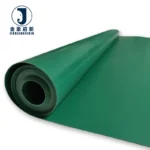
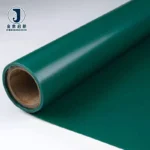
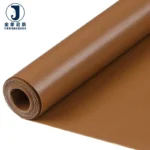

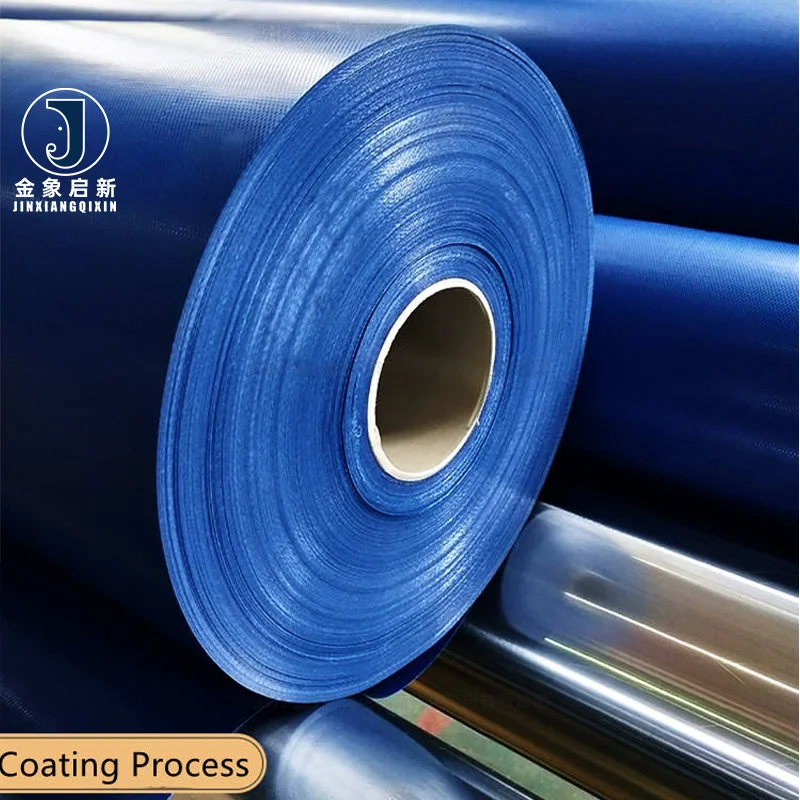
Industrial-Grade Material Control — Every roll of PVC coated tarpaulin is produced with documented GSM verification and base fabric traceability, ensuring the membrane and shelter fabric you specify is the material you receive on site.
Technical Specifications
| Parameter | Value |
|---|---|
| Product Type | PVC Coated Tarpaulin Roll |
| Coating Material | PVC (double-sided) |
| Base Fabric Material | Polyester |
| Yarn Count Options | 500D840D / 500D1000D / 1000D1000D / 1000D1300D / 1300D1300D / 1000D2000D |
| Weight Options (GSM) | 350 / 400 / 420 / 500 / 600 / 650 / 750 / 900 |
| Thickness Range | 0.29 mm (400 GSM) – 0.65 mm (900 GSM) |
| Mesh Count | 3019 (350/400/420 GSM), 2020 (600/650/750 GSM), 30*15 (900 GSM) |
| Tensile Strength Warp | 1650 N (350 GSM) – 3900 N (900 GSM) |
| Tensile Strength Weft | 1600 N (350 GSM) – 3500 N (900 GSM) |
| Flame Retardant | Available — confirm grade required for your market |
| UV Treatment | Available — confirm test basis for your project specification |
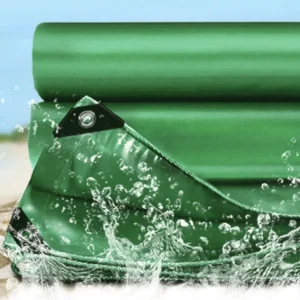
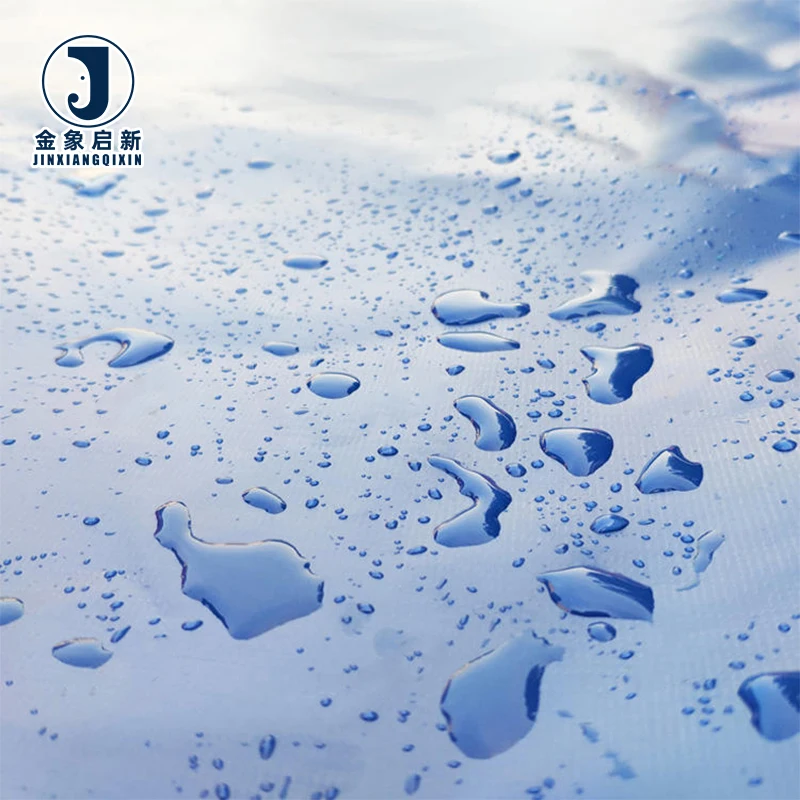
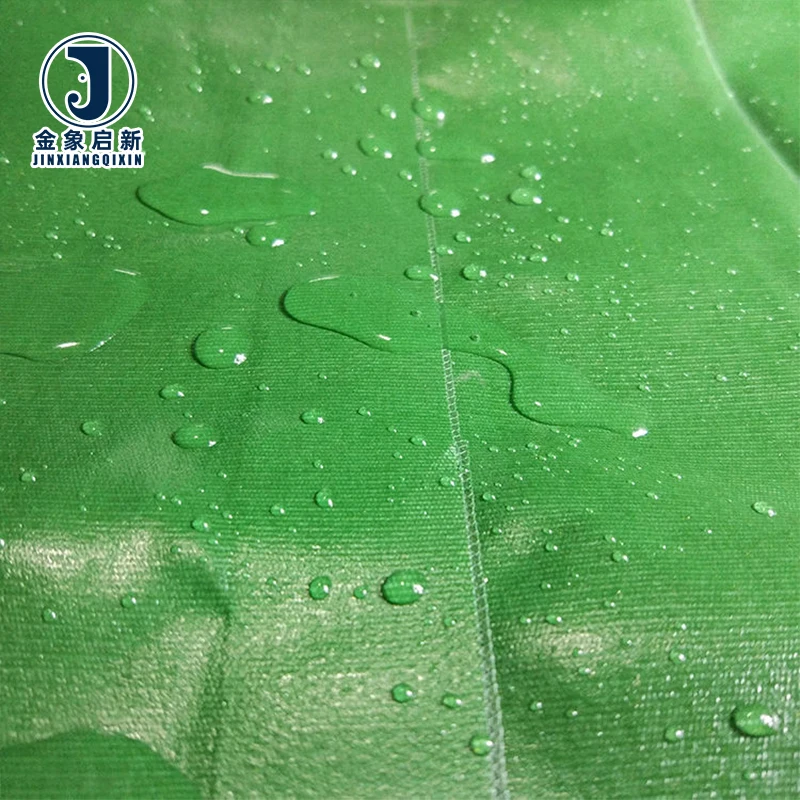
| Waterproof | Fully waterproof coated construction |
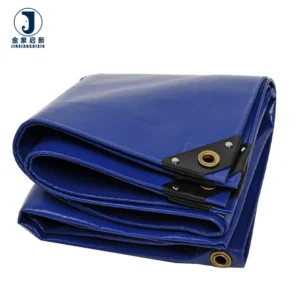
| Edge Finishing | High-temperature heat-sealed seamless edge wrapping with 5 mm rope |
| Eyelet | 3 cm enlarged aluminum alloy buttonhole |
| Corner Reinforcement | Reinforced corners on all sides |
| Brittle Temperature | ≤ -50 to -60 °C |
| Softening Temperature | ≥ 80 °C |
| Melting Point | 212 °C |
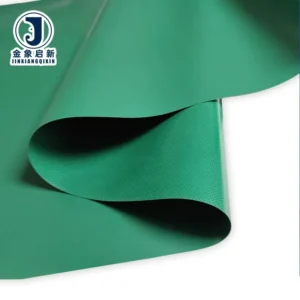
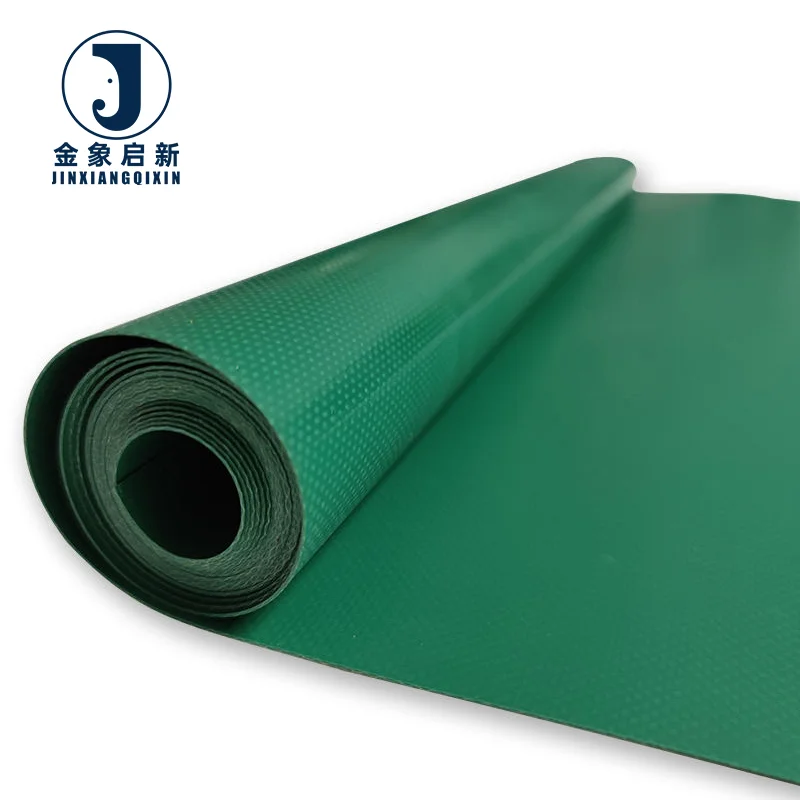
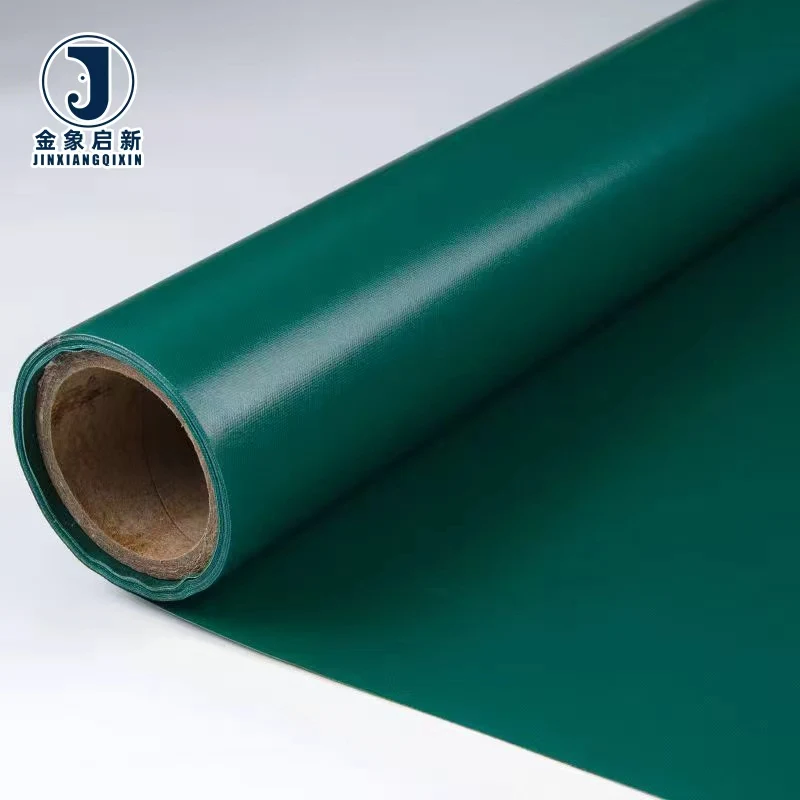
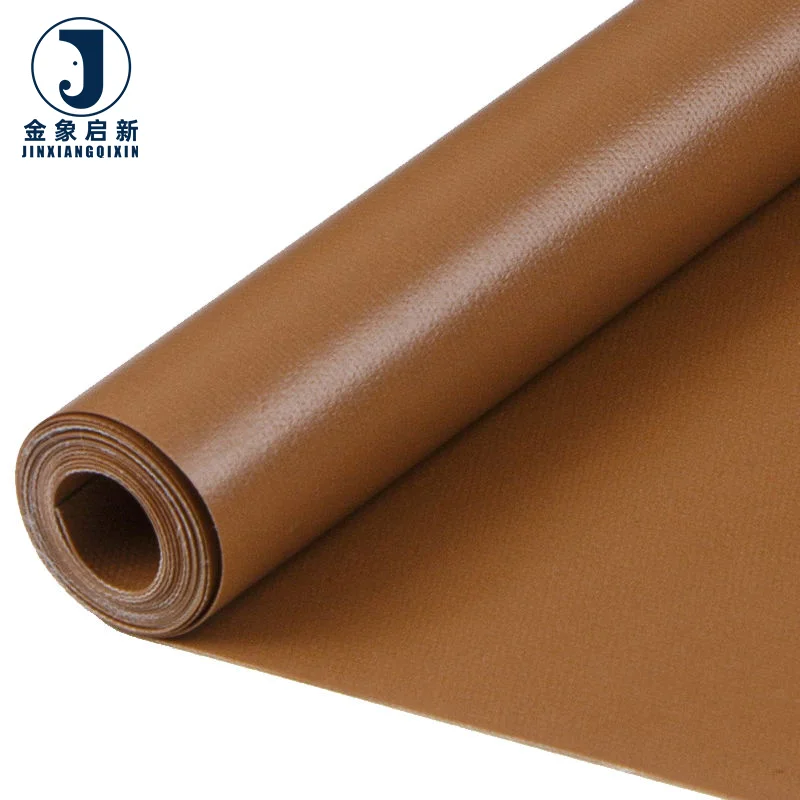
| Key Features | Water resistant, flame retardant options, anti-UV options, smooth leather-like surface |
Application Suitability
| Application | Exposure & Requirement |
|---|---|
| Mining and tunnelling ventilation duct | Constant airflow abrasion, suspended mounting stress, mandatory fire-retardant and anti-static compliance for underground operations |
| Industrial shelter and site enclosure | Wind load on large unsupported spans, UV and rain exposure, thermal cycling across seasons |
| Membrane and inflatable structure fabric | Biaxial tension under internal pressure, long-term UV exposure, weld integrity at curved panel joins |
| Heavy-duty machine and equipment covers | Contact abrasion from sharp metal edges, outdoor weathering, repeated removal and re-fitting |
| Aviation ground support covers | Fuel and hydraulic fluid splash resistance, low-temperature flexibility on tarmac, rapid deployment |
What "Certified" Fabric Means When the Test Report Does Not Match the Site Standard
A flame-retardant claim without a matching grade is a compliance risk, not a material property.
Mining and tunnelling contractors have faced shutdowns because the ventilation duct on site carried a generic flame-retardant label that did not satisfy the fire officer’s specific standard. The PVC coated tarpaulin roll arrived looking correct, but the documentation gap forced a costly replacement mid-project. The same problem surfaces in membrane structures where the building inspector asks for a classification the fabric supplier never tested against. [NEED_CITE: fire classification standards for temporary structures and ventilation ducts in underground works]
Fire-Retardant and Anti-Static Grades for Underground and Enclosed Environments
Ventilation ductwork in mining and tunnelling must satisfy both flame-spread and static-dissipation requirements simultaneously. This PVC coated tarpaulin is available in flame-retardant grades — confirm the specific grade required for your jurisdiction, whether that is a local mining safety code or a building standard for temporary enclosures. The material specification sheet documents the base fabric denier and coating weight for whichever grade you select, so the compliance trail is complete before the fabric reaches site.
Extreme-Cold Flexibility for Surface and Sub-Surface Installations
Fabric used in high-altitude mining or winter tunnelling must remain flexible at temperatures well below freezing. The brittle temperature rating of ≤ -50 to -60 °C means the PVC coated tarpaulin retains its handling characteristics in conditions where lesser coatings crack during deployment. [NEED_CITE: low-temperature flexibility test methods for PVC coated polyester fabrics] This performance range covers the full spectrum of surface and underground environments where ventilation duct and shelter membrane must be installed without pre-warming.
Reading the GSM and Tensile Figures Together
Weight in GSM and base fabric denier are interdependent variables, not independent selling points. A 650 GSM fabric built on a 1000D*1300D polyester base distributes load across heavier yarns, yielding 2550 N warp tensile strength through yarn mass rather than excess coating filler. Compare this with a 600 GSM grade on a lighter mesh count that achieves 2500 N warp through tighter weave density. Both figures appear similar on paper, but the heavier-yarn construction resists tear propagation differently under biaxial stress — a critical distinction when a membrane panel is tensioned across a curved frame. Coating weight and base fabric density must be evaluated as a system, which is why the specification sheet lists both parameters for every grade.
The Hidden Cost of Specifying the Wrong Grade for the Application
Selecting a ventilation duct fabric without confirming the fire-retardant grade can result in a failed site inspection, halting production until compliant material arrives. A membrane structure builder who substitutes a lighter GSM grade to reduce cost may discover that the panel seams split under wind load because the tensile reserve was insufficient for the span. Colour variation between rolls delivered in the same batch forces a contractor to reject an entire shipment when adjacent panels show visible mismatch once installed side by side. Weld failures at high-flex points often trace back to a coating formulation that was not matched to the hot-air welding temperature window. [NEED_CITE: tensile and tear test methods for coated fabrics per ISO 1421]
Why Source This PVC Coated Tarpaulin Through Jinxiang
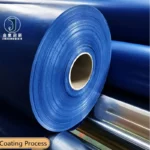
Three full production lines and dedicated equipment sets allow bulk roll output without compromising the coating-weight control that technical fabric demands. The ten-person R&D team develops custom-width samples and verifies flame-retardant treatment against your target standard before production scales up. Every roll undergoes in-process QA during coating, with a full pre-shipment inspection covering GSM verification, colour consistency and seam integrity. ISO and CE certification underpins the documentation package, so the compliance paperwork travels with the fabric from the production floor to your project site.
Documentation & Verification
- Material specification sheet confirming GSM, denier, coating type and mesh count per roll grade
- Flame-retardant test report issued against the standard you nominate at inquiry stage
- ISO and CE certificates included in the shipment documentation package
- Pre-shipment inspection record with roll-by-roll weight and colour verification
- Certificate of origin and customs documentation for cross-border freight
Fabrication, Handling & Storage
- Hot-air welding parameters vary by GSM — test weld settings on a sample swatch before full panel fabrication
- High-temperature heat-sealed edge wrapping prevents delamination at stress points during duct assembly
- Store rolls vertically on pallets to avoid compression creases that weaken the PVC coating layer
- Allow cold-stored rolls to reach ambient temperature before unrolling to prevent coating micro-cracking
- Clean the smooth surface with mild detergent; solvent-based cleaners may degrade the PVC topcoat finish
- Field repairs are achievable with portable hot-air welders matching the coating’s 212 °C melting point
Before You Request a Quote
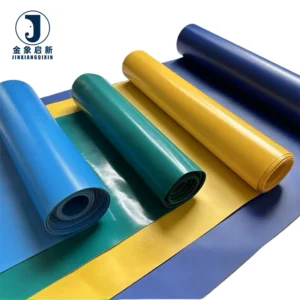
Tell us the specific ventilation duct diameter or membrane span dimensions, the fire-retardant and anti-static standards your site authority requires, and the operating temperature range. If you need custom widths, colour matching or printed identification stripes, provide the target quantities so we can confirm production lead time. Sample development is available for approval before bulk roll commitment.
Frequently Asked Questions
Q: How do I specify the correct flame-retardant grade for my site’s fire safety requirements?
A: Provide the exact standard or code your site authority enforces — such as a mining ventilation regulation or a temporary building fire classification. We then match the PVC coated tarpaulin formulation to that grade and include the corresponding test report in the documentation package, so compliance is verifiable before installation begins.
Q: What test basis supports the anti-UV claim, and how does it affect outdoor service life?
A: UV treatment is applied during coating and confirmed by test — request the specific test report that matches your project’s exposure requirement. Confirming the test basis at inquiry stage ensures the membrane or shelter fabric you receive carries documented UV performance rather than an unsupported claim.
Q: How is GSM verified on arrival, and what documentation accompanies each roll?
A: Every roll is weighed and measured during pre-shipment inspection, with the result recorded on the inspection sheet that ships with your order. The material specification sheet states the nominal GSM, base fabric denier and coating type, giving you a direct comparison point when the fabric arrives at your facility.
Q: What is the process for custom width, colour and reinforcement on specialist orders?
A: Submit your required width, colour reference and any reinforcement details such as additional eyelet spacing or corner patching. The R&D team produces a sample roll for your approval, and once confirmed, bulk production follows with in-process QA checks maintaining colour consistency across the full order quantity.
Q: How are welded seams tested to ensure they match the fabric’s tensile performance?
A: Weld samples from each production run undergo peel and tensile testing to confirm the joint strength tracks with the base fabric rating. The high-temperature heat-sealed edge wrapping and 5 mm rope reinforcement are designed so the seam does not become the failure point under load.