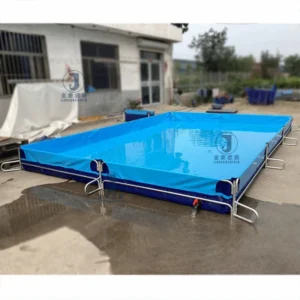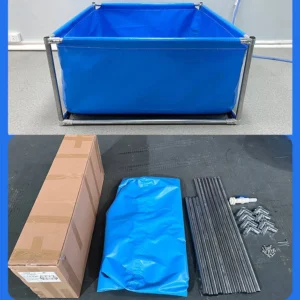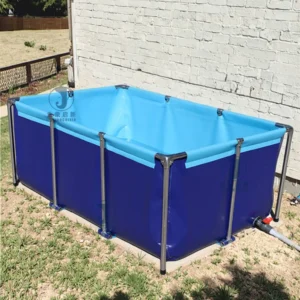
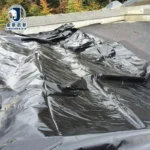
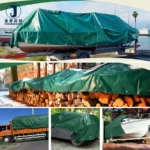

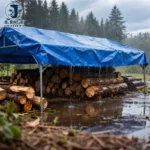
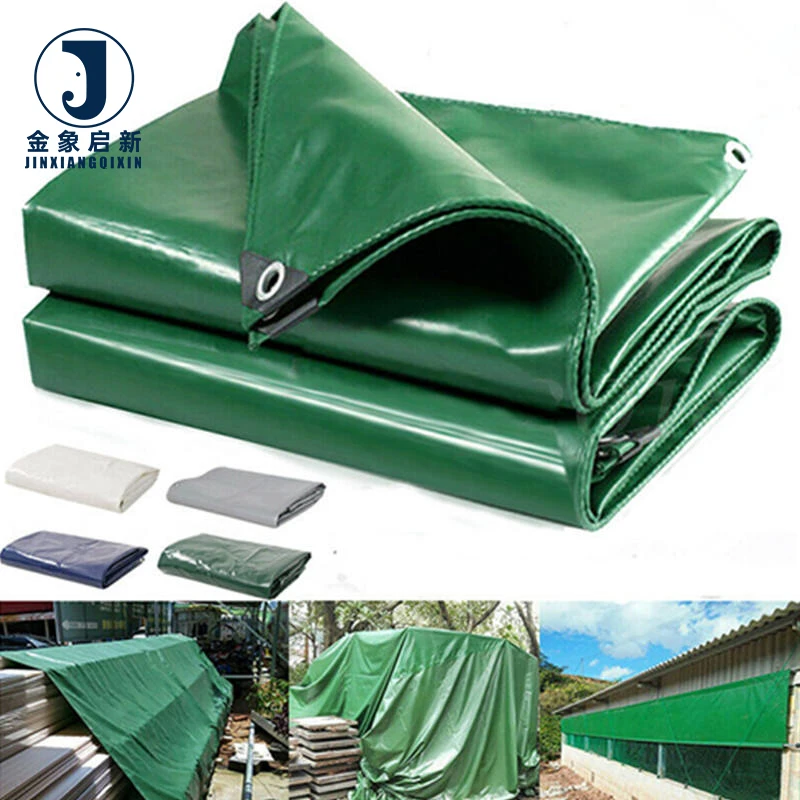
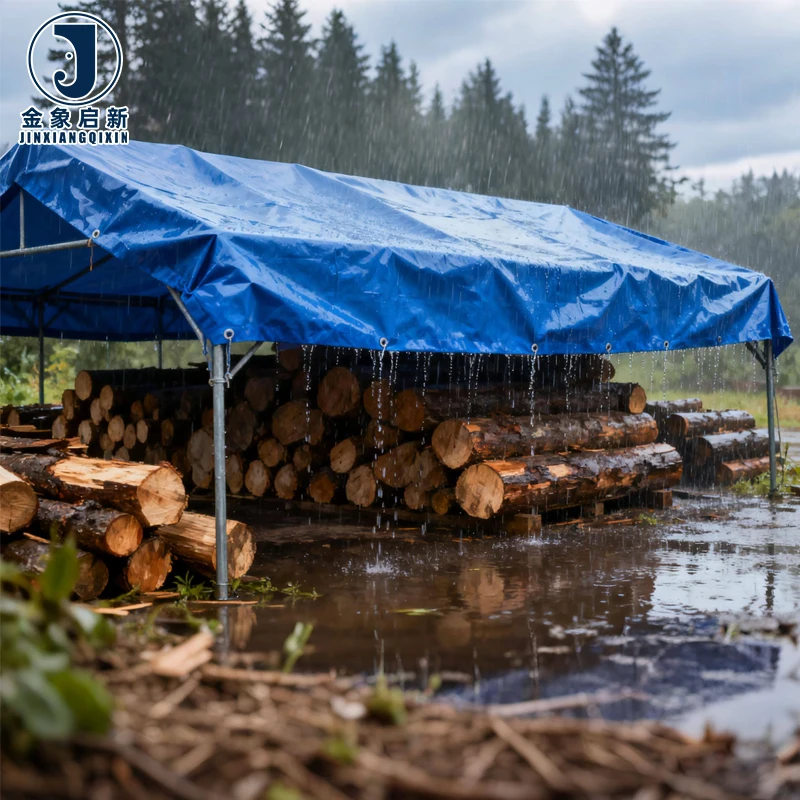
Hot-melt coating precision — Every roll of PVC coated blackout pond liner fabric undergoes 100% pre-shipment inspection, with GSM verified against the purchase order specification and documented in the dispatch record.
Technical Specifications
| Parameter | Value |
|---|---|
| Product Type | Pond Liner / Blackout Tarpaulin |
| Material | PVC + High-strength polyester mesh fabric |
| Coating Material | PVC |
| Base Fabric | High-strength polyester mesh fabric |
| Coating Method | Laminated technology / Hot-melt coating technology |
| Weight (GSM) | 350gsm / 420gsm / 500gsm / 550gsm / 600gsm / 750gsm |
| Total Thickness | 0.32mm / 0.35mm / 0.4mm / 0.45mm / 0.5mm / 0.65mm |
| Roll Size | 2m × 75m / 2.1m × 50m |
| Finish Product Size | Custom dimensions per project requirement or standard inventory |
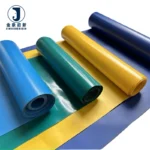
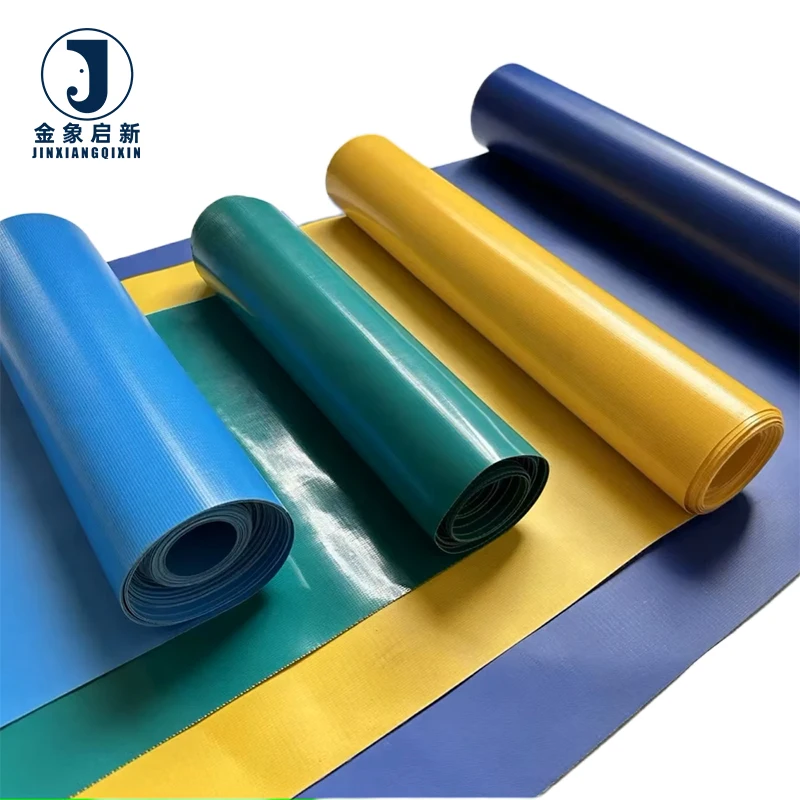
| Color | Blue / Red / Yellow / Light blue / Grey (Customizable) |
| Key Features | Waterproof; cold crack resistance; anti-mildew; anti-static treatment; outstanding tearing strength for welding |
| Flame Retardant | Available in flame retardant grades — confirm the grade required for your market |
| UV Resistance | Sunproof treatment applied — test basis not stated in source, confirm applicable standard |
| Standards | ISO, CE |
Application Suitability
| Application | Exposure & Requirement |
|---|---|
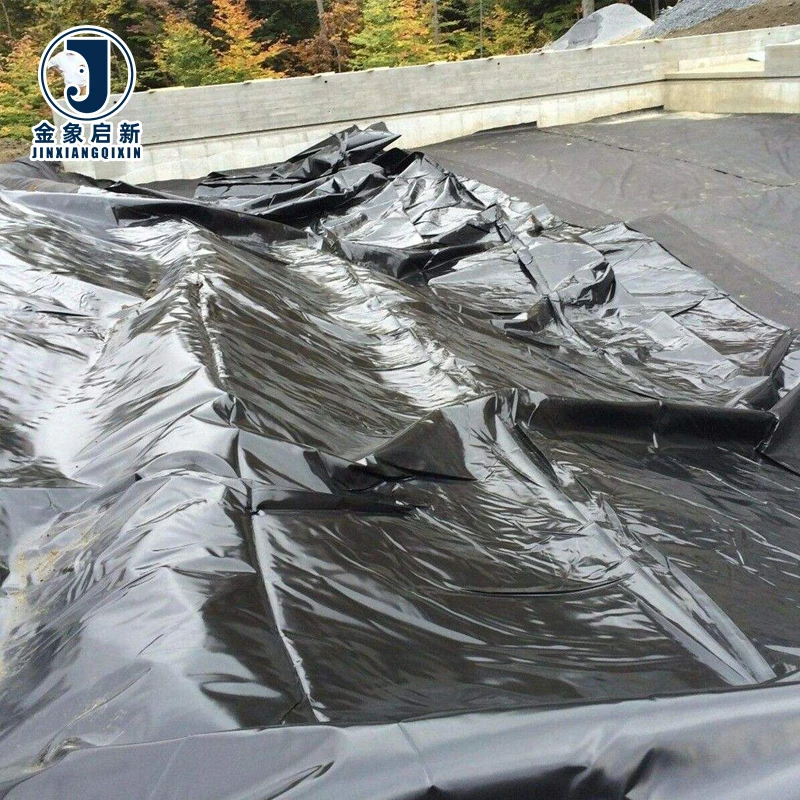
| Commercial fish ponds and shrimp reservoirs | Permanent water immersion, algae control via blackout opacity, soil chemistry contact, puncture risk from substrate |
| Agricultural irrigation reservoirs | Continuous hydrostatic pressure, UV exposure, temperature cycling, edge anchoring stress |
| Specialist containment structures | Certified flame-retardant and anti-static compliance, chemical resistance, regulatory inspection |
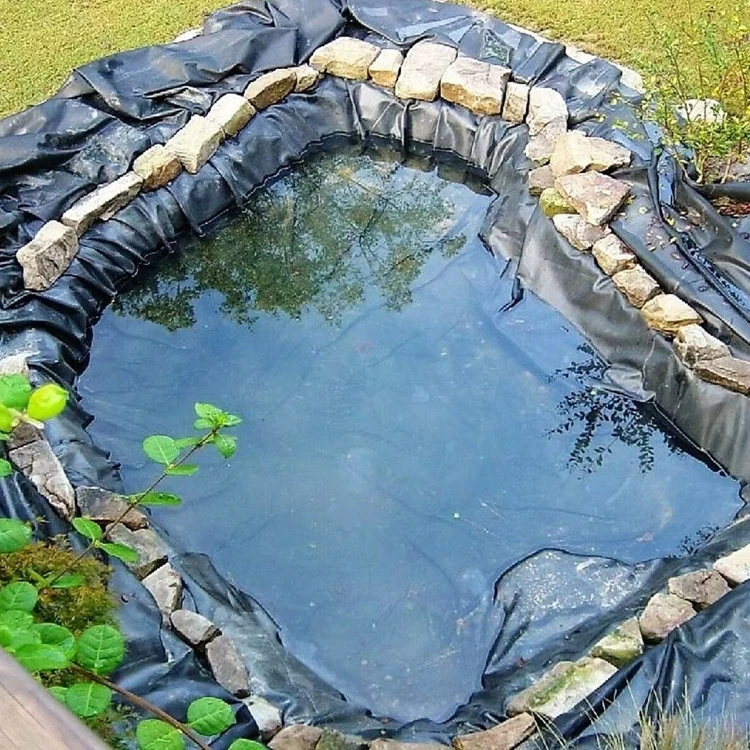
| Decorative and landscaping ponds | Aesthetic colour consistency across panels, welded seam integrity at curved geometries |
Why a Blackout PVC Pond Liner Fire Retardant Grade Must Be Documented Before Dispatch
A flame-retardant claim without a test report is a compliance liability, not a material property.
Aquaculture and containment projects increasingly fall under site safety audits where inspectors request documented proof of fire classification. When the blackout PVC pond liner fire retardant specification appears on the purchase order but no matching test report ships with the rolls, the entire installation can be held pending verification. Procurement teams then face delays while suppliers scramble to produce documentation that should have accompanied the dispatch [NEED_CITE: fire classification test methods for coated fabrics used in containment]. The consequence is not simply paperwork — it is idle installation crews and missed stocking schedules.
Hot-Melt Coating and Adhesion Integrity Under Water
The hot-melt coating technology used on this PVC pond liner drives the PVC compound into the high-strength polyester mesh base fabric under heat and pressure, creating a bond that resists delamination during prolonged water immersion. Unlike simple lamination where the coating sits on the surface, hot-melt penetration means the coating and base fabric behave as a unified structure when the liner flexes under hydrostatic load. This matters most at welded seams, where the heat-activated bond must maintain adhesion strength equal to the parent fabric.
Cold Crack Resistance and Continuous Temperature Cycling
Pond liners in temperate and continental climates experience wide temperature swings between day and night, and between seasons. The cold crack resistance built into this PVC pond liner formulation prevents the coating from becoming brittle and micro-cracking when temperatures drop, which is the primary failure pathway for liners installed in exposed reservoirs. Combined with anti-mildew treatment, the fabric maintains structural integrity in the warm, humid conditions that promote biological growth on submerged surfaces [NEED_CITE: cold crack test procedures for PVC coated fabrics in water containment].
Reading the Weight and Thickness Specifications Correctly
The available weight range from 350gsm to 750gsm and corresponding thickness from 0.32mm to 0.65mm reflects different engineering responses to pond depth and substrate conditions. GSM alone does not determine puncture resistance — the base fabric denier and weave density work together with the coating weight to produce the final tensile and tear performance. A 500gsm liner with a tightly woven high-tenacity polyester base may outperform a heavier grade built on a looser weave, because the yarn density controls how a puncture propagates into a tear. Thickness correlates with coating volume, which directly affects weld window parameters: thicker coatings allow wider heat-seam temperature ranges, giving installers more tolerance on site. The laminated and hot-melt coating methods both appear in the specification, and the choice between them influences peel strength and the flexibility of the finished liner when folded around pond corners.
What Happens When Batch Colour Varies Across a Single Pond
When multiple rolls of a PVC pond liner are installed side by side in a large reservoir, even subtle colour variation between batches becomes visible at the overlap lines. For aquaculture operators, this is not purely cosmetic — inconsistent opacity between panels can allow differential light penetration, encouraging algae growth in zones where the blackout performance is weaker. The root cause is typically inconsistent pigment loading during the coating stage, which also means the GSM may vary roll to roll within the same order. Buyers who do not verify colour and weight consistency at dispatch frequently discover the problem only after the liner is deployed and filled, when remediation requires draining and partial replacement [NEED_CITE: batch consistency inspection protocols for coated fabric rolls].
Why Procurement Teams Specify From This Production Facility
Three full production lines and 36 sets of professional equipment support bulk roll output with consistent coating weight control, which is the foundation of reliable GSM delivery on every pond liner order.
A 10-person R&D team handles material selection and sample development, producing custom-width rolls and fabricated pond dimensions within days rather than weeks.
Dedicated QA/QC operates at every production stage with 100% inspection before shipment, meaning each roll is weighed and measured against the specification stated on the quotation.
Hot-melt coating process control ensures adhesion strength is repeatable across production runs, so welded seams perform identically whether the liner is fabricated in the factory or heat-seamed on site.
ISO and CE certified production underpins the documentation package that accompanies every dispatch, providing the traceability that compliance-driven aquaculture and containment projects require.
Documentation & Verification
- Material specification sheet stating exact GSM, base fabric, coating method and thickness for the grade ordered
- Test report for UV and flame-retardant grades where applicable, matching project compliance requirements
- Pre-shipment inspection record with roll-by-roll GSM and colour verification against the purchase order
- ISO and CE certificates plus certificate of origin included in the dispatch documentation package
- Roll packing list with individual roll weights and dimensions for receiving verification
Fabrication, Handling & Storage
- Heat-seam parameters must match the coating method — hot-melt coated grades tolerate wider temperature windows than laminated grades at the weld line
- Store rolls upright on pallets to prevent flat-spot deformation that creates permanent creases in the 0.45mm and heavier grades
- Unroll in ambient temperatures above 5°C to avoid stressing the cold crack resistant coating during deployment
- Clean submerged surfaces with non-solvent cleaners to preserve the anti-mildew treatment on the PVC coating
- Cut and weld custom pond shapes with overlap allowances that account for the 2m or 2.1m roll width to minimise seam count
What to Include in Your Enquiry
Provide the pond dimensions, water depth and substrate type so the correct GSM and thickness grade can be recommended for the hydrostatic load. State your market’s fire-retardant and anti-static compliance requirements upfront so the matching test documentation is prepared before production. Confirm whether you need roll stock for on-site fabrication or pre-cut panels with reinforced edges, and specify colour requirements including any custom shades for multi-roll orders.
Frequently Asked Questions
Q: How is the GSM verified on arrival and what documentation supports the quoted weight?
A: Every roll undergoes 100% pre-shipment inspection where the actual weight is measured and recorded against the specification stated on your purchase order. The inspection record ships with the dispatch documentation, giving your receiving team a roll-by-roll weight verification to check on arrival. Any discrepancy is flagged before the goods leave the facility.
Q: What flame-retardant and anti-static certifications are available for pond liner fabric?
A: The fabric is available in flame-retardant and anti-static grades with documentation matching the applicable standard for your market. Confirm the specific classification your project requires at the enquiry stage so the correct test report is generated and included with your dispatch. ISO and CE certificates are standard with every shipment.
Q: How does hot-melt coating differ from laminated coating for pond liner welding?
A: Hot-melt coating penetrates the polyester mesh base fabric under heat and pressure, creating a through-thickness bond that gives installers a wider welding temperature window on site. Laminated coating bonds the PVC layers to the fabric surfaces. Both methods are available, and the choice depends on your fabrication method and the seam strength your installation requires.
Q: Can custom pond shapes be heat-welded on site without seam failure?
A: The high-strength polyester mesh base fabric provides outstanding tearing strength specifically for welding applications. Heat-seamed joints on this PVC pond liner can match or exceed the tensile capacity of the parent fabric when correct welding parameters are followed, preventing the seam from failing before the liner material itself.
Q: How is batch colour consistency controlled across multiple rolls for large pond projects?
A: Pigment loading is controlled at the coating stage and verified during pre-shipment inspection. For large pond projects requiring multiple rolls, colour consistency is checked roll to roll before dispatch so that panels installed side by side show uniform opacity and shade, preventing differential light penetration that can encourage algae growth.