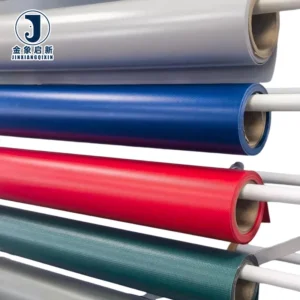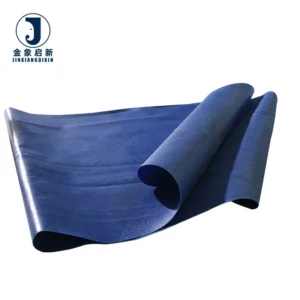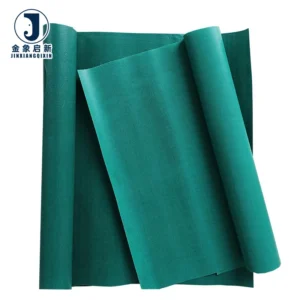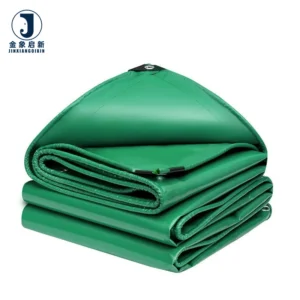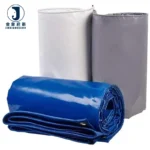
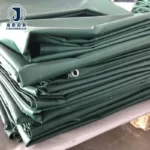
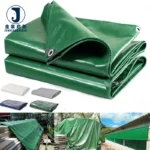
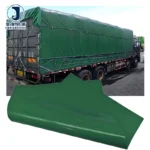
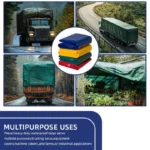
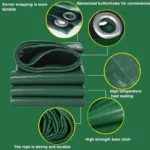
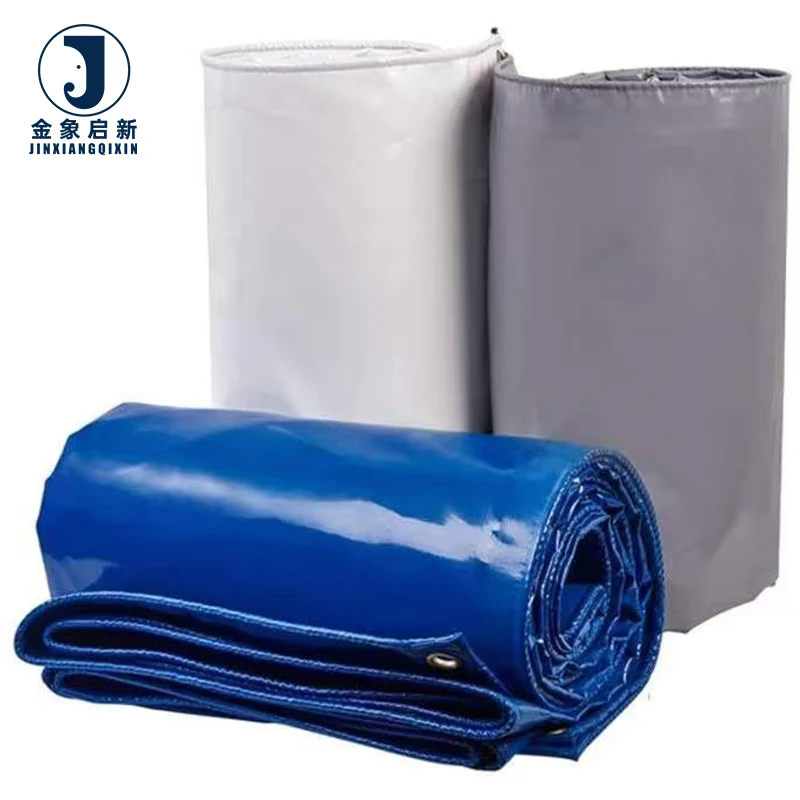
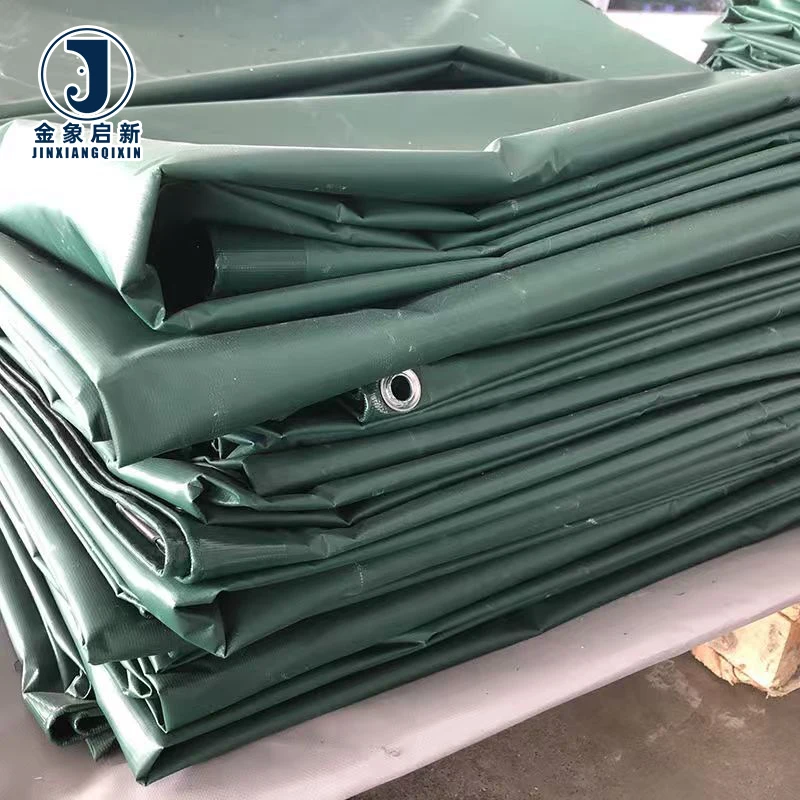
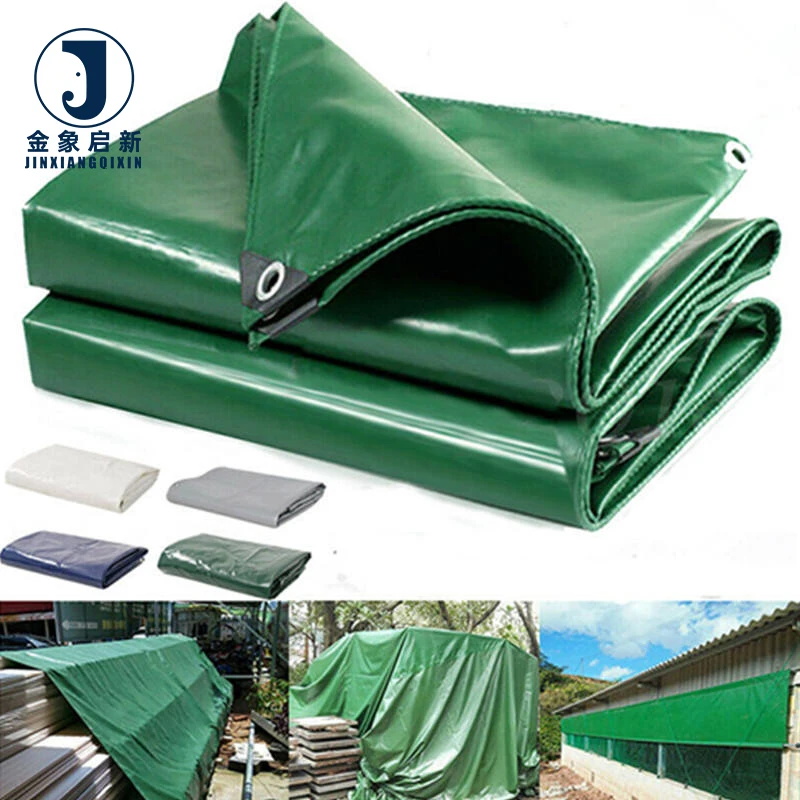
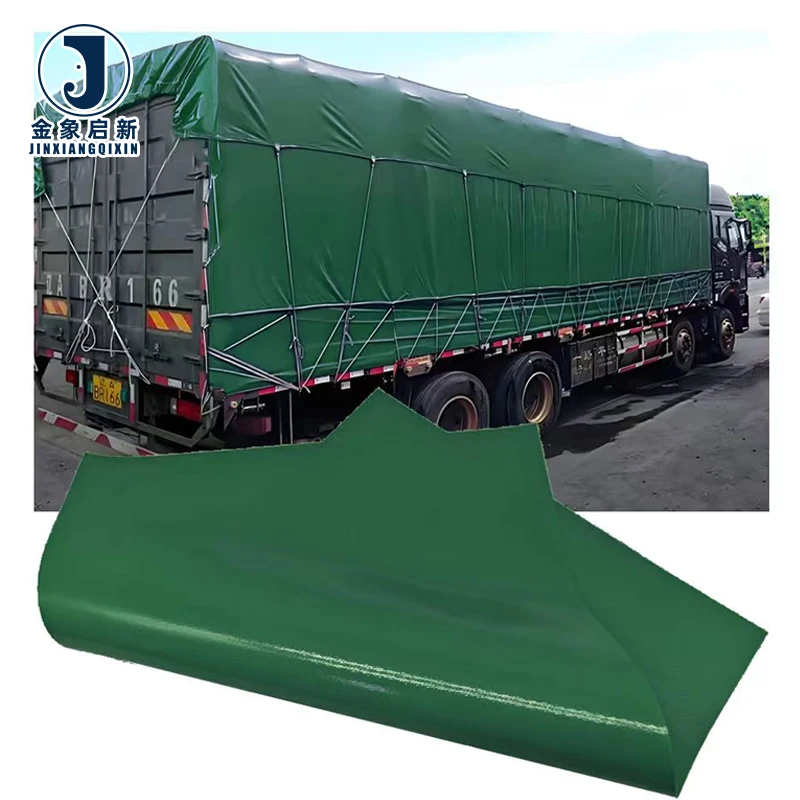
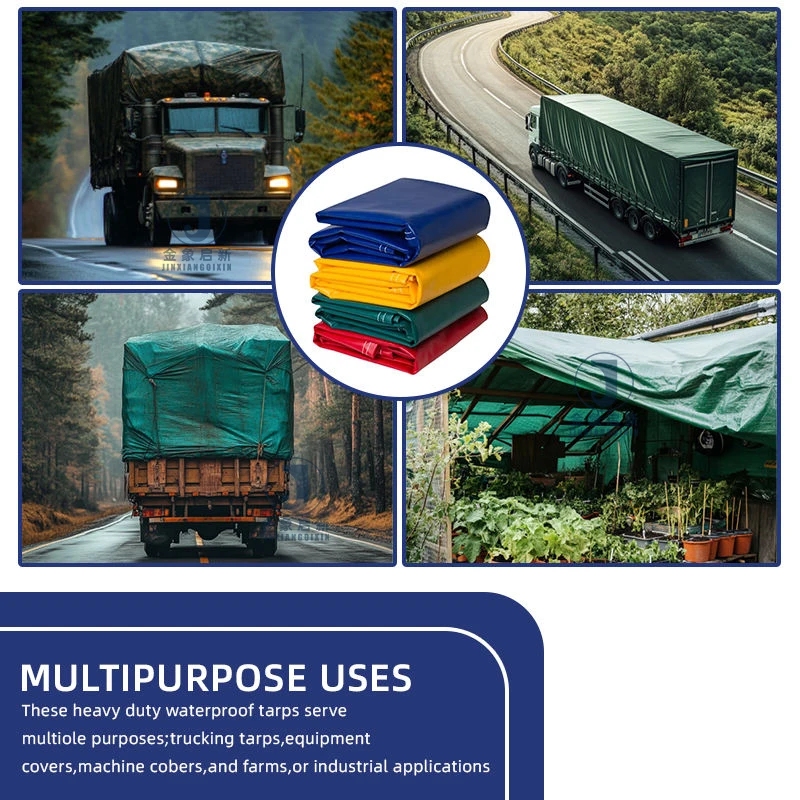
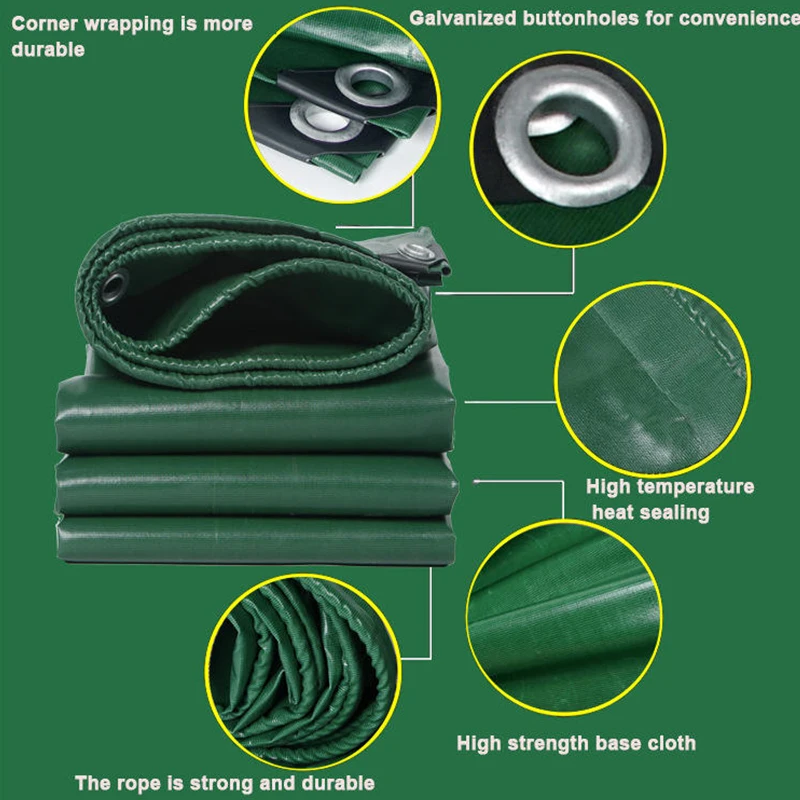
Industrial Coating Control — Deep process expertise over PVC coating weight and adhesion ensures the material performs as specified when ventilation ducts or membrane structures face real site conditions.
Technical Specifications
| Parameter | Value |
|---|---|
| Product Type | PVC Coated Tarpaulin Roll |
| Material | PVC Coated Fabric |
| Application Grade | Industrial Grade, Heavy Duty |
| Waterproof | Yes |
| Anti-Shrink | Yes |
| Flame Retardant Treatment | Available in flame retardant grades — confirm the grade required for your market |
| UV Treatment | Available with UV resistant formulation — test basis to be confirmed at inquiry |
| Certification Basis | ISO, CE |
Application Suitability
| Application | Exposure & Requirement |
|---|---|
| Mining and tunnelling ventilation duct | High air pressure flex cycles, abrasive dust, mandatory fire-retardant compliance underground |
| Membrane and inflatable structures | Continuous tension load, prolonged sun exposure, wind-induced vibration |
| Aviation and construction ventilation | Documented flame-retardant certification, temperature variation, mechanical handling |
| Industrial air duct systems | Constant airflow pressure, chemical particulate exposure, anti-static requirement in combustible dust environments |
Why "Fire Retardant" on a Quotation Is Not Enough for Site Acceptance
A PVC tarpaulin roll fire retardant claim without a documented test grade will fail the first site safety inspection.
Ventilation duct fabric and membrane structure covers are often specified with a fire-retardant treatment stated on the quotation, but when the safety officer requests the test certificate on site, the documentation does not exist or refers to a different standard than the regional code demands. [NEED_CITE: regional fire safety classification systems for industrial fabric in construction and mining] The result is a failed inspection, work stoppage, and material that must be replaced under time pressure. This PVC tarpaulin roll fire retardant option is developed with the understanding that the grade must be matched to your specific compliance framework before production begins. The industrial coated fabric can be manufactured with treatment levels aligned to documented standards — but only if the requirement is communicated at the specification stage, not discovered at delivery.
Ventilation Duct Fabric That Must Pass More Than a Flame Test
Underground mining and tunnelling projects demand industrial coated fabric that carries both fire-retardant and anti-static certification because the ventilation duct operates in an atmosphere where combustible dust and flammable gases are present. A fabric that passes a flame test but generates static charge during high-velocity airflow can still trigger an ignition event. [NEED_CITE: anti-static and fire-retardant dual compliance for underground ventilation duct fabric] The PVC tarpaulin roll fire retardant formulation must therefore be evaluated against the full compliance requirement of the project, not just a single laboratory flame exposure test.
Membrane Structures Under Continuous Tension and Weather Load
Temporary and semi-permanent membrane structures rely on fabric that maintains dimensional stability under constant tension and temperature cycling. When PVC coated fabric shrinks or relaxes unevenly across the membrane surface, the structural load redistributes to attachment points that were not engineered for the additional stress. The anti-shrink treatment on this industrial coated fabric addresses this failure mode by stabilising the base fabric before the coating process locks in the dimensional properties required for tensioned installations.
Reading the Specification Sheet Beyond the Headline Weight
Coating weight and base fabric denier together determine how the material behaves under tensile and tear stress — a heavy PVC coat on a low-denier base fabric may meet the stated GSM but will split rather than stretch when the load shifts. The coating method, whether knife-over-roll, lamination or calendering, directly affects peel strength between the coating and the base weave, which in turn governs how well heat-welded seams hold under flexing. Surface finish selection between glossy and matte influences both the adhesion of printed markings and the ease of cleaning accumulated dust in ventilation applications. For flame-retardant grades, the additive chemistry used must align with the classification system enforced in your project jurisdiction, as a grade accepted in one region may not satisfy the building or mining code in another. [NEED_CITE: coating method impact on peel strength and weld integrity in PVC coated fabrics]
What Happens When the Fabric Fails the Compliance Check on Site
When industrial coated fabric arrives at a mining or tunnelling project without the fire-retardant certification the site safety plan requires, the consequences extend far beyond a single rejected shipment. The ventilation system cannot be commissioned, tunnelling progress halts, and the contractor faces liquidated damages against a construction schedule that has no slack. Similarly, membrane structure fabric with colour variation between rolls becomes visible once panels are tensioned side by side, forcing a complete replacement at the installer’s cost. [NEED_CITE: batch colour consistency requirements for installed membrane and duct fabric panels] These failures are preventable when the specification is confirmed and documented before production, not negotiated after the container has been loaded.
Production Capability Aligned with Technical Fabric Requirements
The ten-person R&D team handles material selection and sample development specific to ventilation duct and membrane structure applications, ensuring the industrial coated fabric is matched to the project environment before bulk production begins. Three full production lines and thirty-six sets of professional equipment provide the capacity to fulfil project-volume orders while maintaining coating weight consistency across every roll in the shipment. Dedicated quality control at each production stage with full inspection before dispatch means that GSM, colour, and treatment properties are verified roll by roll, not sampled from a single reference piece. Custom width and length options are available to match the duct diameter or membrane panel geometry specified by the project engineer, reducing on-site cutting waste and weld seam count. The sample development process delivers testable material within days, allowing fabricators to validate heat welding parameters and seam strength before committing to a production order.
Documentation & Verification
- Material specification sheet confirming GSM, base fabric denier, coating weight, and colour reference for every roll
- Flame-retardant test report aligned to the compliance standard required by your project jurisdiction
- Anti-static test documentation where combustible dust or gas environments mandate dual certification
- Pre-shipment inspection record with individual roll verification against the purchase specification
- Certificate of origin and customs documentation supporting international project site delivery
Fabrication, Handling & Storage
- Heat welding temperature and dwell time must be calibrated to the specific PVC coating weight of this fabric before production welding begins
- Store rolls horizontally on racking to prevent permanent creasing in the coating layer that will telegraph through to the finished duct or membrane surface
- Allow cold-transported rolls to reach ambient temperature before unrolling to avoid cracking the PVC coating at low temperatures
- Use compatible PVC-based repair patches and solvent cement for field repairs to maintain coating adhesion integrity at the patch boundary
- Plan cutting layout to minimise offcuts from the supplied roll width, reducing waste on large-diameter duct or membrane panel fabrication
Request a Specification Matched to Your Project Compliance Framework
Provide the ventilation duct diameter or membrane panel dimensions, the fire-retardant and anti-static classification required by your site safety plan, and the annual volume or project quantity to receive a specification recommendation. If custom width, colour, or surface finish is required for your application, request a production sample to validate fabrication parameters before bulk commitment.
Frequently Asked Questions
Q: How do you confirm the flame-retardant grade matches our regional fire safety code?
A: We require the specific standard or classification reference from your project specification before recommending a treatment grade. The industrial coated fabric can be manufactured with flame-retardant additives aligned to documented test methods, and the resulting test report is included in the shipment documentation. Confirm your regional code requirement at the inquiry stage to ensure alignment.
Q: What test basis supports the UV resistant treatment claim on this fabric?
A: The UV resistant formulation is applied during the coating process, but the specific test method and exposure duration must be confirmed against the service environment of your project. Request the test report applicable to your outdoor exposure conditions when submitting your inquiry so the correct formulation is selected for production.
Q: How is the GSM verified before the rolls are dispatched?
A: Every roll undergoes weight verification against the stated specification during the pre-shipment inspection. The inspection record documents the measured GSM for each roll and is included with the shipment. This process ensures the material arriving at your fabrication facility matches the coating weight confirmed in your approved sample.
Q: What heat welding parameters should we expect with this PVC coated fabric?
A: Welding temperature, pressure, and dwell time depend on the specific coating weight and base fabric construction of your ordered specification. We recommend requesting a sample roll to calibrate your welding equipment and confirm seam peel strength before full production. Our R&D team can provide general welding guidance based on the coating formulation supplied.
Q: What is the minimum order for custom width or colour on this roll?
A: Custom width and colour options are available for project-specific requirements, with minimum order quantities depending on the specification selected. Submit your required dimensions and colour reference at the inquiry stage to receive the applicable minimum and lead time for your configuration.