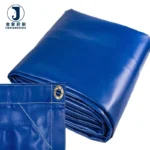
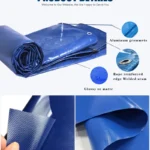
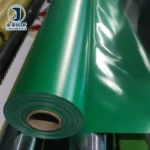
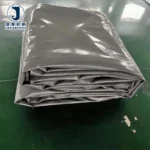
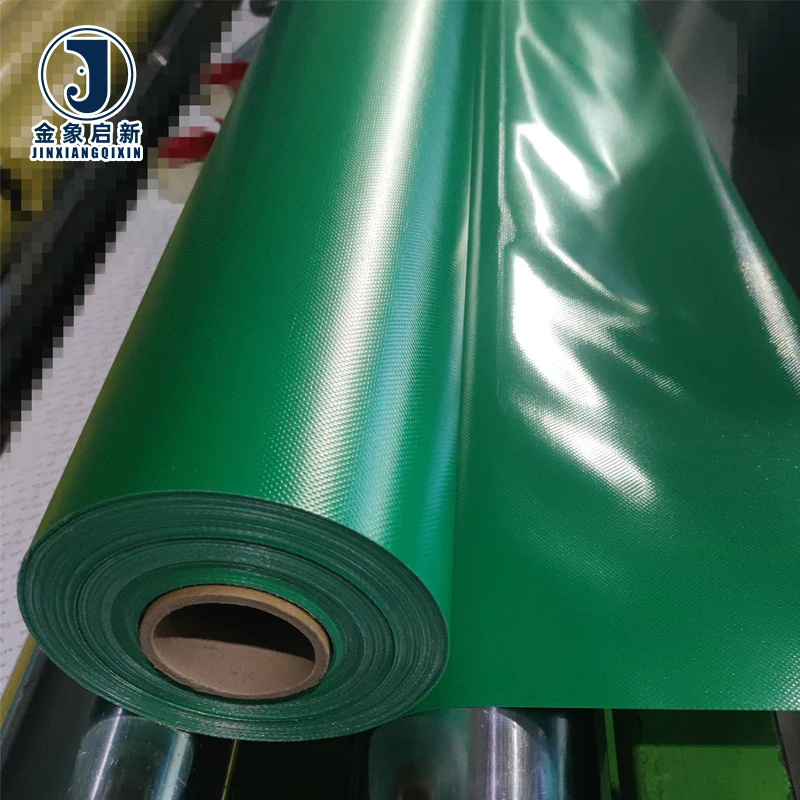
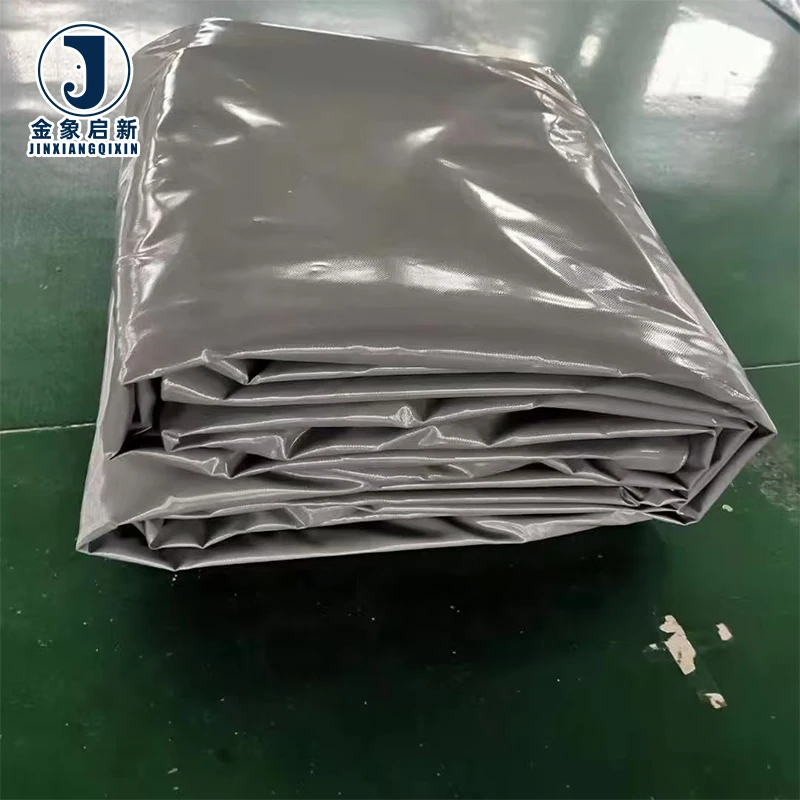
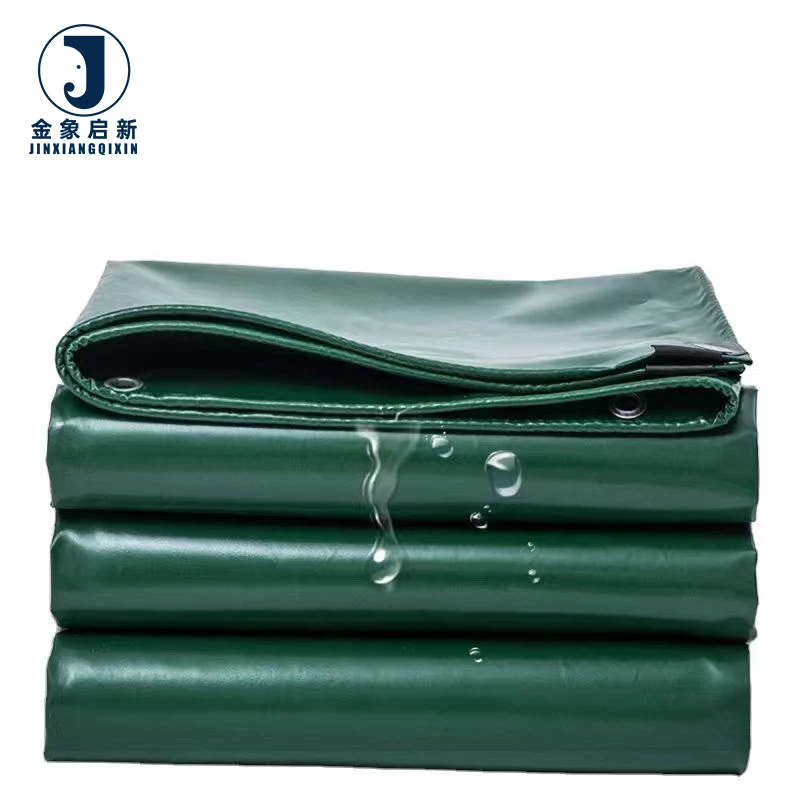
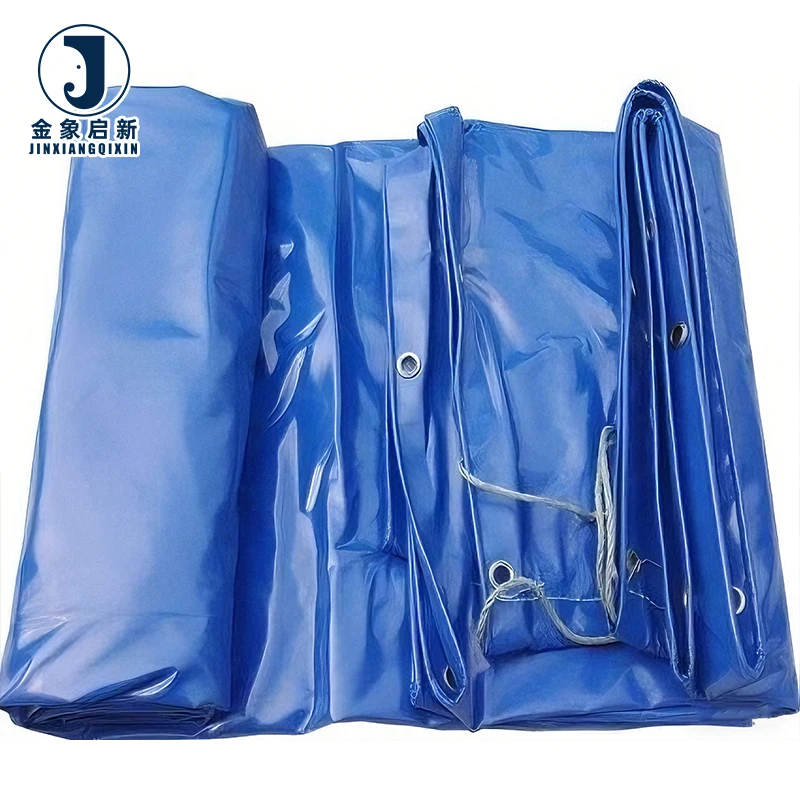
Coating weight control — verified at every production stage with dedicated QA/QC to prevent weight drift across PVC coated tarpaulin rolls destined for truck and industrial covering applications.
Technical Specifications
| Parameter | Value |
|---|---|
| Product Type | PVC Tarpaulin Roll |
| Weight (GSM) | 500 to 800 g/m² (range covers product family — confirm the grade for this item) |
| Coating Material | PVC |
| Waterproof Rating | Anti-permeable ≥20KPa |
| Flame Retardancy | ≤10 seconds (grade not stated — confirm applicable standard) |
| Low-Temperature Flexibility | -30°C |
| Corrosion Resistance | Acid, alkali, brine |
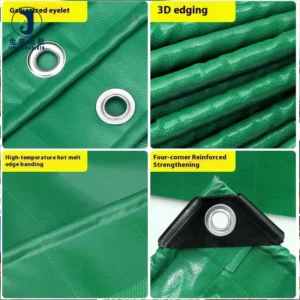
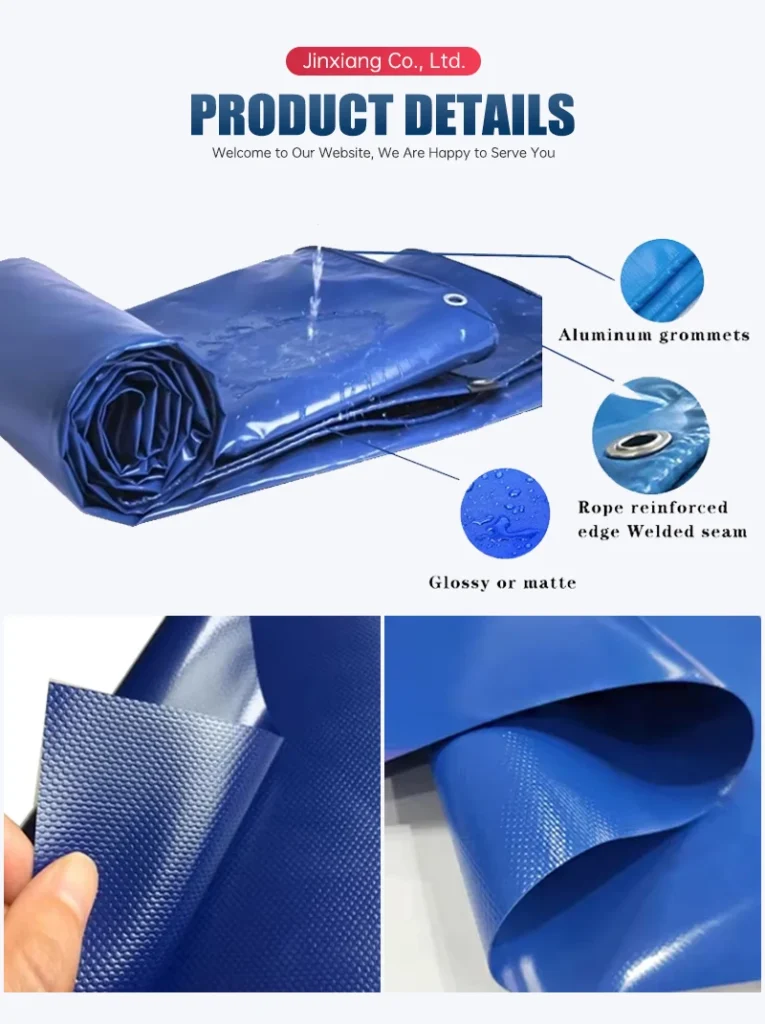
| Seam Construction | Heat combined with high-frequency welding |
| Water Absorption | Almost no water absorption |
Application Suitability
| Application | Exposure & Requirement |
|---|---|
| Truck and trailer side curtains | Constant flexing at load points, road debris abrasion, continuous UV and weather exposure |
| Open-air industrial equipment covers | Long-term rain and humidity contact, chemical splash risk, wind-driven tension on seams |
| Outdoor weather-exposed storage | Standing water on horizontal surfaces, temperature cycling, forklift and handling abrasion |
| Temporary construction enclosures | Dust containment, wind load stress, repeated installation and removal cycles |
What "Flame Retardant ≤10 Seconds" Means Without a Named Standard
A burn time alone does not equal site compliance — always match the grade to your local fire code.
When a PVC coated tarpaulin for industrial ventilation and specialist application data sheet states flame retardancy at ≤10 seconds without citing DIN 4102, NFPA 701, or M2, procurement teams cannot confirm whether the fabric will pass a site fire marshal inspection. In mining and tunnelling projects, specifying authorities typically require a classified result such as B1 per DIN 4102 or the equivalent national standard before the fabric is permitted underground or in enclosed public structures. Ordering on a generic burn-time claim risks rejection at the pre-commissioning audit, forcing costly replacement and project delays [NEED_CITE: fire classification standards for flexible fabrics in enclosed industrial spaces].
How PVC Coated Tarpaulin for Industrial Ventilation and Specialist Application Meets Demanding Truck Cover Environments
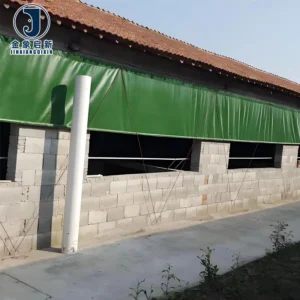
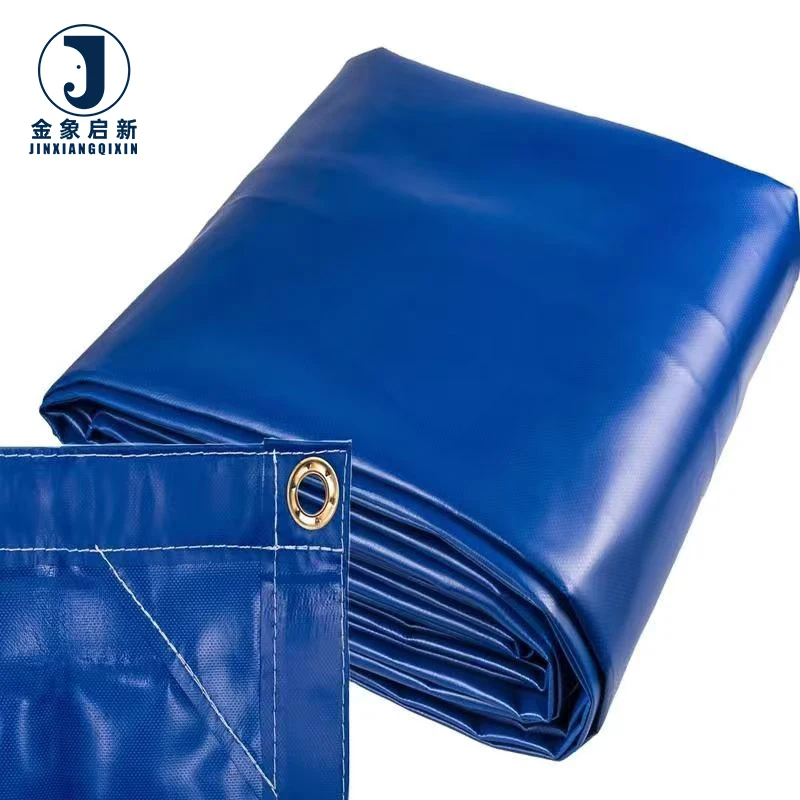
Truck and trailer covering demands a fabric that survives daily flexing without cracking at the weld line. The PVC coated tarpaulin for industrial ventilation and specialist application supplied here is engineered with a coating formulation that retains low-temperature flexibility to -30°C, preventing brittle failure during cold-climate transport routes. Heat combined with high-frequency seam construction ensures the joined sections match the parent fabric strength at the exact points where cargo shift places the highest cyclic stress on the material.
Corrosion Resistance Across Chemical and Saline Exposure
Industrial yards and port-side storage areas expose covers to alkali run-off from concrete, acidic residues from fertiliser handling, and brine spray in coastal logistics hubs. The PVC coating on this tarpaulin resists acid, alkali, and brine contact without softening, delaminating, or losing waterproof integrity. Anti-permeable performance rated at ≥20KPa means standing water on horizontal covers will not penetrate through the fabric body even under sustained hydrostatic head [NEED_CITE: coated fabric hydrostatic pressure test methodology].
Reading Between the GSM and the Base Fabric Weave
A common misconception in coated fabric procurement is that gsm alone determines tensile and tear strength. In reality, the base fabric denier, the warp-and-weft thread count, and the coating adhesion method collectively define how the material behaves under load. A 500 gsm roll woven from high-tenacity polyester with a dense weave can outperform a heavier roll built on a looser scrim. The coating method — whether knife-over-roll, dip, or calender — further influences peel strength between the PVC layer and the base cloth, which in turn governs how well high-frequency welded seams hold when the cover flexes over sharp-edged loads. Temperature range is equally consequential: a fabric that remains pliable at -30°C avoids the micro-cracking that allows moisture ingress and accelerates coating degradation over repeated thermal cycles.
The Hidden Cost of Specifying on Price Per Roll Instead of Verified Weight
When a roll arrives lighter than the quoted gsm, the shortfall is rarely obvious until the cover fails prematurely at a stress point. Under-weight coating reduces the PVC reservoir available to protect the base fabric from UV penetration and mechanical abrasion, accelerating yarn exposure and tear propagation. Equally, inconsistent coating weight across a single order causes colour variation between rolls, visible the moment two panels are installed side by side on a fleet trailer. Flame retardant grades without supporting test reports create a compliance gap that only surfaces during a regulatory inspection, potentially shutting down operations until replacement fabric is sourced [NEED_CITE: impact of coating weight variance on long-term fabric performance].
Why Technical Buyers Source This PVC Tarpaulin Here
Three full production lines and 36 sets of professional equipment allow bulk PVC tarpaulin roll orders to run on dedicated lines, preventing cross-contamination between coating formulations and maintaining batch-to-batch colour consistency. A 10-person R&D team handles material selection, custom sizing, and sample development, delivering approval samples within days rather than weeks so that production can proceed without extended hold-ups. Dedicated QA/QC at every production stage — from base fabric inspection through coating weight verification to final roll packing — ensures 100 percent of output is inspected before dispatch. The specification recommendation process matches each enquiry to a confirmed gsm grade and treatment package, eliminating the ambiguity that leads to under-performing fabric on site.
Documentation & Verification
- Material specification sheet stating confirmed GSM, base fabric denier, and PVC coating weight for each roll batch
- Flame retardant test report citing the applicable standard where grades are specified for the order
- Pre-shipment inspection record confirming 100 percent roll inspection with weight verification against quoted grade
- Roll packing list detailing net weight, gross weight, roll count, and linear meterage per container load
- Certificate of origin and customs documentation package supporting import clearance at destination port
Fabrication, Handling & Storage
- High-frequency welding parameters must be adjusted for the 500–800 gsm range to ensure full coating fusion without base fabric scorch
- Store rolls vertically on pallets in shaded, ventilated areas to prevent flat-spot deformation on the PVC surface
- Allow cold-stored rolls to acclimatise above 5°C before unrolling to avoid cracking the PVC coating at low temperature
- Use non-solvent cleaners on the PVC surface to preserve the coating integrity and anti-permeable rating over repeated wash cycles
- Reinforce tie-down and grommet zones with additional PVC patches to distribute point loads across the coated fabric
What to Include in Your Enquiry
Provide the specific truck or trailer model dimensions, the operating temperature range of your routes, and any fire-retardant compliance standards required at your destination site. Specify whether you need rolls at a standard stock width or a custom width to minimise off-cuts during fabrication. Indicate your annual volume so that production scheduling can secure a dedicated line slot for colour and coating consistency across every shipment.
Frequently Asked Questions
Q: What fire-retardant grade applies to this fabric for my site compliance?
A: The base specification states flame retardancy at ≤10 seconds without citing a specific standard. Before placing an order, confirm the grade your site requires — such as B1 per DIN 4102 or NFPA 701 — so the correct formulation is selected and a matching test report is included with your documentation package.
Q: How is GSM verified on each roll before shipment?
A: Every roll undergoes 100 percent inspection at the pre-shipment stage, where coating weight and total GSM are measured against the material specification sheet confirmed at order placement. The inspection record travels with the shipment so you can cross-reference on arrival.
Q: What seam construction is used, and how does it perform at flex points?
A: Seams are formed using heat combined with high-frequency welding, which fuses the PVC coating layers into a homogeneous joint. This method is engineered to match the tensile strength of the parent fabric at load flex points on truck covers and industrial enclosures.
Q: Can I get a sample before committing to a full roll order?
A: Yes. The R&D team develops samples within days based on your required GSM, width, colour, and treatment specifications. Sample approval is a standard gate before bulk production begins, ensuring the delivered fabric matches your fabrication and compliance requirements.
Q: What documentation accompanies each shipment for customs and site audits?
A: Each consignment includes a material specification sheet, flame retardant test report where applicable, pre-shipment inspection record, roll packing list, and certificate of origin. This package supports both customs clearance at destination and on-site regulatory compliance verification.