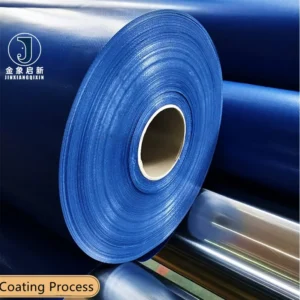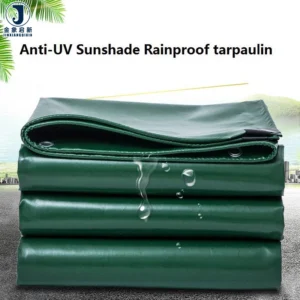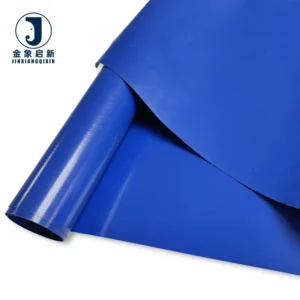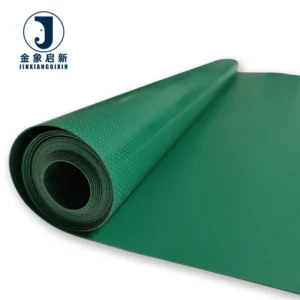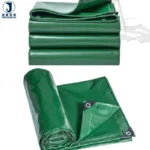

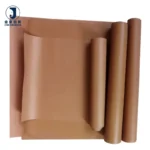
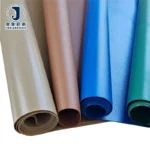
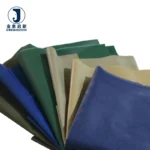
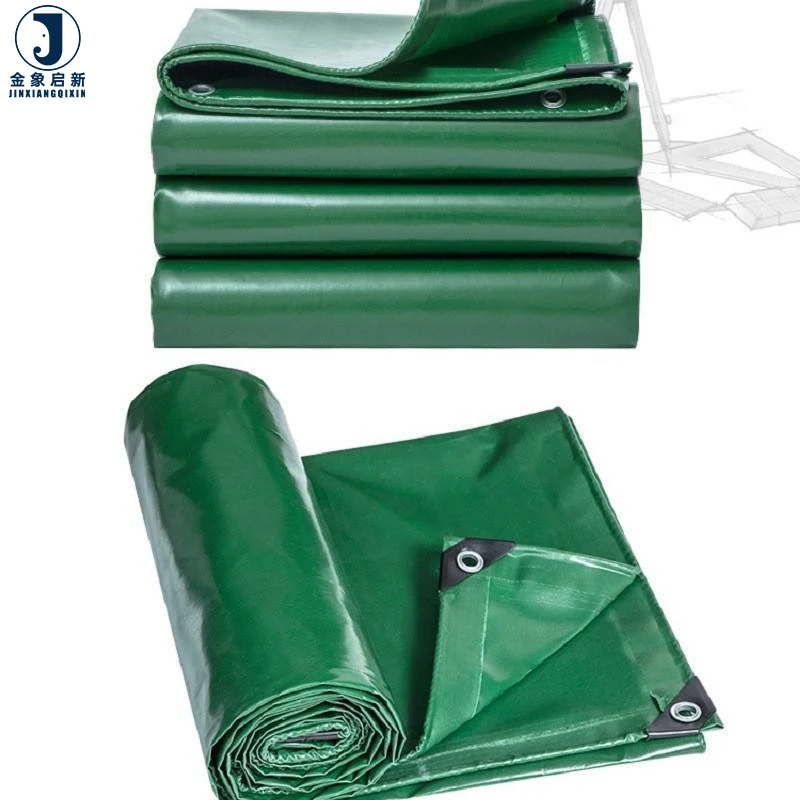
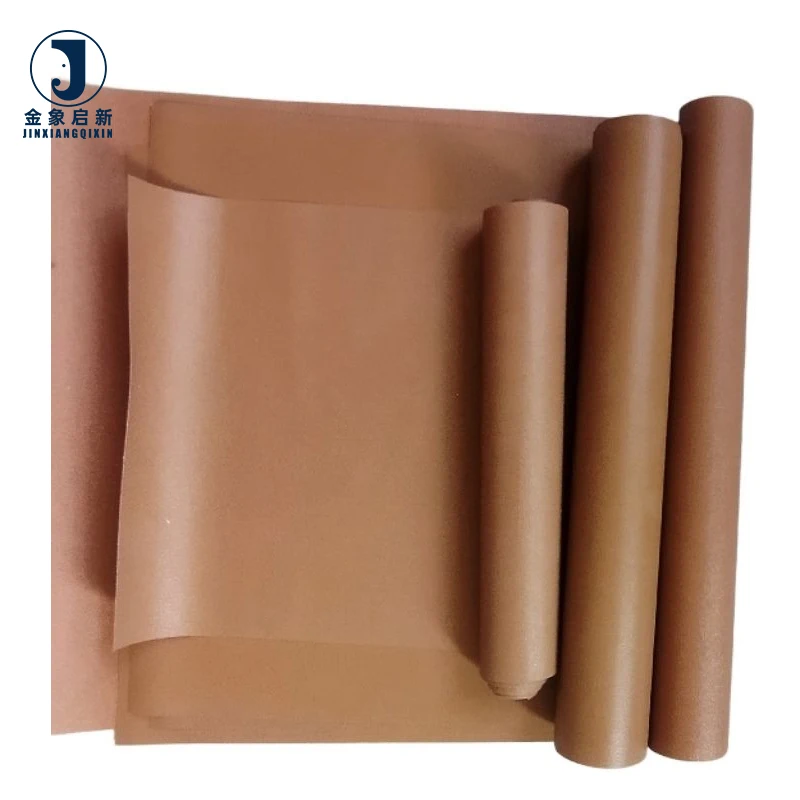
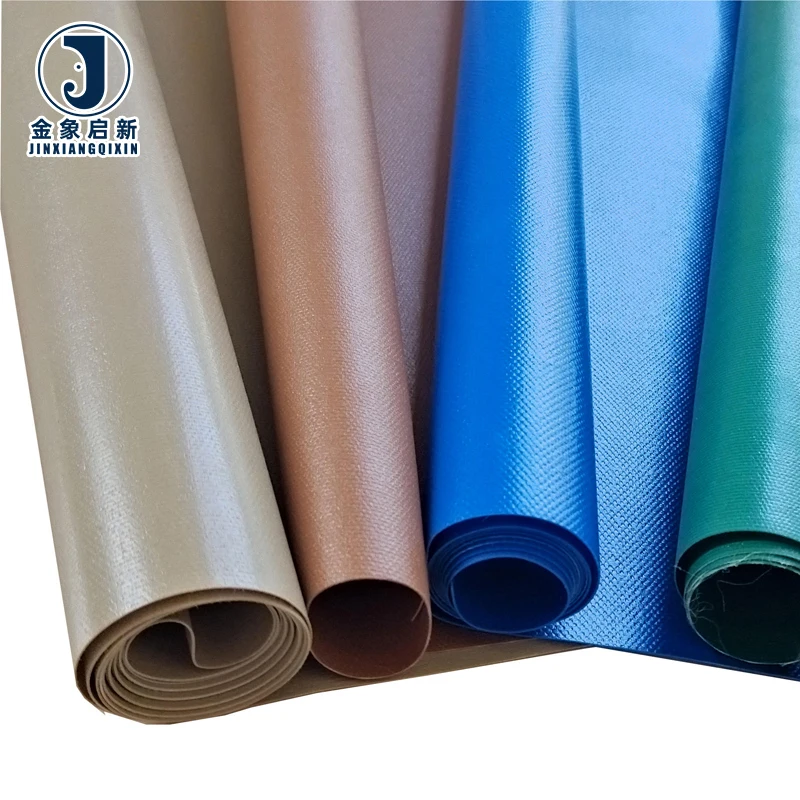
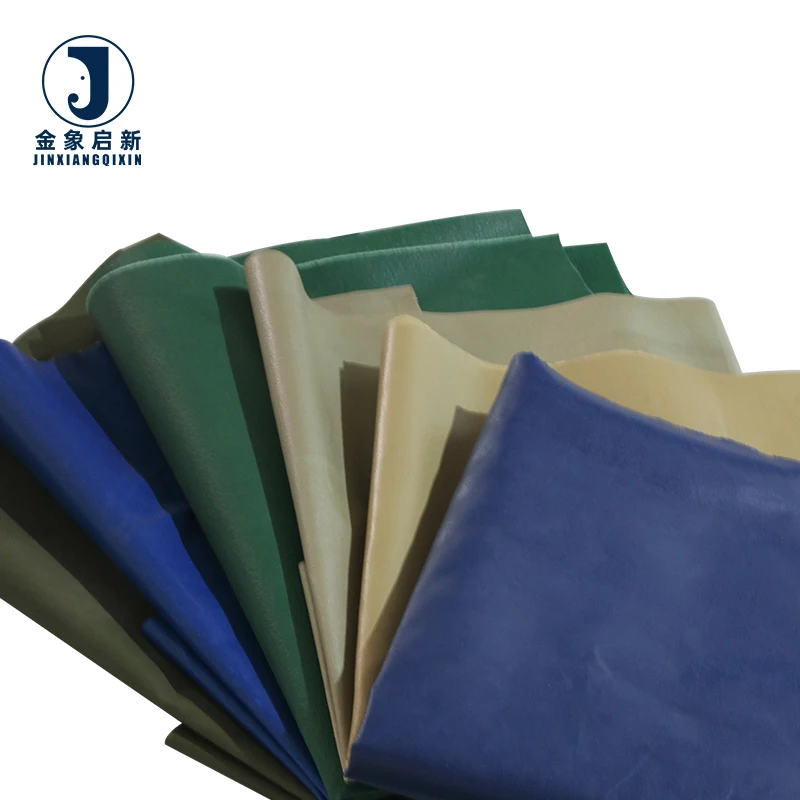
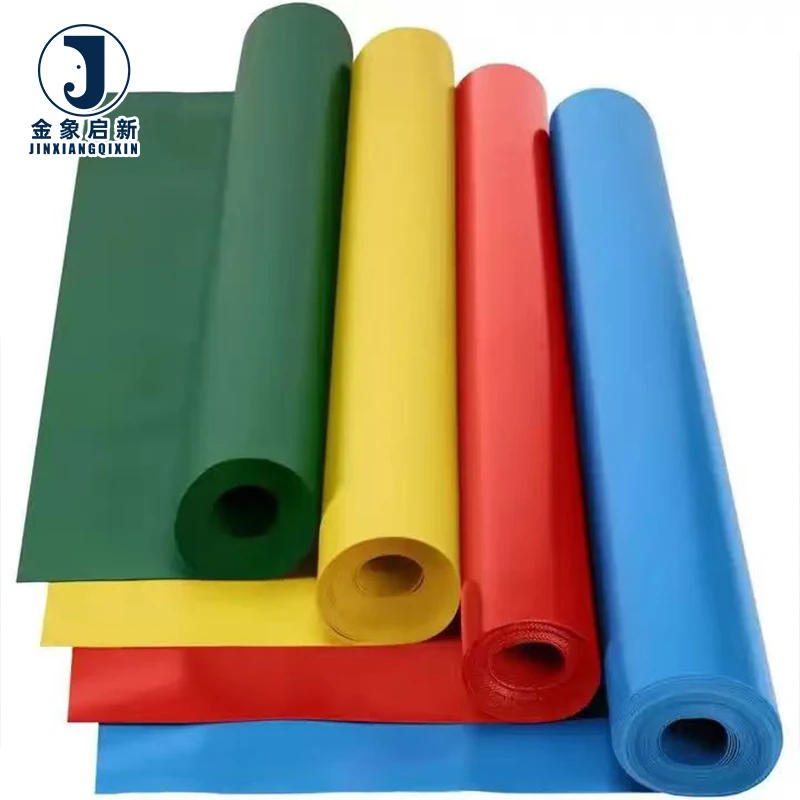
Roll Consistency Protocol — Every batch of heavy-duty PVC tarpaulin roll is produced on dedicated lines with 100% pre-shipment weight and colour verification, ensuring what you specify is what you unroll on the fabrication floor.
Technical Specifications
| Parameter | Value |
|---|---|
| Product Type | PVC Coated Tarpaulin |
| Material | PVC + High-strength polyester mesh fabric |
| Coating Method | Laminated technology & Hot-melt Coating technology |
| Weight Range | 350 gsm / 420 gsm / 500 gsm / 550 gsm / 600 gsm / 750 gsm |
| Thickness Range | 0.32 mm / 0.35 mm / 0.4 mm / 0.45 mm / 0.5 mm / 0.65 mm |
| Roll Size | 2 m × 75 m or 2.1 m × 50 m |
| Surface Finish | Glossy or Matt |
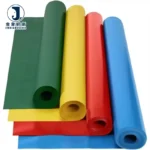
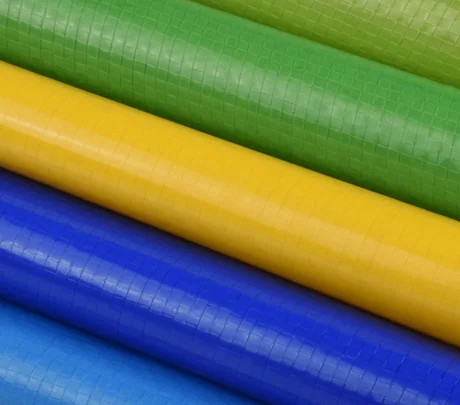
| Color Options | Blue, Red, Yellow, Light blue, Grey (customizable) |
| Waterproof Rating | Double-sided 100% waterproof |
| Treatments | Cold crack resistance, Anti-mildew, Anti-static (grade to confirm per order), UV resistance |
| Welding Performance | High tearing strength at welded seams |
| Service Life | 3–7 years under normal circumstances |
| Standards | ISO, CE |
Application Suitability
| Application | Exposure & Requirement |
|---|---|
| Industrial ventilation duct | Continuous airflow pressure, fire-retardant compliance, potential static buildup in confined underground environments |
| Inflatable and membrane structures | Sustained internal pressure, UV exposure, wind load cycling, architectural fire codes |
| Fish tank and pool lining | Permanent water immersion, chlorine or salt exposure, puncture risk from substrate |
| Tent and awning covers | Repeated assembly and folding, UV and rain exposure, mildew in humid storage |
| Cargo ship and truck awnings | Road or sea spray, mechanical abrasion at contact points, UV degradation over extended transit |
Why the Fire-Retardant Label Alone Will Not Pass Your Site Inspection
A PVC tarpaulin roll marked "flame retardant" without a batch-matched test report is a compliance gap waiting to be found at the audit.
Ventilation duct fabric specified for underground mining or tunnelling must meet the fire classification required by the site safety authority. When the roll arrives with no grade printed on the label and no test certificate in the documentation pack, the contractor either installs uncertified material or halts the project while chasing paperwork. I have seen fabrication shops receive rolls described as flame retardant on the quotation, only to discover that the PVC tarpaulin roll fire retardant documentation was missing entirely or referenced a different production batch. [NEED_CITE: fire-retardant classification systems such as DIN 4102 or NFPA 701 for coated fabrics]
Coating Adhesion That Holds Through the Weld Line
Hot-melt coating technology bonds the PVC layer to the high-strength polyester mesh base fabric under sustained heat and pressure, creating a unified composite that resists delamination during high-frequency welding. When the weld is applied, the coating must remain intact at the joint interface rather than separating from the yarn structure. This PVC tarpaulin roll is manufactured with laminated and hot-melt processes that maintain adhesion integrity across the full GSM range, from lightweight membrane grades to heavy-duty duct fabric.
Static Dissipation for Regulated Atmospheres
In environments where airborne particulates or combustible gases are present, anti-static treatment becomes a non-negotiable specification rather than an optional add-on. The anti-static PVC tarpaulin roll variant is available for applications requiring static dissipation, though the surface resistance value and applicable test standard must be confirmed against the specific production batch before order placement. [NEED_CITE: anti-static surface resistance requirements for industrial ventilation in explosive atmospheres]
Reading the Specs Beyond the GSM Number
The GSM figure tells you the total weight per square metre, but it does not explain how that weight is distributed between the polyester base fabric and the PVC coating layers. A heavier coating over a lighter base may deliver the quoted GSM yet underperform in tensile strength compared to a balanced construction where more weight sits in the yarn structure. The thickness values — ranging from 0.32 mm to 0.65 mm across the available GSM grades — provide a secondary reference point. Thickness combined with GSM indicates whether the fabric achieves its weight through coating bulk or base fabric density, which directly affects tear propagation resistance and weld behaviour. The hot-melt coating process used here ensures that the coating penetrates the mesh structure rather than sitting on the surface, improving peel strength at the interface where most delamination failures originate.
The Hidden Cost of Specification Shortcuts
When a buyer accepts a PVC tarpaulin roll based on price per kilogram without verifying the coating-to-base ratio, the consequences surface during fabrication. Rolls that are coating-heavy and base-light tend to stretch unevenly under tension, producing waviness that makes high-frequency welding unpredictable. Welded seams on these rolls may fail before the fabric body does, particularly at the flex points where truck side curtains or duct joints experience repeated movement. Colour inconsistency between rolls in the same shipment is another consequence of insufficient process control — a problem that becomes visible only after the fabric is installed side by side on a membrane structure or a row of trailers. [NEED_CITE: tensile and tear test methods for coated fabrics per ISO 1421]
Why Fabricators Source This PVC Tarpaulin Roll Here
Three dedicated production lines run this coated fabric range, allowing batch separation so that your order does not share a production slot with incompatible formulations.
The 10-person R&D team develops custom samples within days, handling material selection and sizing for technical applications rather than redirecting you to a standard catalogue page.
Every roll undergoes 100% pre-shipment inspection with weight and thickness verification, so GSM deviations are caught before the container is sealed.
Coating weight control is maintained across the full GSM spectrum — 350 gsm through 750 gsm — with process parameters locked per grade rather than adjusted mid-run.
Full export documentation ships with each dispatch, including material specification sheets and test reports matched to the batch, eliminating the documentation chase that delays site approvals.
Documentation & Verification
- Material specification sheet stating GSM, base fabric construction, and coating method for each roll
- Fire-retardant test report issued against the specific production batch with applicable grade noted
- Pre-shipment inspection record with roll-by-roll weight and thickness spot-check results
- Certificate of origin and customs documentation for export to regulated markets
Fabrication, Handling & Storage
- Set high-frequency welding parameters to match the specific GSM and thickness grade to avoid coating burn-through
- Allow cold-stored rolls to acclimatise before unrolling to prevent surface cracking on cold-crack resistant grades
- Store rolls upright on pallets to prevent flat-spot deformation that transfers to the fabricated panel
- Use compatible PVC-based repair adhesive matching the coating chemistry for on-site seam repairs
- Plan cutting layout around the 2 m or 2.1 m roll width to minimise offcuts and weld seam count
What to Include in Your Enquiry
Specify the ventilation, membrane, or containment application along with the fire-retardant or anti-static grade your site authority requires. Confirm the roll width and GSM grade needed, whether you require stock colour or a custom shade, and whether you need the PVC tarpaulin roll shipped as stock rolls or pre-cut panels. Sample approval is recommended before bulk production for any regulated or large-volume project.
Frequently Asked Questions
Q: What fire-retardant grades are available and which test standards do they meet?
A: The PVC tarpaulin roll is available in flame-retardant grades upon specification. The applicable test standard — such as DIN 4102, NFPA 701, or M2 — must be confirmed at enquiry stage so the correct formulation is produced and the matching test report is issued against your batch.
Q: How is anti-static performance verified for regulated environments?
A: Anti-static treatment is applied during coating for orders specifying this requirement. The surface resistance value and the test method used for verification should be confirmed before production so the result meets the compliance threshold your site or jurisdiction mandates.
Q: How can I confirm the GSM and coating weight match the specification on arrival?
A: Each roll ships with a pre-shipment inspection record documenting weight and thickness spot-checks. You can cross-reference these figures against the material specification sheet and conduct your own GSM verification by cutting and weighing a measured sample upon receipt.
Q: Are custom roll widths supported for technical fabrication projects?
A: Standard roll widths are 2 m and 2.1 m. Custom widths are available subject to production line capability and minimum order requirements. Confirm your required width at enquiry stage so feasibility and lead time can be assessed before quotation.
Q: What compliance documentation is included with each shipment?
A: Every dispatch includes the material specification sheet, applicable test reports matched to the production batch, a roll-by-roll packing list, certificate of origin, and customs documentation required for import into regulated markets.