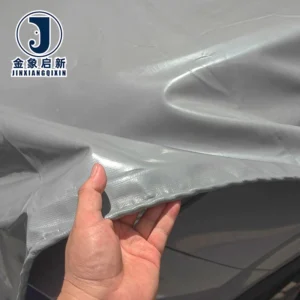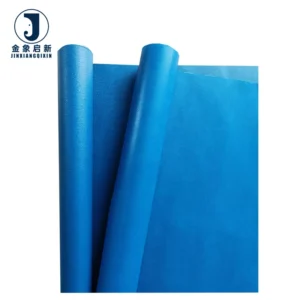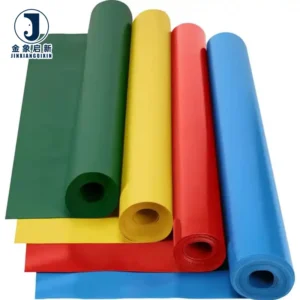
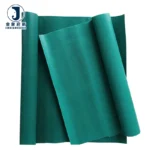
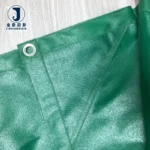

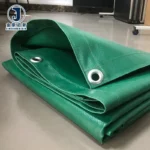
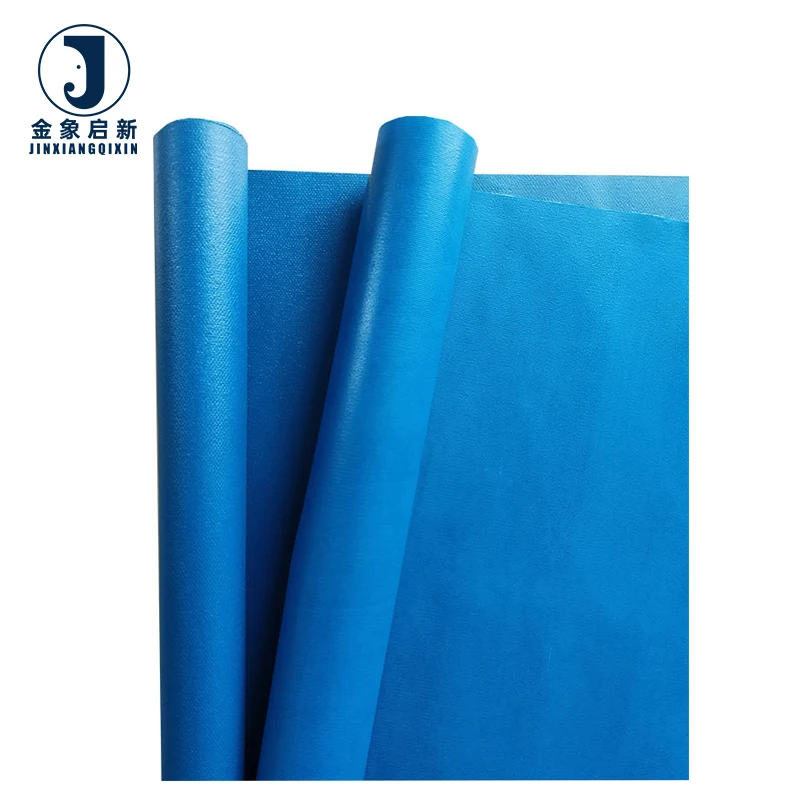
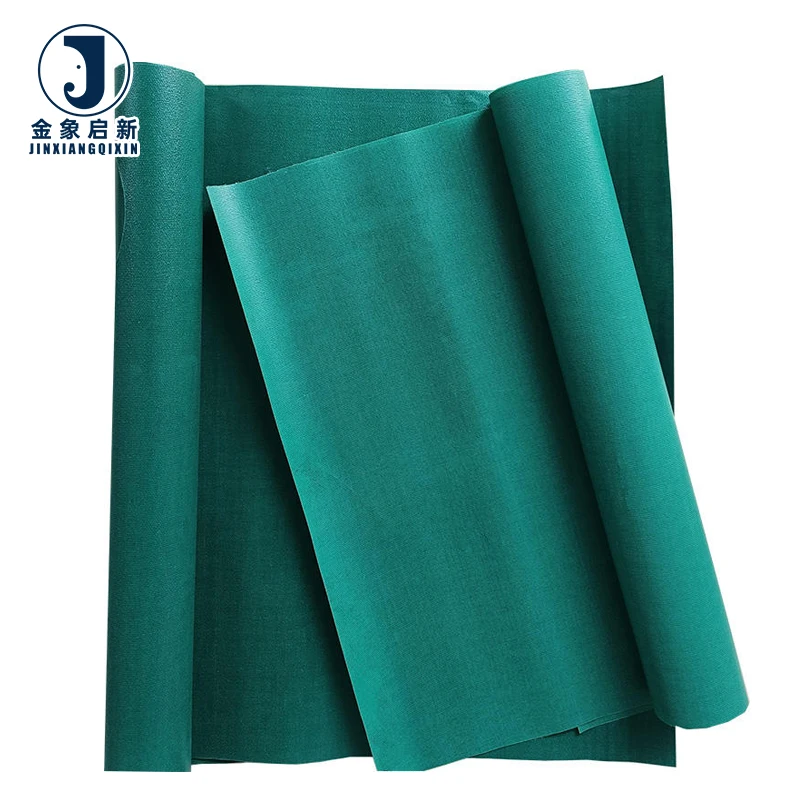
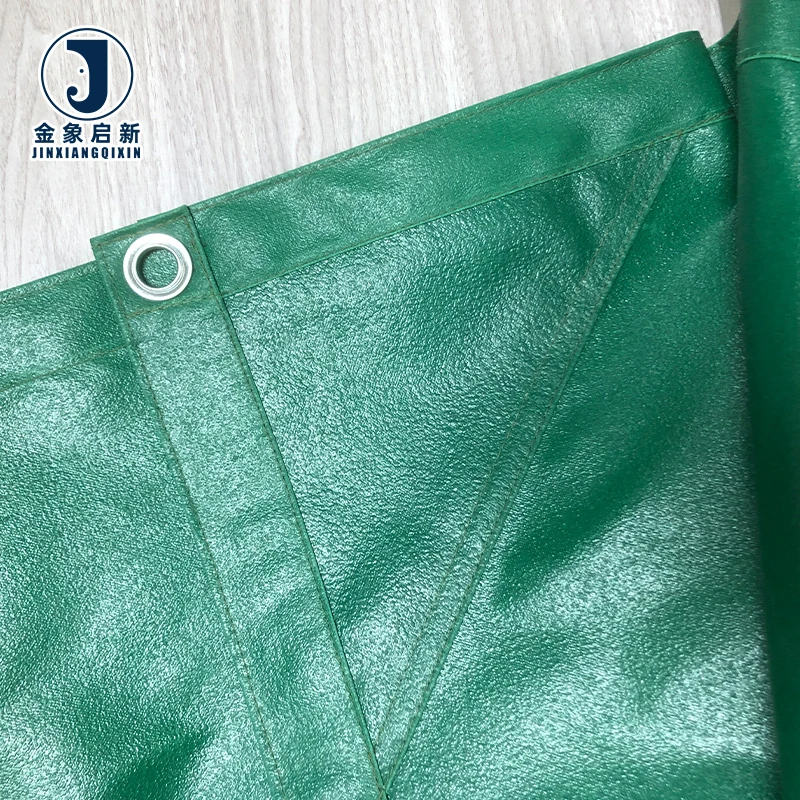
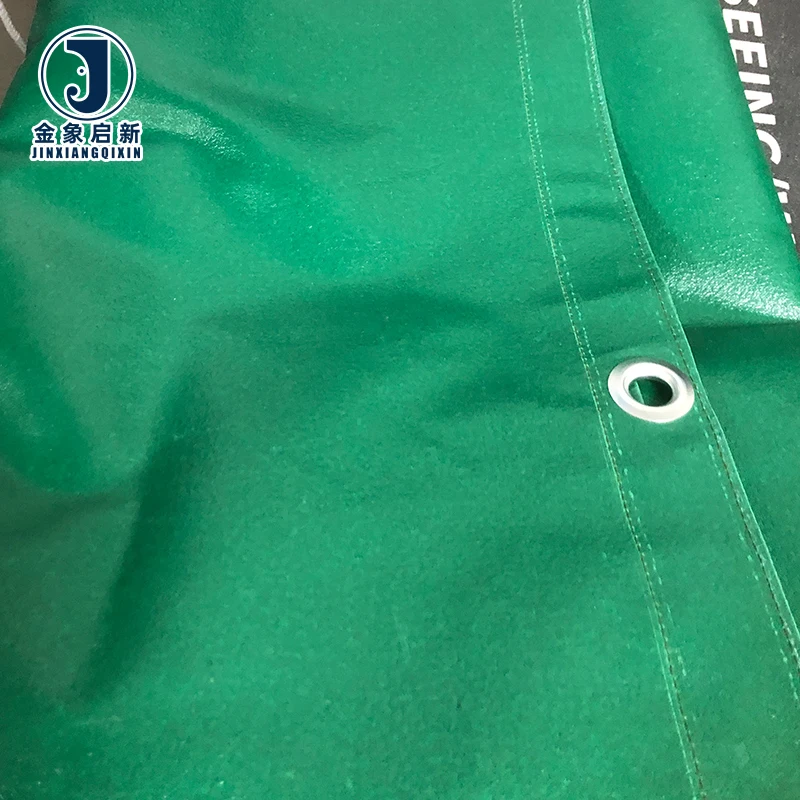
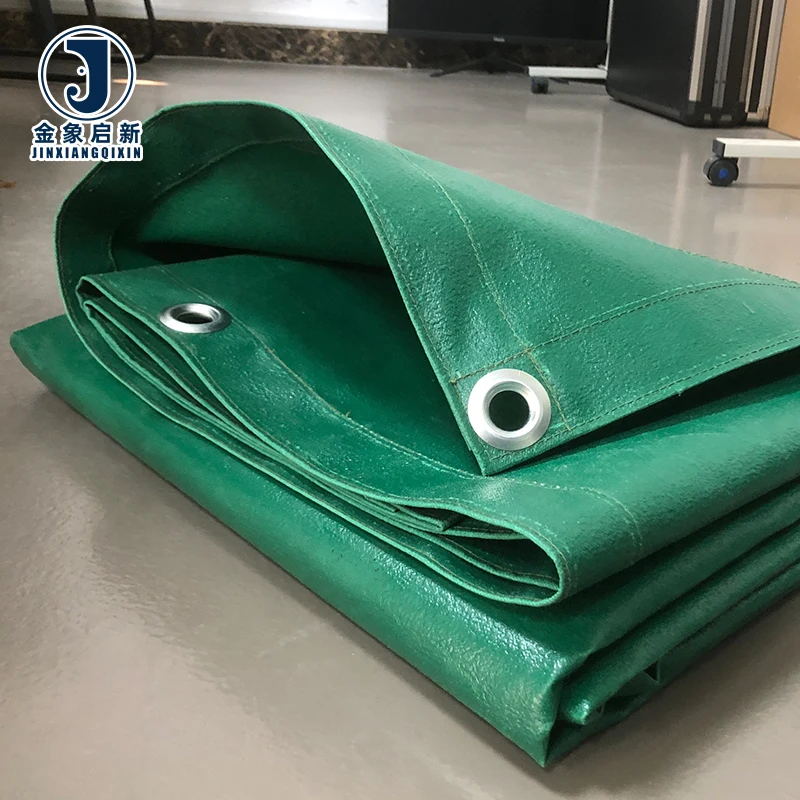
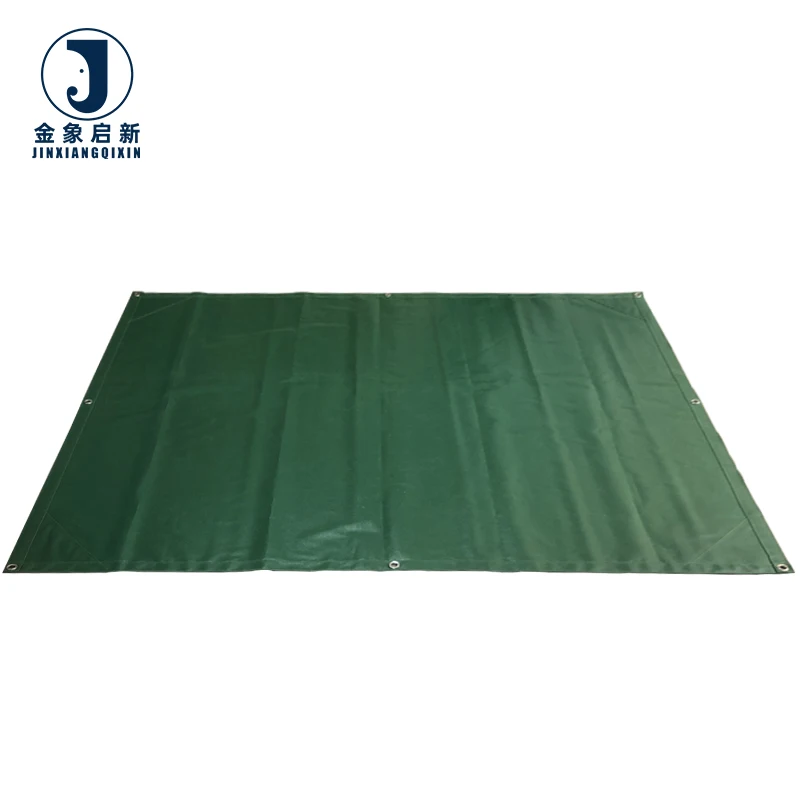
Roll-to-Roll Consistency — Coating weight and adhesion are controlled at every stage across all three production lines, ensuring your PVC Coated Tarpaulin Roll order arrives with uniform GSM and colour from the first roll to the last.
Technical Specifications
| Parameter | Value |
|---|---|
| Product Type | PVC Coated Tarpaulin |
| Material | PVC + High-strength polyester mesh fabric |
| Coating Technology | Laminated & Hot-melt Coating |
| Weight Grades | 350 gsm, 420 gsm, 500 gsm, 550 gsm, 600 gsm, 750 gsm |
| Thickness Range | 0.32 mm, 0.35 mm, 0.4 mm, 0.45 mm, 0.5 mm, 0.65 mm |
| Roll Width | 2 m / 2.1 m |
| Roll Length | 75 m (2 m width) / 50 m (2.1 m width) |
| Color Options | Blue, Red, Yellow, Light Blue, Grey (Customizable) |
| Treatment Options | Flame retardant, Anti-static, Anti-cold, Anti-mildew, UV resistant (confirm grade required for your market) |
| Key Features | Cold crack resistance, anti-mildew, waterproof, high tearing strength for welding, good color fastness |
| Standards | ISO, CE |
Application Suitability
| Application | Exposure & Requirement |
|---|---|
| Fire-retardant ventilation ducts for mining and tunnelling | Continuous airflow abrasion, suspended load, mandatory flame-retardant compliance underground |
| Anti-static enclosures for aviation fuel handling | Explosive atmosphere zones, static discharge risk, certified surface resistance |
| Membrane and inflatable structure fabric | Tensioned panels, wind load, weld seam integrity under flex |
| Scaffolding and building enclosure | Wind-driven rain, UV exposure, scaffolding tie-off abrasion |
| Plant and refinery maintenance covers | Chemical splash, high humidity, fire safety protocols on site |
| Tent and temporary industrial shelter | Repeated assembly and teardown, weather exposure, structural frame contact |
Why Certification Matters More Than the "Fireproof" Label on a PVC Coated Tarpaulin Roll
A flame-retardant claim without a matching test report is a compliance risk, not a material specification.
I have reviewed too many roll orders where the quotation states "flame retardant" but the delivery arrives with no grade documentation. For mining ventilation ducts or aviation hangar enclosures, site safety officers require a specific classification — M2, B1, NFPA 701 — not a generic promise. When the paperwork is missing, the entire shipment can be rejected at the gate, delaying the project and forcing an emergency re-order. [NEED_CITE: fire classification standards for coated fabrics in mining ventilation]
The same applies to anti-static treatment. In explosive atmosphere zones, surface resistance must be measured and reported per roll. A PVC Coated Tarpaulin Roll fire retardant or anti-static claim must always ship with test data tied to the batch you receive.
Coating Adhesion and Weld Integrity in Duct Fabrication
The laminated and hot-melt coating technology used on these rolls produces a bond between the PVC layers and the polyester mesh that withstands the thermal stress of hot-air welding. When ventilation duct sections are joined, the weld seam is often the first failure point if coating adhesion is weak. Hot-melt coating drives the PVC into the mesh structure under heat and pressure, creating a mechanical lock that resists delamination at the flex points where the duct vibrates under airflow.
Selecting the Right Weight Grade for Technical Structures
These PVC coated tarpaulin rolls are available in six weight grades from 350 gsm to 750 gsm, each matched to a specific thickness. Lighter grades suit temporary shelter panels and inflatable structures where weight savings matter. Heavier grades provide the tensile mass needed for suspended ventilation ducts and membrane roofs that carry wind and snow loads. The correct choice depends on the structural role the fabric plays, not simply on selecting the heaviest option. [NEED_CITE: tensile and tear test methods for coated fabrics per ISO 1421]
How Base Fabric and Coating Weight Interact
The total GSM of a PVC coated tarpaulin roll is the sum of the base polyester mesh weight and the PVC coating applied to both sides. A roll can reach a target GSM through heavy coating on a light mesh, or lighter coating on a dense mesh — and the performance difference is significant. Dense base fabric with high denier yarns provides tear resistance and dimensional stability, while the coating contributes waterproofing and surface protection. Understanding this balance prevents under-specification: a roll that meets the quoted GSM but uses a light base fabric will tear more easily at eyelets and weld seams under load.
The coating method also influences fabrication behaviour. Laminated and hot-melt coated fabrics hold weld seams differently than knife-coated alternatives, affecting the temperature and dwell time your welding equipment should use. Roll width — available in 2 m or 2.1 m — directly determines how many panels must be joined to cover a given duct diameter or structure span, influencing both labour and the number of potential failure lines. [NEED_CITE: welding parameters for PVC coated polyester fabrics]
The Hidden Cost of Specifying on Price Per Kilogram
When procurement teams evaluate PVC coated tarpaulin rolls on cost per kilogram alone, the supplier has an incentive to hit the target GSM with the cheapest combination of base fabric and coating. The result is a roll that passes the weight check but fails on the job site — seams delaminate under vibration, the fabric tears at tie-off points, or colour shifts visibly between rolls installed side by side. For industrial air ducts and technical structures, the consequences extend beyond material replacement: a ventilation duct failure underground halts production, and a membrane structure that tears under wind load creates a safety incident. [NEED_CITE: common failure modes in PVC coated fabric installations]
Colour consistency is another area where batch-level shortcuts surface. Rolls produced from different coating batches without strict pigment control show visible shade variation once unrolled and installed next to each other. On a large enclosure or duct run, this is not a cosmetic issue — it signals inconsistent coating chemistry that may also affect flame-retardant or anti-static treatment uniformity.
Why Technical Buyers Source PVC Coated Tarpaulin Rolls Here
Three full production lines and 36 sets of professional equipment support bulk roll orders with on-time dispatch, so your ventilation duct or membrane structure project stays on schedule.
A 10-person R&D team handles material selection, custom width requests, and sample development — critical when your duct fabrication line is set up for a specific roll dimension and standard widths generate excess weld waste.
Dedicated QA/QC runs at every production stage, with 100% inspection before shipment. Each roll is checked against the stated GSM and coating weight, not just sampled from the batch.
Hot-melt and laminated coating processes are controlled in-house, giving direct command over adhesion strength and ensuring welded seams perform as expected in the field.
Samples for custom colour, treatment, or width are developed within days, allowing you to validate the material on your own welding equipment before committing to a full container load.
Documentation & Verification
- Material specification sheet stating exact GSM, base fabric denier, coating weight, and colour reference for every roll
- Test report for flame-retardant grade and anti-static surface resistance matched to the delivered batch
- Pre-shipment inspection record with roll-by-roll weight and dimension verification
- Roll packing list cross-referenced to purchase order line items for receiving checks
- Certificate of origin and customs documentation prepared for cross-border project sites
Fabrication, Handling & Storage
- Set hot-air welding temperature and speed based on the specific gsm and coating thickness of your roll grade
- Allow heavier grades like 600 gsm and 750 gsm extra dwell time at the weld head for full adhesion
- Store rolls upright on end caps to prevent flat-spot creases across the 2 m or 2.1 m width
- Unroll and allow cold-stored fabric to reach ambient temperature before welding to avoid coating crack at the seam
- Use mild detergent for cleaning — solvent-based agents can degrade the anti-mildew and flame-retardant surface treatment
- Plan panel cutting layout around the 75 m or 50 m roll length to minimise offcut waste on duct sections
What We Need to Quote Your PVC Coated Tarpaulin Roll Order Accurately
Share the specific application — ventilation duct, membrane structure, or enclosure — along with the fire-retardant or anti-static grade your site requires. Tell us the roll width your fabrication line is set up for and your annual volume so we can plan batch-consistent production runs. If you need a sample to test weld parameters on your equipment before committing, state that upfront and we will prioritise sample development.
Frequently Asked Questions
Q: What fire-retardant grade can you certify for mining ventilation duct?
A: Flame-retardant treatment is available in grades aligned with common mining and construction standards. The specific grade — such as M2, B1, or NFPA 701 — must be confirmed at inquiry so we can supply the matching test report with your shipment. State your site compliance requirement and we will document the grade accordingly.
Q: How is anti-static surface resistance measured and reported per roll?
A: Anti-static treatment is applied during coating and surface resistance is measured on finished rolls. We provide a test result for the batch you receive. Confirm the resistance range your project specification calls for so we can align the treatment level and include the data in your documentation package.
Q: Can you supply rolls in custom widths to reduce welding waste on duct fabrication?
A: Standard roll widths are 2 m and 2.1 m, but custom widths are available for projects where a specific duct diameter makes standard sizes inefficient. Share your target width and order volume, and our R&D team will confirm feasibility and provide a sample for your welding line to test before bulk production.
Q: How do you guarantee batch-to-batch colour and coating consistency across a container load?
A: Every production run goes through in-process QA checks on coating weight, colour reference, and GSM. Rolls are inspected individually before packing. For large orders spanning multiple production batches, we control pigment dosing and coating parameters to minimise shade variation, and we ship pre-shipment inspection records documenting each roll.