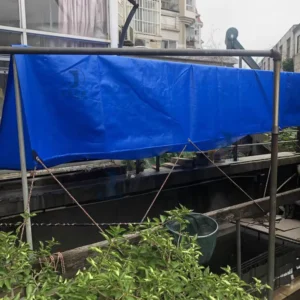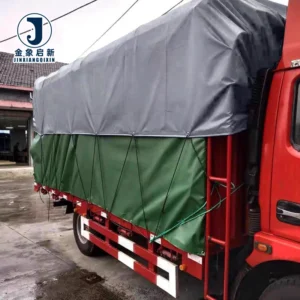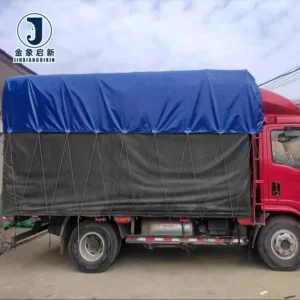

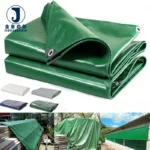
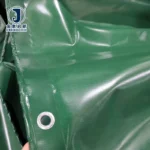
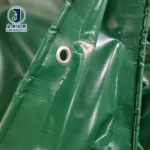
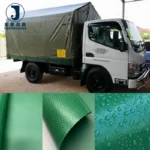
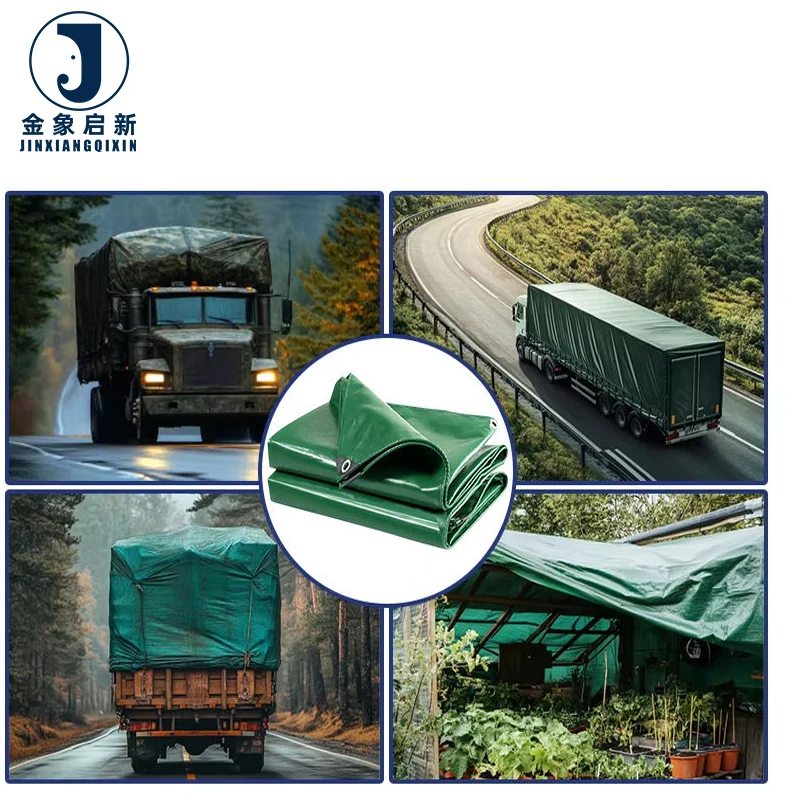
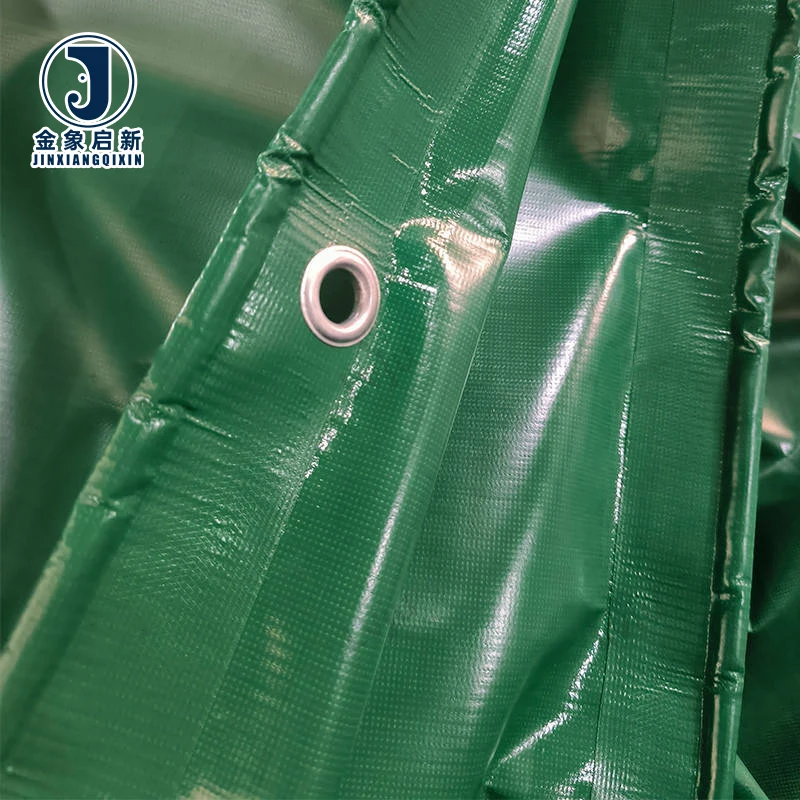
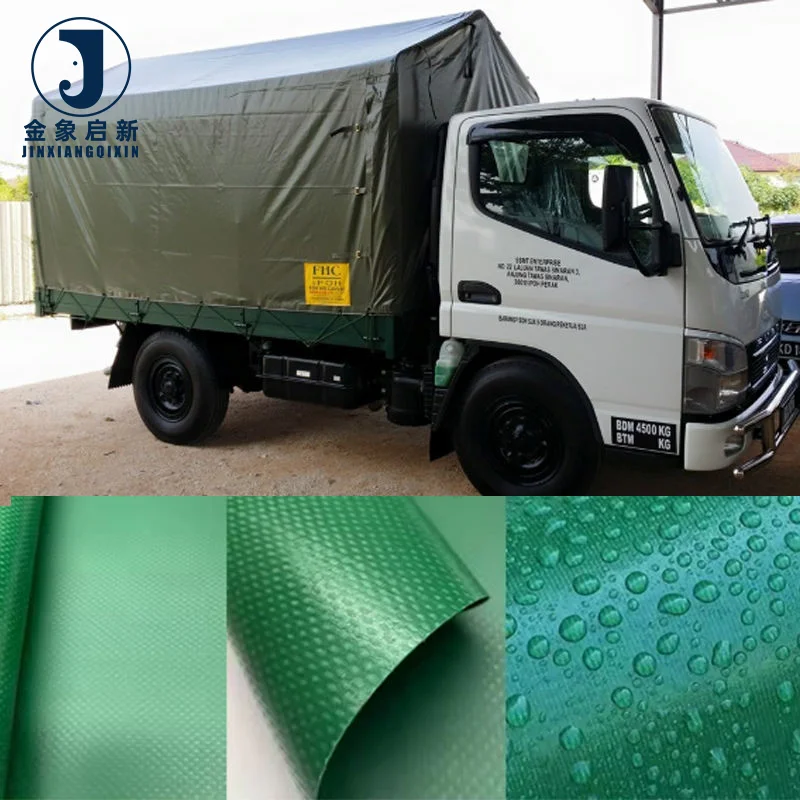
Dedicated QA/QC at every stage — 100% pre-shipment inspection verifies hem reinforcement, eyelet interval and coating adhesion before any PVC Truck Cover for transport leaves the facility.
Technical Specifications
| Parameter | Value |
|---|---|
| Product Type | PVC Truck Cover |
| Base Material | HDPE weaving with LDPE lamination on both sides |
| Coating Material | LDPE |
| Weight (GSM) | 50gr/m² ~ 220gr/m² (range covers product family — confirm the grade for your application) |
| Thickness | 0.2-0.4mm / 8 mil-16 mil / Custom |
| Roll Width | 6ft, 8ft, 10ft, 12ft, 2m, 4m, 6m |
| Roll Length | 100 yards, 100 meters, or custom |
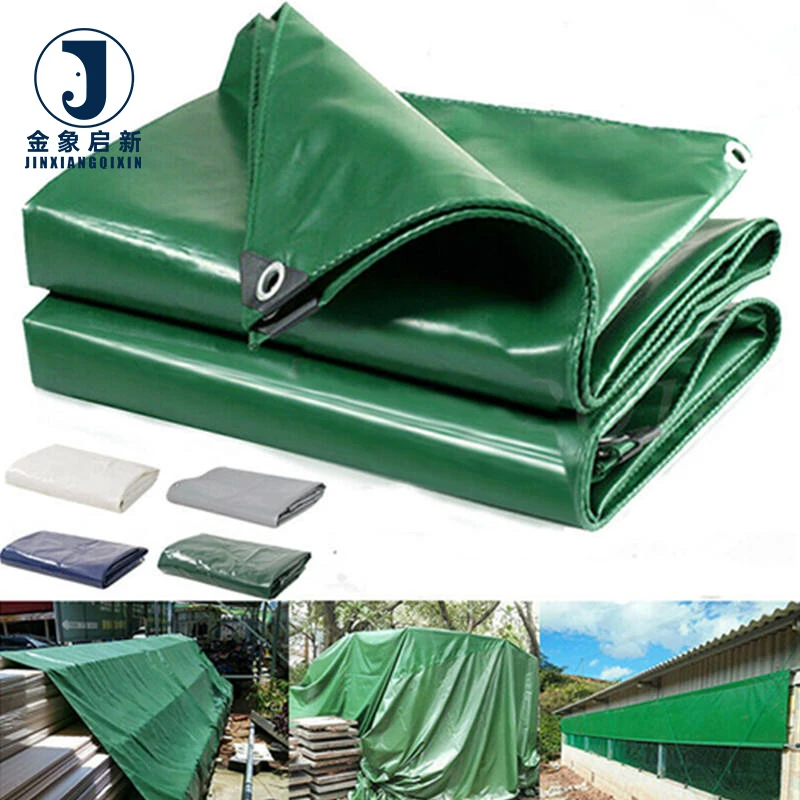
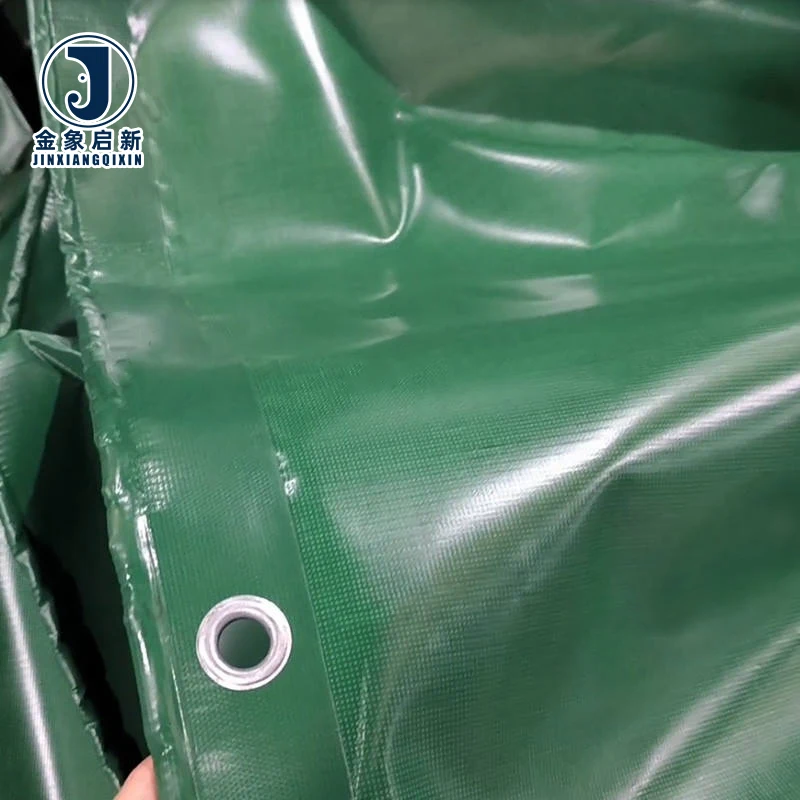
| Finished Edge | PP rope reinforced hem on all four sides |
| Eyelets | Galvanized, spaced every 3ft or 1 meter |
| Corner Reinforcement | Reinforced plastic corners |
| Key Features | Waterproof, washable, tear resistant, mildew proof, anti-aging, UV treatment available (test basis not stated) |
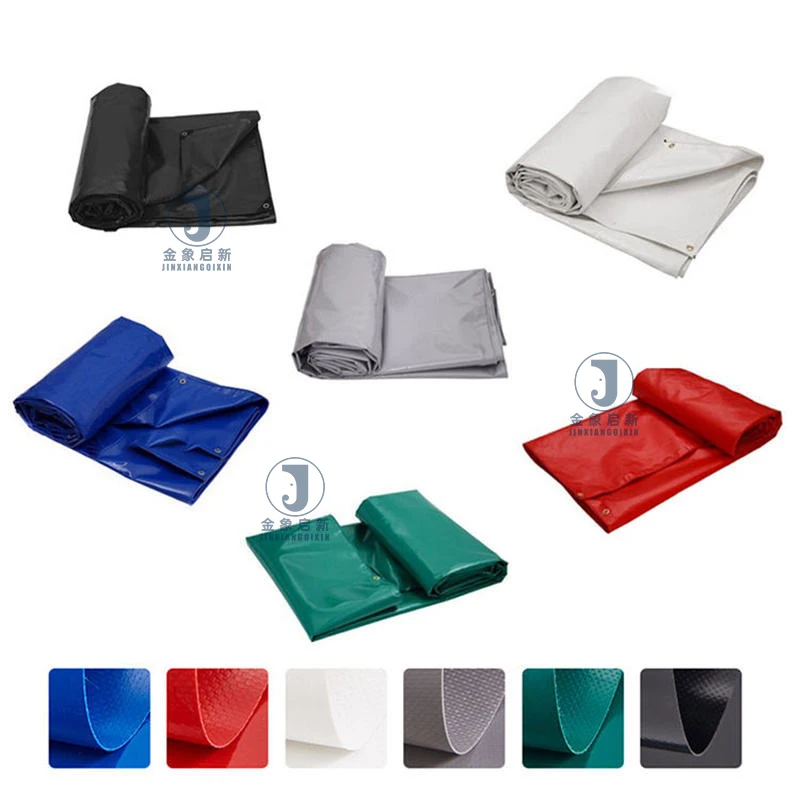
| Colors Available | Blue, Blue/Orange, Green, Grey, Black, Clear, Grey/Green, Orange, or custom |
| Certifications | ISO 9001, CE |
Application Suitability
| Application | Exposure & Requirement |
|---|---|
| Flatbed trailer load covering | Road abrasion, wind uplift, constant tie-down tension on eyelets and hems |
| Lumber and steel transport | Sharp cargo edges, heavy tie-down loads, weather exposure during long hauls |
| Curtain-side trailer fabric replacement | Continuous flexing at folds, friction against trailer frame, UV exposure |
| Outdoor equipment and machinery storage | Standing moisture, mildew risk, seasonal temperature swings |
| Construction site material covers | Dust, rain, ground contact, puncture from aggregate or rebar |
Why Generic Sizing Undermines a PVC Truck Cover for Transport Fleet Performance
A cover that does not match the exact trailer dimensions creates stress concentrations at every misaligned edge.
When buyers order tarps by generic dimensions, the excess fabric flaps in highway wind, abrading against the load and the trailer frame. Where the cover falls short, tie-down straps pull the eyelets at angles the hem was not designed to handle. I have watched fleet operators replace covers mid-season because the reinforcement failed not from material weakness but from poor fit geometry [NEED_CITE: common failure modes in heavy-duty transport tarpaulins]. Custom cut-to-size specification removes this variable entirely, ensuring every PP rope hem and galvanized eyelet sits exactly where the trailer structure demands.
Cut-to-Size Engineering for Trailer-Specific Fitment
Every trailer body type — flatbed, curtain-side, step-deck — presents distinct coverage geometry. A PVC Truck Cover for transport must account for the drop distance from the load crown to the tie-down rail, the wrap-around at the rear, and the clearance around landing gear. Our R&D team reviews your trailer model drawings to calculate exact panel dimensions, reducing excess fabric that would otherwise create drag and fatigue at highway speeds.
Reinforcement Strategy at Load Flex Points
When cargo shifts or the trailer frame twists over uneven road, specific zones on the cover absorb repeated bending stress. The PP rope reinforced hem on all four edges distributes tie-down load across a wider fabric area rather than concentrating it at individual eyelet points. Reinforced plastic corners add an extra layer at the locations most prone to tearing during strap tensioning, addressing a failure pattern common in generic tarps [NEED_CITE: tie-down load distribution standards for cargo restraint systems].
Reading the Specification Sheet Beyond the GSM Number
The weight range of 50gr/m² ~ 220gr/m² spans from light storage covers to heavy transport-grade tarps, but GSM alone tells only part of the story. The HDPE weaving base provides the tensile backbone, while the LDPE lamination on both sides seals the weave against water ingress and adds abrasion resistance at contact points. A 150gr/m² cover with a tighter weave and thinner coating may outperform a 180gr/m² cover that achieves weight through heavier lamination but uses a looser base fabric. Always request the base fabric denier and weave count alongside the GSM figure to understand where the weight actually sits in the composite structure.
The Hidden Cost of Skipping Fitment Verification
I have seen fleet orders where every cover in a batch arrived the correct colour and weight but failed within weeks because the hem reinforcement was specified for static storage rather than dynamic transport loads. The eyelets pulled through the fabric not because the galvanizing was poor but because the interval spacing left too much unsupported edge between tie-down points [NEED_CITE: edge load calculation methods for reinforced tarpaulin hems]. Mildew-proof treatment matters little if the cover has to be replaced before the season ends due to mechanical failure at the reinforcement zone.
Why Source This PVC Truck Cover for Transport from Jinxiang
Three full production lines and 36 sets of professional equipment support bulk fleet orders without sacrificing lead-time reliability. The 10-person R&D team develops cut-to-size samples within days, allowing you to trial fitment on a specific trailer model before committing to a full production run. Dedicated QA/QC checks every roll for GSM compliance, coating adhesion and eyelet spacing against the order specification — not just a random sampling from the batch. ISO 9001 and CE certification underpin the production process, and full customs documentation is prepared for each shipment to streamline your import clearance.
Documentation & Verification
- GSM verification report confirming the weight matches the quoted grade for every roll shipped
- Material specification sheet detailing HDPE base fabric denier and LDPE coating weight
- Pre-shipment inspection record covering eyelet spacing, hem reinforcement and colour consistency
- Roll packing list with individual roll dimensions and gross weight for container planning
- Certificate of origin and customs documentation matched to your destination market requirements
Fabrication, Handling & Storage
- Heat-sealing parameters must account for LDPE lamination melting point to avoid delamination at weld seams
- Galvanized eyelets at 3ft or 1m intervals require matching grommet press dies to prevent distortion during setting
- Store rolls flat or on horizontal racks to avoid permanent creasing in the HDPE woven base
- Unroll and allow fabric to acclimatise before fabrication in cold conditions to prevent coating micro-cracking
- Mildew-proof treatment tolerates standard mild detergents but avoid solvent-based cleaners that attack LDPE coating
What We Need to Specify Your Cover Correctly
To engineer a PVC Truck Cover for transport that matches your fleet requirements, share the trailer model and body type so we can calculate exact panel dimensions. Confirm the cargo type — lumber, steel, general freight — so we can recommend the appropriate GSM grade and reinforcement level. If you require UV treatment or specific colour matching across a fleet order, let us know the destination market to ensure the treatment and colour standard align with your regional exposure conditions.
Frequently Asked Questions
Q: How is truck cover sizing matched to specific trailer models and body types?
A: We review your trailer model drawings or physical measurements to calculate exact panel dimensions, accounting for load crown height, tie-down rail position and rear wrap-around. This eliminates the excess fabric that causes highway wind flap and the short-fall that over-stresses eyelets at misaligned tie-down points.
Q: What eyelet spacing and hem reinforcement options are available for heavy tie-down loads?
A: Standard configuration uses galvanized eyelets at 3ft or 1m intervals with PP rope reinforced hems on all four edges and reinforced plastic corners. For heavier cargo like steel coils, we can adjust eyelet spacing closer together and add extra reinforcement patches at high-load zones based on your tie-down strap pattern.
Q: How is GSM verified on arrival to match the quotation?
A: Every roll undergoes weight verification before dispatch, documented in the pre-shipment inspection record. The material specification sheet included with your shipment states the exact GSM, base fabric denier and LDPE coating weight so you can cross-check the grade you ordered against what arrived.
Q: How do you ensure colour consistency across multiple covers in a fleet order?
A: All covers in a single production batch use the same colour compound run. Our QA/QC team checks colour consistency roll-to-roll during the pre-shipment inspection, flagging any deviation before packing. For repeat orders, we retain colour reference samples to match future batches.
Q: What is the typical lead time for custom-sized truck tarps?
A: Lead time depends on order volume, the degree of custom sizing and whether specific colour or treatment requires a special production run. We confirm the production schedule and dispatch date at quotation stage, and the 10-person R&D team can develop fitment samples within days to keep your approval process moving.