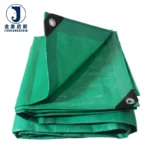
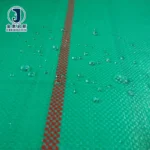

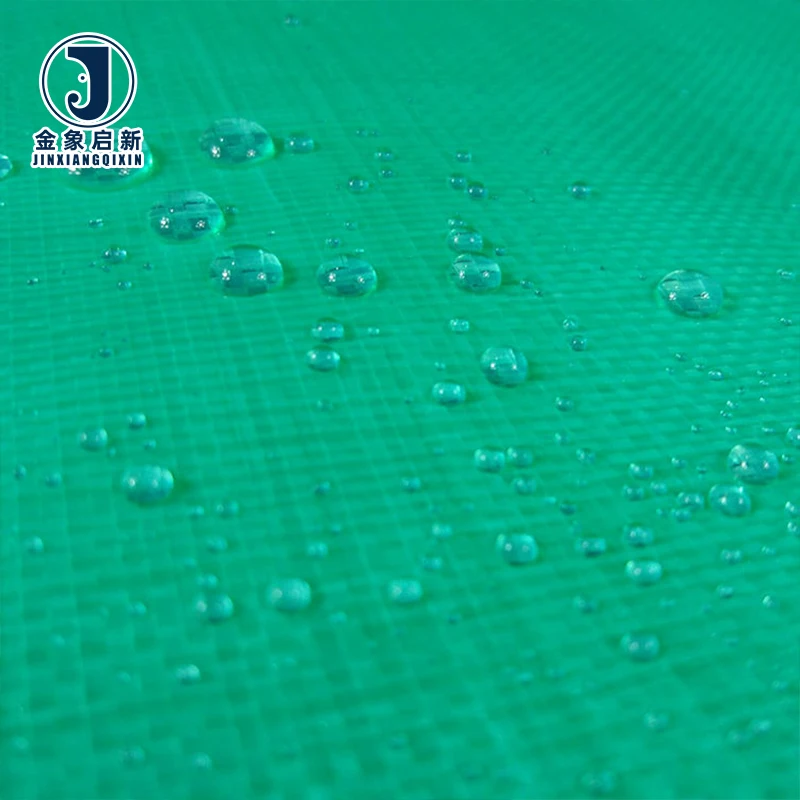
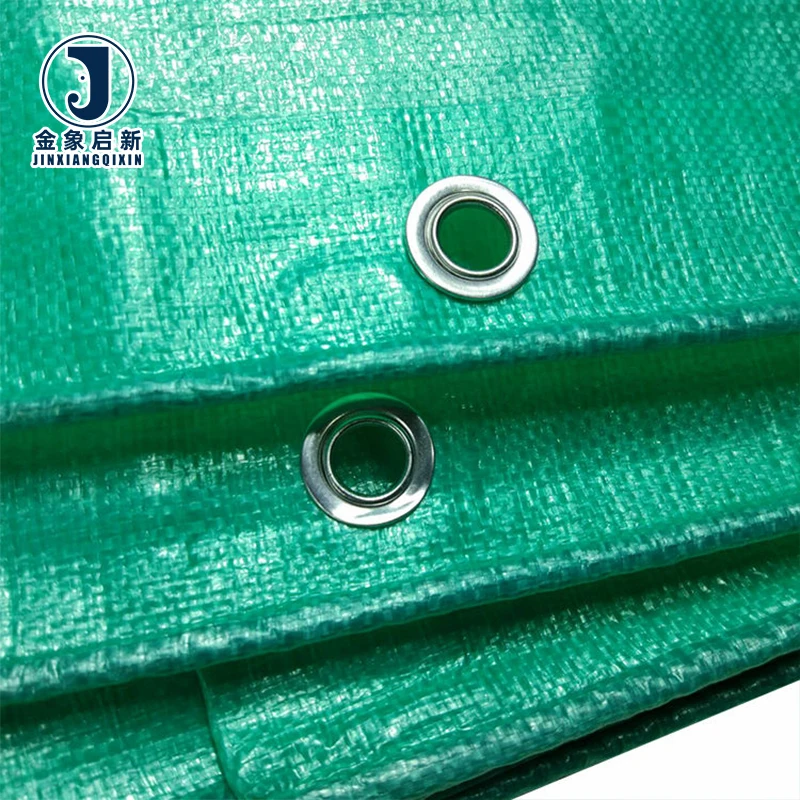
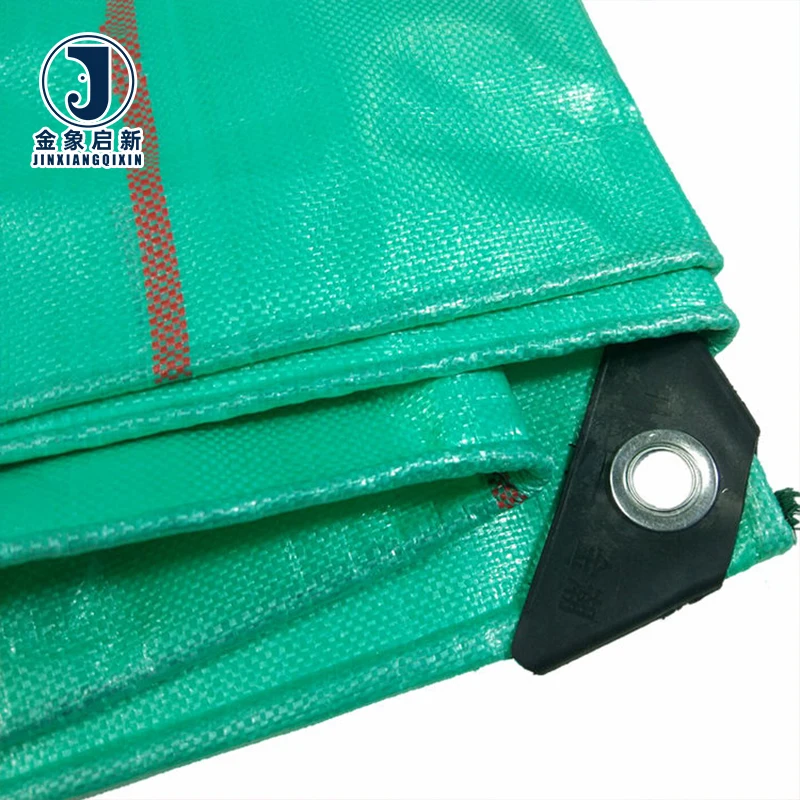
Deep Process Control — coating weight and adhesion consistency verified at every production stage, ensuring the PE Tarpaulin for Outdoor and Transport Use arrives with uniform lamination integrity across every roll.
Technical Specifications
| Parameter | Value |
|---|---|
| Product Type | PE Tarpaulin |
| Coating Material | LDPE lamination on both sides |
| Base Fabric | HDPE weaving |
| Weight (GSM) | 50gr/m2 ~ 220gr/m2 available (range covers product family — confirm the grade for this item) |
| Total Thickness | 0.2-0.4mm / 8 mil-16 mil / Custom |
| Product Form | Tarpaulin rolls and finished tarpaulin |
| Roll Width | 6ft, 8ft, 10ft, 12ft or 2m, 4m, 6m |
| Roll Length | 100 yards, 100 meters, or custom |
| Finished Sizes | 2x2m to 8x10m, additional custom dimensions available |
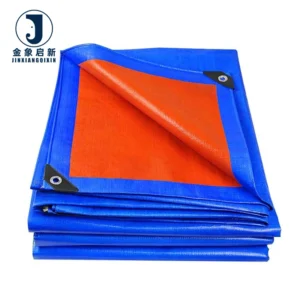
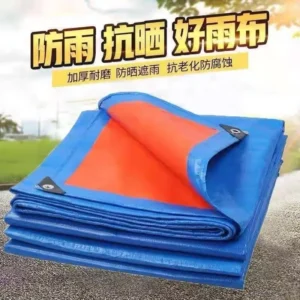
| Color | Blue, Blue/Orange, Green, Grey, Black, Clear, Grey/Green, Orange, or custom |
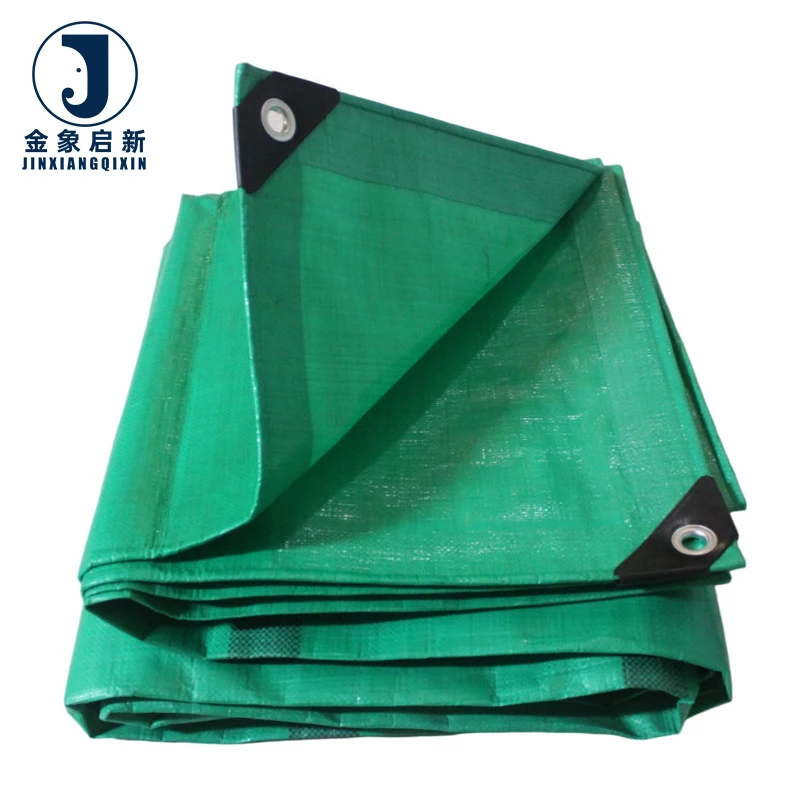
| Edge Reinforcement | PP rope in hem on all four edges |
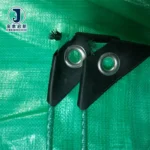
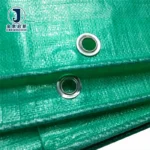
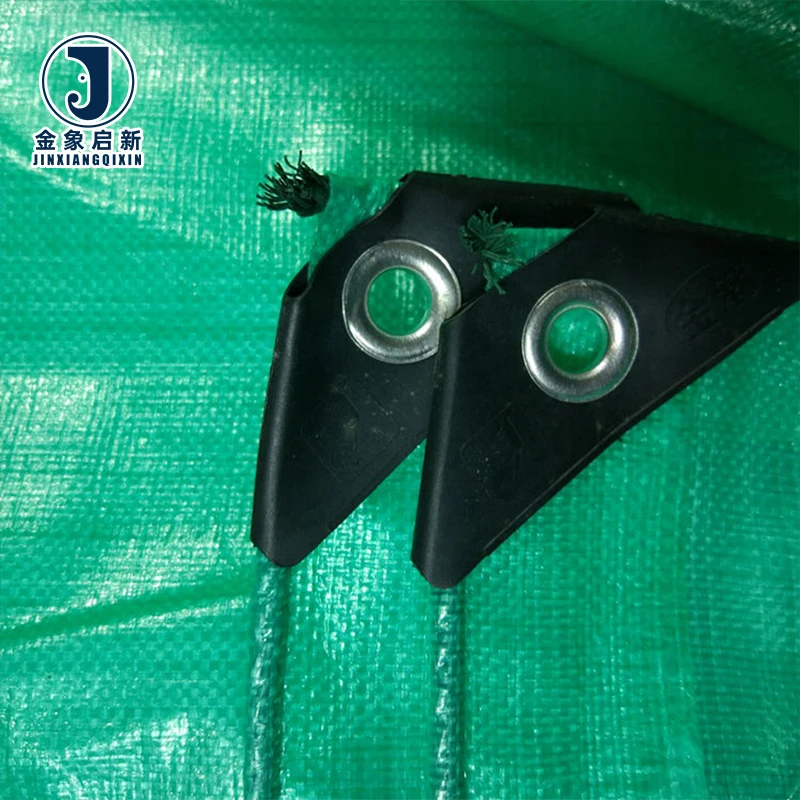
| Eyelets | Galvanized, every 3ft or 1 meter interval |
| Corner Reinforcement | Reinforced plastic corners |
| UV Treatment | Available (test basis not stated in source) |
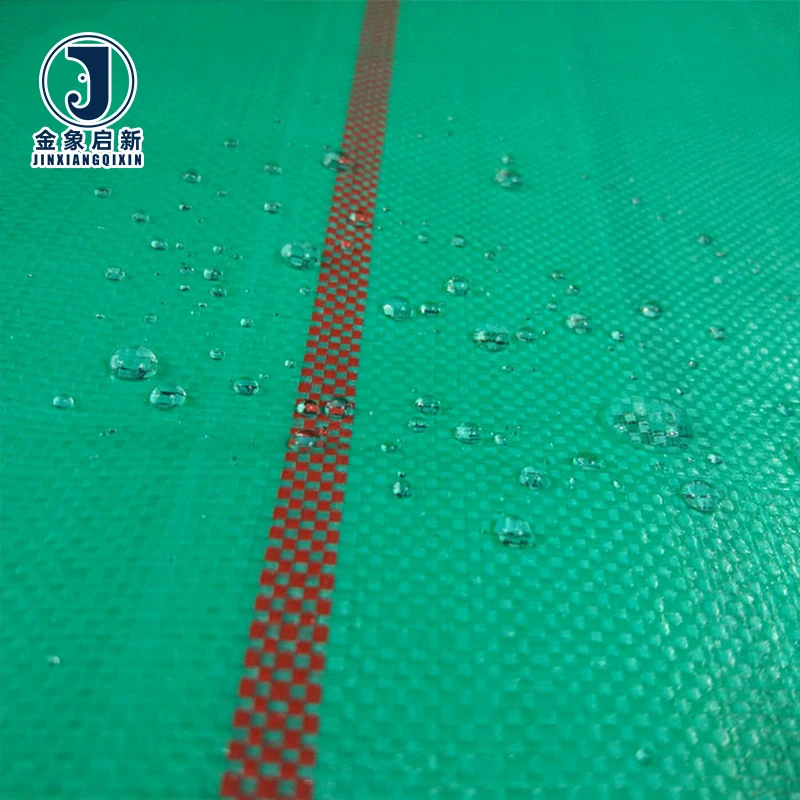
| Waterproof | Yes |
| Anti-Mildew | Yes |
| Anti-Aging | Anti-oxidants added (grade not stated in source) |
| Printing Option | Custom brand printing available |
Application Suitability
| Application | Exposure & Requirement |
|---|---|
| Truck and trailer load covering | Road vibration, wind uplift, rain ingress, UV exposure, tie-down abrasion at eyelet and hem zones |
| Construction site equipment and material covers | Prolonged sun and rain, dust infiltration, puncture risk from sharp aggregate, frequent removal and refitting |
| Agricultural and outdoor storage covers | Hay and machinery moisture protection, soil contact mildew, seasonal UV degradation, wind billowing |
Why GSM Alone Does Not Tell You How Waterproof a Tarpaulin Really Is
Waterproof integrity depends as much on lamination adhesion and seam construction as on the stated GSM.
Many buyers specify a target GSM and assume that number alone guarantees weather protection. In practice, a PE Tarpaulin for Outdoor and Transport Use with poorly bonded LDPE lamination can delaminate at stress points long before the base fabric fails. The HDPE woven base provides tensile strength, but it is the double-side LDPE coating that creates the actual moisture barrier. When lamination temperature or pressure drifts during production, micro-channels open along the weave intersections — invisible on inspection but the first path for water ingress under sustained rain. [NEED_CITE: lamination peel strength test methods for coated fabrics per ISO standards]
Lamination Bonding and Waterproof Reliability
The double-side LDPE lamination on this PE tarpaulin range serves two functions: sealing the HDPE woven base against moisture and locking the yarn intersections against fibre migration. When lamination is applied at consistent temperature and pressure across the full web width, the coating penetrates the weave structure and forms a mechanical bond that resists peeling under flex and tie-down loads. This matters most on truck and trailer covers where the fabric flexes constantly during transit.
Edge and Eyelet Reinforcement Design
Waterproofing fails most often at the edges and tie-down points, not in the field of the fabric. This range specifies PP rope hemming on all four edges with galvanized eyelets at 3ft or 1m intervals and reinforced plastic corners. The rope inside the hem distributes tie-down tension across the fabric width rather than concentrating it at individual eyelet holes. [NEED_CITE: eyelet pull-out resistance test protocols for tarpaulin products]
Reading the Weight Range Against Your Actual Application
The 50gr/m2 to 220gr/m2 range covers the full product family, not a single grade. Selecting the correct GSM requires matching the cover’s exposure conditions — a truck side curtain facing constant highway wind demands a substantially heavier grade than a static storage cover on a construction site. The HDPE base fabric density and the LDPE coating weight together determine both the tensile capacity and the waterproof barrier thickness. A lighter grade may meet a cost target but will show wear at hem and eyelet zones sooner under repeated tie-down cycles. Always request the exact GSM for the grade being quoted and verify on receipt.
The Cost of Underspecifying Weight or Edge Detail
When a tarpaulin arrives lighter than the quoted GSM, the shortfall rarely shows up as a clean tear in the field — it appears first at the stress concentration zones. Eyelets pull through thinner coating. Hems split where the PP rope bears against underweight fabric. Corner patches delaminate under tie-down load. For logistics fleets running daily tie-down and removal cycles, these failures accumulate across the fleet and drive replacement costs that exceed the savings from a lighter grade. Batch colour variation compounds the problem when replacement panels must be spliced into existing covers. [NEED_CITE: common failure modes at tarpaulin edge reinforcement zones]
Why Procurement Verification Matters Here
Production consistency across a multi-roll order requires more than a single sample approval. Each production run on this range moves through dedicated QA checks at the coating, weaving, and finishing stages, with 100% pre-shipment inspection covering roll weight, lamination adhesion, eyelet spacing, and colour consistency. The R&D team handles custom sizing and pattern printing development, producing samples within days for buyer confirmation before bulk production begins. This reduces the gap between approved sample and delivered roll — a gap where most specification disputes originate.
Documentation & Verification
- Material specification sheet stating exact GSM and base fabric details for the ordered grade
- Pre-shipment inspection record with roll-by-roll weight and lamination adhesion check
- UV and anti-aging treatment confirmation available — request test report for your climate zone
- Roll packing list with colour batch reference for cross-roll consistency verification
- Certificate of origin and customs documentation for international shipment
Fabrication, Handling & Storage
- Heat-seal temperature must match LDPE lamination grade — test on offcut before full production
- Galvanized eyelets at 3ft intervals require matching gasket washer size to prevent pull-through on lighter GSM grades
- Store rolls horizontally on pallets to prevent permanent creasing across the HDPE woven base
- Avoid dragging finished tarpaulins over abrasive surfaces — LDPE coating scuffs expose the woven base to moisture
- Clean with mild detergent only — solvent-based cleaners degrade anti-oxidant additive in the coating
What to Include in Your Enquiry
Provide the application scenario, exposure conditions, and the specific trailer or structure dimensions so we can recommend the correct GSM and finished size. Specify whether you need roll stock for your own fabrication or finished sheets with eyelets and hemming. Confirm colour, printing, and UV treatment requirements along with your target market compliance needs so we can include relevant test documentation with the quotation.
Frequently Asked Questions
Q: How do I verify the quoted GSM when the rolls arrive?
A: Request the material specification sheet stating the exact GSM for your ordered grade before shipment. On receipt, cut a measured sample from each roll and weigh it on a calibrated scale. Compare against the stated value and flag any discrepancy exceeding normal production tolerance. This check catches lightweight delivery before the material enters fabrication or field use.
Q: What UV treatment is applied and how do I validate it?
A: UV treatment is available across this range, but the specific test basis and grade should be confirmed for your climate zone and expected exposure duration. Request the treatment confirmation and any supporting test report with your quotation. Outdoor service life depends on local UV index, installation angle, and whether the cover is in continuous or intermittent use.
Q: Should I order roll stock or finished cut sizes with eyelets?
A: Roll stock suits buyers with in-house fabrication capability who cut to their own dimensions and install eyelets locally. Finished sizes arrive with PP rope hems, galvanized eyelets at specified intervals, and reinforced plastic corners — ready for immediate tie-down. Consider the total project volume and whether your workshop can handle the finishing economically versus ordering complete panels.
Q: What eyelet spacing and corner options are available?
A: Standard eyelet spacing is every 3ft or 1 meter, with galvanized metal and reinforced plastic corner patches. For high-wind transport applications or heavy tie-down loads, closer spacing or additional intermediate eyelets can be specified during the sample stage. Confirm the tie-down hardware you use so the eyelet diameter and reinforcement patch size match your rope or strap system.