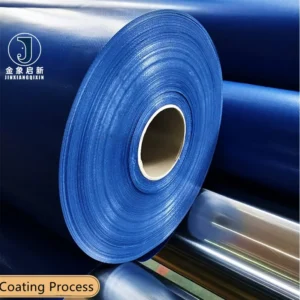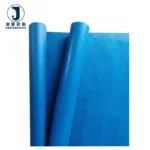
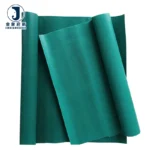
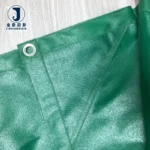
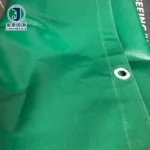
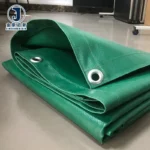
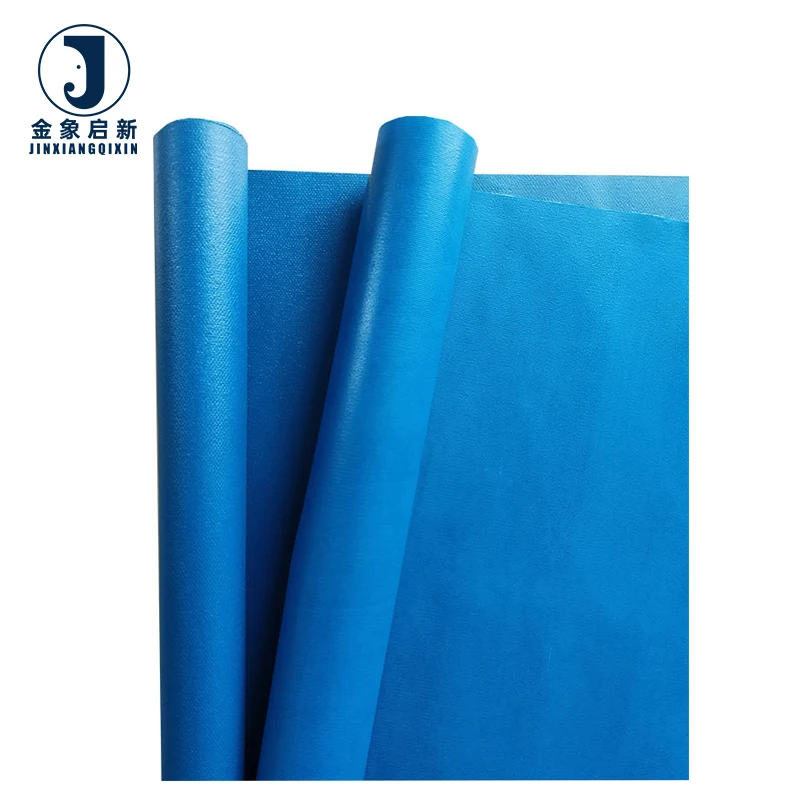
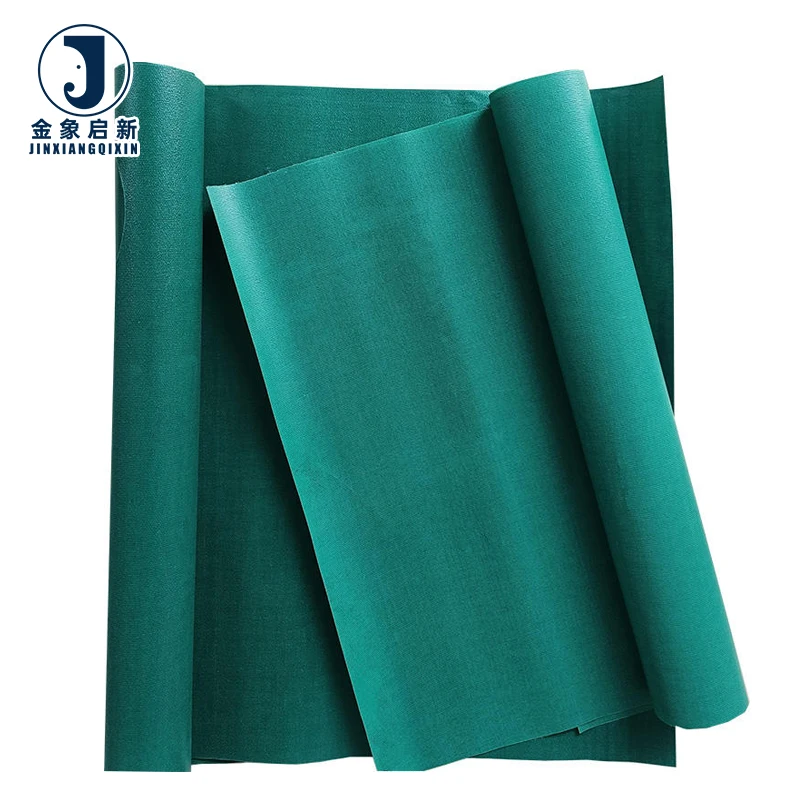
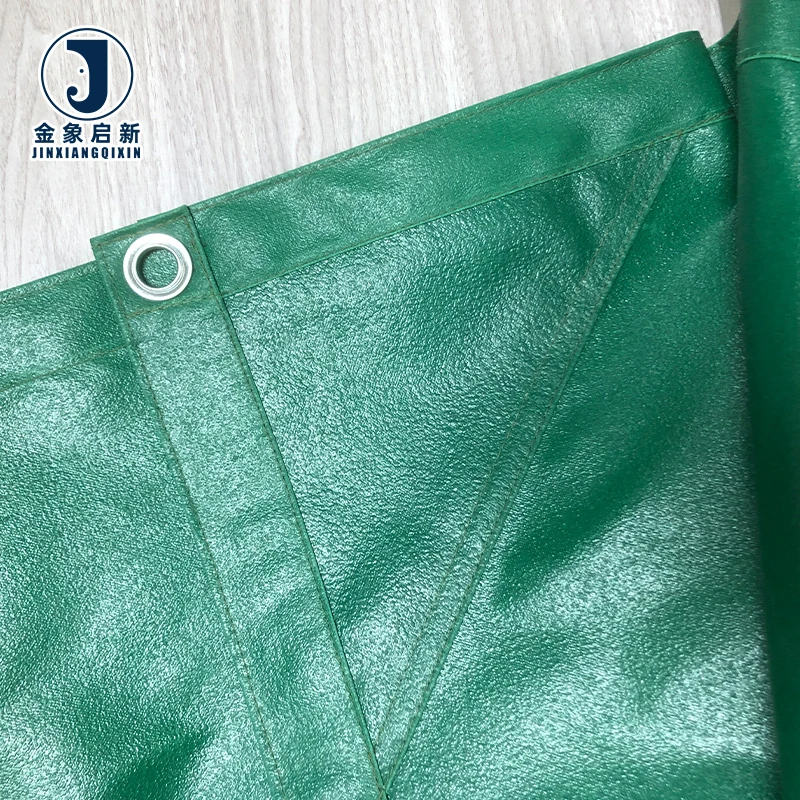
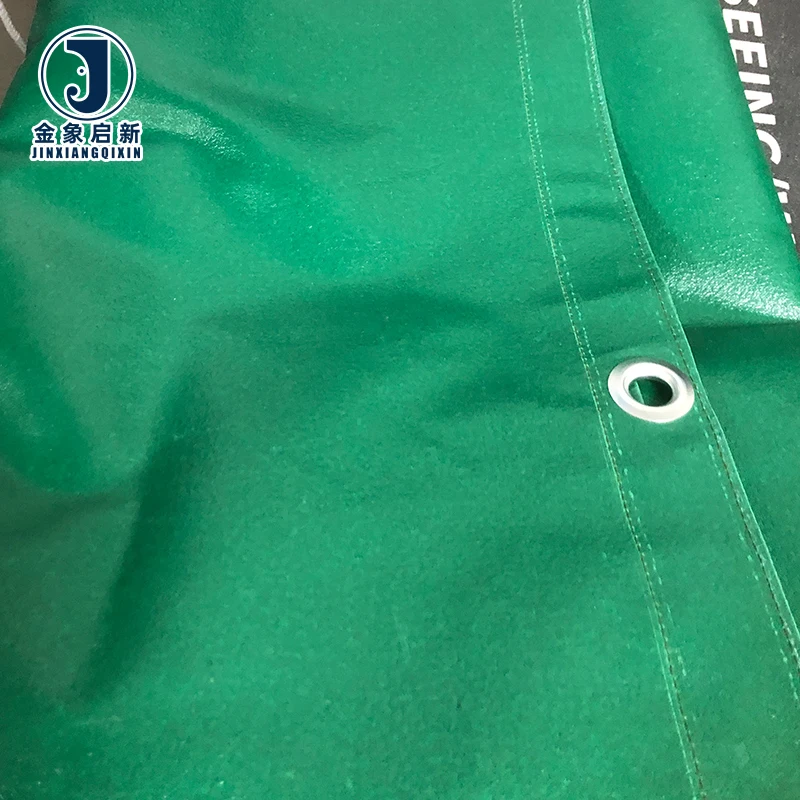
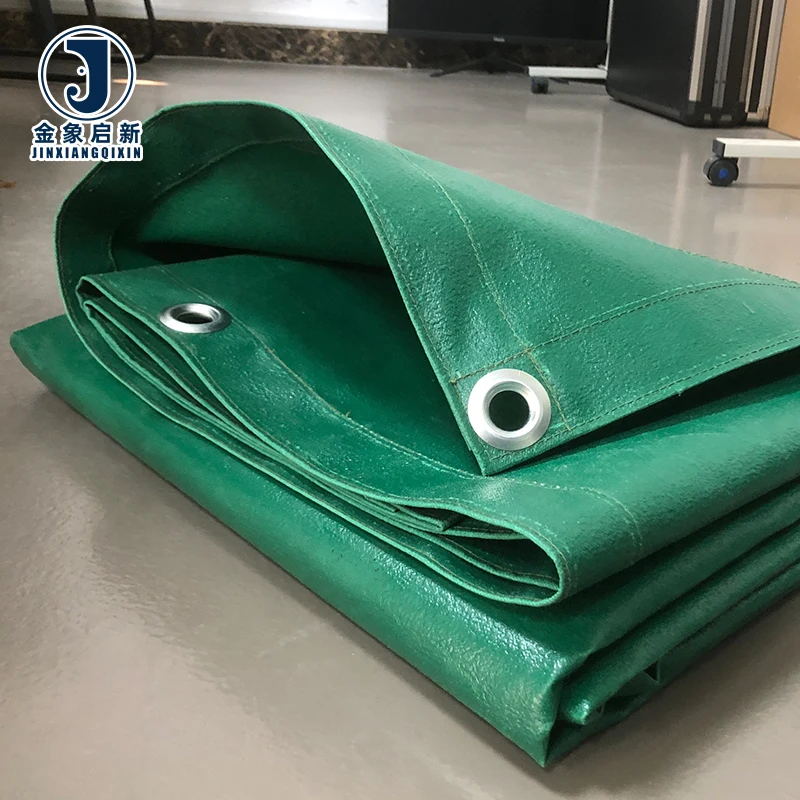
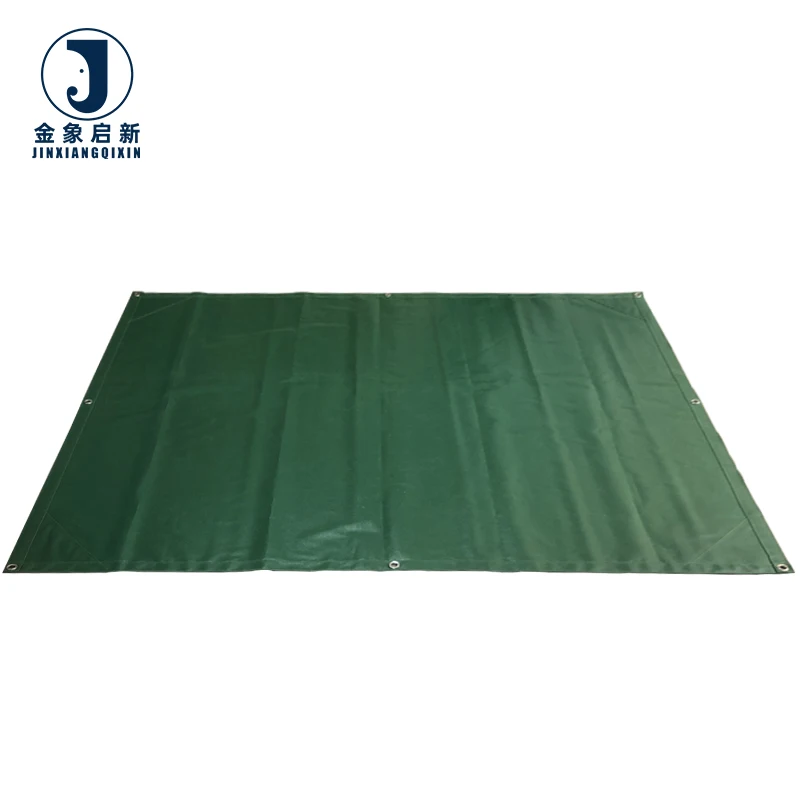
Coated Fabric Process Control — Three full production lines maintain tight adhesion and coating weight tolerances critical for ventilation duct seams and membrane structure welds.
Technical Specifications
| Parameter | Value |
|---|---|
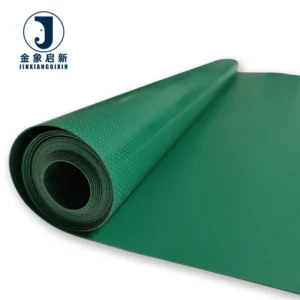
| Product Type | PVC Coated Tarpaulin Fabric Roll |
| Material | PVC + High-strength polyester mesh fabric |
| Coating Technology | Laminated technology & Hot-melt coating technology |
| GSM Range | 350gsm / 420gsm / 500gsm / 550gsm / 600gsm / 750gsm (confirm grade required) |
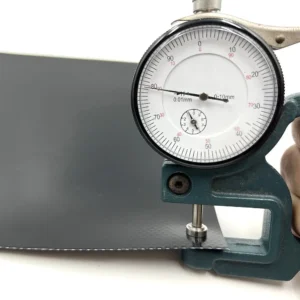
| Total Thickness | 0.32mm / 0.35mm / 0.4mm / 0.45mm / 0.5mm / 0.65mm (confirm grade required) |
| Roll Size | 2m × 75m / 2.1m × 50m |
| Color Options | Blue / Red / Yellow / Light blue / Grey (custom colours available) |
| Flame Retardant | Available in flame retardant grades — confirm the grade required for your market |
| Anti-Static | Anti-static treatment available — confirm surface resistance standard required |
| Key Features | Waterproof, anti-mildew, cold crack resistance, sunproof, colour fastness |
| Standards | ISO / CE certified production |
| Service Life | 3–7 years under normal circumstances |
Application Suitability
| Application | Exposure & Requirement |
|---|---|
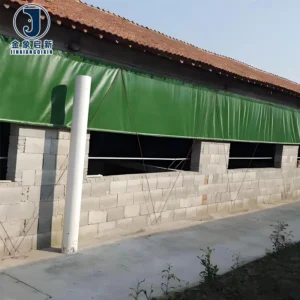
| Mining & tunnelling ventilation duct | Continuous airflow pressure, underground moisture, strict fire-retardant and anti-static compliance |
| Aviation ground support ventilation | Fuel-rich environment, anti-static surface requirement, frequent deployment and stowage |
| Membrane & inflatable structures | Wind loading, UV exposure, weld integrity under cyclic inflation pressure |
| Temporary industrial enclosures | Weather exposure, abrasion from equipment movement, rapid deploy and dismantle cycles |
What Compliance Documentation Should Arrive With Your PVC Coated Tarpaulin Roll?
Every roll must ship with test reports matched to the fire-retardant grade and anti-static standard specified in your project documentation.
Ventilation duct fabric arriving on a mining or tunnelling site without the required fire-retardant certificate is not just a paperwork problem — it halts installation, delays inspection sign-off, and exposes the contractor to liability if an incident occurs before the documentation gap is closed [NEED_CITE: fire-retardant compliance requirements for underground ventilation ductwork]. Anti-static certification carries the same weight in environments where airborne particulates or flammable gases are present. Fabric that claims treatment without a traceable test report cannot be verified by the site safety officer and will be rejected at the pre-installation audit.
Fire-Retardant and Anti-Static Treatment for Regulated Sites
Mining ventilation, tunnelling ductwork, and aviation ground support systems operate under fire safety codes that specify exact flame-retardant grades and anti-static surface resistance values. A PVC coated tarpaulin roll destined for these applications must carry documentation proving the treatment applied during coating matches the standard demanded by the jurisdiction. Available grades and surface resistance ranges should be confirmed at the inquiry stage so the correct formulation is matched to your project specification before production begins.
Coating Adhesion and Weld Integrity Under Duct Pressure
Ventilation ducts flex continuously under positive and negative air pressure cycles. The welded seams bear concentrated stress at every bend and junction. Hot-melt coating technology produces a bond between the PVC layer and the high-strength polyester mesh that resists delamination at these flex points [NEED_CITE: peel strength test methods for coated fabrics per ISO 1421]. Laminated coating offers an alternative construction route. Specifying the correct coating method relative to your duct fabrication technique — hot-air welding, high-frequency welding, or wedge welding — ensures the seam strength meets or exceeds the base fabric tear resistance.
Selecting GSM and Thickness for Duct Diameter and Pressure
GSM alone does not define how a fabric will perform in a ventilation duct. The relationship between base fabric denier, weave density, and coating weight together determines tensile and tear behaviour under operating pressure. A 350gsm grade may suit small-diameter, low-pressure auxiliary ventilation, while a 750gsm grade is typically specified for large-diameter main duct runs in deep mining operations where static pressure is substantially higher. Thickness values from 0.32mm to 0.65mm across the GSM range reflect this coating-to-substrate ratio. Matching the correct weight to your duct diameter and system pressure prevents premature fabric fatigue and seam splitting [NEED_CITE: tensile and tear test methods for coated fabrics per ISO 1421].
The Hidden Cost of Undocumented Treatment Grades
When flame-retardant or anti-static treatment is specified on paper but not verified with a batch-specific test report, the fabric may pass a visual inspection yet fail the site safety audit. This triggers removal, re-ordering, and project delay — costs that far exceed the original material spend. Colour variation between rolls in the same shipment compounds the problem on membrane structures, where panels installed side by side reveal mismatches visible from ground level. Weld failures at seam joints, caused by incorrect coating formulation for the welding method used, surface after the duct is pressurised and often require full section replacement [NEED_CITE: common failure modes in flexible ventilation duct installations].
Why Fabricators Source Ventilation Duct Material Here
Deep process control over coating weight and adhesion, developed across nearly 30 years focused on coated fabric, ensures the PVC layer bonds to the polyester mesh consistently across every roll. Three full production lines and 36 sets of professional equipment support the volume required for large-scale mining and tunnelling duct projects without sacrificing delivery timelines. A 10-person R&D team handles material selection, custom sizing, and sample development so the correct grade reaches your fabrication floor. Dedicated QA/QC at every production stage with 100% inspection before shipment catches coating defects, GSM deviations, and treatment inconsistencies before they leave the factory. Samples for custom requirements are developed within days, allowing you to verify weld parameters and fabrication compatibility before committing to a production run.
Documentation & Verification
- Material specification sheet stating GSM, base fabric denier, coating method, and treatment type per roll
- Fire-retardant test report with grade documentation supplied per batch — confirm your required standard
- Anti-static surface resistance test result included with each treated roll shipment
- Pre-shipment inspection record with roll-by-roll GSM and coating weight verification
- Certificate of origin and full customs documentation for international project sites
- ISO and CE certificates available for compliance submission
Fabrication, Handling & Storage
- Hot-air weld temperature and speed must be calibrated to the specific GSM and coating thickness of the roll received
- High-frequency welding suitability depends on the PVC formulation — confirm compatibility before production
- Store rolls upright on pallets in shaded, ventilated areas to prevent flat-spot deformation of the coated surface
- Allow cold-stored rolls to reach ambient temperature before unrolling to avoid coating crack at low-flex points
- Cut patterns should account for the 2m or 2.1m roll width to minimise transverse seams in long duct sections
- Anti-mildew treatment does not replace proper storage — keep fabric dry and elevated above concrete floors
Specifying the Right Material for Your Ventilation or Membrane Project
To receive an accurate specification recommendation and sample, provide your duct diameter, operating pressure range, and the fire-retardant or anti-static standard required by your site authority. Include your preferred welding method, target roll width, and estimated annual volume. If the fabric is destined for membrane or inflatable structures, share the structural load calculations and any colour or surface finish requirements so the correct grade is matched from the outset.
Frequently Asked Questions
Q: What fire-retardant grades are available for mining and tunnelling ventilation duct fabric?
A: Flame retardant treatment is available across the product range, but the specific grade must be matched to your jurisdiction’s requirements. Standards vary by region and project specification. Request the test report for your required standard — such as M2, B1, NFPA 701, or DIN 4102 — during the inquiry stage so the correct formulation is confirmed before production.
Q: How is anti-static performance documented for ventilation duct installations?
A: Anti-static treatment is applied during the coating process and measured by surface resistance value. The test result documenting the achieved resistance range ships with each treated batch. Provide your site’s required surface resistance specification at inquiry so the treatment level is matched to your compliance framework.
Q: How do I choose the correct GSM for my duct diameter and air pressure?
A: GSM, base fabric denier, and coating thickness together determine how the fabric withstands internal pressure and flex fatigue. Larger diameter ducts operating at higher static pressure typically require heavier grades. Share your duct specifications and operating conditions during inquiry to receive a grade recommendation backed by material test data.
Q: What welding methods work best with this coated fabric for duct fabrication?
A: Both hot-air and high-frequency welding are compatible with the PVC coating applied via laminated and hot-melt technology. Weld parameters must be calibrated to the specific GSM and thickness of the roll. Request sample material to test your welding setup and confirm seam peel strength before committing to a full production order.
Q: Can custom roll widths be supplied to reduce duct seam count?
A: Standard rolls are supplied in 2m and 2.1m widths. Custom widths are available to minimise transverse and longitudinal seams in large-diameter duct sections. Provide your required width and roll length during inquiry. Minimum order quantities and lead times for custom dimensions will be confirmed in the quotation.