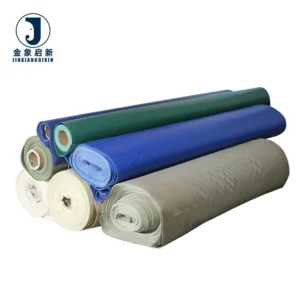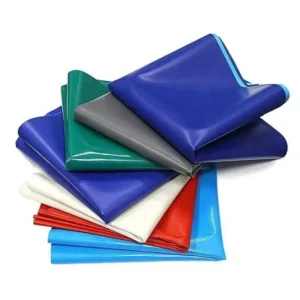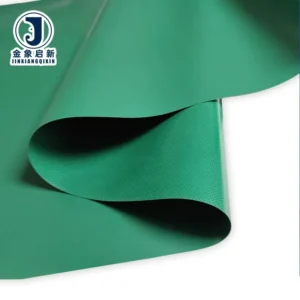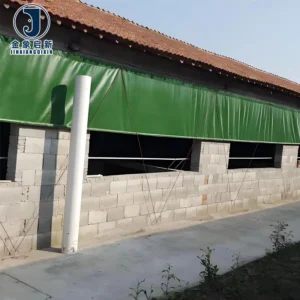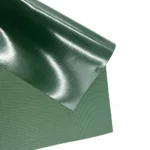

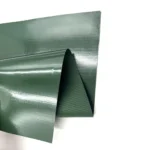


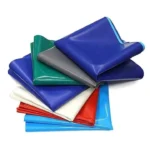
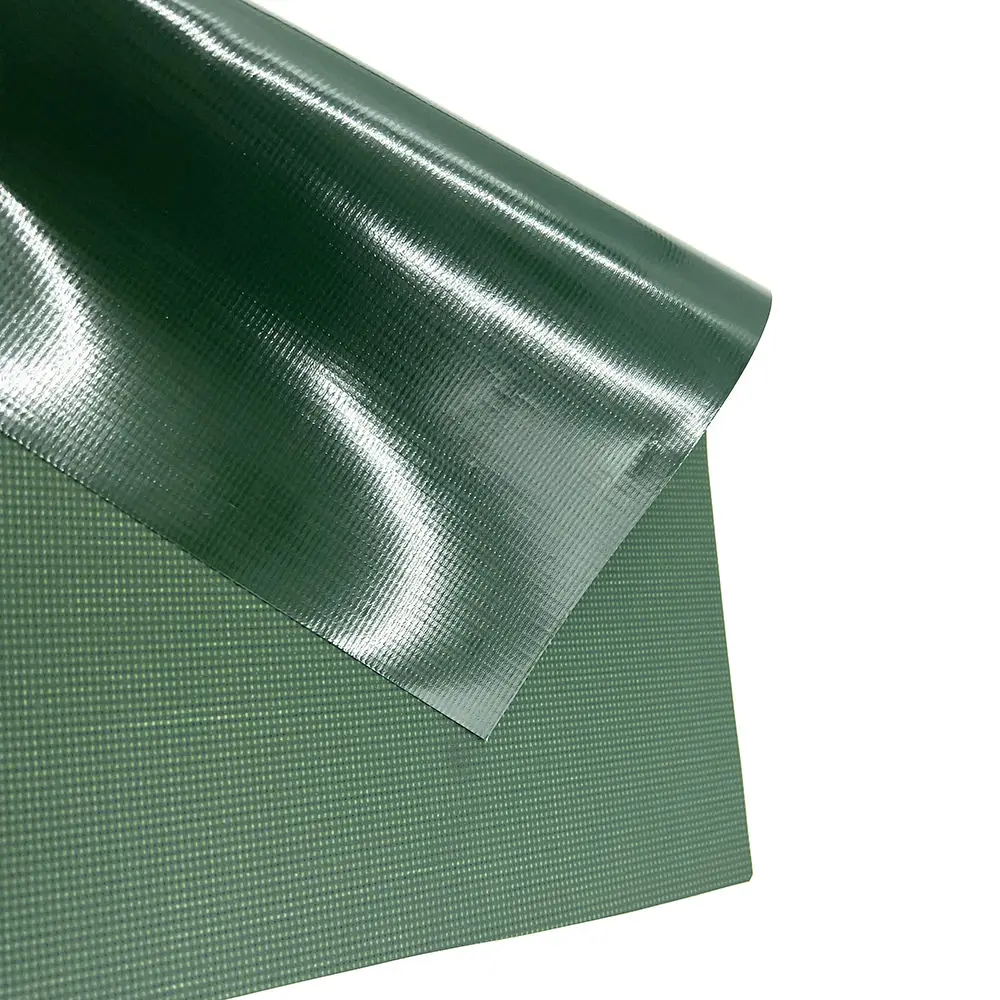
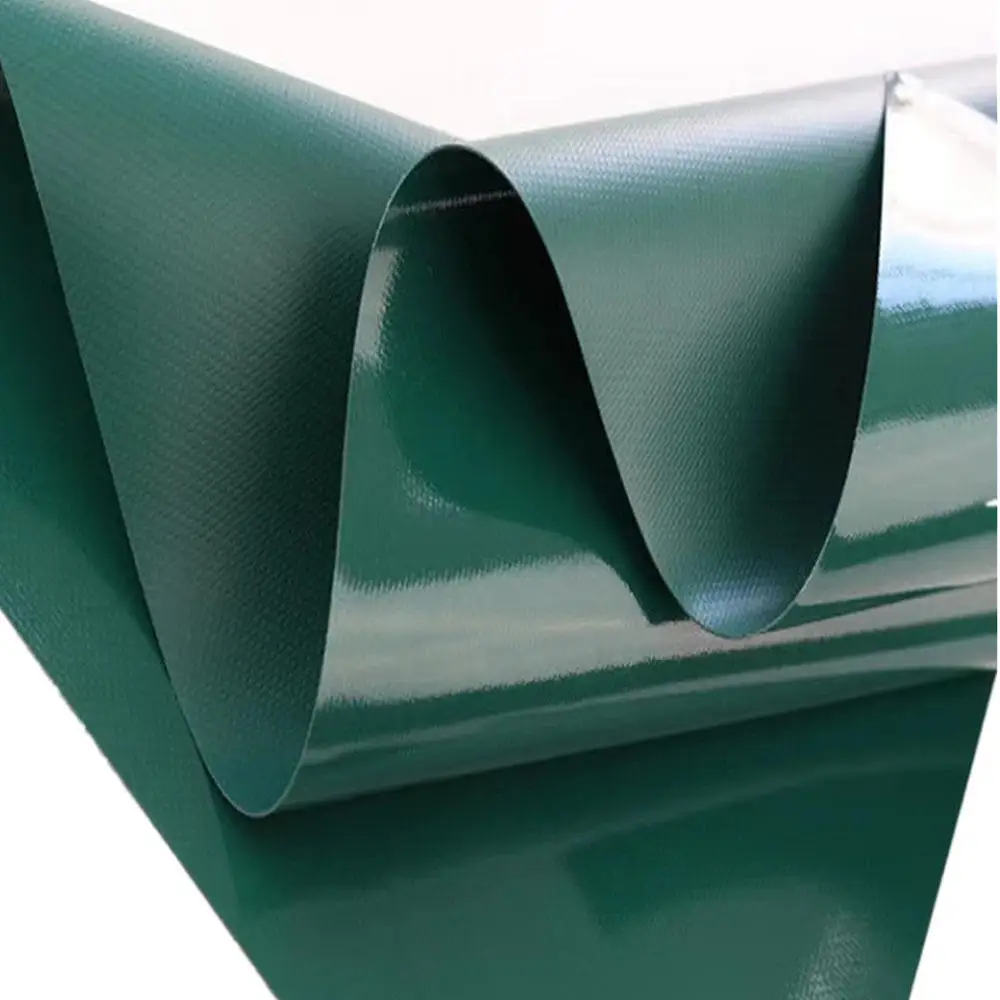
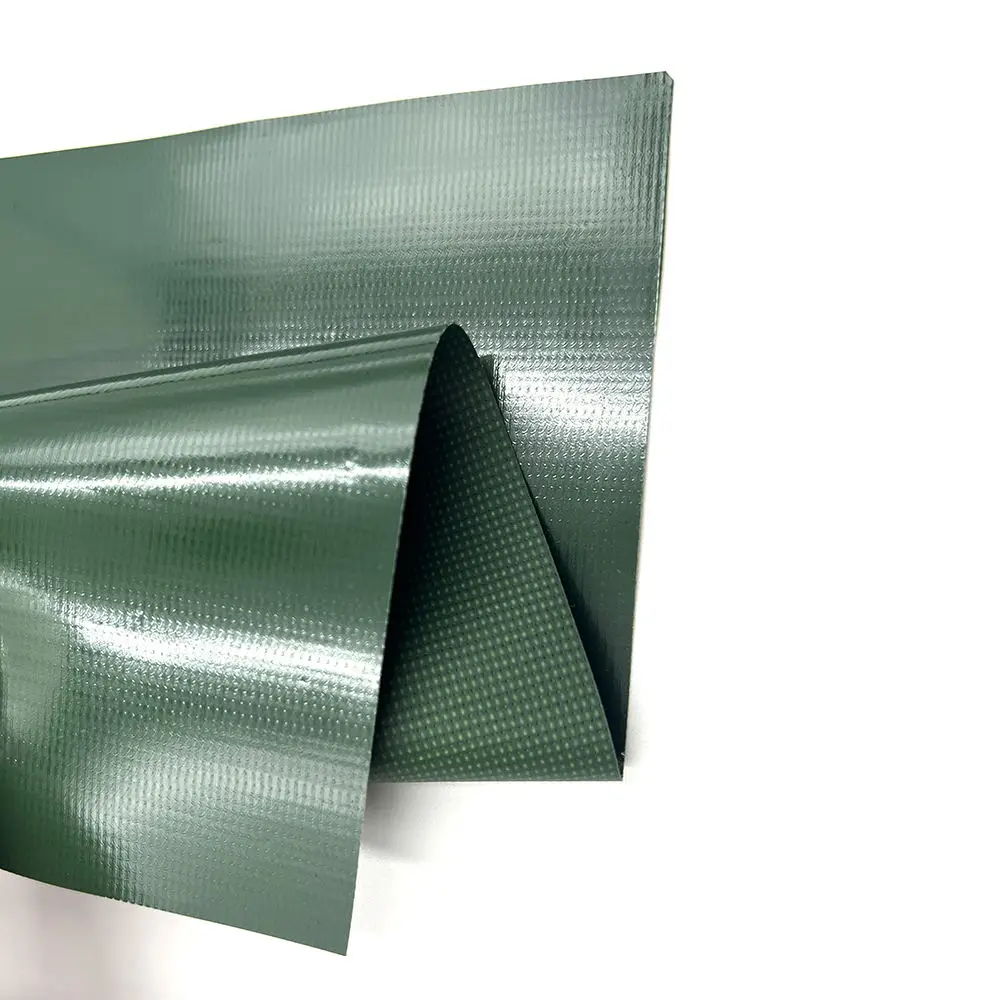
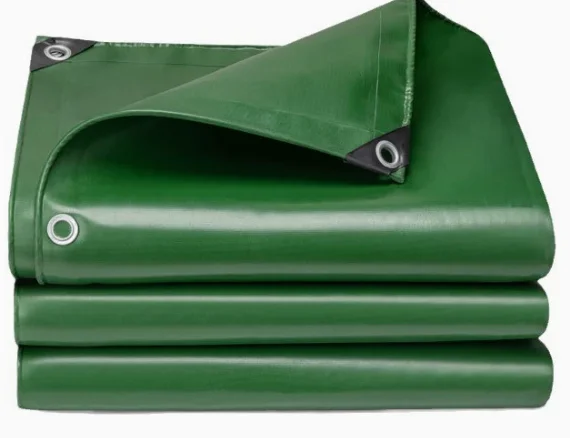
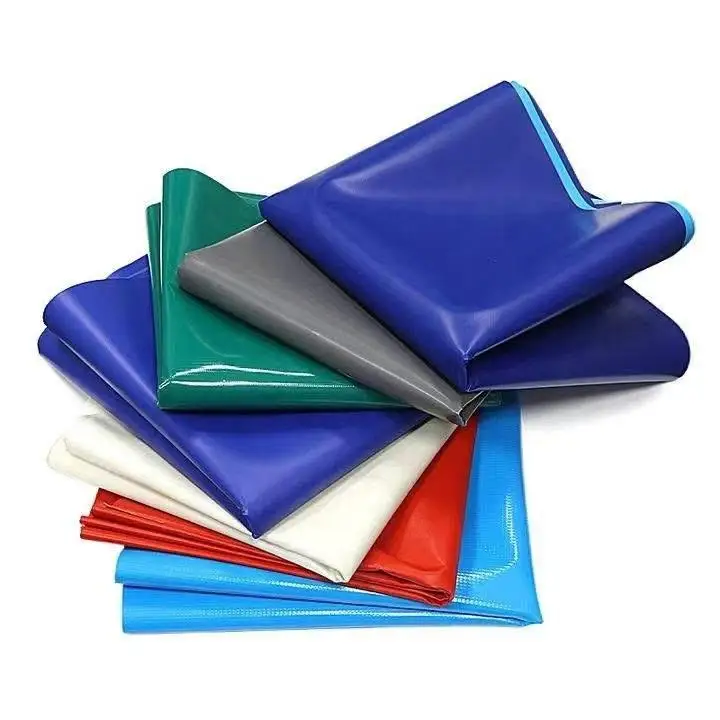
Deep Process Control — nearly 30 years focused on coated fabric production, with dedicated QA at every stage ensuring your membrane roll meets the specification sheet before it leaves the factory.
Technical Specifications
| Parameter | Value |
|---|---|
| Product Type | PVC Coated Tarpaulin Roll |
| Material | PVC Knife Coated Fabric |
| Color | Green |
| Coating Method | Knife Coated |
| Welding Options | HF, Hot Air, Sewing |
| Antibacterial | Yes |
| Mildew Proof | Yes |
| Oil and Stain Resistance | Yes |
| Acid and Alkali Resistance | Yes |
| Temperature Resistance | High temperature and cold resistant |
| Anti-Oxidation | Yes |
| Weather Resistance | Yes |
| Flexibility | Highly flexible, resistant to cracking |
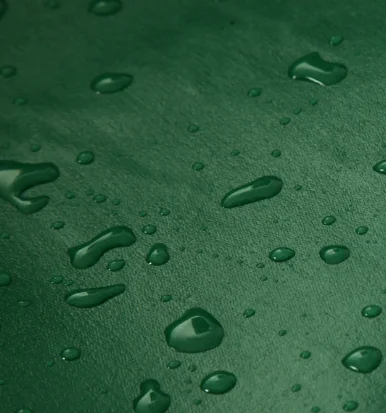
| Self-Cleaning | Yes |
| Fire Retardant | Available in flame retardant grades — confirm the grade required for your market¹ |
| UV Treatment | Available with anti-UV treatment — request test report for your climate zone¹ |
¹ Grades and test basis stated upon request; verify against local building codes before specifying.
Application Suitability
| Application | Exposure & Requirement |
|---|---|
| Tensile membrane structures | Permanent UV exposure, sustained tension loads, high wind uplift, surface staining from urban pollution |
| Stadium architectural roofs | Large span tensioning, public fire safety compliance, drainage and ponding resistance |
| Airport hangar covers | Aviation fuel exposure, wide span deflection, strict FR certification for airside use |
| Portable storage structures | Seasonal assembly and disassembly, abrasion at frame contact points, UV and weather cycling |
| Shade systems and canopies | Direct solar radiation, thermal expansion and contraction, aesthetic consistency across panels |
Why Specifying "PVC Membrane" Without a Test Report Is a Procurement Risk
PVC Knife Coated Tarpaulin for tensile structures and architectural membrane applications must carry documented evidence for every performance claim on the data sheet.
Fabricators regularly receive rolls labelled "fire retardant" or "anti-UV" with no test standard referenced. When the building inspector asks for a DIN or NFPA classification, the supplier’s vague label does not satisfy the authority having jurisdiction. The membrane fails site inspection, the project stalls, and the fabricator absorbs the cost of replacement material and schedule delay. Knife coated PVC membrane fabric intended for tensile and architectural use should always ship with a test report naming the specific standard and grade achieved. [NEED_CITE: fire classification standards for tensile membrane structures in public assembly buildings]
Welding Compatibility Across HF, Hot Air and Sewing
Fabricators working with architectural membranes need material that performs consistently regardless of the joining method chosen. This PVC Knife Coated Tarpaulin for tensile structures and architectural membrane supports high frequency welding, hot air welding and conventional sewing, allowing shops to select the method that suits each panel geometry and seam requirement.
High frequency welding produces a homogeneous bond at the molecular level, preferred for tensile structures where seam strength must approach the base fabric strength. Hot air welding is practical for on-site repairs and curved seams on stadium roofs. Sewing remains relevant for temporary installations and portable storage structures where disassembly is planned.
Knife Coating Versus Alternative Methods
Knife coating applies PVC directly to the base fabric under controlled tension, forcing the compound into the weave interstices. This produces higher peel strength compared to laminated or calendered alternatives, which matters when the membrane undergoes sustained biaxial tension in a tensile structure.
The coating-to-fabric bond resists delamination at stress concentrations — typically around corner plates, cable pockets and perimeter clamping rails. [NEED_CITE: peel strength requirements for architectural membrane fabrics under sustained tension] For airport hangar and stadium applications where membrane replacement involves significant access cost, coating adhesion directly influences service intervals.
Reading the Specification Sheet Beyond GSM
GSM tells you the total mass per square metre but does not distinguish between base fabric contribution and coating contribution. A heavy coating on a light base fabric yields high GSM with relatively modest tensile and tear performance. For tensile membrane applications, the base fabric denier, weave density and yarn type determine how the material behaves under sustained load.
Knife coated construction allows the manufacturer to vary coating weight independently from the base fabric, giving specifiers the ability to select tensile strength and surface properties separately. The self-cleaning surface finish on this material reduces particulate adhesion, which affects long-term appearance on large-area shade systems and stadium roofs where cleaning access is limited or costly. Acid and alkali resistance provides additional margin in industrial or coastal environments where airborne contaminants attack standard PVC surfaces over time. [NEED_CITE: relationship between base fabric denier and tensile performance in coated architectural fabrics]
What Happens When Roll Consistency Is Overlooked
Colour variation between rolls in the same project becomes visible once panels are installed side by side on a tensile structure or shade system. Stadium roofs and airport hangar membranes span large visible areas where even subtle shade differences draw attention and trigger client complaints.
Coating weight inconsistency from roll to roll causes uneven stiffness, which affects how the membrane drapes and tensions during installation. Panels cut from lighter-coated rolls may sag or flutter under wind load while adjacent panels remain taut. Welding parameters that work on one roll may produce weak bonds on another if the coating chemistry varies, leading to seam failures that appear only after the structure is under full tension. [NEED_CITE: coating weight variance and its effect on weld integrity in PVC membrane fabrication]
Why Fabricators Source Membrane Roll Stock Here
Three full production lines and 36 sets of professional equipment support bulk roll orders with consistent coating application across the entire production run.
A 10-person R&D team handles material selection and sample development, producing custom colour and width samples within days so fabricators can confirm appearance and handling before committing to container volumes. Dedicated quality control operates at every production stage, with 100% inspection before shipment — rolls do not leave the facility without verification against the specification sheet. Nearly 30 years of focused coated fabric production means process parameters for knife coating are established and repeatable, not experimental. Material specification sheets, test reports and pre-shipment inspection records ship with every order, giving fabricators the documentation their clients and building authorities require.
Documentation & Verification
- Material specification sheet stating base fabric, coating method and GSM for each roll produced
- Fire retardant and anti-UV test reports referencing specific standards applicable to your jurisdiction
- ISO and CE certificates confirming management system and product conformity
- Pre-shipment inspection record documenting roll count, colour consistency and coating weight verification
- Roll packing list with individual roll identifiers for traceability through fabrication
Fabrication, Handling & Storage
- Calibrate HF welding power and dwell time on a sample cut from the actual production roll before running full panels
- Hot air welding temperature should be validated against the green PVC knife coated surface to avoid scorch or incomplete fusion
- Store rolls vertically on padded cradles to prevent flat spots that create visible defects when the membrane is tensioned
- Unroll in temperatures above the material’s cold-flex threshold to avoid cracking the PVC coating at fold lines
- Use PVC-compatible cleaners only; solvent-based products may attack the self-cleaning surface treatment
- Plan panel cutting layout to minimise offcuts and place seams away from peak stress zones on the tensile structure
Requesting a Quotation for Membrane Roll Stock
Provide your target fire classification standard, the span dimensions of your structure and the panel widths that minimise welding seams on your project. Specify whether you need roll stock only or finished cut panels with welded hems and cable pockets. Confirm the colour reference and whether adjacent panels must fall within a defined shade tolerance for visible architectural installations.
Frequently Asked Questions
Q: What fire retardant grades are available, and how do I match them to my market?
A: Flame retardant grades are available for this knife coated PVC membrane fabric. The specific grade required depends on your local building code — European projects typically reference DIN 4102 or EN 13501, while North American projects may require NFPA 701. State your target standard at inquiry stage and we will confirm which grades can be supplied with supporting test documentation.
Q: Can I obtain a UV test report before committing to a full container order?
A: Yes. Anti-UV treatment is available and test reports can be provided referencing the test method used. Share your installation climate and expected exposure conditions, and we will supply the relevant data sheet and test result for your review before you place a bulk order.
Q: Which welding method is recommended for large-span tensile membrane panels?
A: High frequency welding is generally preferred for structural seams on tensile membranes because it produces a bond approaching base fabric strength. Hot air welding suits curved seams and on-site repairs. This PVC knife coated fabric supports HF, hot air and sewing, so your fabrication shop can select the appropriate method per seam.
Q: How should I verify GSM and coating weight on delivery?
A: Each roll ships with a specification sheet stating the agreed GSM and coating weight. Weigh and measure sample cuts from received rolls and compare against the documentation. Any discrepancy should be raised before fabrication begins, while the roll is still intact and returnable.
Q: What widths and roll lengths are available for architectural membrane projects?
A: Widths and roll lengths can be confirmed based on your panel dimensions and project quantity. Custom widths reduce welding seams on large-format tensile structures. Request available options at inquiry stage, providing your maximum panel width and total linear metres required, and we will confirm production feasibility and lead time.