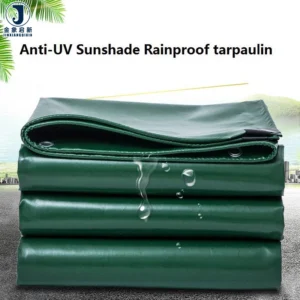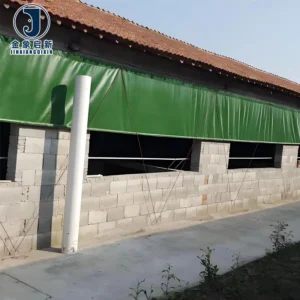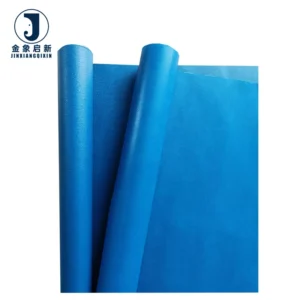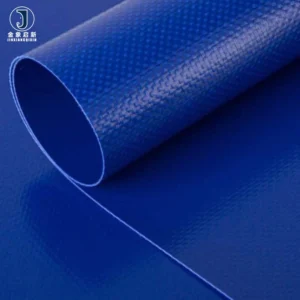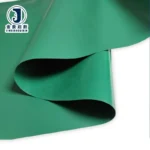
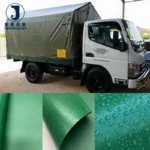
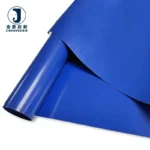
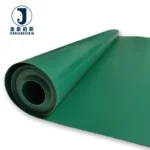
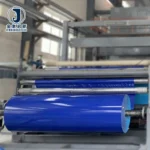
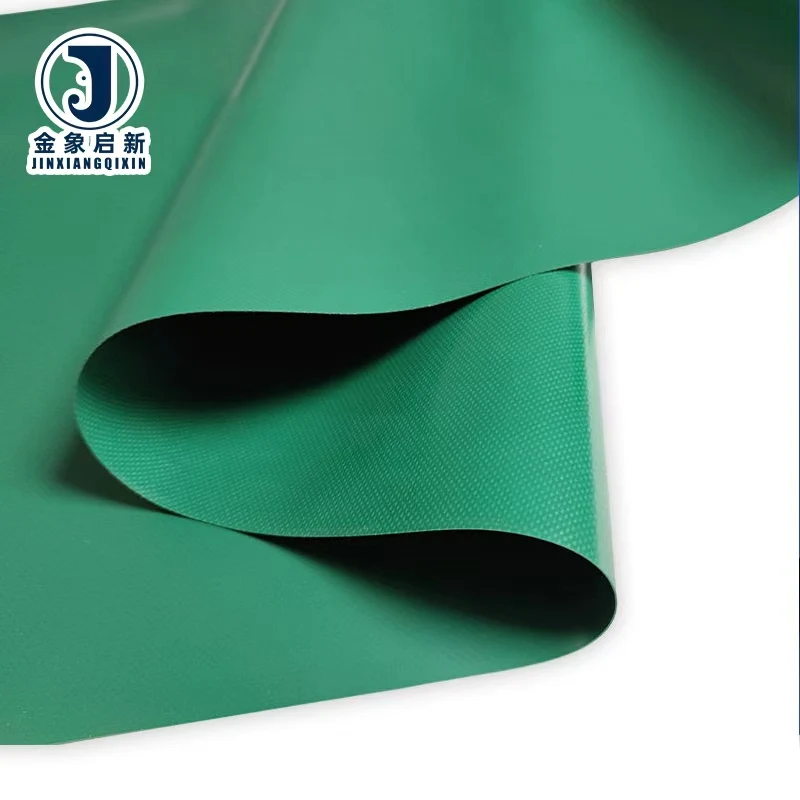
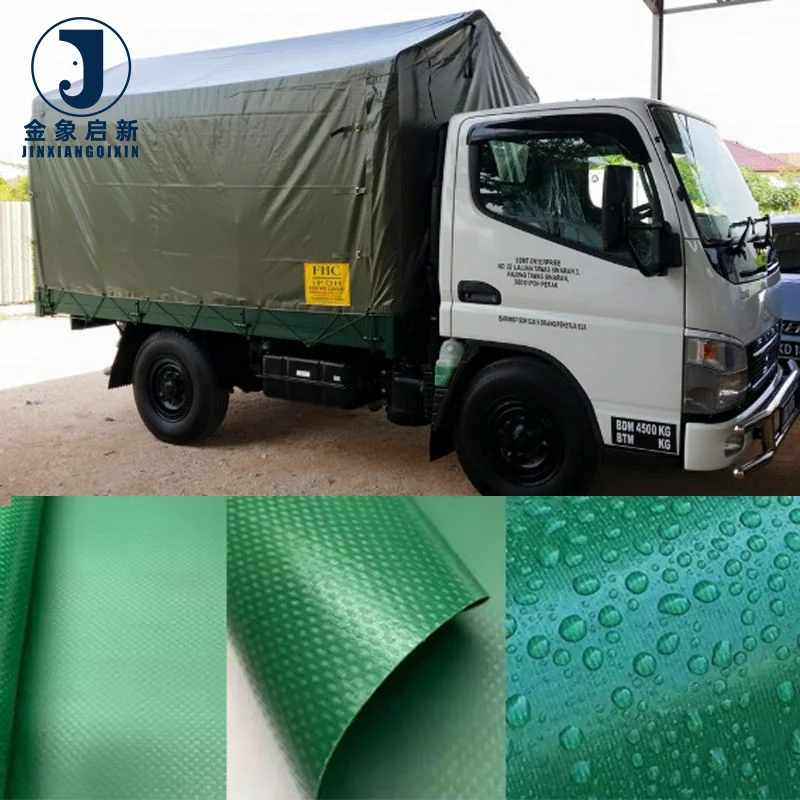
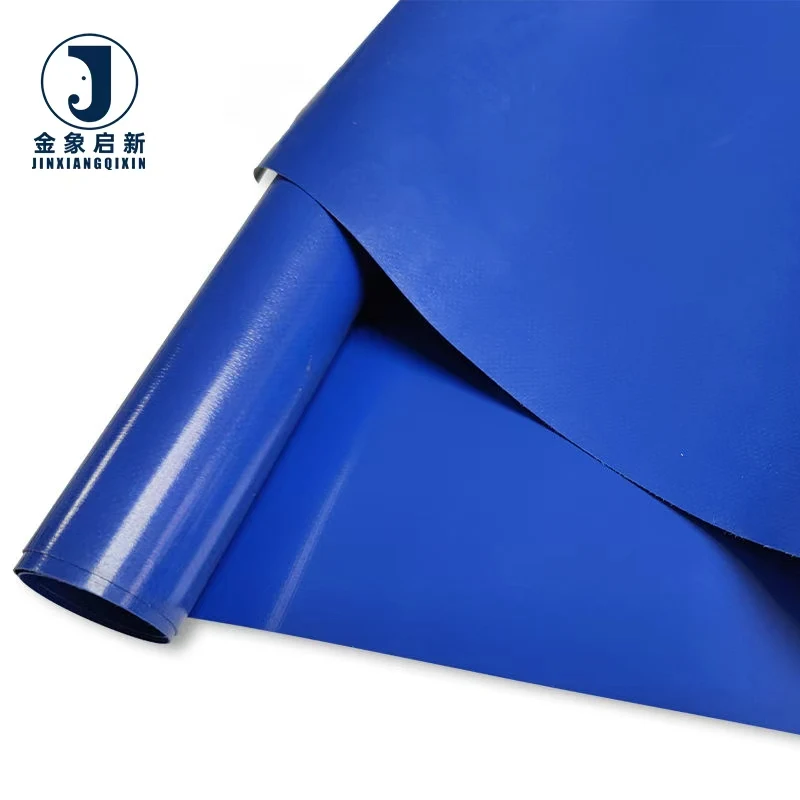
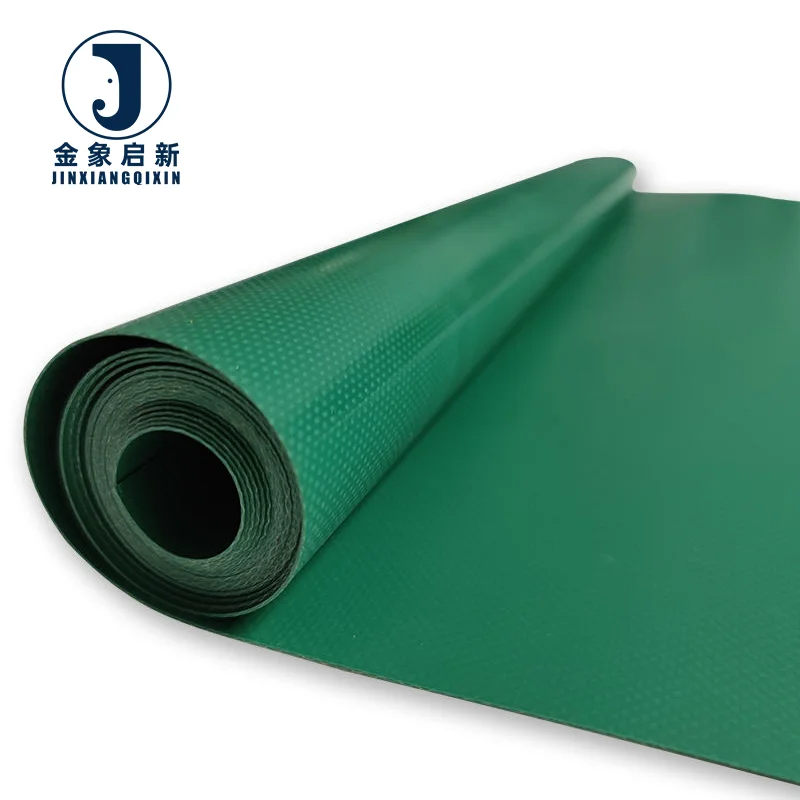
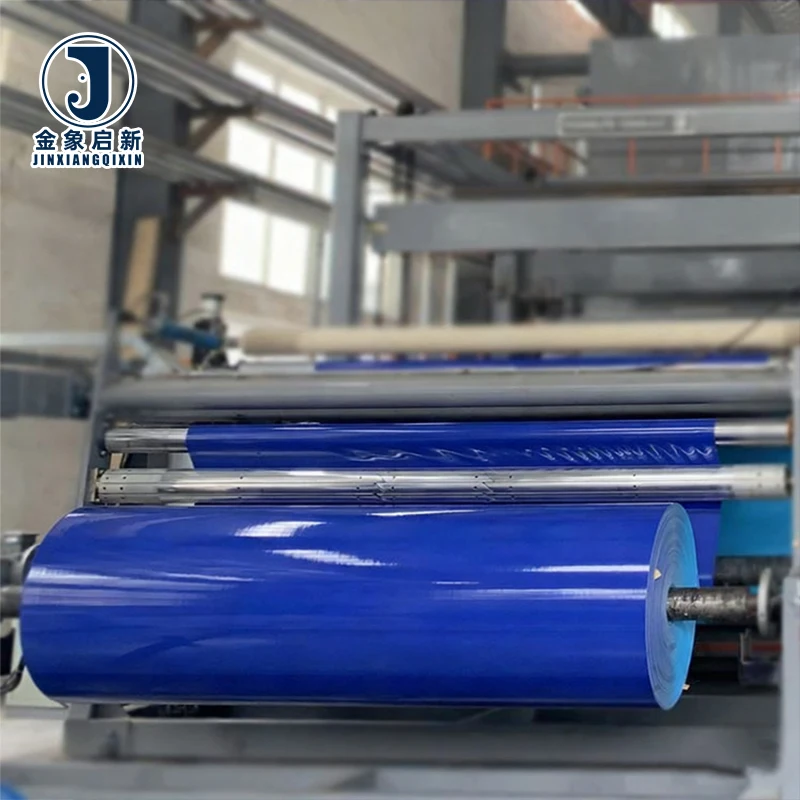
Deep Coating Adhesion Control — every roll of this PVC coated tarpaulin roll undergoes in-process coating weight checks to ensure the 510Gsm stated on the specification sheet matches the material you receive at the dock.
Technical Specifications
| Parameter | Value |
|---|---|
| Product Type | PVC Tarpaulin Roll |
| Base Material | Polyester woven fabric with double-sided PVC coating |
| Weight (GSM) | 510 GSM (15OZ) |
| Yarn Count Options | 500D×840D, 500D×1000D, 1000D×1000D, 1000D×1300D, 1300D×1300D, 1000D×2000D |
| Mesh Count | 30×19 / 20×20 / 30×15 (varies by grade) |
| Thickness | 0.38mm (500 grade reference) |
| Tensile Strength (Warp) | Up to 2050N (500 grade) |
| Tensile Strength (Weft) | Up to 1900N (500 grade) |
| Brittle Temperature | ≤ -50°C to -60°C |
| Softening Temperature | ≥ 80°C |
| Melting Point | 212°C |
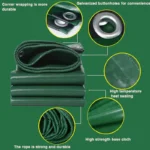
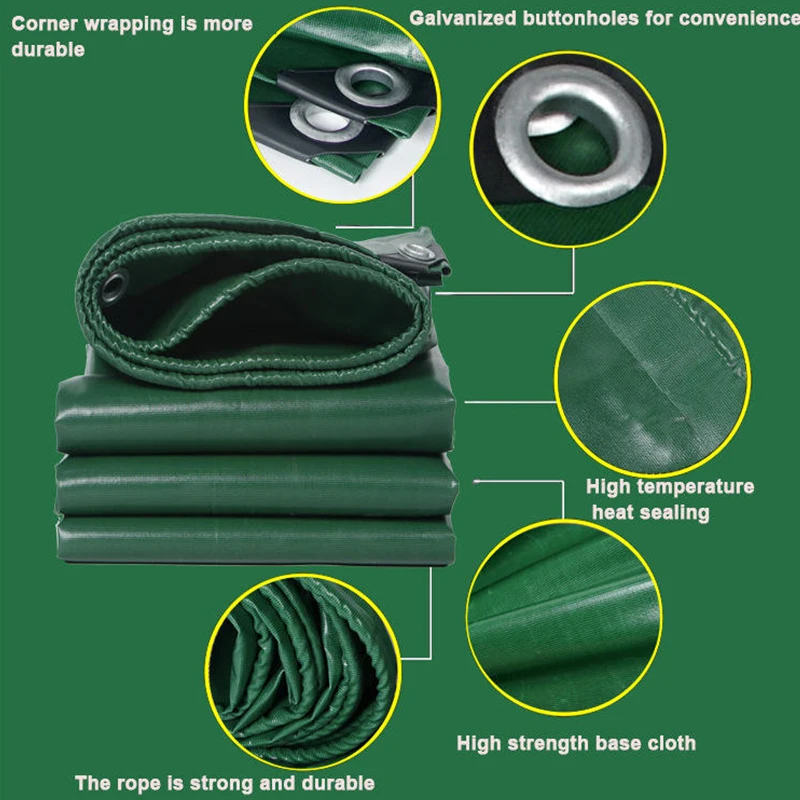
| Edge Finishing | 5mm rope without splicing, high temperature heat sealed seamless edge wrapping |
| Eyelets | 3cm enlarged aluminum alloy buttonhole |
| Corner Reinforcement | Reinforced corners on all sides |
| Key Features | Water resistant, flame retardant (grade not stated — confirm compliance for your market), anti-UV (test basis not stated — request test report) |
| Color | Customizable |
| Printing | Custom brand printing available |
| Standards | ISO, CE |
Application Suitability
| Application | Exposure & Requirement |
|---|---|
| Membrane and inflatable structures | Sustained wind uplift, UV exposure, structural tension at anchor points |
| Mining ventilation ductwork | Underground humidity, particulate abrasion, fire safety compliance |
| Temporary construction enclosures | Weather cycling, mechanical contact, rapid deployment and teardown |
| Specialist structure covers | Long-term outdoor exposure, thermal expansion and contraction cycles |
| Tunnel ventilation ducts | Continuous airflow pressure, moisture ingress, regulatory fire classification |
Why Flame Retardant Claims Fail at the Mine Gate Without Documented Grades
Specifying flame retardant fabric without a named standard is a compliance risk you cannot recover from after the duct is hung underground.
Mining and tunnelling contractors routinely discover that the ventilation duct fabric delivered to site carries a generic "flame retardant" label but no test certificate matching the jurisdiction’s fire safety code. The PVC coated tarpaulin roll you purchase for underground or enclosed structure use must be matched to the specific standard your site inspector enforces — whether that is M2, B1 per DIN 4102, NFPA 701, or another regional classification. Without that documentation in hand before fabrication begins, the entire duct run can be rejected at commissioning. [NEED_CITE: fire classification standards for ventilation duct materials in underground mining]
Matching Fabric Grade to Structural Load Requirements
Selecting the correct denier and mesh count from the available range determines how the PVC coated tarpaulin roll performs under sustained tension. A 500D×840D base fabric with a 30×19 mesh count distributes load differently than a 1000D×2000D construction. Membrane structures subject to wind uplift demand higher warp tensile values, while inflatable installations prioritise tear propagation resistance across welded seam lines.
Coating Integrity at Welded Seams and Flex Points
The double-sided PVC coating on a polyester base provides waterproof sealing, but the long-term behaviour of the fabric depends on how the coating bonds to the yarn at points of repeated flexion. Heat sealed seamless edge wrapping with high temperature adhesion prevents glue cracking and loose edges — failures that typically appear first at the seam rather than the field of the fabric. [NEED_CITE: tensile and tear test methods for coated fabrics per ISO 1421]
How GSM, Denier, and Mesh Count Interact to Determine Real Strength
A 510Gsm weight rating tells you the mass of coating and base fabric per square metre, but it does not independently define tensile or tear performance. The base fabric denier — whether 500D×840D or 1000D×1000D — sets the structural skeleton, while the mesh count (30×19 versus 20×20) determines how tightly that skeleton is woven. Two rolls at the same GSM can show markedly different tear propagation behaviour if one uses a heavier coating to compensate for a lighter base fabric. Knife coating, as used on this product, drives the PVC compound into the weave under blade pressure, improving adhesion and peel strength compared to simple lamination. This directly affects how well the fabric survives heat welding during duct or membrane fabrication.
What Happens When the Wrong Specification Reaches the Site
A ventilation duct fabricated from fabric that lacks the anti-static properties required for underground coal environments can be shut down at the first safety audit, forcing a complete replacement under time pressure. Similarly, membrane structure panels that show colour variation between rolls create visible banding once installed side by side, triggering client rejection and rework. When welded seams fail before the fabric itself, the root cause often traces back to a coating formulation that was not matched to the heat sealing parameters used during fabrication. [NEED_CITE: common failure modes in PVC coated fabric welded seams]
Why Procurement Verification Matters Here
Our production runs on three full lines with 36 sets of professional equipment, giving the volume capacity to hold batch consistency across multiple rolls of the same PVC coated tarpaulin roll order. A dedicated 10-person R&D team handles material selection and sample development so you can confirm denier, mesh count, and coating behaviour before committing to a production run. Every roll passes 100% inspection before dispatch, with GSM verified against the specification sheet. Fire-retardant and anti-UV treatments are documented with test reports where applicable, and the QA/QC process runs at every production stage rather than only at final packing.
Documentation & Verification
- Material specification sheet stating exact 510Gsm weight, base fabric denier, and coating formulation
- Flame retardant test report citing the specific standard grade applicable to your market
- Pre-shipment inspection record with roll-by-roll GSM verification before dispatch
- ISO and CE certificates supplied with each shipment
- Roll packing list detailing quantity, dimensions, and net weight per roll
Fabrication, Handling & Storage
- Heat seal parameters must match the PVC coating thickness to achieve full seam adhesion without scorching the 510Gsm material
- Use the 5mm rope hem with no-splice construction to distribute load evenly along edge terminations
- Store rolls upright on pallets to prevent flat-spot deformation of the PVC coated surface
- Allow rolls to acclimatise before unrolling in cold conditions to avoid brittle cracking below -50°C
- Clean with mild detergent only — solvent-based cleaners can degrade the PVC coating seal
What to Include in Your Enquiry
Provide the specific fire safety standard your site or jurisdiction requires, the intended application and exposure conditions, and whether you need anti-static certification for underground or enclosed environments. Confirm the roll width and length you require, along with annual volume estimates, so we can align production scheduling. Let us know if you need finished panels fabricated or roll stock only, and whether sample approval is required before full production.
Frequently Asked Questions
Q: How do I confirm the flame retardant grade matches my mining or tunnelling site requirements?
A: Tell us the specific fire safety standard your site inspector enforces — whether M2, B1 per DIN 4102, NFPA 701, or another classification. We will confirm whether this 510Gsm PVC coated tarpaulin roll can be produced to that grade and supply the corresponding test report with your shipment documentation.
Q: What is the procedure for verifying 510Gsm weight when rolls arrive at our receiving dock?
A: Our pre-shipment inspection record includes roll-by-roll GSM verification. On arrival, cut a measured sample from each roll, weigh it on a calibrated scale, and compare against the specification sheet. Any discrepancy outside tolerance should be reported immediately with photographs and sample weights.
Q: What heat sealing parameters work best for fabricating ducts and membrane panels from this fabric?
A: The high temperature heat sealed edge wrapping on this product indicates good coating adhesion under thermal processing. Confirm the exact temperature, dwell time, and pressure settings with our R&D team based on your fabrication equipment, and request a test sample to validate seam peel strength before full production.
Q: How do I select the right roll width and length for large-format membrane structure panels?
A: Larger panel widths reduce the number of welded seams in the finished structure, improving both aesthetics and structural continuity. Provide your maximum panel dimensions and we will confirm available roll widths and calculate the most efficient cutting layout to minimise material waste.
Q: Is anti-static certification available for mining ventilation duct applications?
A: Anti-static treatment must be confirmed separately for this product range. Inform us of your underground compliance requirements and the specific anti-static standard your site mandates. We will verify availability and provide documentation if applicable to your order.