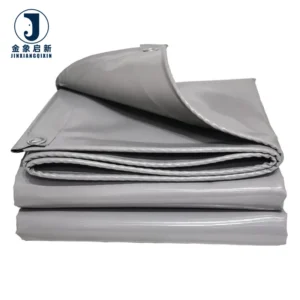
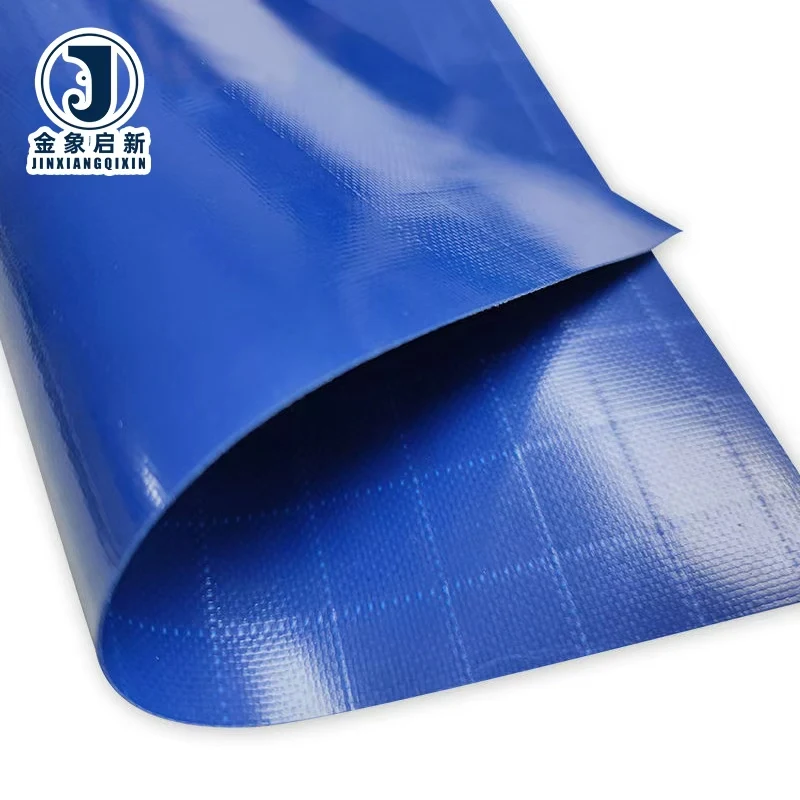
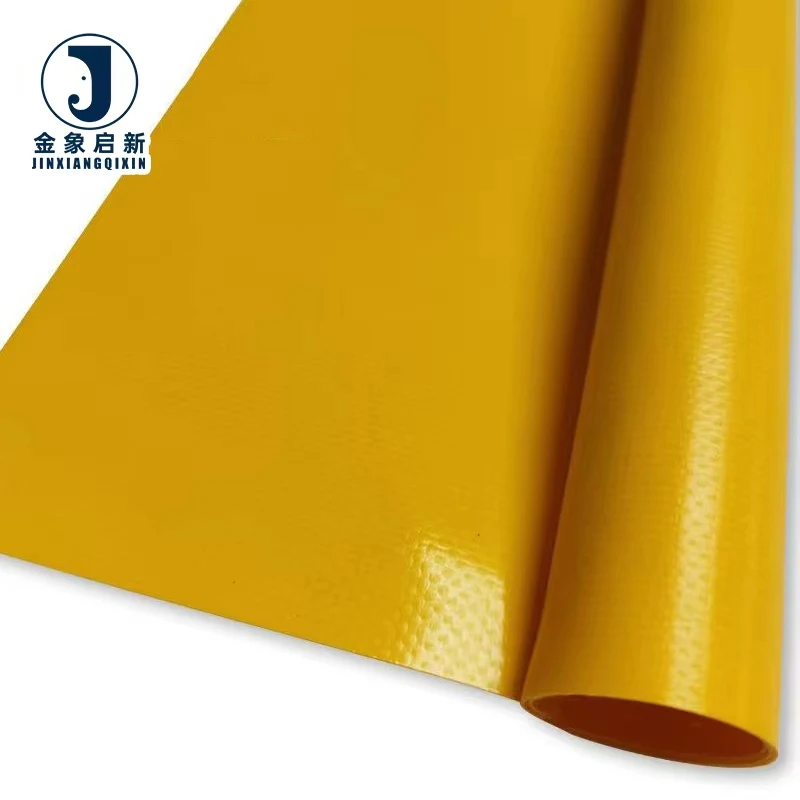
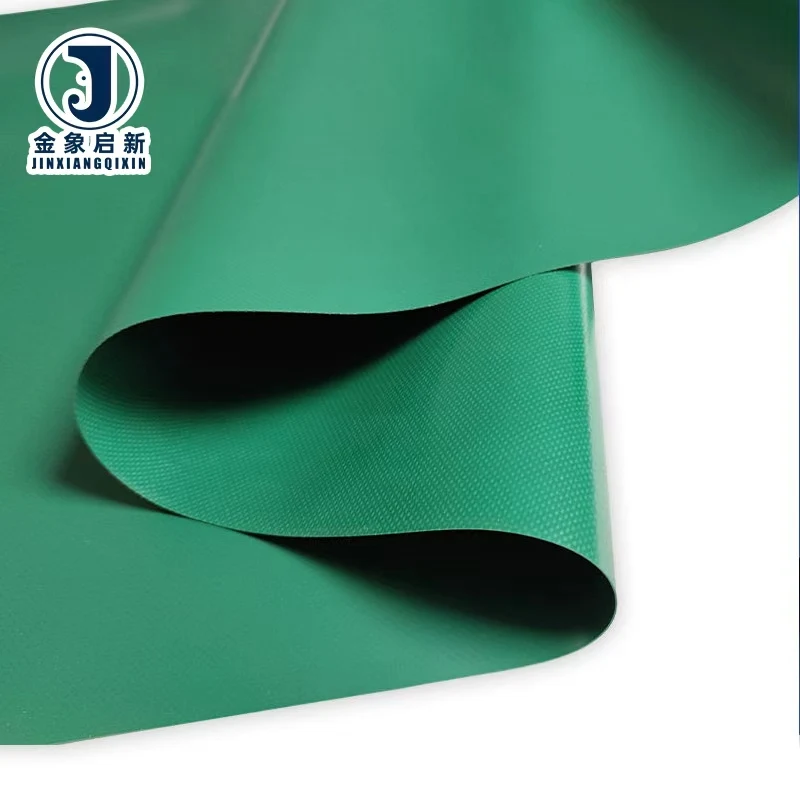
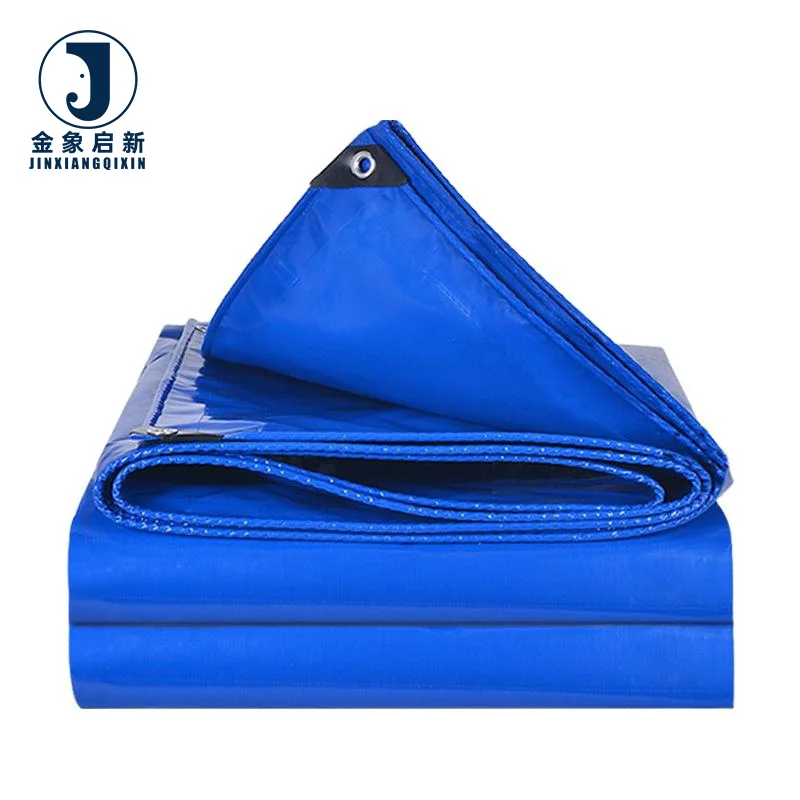
Process Control Over Coating Weight — three full production lines and 36 sets of professional equipment support consistent GSM delivery across every roll of PVC knife-coated fabric we manufacture.
Technical Specifications
| Parameter | Value |
|---|---|
| Product Type | PVC Coated Tarpaulin |
| Specification | 500D840D 3019 / 1000D1000D 2020 / 1300D1300D 2020 / 1000D2000D 3015 |
| Base Fabric Denier | 500D840D / 500D1000D / 1000D1000D / 1000D1300D / 1300D1300D / 1000D2000D |
| Mesh Count | 3019 / 2020 / 30*15 |
| Weight (GSM) | 350 / 400 / 420 / 500 / 600 / 650 / 750 / 900 |
| Total Thickness | 0.29mm / 0.32mm / 0.38mm / 0.44mm / 0.46mm / 0.55mm / 0.65mm |
| Tensile Strength (warp) | 1650N / 1800N / 1850N / 2050N / 2500N / 2550N / 2750N / 3900N |
| Tensile Strength (weft) | 1600N / 1700N / 1750N / 1900N / 2200N / 2250N / 2850N / 3500N |
| Coating Material | PVC & polyester |
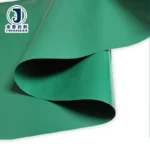
| Finish | Smooth surface, leather-like texture |
| Waterproof | Yes (overall coating sealing) |
| Flame Retardant Grade | Available in flame retardant grades — confirm the grade required for your market (grade not stated) |
| UV Treatment | Available with UV treatment — confirm test basis for your application (test basis not stated) |
| Brittle Temperature | ≤ -50~-60°C |
| Softening Temperature | ≥ 80°C |
| Melting Point | 212°C |
| Density Parameter | 1.15–2.00 g/cm³ |
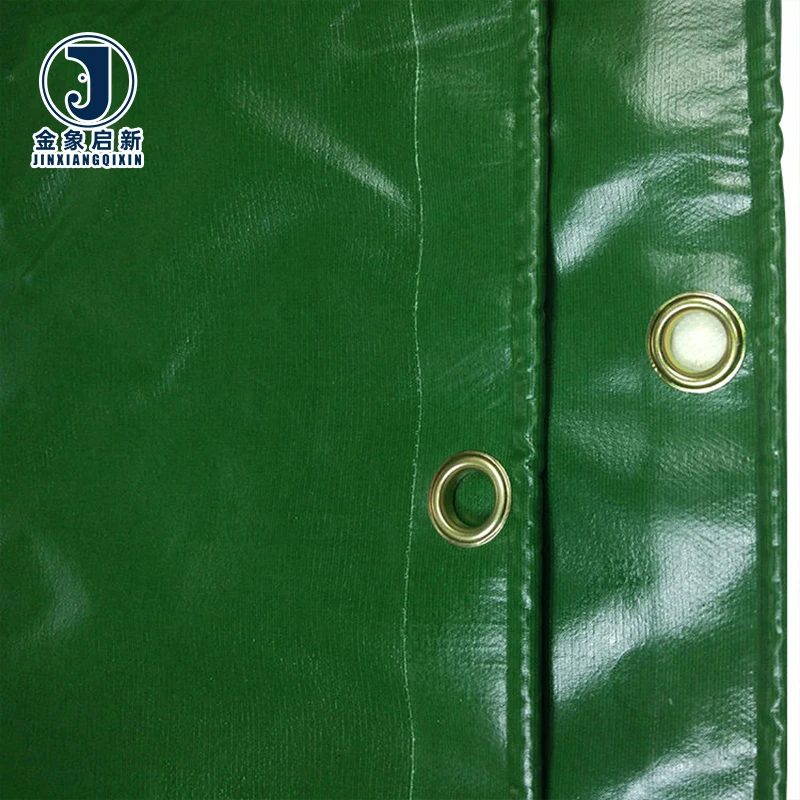
| Edge Construction | High temperature heat sealed seamless edge wrapping |
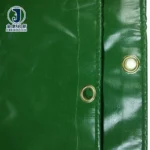
| Eyelet Options | 3cm enlarged aluminum alloy buttonhole |
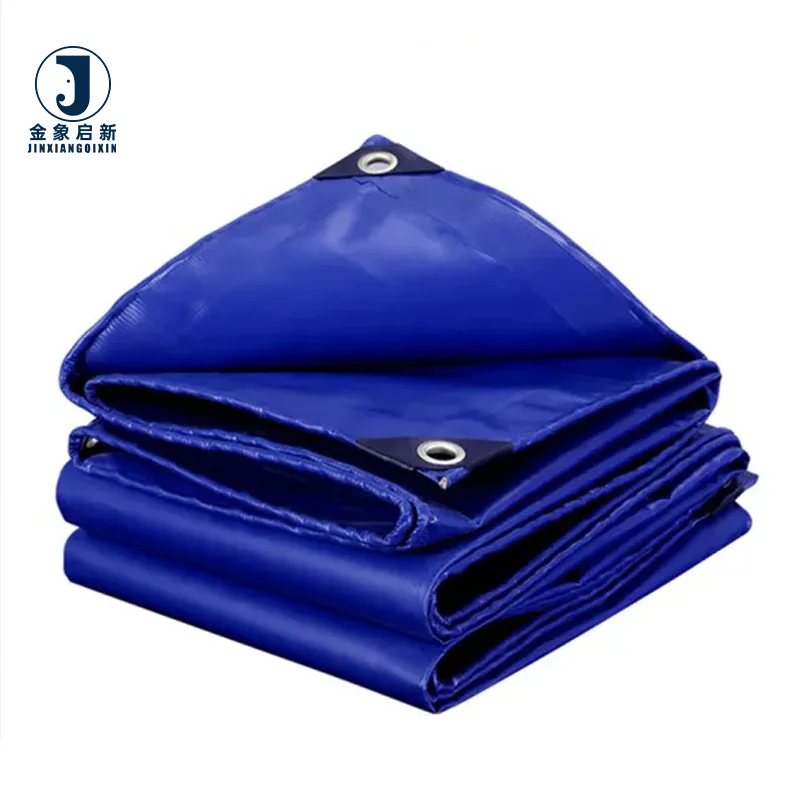
| Corner Reinforcement | Reinforced corners on all sides |
| Rope | 5mm thick rope without splicing |
| Key Features | Water resistant, flame retardant available, anti-UV available |
Application Suitability
| Application | Exposure & Requirement |
|---|---|
| Mining ventilation duct | Continuous negative pressure, flex cycling, underground fire and static compliance |
| Tunnelling air duct | Abrasive dust, moisture ingress, fire-retardant and anti-static certification on site |
| Aviation ground support duct | Temporary ventilation under ramp conditions, certified flame-retardant fabric required |
| Inflatable membrane structure | Biaxial tension, wind load cycling, airtight seam integrity |
| Temporary construction enclosure | Weather exposure, wind uplift, site safety visibility |
Why Certified Fabric Matters More Than Stated GSM for Ventilation Duct
A ventilation duct is only as compliant as the test report that ships with it.
When a mining or tunnelling project reaches inspection, the site engineer does not measure your fabric by hand — they check the certificate. PVC coated tarpaulin fire retardant claims without a matching grade and test standard mean the duct fails compliance before it ever inflates. I have seen projects halted because the fabric supplier quoted "flame retardant" but could not produce a test report aligned to the jurisdiction’s classification system [NEED_CITE: fire classification standards for underground ventilation fabric]. The cost of replacing installed duct sections mid-project far exceeds the cost of specifying the correct certified material upfront.
Matching Base Fabric Denier to Duct Pressure Class
The base fabric denier directly determines how the duct wall behaves under continuous airflow pressure. Lower denier constructions such as 500D840D suit lightweight duct sections where static pressure remains moderate. Higher denier options including 1000D2000D deliver the tensile capacity needed for long-run main ventilation lines where negative pressure and flex cycling compound over distance. Selecting the correct denier prevents wall collapse and premature fatigue at support rings.
Seam Integrity Under Continuous Vibration
Ventilation duct fabric flexes constantly under airflow pulsation. Heat-sealed edge wrapping on this PVC coated tarpaulin addresses the junction where welded seams meet the base fabric — the point most likely to delaminate under vibration. High-temperature sealing produces adhesion that tracks with the coating itself rather than sitting on the surface as a separate glue layer [NEED_CITE: heat seal adhesion test methods for coated fabrics per ISO 1421]. This construction method keeps the seam functional through repeated inflation and deflation cycles.
Reading GSM, Denier and Tensile Strength Together
Weight alone does not predict duct performance. A 650 GSM fabric woven at 1000D1300D with 2020 mesh delivers different tear behaviour than a 650 GSM fabric at a different denier and mesh count. The warp and weft tensile values — up to 3900N warp and 3500N weft at the 900 GSM / 1000D*2000D grade — reflect the combined effect of yarn thickness, weave density and coating penetration. For high-pressure ventilation runs, specifying on tensile strength and denier together ensures the duct wall resists both steady-state load and sudden pressure spikes during fan start-up.
The Compliance Gap That Stops Projects at Inspection
Supplying ventilation duct without fire-retardant or anti-static certification matched to the site requirement is the most frequent documentation failure in underground projects. The fabric may perform adequately in service, but without a grade-specific test report the installation cannot pass the pre-operation safety audit [NEED_CITE: mining ventilation compliance documentation requirements]. Batch-level traceability — linking each roll to its test certificate — eliminates this gap and keeps the project on schedule.
Why Source This PVC Coated Tarpaulin Here
Process control over coating weight and adhesion is maintained across three full production lines with 36 sets of professional equipment, ensuring every roll meets the stated GSM and coating specification. A 10-person R&D team handles material selection and sample development for duct-specific requirements including custom width and fire-retardant grade matching. Dedicated QA/QC runs at every production stage with full inspection before dispatch. Samples are developed within days when custom duct dimensions or treatment grades are required. ISO and CE certified production supports documentation packages that satisfy project compliance audits across multiple jurisdictions.
Documentation & Verification
- Material specification sheet stating base fabric denier, mesh count, GSM and coating method per roll
- Fire-retardant and anti-static test reports matched to the specific grade ordered
- Pre-shipment inspection record confirming coating weight and adhesion against specification
- ISO and CE certificates included with every consignment
- Certificate of origin and customs documentation prepared per destination market
Fabrication, Handling & Storage
- Heat-seal temperature must match the PVC coating grade to achieve full adhesion at duct seams
- Store rolls horizontally on padded racks to prevent permanent creasing in the coating layer
- Allow cold-stored rolls to reach ambient temperature before unrolling to avoid brittle cracking below -50°C
- Use compatible PVC solvent cement for field repairs on coated knife-coated fabric surfaces
- Plan cut patterns around standard roll widths to minimise welded joints in finished duct sections
- Reinforce all eyelet and tie-down points with additional fabric patches before installing grommets
What to Include in Your Enquiry
Specify the ventilation application, required duct diameter and run length so we can recommend the correct denier and GSM grade. Confirm the fire-retardant or anti-static classification your site requires — different jurisdictions reference different standards. Indicate whether you need rolls for in-house fabrication or finished duct sections with heat-sealed seams and flanges.
Frequently Asked Questions
Q: What fire-retardant and anti-static certifications are available for underground mining ventilation duct?
A: We supply PVC coated tarpaulin in flame retardant grades with test documentation. The specific certification required depends on your jurisdiction — confirm the classification standard your site mandates before ordering so we match the correct grade and include the corresponding report with your shipment.
Q: How is GSM and coating weight verified on the finished duct fabric before shipment?
A: Every roll undergoes inspection against the material specification sheet before dispatch. We verify GSM, coating weight and adhesion, and record the results in a pre-shipment inspection report that ships with your documentation package for full traceability.
Q: What base fabric denier and tensile strength grade is recommended for high-pressure ventilation?
A: Long-run main ventilation lines under continuous negative pressure typically require higher denier base fabrics such as 1000D*2000D with tensile strength up to 3900N warp. Share your duct diameter, static pressure and support spacing so we can recommend the appropriate grade.
Q: Can duct fabric be supplied in custom widths and lengths to match specific duct diameter?
A: Yes. Our production lines support custom width and length for duct fabrication. Provide your target flat width and roll length, and we will develop a sample for approval before scheduling bulk production.
Q: What is the heat-seal construction method and how does it perform under continuous flex?
A: We use high-temperature heat sealed edge wrapping that bonds the PVC coating layers together at the seam. This method produces adhesion that flexes with the fabric rather than cracking as a surface glue would, maintaining seam integrity through repeated inflation and vibration cycles.