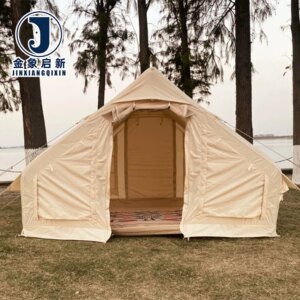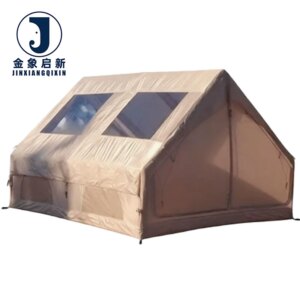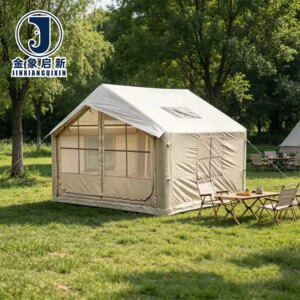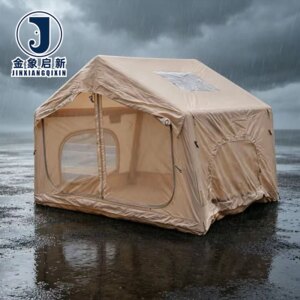
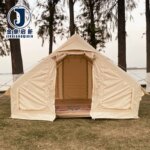
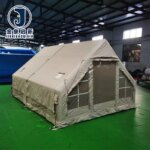
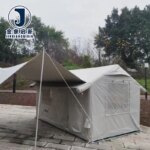
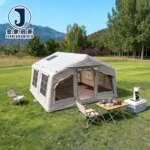
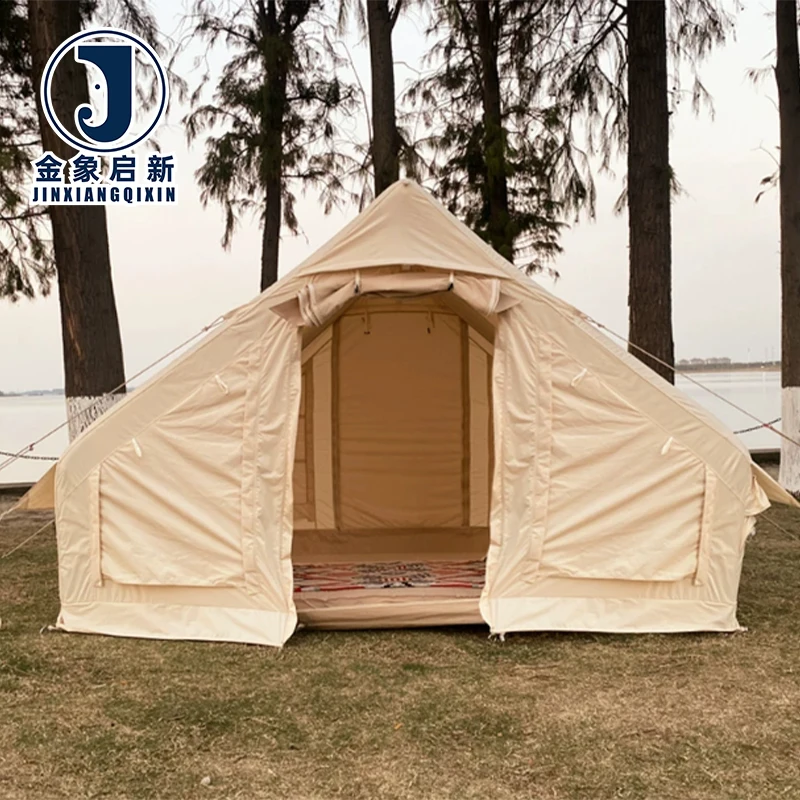
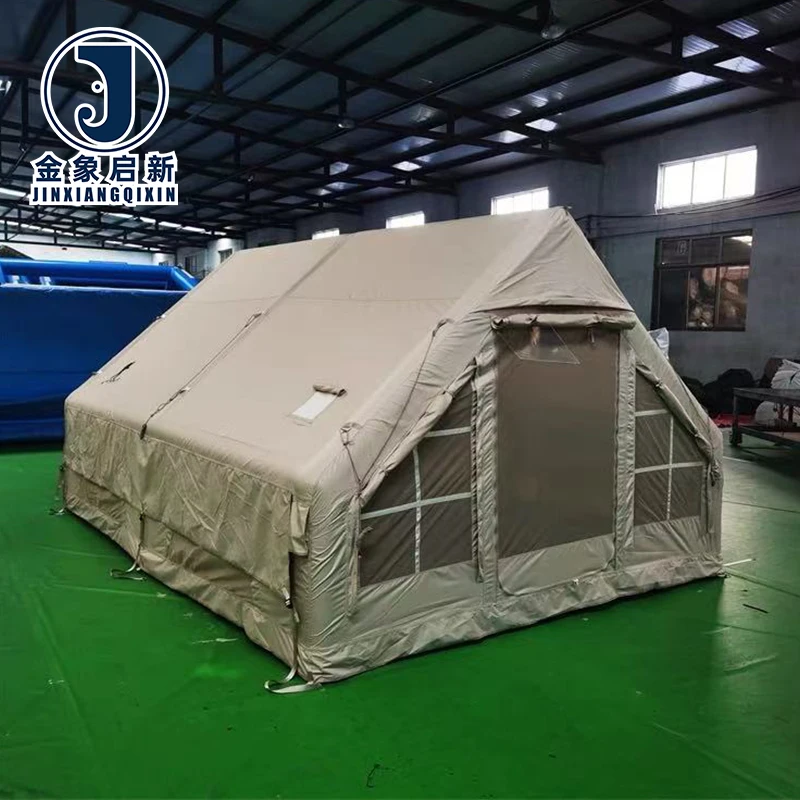
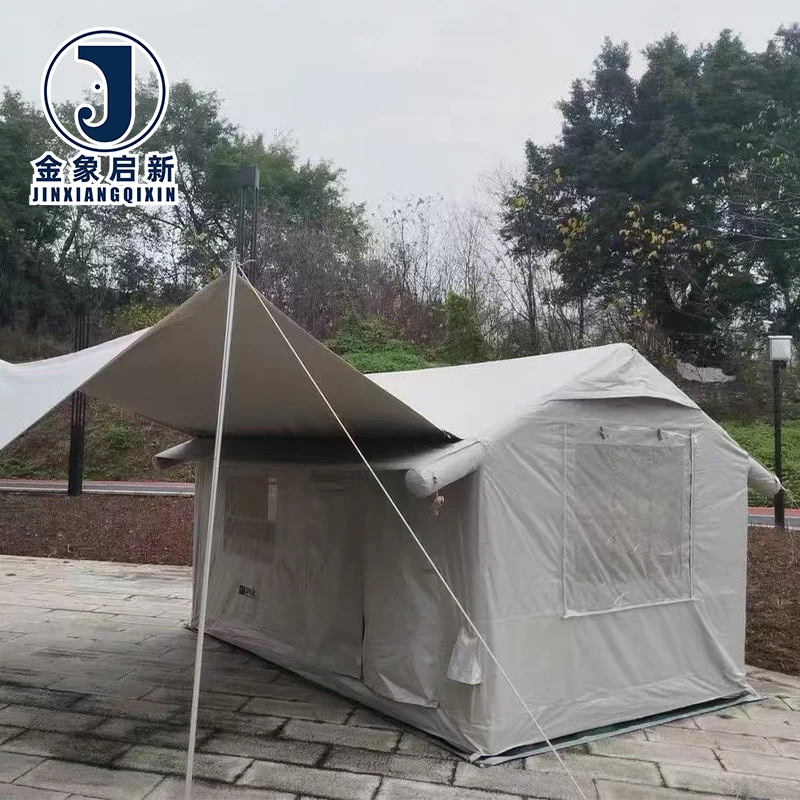
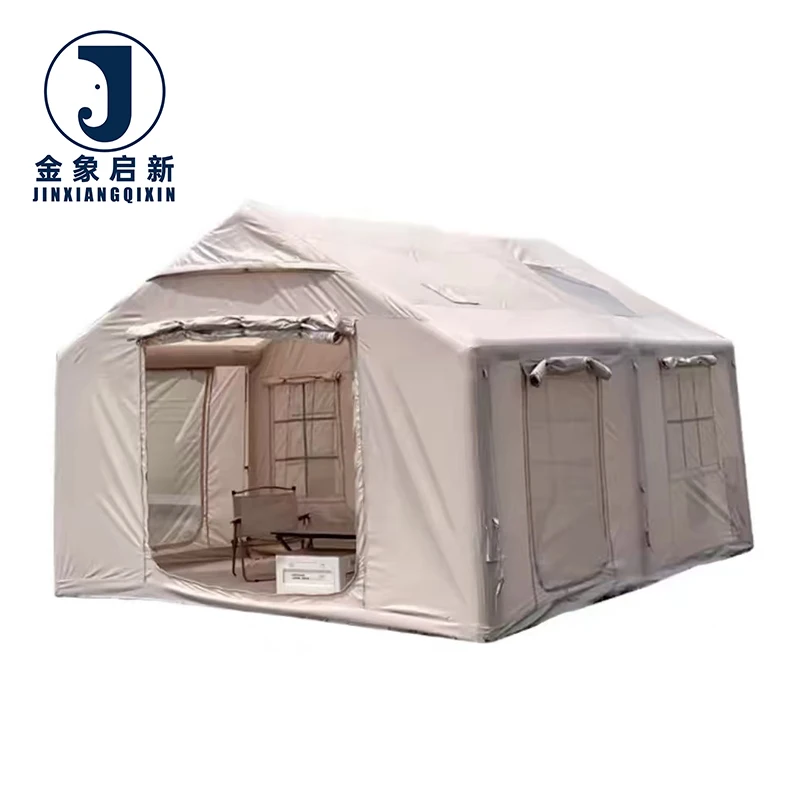
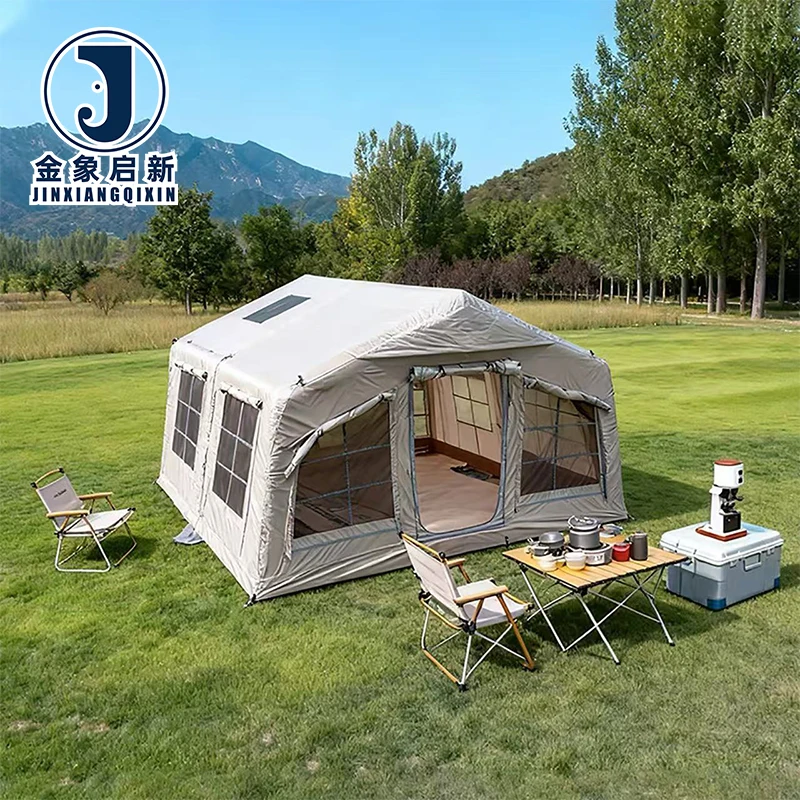
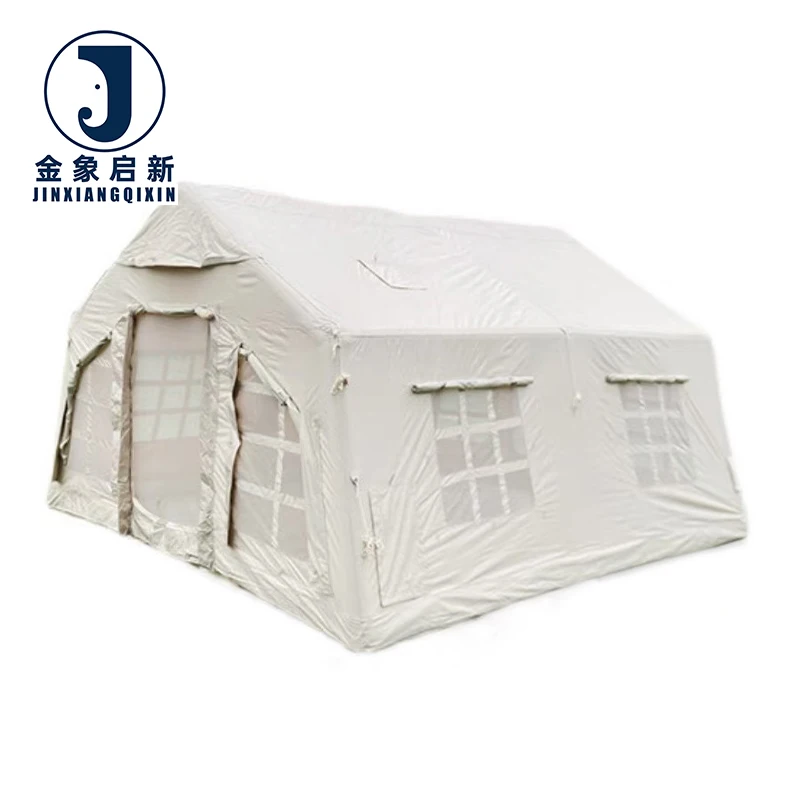
Rapid-Deployment Compliant Fabric — single-layer PVC inflatable tent fabric with fire-retardant and anti-static options, supported by test documentation for aviation, mining and emergency infrastructure projects.
Technical Specifications
| Parameter | Value |
|---|---|
| Product Type | Inflatable Tent Fabric |
| Core Material | PVC tarpaulin |
| Construction | Single layer, inflatable, extended type |
| Key Performance | Waterproof, windproof, 4-season suitable, quick automatic opening (test basis not stated) |
| Fire-Retardant Treatment | Available in fire-retardant grades — confirm the grade required for your market |
| Anti-Static Treatment | Available for mining and tunnelling applications — specify compliance standard |
| Customization | OEM & ODM, sample customization, pattern printing |
| Production Capacity | 3 full production lines, 36 sets of professional processing equipment |
| Quality Control | Full-process inspection with dedicated QA & QC staff |
| Certifications | ISO 9001, ISO 14001, ISO 45001, CE |
Application Suitability
| Application | Exposure & Requirement |
|---|---|
| Mining and tunnelling temporary shelters | Underground moisture, dust, compliance with fire-retardant and anti-static codes |
| Aviation ground support inflatable structures | Tarmac UV exposure, wind loads, fire safety certification for airside operations |
| Disaster recovery field command centers | Rapid deployment, all-weather waterproofing, repeated inflation cycles |
| Construction site emergency workspace | Rain and wind exposure, short-term continuous occupancy, site safety compliance |
What "Fire Retardant" Means Without a Certified Grade Behind It
Specifying fire-retardant inflatable tent fabric without naming the standard leaves compliance to chance.
Contractors on mining, aviation and disaster relief sites face audits where the inspector checks the test report, not the quotation. A fabric described only as "fire retardant" with no referenced standard creates a documentation gap that delays site approval. The inflatable tent fabric you order must carry a test result tied to the fire classification your jurisdiction requires. [NEED_CITE: fire classification standards for temporary structures in industrial settings]
Meeting Site-Specific Fire and Anti-Static Codes
Mining and tunnelling contractors operate under ventilation and fire safety regulations that demand documented proof. Our PVC inflatable tent fabric is available in fire-retardant grades — confirm the grade required for your market before placing an order. Anti-static treatment options are supplied with supporting test data so your compliance file is complete before the structure is inflated on site.
Rapid Inflation for Time-Critical Deployments
Emergency infrastructure projects cannot afford slow setup sequences. The quick automatic opening mechanism built into this inflatable tent fabric design reduces the time between unpacking and full structural inflation. Single-layer construction keeps transport weight manageable while the PVC coating maintains waterproof and windproof performance across seasonal temperature shifts. [NEED_CITE: deployment time benchmarks for inflatable emergency shelters]
Understanding Coating Weight and Base Fabric Interaction
The durability of any inflatable structure depends on how coating weight interacts with the base fabric denier and weave density. A heavier coating on a loosely woven base may crack at flex points during repeated inflation and deflation cycles, while a tightly woven base with insufficient coating adhesion risks delamination under internal air pressure. Heat welding performance also shifts with coating chemistry — the weld must bond through the full coating layer to the base yarns without burning through the film surface. Requesting a material specification sheet that states both base fabric denier and coating weight lets you evaluate whether the combination suits your intended inflation pressure and structural span.
The Hidden Cost of Undocumented Compliance Claims
When inflatable structure fabric arrives on site without the fire-retardant or anti-static certificate the safety officer requires, the entire structure sits idle until paperwork catches up. Weld seam failures at flex points are another common field problem — if the heat welding parameters were not matched to the coating thickness, the seam separates before the fabric itself shows wear. Batch colour variation across multiple inflatable units in the same compound also becomes visible once structures stand side by side. These issues are not material defects; they are specification and documentation gaps that surface only at the point of use. [NEED_CITE: common causes of inflatable structure field failures]
Why Source Inflatable Tent Fabric Through This Production Line
Three full production lines with 36 sets of professional processing equipment handle bulk orders without splitting batches across separate runs, maintaining roll-to-roll consistency. A 10-technician R&D team manages material selection, pattern printing layout and sample development so your custom dimensions and branding are confirmed before bulk commitment. Dedicated QA and QC staff inspect every stage — coating weight, base fabric alignment, weld seam integrity — and issue a batch quality inspection report tied to your order number. Sample customization is completed within days, letting you verify fire-retardant grade, colour and weld behaviour before authorizing full production. All documentation — material specification sheet, test reports, pre-shipment inspection record — ships with the order, not weeks after. [NEED_CITE: quality inspection protocols for coated technical fabrics]
Documentation & Verification
- Material specification sheet stating base fabric denier, coating weight and PVC compound type per order
- Fire-retardant and anti-static test reports matched to the grade specified at inquiry stage
- Batch quality inspection record with order-specific test data retrievable by reference number
- ISO 9001, ISO 14001, ISO 45001 and CE certificates included in the shipment documentation package
- Pre-shipment inspection record confirming roll count, colour consistency and weld seam check
Fabrication, Handling & Storage
- Heat welding temperature must match the PVC coating thickness to achieve full-thickness seam bonds
- Store rolls horizontally on pallets to prevent permanent creasing in the single-layer PVC construction
- Inflate test sections after welding to verify seam integrity before full structure assembly
- Use PVC-compatible cleaners only to avoid degrading the coating surface treatment
- Avoid dragging rolls across abrasive ground during site deployment to protect the outer coating layer
Moving From Inquiry to Confirmed Order
Share your site compliance requirements — fire-retardant grade, anti-static standard and any jurisdictional codes — alongside the intended structure dimensions and annual volume. If pattern printing or custom colour is needed, request a sample first so coating behaviour and weld response can be evaluated on your own fabrication equipment. Specify whether you need full rolls or pre-cut panels to match your inflation frame geometry.
Frequently Asked Questions
Q: What fire-retardant grades are available for inflatable structures on mining sites?
A: Fire-retardant PVC inflatable tent fabric is available in multiple grades — the correct grade depends on your jurisdiction’s fire code for temporary underground or surface structures. Provide the standard reference at inquiry stage so the matching test report is issued with your order.
Q: How is anti-static compliance verified for mining and tunnelling applications?
A: Anti-static treatment is applied during the coating process and validated through testing. Request the anti-static test report at quotation stage to confirm the result meets your site’s ventilation and safety regulations before production begins.
Q: Can custom dimensions and branding be applied to inflatable tent fabric?
A: OEM and ODM services cover custom sizing, pattern printing and sample confirmation. A physical sample is produced for your approval before bulk commitment, ensuring print adhesion and dimensional accuracy match your inflatable frame design.
Q: How is weld seam strength validated on inflatable air-holding structures?
A: Weld seams are inspected during production and checked against the coating thickness to confirm full-thickness bonding. Pre-shipment inspection records document seam integrity results, and test inflation of sample sections is recommended upon receipt.
Q: How is batch-to-batch colour consistency controlled across multiple orders?
A: Colour reference is recorded at sample approval stage and cross-checked during production. The batch quality inspection report documents colour consistency results, and rolls from the same production run are grouped to minimize visible variation when structures stand side by side.