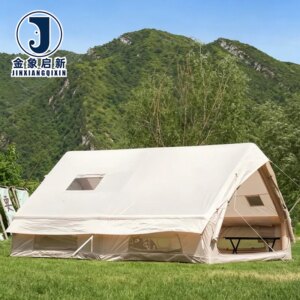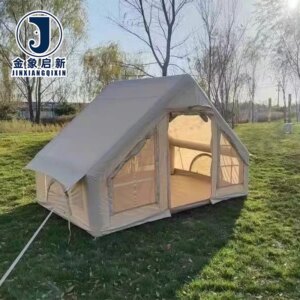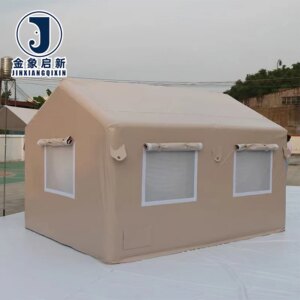
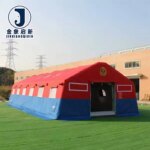
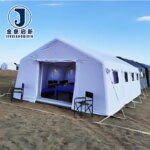
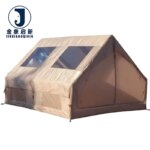


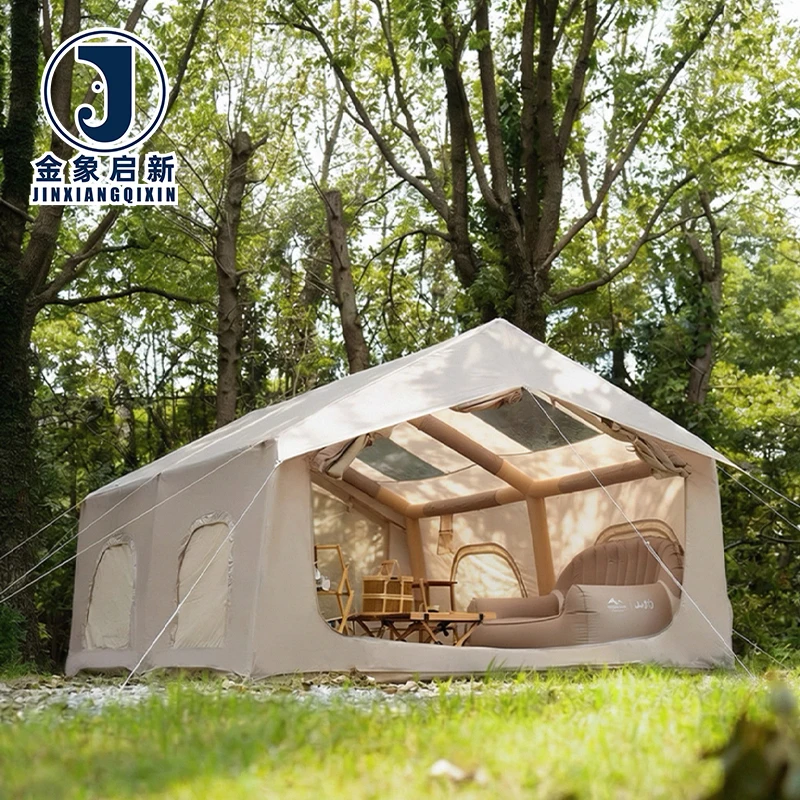
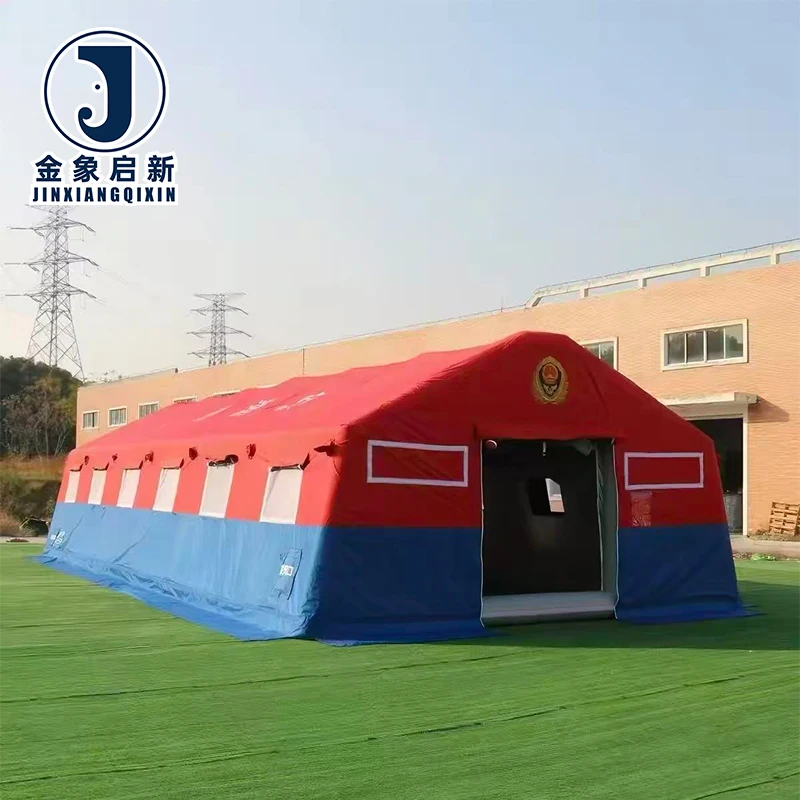
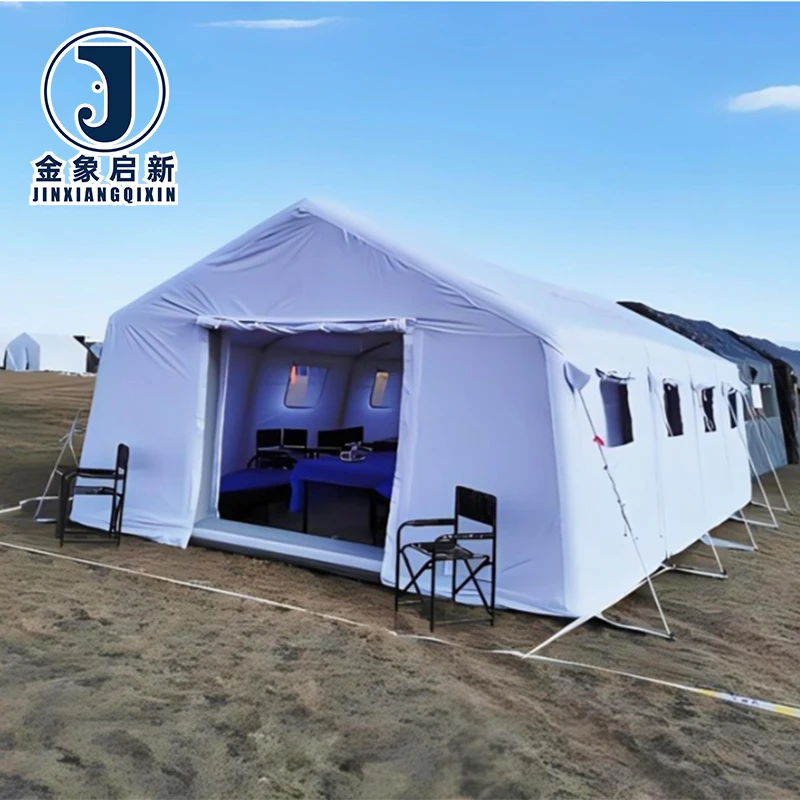
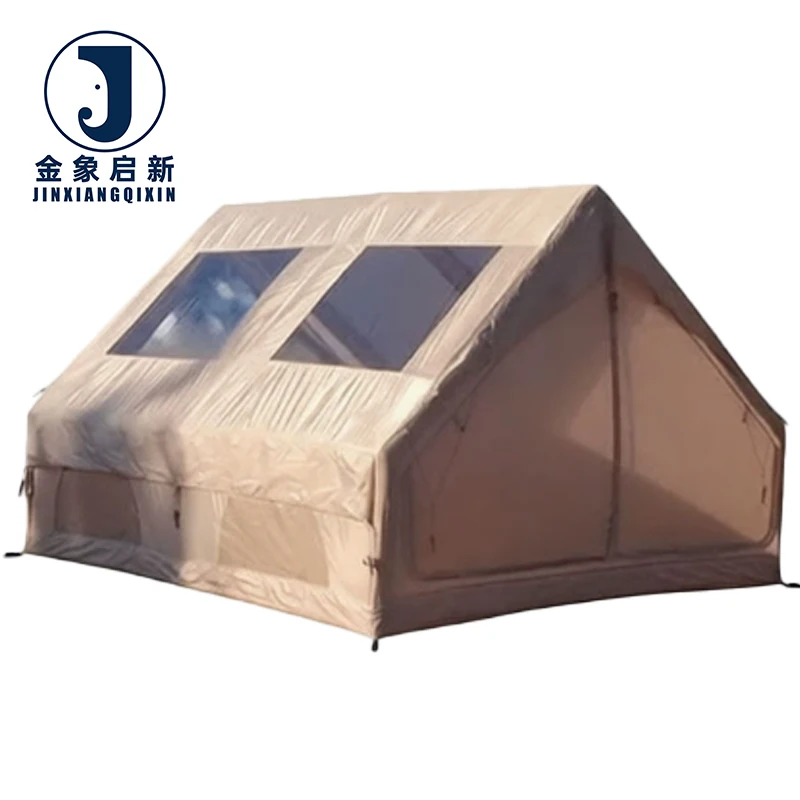


Production Line Control — three fully integrated coating and fabrication lines ensure batch-to-batch consistency across fire-retardant and anti-static inflatable tent fabric orders, critical for mining and aviation compliance audits.
Technical Specifications
| Parameter | Value |
|---|---|
| Product Type | Inflatable Tent |
| Core Material | PVC Tarpaulin |
| Product Form | Inflatable structure with quick automatic opening |
| Capacity | 2-3 person |
| Key Features | Waterproof, UV-resistant, Tear-resistant, Fire-retardant, Anti-static |
| Fire-Retardant Grade | Available in fire-retardant grades — confirm the grade required for your market (e.g., M2 / B1 / NFPA 701) |
| Anti-Static Treatment | Anti-static treatment applied — surface resistance data and standard reference available on request |
| Season Rating | Four-season design |
| Design Option | Extended type option available |
| Customization | OEM & ODM — sample customization, pattern printing |
| Certifications | ISO 9001, ISO 14001, ISO 45001, CE |
| R&D Team | 10 technicians |
| Quality Control | Full-process QA & QC with dedicated inspection staff |
Application Suitability
| Application | Exposure & Requirement |
|---|---|
| Mining and tunnelling temporary shelters | Continuous underground moisture, dust loading, fire-retardant and anti-static compliance for site safety approval |
| Aviation ground operations enclosures | Fuel-rich tarmac environment requiring anti-static certification, rapid deployment between flight rotations |
| Disaster relief field hospitals and command posts | All-weather exposure, repeated inflation cycles, fast automatic opening under time-critical emergency windows |
| Temporary construction site workspaces | UV exposure, mechanical abrasion from equipment movement, fire-retardant requirement for hot-work zones |
| Emergency supply storage depots | Waterproof integrity over extended standing periods, tear resistance against stacked cargo contact |
What Fire-Retardant Means When the Grade Is Missing
A fire-retardant claim without a cited standard is a procurement risk, not a specification.
When inflatable tent fabric arrives on a mining or construction site, the safety officer checks the test report against the site’s required grade — not the supplier’s marketing language. PVC inflatable tent fire retardant performance must be documented to a recognised standard such as M2, B1 or NFPA 701 before deployment. Fabric labelled simply as "fire-retardant" without a cited grade routinely fails site inspection, forcing contractors to source emergency replacements at premium cost and project delay [NEED_CITE: DIN 4102 and NFPA 701 fire classification frameworks for temporary structures]. The gap between a quoted claim and a verified certificate is where most compliance failures originate, and it is entirely preventable at the inquiry stage.
Rapid Inflation Architecture for Emergency Timelines
The quick automatic opening mechanism is engineered for scenarios where deployment time is measured in minutes rather than hours. Each PVC Inflatable Tent is designed as a single-chamber or multi-chamber inflatable structure that achieves full rigidity once connected to a standard blower unit. The four-season rating ensures the fabric maintains structural inflation pressure across temperature extremes, from winter disaster relief deployments to summer construction site shelters. This rapid-deploy capability removes the dependency on large crews or complex pole-and-rope assembly in the field.
Certification Documentation as a Procurement Deliverable
Every batch of PVC Inflatable Tent fire retardant fabric is supported by a documentation package built for compliance audits. ISO 9001, ISO 14001, ISO 45001 and CE certificates are held at factory level, and batch-specific test reports for fire-retardant and anti-static performance are compiled before dispatch. Mining contractors and aviation operators routinely require these documents for pre-deployment site approval, and the absence of any single certificate can halt an entire project mobilisation [NEED_CITE: ISO 1421 tensile and tear test methods for coated fabrics]. Procurement teams are advised to request the complete document set during the quotation stage, not after the purchase order is placed.
Decoding the PVC Tarpaulin Core Material
The performance envelope of any inflatable tent is defined by its base fabric and coating system. PVC tarpaulin construction provides inherent waterproof integrity without secondary membrane layers, and the coating adhesion strength determines how the material behaves under repeated inflation-deflation cycles. Fire-retardant grades are achieved through additive chemistry within the PVC compound rather than a topical spray, which means the protection persists through surface abrasion and cleaning. Anti-static treatment operates at the surface level to dissipate charge accumulation — a non-negotiable requirement in environments where combustible dust or flammable vapours are present [NEED_CITE: anti-static surface resistance measurement standards for hazardous area compliance]. The interplay between base fabric denier, weave density and coating weight collectively determines tear propagation resistance and overall structural rigidity when inflated, and no single parameter should be evaluated in isolation.
The Hidden Cost of Specifying Without Test Data
Inflatable tent fabric that passes a visual inspection but fails a site fire-retardant audit creates a cascade of downstream costs. The tent is rejected, the shelter remains undeployed, and emergency procurement must be activated — often at expedited freight charges and higher unit pricing. Anti-static non-compliance in aviation or mining environments carries an additional dimension of risk: static discharge in fuel-handling or dust-laden zones can ignite an event that no post-incident documentation can resolve. Batch colour variation between rolls delivered for the same project forces visual rejection when panels are installed adjacent to one another, triggering rework across an entire deployment [NEED_CITE: batch colour consistency tolerance in coated fabric procurement]. These failure modes are specification failures, not material failures, and they are corrected by demanding test reports and physical samples before production begins.
Why Procurement Teams Source This Fabric Here
Three full production lines and 36 sets of professional processing equipment provide the capacity to fulfil multi-unit inflatable tent orders within predictable lead times. A 10-technician R&D team handles pattern printing, extended-type design variations and sample development in-house, eliminating third-party delays. Every roll undergoes full-process quality inspection with dedicated QA and QC staff — not spot-check sampling — and a pre-shipment inspection record accompanies each dispatch. OEM and ODM capability allows branding, sizing and configuration changes without minimum order thresholds that exclude mid-volume projects. The facility operates under ISO 9001, ISO 14001, ISO 45001 and CE frameworks, providing the audit trail that industrial procurement departments require.
Documentation & Verification
- Fire-retardant test report citing the specific grade and standard applicable to the destination market
- Anti-static surface resistance measurement included with batch quality documentation
- Material specification sheet confirming PVC tarpaulin composition, weight and treatment profile per order
- Pre-shipment inspection record covering dimensional checks, inflation test and visual consistency
- ISO 9001, ISO 14001, ISO 45001 and CE certificates available for procurement audit submission
- Certificate of origin and customs documentation package included with each export dispatch
Fabrication, Handling & Storage
- Heat-weld seam parameters must be calibrated to the specific PVC tarpaulin grade and coating weight to prevent weld-line failure before fabric failure
- Store inflated or deflated tents in dry, shaded conditions to protect the PVC coating from prolonged UV exposure during staging periods
- Avoid sharp-fold creasing during transport — roll or loosely fold the PVC tarpaulin structure to prevent permanent coating cracks at fold lines
- Clean surfaces with mild, non-solvent detergents only; aggressive chemicals can degrade the fire-retardant additive chemistry within the PVC compound
- Field repair kits should include compatible PVC tarpaulin patches and adhesive formulated for fire-retardant coated grades to maintain certification continuity
- Inflate test each unit after storage or transit to verify chamber integrity and automatic opening mechanism function before deployment
Structuring Your Inquiry for an Accurate Quotation
Provide the deployment environment — underground mining, aviation tarmac, open-field disaster relief — so the correct fire-retardant grade and anti-static specification can be matched to your site compliance requirements. Specify the tent quantity, any sizing or extended-type design preferences, and whether pattern printing or branding is required for project identification. Confirm the certification standards your site safety officer requires on file before deployment, and indicate whether sample approval is needed before bulk production commences.
Frequently Asked Questions
Q: What fire-retardant grade and test standard does the inflatable tent fabric meet?
A: The PVC tarpaulin is available in fire-retardant grades aligned to standards such as M2, B1 or NFPA 701. The specific grade must be confirmed against your destination market and site safety requirements. A test report citing the applicable standard is included with each batch shipment for compliance documentation purposes.
Q: Is anti-static certification available with surface resistance data?
A: Anti-static treatment is applied to the PVC tarpaulin and surface resistance measurement data can be provided with batch documentation. Mining and aviation contractors should specify the required surface resistance range or standard reference during the inquiry stage so the correct treatment level is applied to production.
Q: How does the quick automatic opening perform in extreme conditions?
A: The four-season inflatable structure is engineered to achieve full deployment across temperature extremes encountered in disaster relief and industrial site applications. Blower capacity and inflation time should be matched to the tent size and ambient conditions. Sample testing under representative field conditions is recommended before bulk procurement.
Q: What OEM and ODM customisation options are available?
A: Pattern printing, branding, extended-type design configurations and size modifications are supported by the in-house R&D team. Sample development is available to confirm visual and structural requirements before production. Custom colour matching is handled under batch consistency controls to ensure uniformity across all units in a single order.
Q: What documentation ships with each batch?
A: Each dispatch includes a fire-retardant test report, anti-static surface resistance data, material specification sheet, pre-shipment inspection record and the full suite of ISO 9001, ISO 14001, ISO 45001 and CE certificates. Certificate of origin and customs support documentation are provided for export shipments.