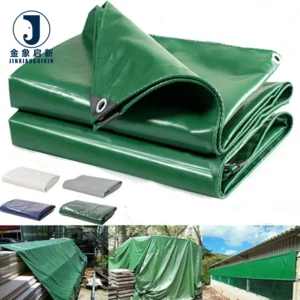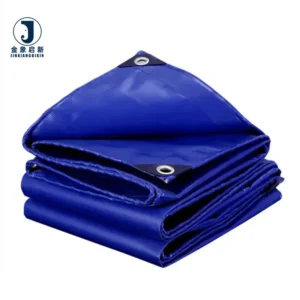
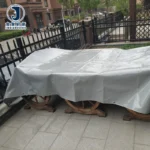
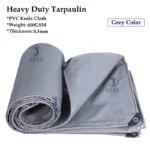
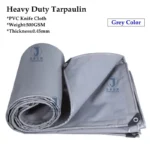
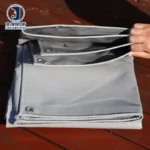
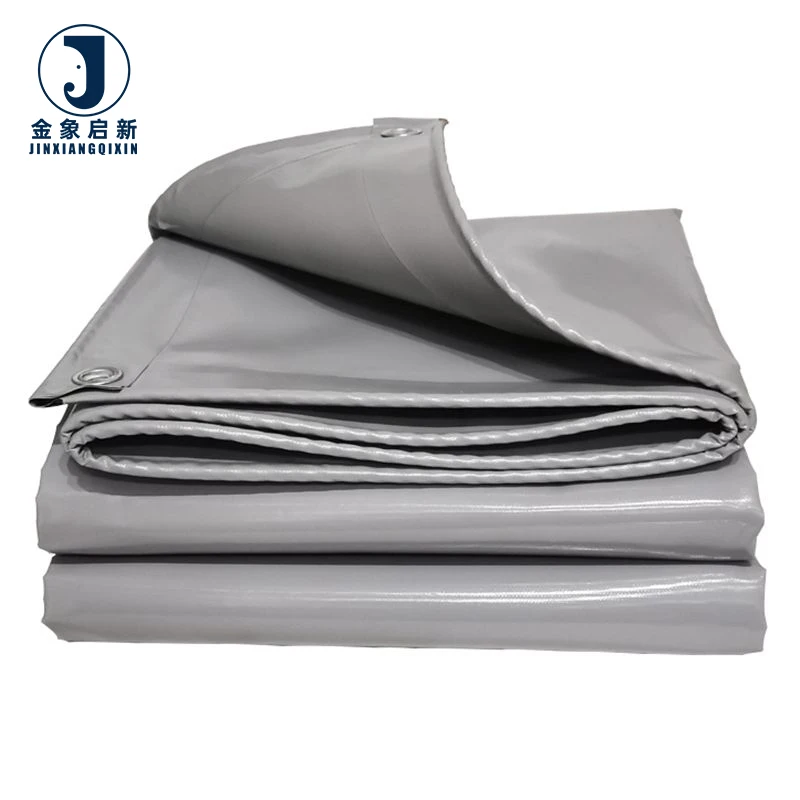
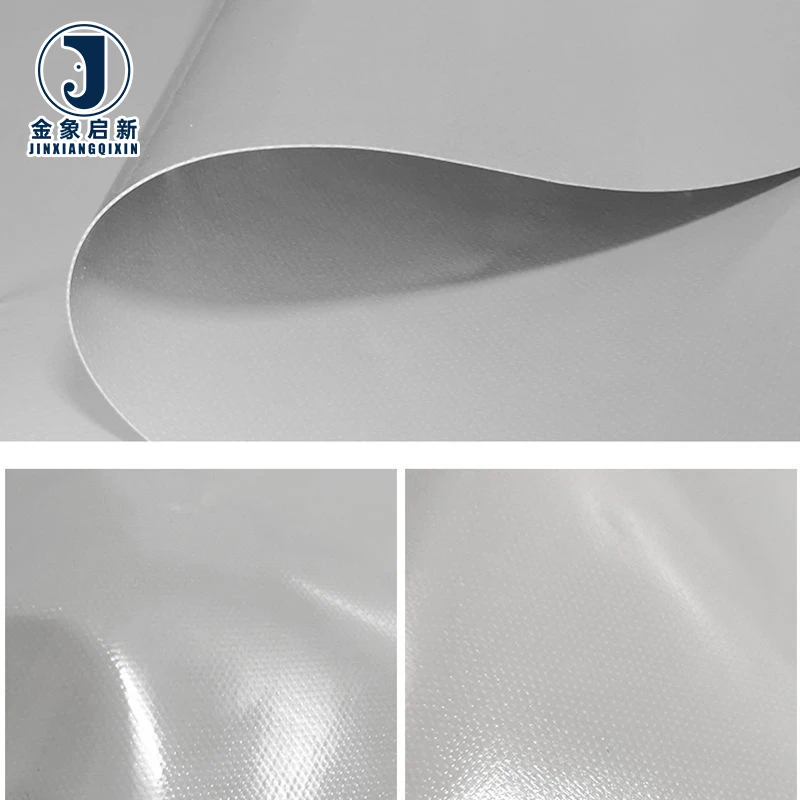
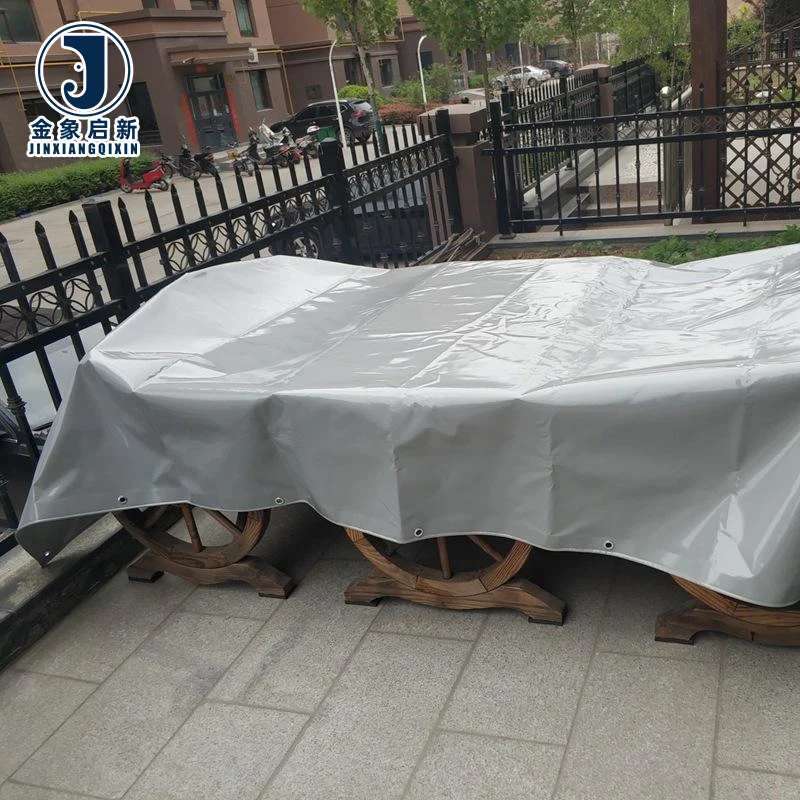
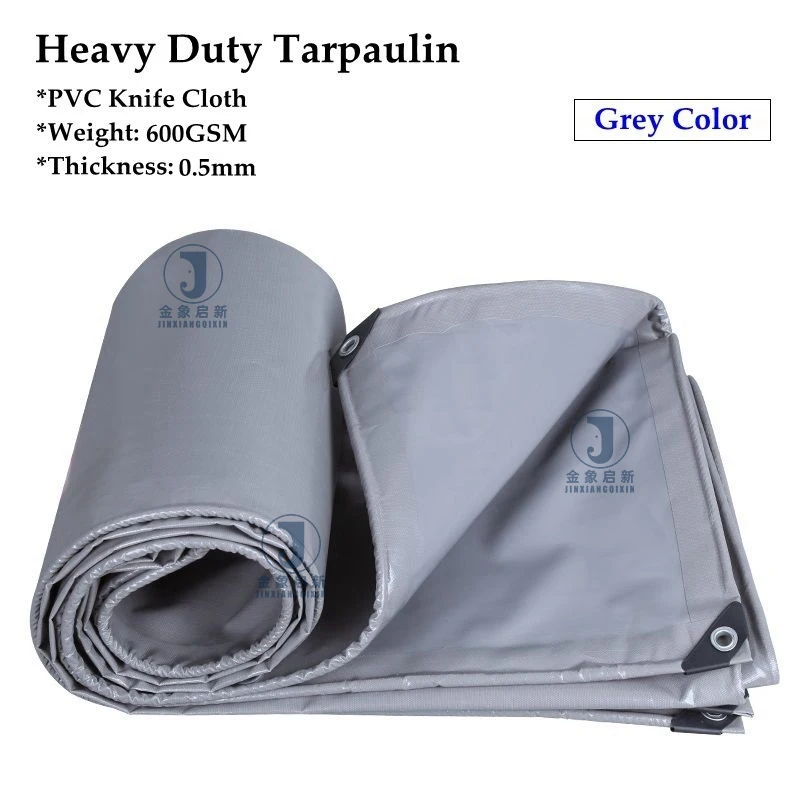
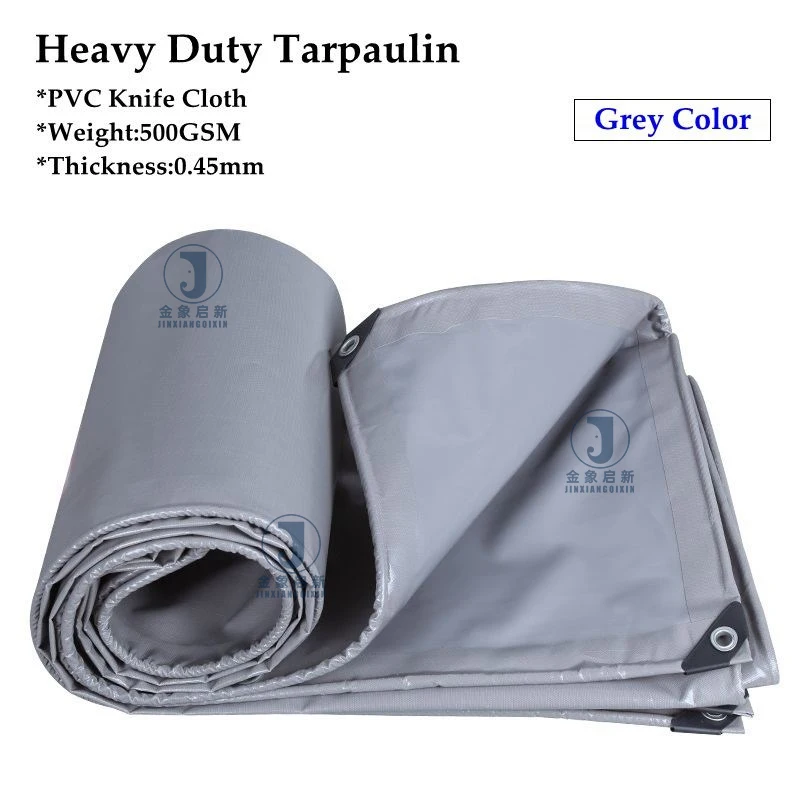
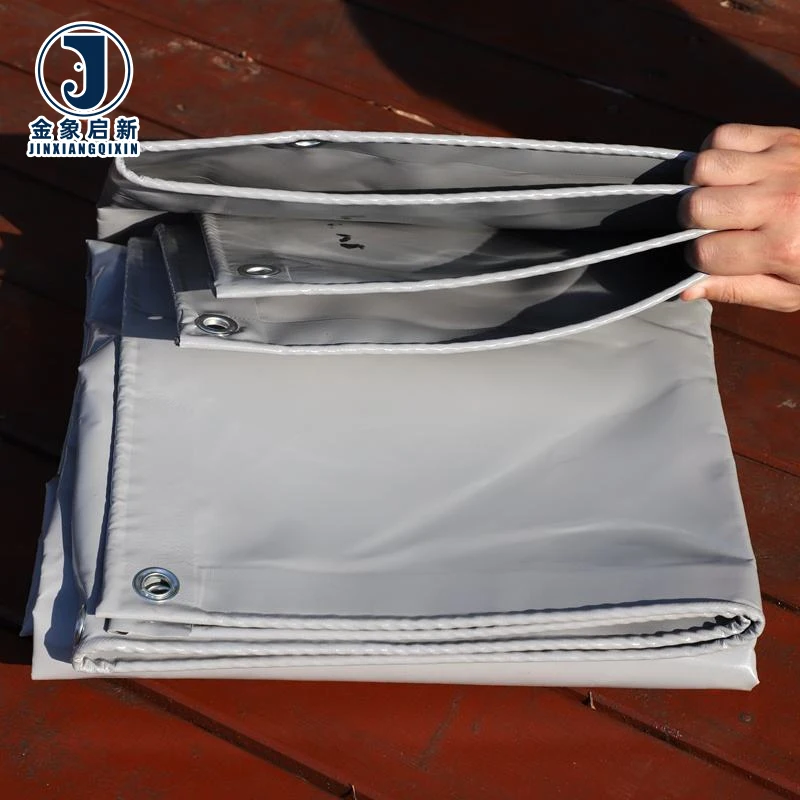
Process-Controlled Coating — Nearly 30 years focused on coated fabric with deep control over knife-coat weight and adhesion, ensuring every roll of this technical-grade PVC meets specification before it leaves the factory.
Technical Specifications
| Parameter | Value |
|---|---|
| Product Type | PVC Knife-Coated Tarpaulin |
| Weight | 500 to 800 GSM (confirm exact grade for your application) |
| Coating Material | PVC |
| Coating Method | Knife coated |
| Waterproof Rating | Anti-permeable ≥ 20 KPa |
| Flame Retardant | ≤ 10 seconds (grade not stated — confirm required standard) |
| UV Treatment | Anti-UV treated (test basis not stated — verify per market) |
| Low-Temperature Flexibility | No fracture at -30°C |
| Mildew Resistance | Mildew-proofed formulation |
| Chemical Resistance | Acid, alkali, and brine corrosion resistant |
| Water Absorption | Near-zero absorption, rapid drying |
| Seam Method | Heat combined with high-frequency welding |
| Tensile Strength | High tensile strength (standard not stated) |
| Certifications | ISO, CE (verify current issue with supplier) |
Application Suitability
| Application | Exposure & Requirement |
|---|---|
| Ventilation ducting (mining, tunnelling) | Underground fire-risk zones requiring verified flame-retardant and anti-static certification |
| Inflatable and membrane structures | Sustained pneumatic pressure, wind loading, UV exposure demanding high tensile and seam integrity |
| Aviation ground-support covers | Jet-fuel splash, de-icing fluid contact, tarmac UV requiring chemical-resistant coating |
| Public-venue tensile canopies | Crowd-occupancy structures where fire classification (M2 / B1 / NFPA 701) governs material approval |
| Industrial warehouse partitions | Forklift impact, dust containment, and wash-down exposure in manufacturing environments |
Why Certified Flame Retardancy Demands More Than a Supplier’s Word
Sourcing a PVC knife-coated tarpaulin fire retardant or anti-static grade for a regulated site without a matching test report is a compliance gap that shuts projects down.
I have watched site inspectors reject entire duct installations because the fire certificate supplied covered a different product line than the fabric on the reel. The paperwork looked correct at a glance, but the GSM and coating formulation did not match what was tested. For mining ventilation or public-venue membrane work, the cost of that mismatch extends far beyond the material itself — it delays the critical path and erodes contractor credibility [NEED_CITE: fire safety compliance documentation requirements for coated fabrics in underground and public-occupancy structures].
Verifiable Compliance from Coating to Certificate
A genuine technical-grade PVC knife-coated tarpaulin must carry a test report tied to the specific production batch, not a generic certificate issued once and reprinted indefinitely. The relevant classification — whether DIN 4102, NFPA 701, M2 or another regional standard — must match the end-use jurisdiction’s building or mining code. We supply batch-linked documentation so that the fabric arriving on your site matches the specification the engineer approved.
Anti-Static Performance Where Ignition Risk Is Non-Negotiable
In underground mining and aviation fuel-handling environments, static discharge across a fabric surface can trigger catastrophic ignition [NEED_CITE: anti-static requirements for ventilation ducting in explosive atmospheres]. Surface resistance must be measured and certified to the standard your site safety plan references. This fabric is available in anti-static grades — request the surface resistance test report matched to your project specification before confirming the order.
Coating Adhesion and Seam Behaviour Under Field Stress
Knife coating forces PVC paste into the interstices of the base fabric under blade pressure, creating a mechanical lock that laminated methods cannot replicate. This adhesion integrity matters most at heat-welded seams, where high-frequency welding melts the coating into a homogeneous bond. If the coating-to-yarn adhesion is weak, the seam peels apart under flex loading long before the base fabric reaches its tensile limit.
Thickness, Weight, and the Limits of GSM as a Standalone Metric
A 500 GSM fabric and an 800 GSM fabric from the same base weave will differ in stiffness, drape, and puncture resistance — but GSM alone does not predict tear propagation. The denier of the base yarn and the density of the weave determine how a puncture spreads into a tear. Two fabrics at the same GSM can perform very differently depending on whether the weight sits in the yarn or in the coating layer [NEED_CITE: relationship between base fabric construction and tear performance in coated textiles per ISO 1421].
Reading the Specification Sheet Beyond the Headline Number
Waterproofing rated at ≥ 20 KPa confirms hydrostatic resistance suitable for sustained rain exposure and ponding water on horizontal membrane surfaces. Low-temperature flexibility to -30°C means the plasticiser system resists embrittlement in cold-climate installations where the fabric must be unrolled and tensioned on site without cracking. Chemical resistance to acid, alkali, and brine positions this PVC knife-coated tarpaulin for coastal, agricultural, and industrial wash-down environments where acidic rain or saline spray would degrade lesser coatings. Quick-dry, near-zero water absorption ensures the fabric adds no significant weight after rainfall, reducing structural loading on membrane frames.
The Hidden Cost of Uncertified Fire-Retardant Claims
When a ventilation duct is specified as fire-retardant but arrives with no test report matching the stated grade, the contractor faces a binary choice: install and hope the inspector does not ask, or halt work and source replacement material on a compressed timeline. I have seen the second option add weeks to a tunnel advance schedule. The root cause is almost always a quotation that stated "flame retardant" as a line item without specifying which standard was met or whether the report covered the exact GSM and coating formulation ordered [NEED_CITE: fire-retardant grade verification for PVC-coated ducting in mining compliance audits].
Why This Source Supports Technical Procurement
Three full production lines and dedicated equipment sets allow parallel runs so that a custom fire-retardant grade does not displace scheduled ventilation-duct tonnage. A 10-person R&D team develops material samples against your exact specification — base denier, coating weight, fire classification — within days rather than weeks. Dedicated QA/QC at every production stage includes roll-by-roll weight verification, meaning the GSM on your packing list matches the fabric that arrives. Nearly 30 years of focused coating-fabric experience translates into process parameters that are set and locked, not adjusted mid-run. Pre-shipment inspection covers every roll before dispatch, so deficiencies are caught at the factory rather than on your receiving dock.
Documentation & Verification
- Material specification sheet confirming exact GSM, base fabric denier, and PVC coating weight per roll
- Fire-retardant test report issued per batch against the standard specified in your purchase order
- Anti-static surface resistance certificate for mining and aviation applications where required
- Pre-shipment inspection record with roll-by-roll weight verification before container loading
- Certificate of origin and customs documentation package for destination-country clearance
Fabrication, Handling & Storage
- Use high-frequency welding at manufacturer-recommended temperature to ensure seams match base fabric tensile capability
- Store rolls horizontally on pallets to prevent permanent creasing in the 500–800 GSM coated surface
- Allow cold-stored rolls to acclimatise before unrolling to avoid low-temp stiffness stress on the knife-coated layer
- Clean with pH-neutral detergent only; acid or solvent cleaners may degrade the anti-UV treatment over time
- Plan cutting layout to minimise off-cuts from standard roll widths and reduce heat-weld seam count
Preparing Your Specification Enquiry
To receive an accurate quotation with a matched test report, provide your end-use environment, the fire-retardant or anti-static standard your jurisdiction requires, the GSM range under consideration, roll width and length preferences, and annual volume estimate. If the fabric will be fabricated into finished ducts or membrane panels, state whether you require raw roll stock or pre-cut panels with edge reinforcement. Request a production sample for independent lab verification before confirming the bulk order.
Frequently Asked Questions
Q: What fire-retardant grade does this fabric carry, and is the test report issued per batch?
A: This PVC knife-coated tarpaulin is available in flame-retardant grades — the specific classification (such as M2, B1, NFPA 701, or DIN 4102) depends on the formulation ordered. We provide a batch-linked test report matching your stated standard. Confirm your market’s required classification at enquiry stage so the correct formulation is produced and documented.
Q: How is anti-static compliance verified for mining and aviation ventilation applications?
A: Anti-static grades carry a surface resistance measurement tested to the standard your site safety plan specifies. The test report is issued alongside the material certificate and is traceable to the production batch. Request this documentation before shipment to ensure it aligns with your compliance audit requirements.
Q: How do I confirm the exact GSM of my order matches the quotation before shipment?
A: Our pre-shipment inspection includes roll-by-roll weight verification against the quoted GSM. You receive a documented inspection record showing measured values per roll, along with a packing list. This eliminates the common discrepancy where fabric arrives lighter than specified on the original quotation.
Q: What is the recommended seam method for knife-coated PVC to prevent failure at flex points?
A: High-frequency heat welding produces a homogeneous bond where the PVC coating fuses across the seam. This method is specified for this fabric because it matches the coating-to-yarn adhesion created during the knife-coating process, preventing seam peel at flex and stress points that mechanical stitching cannot avoid.
Q: Can custom widths and roll lengths be produced with batch-to-batch colour consistency?
A: Custom widths and lengths are available through our production lines. Colour consistency across rolls within a single order is verified during in-process QA. For repeat orders, we reference the original colour standard and confirm shade approval via sample before bulk production begins.