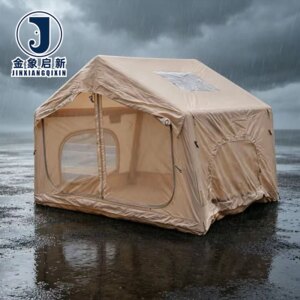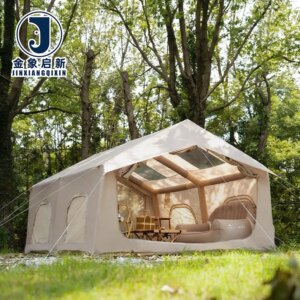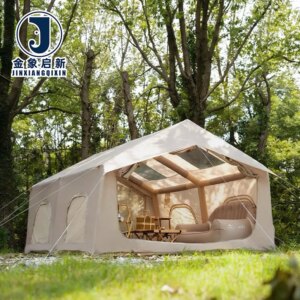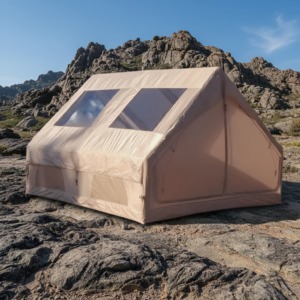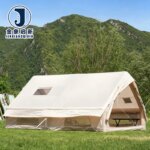
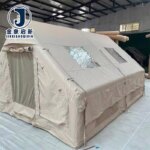
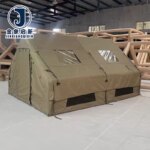
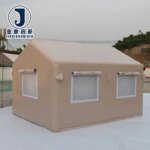
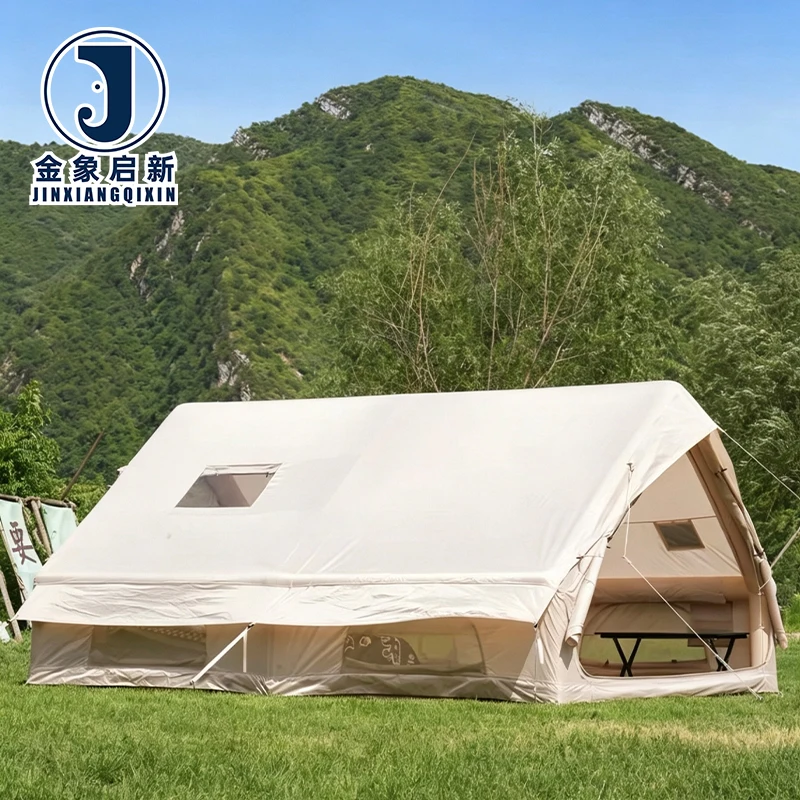
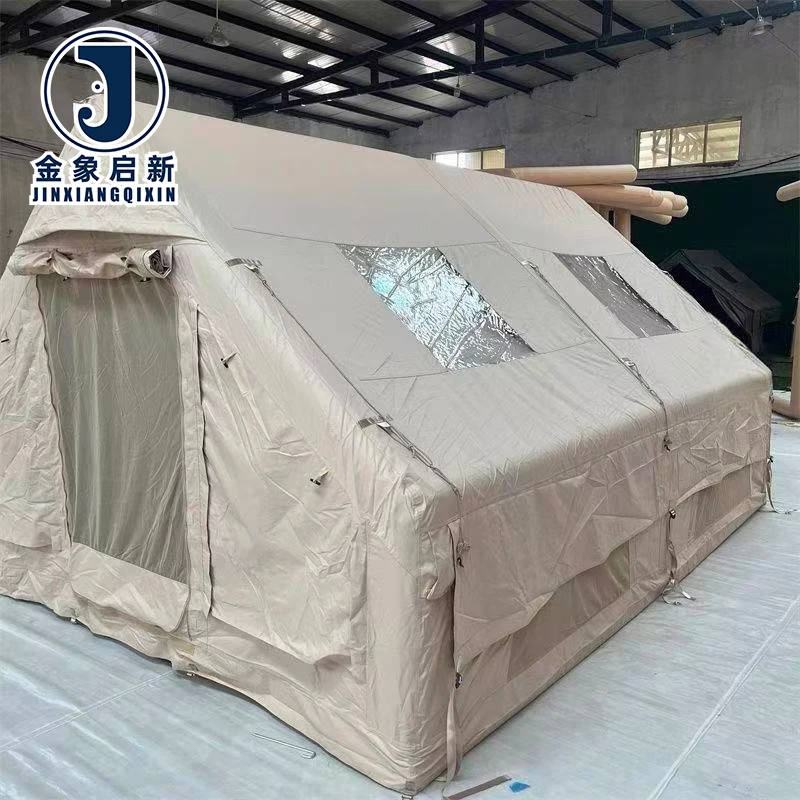
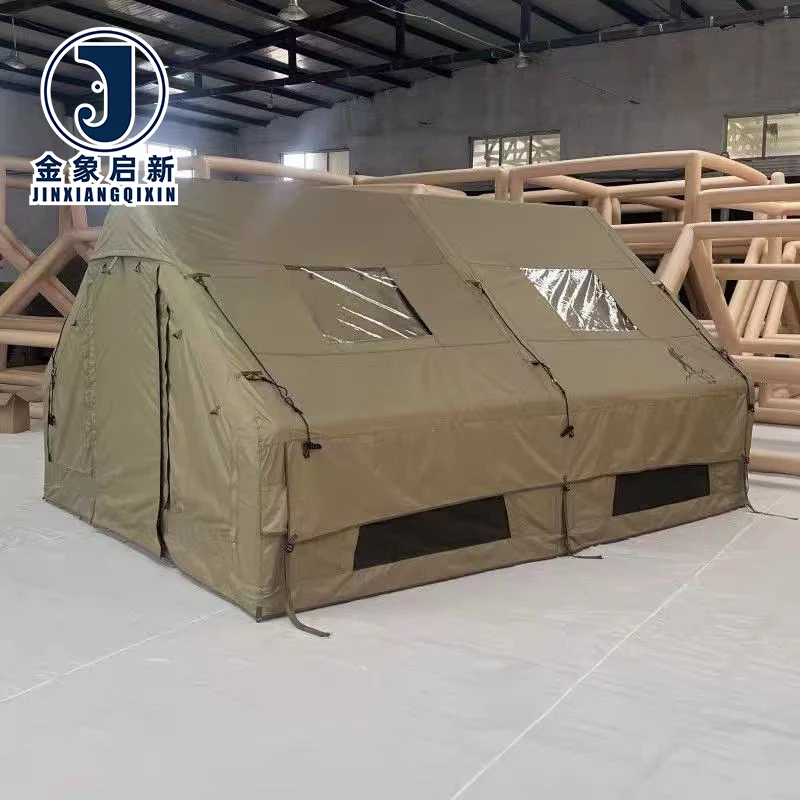
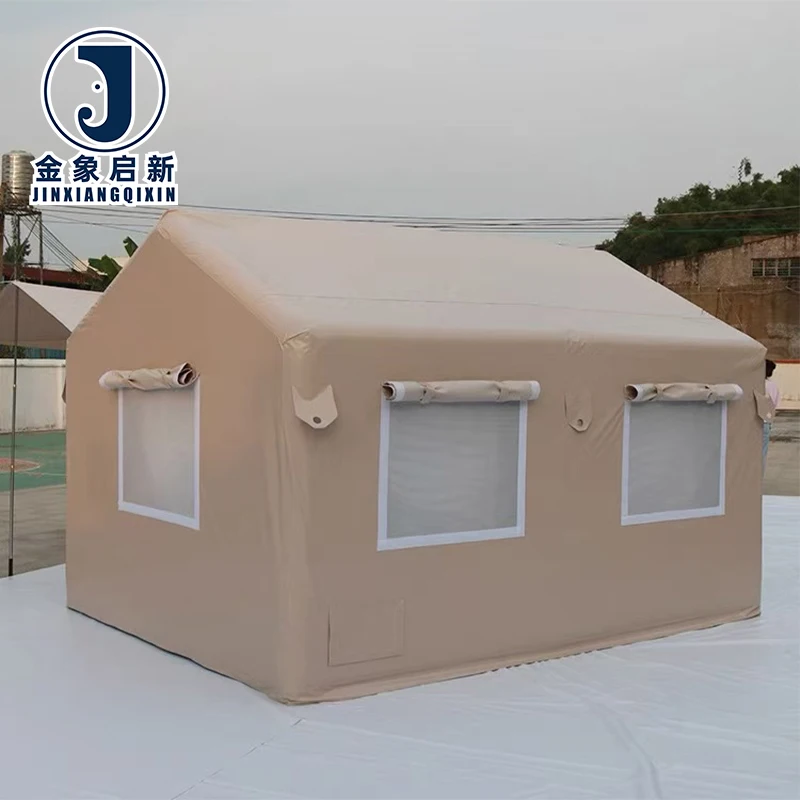
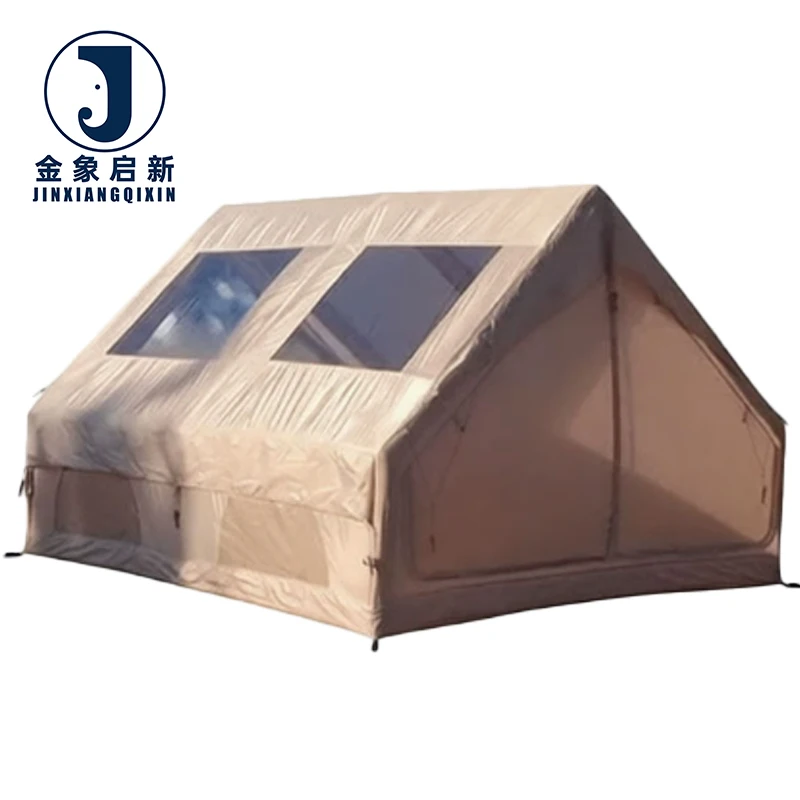
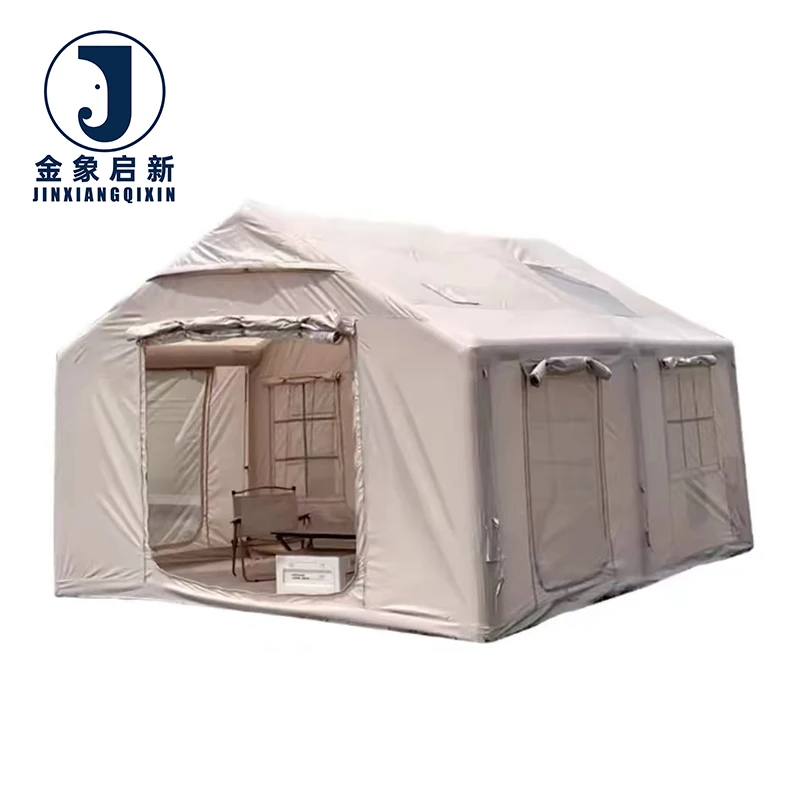
Technical Coating Expertise — 29 years of PVC coating process control applied to inflatable structure fabric, maintaining airtight seam integrity and consistent GSM across production batches for commercial tent manufacturers.
Technical Specifications
| Parameter | Value |
|---|---|
| Product Type | Inflatable Tent Fabric / Inflatable Tent |
| Core Material | PVC Tarpaulin |
| Waterproof Rating | 3000mm water column (source value — verify against manufacturer catalog) |
| Flame Retardant | EN 13501-1 (source value — verify against manufacturer catalog) |
| Anti-Static | Anti-static properties claimed (standard or surface resistance not stated in source) |
| Raw Material Standard | GB/T 5761-2006 (source value — verify against manufacturer catalog) |
| Thickness Tolerance | ±2% across production batches |
| Key Features | Waterproof, UV-resistant, Tear-resistant, Fire-retardant, Anti-static |
| Customization Options | Size adjustments, Pantone color matching, logo printing, custom door/window configurations |
| Standards & Certifications | ISO 9001, ISO 14001, ISO 45001, CE, EN 13501-1 |
Application Suitability
| Application | Exposure & Requirement |
|---|---|
| Remote project site workforce housing | Continuous inflation stress, wind loading, fire code compliance for temporary structures |
| Mining and expedition base camp inflatable structures | Abrasive dust, temperature extremes, anti-static requirement near sensitive equipment |
| Commercial adventure tourism temporary shelters | Rapid deployment cycles, repeated inflation and deflation, UV exposure |
| Field research stations in isolated locations | Severe weather, waterproofing integrity, structural stability under sustained air pressure |
Why Fire-Retardant Certification Determines Whether Your Inflatable Tent Fabric Passes Site Inspection
Fabric without a verifiable fire-retardant grade is a liability the moment a site inspector asks for documentation.
I have walked onto commercial event sites where the inflatable tent fabric arrived with a certificate that referenced a different batch or a different material entirely. The site safety officer does not accept a generic "fire-retardant treated" claim — they need a test report tied to the specific EN 13501-1 classification for the rolls that were actually delivered. When that paperwork gap surfaces during installation, the entire deployment halts until compliant documentation is produced. [NEED_CITE: EN 13501-1 classification for construction products and building elements]
Air Pressure Demands That Define Inflatable Tent Fabric Selection
Inflatable tent structures place a unique mechanical load on the PVC tarpaulin that static covers never experience. The fabric must hold airtight heat-sealed seams under continuous positive pressure, meaning every welded joint acts as a structural member rather than a simple overlap. This is why inflatable tent fabric requires coating adhesion that survives flex cycling without delamination at the seam boundary.
Anti-Static Treatment for Equipment-Dense Field Environments
Where inflatable tents house electronic survey instruments, communication arrays, or medical equipment in mining and expedition camps, electrostatic discharge becomes a real operational hazard. Anti-static PVC tarpaulin prevents charge accumulation on the tent surface that could otherwise interfere with sensitive field instrumentation. The specific surface resistance requirement should be confirmed against your site’s electrical safety protocol before placing a bulk order. [NEED_CITE: anti-static requirements for temporary structures in mining environments]
How Coating Weight and Base Fabric Interact in Inflatable Applications
The waterproof rating of 3000mm water column is achieved through a combination of PVC coating thickness and base fabric weave density, not coating weight alone. A lighter base fabric with heavy coating may achieve the same initial waterproof reading but will show different tear propagation behaviour when the inflatable tube is under pressure and abraded by ground contact. The ±2% thickness tolerance maintained across production batches ensures that heat-sealing parameters set during fabrication remain valid from the first panel to the last, which matters when a tent fabricator is welding dozens of seams on a single large unit. Flame retardant to EN 13501-1 means the material has been tested and classified under a European standard widely referenced in commercial temporary structure regulations across multiple markets.
What Happens When Inflatable Tent Fabric Specifications Are Wrong for the Application
I have seen inflatable tent structures fail not because the fabric tore, but because the heat-sealed seam gave way at the point where inflation pressure concentrated stress during a gust cycle. This typically traces back to a coating formulation that was not optimised for thermal welding, or a GSM that was quoted on paper but did not arrive on the roll. When batch colour shifts occur across multiple tent units deployed side by side at a commercial glamping site, the visual inconsistency forces a costly panel replacement that no one budgeted for. [NEED_CITE: seam failure analysis in coated fabric inflatable structures]
Why Fabricators Source Inflatable Tent Fabric Through This Production Line
Three full production lines with 36 sets of professional equipment allow bulk roll output with consistent coating weight — critical when your tent fabrication shop needs repeatable heat-seal behaviour across an entire container load. A 10-person R&D team handles custom Pantone matching and door or window configuration development, producing samples within days so you can validate weld parameters before committing to a production run. Dedicated QA and QC inspection at every production stage, with 100% pre-shipment inspection, means thickness tolerance and coating adhesion are verified before rolls are packed rather than discovered at your receiving dock. Virgin PVC resin sourced to GB/T 5761-2006 eliminates the variability that recycled content introduces into coating consistency. Full documentation packages travel with every shipment, so your compliance file is complete the day the container arrives.
Documentation & Verification
- Material specification sheet stating GSM, base fabric construction, and coating type for each roll
- EN 13501-1 fire-retardant test report matched to the production batch shipped
- Pre-shipment inspection record covering coating thickness, seam integrity, and surface quality
- Certificate of origin and customs documentation for cross-border shipment clearance
- Material Safety Data Sheets provided on request for site safety file compilation
Fabrication, Handling & Storage
- Set heat-seal temperature and dwell time based on the specific PVC coating formulation before welding inflatable tube seams
- Allow rolls to acclimatise to workshop temperature before unrolling to prevent coating micro-cracking in cold PVC tarpaulin
- Store rolls horizontally on padded racks to avoid permanent creasing that compromises airtightness in inflatable tent fabric panels
- Use compatible PVC-based repair adhesive for field patching to maintain coating chemistry continuity at the repair boundary
- Plan panel cutting layout to minimise cross-grain seams in high-stress inflatable tube zones
What We Need to Move Your Inquiry Forward
Provide the intended deployment environment and any fire safety or anti-static compliance standards your end client requires. Specify whether you need fabric by the roll for your own fabrication line or finished pre-cut panels, along with target colour references and annual volume estimates so we can confirm lead time and production slot availability.
Frequently Asked Questions
Q: Can you provide fire-retardant test reports accepted in European and North American markets?
A: We supply EN 13501-1 test documentation with each shipment batch. If your local authority requires an additional regional standard such as NFPA 701 or a specific building code classification, share the exact reference during inquiry so we can confirm test availability before production.
Q: How do you ensure color consistency across multiple rolls in one order?
A: Every production run uses Pantone-matched pigment formulation with in-process colour checks at the coating stage. Pre-shipment inspection includes side-by-side roll comparison under controlled lighting to catch any batch variation before dispatch, ensuring uniform appearance when tent units are deployed adjacent to each other.
Q: What is the recommended approach for custom door and window configurations?
A: We develop sample panels with your specified opening dimensions and reinforcement details so you can validate heat-seal parameters and structural behaviour under inflation pressure. Once approved, the configuration is locked into the production specification for full batch consistency.
Q: Do you supply fabric by the roll or pre-cut panels for inflatable tent fabricators?
A: Both options are available depending on your fabrication setup. Rolls are supplied in custom widths and lengths to minimise waste on your cutting table. Pre-cut panels with welded seam allowances can be produced for fabricators who want to reduce in-house cutting labour.