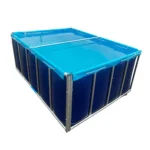

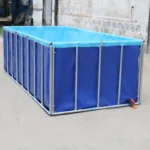
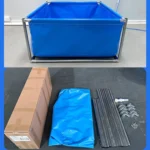
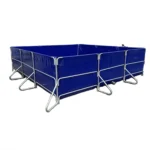
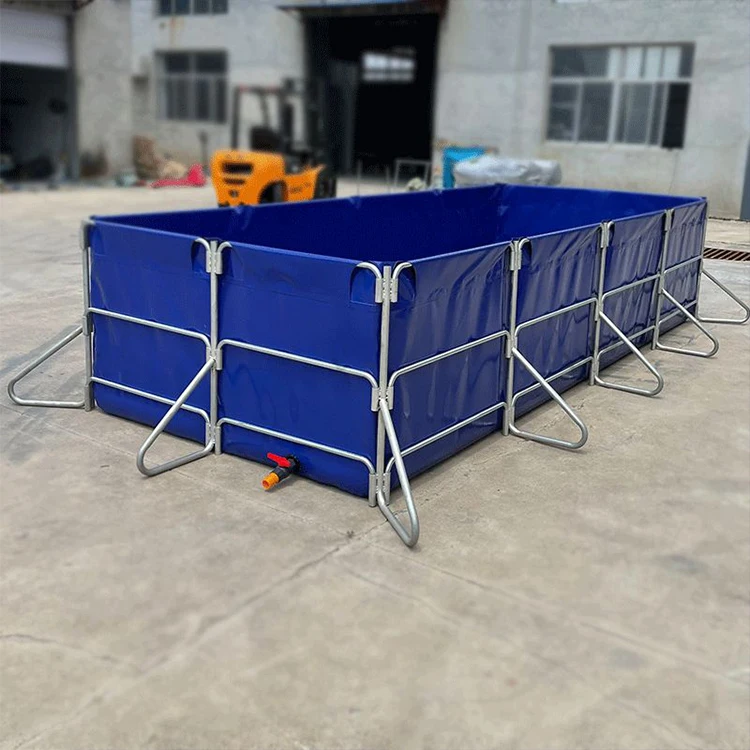
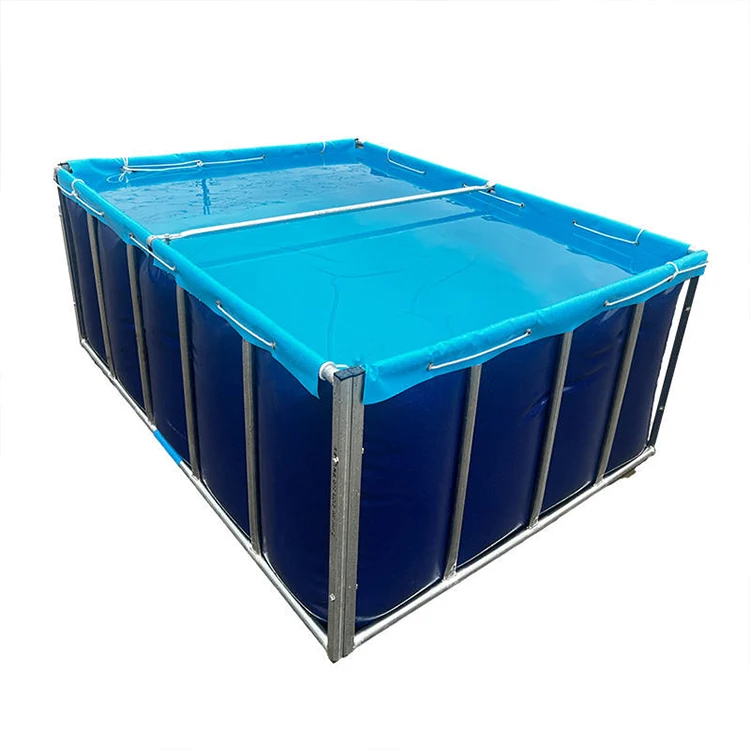
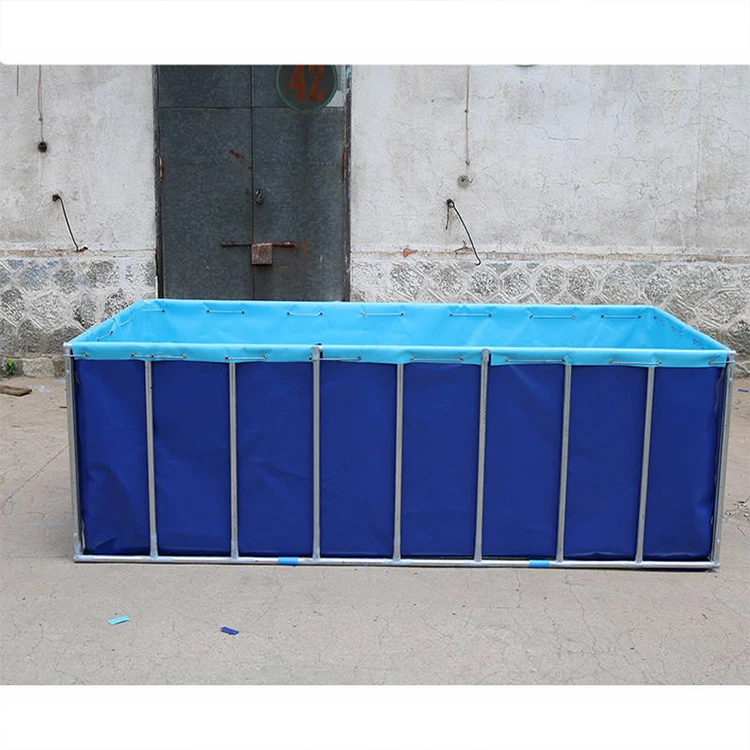

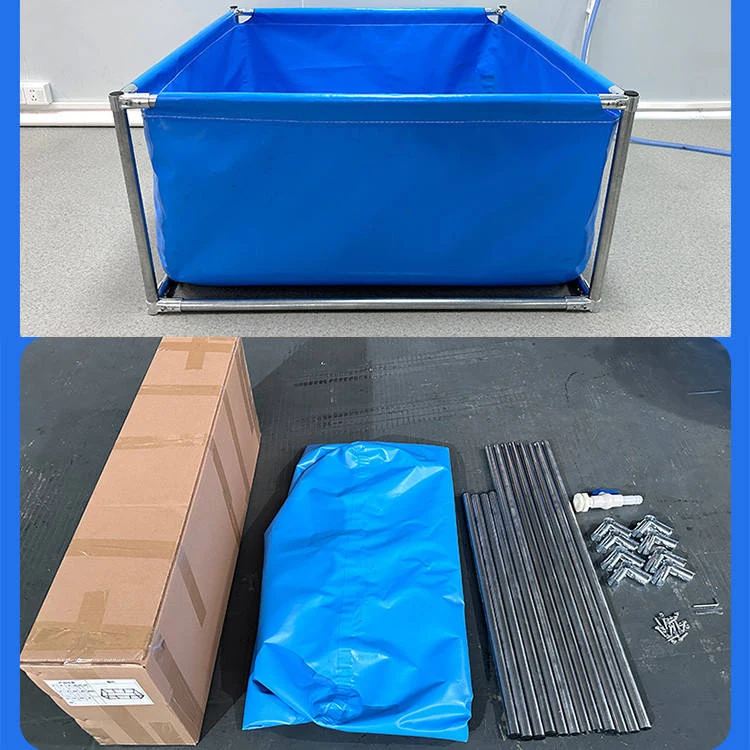

Process Control Over Coating Weight — Every roll of aquaculture pond liner undergoes dedicated QA at every production stage to ensure the PVC coating weight and adhesion match the material specification sheet before dispatch.
Technical Specifications
| Parameter | Value |
|---|---|
| Product Type | PVC Fish Pond Liner |
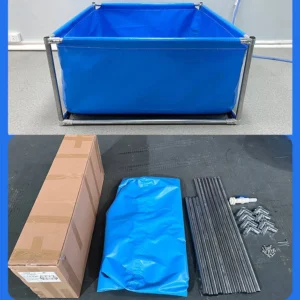
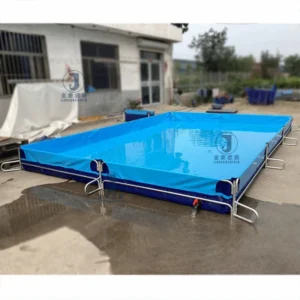
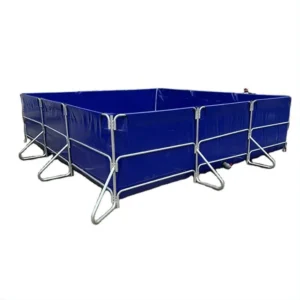
| Shape Options | Circular / Rectangular |
| Coating Material | PVC |
| Foldable Design | Yes |
| Application Form | Fish tank / Aquaculture pond |
| Production Standard | ISO, CE certified facility |
Application Suitability
| Application | Exposure & Requirement |
|---|---|
| Commercial aquaculture fish ponds | Permanent water immersion, soil chemistry contact, puncture from substrate |
| Circular and rectangular fish tanks | Contained water load, flexing at tank walls, repeated filling and draining |
| Hatchery and breeding installations | Sensitive stock requiring clean, non-leaching waterproof containment |
| Portable and foldable aquaculture setups | Frequent assembly and disassembly, transport abrasion, rapid deployment |
| Outdoor water containment reservoirs | UV exposure, temperature fluctuation, wind-driven debris |
Why Liner Weight Verification Matters More Than the Quoted GSM
A pond liner that arrives lighter than the GSM stated on the quotation compromises water containment integrity from the first fill.
Procurement teams in aquaculture regularly face a frustrating gap: the specification sheet promises a certain coating weight, but the material delivered is measurably lighter. For a PVC Fish Pond Liner holding thousands of litres of water, even a marginal shortfall in coating adhesion or base fabric density can accelerate seam failure and increase puncture vulnerability. The financial consequence is rarely limited to the liner itself — lost stock, emergency pond draining, and unplanned downtime compound the original material cost many times over. [NEED_CITE:]
How Coating Adhesion Affects Long-Term Water Containment
The bond between the PVC coating and the base polyester fabric determines whether the liner performs as a single structural unit or begins to delaminate under sustained hydrostatic pressure. In aquaculture pond lining, water load is constant and unforgiving. A PVC Fish Pond Liner with poor adhesion will develop blistering at the coating interface, particularly where the material folds or conforms to uneven ground. This separation is not cosmetic — it exposes the base fabric to moisture ingress and biological growth, accelerating degradation from within.
Welded Seam Integrity Under Flex and Load
Welded seams on pond liners carry the full water load at the points where the structure flexes most — corners, wall-to-floor transitions, and any area where the liner bridges a rigid frame. When seams are engineered correctly, they hold as long as the fabric itself. The foldable design of these circular and rectangular ponds places additional demands on seam construction, since the liner is repeatedly folded for transport and unfolded on site. Each fold cycle tests the weld line at predictable stress concentrations. [NEED_CITE:]
Reading the Specification Sheet Beyond the GSM Number
Coating weight alone does not define how a pond liner will perform in the field. The base fabric denier and weave density work together with the PVC coating to produce the final tensile and tear behaviour. A liner with a high GSM but loosely woven base fabric may resist puncture adequately yet tear easily once a nick propagates. Conversely, a tightly woven lighter base with controlled coating penetration can deliver superior tear propagation resistance. The coating method — whether knife-over-edge, calendered, or laminated — also influences peel strength at the weld line and determines which heat welding parameters the fabricator should use. Understanding these interactions helps buyers evaluate quotations on performance merit rather than a single weight figure.
The Hidden Cost of Specification Mismatch in Pond Liners
When a batch of pond liners arrives with inconsistent coating weight across rolls, the consequences surface during installation and first fill. Thinner sections stretch disproportionately, pulling stress toward the welded seams and eyelet reinforcements. Colour variation between rolls becomes visible once panels are installed side by side in adjacent ponds, creating an unprofessional appearance that reflects poorly on the operator. More critically, UV treatment claimed without a supporting test report leaves the buyer exposed to accelerated surface chalking and embrittlement after a single season of direct sunlight. [NEED_CITE:]
Why Aquaculture Operators Source This Liner Here
The 10-person R&D team develops samples for custom pond dimensions within days, allowing operators to validate fit and material behaviour before committing to a production run. Three full production lines with 36 sets of professional equipment maintain roll-to-roll consistency across bulk orders, so every pond liner in a multi-pond facility performs identically. Dedicated QA at every production stage catches coating weight deviation before the roll reaches the packing stage, not after it arrives at the farm. In-process inspection covers coating adhesion, base fabric alignment, and weld seam continuity — parameters that directly affect water containment performance.
Documentation & Verification
- Material specification sheet confirming PVC coating weight, base fabric denier, and GSM for each pond liner order
- UV and flame-retardant test reports included where applicable treatment grades are specified
- 100% pre-shipment inspection record documenting coating weight verification before dispatch
- ISO and CE certificates with certificate of origin and full customs documentation package
- Roll packing list detailing dimensions, weight, and batch reference for traceability
Fabrication, Handling & Storage
- Heat welding parameters must match the PVC coating method — request recommended temperature and dwell time for the specific pond liner grade ordered
- Fold the liner along factory crease lines during transport to avoid introducing new stress points at the welded seams
- Store rolls or folded liners on flat, dry surfaces away from direct ground contact to prevent moisture wicking into the base fabric edges
- Clean pond liner surfaces with mild, non-solvent detergents to preserve the PVC coating surface and avoid softening the plasticiser layer
- When cutting panels for custom rectangular or circular shapes, allow sufficient overlap at welded seams for reliable heat bond width
What to Include in Your Enquiry
Provide the pond dimensions or tank frame specifications, including whether you need circular or rectangular configurations. Indicate the intended water depth so the appropriate coating weight and base fabric grade can be recommended. If the installation site has specific UV exposure conditions or fire safety requirements, state the treatment grade needed for your market. Confirm whether you require the liner as a finished, welded product or as roll stock for on-site fabrication.
Frequently Asked Questions
Q: How can I verify the coating weight when the PVC Fish Pond Liner arrives?
A: Every shipment includes a material specification sheet stating the agreed GSM, base fabric, and coating details. The 100% pre-shipment inspection record documents weight verification per roll. On receipt, you can conduct a simple cut-and-weigh sample test against the stated specification to confirm compliance before installation.
Q: What UV treatment options are available for outdoor aquaculture pond liners?
A: UV treatment is available in grades suited to extended outdoor exposure. The specific grade should be matched to your regional climate and expected sun hours. Request the UV test report with your documentation package to confirm the treatment level applied to your order and validate it against your local conditions.
Q: Can the pond liner be made to a custom circular or rectangular dimension?
A: Yes. The R&D team develops samples for custom pond shapes and sizes within days. Provide your exact dimensions or tank frame measurements, and a sample will be produced for approval before the full production run begins. Minimum order requirements vary depending on the custom width and treatment grade specified.
Q: How are welded seams tested to ensure they hold under water load?
A: Welded seams undergo in-process inspection during production, checking bond continuity and peel strength at the weld line. The pre-shipment inspection record documents seam verification results. Seam integrity is critical at corners and fold points where the liner experiences the highest stress during filling and draining cycles.
Q: How is colour consistency maintained when ordering multiple pond liners?
A: In-process QA across all production lines monitors coating colour from the first roll to the last within a single batch order. This ensures that when multiple pond liners are installed side by side in an aquaculture facility, no visible variation appears between adjacent panels once filled with water.