
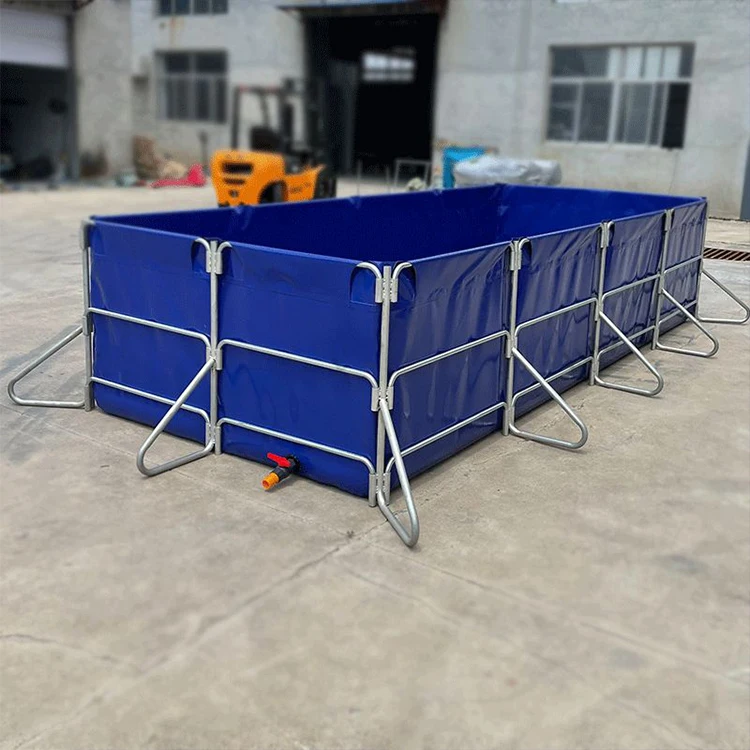
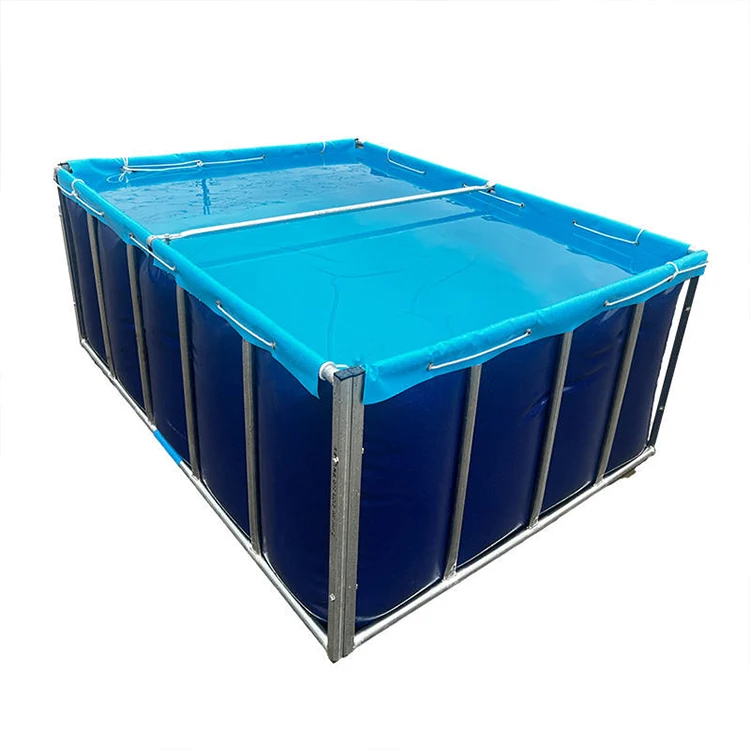
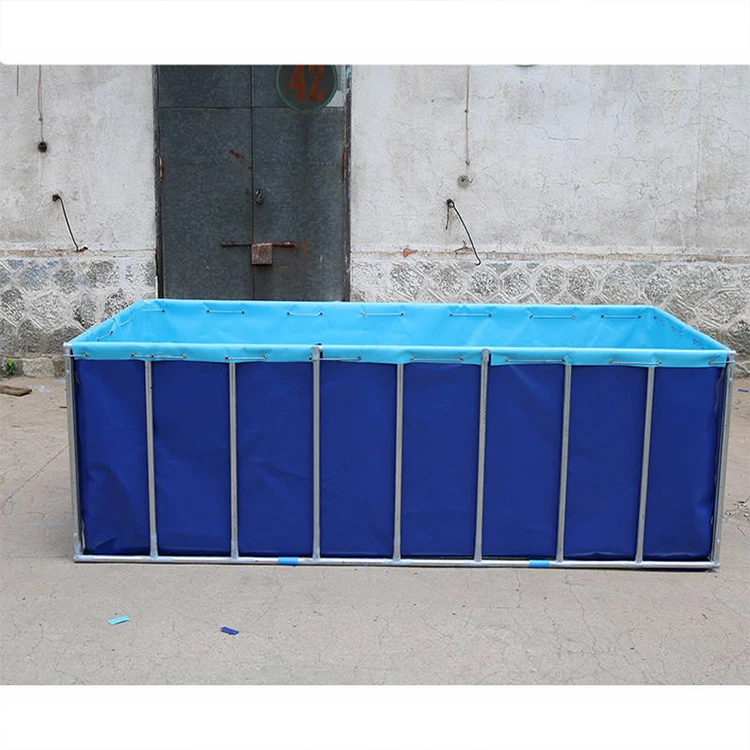

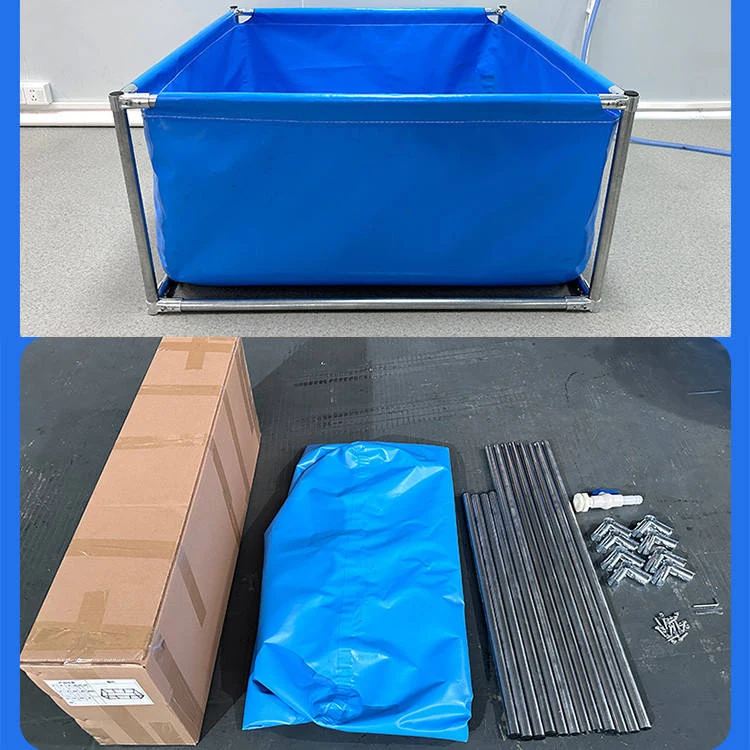

Specialist aquaculture membrane engineering — 30 years of coated fabric process control applied to continuous water immersion and site compliance requirements.
Technical Specifications
| Parameter | Value |
|---|---|
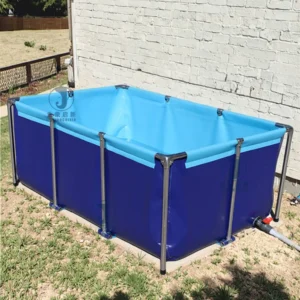
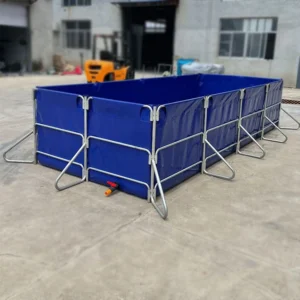
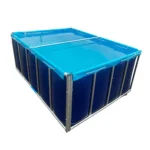
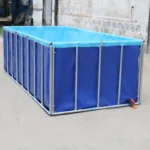
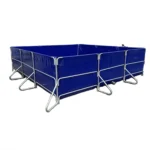
| Product Type | PVC Tarpaulin Fish Pond |
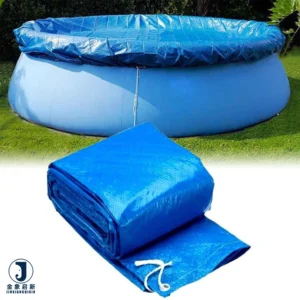
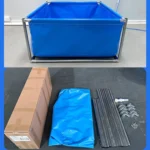
| Shape Options | Circular / Rectangular (foldable) |
| Coating Material | PVC |
| Application Form | Pre-fabricated fish pond / fish tank liner |
| Fire Retardant | Available in fire-retardant grades — confirm the grade required for your site |
| Anti-Static | Available in anti-static grades — confirm certification requirements |
| UV Treatment | Available with UV treatment — test report supplied where applicable |
| Custom Sizing | Available with sample development prior to bulk order |
Application Suitability
| Application | Exposure & Requirement |
|---|---|
| Commercial fish and shrimp farming | Continuous water immersion, UV exposure, biological load, puncture risk from substrate |
| Agricultural water reservoir lining | Permanent water contact, soil chemistry, mechanical damage during installation |
| Temporary aquaculture containment at construction or mining sites | Rapid deployment, fire-retardant or anti-static compliance on regulated sites |
| Inflatable or membrane structure integration | Welded seam integrity under flex load, coating adhesion under air pressure |
Why Specified Compliance Grades Matter for Aquaculture Containment
A pond liner without verifiable fire-retardant or anti-static certification fails the moment your site inspector asks for documentation.
Many aquaculture operations, particularly those on mining or construction sites, require containment membranes that meet specific fire safety or static dissipation standards. Suppliers frequently quote "fire retardant" or "anti-static" as blanket claims without attaching a test report or grade classification. When the site auditor requests documentation, the buyer is left with an unverified liner already deployed in the field — creating compliance exposure and potential work stoppage. For a PVC tarpaulin fish pond installed in a regulated environment, the absence of a traceable certificate is not a paperwork inconvenience; it is a project risk [NEED_CITE: fire-retardant and anti-static compliance requirements for industrial containment membranes].
Welded Seam Integrity Under Continuous Hydrostatic Load
A pre-fabricated PVC tarpaulin fish pond holds water at constant pressure across every seam. The welded joints must match or exceed the tensile strength of the base fabric itself, because failure at the seam line releases the entire water volume rather than producing a slow leak. Our production process controls heat input and dwell time at each weld to ensure coating fusion penetrates the full fabric thickness. Every pond undergoes seam inspection before dispatch, checking for cold welds, edge lift, and dimensional accuracy against the specified footprint.
Base Fabric Selection for Puncture and Tear Resistance
The denier and weave density of the base fabric determine how the membrane resists sharp substrate contact, installation drag, and the lateral forces generated when a filled pond flexes under wind or stock movement. Heavier denier yarns in a tight weave pattern limit tear propagation if the fabric is nicked during placement. For aquaculture operators deploying ponds on uneven ground or over compacted aggregate, specifying the correct base fabric construction is as important as the PVC coating weight itself [NEED_CITE: tensile and tear test methods for coated fabrics per ISO 1421].
Coating Weight, Base Fabric Density, and What They Mean for Water Containment
GSM alone does not define membrane performance in continuous immersion. The PVC coating weight and the base fabric density work together: the coating provides waterproof containment and chemical resistance, while the woven substrate carries the structural load. A heavier coating improves puncture resistance and weld integrity but adds stiffness, which can complicate folding and on-site deployment. Base fabric denier and thread count govern how the membrane behaves under tension — a tightly woven substrate limits stretch and prevents tear propagation from a localised nick. When evaluating a PVC tarpaulin fish pond specification, buyers should request both the total GSM and the base fabric construction to understand how the membrane will perform under the combined stresses of water load, substrate contact, and UV exposure [NEED_CITE: relationship between coating weight and base fabric denier in coated technical textiles].
The Hidden Cost of Underspecified Containment Fabric
When a pond liner is selected on price per square metre without verifying coating weight or seam construction, the consequences surface after filling. Lightweight coating may resist water initially but fails at stress points where the pond base contacts protruding substrate. Underspecified seams — bonded rather than fully heat-welded — separate under hydrostatic pressure, releasing stock and water simultaneously. On regulated sites, a liner lacking the required fire-retardant or anti-static grade triggers inspection failure, forcing removal and replacement at multiples of the original material cost. These are not theoretical risks; they are documented failure modes across industrial containment installations [NEED_CITE: documented failure modes in coated fabric containment applications].
Why Source Your Aquaculture Membrane Here
Three full production lines and 36 sets of professional equipment support batch consistency across multiple pond sizes ordered simultaneously. A 10-person R&D team handles custom footprint design, developing samples within days so buyers can verify fit and fabrication before committing to production volume. Dedicated QA/QC runs at every production stage — coating weight check, base fabric inspection, weld integrity test — with 100% inspection before any pond ships. Fire-retardant and anti-static treatments are applied with test documentation when the site demands compliance-grade material. Nearly 30 years of coated fabric process control means coating adhesion and weld parameters are refined continuously, not guessed per order.
Documentation & Verification
- Material specification sheet confirming PVC coating weight and base fabric construction per pond
- UV and fire-retardant test reports supplied where treatment grades are specified
- Anti-static certification documentation for mining or regulated site compliance
- Pre-shipment inspection record covering seam integrity, dimensional accuracy, and fold packing
- Certificate of origin and customs support documentation for international shipment
Fabrication, Handling & Storage
- Heat-weld seams using temperature and dwell settings matched to PVC coating weight for full fusion
- Fold along reinforced crease lines to prevent uncontrolled creasing that weakens the coating layer
- Store folded ponds on pallets away from direct ground contact to avoid moisture trapping underneath
- Deploy on cleared, smooth substrate to prevent puncture through the PVC coating at sharp contact points
- Repair minor field damage with PVC-compatible adhesive patches matched to the coating formulation
What to Include in Your Enquiry
Specify the intended application environment — open-air aquaculture, covered facility, or regulated industrial site — so we can confirm whether fire-retardant or anti-static grades apply. Provide the required pond dimensions, including depth, and indicate whether circular or rectangular configuration suits your farm layout. State any compliance standards your site requires so that test documentation is prepared alongside production [NEED_CITE: common aquaculture containment compliance standards by region].
Frequently Asked Questions
Q: What base fabric and GSM grade suits continuous water immersion?
A: The correct base fabric denier and GSM depend on pond depth, substrate condition, and expected mechanical load. Heavier grades resist puncture on rough ground, while lighter grades suit smooth-base temporary installations. Share your site conditions and we will recommend a specification with sample validation before bulk production.
Q: Can the pond liner meet fire-retardant or anti-static certification for my site?
A: Fire-retardant and anti-static treatments are available with test documentation. Confirm the specific grade or standard your site requires — mining, aviation, and construction environments each have different compliance thresholds — so we supply the correct certified material with verifiable reports.
Q: How are seams welded and tested before shipment?
A: All seams are heat-welded with parameters controlled to the PVC coating specification. Each pond undergoes visual and mechanical seam inspection before dispatch, checking for cold welds, edge separation, and dimensional accuracy. The pre-shipment inspection record documents these checks for your records.
Q: What custom shapes and sizes are available beyond standard circular and rectangular?
A: Custom footprints are developed through our R&D team with samples produced within days for buyer approval. Provide your required dimensions, depth, and any site-specific constraints. Minimum order and lead time are confirmed once the specification is agreed.
Q: How do I verify the coating weight matches my specification on arrival?
A: Each shipment includes a material specification sheet stating the PVC coating weight and base fabric construction. You can verify GSM on receipt using standard coated fabric test methods. Our pre-shipment inspection record confirms the measured values before dispatch.