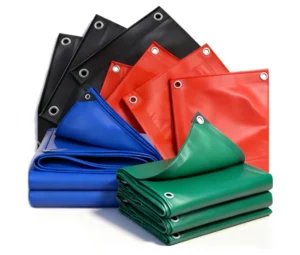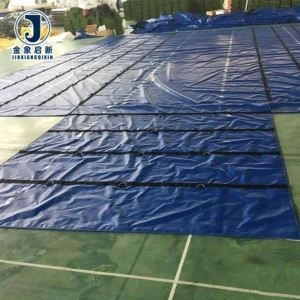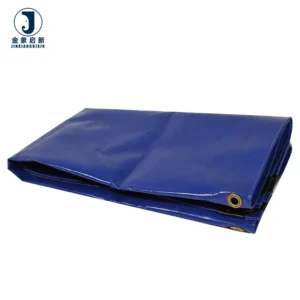

Deep Process Control Over Coating — Every roll of PVC coated tarpaulin produced on our three full lines undergoes in-process weight verification to ensure the stated GSM matches the delivered fabric.
Technical Specifications
| Parameter | Value |
|---|---|
| Product Type | PVC Coated Tarpaulin |
| Weight (GSM) | 700gsm / 850gsm / 900gsm |
| Coating Material | PVC |
| Surface Finish | Custom PVC coated canvas |
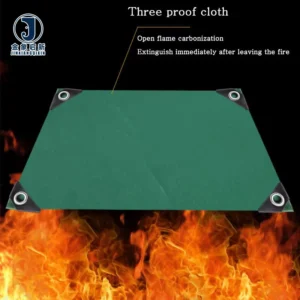
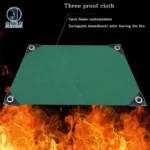
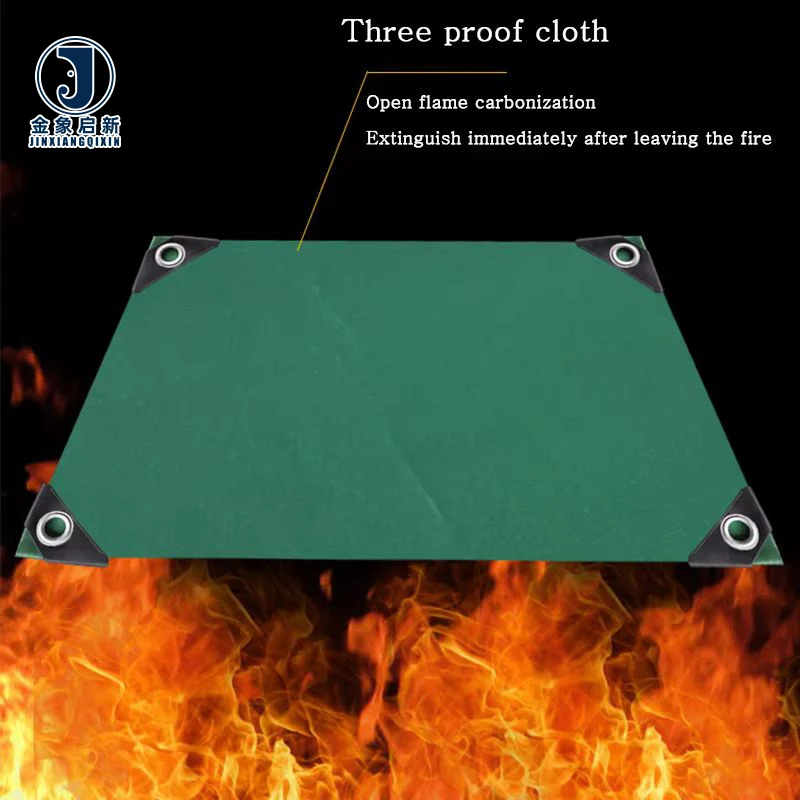
| Flame Retardant | Available (grade to be confirmed against project standard) |
| Anti-Static | Available (surface resistance to be verified against site specification) |
| Anti-Cold | Available |
| Anti-Mildew | Available |
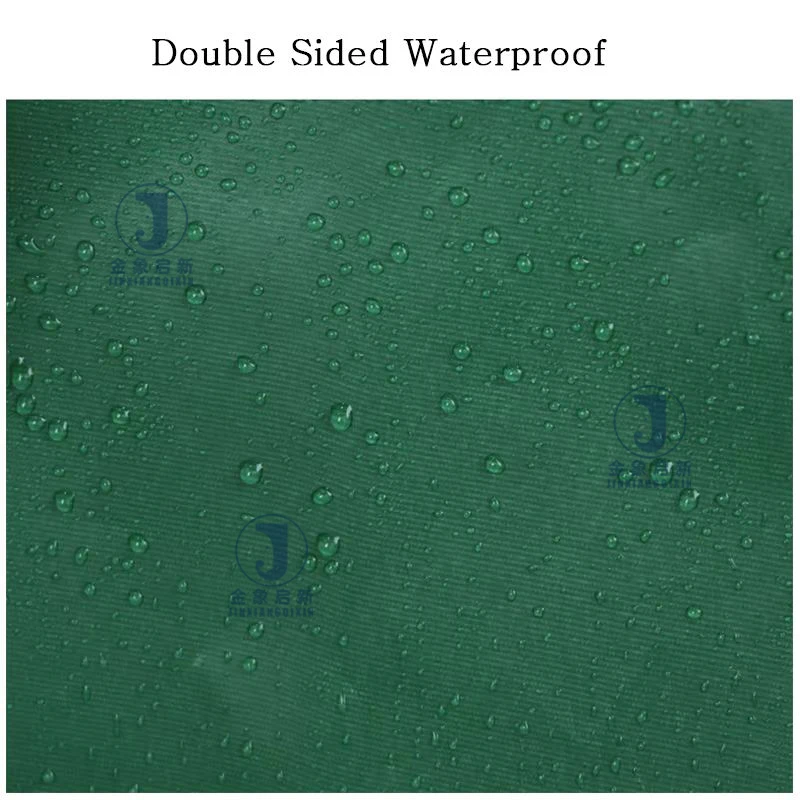
| Waterproof | Fully waterproof coated construction |
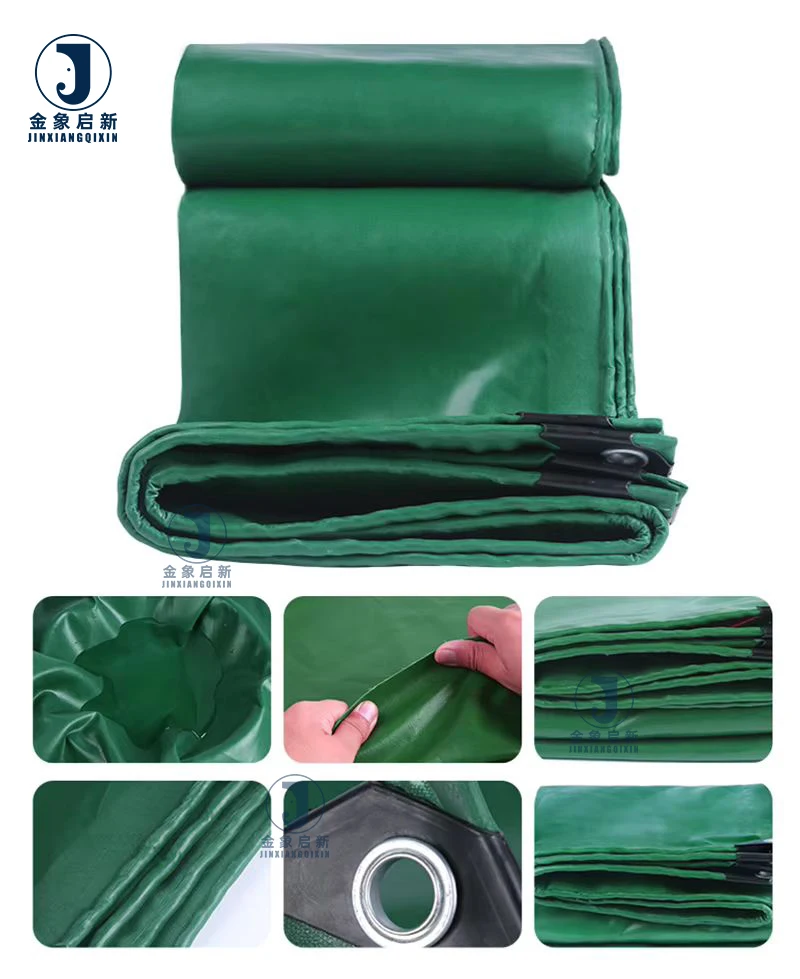
| Form Factor | Roll |
Application Suitability
| Application | Exposure & Requirement |
|---|---|
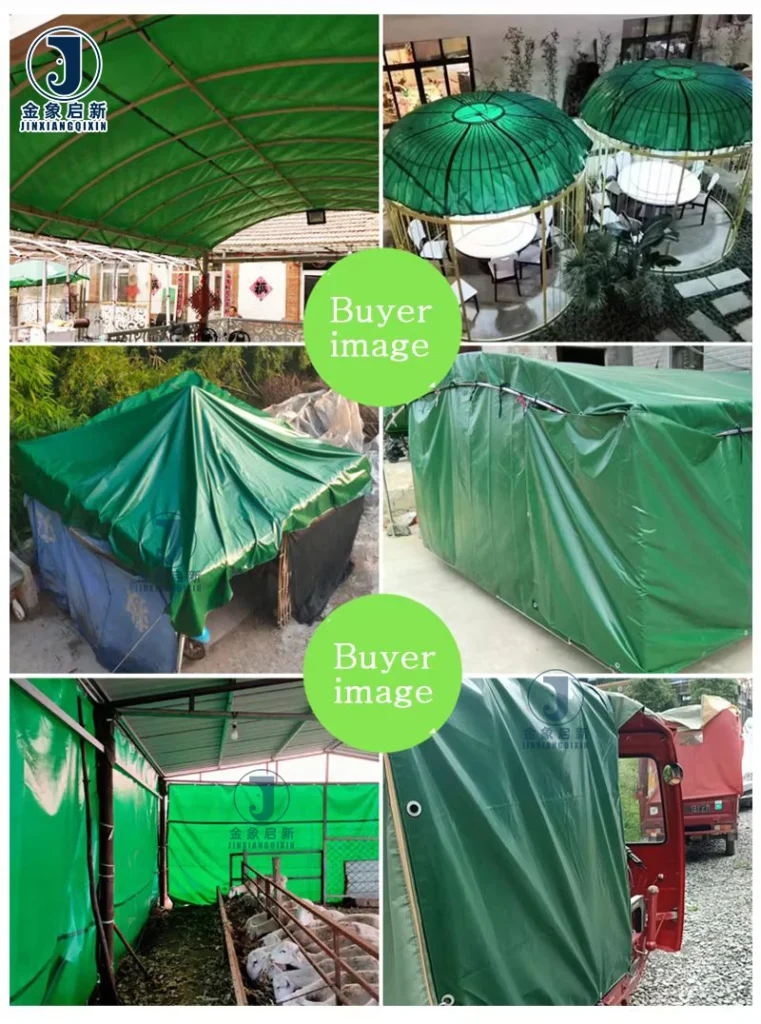
| Mine and tunnelling ventilation ducts | Continuous airflow pressurisation, electrostatic discharge hazard, mandatory fire-retardant compliance |
| Aviation ground support flexible ducts | Fuel vapour proximity, rapid deployment and teardown, temperature fluctuation on tarmac |
| Membrane and inflatable structure fabric | Sustained tension across spans, UV and weather exposure, structural weld integrity |
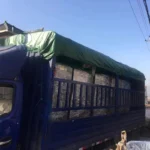
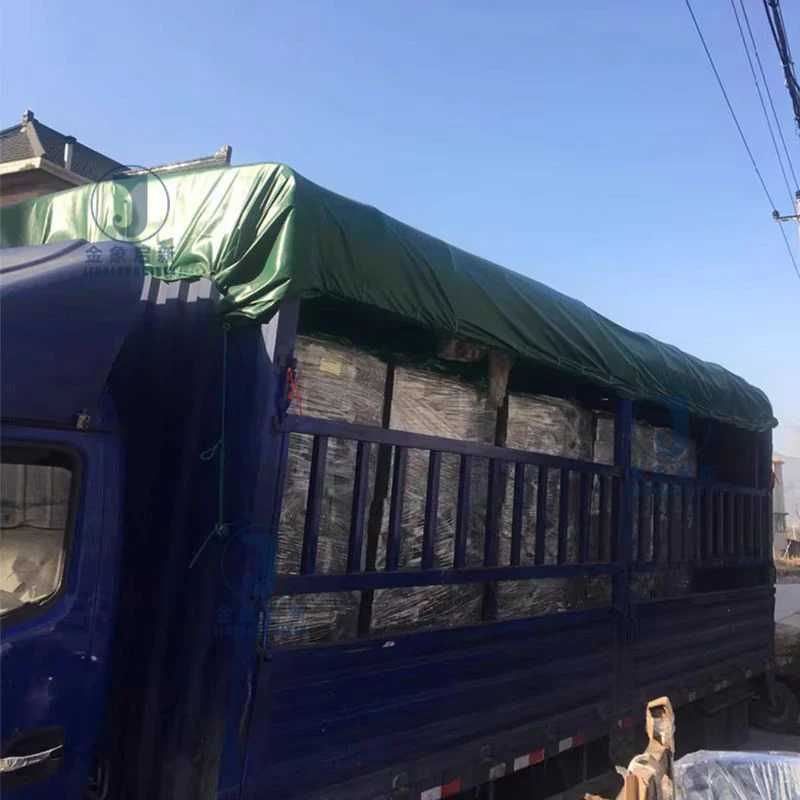
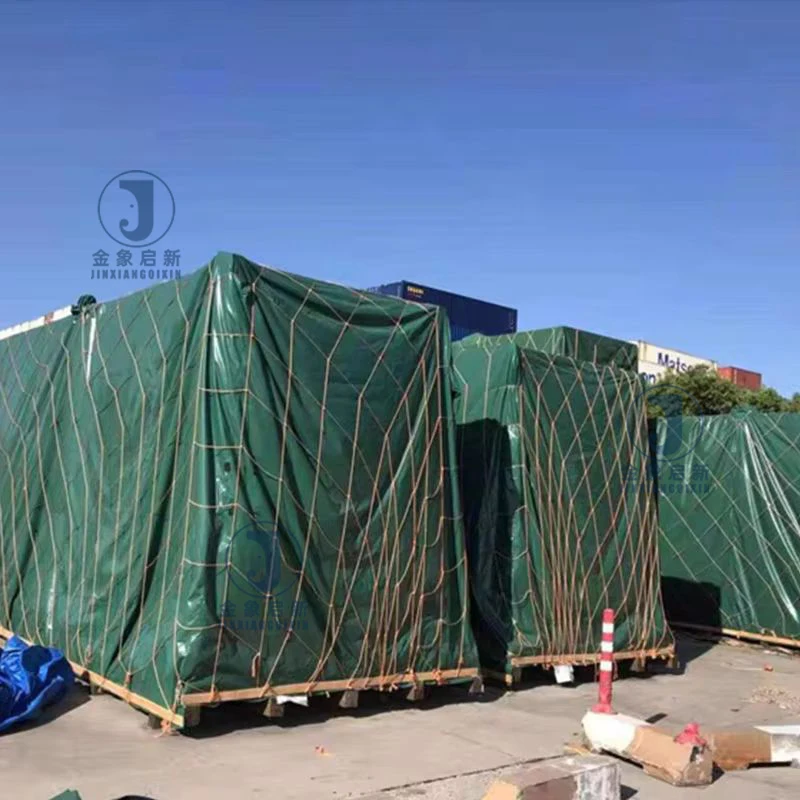
| Industrial truck cargo cover | Road abrasion at flex points, weather during transit, load movement stress |
Why Certification Gaps in Fire-Retardant and Anti-Static PVC Coated Tarpaulin Create Site Risk
A treated fabric without the matching test report is a liability the moment the site inspector asks for documentation.
Mining and tunnelling contractors frequently specify fire-retardant and anti-static PVC coated tarpaulin for ventilation ductwork, only to discover at delivery that the supplier cannot produce a test report aligned with the project standard. The fabric may carry a treatment, but without documented classification per DIN 4102, NFPA 701 or the relevant local mining code, the duct cannot be commissioned [NEED_CITE: fire classification standards for ventilation duct materials in underground mining]. Similarly, anti-static claims without measured surface resistance values leave the contractor exposed in environments where electrostatic discharge near combustible dust or gas is a genuine ignition hazard. The consequence is not a minor paperwork delay — it is a halted installation, a failed inspection, and a replacement order on a compressed timeline.
Matching Weight Grade to Duct Diameter and Pressure Load
Selecting between 700gsm, 850gsm and 900gsm is fundamentally a calculation of duct diameter, internal pressure and handling frequency. Larger-diameter ducts used in mainline mine ventilation operate under higher static pressure and require a heavier base fabric to resist ballooning and seam stress at the joint rings. Smaller auxiliary ducts that are repositioned frequently as the tunnel face advances benefit from the lighter 700gsm grade, which reduces crew fatigue during manual handling. The PVC coated tarpaulin fire retardant treatment must penetrate and bond uniformly across the selected weight, which is why we confirm the treatment compatibility for each grade before production release rather than applying a single formulation across all weights.
Ensuring Anti-Static Compliance in Hazardous Underground Environments
Underground mining and tunnelling sites impose strict limits on surface resistivity for all flexible duct materials to prevent charge accumulation in atmospheres where methane or coal dust may be present [NEED_CITE: electrostatic discharge limits for flexible ventilation ducts in mining]. Our anti-static treatment is applied during the coating stage so that conductivity is distributed through the PVC layer rather than relying on a topical finish that degrades with abrasion. Before production, we work with the buyer to confirm the target surface resistance range required by the site safety specification, then produce a test sample for independent verification. This step is non-negotiable — an anti-static PVC coated tarpaulin that loses conductivity after a few weeks of duct flexing and cleaning is a false safeguard.
How Base Fabric and Coating Weight Interact to Determine Duct Performance
GSM alone does not define the mechanical behaviour of a coated fabric in a pressurised duct application. A 900gsm PVC coated tarpaulin built on a loosely woven, low-denier base fabric may weigh the same as one built on a tightly woven, high-denier base — yet the tear propagation resistance and weld peel strength will differ significantly. The coating method also matters: knife-over-roll coating typically delivers higher adhesion between the PVC film and the base yarns than laminating, which directly affects how well heat-welded seams hold under the cyclic pressurisation and deflation that ventilation ducts experience daily. For membrane structures, the surface finish influences both weldability and long-term dirt retention, making the choice between a glossy and a matte top coat a functional decision, not merely an aesthetic one [NEED_CITE: coating adhesion test methods for PVC coated fabrics per ISO 1421].
The Hidden Cost of Specifying Treated Fabric Without Verified Test Data
When a buyer accepts a flame retardant or anti-static PVC coated tarpaulin based on a quotation claim alone, the risk surfaces at the worst possible moment: site acceptance. A tunnel ventilation inspector who requests the fire classification certificate and receives a generic material safety data sheet instead of a standard-specific test report will reject the entire duct installation. The cost is not limited to replacement fabric — it includes idle crew time, delayed project milestones and reputational damage with the principal contractor [NEED_CITE: consequences of non-compliant ventilation materials in tunnelling projects]. Batch-to-batch inconsistency in treatment concentration can also mean that roll number one passes while roll number twelve fails, a problem that only a 100% pre-shipment inspection with per-roll sampling can catch before the material leaves the factory.
Why Procurement Teams Source This PVC Coated Tarpaulin From Jinxiang
Nearly 30 years of focused coated fabric production gives our process engineers the pattern recognition to anticipate how a new treatment combination — say, flame retardant plus anti-cold — will behave during heat welding, before the first trial roll is made. Three full production lines and 36 sets of professional equipment mean that a mining project ordering multiple container loads of 900gsm duct fabric can receive the entire volume within a single production window, keeping batch consistency tight. Our 10-person R&D team develops sample swatches within days, allowing the buyer’s engineering department to run weld trials and flammability bench tests before committing to full production. A dedicated QA/QC protocol inspects every roll before shipment, with coating weight, treatment uniformity and weld peel strength all recorded on the pre-shipment inspection report.
Documentation & Verification
- Material specification sheet stating exact GSM, base fabric denier, weave density and coating weight for the ordered grade
- Flame retardant test report referencing the specific standard and classification achieved by the production batch
- Anti-static surface resistance measurement report aligned to the site specification range
- Pre-shipment inspection record covering coating adhesion, colour consistency and treatment uniformity per roll
- ISO and CE certificates, certificate of origin and customs documentation included with every dispatch
Fabrication, Handling & Storage
- Heat-weld PVC coated tarpaulin seams at temperatures matched to the selected GSM to prevent base fabric scorch or incomplete bonding
- Store rolls upright on pallets in a dry, shaded area to prevent permanent creasing that weakens the coating at the fold line
- Allow cold-stored rolls to acclimatise before unrolling to avoid cracking the anti-cold treated PVC layer
- Use compatible PVC-based repair adhesive for field patching of duct punctures to maintain treatment continuity at the repair site
- Plan cutting layout to minimise transverse welds in long duct runs, as each joint is a potential flex-failure point
Preparing Your Technical Enquiry
To move from general interest to a firm quotation, share the ventilation duct diameter and operating pressure, or the membrane structure span and design load, so we can recommend the correct weight grade. Specify the fire-retardant standard and anti-static surface resistance range mandated by your site safety code, along with any anti-mildew or anti-cold requirements for the deployment environment. Confirm whether you need roll stock for your own fabrication facility or finished cut-and-welded duct sections, and state the target delivery window so we can align production scheduling.
Frequently Asked Questions
Q: Which flame retardant standard does my mining or tunnelling project require, and how is it verified?
A: The required standard depends on the jurisdiction and the principal contractor’s safety specification — common references include DIN 4102, NFPA 701 or local mining codes. We supply a batch-specific test report from an accredited laboratory stating the classification achieved. Share your project specification at enquiry stage so we confirm the correct test method before production begins.
Q: How is anti-static performance measured on this PVC coated tarpaulin?
A: Anti-static performance is assessed by measuring surface resistance in ohms per square, using a standardised electrode configuration. The acceptable range is set by the site safety specification for the particular underground environment. We produce a sample swatch with the proposed treatment formulation so your laboratory can verify the reading before we release full production.
Q: How do I select between 700gsm, 850gsm and 900gsm for duct versus membrane use?
A: For ventilation ducts, the choice depends on duct diameter and internal static pressure — larger ducts under higher pressure need the heavier base fabric of 900gsm to resist seam stress. For membrane structures, the span and expected wind load drive the selection. We review your engineering parameters and recommend the grade that balances mechanical performance with handling weight.
Q: What anti-cold and anti-mildew treatments are available for underground or extreme climates?
A: Anti-cold treatment modifies the PVC formulation to maintain flexibility at sub-zero temperatures, preventing crack propagation when the duct is handled in freezing conditions. Anti-mildew treatment inhibits fungal growth on the coating surface in humid underground or tropical environments. Both can be combined with flame retardant and anti-static treatments — confirm the combination required at enquiry stage.
Q: How are welded seams tested to hold under duct pressurisation and flex cycles?
A: Weld peel strength is tested by pulling apart a standard-width seam sample and recording the force at failure, ensuring the weld bond exceeds the minimum threshold for the duct’s operating pressure. We also inspect seam integrity during the pre-shipment inspection, checking for incomplete bonding or base fabric damage at the weld line that could propagate under cyclic flexing.