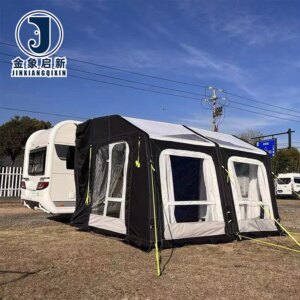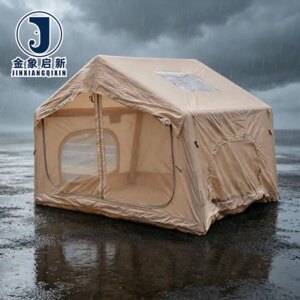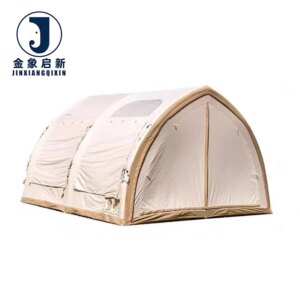

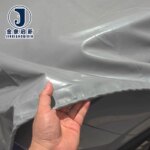

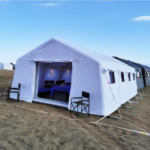
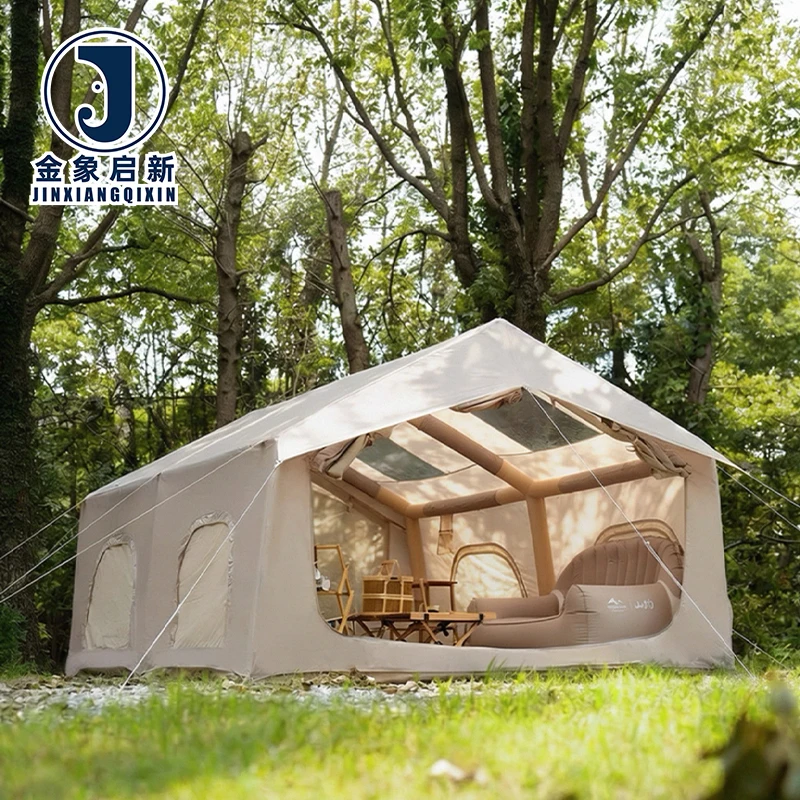
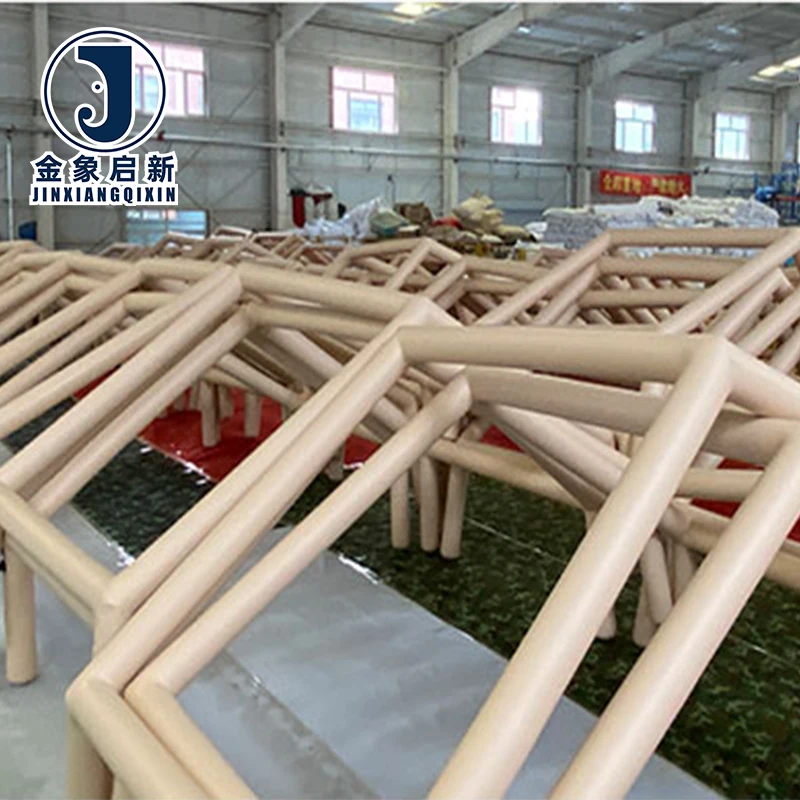
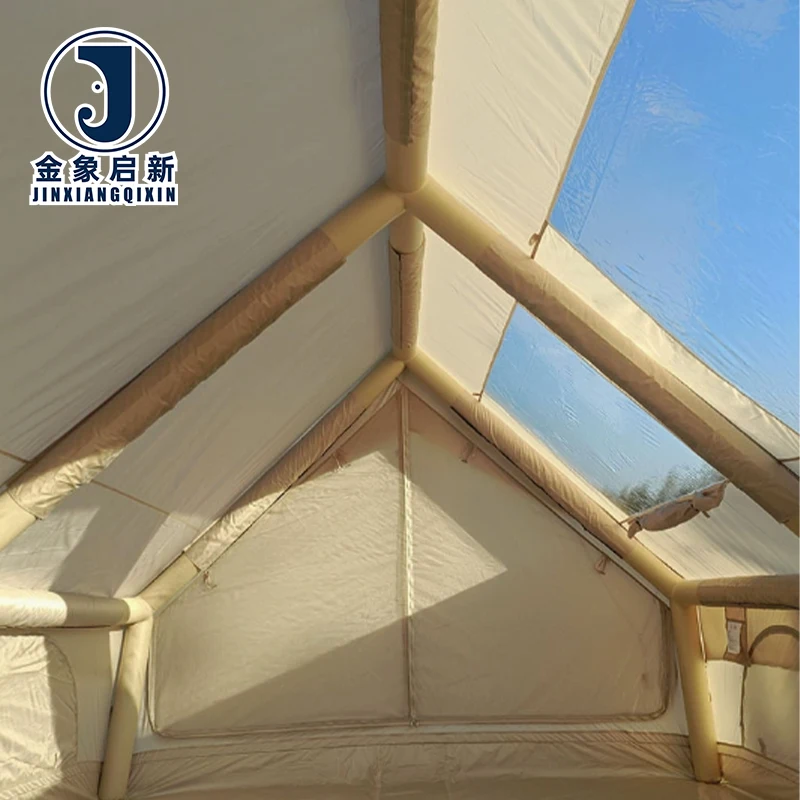
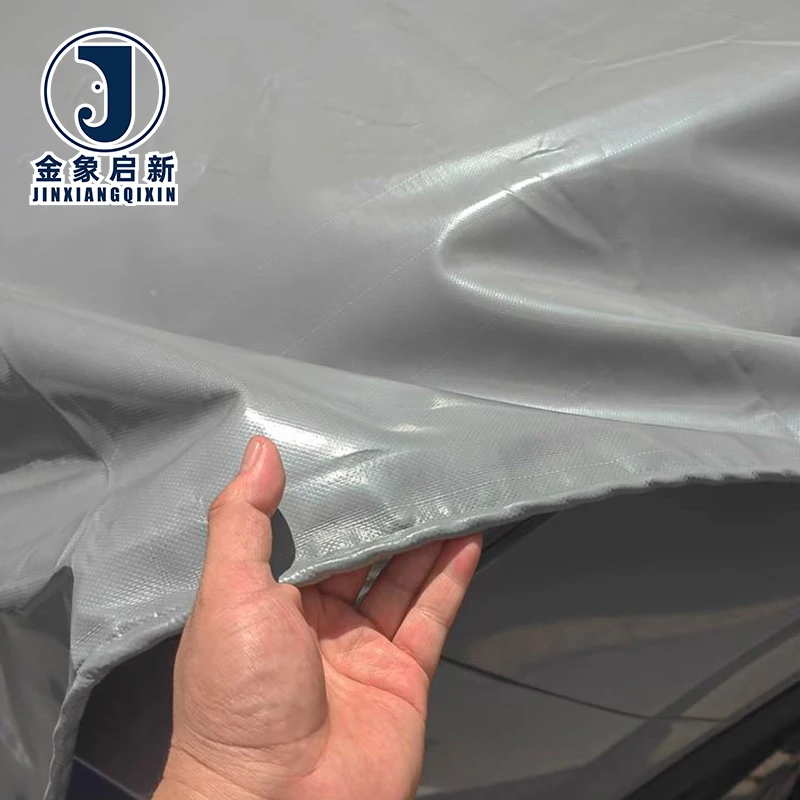

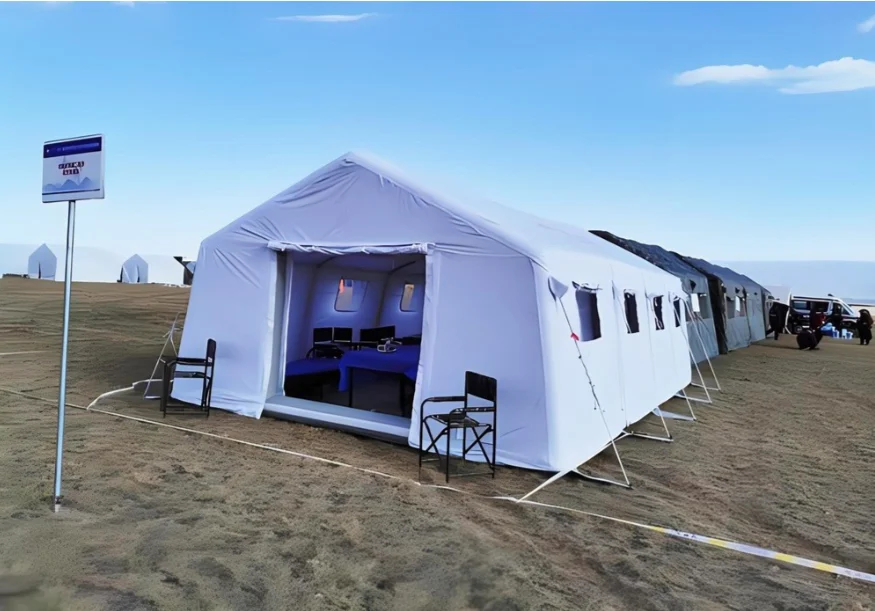
Deep process control over coated fabric — every roll of inflatable tent fabric is tracked through three full production lines to guarantee the fire-retardant and anti-static properties your site audit requires.
Technical Specifications
| Parameter | Value |
|---|---|
| Product Type | Inflatable Tent |
| Core Material | PVC Tarpaulin |
| Construction | Single-layer inflatable structure |
| Waterproof | Yes, precision coating technology |
| UV-resistant | Yes (test basis not stated in source) |
| Tear-resistant | Yes (test standard not stated in source) |
| Flame Retardant | Yes (grade not stated in source) |
| Anti-Static | Yes (surface resistance or standard not stated in source) |
| Customization | OEM & ODM, size adjustments, pattern printing, material thickness modifications |
| Certifications | ISO9001, ISO14001, ISO45001, CE |
Application Suitability
| Application | Exposure & Requirement |
|---|---|
| Mining and tunnelling temporary shelters | Constant dust, confined ventilation zones, strict fire-retardant and anti-static compliance for underground or surface operations |
| Disaster-relief rapid-deployment structures | Unpredictable weather, immediate weatherproof shelter demand, repeated inflation and deflation cycles during relocation |
| Aviation ground-support enclosures | Tarmac fuel vapour exposure, electrostatic discharge control, rapid setup and teardown between service windows |
| Construction site equipment storage | Prolonged UV exposure, wind-driven rain, abrasion from loading and unloading machinery against inner walls |
Why Certifications Matter More Than Claims on Inflatable Tent Fabric
A material data sheet without a test standard is just marketing copy.
Procurement teams sourcing inflatable tent fabric for industrial or emergency deployment frequently receive quotations that state "fire retardant" or "anti-static" without referencing a recognised test method. When the fabric arrives on site, the safety officer asks for the test report and the project stalls. This gap between a verbal claim and a documented grade causes more rejected deliveries than almost any other specification mismatch in the coated fabric sector [NEED_CITE: common causes of coated fabric rejection at industrial sites]. The consequence is not merely a delayed installation — it can halt an entire ventilation or shelter deployment until compliant material is sourced.
Ventilation and Shelter Compliance Starts at the Coating Stage
Fire-retardant treatment must be integrated into the PVC compound before the coating is applied to the base fabric, not sprayed on afterwards. When the treatment is compounded in, the flame-retardant properties survive folding, abrasion, and repeated inflation cycles. Inflatable tent fabric that relies on a topical finish loses its protective rating as the surface wears. For mining and aviation applications where a site inspector will demand continuous compliance, compounded treatment is the only reliable path.
Anti-Static Behaviour in Confined and Fuel-Exposed Zones
Static charge builds rapidly on polymer surfaces in low-humidity environments, particularly inside rapidly inflated structures where air movement is constant. Anti-static treatment reduces surface resistivity, helping to dissipate charge before it reaches discharge levels. For aviation ground-support enclosures and certain mining shelters, this property is a mandatory specification rather than an optional extra. Confirm the surface resistance value your project requires — available in anti-static grades with documented test values upon request.
Reading the Specification Sheet Beyond the Marketing Headline
The single-layer inflatable construction relies on the PVC tarpaulin performing simultaneously as an air-holding membrane and a structural element. Tear resistance is governed by the base fabric denier and weave density, not by coating thickness alone. A heavier coating adds weight and stiffness but does not compensate for a loosely woven base yarn when a puncture begins to propagate. The precision coating technology used here controls coating weight evenly across the fabric width, ensuring that the stated waterproof barrier is consistent from edge to edge rather than thinning at the selvedge [NEED_CITE: relationship between coating uniformity and waterproof integrity in PVC tarpaulin]. Fire-retardant grades are available to match different regulatory frameworks — always confirm the specific test standard your destination market mandates before production begins.
What Happens When the Grade Is Wrong
Fabric that arrives without the fire-retardant grade the project specification demands cannot be used, regardless of how well it performs in other areas. The entire shipment may be quarantined, inflation tests suspended, and the deployment timeline pushed back by weeks. Similarly, if anti-static properties were specified for a fuel-adjacent zone but the delivered material carries no supporting test report, the safety officer has no basis for approval. These failures are almost entirely preventable by locking the grade and test standard into the purchase specification before the production run starts [NEED_CITE: financial impact of specification mismatch in industrial textile procurement].
Why Sourcing Inflatable Tent Fabric Here Reduces Compliance Risk
Three full production lines and 36 sets of processing equipment mean your inflatable tent fabric order is not squeezed into a gap between unrelated product runs — dedicated capacity supports consistent coating parameters batch after batch. The 10-technician R&D team develops custom samples that replicate your exact thickness and treatment requirements before bulk production begins, eliminating guesswork. Full-process QA and QC inspection catches coating-weight deviations and seam-weld weaknesses before the material leaves the factory, not after it arrives at your site. ISO and CE certification documentation travels with every shipment, giving your compliance team the paper trail they need for audit. OEM and ODM capability extends to size adjustments, pattern printing, and material thickness modifications, so the fabric matches your inflatable structure design precisely.
Documentation & Verification
- Material specification sheet confirming PVC tarpaulin grade, coating method, and stated fire-retardant or anti-static treatment level
- Test report referencing the applicable fire-retardant standard, issued per production batch
- Pre-shipment inspection record covering seam weld integrity and inflation-holding validation
- ISO and CE certificates included with each consignment for site audit traceability
- Certificate of origin and customs documentation package prepared per destination country requirements
Fabrication, Handling & Storage
- Heat-weld single-layer inflatable panels using temperature and dwell settings matched to the PVC tarpaulin coating thickness
- Reinforce inflation valve surrounds and structural seams with additional PVC strip overlays before final welding
- Store rolls upright on pallets in a dry, shaded area to prevent creasing that weakens the coated surface
- Allow cold-stored inflatable tent fabric to reach ambient temperature before unrolling to avoid coating micro-cracking
- Clean deployed structures with mild detergent and soft brush — solvent-based cleaners may degrade the PVC coating and fire-retardant treatment
Preparing Your Inflatable Tent Fabric Enquiry
Provide the deployment environment, including whether the structure will operate near fuel, in underground mining zones, or in open disaster-relief settings, so the correct fire-retardant grade and anti-static level can be specified. Confirm the test standard your destination market or site authority requires. State the dimensions of each inflatable panel, the quantity of units per order, and whether you need rolls for your own fabrication or fully welded finished structures.
Frequently Asked Questions
Q: What fire-retardant grade does the inflatable tent fabric carry and which test standard applies?
A: The fabric is available in fire-retardant grades suited to industrial and emergency deployment. The specific grade and corresponding test standard depend on your destination market and site requirements. Confirm the standard your project mandates — such as a national building material classification or mining safety regulation — and the grade will be documented on the material specification sheet and test report before production begins.
Q: Is anti-static certification available and what surface resistance value is guaranteed?
A: Anti-static treatment is available for environments requiring electrostatic discharge control, such as aviation ground-support and certain mining shelters. The guaranteed surface resistance value is confirmed during the specification stage and recorded on the batch test report. Provide your required value or the applicable standard so the R&D team can formulate the coating compound accordingly.
Q: How is seam weld integrity validated for inflatable structures before shipment?
A: Every welded seam on the inflatable structure undergoes visual inspection and an inflation-holding test during the pre-shipment QA/QC stage. Inspectors check for coating delamination, incomplete fusion, and air leakage at valve surrounds and panel joints. Any unit that does not hold pressure to the specified threshold is rejected before packing, ensuring only compliant structures reach your site.
Q: What OEM and ODM options exist for custom size, pattern printing, and material thickness?
A: The 10-technician R&D team develops samples reflecting your exact dimensional requirements, material thickness, and any printed branding or identification markings. Pattern printing is applied using methods compatible with the PVC coating to maintain fire-retardant and anti-static properties. Once you approve the sample, bulk production replicates those parameters across the full order with batch-level consistency.
Q: How does the factory ensure batch-to-batch consistency across a multi-unit inflatable order?
A: Three full production lines run under controlled coating parameters monitored at each stage by dedicated QA and QC staff. Coating weight, fire-retardant compound ratio, and anti-static additive levels are verified against the approved sample specification. A batch-specific quality report accompanies every shipment, documenting the test values for each production run so you can trace performance back to the exact line and shift.