

Proven Coating Process Control — Nearly 30 years focused on polyethylene and coated fabric production, with dedicated QA at every stage from extrusion to final roll inspection for industrial and technical applications.
Technical Specifications
| Parameter | Value |
|---|---|
| Product Type | PE Tarpaulin |
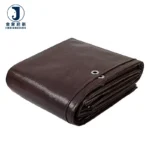
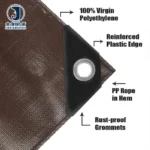
| Material | Polyethylene (PE) woven base with PE coating |
| Weight Range | 40g~500g/m² (grade selected to application) |
| Thickness (Lightweight) | 0.18–0.22 mm |
| Thickness (Medium) | 0.22–0.28 mm |
| Thickness (Heavy-duty) | 0.30–0.35 mm |
| Mesh Density (Lightweight) | 8×8 |
| Mesh Density (Medium) | 10×10 |
| Mesh Density (Heavy-duty) | 12×12 |
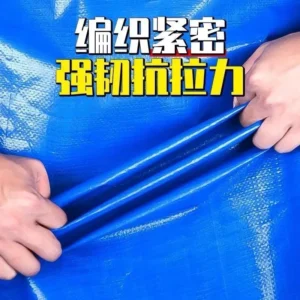
| Tensile Strength (Lightweight) | Meridian 300–500 / Latitude 250–450 N/5cm |
| Tensile Strength (Medium) | Meridian 500–800 / Latitude 400–700 N/5cm |
| Tensile Strength (Heavy-duty) | Meridian 900–1200 / Latitude 700–1000 N/5cm |
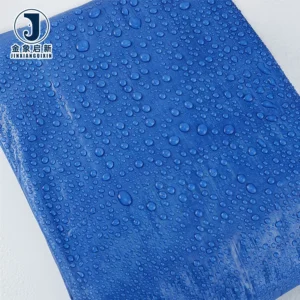
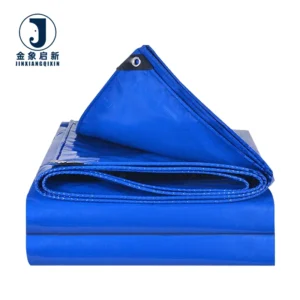
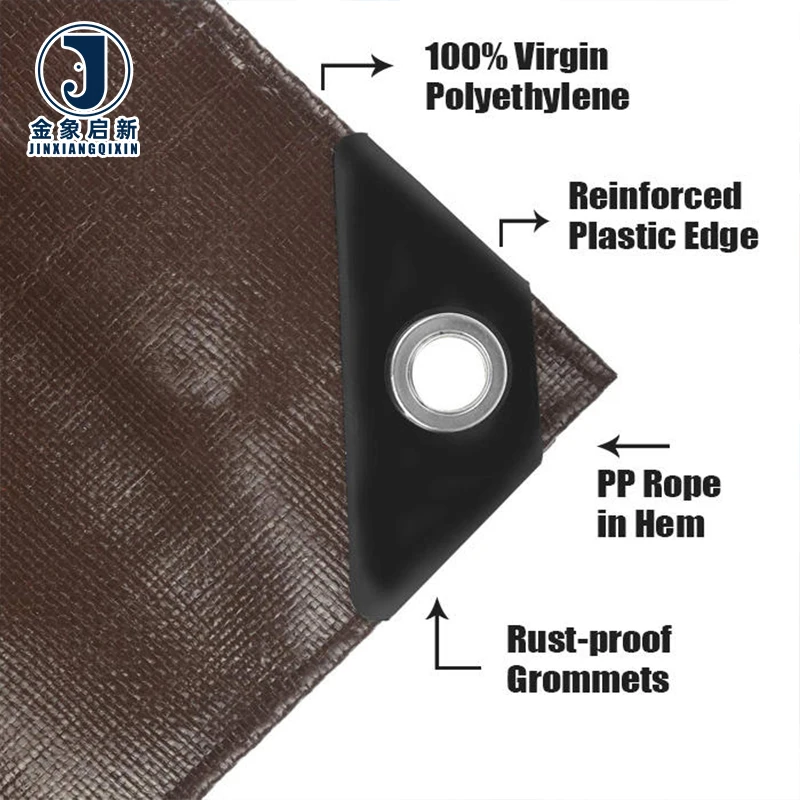
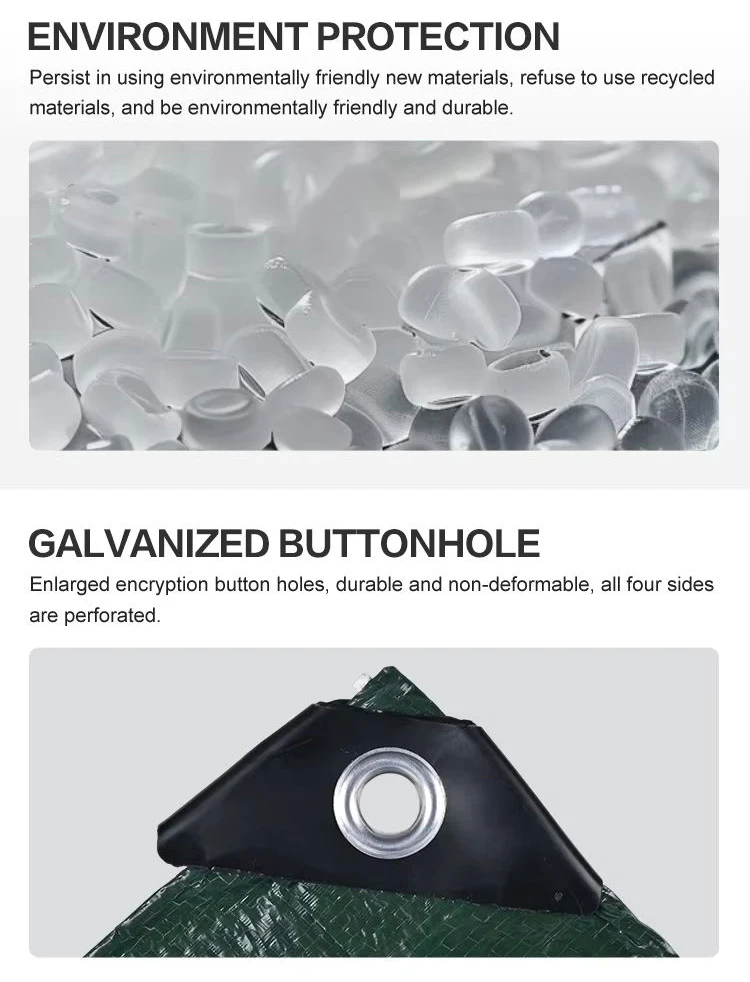
| Water Resistance | Double waterproof surfaces, reinforced corners |
| UV Treatment | Available — confirm grade required for your market |
| Additional Properties | Mildew proof, anti-aging, sunproof |
| Size | Custom size |
| Color | Custom color |
| Certifications | ISO, CE |
Application Suitability
| Application | Exposure & Requirement |
|---|---|
| Mining and tunnelling ventilation ducting | Continuous airflow, dust and moisture ingress, fire-retardant or anti-static compliance required on site |
| Specialist membrane and inflatable structures | Tensile loading under inflation pressure, UV exposure on exterior faces, welded seam integrity under flex |
| Aviation and construction ventilation | Certified duct material for temporary or semi-permanent air handling, flame-retardant grades where building codes apply |
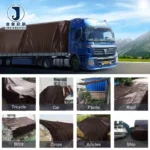
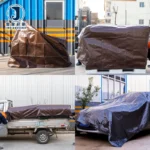
| Industrial site equipment and stockpile covers | Prolonged outdoor weathering, wind uplift on large spans, abrasion from contact with machinery or aggregate |
| Agricultural and aquaculture pond liners | Permanent water contact, soil chemistry, puncture risk from substrate |
What PE Tarpaulin Ventilation Duct Applications Demand Beyond Basic Coverage
A ventilation duct is not a truck cover — the fabric must carry certification, not just weight.
Contractors on mining, tunnelling and aviation projects routinely specify PE tarpaulin for ducting because of its balance of weight, flexibility and cost. The problem arises when material arrives on site without the fire-retardant or anti-static documentation the safety officer requires before installation can begin. A project halted at the ventilation stage burns through schedule and budget while the procurement team scrambles for test reports that should have accompanied the shipment. [NEED_CITE: fire classification standards for temporary ventilation ducts in mining]
I have reviewed site rejection records where the duct fabric itself was adequate in weight and tensile performance, but the absence of a traceable test certificate meant the entire installed run had to be removed. The fabric cost was minor compared to the downtime. Specifying PE tarpaulin ventilation duct material starts with the compliance requirement, not the GSM.
Matching the Grade to the Duct or Structure Requirement
Selecting the right PE tarpaulin specialist application grade means aligning mesh density, thickness and tensile data with the mechanical and regulatory demands of the installation. A lightweight 8×8 mesh at 0.18–0.22 mm thickness suits temporary agricultural covers or short-term stockpile protection where wind loading is moderate. For ventilation ducting that must sustain internal pressure and resist tearing at hanging points, the heavy-duty 12×12 construction at 0.30–0.35 mm provides the meridian and latitude tensile values needed to hold eyelet and clamp loads without progressive tear.
Why Test Documentation Determines Project Acceptance
On a regulated site, the safety inspector does not weigh the fabric — they read the paperwork. UV treatment and flame-retardant formulations are available across the PE tarpaulin range, but each must be backed by a test report matched to the grade shipped. When a mining contractor specifies anti-static duct, the certificate must reference the specific production batch. Generic declarations covering a product family are not accepted at pre-installation audit. Requesting documentation before placing the production order avoids the situation where rolls are on the water and the compliance gap is discovered at customs or site receiving. [NEED_CITE: batch-specific test documentation for coated fabric in regulated industries]
Reading the Specification Sheet Beyond the GSM Number
Weight per square metre is the most quoted figure in PE tarpaulin procurement, yet it tells only part of the story. A 200 g/m² fabric at 8×8 mesh and one at 12×12 mesh distribute that weight very differently — the denser weave concentrates more yarn in the load-bearing directions, yielding higher meridian and latitude tensile values even at the same nominal weight. Thickness, measured across the coating and base fabric combined, correlates more directly with puncture resistance and abrasion life than GSM alone. Coating adhesion to the woven base determines whether the waterproof surface survives repeated flexing at duct hanging points or structure folds. Double waterproof surfaces with reinforced corners address the most common failure initiation sites, but the reinforcement only performs if the underlying base fabric has sufficient tear strength to prevent a localised nick from propagating into a full-width split.
The Cost of Underspecifying for Technical Applications
When a PE tarpaulin ventilation duct is specified by price rather than performance, the failure pattern is predictable. A lightweight grade used in a high-pressure duct will stretch at the hanging clamps, thinning the coating until moisture penetrates and the base fabric begins to degrade from the inside. Welded seams on underspecified material tend to fail before the field fabric does, because the heat-affected zone has less reserve strength. On membrane structures, a colour mismatch between rolls installed side by side is visible from the first day and cannot be corrected without full replacement. [NEED_CITE: weld seam failure mechanisms in coated polyethylene fabrics] These are not material defects — they are specification errors that a clear technical dialogue before ordering would have prevented.
Sourcing PE Tarpaulin for Technical Projects
Three full production lines and 36 sets of professional equipment provide the capacity to run large ventilation duct or membrane structure orders within typical multi-week lead times. A 10-person R&D team develops custom samples within days when your project calls for a specific colour, width or treatment combination not held in stock grades. Dedicated QA and QC checkpoints at each production stage — base weaving, coating, finishing, slitting and packing — catch GSM drift, colour deviation and coating adhesion issues before the roll leaves the factory. Pre-shipment inspection covers every roll in the order, not a statistical sample, so the documentation you receive reflects the actual material on the container. Custom widths and specialist treatments carry lower minimums than many coated fabric suppliers require, which matters when a tunnelling project needs a specific duct diameter that does not match standard stock roll dimensions.
Documentation & Verification
- Material specification sheet stating GSM, base fabric mesh count and coating type for each roll
- Test report for UV treatment or flame-retardant grade where applicable, matched to production batch
- ISO and CE certificates covering the manufacturing facility and product scope
- Pre-shipment inspection record with per-roll weight and visual check results
- Roll packing list with individual roll weight, length and colour reference for receiving verification
- Certificate of origin and customs documentation for international shipment clearance
Fabrication, Handling & Storage
- Heat-weld parameters should be adjusted to the specific thickness grade — 0.30–0.35 mm heavy-duty requires higher dwell time than 0.18 mm lightweight
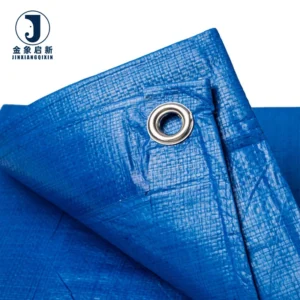
- Reinforced corners must align with the highest-load eyelet positions to prevent tear propagation under wind uplift or duct hanging loads
- Store rolls upright on pallets to avoid flat-spot creasing that becomes visible when the PE tarpaulin is tensioned on site
- Allow cold-stored rolls to reach ambient temperature before unrolling to prevent coating micro-cracking on heavy-duty grades
- Use mild detergent for cleaning — solvent-based cleaners can degrade the UV treatment layer on extended-exposure applications
- Plan cutting layout to minimise off-cut waste, especially on custom-width rolls ordered for membrane or inflatable structure panels
How to Frame Your Enquiry
When requesting a quotation for PE tarpaulin ventilation duct or specialist application fabric, include the operating environment, the compliance standards your site requires and the dimensions of the finished duct or structure. Specify whether you need supply in roll form for your own fabrication, or finished panels with welded seams and eyelets. If colour consistency across multiple rolls is critical — as it is for membrane structures visible from the exterior — state the RAL or Pantone reference and request a pre-production sample for approval before the full run enters coating.
Frequently Asked Questions
Q: How is GSM verified on arrival and what documentation accompanies shipment?
A: Each roll is weighed and measured during pre-shipment inspection, and the result is recorded on the inspection report shipped with the container. The material specification sheet states the target GSM, base fabric mesh and coating weight. On arrival, you can cross-check any roll against these documents. If a discrepancy is found, the inspection record provides the baseline for a claim.
Q: What fire-retardant or anti-static certifications are available for ventilation duct applications?
A: Flame-retardant and anti-static treatments are available — the specific grade must be confirmed against the compliance standard your site or jurisdiction requires. Test reports are issued per production batch, not as generic product family declarations. Provide the standard reference in your enquiry so the correct formulation and documentation are matched to your order.
Q: How are tensile and tear strength values tested and reported?
A: Tensile strength figures are reported in N/5cm for both meridian and latitude directions, across lightweight, medium and heavy-duty grades. Test methods follow recognised coated fabric standards. Request the specific test report with your sample or pre-production documentation to verify values against your engineering requirement before committing to full production.
Q: How do you ensure batch consistency across rolls for large technical fabric orders?
A: Colour and coating weight are monitored at each production stage by the QA team. For orders spanning multiple rolls, in-process checks catch drift before the roll is wound. The pre-shipment inspection covers every roll individually. If your application places rolls side by side — membrane structures, for example — request a pre-production sample and state the acceptable colour tolerance in your purchase specification.