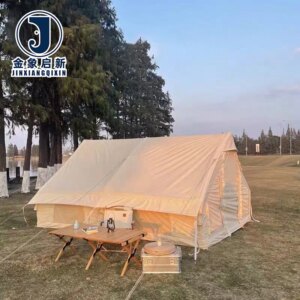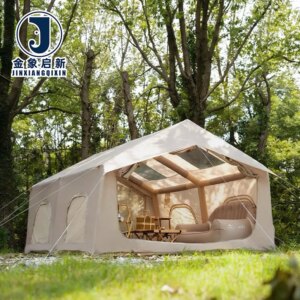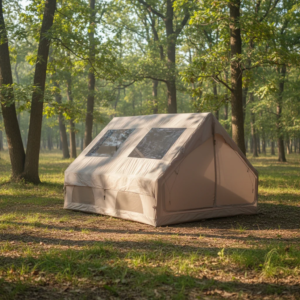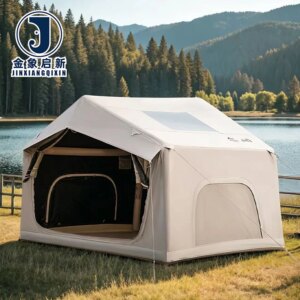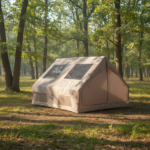

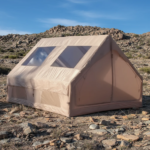

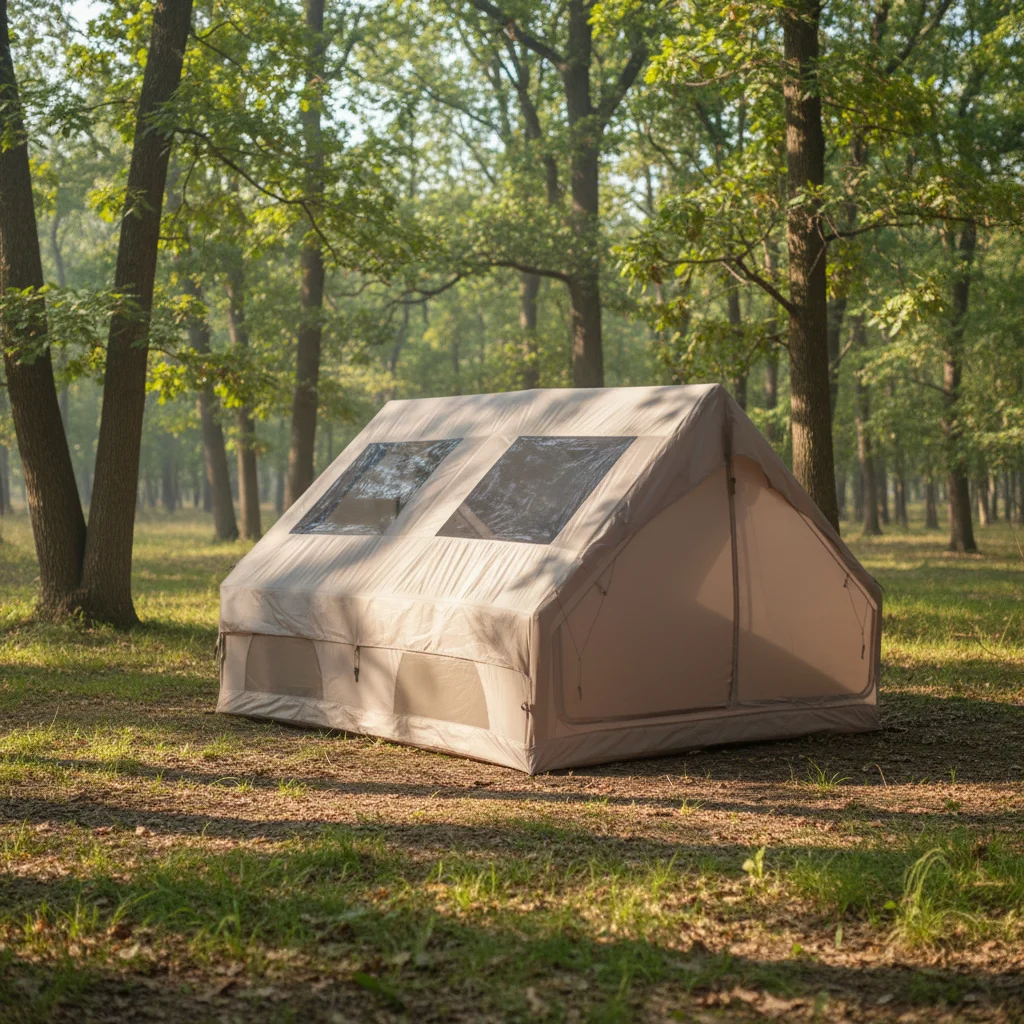
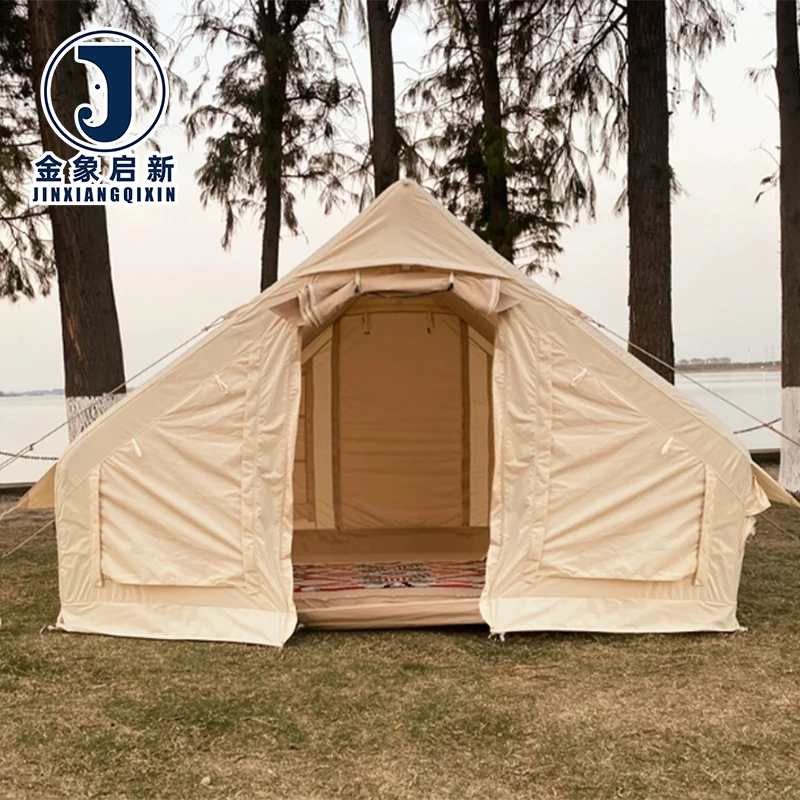
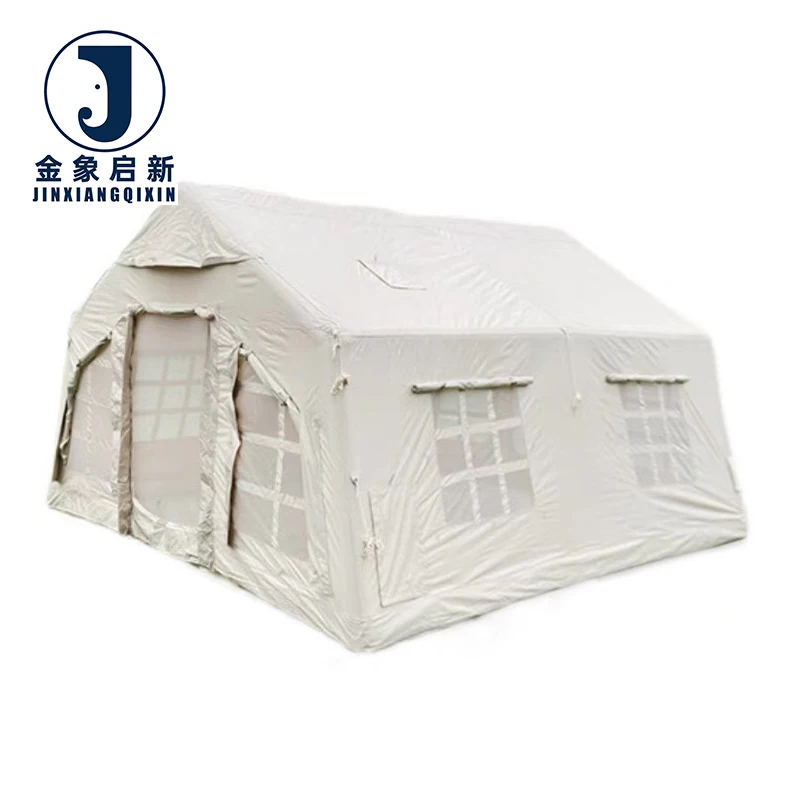
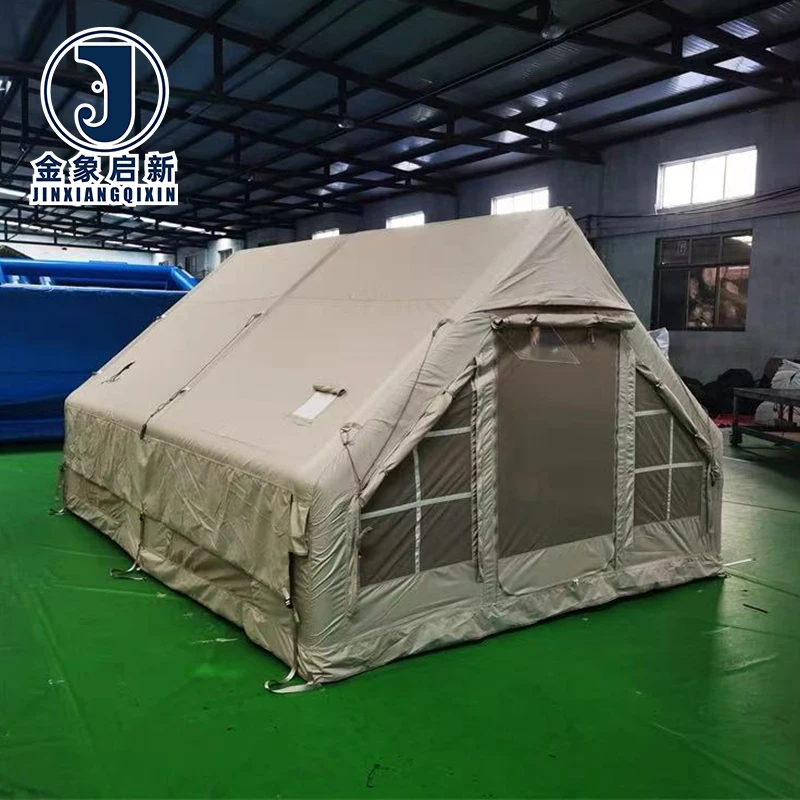
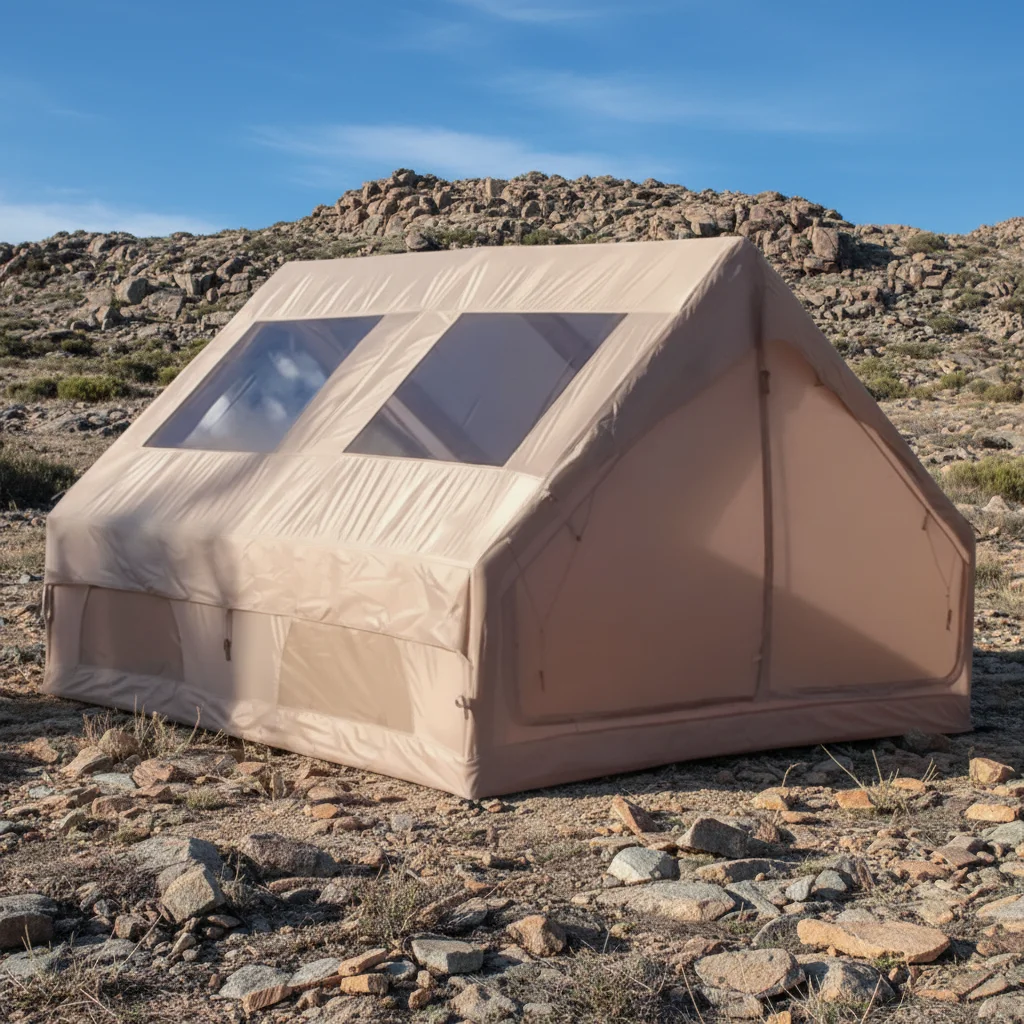

Near 30-Year Material Focus — three dedicated coating lines maintain repeatable thickness and adhesion control across every PVC inflatable tent roll we produce for emergency and industrial shelter projects.
Technical Specifications
| Parameter | Value |
|---|---|
| Product Type | Inflatable Tent |
| Core Material | PVC Tarpaulin |
| Capacity Range | 2–8 Person |
| Design Configuration | Four-Season, Quick Automatic Opening, Single Layer |
| Waterproof Performance | Waterproof (test basis not stated in source) |
| Windproof Performance | Windproof (test basis not stated in source) |
| UV Resistance | UV-resistant (test basis not stated in source) |
| Tear Resistance | Tear-resistant (test basis not stated in source) |
| Customization | OEM & ODM — material selection, product design, sizing |
| Quality System | Full-process inspection, dedicated QA & QC staff |
| Certifications | ISO 9001, ISO 14001, ISO 45001, CE |
Application Suitability
| Application | Exposure & Requirement |
|---|---|
| Disaster response emergency relief stations | Rapid deployment under uncontrolled weather; fabric must resist driving rain, wind gusts and repeated inflation cycles without seam failure |
| Construction site temporary storage shelters | Prolonged UV exposure, dust ingress, abrasive handling by site crews; single-layer portability required for frequent relocation |
| Infrastructure project mobile command centers | Continuous occupation in exposed environments; windproof and waterproof integrity maintained across seasonal temperature swings |
| Industrial logistics coordination hubs | High-frequency setup and teardown; tear-resistant fabric withstands tensioning, staking and transport abrasion at remote locations |
Why Inflatable Tent Fire Retardant Certification Decides Whether Your Shelter Passes Site Inspection
A fire-retardant claim without a documented grade is a compliance gap that shuts down your operation the moment an inspector arrives.
Procurement teams sourcing inflatable tents for mining camps, tunneling portals or aviation ground-support zones routinely discover that the fire-retardant language on a quotation does not match any recognised test standard. The tent arrives, the site safety officer requests a certificate, and the supplier produces a generic material safety sheet that references no classification. The shelter is barred from use until compliant documentation surfaces — a delay that compounds daily when crews have no command post and equipment sits exposed. We see this pattern repeat across infrastructure corridors where multiple contractors share a site and each must satisfy the principal contractor’s fire-safety matrix [NEED_CITE: fire classification standards for temporary industrial shelters].
How PVC Tarpaulin Coating Weight Shapes Shelter Performance in the Field
The PVC tarpaulin used in this inflatable tent range provides the structural membrane that holds inflation pressure and transfers wind load to the anchor points. Coating weight and base-fabric denier together determine how much tension the membrane can carry before the weave distorts. Heavier coating fills the interstices of the base fabric more completely, reducing air permeability and improving the airtight envelope that keeps the inflatable frame rigid. When coating weight falls below what the base fabric demands, micro-gaps remain between yarns, allowing slow pressure bleed that forces the blower to run continuously — a condition that accelerates motor wear and increases fuel consumption on generator-powered sites.
What Four-Season PVC Formulation Means for Year-Round Deployment
Four-season designation indicates that the PVC compound retains flexibility at low ambient temperatures while resisting softening and tackiness under direct summer sun. Standard PVC tarpaulin stiffens below freezing, making the inflatable tent difficult to unpack, unfold and inflate without cracking the coating at fold lines. A four-season formulation incorporates plasticiser systems that lower the glass-transition point, so the membrane can be deployed on frozen ground or in sub-zero staging areas without white-line fractures appearing along crease marks. In hot climates the same formulation prevents the surface from becoming tacky, which would otherwise attract dust and grit that abrade the coating during repeated handling [NEED_CITE: PVC plasticiser migration and low-temperature flexibility in coated fabrics].
Reading the Specification Sheet Beyond the Headline GSM
Coating weight expressed in GSM tells you how much PVC sits on the base fabric, but it does not isolate the contribution of the yarn denier or the weave density. Two inflatable tent membranes can share the same total GSM yet perform very differently: one may use a lighter base fabric with a thicker coating, gaining stiffness but losing tear propagation resistance; the other may use a heavier base with a thinner coat, gaining tear strength but sacrificing airtightness. For inflatable structures, airtightness and tear strength must both be adequate — neither compensates for the other. Buyers should therefore request the base fabric specification alongside the total GSM and verify that the coating method (knife-over-roll, dip or calender) matches the airtightness and weld-strength requirements of the inflatable frame design. Glossy or matte surface finish further influences how well printed markings adhere and how easily field grime releases during cleaning — a factor that matters when shelters cycle through muddy staging areas.
The Cost of Specifying the Wrong Inflatable Tent Grade for Your Site
When the PVC tarpaulin grade is too light for the wind load at a given site, the inflatable frame deflects excessively, stressing welded seams until they delaminate — and the failure almost always occurs at the point the structure flexes most, not across the body of the fabric. We have observed heavy-grade coated rolls fail at the weld line when the welding temperature was set for a lighter membrane, leaving the seam weaker than the parent material [NEED_CITE: hot-air welding parameters matched to PVC coating thickness]. Colour variation between rolls in the same order becomes visible once multiple shelters are erected side by side at a relief camp, undermining the professional image of the operating agency and triggering disputes over acceptance. Anti-UV or flame-retardant treatments claimed without a batch-specific test result leave the buyer exposed when a third-party inspector samples the material on arrival.
Why Procurement Teams Source This Inflatable Tent Range Through Jinxiang Tech
Nearly three decades of coated-fabric production give our process engineers the pattern recognition to adjust coating weight and oven temperature in real time, holding adhesion within tolerance across long production runs. Three full production lines and 36 sets of professional equipment support the volume spikes that emergency-relief tenders demand without sacrificing on-time dispatch. A 10-person R&D team handles material selection, sizing adjustments and sample development so that OEM and ODM requirements are prototyped and approved before bulk commitment. Dedicated QA and QC staff inspect every roll at coating, laminating, slitting and packing stages, ensuring that the inflatable tent membrane leaving our gate matches the specification you signed off. Full-process inspection records travel with each shipment, giving your receiving team a traceable quality narrative from resin lot to finished roll.
Documentation & Verification
- Material specification sheet stating PVC tarpaulin GSM, base fabric denier and weave count for the exact batch supplied
- Batch-specific test report for waterproof, windproof and UV-resistant claims, referenced to your purchase order number
- ISO 9001, ISO 14001, ISO 45001 and CE certificates current at date of manufacture, covering inflatable tent product category
- Pre-shipment inspection record confirming roll count, coating weight verification and visual defect screening
- Fire-retardant classification report when applicable, aligned to the standard required by your project specification
Fabrication, Handling & Storage
- Hot-air weld temperature must match the PVC tarpaulin coating weight to prevent seam delamination under inflation pressure
- Single-layer construction reduces folded volume but requires even tension distribution across all anchor points during erection
- Store rolls upright on pallets in shaded, ventilated areas to prevent compression flat-spotting on the PVC coating surface
- Avoid dragging the membrane over abrasive ground during deployment; use a groundsheet beneath the inflatable tent floor zone
- Clean with mild detergent and soft brush; solvent-based cleaners may extract plasticiser from the four-season PVC compound
- Field puncture repairs require compatible PVC adhesive and patch material matched to the membrane coating weight
What We Need to Prepare Your Quotation
Share the deployment environment — climate zone, typical wind speed range and ground conditions — so we can recommend the PVC tarpaulin grade that balances portability with structural rigidity. Confirm the fire-retardant or safety classification your site authority requires, and we will align the material formulation and test documentation accordingly. Advise whether you need finished inflatable tent units or roll stock for your own fabrication line, along with target dimensions and annual volume, so we can structure production runs that maintain batch consistency across your programme.
Frequently Asked Questions
Q: How are waterproof and windproof performance claims verified for each production batch?
A: Each batch undergoes in-process inspection by our dedicated QA and QC staff, and we issue a batch-specific test report referenced to your order number. The report documents the test method used so your receiving team can cross-check performance against the conditions your inflatable tent will face in the field.
Q: What fire-retardant certifications apply to inflatable tents for industrial use?
A: Fire-retardant grades are available — confirm the grade required for your market, such as B1, M2 or NFPA 701, and we will supply the matching PVC tarpaulin formulation with a classification report. This ensures your inflatable tent passes site safety inspection without documentation delays.
Q: What OEM and ODM customization options can I specify?
A: We support material selection, dimensional adjustment and design modifications through our 10-person R&D team. Samples are developed within days so you can evaluate coating weight, colour and structural layout before authorising full production of your custom inflatable tent order.
Q: How does the quality control process maintain consistency across multiple rolls?
A: Full-process inspection covers coating weight, adhesion, colour uniformity and visual defects at every stage from base fabric intake to final packing. Each roll is checked against the specification sheet, and the inspection record ships with your consignment for full traceability.
Q: What documentation supports regulatory compliance on the project site?
A: We provide a material specification sheet, batch test reports, current ISO 9001, ISO 14001, ISO 45001 and CE certificates, plus a pre-shipment inspection record. Where fire-retardant classification is required, the corresponding test report is included so your inflatable tent clears site acceptance without hold-ups.