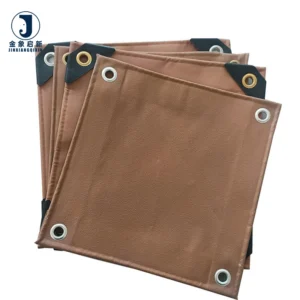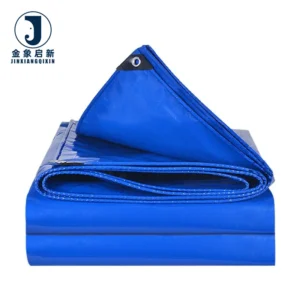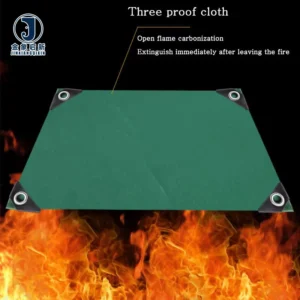
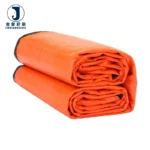
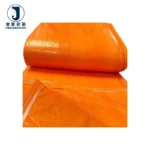
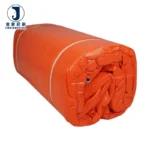

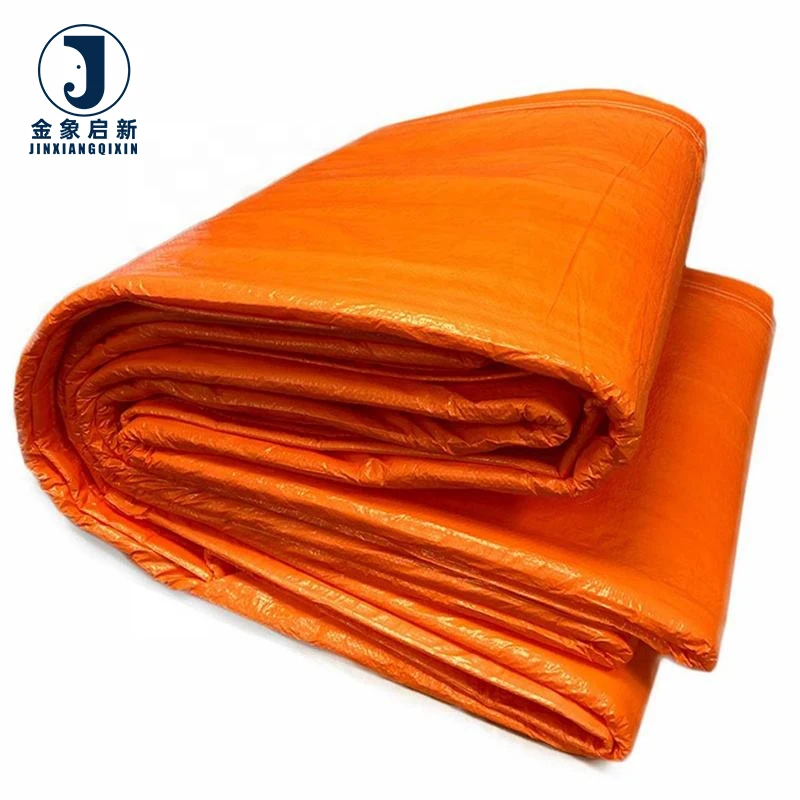
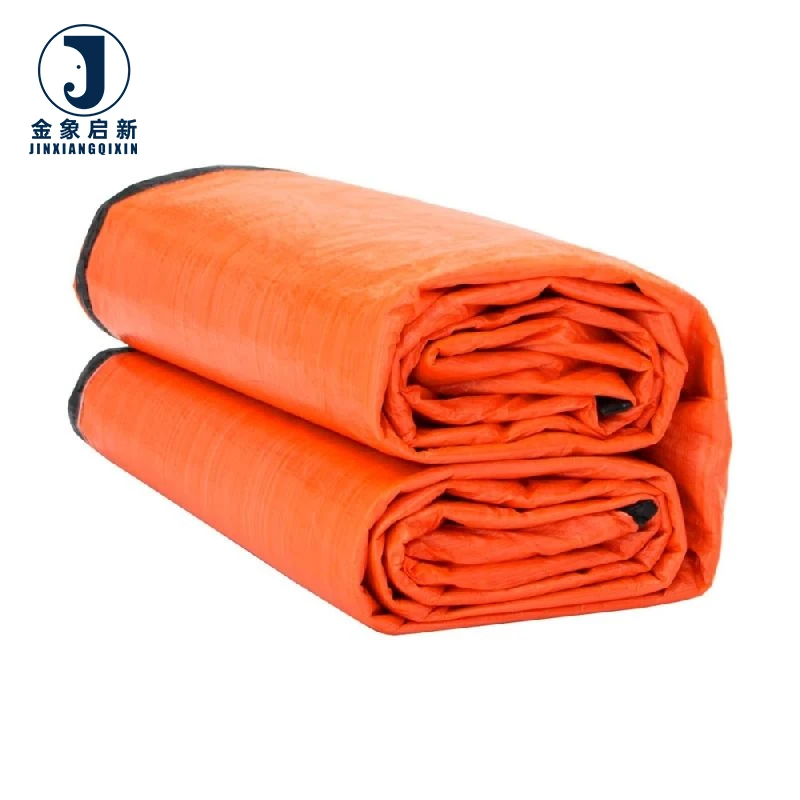
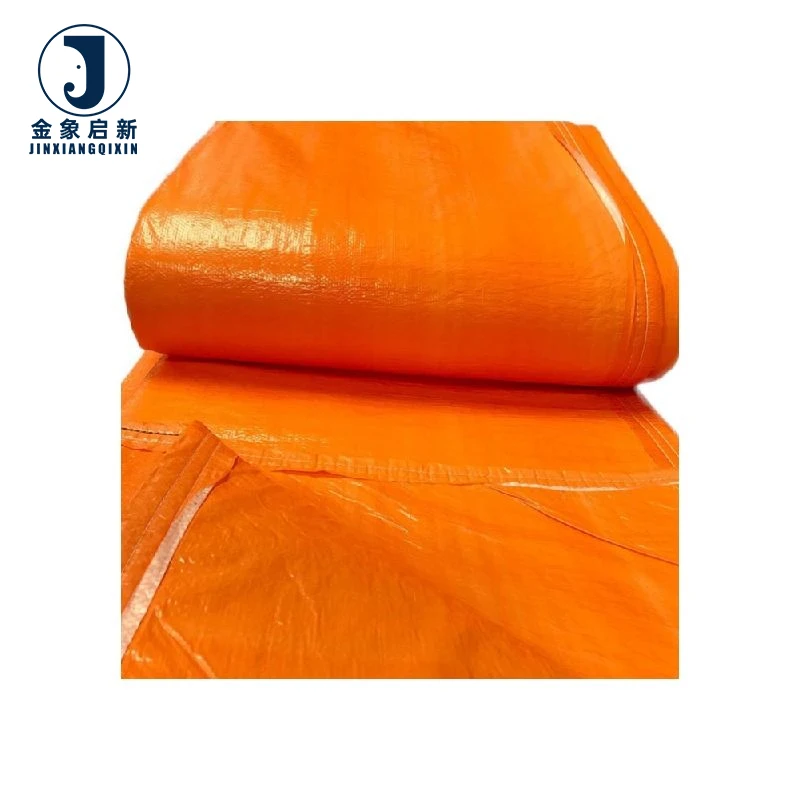
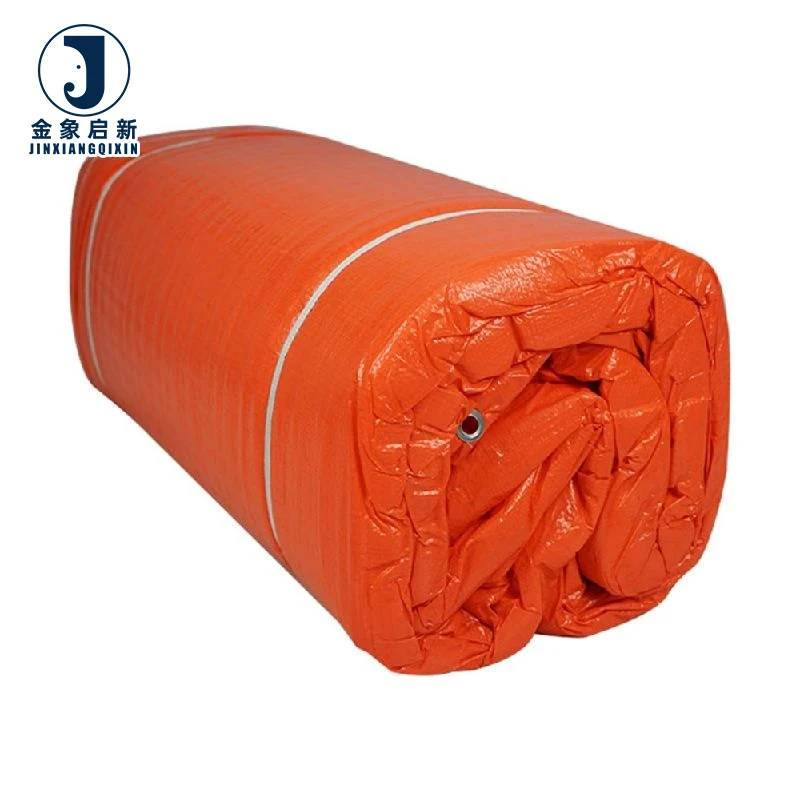
Proven Thermal Control — three full production lines and 36 sets of specialist equipment support batch-consistent output of insulated curing blankets across multiple thickness grades and custom dimensions.
Technical Specifications
| Parameter | Value |
|---|---|
| Product Type | Insulated Tarpaulin Blanket |
| Dimensions (options) | 6ft x 24ft, 8ft x 25ft, 12ft x 20ft, 12ft x 24ft |
| Thickness (options) | 2x2mm, 3×1.5mm, 1x4mm, 5mm, 6mm, 8mm, 12mm |
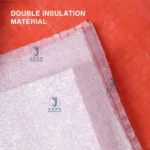
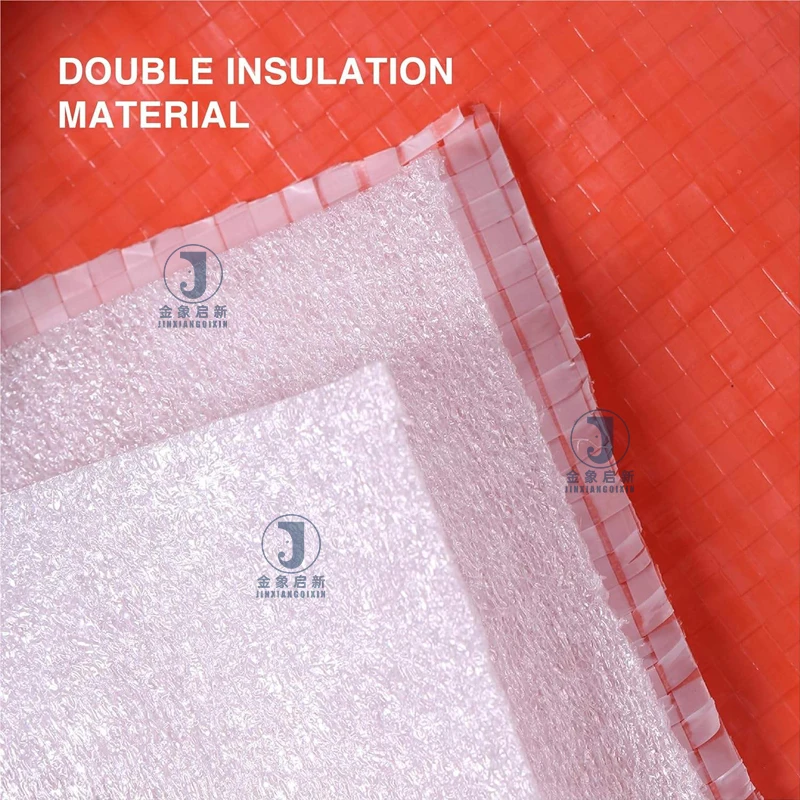
| Core Structure | PE cloth + closed cell PE foam core + PE cloth |
| Grommet Configuration | Aluminum grommets, spacing 61cm or 91.5cm |
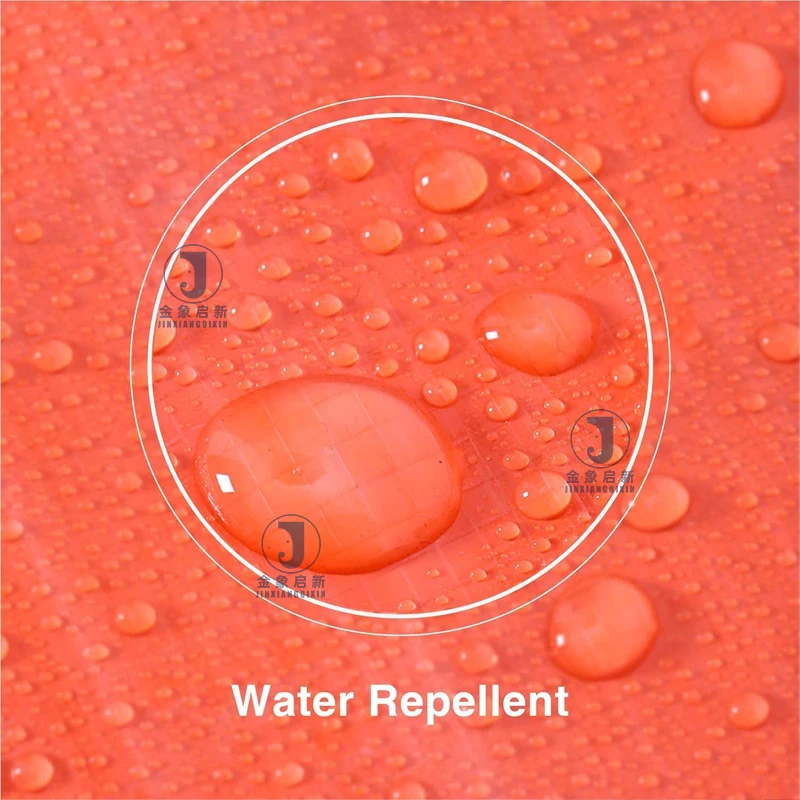
| Surface Fabric | PE cloth, waterproof |
| UV Treatment | Anti-UV treatment (test basis not stated in source — confirm grade required for your market) |
| Flame Retardant | Not stated |
| Color Options | Orange, Black, White, Silver, Customized color |
| Edge Reinforcement | Stitched hems |
Application Suitability
| Application | Exposure & Requirement |
|---|---|
| Concrete curing in cold weather | Continuous contact with freshly poured slabs, sub-zero ambient air, wind-driven heat loss |
| Heated enclosure insulation | Retaining internal temperature against outside cold, repeated installation and removal on scaffolding |
| Vertical wind block on building sites | Lateral wind load on exposed frames, UV exposure across multiple project phases |
| Equipment and material protection | Snow, rain and freezing rain on stored machinery and bulk materials |
What Happens When Your Curing Blanket Cannot Hold Temperature
An insulated concrete curing blanket for construction must resist heat transfer through its core — not just block wind and rain on the surface.
Sourcing curing blankets from suppliers who treat them as standard tarps means receiving single-layer covers that slow wind but do nothing to slow conductive or convective heat loss. On a winter pour, the slab surface temperature drops faster than the hydration reaction can sustain, leading to extended curing times or surface cracking. Contractors then layer multiple blankets or run heaters longer, burning fuel and schedule days. The failure is not visible until the cylinder test results come back low. [NEED_CITE: ACI 306 cold weather concreting temperature requirements]
Three-Layer Construction That Slows Heat Transfer
The Insulated Tarpaulin Blanket uses a closed cell PE foam core sandwiched between two PE cloth faces. Closed cell foam traps air in discrete pockets, reducing conductive heat flow from the warm side to the cold side. This is the same principle used in building insulation and cold-storage panels, adapted here for site-deployable blankets that can be folded, carried and tied down repeatedly. The outer PE cloth layers protect the foam from puncture and moisture ingress during handling on rough concrete surfaces.
Thickness Selection Drives Thermal Performance
Available thickness grades range from lightweight 2x2mm up to heavy-duty 12mm, giving contractors and site managers a way to match insulation level to ambient severity and curing duration. A thin grade may suffice for a mild autumn night where the goal is retaining hydration heat, while a winter pour in sub-zero conditions demands the heavier core to keep the slab above minimum temperature through the critical early strength period. The Insulated Concrete Curing Blanket for construction is specified by thickness rather than weight alone, because the foam core density and total laminate thickness determine thermal resistance more directly than face fabric weight.
Grommet Spacing and Edge Reinforcement for Wind Load
Aluminum grommets are placed at 61cm or 91.5cm intervals along stitched hems. The dual spacing option allows fixing to scaffolding tubes, timber frames or rebar stakes at intervals that match the expected wind load. On a high-rise enclosure where blankets hang vertically as wind breaks, the closer 61cm spacing distributes tie-down force across more attachment points, reducing the risk of a single grommet tearing out under gust load. Stitched edge reinforcement prevents the hem from splitting at the grommet hole under repeated tension and release cycles.
Reading the Specifications Against Your Site Conditions
The core structure — PE cloth, closed cell PE foam, PE cloth — defines what the blanket actually does. The foam core thickness is the primary variable controlling thermal resistance, and it is listed in millimetres across seven grades so you can select without guessing. The PE cloth faces provide waterproof protection but do not carry significant tensile load; the blanket is a thermal cover, not a structural membrane. Grommet spacing should be chosen based on whether the blanket will lie flat on a slab (91.5cm adequate) or hang vertically under wind load (61cm preferred). Anti-UV treatment is stated on the outer face, though the specific test basis should be confirmed with the manufacturer before committing to extended outdoor exposure across multiple curing cycles.
The Hidden Cost of Specifying the Wrong Blanket Grade
Selecting a blanket based on price per square metre rather than thermal performance often surfaces as a problem only after the concrete cylinder tests fail. A blanket that is too thin for the ambient conditions allows the slab surface to cool below the critical threshold within hours, even if the air temperature above the blanket reads acceptable. Contractors then face costly remedial work — grinding, patching, or in severe cases, demolition and re-pour of affected sections. On enclosure projects, an under-specified blanket forces the heating contractor to run equipment continuously, increasing fuel consumption and creating condensation risk on the cold side of the fabric. These costs never appear on the original blanket purchase order. [NEED_CITE: concrete cold-weather curing failure modes and remediation costs]
Why Procure Insulated Blankets Here
Nearly 30 years of coated and laminated fabric production underpins process control over foam core lamination and face cloth adhesion — the bond between layers must survive folding and transport without delamination. Three full production lines and 36 sets of equipment support bulk orders of Insulated Concrete Curing Blanket for construction without compressing lead times during peak winter demand. A 10-person R&D team handles custom sizing, colour matching and sample development, delivering samples within days for project-specific approval. Dedicated QA/QC runs at every stage, with 100 percent pre-shipment inspection verifying grommet spacing, hem stitching and dimensional accuracy across every blanket in the order. ISO and CE certified production supports documentation requirements for regulated construction markets.
Documentation & Verification
- Material specification sheet confirming core structure and thickness per blanket grade
- Pre-shipment inspection record verifying grommet spacing and hem reinforcement
- UV treatment test report provided where extended outdoor exposure is specified
- Roll and blanket packing list with dimensional and quantity verification per item
- Certificate of origin and customs documentation for export shipments
Fabrication, Handling & Storage
- Stitched hems with aluminum grommets at 61cm or 91.5cm — match tie-down interval to expected wind load before fixing
- PE cloth faces tolerate standard site handling; avoid dragging across sharp rebar to protect the foam core bond
- Fold blankets along existing crease lines to prevent compressing the closed cell foam core permanently in storage
- Clean with water and mild detergent; solvent-based cleaners may affect the PE surface treatment over time
- Store flat or loosely rolled in dry conditions to maintain foam resilience across multiple curing cycles
Requesting a Quotation That Matches Your Project
Provide the slab dimensions or enclosure frame measurements, the lowest expected ambient temperature during curing, and the planned fixing method so the correct thickness and grommet spacing can be recommended. Confirm whether the blankets will lie flat or hang vertically, as this changes both the thermal load and the tie-down requirement. If custom colours or non-standard sizes are needed, specify the quantity per variant to determine production feasibility and lead time.
Frequently Asked Questions
Q: What thickness do I need for concrete curing at sub-zero temperatures?
A: Thickness selection depends on how far below zero the ambient temperature drops and the required curing duration. The closed cell PE foam core is available from 2x2mm to 12mm. For light frost conditions a thinner grade may hold adequate heat, while sustained sub-zero exposure demands heavier core options. Confirm the thermal requirement with your concrete supplier before specifying.
Q: Can grommet spacing and edge reinforcement be customized for high-wind sites?
A: Aluminum grommets are offered at 61cm or 91.5cm spacing with stitched edge reinforcement. For vertical wind break installations on exposed scaffolding, the closer 61cm spacing distributes load across more fixing points and reduces individual grommet stress. Custom spacing or additional reinforcement can be discussed during sample development.
Q: Is the insulated blanket reusable across multiple curing cycles?
A: The three-layer PE cloth and closed cell foam structure is designed for repeated installation and removal. The stitched hems and aluminum grommets support multiple tie-down cycles. Longevity depends on handling care — avoiding drag across sharp edges and storing without compressing the foam core permanently between projects.
Q: What documentation is provided for UV and waterproof performance claims?
A: Anti-UV treatment is stated on the outer PE cloth face, and a test report can be requested to verify the specific treatment level. The waterproof performance of the PE cloth surface is confirmed in the material specification sheet. Confirm the test basis required for your market before placing the order.
Q: What is the lead time and MOQ for custom sizes and colours?
A: Custom dimensions and colours are developed through the sample approval process, with the 10-person R&D team producing samples within days. Minimum order quantities and lead times depend on the variant count and total quantity. Provide your size and colour breakdown early in the inquiry to receive accurate scheduling.