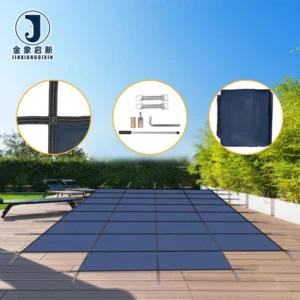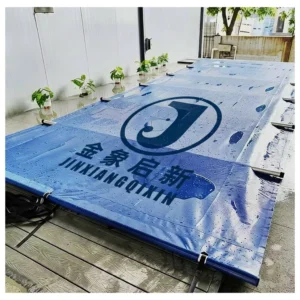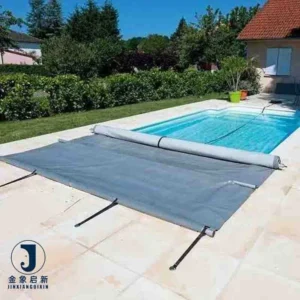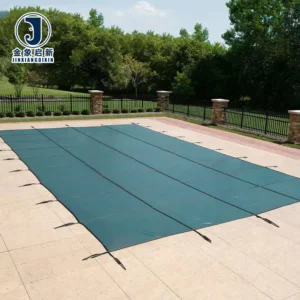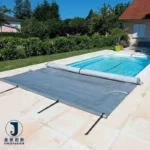
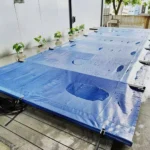
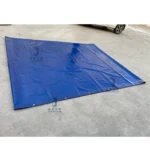
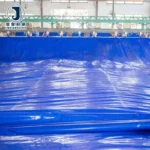
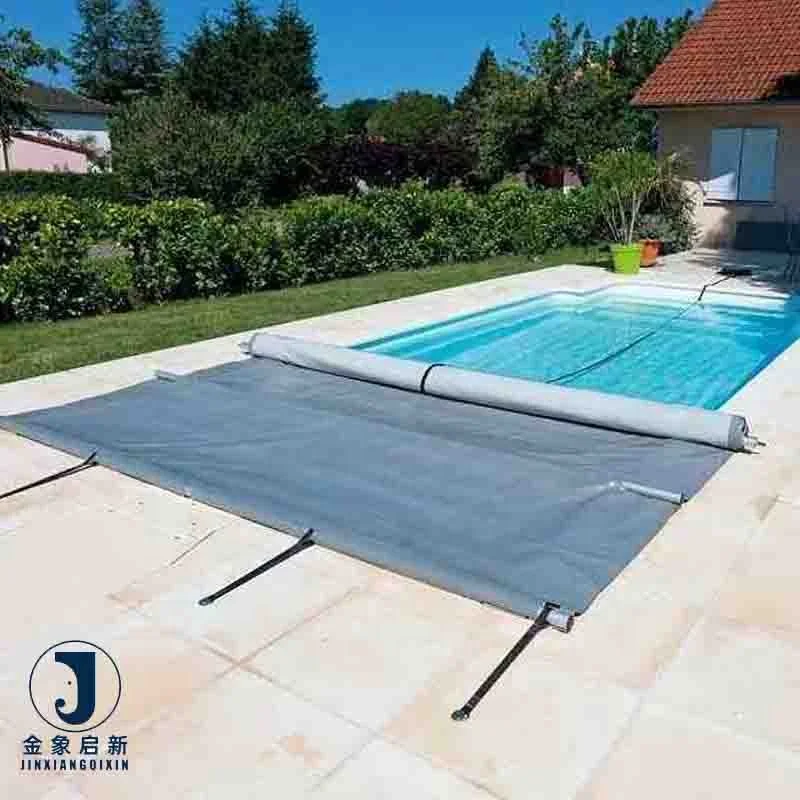
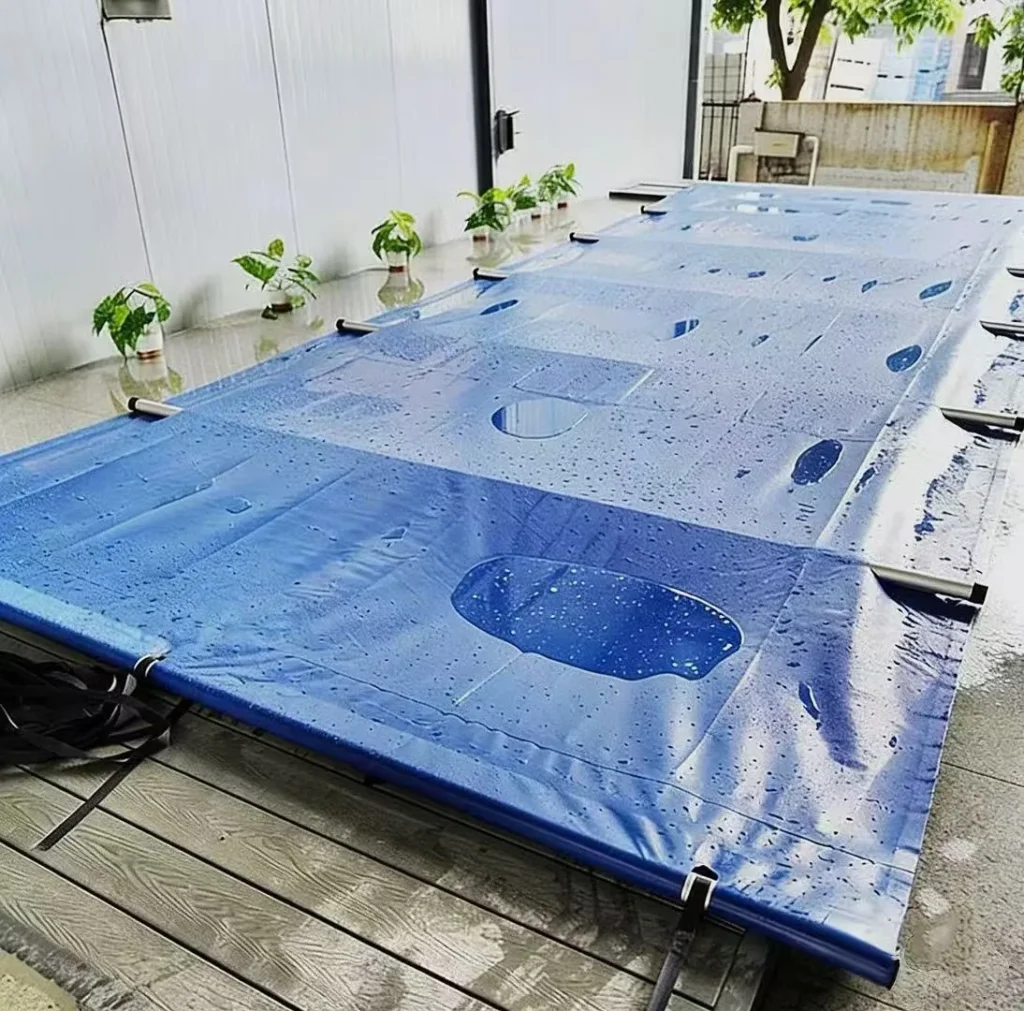
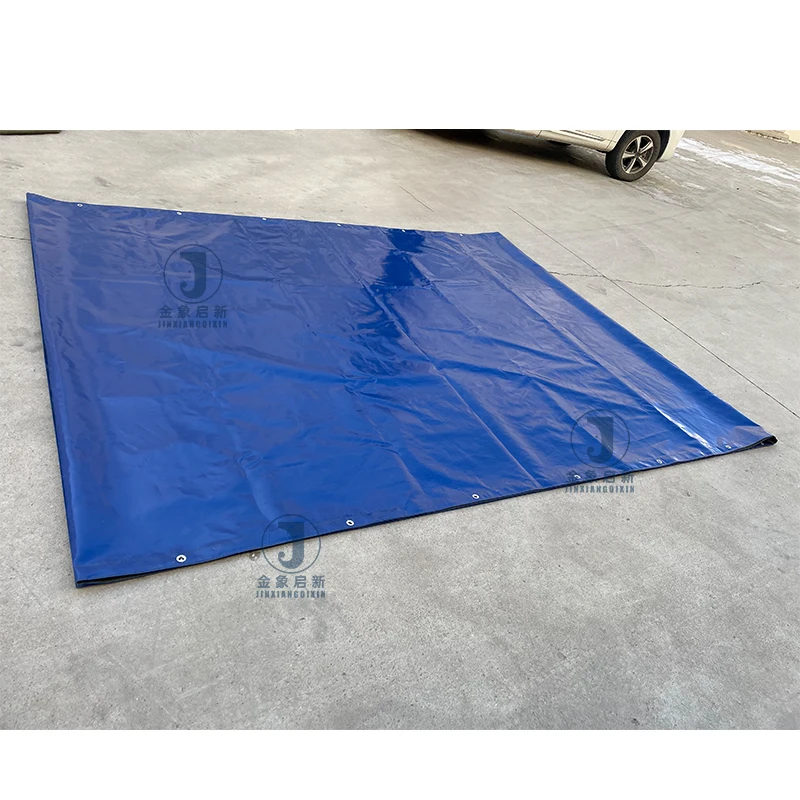
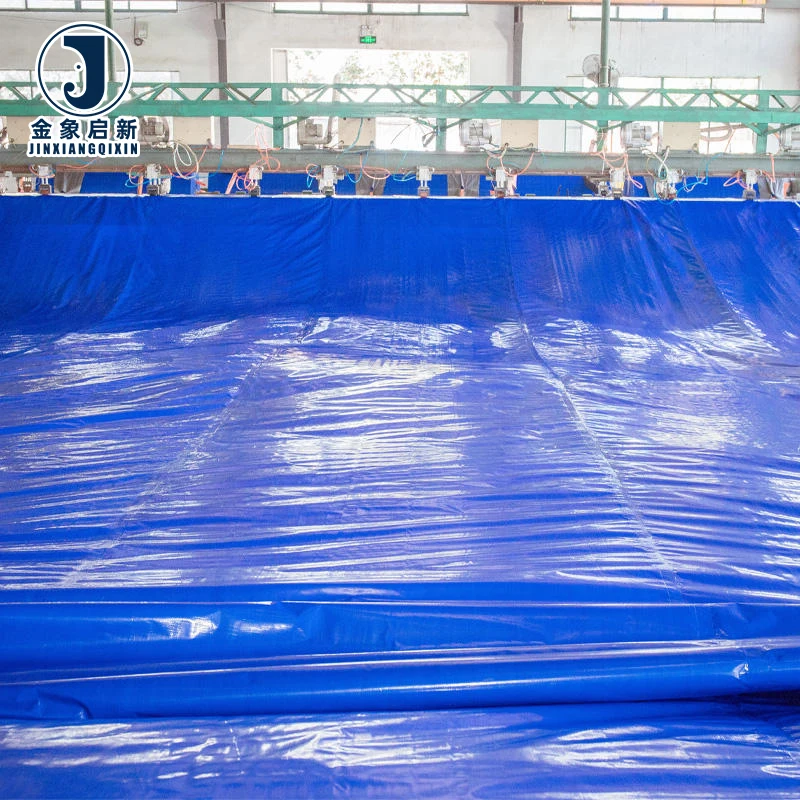
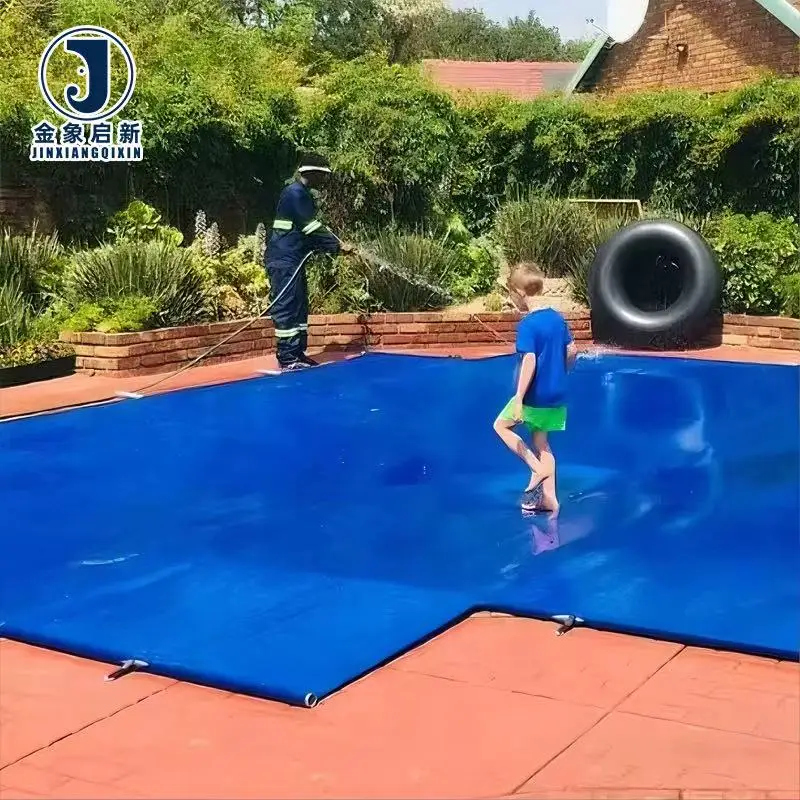
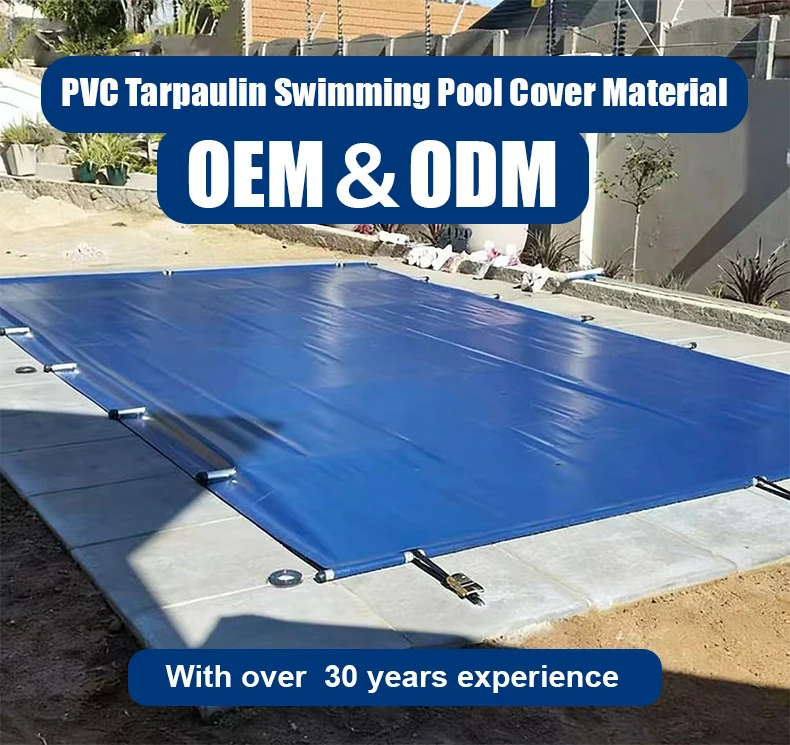
Specialist Coated Fabric Engineering — Laminated PVC pool cover tarpaulin developed with fire-retardant and anti-static treatment options, backed by full certification documentation for compliance-critical installations.
Technical Specifications
| Parameter | Value |
|---|---|
| Product Type | PVC Laminated Waterproof Breathable Anti-UV Swimming Pool Covers Tarpaulin Coated |
| Base Fabric | High-strength polyester mesh fabric |
| Coating Technology | Laminated technology & Hot-melt coating technology |
| Weight Options | 350gsm / 420gsm / 500gsm / 550gsm / 600gsm / 750gsm |
| Thickness Options | 0.32mm / 0.35mm / 0.4mm / 0.45mm / 0.5mm / 0.65mm |
| Roll Width | 2m / 2.1m |
| Roll Length | 75m (2m width) / 50m (2.1m width) |
| Color Options | Blue / Red / Yellow / Light blue / Grey (customizable) |
| Key Features | Waterproof, cold crack resistance, anti-mildew, anti-UV treatment, blackout finish |
| Special Treatments | Flame retardant (grade to be confirmed per project), anti-static treatment available |
Application Suitability
| Application | Exposure & Requirement |
|---|---|
| Commercial swimming pool safety covers | Prolonged UV exposure, chlorine atmosphere, tension at anchor points, fire code compliance |
| Aquaculture pond and fish tank covers | Permanent water contact, chemical resistance, light-blocking blackout requirement |
| Specialist structure enclosures | Mandated fire-retardant compliance, anti-static discharge control, weather sealing |
| Cargo ship and truck awning fabric | Salt spray, wind load flexing, UV degradation, weld seam integrity at stress points |
What Certification Without Documentation Actually Means On Site
A flame retardant claim without a test report is just marketing copy until the site inspector asks for proof.
When a PVC pool cover tarpaulin arrives on a commercial project site, the contractor needs more than a datasheet stating "fire retardant." The fire safety officer requires documentation showing the specific grade achieved and the test standard applied. The same applies to anti-static treatment in controlled environments — surface resistance values must be measurable and verifiable. Procurement teams specifying covers for compliance-driven installations frequently discover after delivery that the certification paperwork does not match the product received, or worse, was never generated at all [NEED_CITE: fire classification standards for textile building materials]. This gap between quotation claims and on-site documentation is where project delays originate.
Fire-Retardant Grades Must Match the Jurisdiction
Specifying a PVC pool cover tarpaulin for a public facility or commercial installation means the fire-retardant grade must align with local building codes and site regulations. Available flame retardant treatments can be configured to meet specific market requirements, but the exact grade must be confirmed during the specification phase — not assumed from a generic product description. We supply the test report documenting the achieved classification alongside the shipment, so compliance verification happens without delay.
Anti-Static Treatment for Controlled Environments
In aquaculture facilities, specialist structure enclosures, or any environment where electrostatic discharge poses a risk, anti-static treatment becomes a mandatory specification rather than an optional upgrade. The PVC pool cover tarpaulin can be produced with anti-static treatment applied during the coating process [NEED_CITE: surface resistivity testing methods for coated technical textiles]. Verification documentation is provided to confirm that the treatment meets the required surface resistance parameters for the installation environment.
How Laminated Coating Technology Affects Weld Integrity
The choice between laminated and hot-melt coating technology directly influences how the fabric behaves during fabrication. Laminated PVC bonds the coating layers to the high-strength polyester mesh base under heat and pressure, creating adhesion strength that determines whether the weld line or the fabric itself fails first under tension. For pool covers that experience cyclic loading from wind, water accumulation, and mechanical tensioning systems, the coating-to-substrate bond must withstand repeated flex without delaminating. The blackout construction adds an additional layer that blocks light transmission completely, which matters for algae control in aquaculture and temperature management in covered pools.
Reading the Weight and Thickness Specifications Correctly
Weight in GSM and thickness in millimeters are related but distinct measurements that together define the fabric’s structural behavior. A 350gsm grade at 0.32mm thickness will handle differently under tension than a 750gsm grade at 0.65mm, and the appropriate selection depends on pool dimensions, span distances, and local wind load requirements. The high-strength polyester mesh base provides the tensile and tear resistance, while the PVC coating weight determines abrasion resistance, waterproofing durability, and weld strength. Selecting solely on GSM without considering the base fabric construction and coating method leads to specification errors [NEED_CITE: tensile and tear test methods for coated fabrics per ISO 1421]. Cold crack resistance ensures the material remains flexible in low-temperature conditions without becoming brittle at the fold lines.
The Cost of Arriving On Site Without the Right Paperwork
When fire-retardant documentation does not match what the site safety plan requires, the cover cannot be installed regardless of how well the material performs physically. Contractors face reinspection fees, project timeline delays, and in some cases complete material rejection and replacement. Anti-static claims without measured surface resistance values create the same bottleneck in controlled environments. These are not theoretical risks — they represent the most common documentation failures that stall compliance-driven installations [NEED_CITE: contractor compliance verification failures in textile installations]. The PVC pool cover tarpaulin must arrive with its certification package complete and traceable to the specific production batch.
Why Technical Buyers Source This Fabric Here
Three full production lines with 36 sets of professional equipment support consistent output across the weight and thickness range, meaning bulk orders maintain roll-to-roll uniformity without color drift between batches. The 10-person R&D team handles material selection and custom sizing, developing samples within days when a project requires non-standard dimensions or specific treatment configurations. Every roll undergoes dedicated QA/QC at each production stage with complete pre-shipment inspection, ensuring the GSM on the certificate matches the material in the container. Fire-retardant and anti-static treatments are documented with test reports rather than unverified claims, which matters when the installation site requires proof before sign-off.
Documentation & Verification
- Material specification sheet confirming exact GSM, base fabric construction, and coating technology for the grade ordered
- Test report for flame retardant classification achieved, matched to the standard required by the project jurisdiction
- Anti-static surface resistance measurement documentation where treatment is specified
- Pre-shipment inspection record confirming weight verification per roll before dispatch
- ISO and CE certificates included in the documentation package for site compliance submissions
Fabrication, Handling & Storage
- Hot-air welding parameters must be calibrated to the specific GSM and laminated coating technology to achieve full bond strength at seams
- Blackout finish requires careful handling during fabrication to avoid surface scuffing that compromises light-blocking integrity
- Rolls should be stored horizontally on pallets to prevent permanent creasing in the polyester mesh base fabric
- Cold crack resistance allows low-temperature transport and deployment without material damage at fold points
- Custom width options of 2m or 2.1m should be factored into cutting layouts to minimize offcut waste on large pool covers
What We Need to Quote Accurately
To provide a precise specification and lead time, we need the installation environment details — whether this is an outdoor commercial pool, an indoor aquaculture facility, or a specialist structure requiring specific fire classification. Confirm which fire-retardant grade or anti-static standard your jurisdiction mandates, along with the preferred GSM and color from the available range. Let us know whether you require rolls at standard widths or finished covers cut to specific pool dimensions, and whether sample approval is needed before production proceeds.
Frequently Asked Questions
Q: What fire-retardant grades are available and how do I confirm which one my project needs?
A: Flame retardant treatment is available as a special configuration for this PVC pool cover tarpaulin. The specific grade must be confirmed based on your local building code or site safety requirements before production. We provide the corresponding test report with the shipment documenting the achieved classification, so verify the required standard with your project safety officer during the specification phase.
Q: How is anti-static treatment verified and what documentation comes with it?
A: Anti-static treatment is applied during the coating process and verified through surface resistance measurement. The test documentation specifying the measured values accompanies each shipment. This is essential for installations in controlled environments where electrostatic discharge must be managed — confirm the required surface resistance range with your facility engineer before ordering.
Q: How do I confirm the GSM matches what was quoted when the rolls arrive?
A: Every roll undergoes weight verification as part of our pre-shipment inspection process, with results recorded before dispatch. The material specification sheet included in your documentation package states the exact GSM for the grade ordered. Physical verification on arrival should match these documented parameters within standard industry tolerances.
Q: Can custom-sized pool covers be produced with certified treatments intact?
A: Yes, finished covers cut to specific dimensions can be produced with fire-retardant and anti-static treatments applied to the base material before fabrication. The certification documentation covers the treated fabric used in your custom order. Lead time depends on the treatment configuration and dimensional complexity — confirm requirements during inquiry for accurate scheduling.