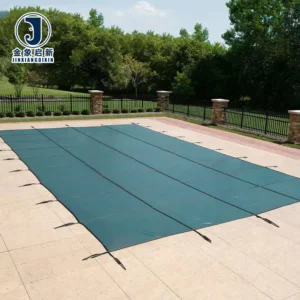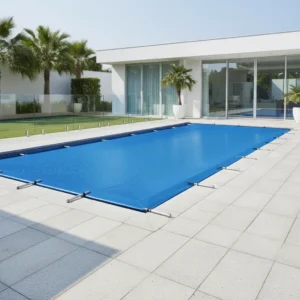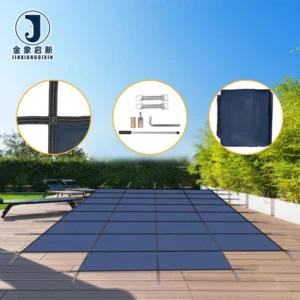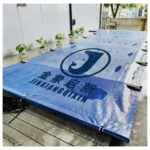
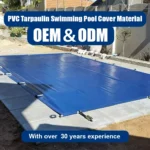
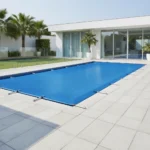
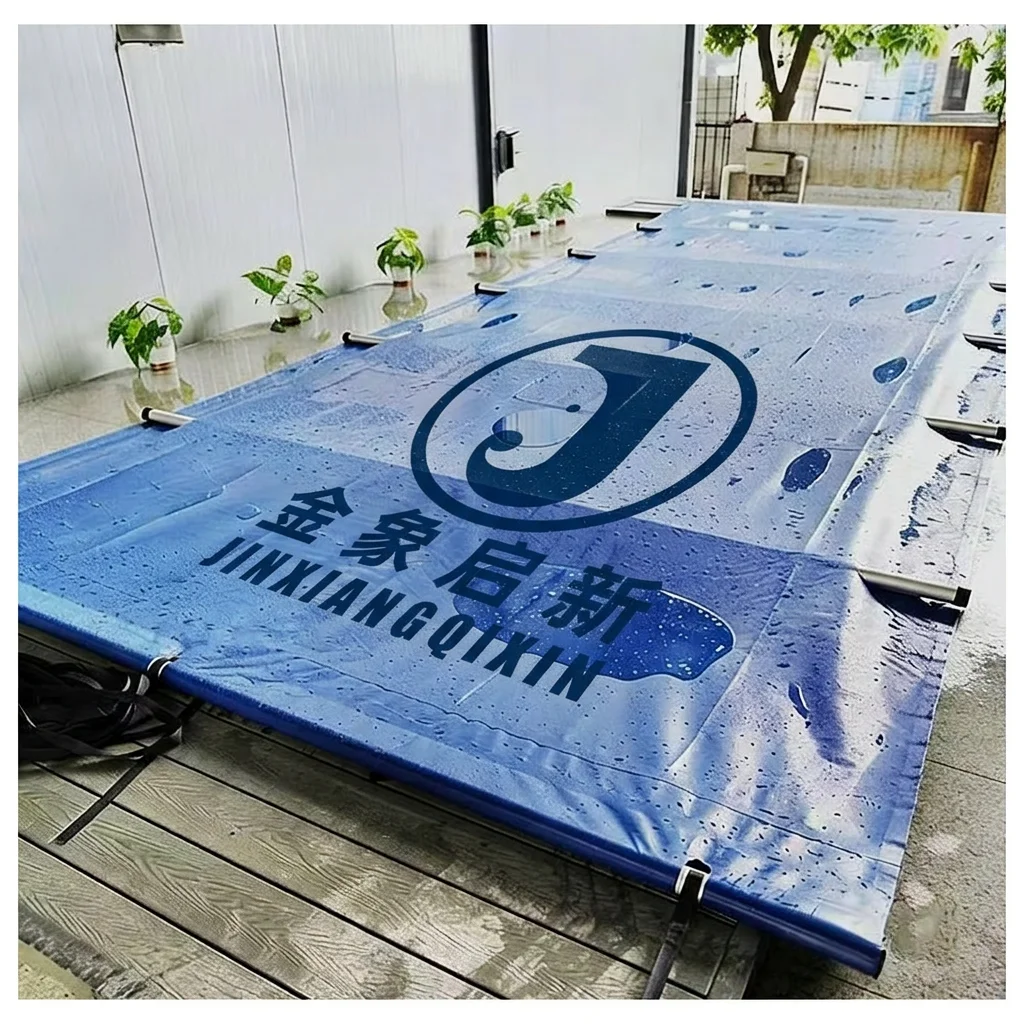
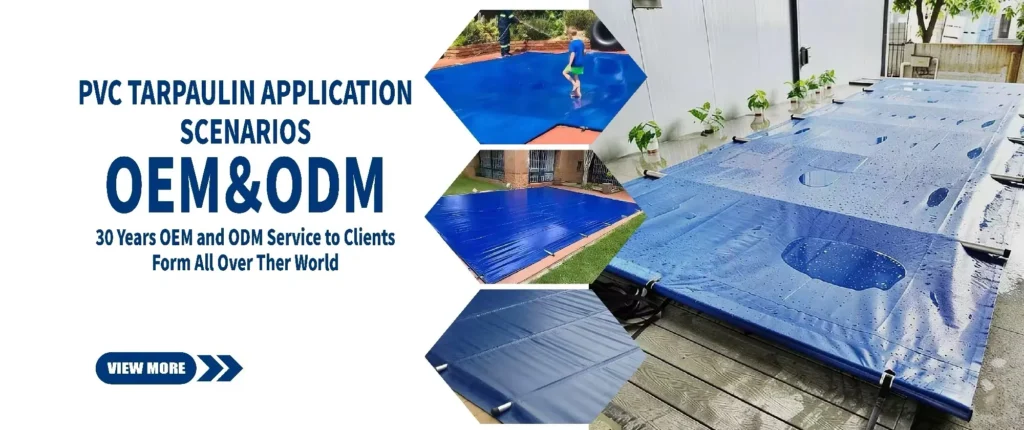
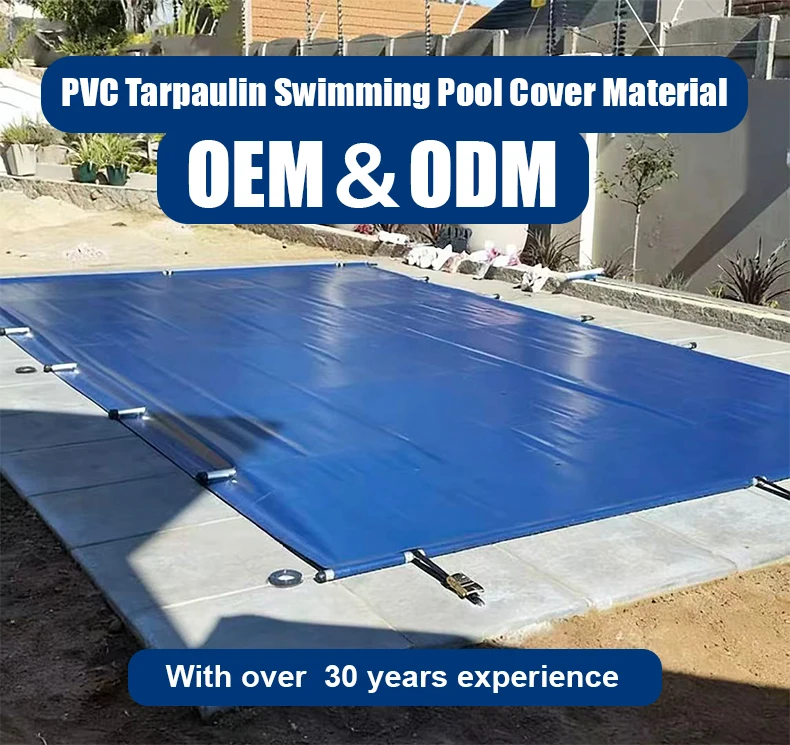
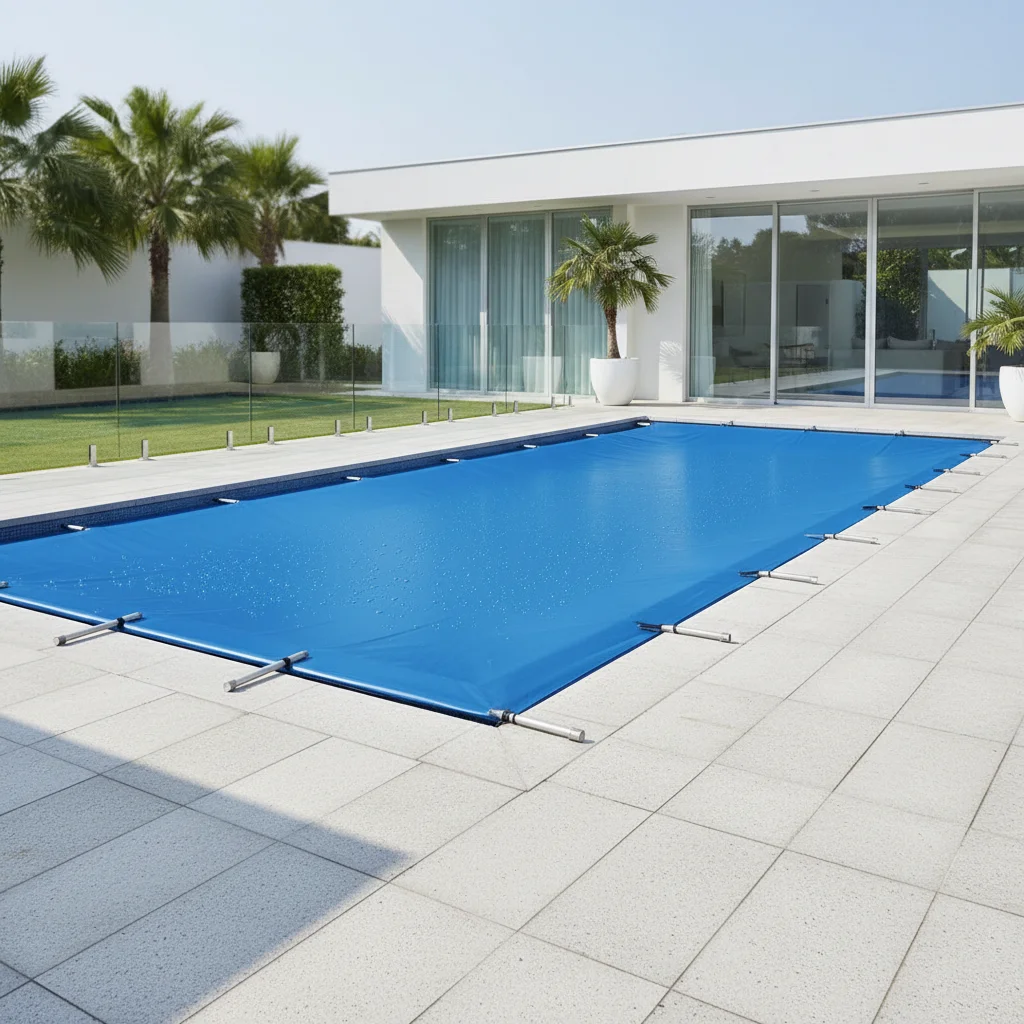
Process Control Expertise — Every roll undergoes dedicated QA/QC at each production stage with 100% inspection before dispatch, ensuring fabric weight and coating adhesion meet the specification sheet.
Technical Specifications
| Parameter | Value |
|---|---|
| Product Type | PVC Tarpaulin |
| Material | PVC Knife Coated Fabric |
| Weight (GSM) | 50 gr/m² – 220 gr/m² (confirm the grade for your application) |
| Thickness | 0.2–0.4 mm / 8–16 mil |
| Color Options | Blue, Blue/Orange, Green, Grey, Black, Clear, Grey/Green, Orange, or custom |
| Key Features | Waterproof, Washable, Tear Resistant, Weather Proof, Mildew Proof, Anti-aging |
| UV Treatment | Available (test basis not stated — confirm the standard for your market) |
| Flame Retardant | Available in flame retardant grades — confirm the grade required for your market |
| Hardware Compatibility | Brass Anchor, Triangular Hook, Ratchet System, Aluminium Poles |
| Operation | Manual or motorized winders; self-sinking stainless steel connections |
| Assembly State | Finished tarpaulin with hardware or roll stock |
| Standards | ISO 9001, ISO 14001, ISO 45001, CE |
Application Suitability
| Application | Exposure & Requirement |
|---|---|
| Commercial pool compliance covers | Certified fire retardant fabric required by local safety codes, continuous UV and chlorine atmosphere exposure |
| Residential pool safety covers | Child-safe anchoring, custom sizing to pool dimensions, seasonal deployment and storage cycles |
| Resort and hospitality pool enclosures | Continuous sun and weather cycles, motorized winder integration, aesthetic colour matching across large spans |
| Seasonal winterization covers | Freeze-thaw cycling, snow and debris load, prolonged moisture contact |
Why Fire Retardant Certification Matters for PVC Pool Cover Material
A fire retardant claim without a test standard is a liability, not a feature.
Pool environments in commercial and municipal settings often fall under building material fire codes. When PVC pool cover material arrives at a project site without documentation matching the required classification, the entire installation can be rejected at inspection. Procurement teams regularly discover after delivery that the flame retardant treatment was listed on the quotation but never verified by an independent lab. The gap between a supplier’s general statement and a project’s compliance obligation is where delays and rework happen [NEED_CITE: fire classification standards for textile materials in public assembly spaces].
Coating Method and Structural Integrity for Pool Environments
Knife coated PVC construction delivers a continuous coating layer bonded to the base fabric, which is the reason this PVC pool cover material holds up under sustained moisture and mechanical stress. Unlike laminated alternatives where the coating can delaminate at the edges, knife coating forces the PVC compound into the weave structure itself. This produces stronger peel adhesion at the seams — a critical factor when pool covers are tensioned across aluminium poles and subjected to wind uplift.
Hardware Integration and Load Distribution
The ratchet system and brass anchor points distribute tension across the cover perimeter rather than concentrating stress at individual attachment locations. Aluminium poles span the cover width, preventing sag under debris or water accumulation. Self-sinking stainless steel connections at six attachment points keep the cover anchored even in high wind. The combination of reinforced PVC fabric with purpose-built hardware is what separates a purpose-engineered pool cover from a generic tarp draped over a pool deck.
Reading the Specification Sheet Beyond GSM Alone
The weight range of 50 gr/m² to 220 gr/m² covers the full product family, so selecting the correct grade depends on the span and load the cover must carry. A heavier GSM generally correlates with a denser base fabric and thicker coating, which together determine tensile and tear resistance. However, GSM alone does not define performance — a 180 gr/m² fabric with a tight weave and balanced coating can outperform a loosely woven 220 gr/m² material. Knife coating thickness between 0.2 mm and 0.4 mm affects rigidity and roll behaviour on motorized winders. Thicker coatings add puncture resistance but reduce flexibility, which matters when the cover is wound and unwound repeatedly. UV treatment availability should be confirmed with a test basis matching your climate zone [NEED_CITE: tensile and tear test methods for coated fabrics per ISO 1421].
The Cost of Undocumented Compliance
When a commercial pool project specifies fire retardant fabric but receives material without a matching test report, the consequences extend beyond the fabric itself. Installation schedules stall while replacement material is sourced. Project managers face penalty clauses for delayed handover. Even when the fabric itself performs adequately, the absence of documentation is sufficient grounds for rejection by building inspectors. Colour variation between rolls in the same shipment becomes visible once multiple panels are installed side by side across a large resort pool — a problem that only surfaces after the material is already on site [NEED_CITE: batch consistency requirements for architectural fabric installations].
Why Source PVC Pool Cover Fabric Through This Channel
Three full production lines and 36 sets of professional equipment support consistent output across bulk orders, so roll-to-roll weight and colour remain stable through an entire container load. The 10-person R&D team handles material selection and sample development, producing confirmation samples within days for custom width, colour, or compliance requirements. Every roll is inspected at each production stage, with 100% pre-shipment verification of GSM and coating weight against the specification sheet. Custom sizing for non-standard pool dimensions is supported without the extended lead times typical of specialist fabric orders. ISO 9001, ISO 14001, ISO 45001, and CE certification underpin the quality management system across all production stages.
Documentation & Verification
- Material specification sheet stating exact GSM, base fabric type, and coating method with colour reference
- Fire retardant test report where applicable, citing the grade and standard relevant to local pool safety codes
- UV treatment verification document confirming test basis and exposure classification
- Pre-shipment inspection record verifying fabric weight, thickness, and hardware kit completeness
- Certificate of origin and full customs documentation for international pool project delivery
- Roll packing list itemising each roll by weight, width, and colour for receiving inspection
Fabrication, Handling & Storage
- Heat welding parameters must be adjusted to the specific PVC knife coated thickness between 0.2 mm and 0.4 mm to avoid seam delamination
- Brass anchors and ratchet attachments should be positioned at reinforced hem sections to prevent pull-through under tension
- Roll stock should be stored upright on pallets in a shaded area to prevent flat-spot deformation of the PVC coating
- Motorized winder compatibility depends on the selected GSM grade — lighter weights roll more easily on standard mechanisms
- Clean with mild detergent only; solvent-based cleaners can degrade the PVC coating surface over time
- Field repairs require PVC-compatible adhesive patches matched to the knife coated fabric weight and colour
What to Include in Your PVC Pool Cover Material Inquiry
Provide the pool dimensions and whether the cover will be deployed manually or via a motorized winder system. Specify the fire retardant grade or safety standard required by your local jurisdiction so the correct test documentation can be prepared. Indicate whether you need finished covers with hardware kits or roll stock for on-site fabrication, along with your target colour and annual volume requirements.
Frequently Asked Questions
Q: What fire retardant grade is available for pool cover fabric and which test standard applies?
A: Fire retardant treatment is available in multiple grades. The applicable standard depends on your local building code and whether the pool is classified as a public assembly space. Confirm the specific classification your project requires so the correct test report can be included with your shipment.
Q: How is UV resistance verified and what test basis supports the outdoor lifespan claim?
A: UV treatment is available for extended outdoor exposure. The verification method and test basis should be confirmed at the inquiry stage so the documentation matches your project specification. We provide test data aligned with the agreed standard before production begins.
Q: Can the pool cover fabric be supplied with certified GSM and coating weight documentation?
A: Every roll is inspected before dispatch and a pre-shipment inspection record confirms the actual GSM and coating weight against the specification sheet. This documentation is included in the shipment package for your receiving inspection.
Q: What hardware kit options are available and are they included or quoted separately?
A: Brass anchors, triangular hooks, ratchet systems, and aluminium poles are all available. Hardware can be supplied as part of a finished cover assembly or as separate components for on-site fabrication. Confirm your requirement at the quotation stage.
Q: What is the lead time for custom-sized pool covers with specific compliance requirements?
A: Lead times depend on the custom width, colour, and compliance documentation required. Samples are developed within days for confirmation before bulk production proceeds. Confirm your project timeline at the inquiry stage so production can be scheduled accordingly.