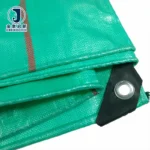
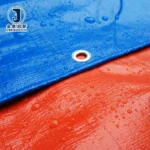
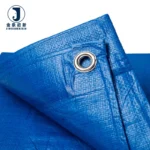
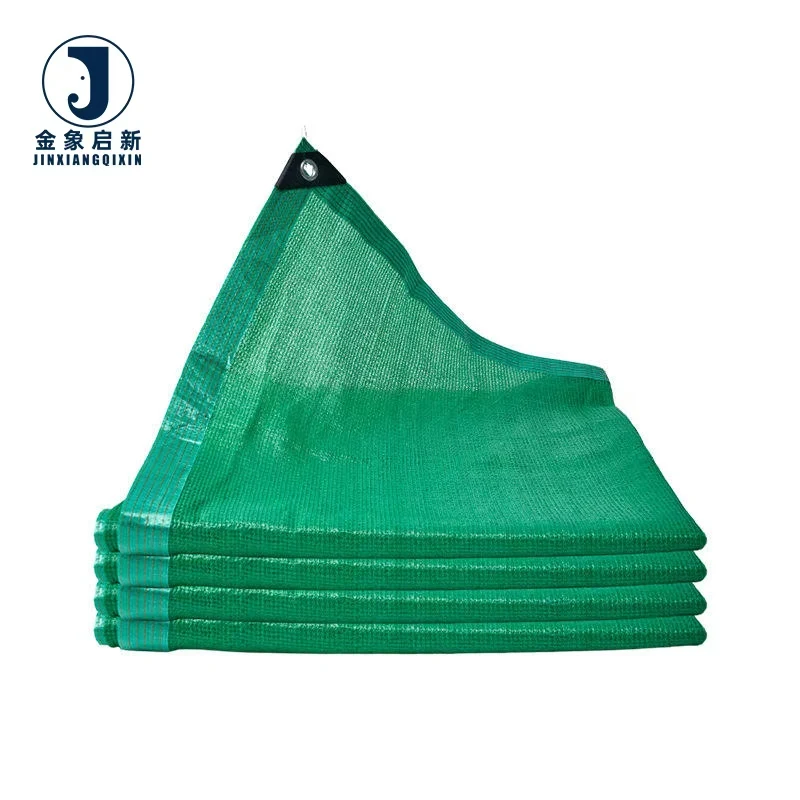

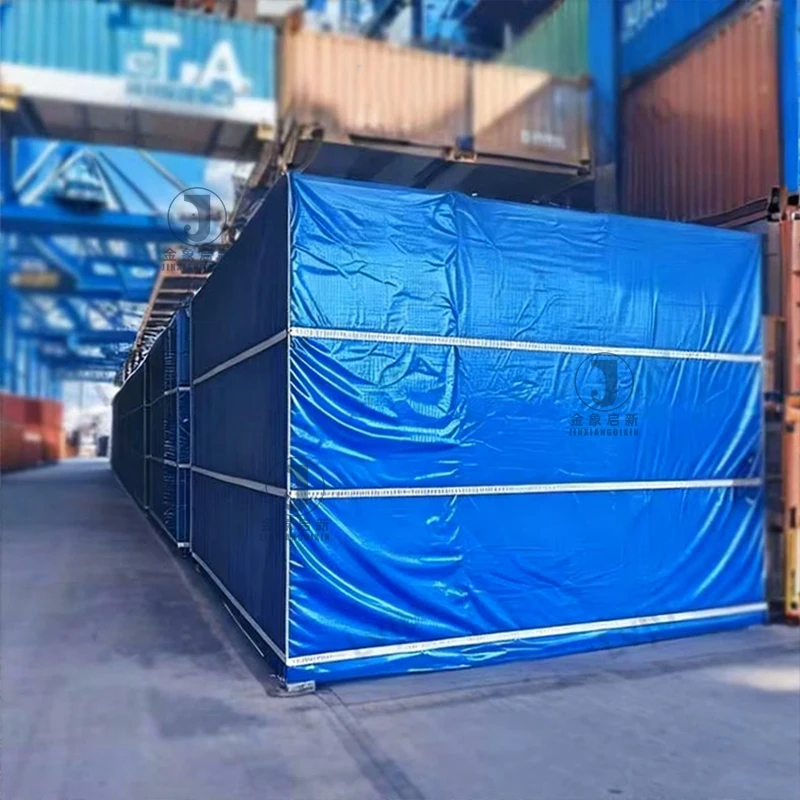
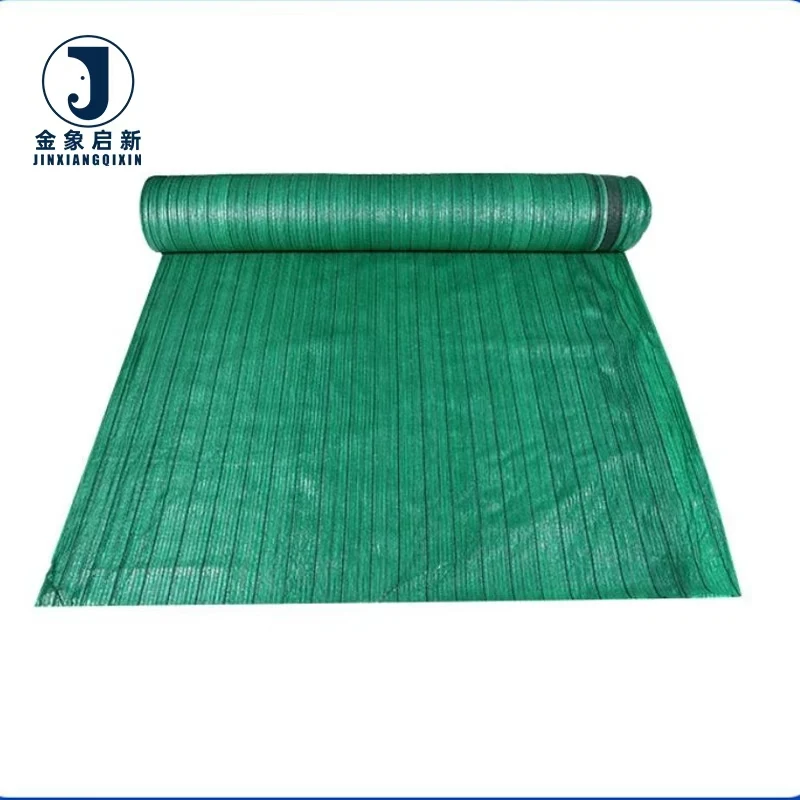
Proven Process Control — nearly 30 years of coating and lamination expertise applied to every PE tarpaulin roll leaving our facility, with GSM and weave density verified at each production stage.
Technical Specifications
| Parameter | Value |
|---|---|
| Product Type | PE Tarpaulin Roll |
| Material | HDPE woven base fabric with LDPE lamination on both sides |
| Mesh Count Options | 6×6, 6×7, 7×7, 7×8, 8×8, 9×9, 8×10, 10×10, 12×12, 14×14, 14×16 |
| Weight (GSM) Range | 50 gr/m² to 220 gr/m² — confirm grade required for your application |
| Total Thickness | 0.2 mm to 0.4 mm (8 mil to 16 mil) |
| Roll Width Options | 6 ft, 8 ft, 10 ft, 12 ft, 2 m, 4 m, 6 m |
| Roll Length | 100 yards, 100 meters, or custom |
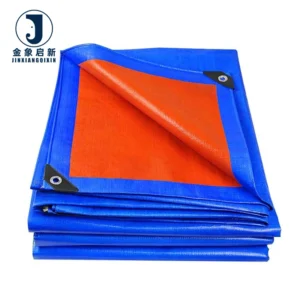
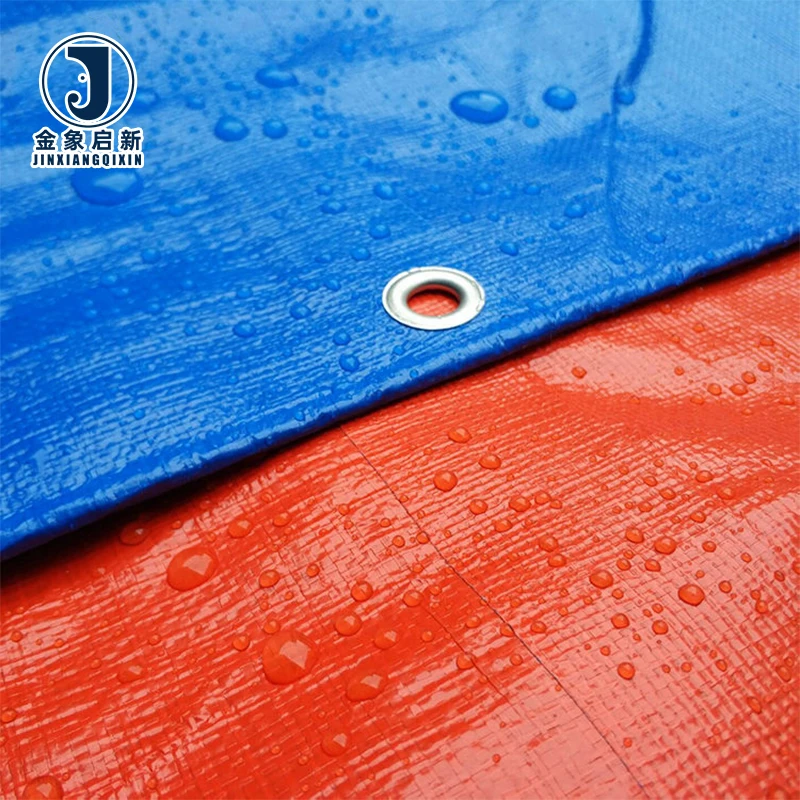
| Color Options | Blue, Blue/Orange, Green, Grey, Black, Clear, Grey/Green, Orange, or custom |
| Waterproof | Yes |
| UV Treatment | Available — confirm test basis for your market |
| Anti-Mildew | Mildew proof and anti-aging claimed — test basis not stated in source |
| Flame Retardant Grade | Available in flame retardant grades — confirm the grade required for your market |
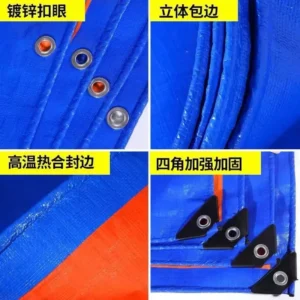
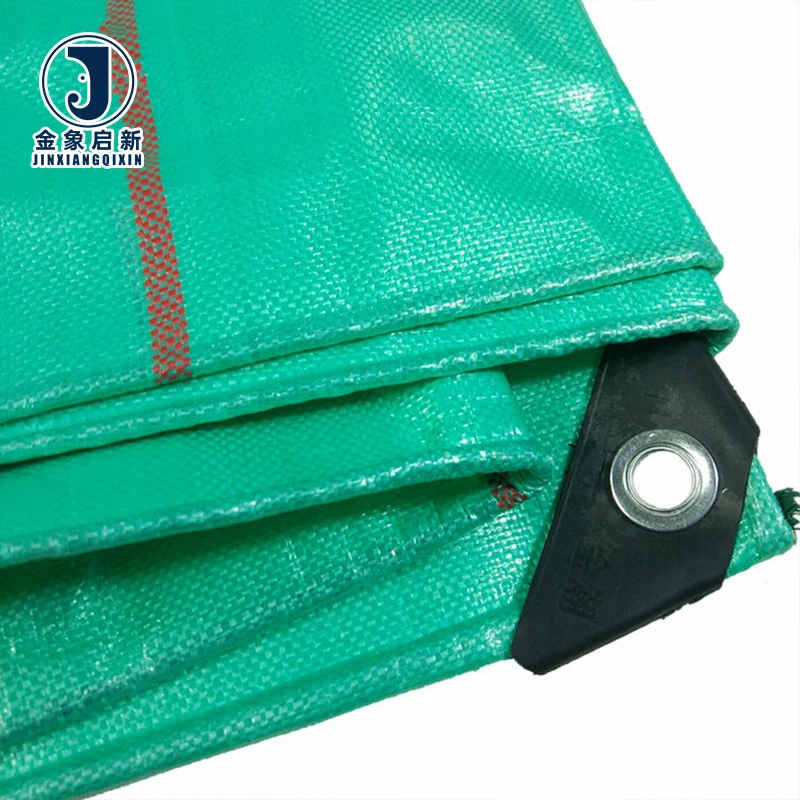
| Hem Reinforcement | All four edges reinforced with PP rope in hem (finished tarpaulin) |
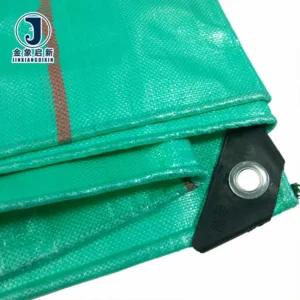
| Eyelets | Galvanized eyelets every 3 ft or 1 meter interval (finished tarpaulin) |
| Corner Reinforcement | Reinforced plastic corners (finished tarpaulin) |
| Printing | Custom printing accepted |
| Standards | ISO, CE certified facility |
Application Suitability
| Application | Exposure & Requirement |
|---|---|
| Sunshade awning structures | Prolonged UV exposure, wind load on seams, repeated deployment and retraction stress |
| Construction site covers | Abrasion from scaffolding contact, rain pooling, wind uplift at grommets |
| Equipment and machinery covers | Dust ingress prevention, moisture exposure, handling and tie-down at eyelets |
| Agricultural stock covers | UV degradation over growing seasons, moisture wicking, mildew in humid storage |
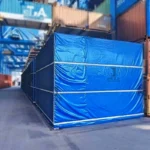
| Truck and container sheeting | Road debris impact, constant wind flutter, tie-down tension at reinforced hems |
| Garden and pool covers | Water contact, chemical exposure from pool treatments, seasonal folding and storage |
Why Sunshade Awning Fabric Selection Demands More Than a GSM Number
A PE tarpaulin ventilation duct fabric or industrial cover that passes the weight check on paper can still fail under real sunshade awning loads if weave density and coating adhesion are not matched to the application.
Buyers sourcing sunshade awning material often start with a GSM target, assuming heavier always means stronger. In practice, a roll that measures correctly on the scale but uses a loose weave with thick coating will flex and crack differently than a tightly woven, evenly laminated fabric of the same weight. Awning structures demand material that handles constant UV exposure, wind-induced flutter, and the mechanical stress of rolling and unrolling without delamination. [NEED_CITE: relationship between mesh count and tensile performance in HDPE woven fabrics] When the wrong PE tarpaulin industrial cover grade is specified for an awning frame, failures typically show up first at the hem line or around the eyelets, where concentrated stress meets the weakest bond between coating and base fabric.
Mesh Count and the Real Measure of Awning Fabric Durability
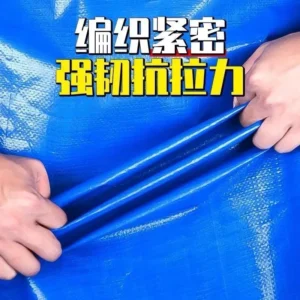
The mesh count — the number of HDPE yarns per unit area in warp and weft — determines how load is distributed across the PE tarpaulin ventilation duct fabric or awning cover before the LDPE lamination even enters the equation. A 14×14 weave spreads wind load across significantly more yarn crossover points than a 7×7 weave, reducing the point stress that causes individual yarns to snap under gust loading. For sunshade awning applications where the fabric is tensioned across a frame, higher mesh counts also resist the progressive tearing that starts from a single puncture or cut edge.
Coating Adhesion and Long-Term Awning Performance
The LDPE lamination on both sides of the HDPE woven base does more than provide waterproofing — it locks the weave geometry in place and prevents yarn migration under cyclic wind loading. When lamination adhesion is insufficient, the coating peels away from the base fabric at fold lines and hem folds, exposing bare HDPE yarns to UV degradation and mechanical abrasion. [NEED_CITE: lamination adhesion test methods for PE coated fabrics] Batch-to-batch consistency in coating weight and lamination temperature during production is what separates awning fabric that holds its shape across multiple seasons from material that begins to delaminate after the first summer. Selecting the right PE tarpaulin industrial cover for awning use means verifying both the coating weight and the bond strength between layers.
Reading the Specs: How GSM, Mesh Count, and Thickness Interact
GSM alone tells you how much material is in each square meter, but it does not reveal how that weight is distributed between base fabric and coating. Two PE tarpaulin rolls can share the same GSM yet perform very differently: one may achieve its weight through a dense HDPE weave with thin lamination, offering high tensile strength and good tear resistance, while the other uses a loose weave loaded with thick LDPE coating, which adds weight without proportional strength gains. Thickness readings of 0.2 mm to 0.4 mm correlate more closely with coating build than with base fabric quality. Mesh count is the parameter that bridges the gap — it tells you how many load-bearing yarns are present before coating is applied. For sunshade awning fabric that must resist wind uplift and repeated folding, specifying by mesh count alongside GSM gives a more complete picture of how the material will behave in service. The relationship between these three values determines whether the awning cover will resist sagging, tolerate tie-down tension at eyelets, and survive seasonal deployment cycles without premature failure.
The Hidden Cost of Specifying Sunshade Fabric by Price Per Roll
When awning manufacturers or distributors select PE tarpaulin industrial cover material primarily on roll cost, the downstream expenses rarely appear on the original purchase order. Fabric that delaminates at the hem fold forces the entire awning panel to be replaced, not just repaired. Color variation between rolls in the same shipment becomes visible once panels are installed side by side on a multi-bay awning structure, triggering customer complaints and rework. [NEED_CITE: colour consistency standards across production batches for coated fabrics] Eyelets pulled from insufficiently reinforced hems leave torn fabric that cannot be re-grommeted in the field, converting a minor repair into a full panel write-off. These failure modes all trace back to specification decisions made before the roll ever left the factory, and they compound when the supplier cannot provide documentation tying the delivered material back to the quoted grade.
Why Sourcing PE Tarpaulin Here Makes Sense for Awning Fabricators
Deep process control over HDPE weaving and LDPE lamination means coating weight and mesh count are managed as linked variables, not independent line items on a spec sheet. Three full production lines and 36 sets of professional equipment support consistent roll-to-roll output, so awning panels cut from different rolls in the same order match in color, weight, and handling characteristics. A 10-person R&D team develops custom width, color, and print samples within days, allowing awning manufacturers to confirm appearance and fabrication behavior before committing to bulk. Dedicated QA and QC at every production stage, with 100% inspection before shipment, catches GSM deviations and lamination defects before they reach the container. After-sales support on installation and repair questions means the supplier relationship does not end at the bill of lading.
Documentation & Verification
- Material specification sheet stating confirmed GSM, HDPE base fabric mesh count, and LDPE coating weight per roll
- Test report for UV treatment and flame retardant grades where applicable to your awning market requirements
- ISO and CE certificates documenting facility quality management and product compliance standards
- Pre-shipment inspection record with individual roll weight verification against quoted specification
- Roll packing list with batch identification for traceability across your awning production runs
- Certificate of origin and customs documentation supporting international awning material import
Fabrication, Handling & Storage
- Heat sealing parameters must account for LDPE lamination melting point — test on scrap from the same PE tarpaulin roll before production runs
- Galvanized eyelets at 1-meter intervals distribute tie-down load across the PP rope reinforced hem on finished awning panels
- Store PE tarpaulin rolls horizontally on pallets in shaded, ventilated areas to prevent LDPE coating deformation under compression
- Avoid dragging rolls on concrete floors — abrasion damages the outer LDPE lamination layer and exposes HDPE base yarns
- Clean finished awning covers with mild detergent and soft brush; solvent-based cleaners may degrade the LDPE coating surface
- Field repairs on punctures require compatible LDPE patch material heat-bonded at temperatures matching the original lamination process
Requesting a Quotation for Your Sunshade Awning Project
To provide an accurate material recommendation and quotation, we need to understand your awning frame dimensions, the wind load conditions at the installation site, and your target market’s fire safety or UV performance requirements. Specify whether you need roll stock for in-house fabrication or finished panels with eyelets and hem reinforcement. Include your preferred color, any custom printing requirements, and the approximate annual volume so we can align production scheduling with your delivery timeline. Samples are developed within days for your evaluation before bulk commitment.
Frequently Asked Questions
Q: What fire-retardant certifications are available for PE tarpaulin used in sunshade awning structures?
A: Flame retardant grades are available for our PE tarpaulin range, but the specific certification required depends on your local building code and awning installation regulations. We recommend confirming the fire classification your market demands — such as DIN 4102, NFPA 701, or M2 — so we can supply the matching test report with your shipment.
Q: How is GSM verified before shipment and what proof accompanies each PE tarpaulin roll?
A: Every PE tarpaulin roll undergoes weight verification during our 100% pre-shipment inspection, with results recorded against the quoted GSM. Your shipment includes a material specification sheet stating the confirmed GSM, mesh count, and coating weight, along with the inspection record and packing list for full traceability.
Q: What custom widths and roll lengths can be produced for sunshade awning fabrication?
A: Roll widths up to 6 meters and custom lengths beyond standard 100-yard or 100-meter rolls are available. Minimum order quantities depend on the specific width, color, and mesh count selected. Sample rolls are produced within days for fabrication testing before you commit to full production volume.
Q: How is color consistency maintained across multiple PE tarpaulin rolls in one awning order?
A: Color matching is controlled at the LDPE compounding stage, with masterbatch ratios locked per production batch. Rolls within the same order are produced consecutively to minimize variation. Pre-shipment inspection includes visual comparison across rolls, and a color reference standard is retained for future reorder matching.