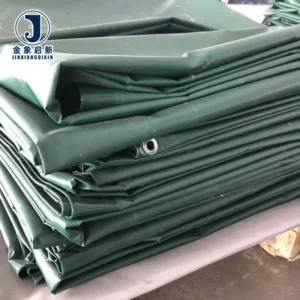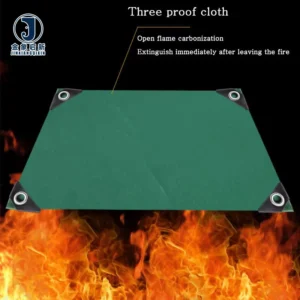
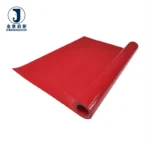
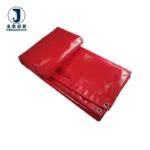
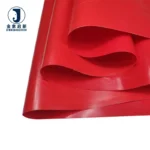
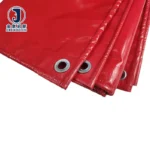
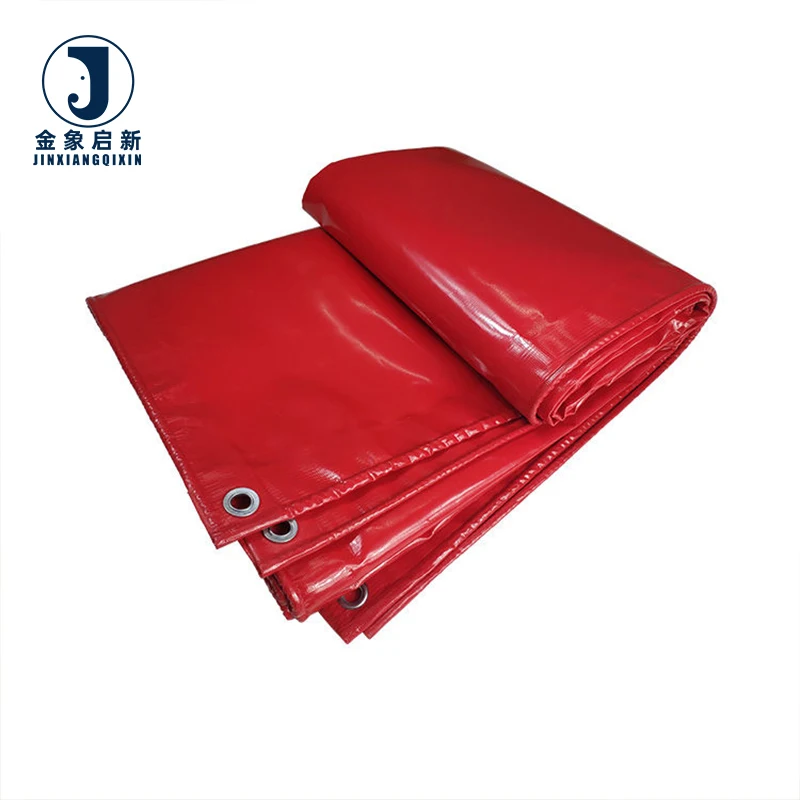
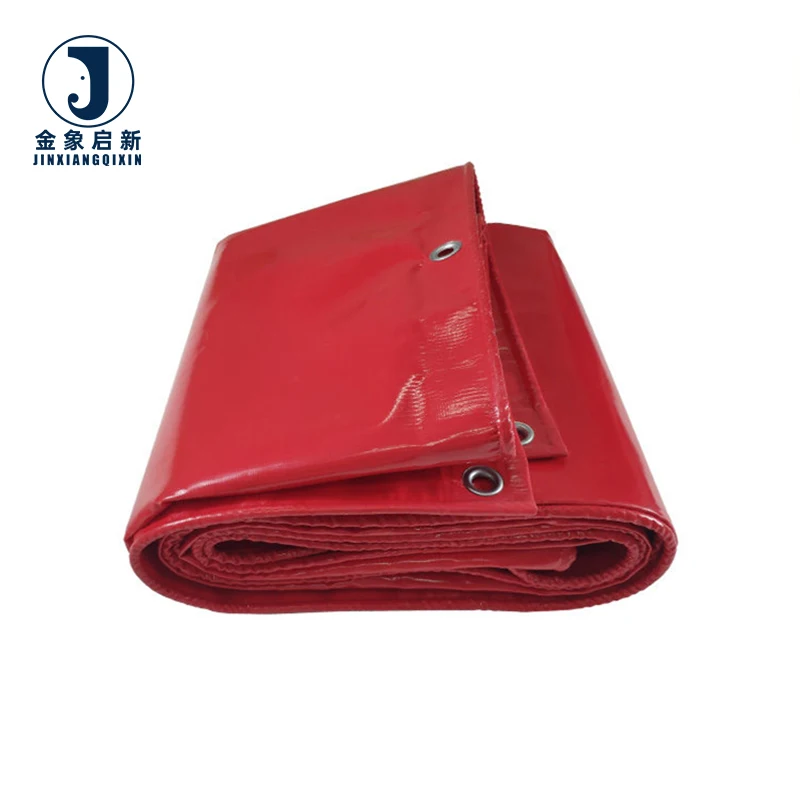
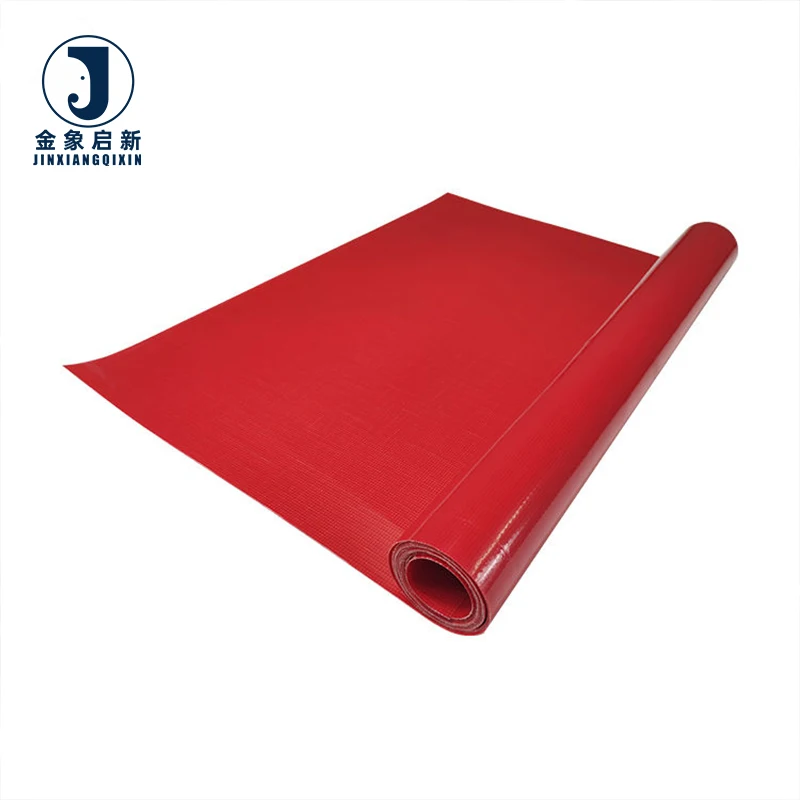
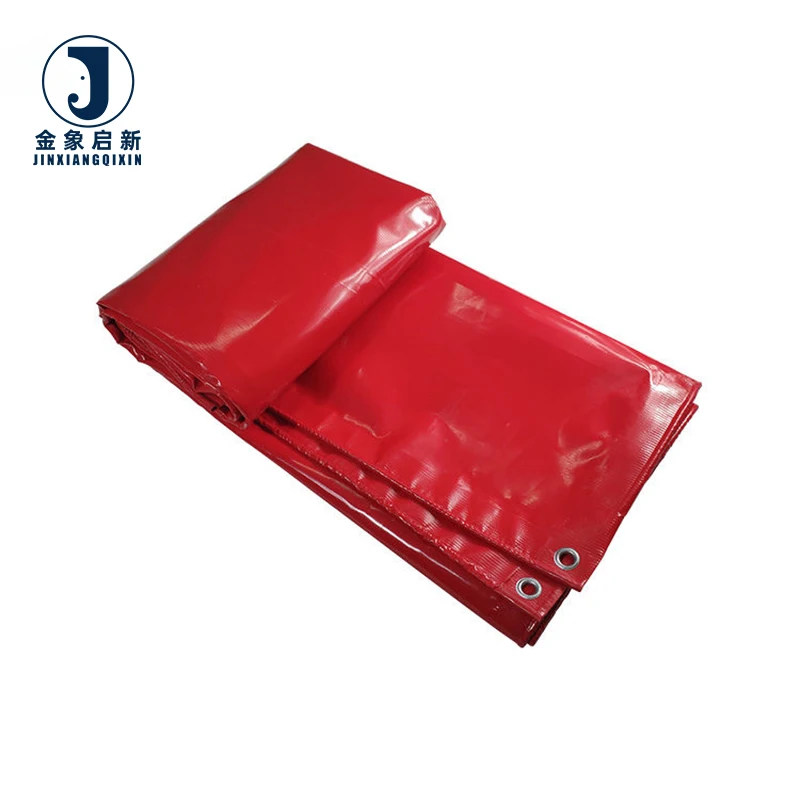
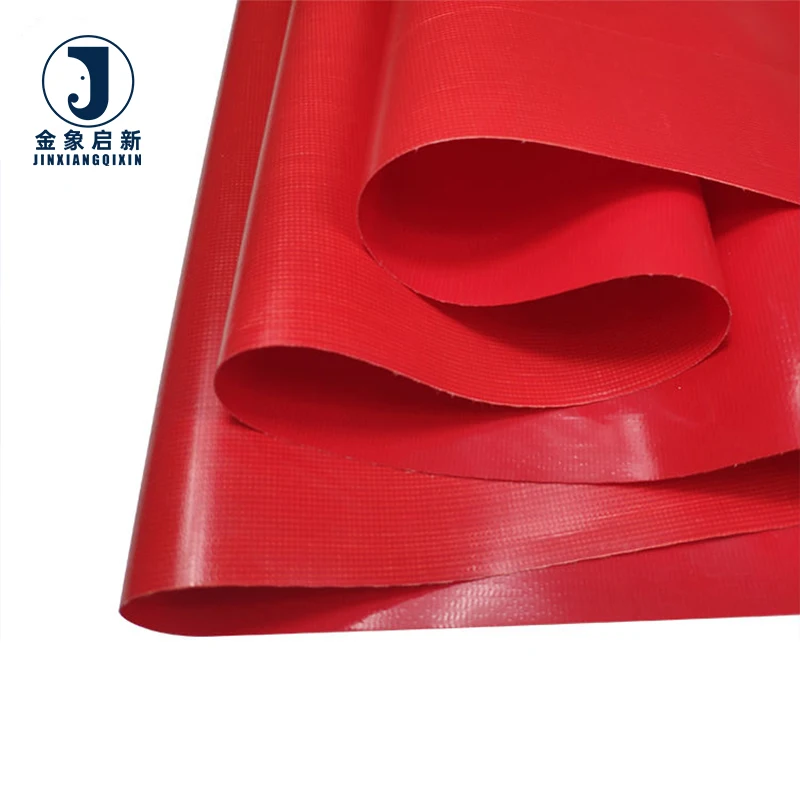
Precision Coating Control — Nearly 30 years of PVC coating process mastery ensures every roll meets its stated GSM, base fabric denier, and fire-retardant specification before leaving the facility.
Technical Specifications
| Parameter | Value |
|---|---|
| Product Type | PVC Coated Tarpaulin |
| Base Fabric | Polyester, double-sided PVC coating |
| Yarn Count Options | 500D×840D, 500D×1000D, 1000D×1000D, 1000D×1300D, 1300D×1300D, 1000D×2000D |
| Mesh Density | 20×20, 30×15, 30×19 |
| Weight Range | 500gsm, 610gsm, 650gsm, 800gsm, 1000gsm |
| Thickness Range | 0.29 mm – 0.65 mm |
| Tensile Strength (Warp) | 1650 N – 3900 N |
| Tensile Strength (Weft) | 1600 N – 3500 N |
| Temperature Range | Brittle ≤ -50 to -60 °C; Softening ≥ 80 °C; Melting point 212 °C |
| Fire Retardant | Available in fire retardant grades — confirm the grade required for your market |
| Anti-Static | Available on request — confirm surface resistance specification for your application |
| Anti-UV | Available — confirm test basis and exposure rating for your region |
| Key Features | Waterproof, anti-mildew, heavy metal free, flexible, self-clean surface |
| Joining Methods | High-frequency hot melt, hot air welding, sewing |
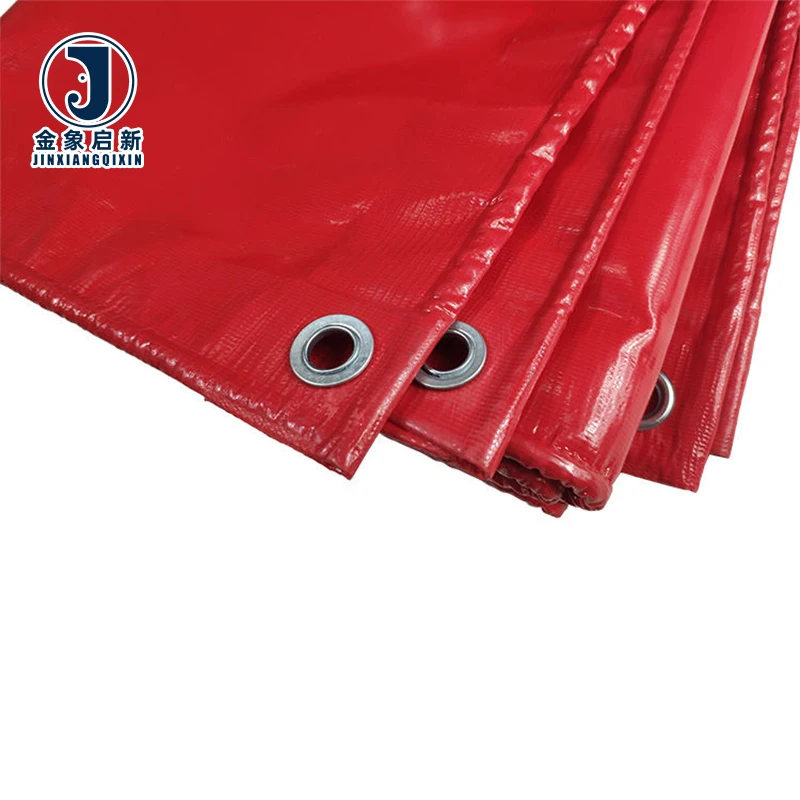
| Edge Construction | High-temperature heat-sealed seamless edge wrapping |
| Eyelet Options | Brass eyelets at 1 m intervals; 3 cm enlarged aluminium alloy buttonhole |
| Reinforcement | Reinforced corners on all sides; 5 mm thick rope without splicing |
| Printing | Printable, customised graphics available |
Application Suitability
| Application | Exposure & Requirement |
|---|---|
| Mining ventilation duct | Continuous airflow, underground fire-risk environment, anti-static compliance mandatory |
| Tunnelling duct construction | Abrasive dust, high humidity, fire-retardant certification required by site safety regulation |
| Aviation ground support ducting | Jet blast proximity, flame performance certification, lightweight yet high-tensile fabric |
| Membrane structures | Wind load tension, air retention at seams, long-term UV exposure |
| Inflatable structures | Internal pressure cycling, airtight weld integrity, repeated inflation and deflation |
What "Fire Retardant" Means When No Grade Is on the Datasheet
Certified fabric ships with a test report traceable to the batch — not a claim on a quotation.
Mining and tunnelling contractors regularly specify PVC coated tarpaulin for ventilation ducts only to discover the delivered material carries no fire-retardant grade recognised by the site safety authority. A fabric that burns slowly in one test standard may fail outright under another. Procurement teams end up holding material that cannot be installed, delaying the project while sourcing a certified replacement. The cost is rarely just the fabric — it is the idle crew, the missed milestone, and the re-inspection fee. [NEED_CITE: fire classification standards for ventilation duct materials in underground mining]
Weld Integrity Under Continuous Airflow Pressure
Ventilation ducts fail most often at the seam, not in the body of the fabric. High-frequency hot melt and hot air welding both produce airtight joins on this PVC coated tarpaulin, but the welding temperature and dwell time must match the coating weight and thickness of the specific grade selected. A 500gsm lightweight duct fabric requires a different energy input than a 1000gsm heavy-duty grade. The 10-person R&D team develops welding parameter recommendations for each material variant, and sample panels can be produced within days for fabricators to validate on their own equipment before committing to a full production run.
Base Fabric Denier and Duct Structural Load
The yarn count options — from 500D×840D up to 1000D×2000D — directly govern how much tensile and tear load the duct wall can carry before deformation. A large-diameter duct operating under positive pressure in a mining decline needs a heavier denier base fabric to resist ballooning and longitudinal creep. Lower-denier constructions suit temporary surface ventilation or short-run event ducting where weight and pack-down size matter more than long-term structural stability. Selecting the correct PVC coated tarpaulin denier avoids both over-engineering and premature duct wall distortion. [NEED_CITE: tensile and tear test methods for coated fabrics per ISO 1421]
Reading the Specification Sheet Beyond GSM
Coating weight and base fabric density together determine the mechanical performance of the material. Two rolls both labelled 650gsm can differ substantially in tensile strength if one uses a 1000D×1000D base cloth at 20×20 mesh while the other uses a 500D×1000D cloth at 30×19 mesh — the latter has more PVC filling the weave and less polyester carrying the load. Thickness readings from 0.29 mm to 0.65 mm correlate with coating volume, which in turn influences weld penetration depth and the energy required for a reliable hot-air join. Fire retardant and anti-static treatments add functional chemistry to the coating compound; these must be specified at the inquiry stage so the correct formulation is batched rather than applied as an afterthought. Surface finish — self-clean and heavy metal free as standard — affects how particulate dust accumulates inside a duct over extended service, influencing airflow efficiency and cleaning intervals.
The Cost of Specifying on Price Per Kilogram Alone
When procurement decisions reduce PVC coated tarpaulin to cost per kilogram, the hidden failures surface on site. A duct fabric that is lighter than the stated GSM will stretch under positive pressure, pulling welded seams apart at the flex points where the duct bends around a tunnel corner. Anti-static treatment claimed without a measured surface resistance value leaves the contractor unable to demonstrate compliance during the safety audit. Colour variation between rolls in the same consignment becomes visible once adjacent duct sections are hung side by side in a permanent installation, forcing selective replacement. These failures are not manufacturing accidents — they are the direct consequence of specifying on price rather than on verified material properties. [NEED_CITE: common failure modes in flexible ventilation duct installations]
Why Technical Buyers Source Here
Deep process control over coating weight and adhesion comes from nearly 30 years focused exclusively on coated fabric — this is not a trading company reselling third-party rolls. Three full production lines and 36 sets of professional equipment support bulk duct fabric orders with consistent on-time delivery, even when fire-retardant or anti-static formulations require dedicated batch runs. The 10-person R&D team handles material selection, welding parameter development, and custom sizing, turning sample requests around within days rather than weeks. Dedicated QA and QC at every production stage means 100 percent inspection before shipment, with roll-by-roll documentation that technical buyers can file directly into their project compliance records. ISO and CE certifications back the management system, and the documentation pack — including certificate of origin — supports customs clearance across multiple import jurisdictions.
Documentation & Verification
- Material specification sheet stating GSM, base fabric denier, coating weight, and colour reference per roll
- Fire retardant and anti-static test reports matched to the batch number on delivery
- Pre-shipment inspection record covering weight verification, coating adhesion, and visual check
- ISO and CE certificates included in the shipping documentation pack
- Certificate of origin and full customs support documentation for international dispatch
Fabrication, Handling & Storage
- Hot air welding temperature must be matched to the selected thickness from 0.29 mm to 0.65 mm
- Brass eyelets at 1 m spacing distribute tie-down load across the reinforced hem rope
- High-temperature heat-sealed edge wrapping prevents fraying during duct fabrication cutting
- Store rolls horizontally on pallets to avoid permanent creasing in heavy-grade 1000gsm material
- Clean self-clean surface with mild detergent only; solvent-based cleaners may attack the PVC coating
- Field repairs use hot air welding compatible with the double-sided PVC coating construction
What to Include in Your Enquiry
Specify the ventilation or structure application, operating pressure range, and whether fire-retardant or anti-static certification is required by the site safety authority. Provide the target market so the correct test standard can be matched. State the required roll width, approximate annual volume, and whether you need finished cut-to-size panels or full rolls for in-house fabrication. If colour consistency across multiple rolls is critical for a visible installation, note this at the inquiry stage so batch allocation can be planned accordingly.
Frequently Asked Questions
Q: What fire-retardant grade does this PVC coated tarpaulin carry, and will my market accept it?
A: Fire retardant grades are available and the applicable test standard depends on your target market and end-use regulation. Specify the standard required — such as the classification used in mining ventilation or building membrane codes — at the inquiry stage so the correct formulation is batched and the matching test report is supplied with your shipment.
Q: How is anti-static performance measured and what value should I expect?
A: Anti-static treatment is available on request and is measured by surface resistivity. The required value depends on the hazard classification of the installation environment. Provide your site specification or the relevant standard at the enquiry stage so the coating formulation and test documentation can be aligned before production begins.
Q: Which base fabric denier and weight should I choose for duct versus inflatable use?
A: Ventilation ducts under positive pressure in mining or tunnelling typically require higher denier base fabrics such as 1000D×1000D or above for structural stability. Inflatable structures may use lighter denier constructions where airtight weld integrity and flexibility matter more than tensile load. The R&D team can recommend the optimal grade based on your operating conditions.
Q: Can you supply hot air welding parameters and seam strength data?
A: Welding parameters vary with coating weight and thickness across the 0.29 mm to 0.65 mm range. The R&D team provides recommended temperature, speed, and pressure settings for each grade, and sample panels can be produced within days for your fabrication team to validate on-site before full production is committed.
Q: How do you ensure batch-to-batch consistency across multiple rolls?
A: Every roll undergoes weight verification against the stated GSM and visual inspection before dispatch. Coating weight, colour, and treatment formulation are controlled at each production stage. The pre-shipment inspection record documents these checks roll by roll, giving you traceable evidence of consistency across the entire order.