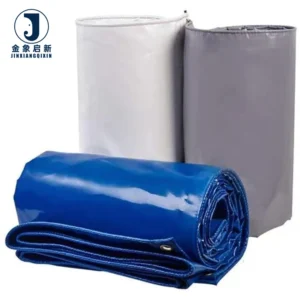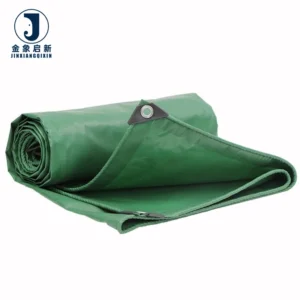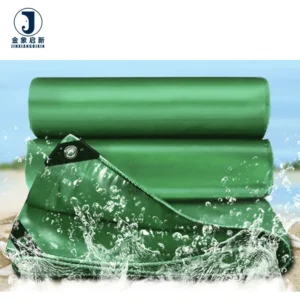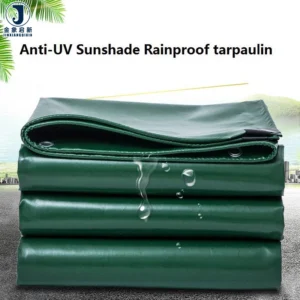
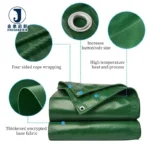
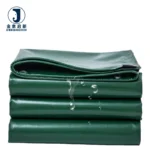
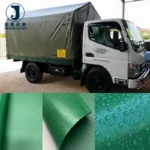
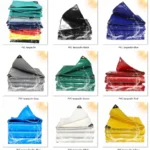
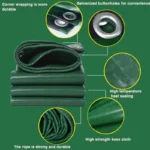
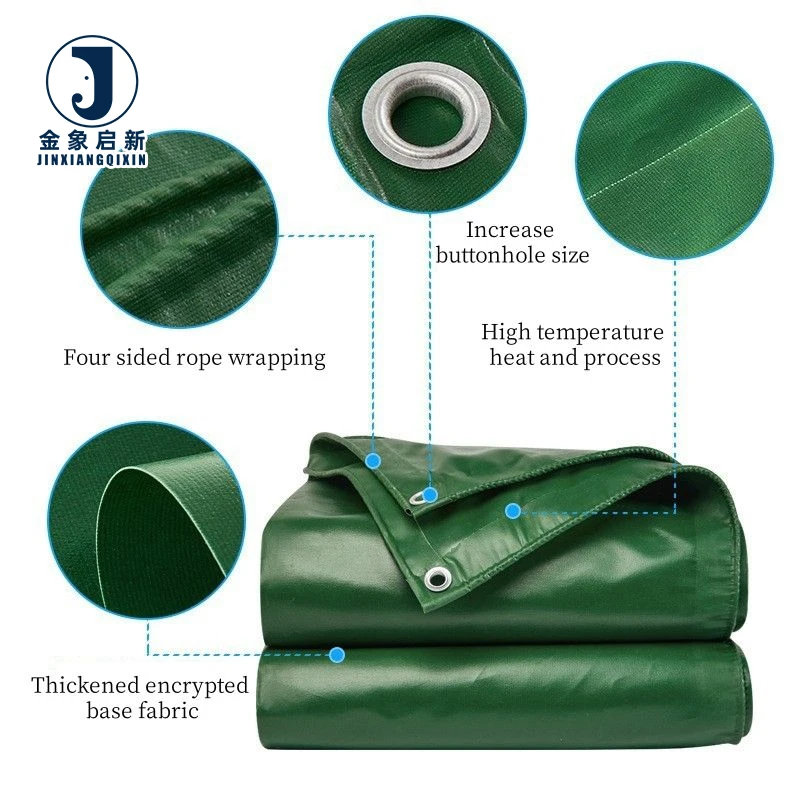
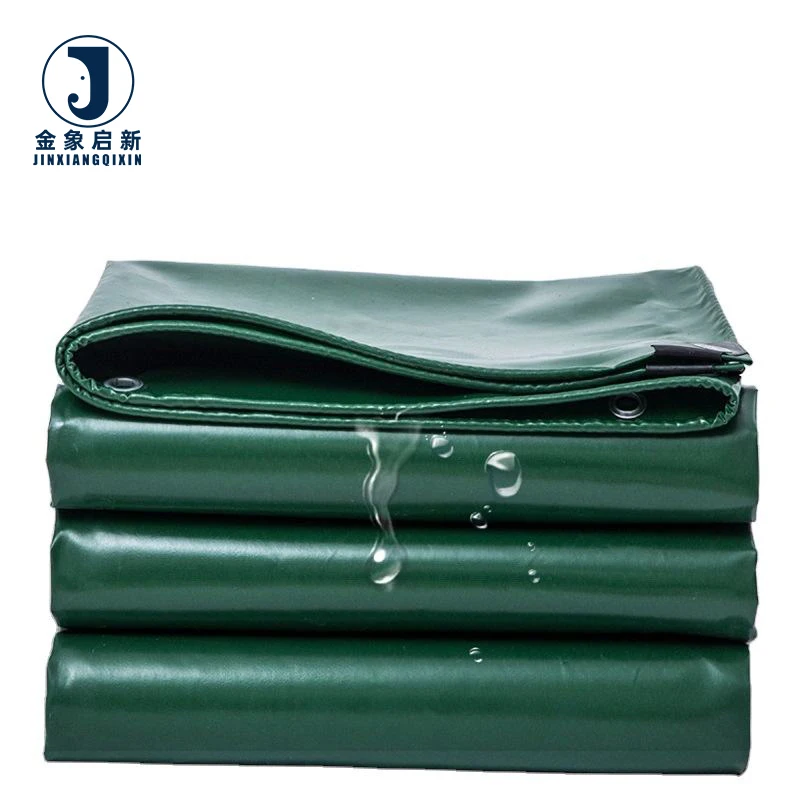
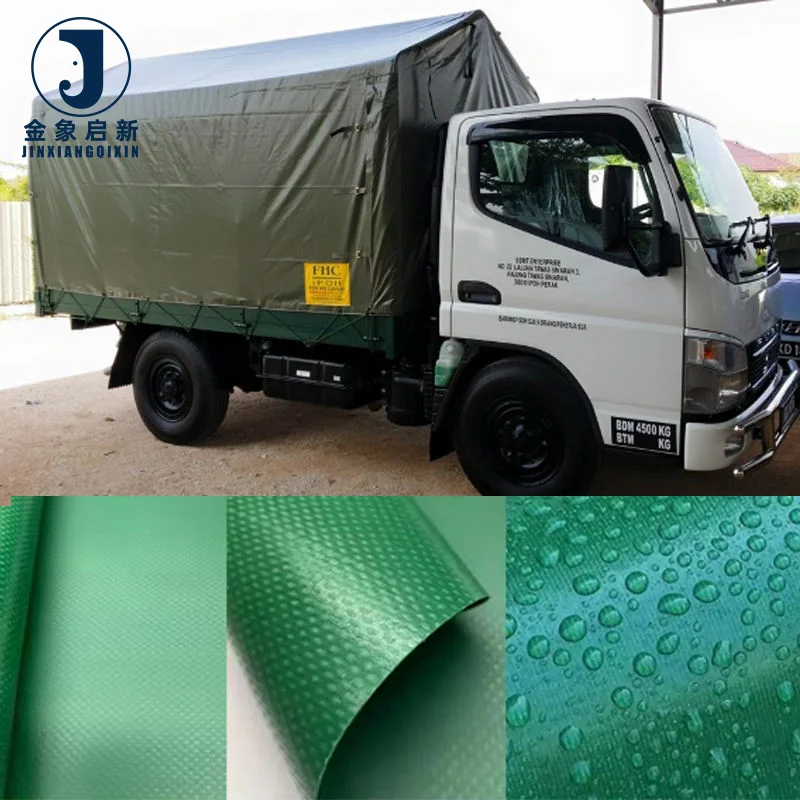
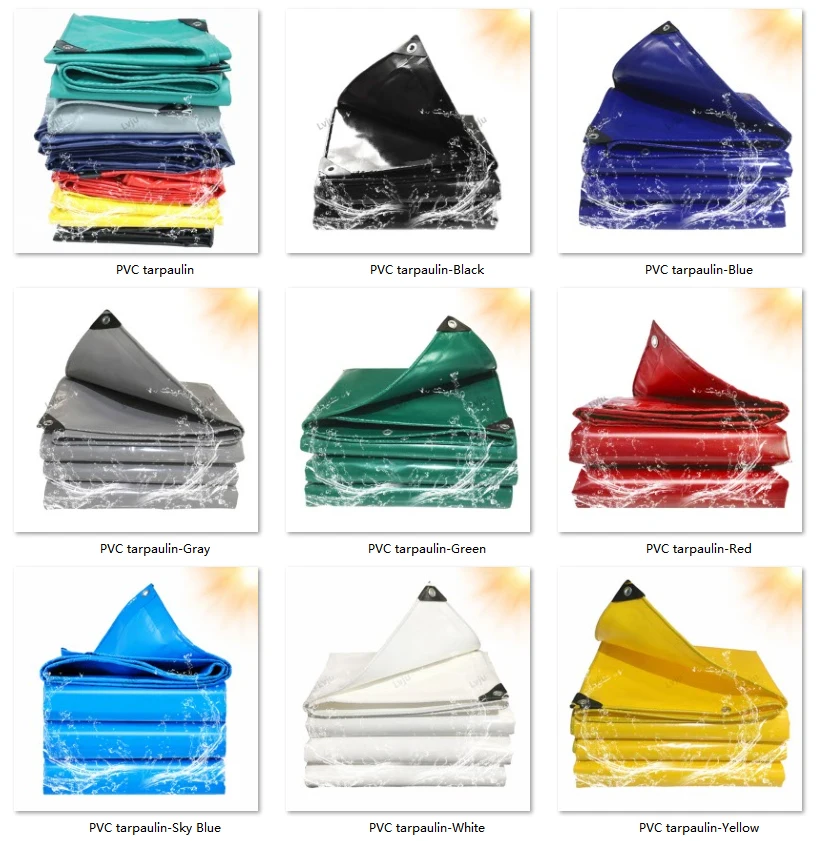
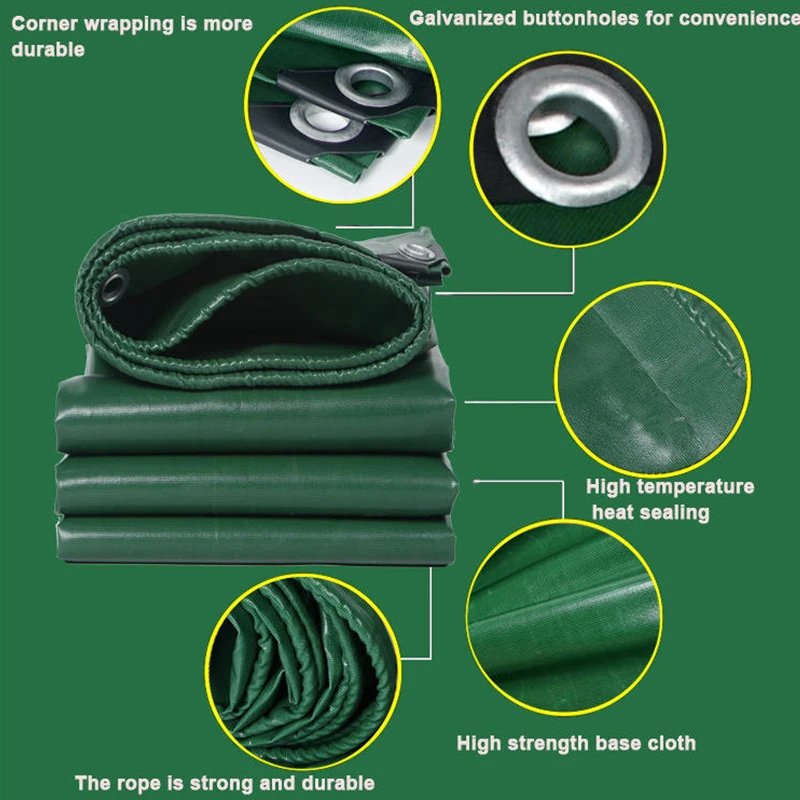
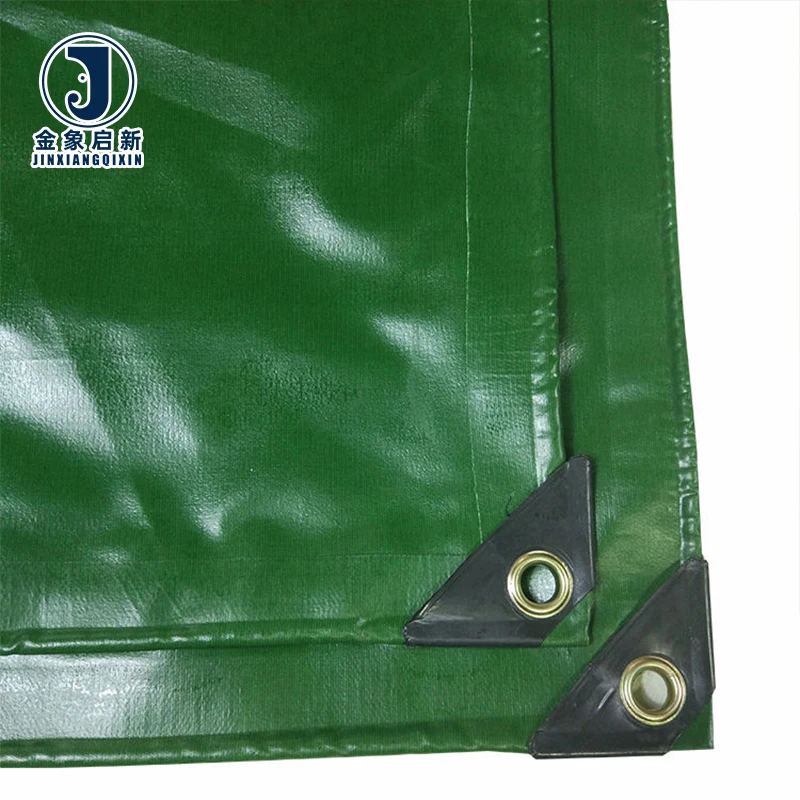
Process-Controlled Coating — Every roll of this PVC coated tarpaulin is produced on one of three dedicated lines with stage-by-stage QA, ensuring batch-to-batch consistency for industrial ventilation and technical structure applications.
Technical Specifications
| Parameter | Value |
|---|---|
| Product Type | PVC Coated Tarpaulin |
| Coating Material | PVC |
| Base Fabric | Tricot / plain industrial woven fabric |
| Weight | 500GSM |
| Waterproof Rating | anti-permeable ≥20KPa |
| Flame Retardant | ≤10 seconds (grade not stated — confirm required classification) |
| Low-Temperature Flexibility | not fractured by pliers at -30°C |
| Corrosion Resistance | acid, alkali and brine |
| Anti-Mildew | stated |
| Abrasion Resistance | stated |
Application Suitability
| Application | Exposure & Requirement |
|---|---|
| Mining and tunnelling ventilation ducts | Continuous airflow pressure, fire-retardant and anti-static compliance, repeated flex at junctions |
| Inflatable and membrane structures | Sustained internal pressure, seam integrity under tension, weather exposure across seasons |
| Aviation and construction enclosures | Extreme temperature swings, wind load, temporary structural demands |
| Chemical-plant adjacent installations | Acid and alkali atmosphere, brine corrosion, long-term coating stability |
Why "Fire Retardant" Without a Verified Grade Creates Site Risk
Specifying PVC coated tarpaulin fire retardant performance without a documented classification exposes your project to compliance failure at the inspection stage.
Request the test report before the purchase order, not after the container arrives.
A ventilation duct installed underground or a membrane structure erected on a public site must meet the fire classification demanded by the local authority. When the roll arrives with only a generic "flame retardant" claim and no supporting documentation tied to a recognised standard, the entire installation can be rejected — forcing removal, replacement, and schedule delay [NEED_CITE: fire classification standards for textile structures and ventilation ducts in mining]. This PVC coated tarpaulin is available in flame retardant grades; the specific classification required for your market must be confirmed at inquiry stage so the correct formulation and test documentation are aligned before production begins.
Coating Formulation for Technical Airflow and Containment
This PVC coated tarpaulin is engineered where the fabric itself forms part of a pressurised or contained system. Ventilation ducts demand a coating that maintains adhesion to the base fabric under continuous positive or negative pressure, resisting delamination at heat-welded seams. The PVC formulation used here delivers waterproof performance at anti-permeable ≥20KPa, making it equally suited to membrane structures where water ingress through the fabric would compromise internal climate control. Acid, alkali and brine corrosion resistance extends usable service life in chemical-plant adjacencies and marine-environment installations where atmospheric contaminants attack standard coatings.
Low-Temperature Behaviour in Exposed and Underground Sites
Fabric flexibility at sub-zero temperatures separates materials that survive a single season from those that crack under the first cold snap. This PVC coated tarpaulin retains low-temperature flexibility down to -30°C without fracture when tested by pliers, a threshold relevant to high-altitude construction enclosures, winter mining operations, and cold-storage membrane walls [NEED_CITE: low-temperature flexibility test methods for coated industrial fabrics]. The tricot base fabric provides multidirectional yarn support that resists crack propagation once the coating is stressed, an important characteristic for inflatable structures that undergo repeated inflation and deflation cycles across temperature ranges.
Reading the Specification Sheet Beyond the GSM Number
Weight per square metre alone tells you how much material is present, not how that material behaves under load. The 500GSM figure for this PVC coated tarpaulin combines base fabric mass and coating weight; the ratio between the two determines whether the fabric is coating-heavy (better waterproofing, softer hand) or yarn-heavy (higher tensile and tear resistance). Tricot and plain woven base fabric options offer different structural responses: tricot provides bias-direction stability suited to curved duct sections and inflatable panels, while plain woven constructions deliver predictable warp-and-weft tensile values for flat membrane applications. The anti-permeable ≥20KPa waterproof rating indicates coating continuity — no pinholes or thin spots that would allow water passage under hydrostatic pressure, a requirement for pond liners and reservoir covers as much as for ventilation ducts exposed to condensate.
What Happens When Technical Fabric Specifications Are Not Verified
Rolls arriving lighter than the quoted GSM force a difficult choice: accept substandard material or delay the project while replacements ship. Ventilation duct fabric that lacks the fire-retardant or anti-static certification required by the site safety plan cannot be installed regardless of how well it performs mechanically [NEED_CITE: anti-static surface resistance requirements for underground ventilation materials]. Colour variation between rolls ordered for the same membrane structure becomes visible once panels are heat-welded side by side, triggering client rejection. Welded seams that fail before the fabric itself indicate a mismatch between heat-welding temperature and the coating’s melting characteristics — a problem traceable to insufficient specification of coating type and weight at the ordering stage.
Sourcing Technical Coated Fabric With Confidence
Three full production lines and 36 sets of professional equipment allow this PVC coated tarpaulin to be manufactured at volume without sacrificing the process control that technical applications demand. A 10-person R&D team develops samples within days when custom formulations, widths, or fire-retardant grades are specified, so you evaluate actual production material before committing to a full order. Dedicated QA and QC at every production stage — from base fabric inspection through coating weight verification to final roll examination — catches deviations before they reach the packing area. Every shipment undergoes 100% pre-shipment inspection with a documented record provided, giving you evidence of compliance before the container leaves the facility. Nearly 30 years of focused coated-fabric production informs the process parameters chosen for each technical grade.
Documentation & Verification
- Material specification sheet stating 500GSM, base fabric construction and PVC coating weight per roll
- Flame-retardant test report aligned to the classification requested at inquiry stage
- Anti-static surface resistance measurement where site compliance demands certification
- Pre-shipment inspection record confirming roll weight, dimensions and visual quality
- ISO and CE certificates supporting import documentation in regulated markets
- Certificate of origin and customs documentation for cross-border technical procurement
Fabrication, Handling & Storage
- Heat-weld at temperatures matched to the PVC coating formulation to prevent seam delamination on 500GSM rolls
- Store rolls upright on end-caps to avoid flat-spot deformation of the tricot base fabric
- Allow cold-stored rolls to reach ambient temperature before unrolling to prevent coating micro-cracking at -30°C flex limit
- Use compatible PVC adhesive for field repairs on acid and alkali resistant coating surfaces
- Plan cut patterns across roll width to minimise offcut waste and welded seam count on membrane panels
Preparing Your Technical Inquiry
Provide the ventilation duct diameter, airflow pressure, and fire-retardant or anti-static classification your site authority requires so the correct PVC coated tarpaulin formulation can be matched. Specify whether you need roll stock in standard widths or custom dimensions, and indicate annual volume to align production scheduling. If your membrane structure demands a specific colour or surface finish, request a sample roll for weld-parameter testing before full production.
Frequently Asked Questions
Q: What fire-retardant standard does this PVC tarpaulin meet, and can you supply the test report?
A: This PVC coated tarpaulin is available in flame retardant grades with self-extinguishing times at or below 10 seconds. The specific classification — whether DIN 4102, NFPA 701, or a local mining standard — must be confirmed at inquiry so the correct formulation is produced and the matching test report is included with your shipment documentation.
Q: Is this fabric anti-static certified, and what is the measured surface resistance?
A: Anti-static treatment is available for PVC coated tarpaulin destined for underground mining and tunnelling ventilation ducts where static discharge poses ignition risk. State your required surface-resistance range at inquiry stage; the R&D team will formulate accordingly and include measured values in the pre-shipment inspection record.
Q: How is GSM verified on arrival to ensure the roll matches the quoted specification?
A: Each roll of this 500GSM PVC coated tarpaulin is weighed during 100% pre-shipment inspection, and the verification record accompanies the packing list. On arrival, you can cross-check by cutting a measured sample and comparing its weight to the stated specification — any discrepancy triggers immediate resolution.
Q: Can the fabric be custom-welded into duct configurations and what seam strength can be expected?
A: Heat-welded seams on this PVC coated tarpaulin achieve strength dependent on welding temperature, pressure, and dwell time matched to the coating formulation. The 10-person R&D team supplies recommended weld parameters with your sample roll so your fabrication team can validate seam integrity before full production begins.
Q: What roll widths and lengths are available, and what is the MOQ for custom technical grades?
A: Standard and custom widths are available for this PVC coated tarpaulin, with lengths determined by roll weight limits for container loading. Custom fire-retardant grades, colours, and widths carry minimum order quantities confirmed at quotation stage alongside lead time, ensuring production capacity is reserved for your batch.