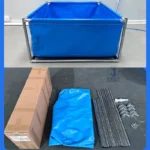
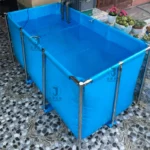
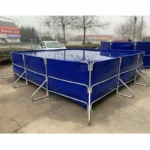
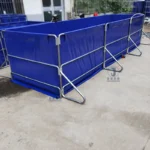
Deep Process Control Over Coating Weight — Our PVC coated pond liners undergo QA/QC at every production stage with 100% pre-shipment inspection to ensure the GSM on the quotation matches the material you receive.
Technical Specifications
| Parameter | Value |
|---|---|
| Product Type | Pond Liner |
| Material | PVC Coated Tarpaulin |
| Base Fabric | Polyester (500D×500D) |
| Coating Method | Double-Sided PVC Coating |
| Construction | Integrated Pressing (No Stitching) |
| Thickness Range | 450-900 g/m² |
| Surface Finish | Smooth, leather-like texture |
| Waterproof Performance | Fully waterproof overall coating sealing |
| UV Treatment | Anti-UV (test basis not stated — confirm documentation required) |
| Flame Retardant | Flame retardant grades available (grade not stated — verify for local compliance) |
| Repairability | Hot air weldable on-site |
| Standards | ISO, CE certified production facility |
Application Suitability
| Application | Exposure & Requirement |
|---|---|
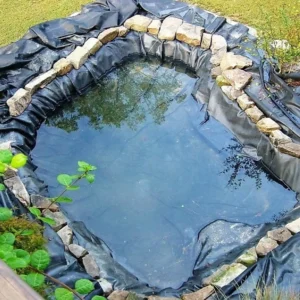
| Commercial Fish Farming Ponds | Permanent water contact, constant hydrostatic pressure, biological exposure, UV degradation from sun |
| Shrimp Aquaculture Tanks | Saltwater corrosion resistance, liner integrity under stocking density, smooth surface for harvest |
| Agricultural Water Reservoirs | Long-term water containment, soil chemistry exposure, puncture risk from substrate |
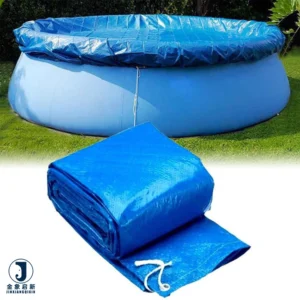
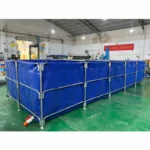
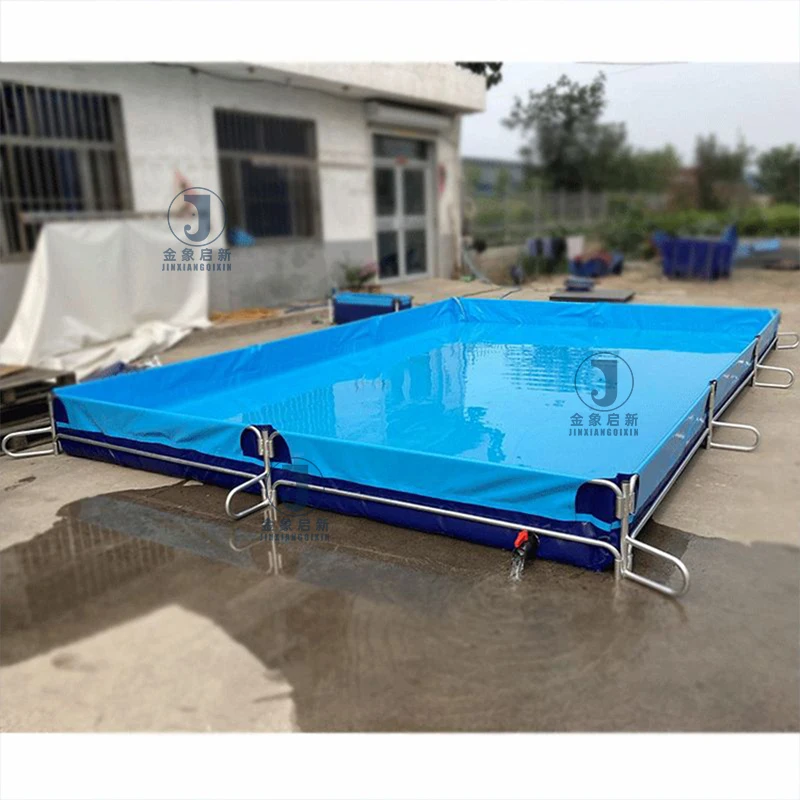
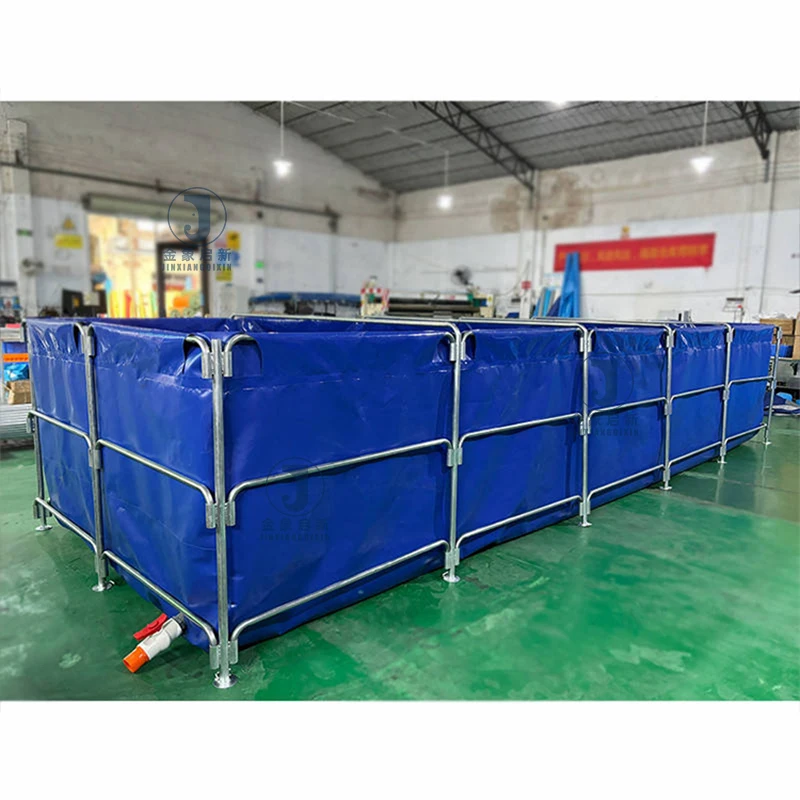
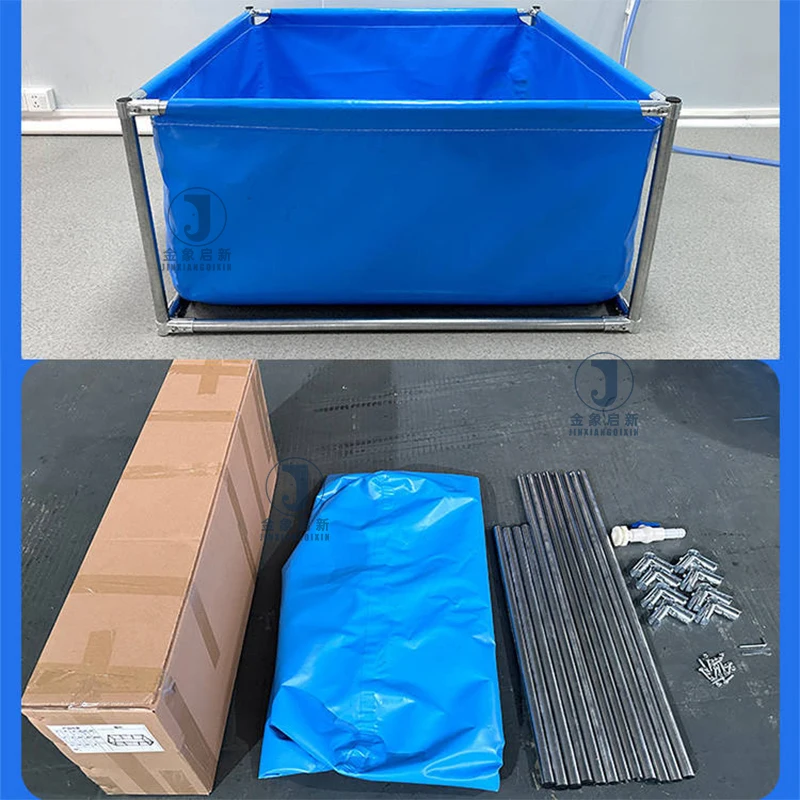
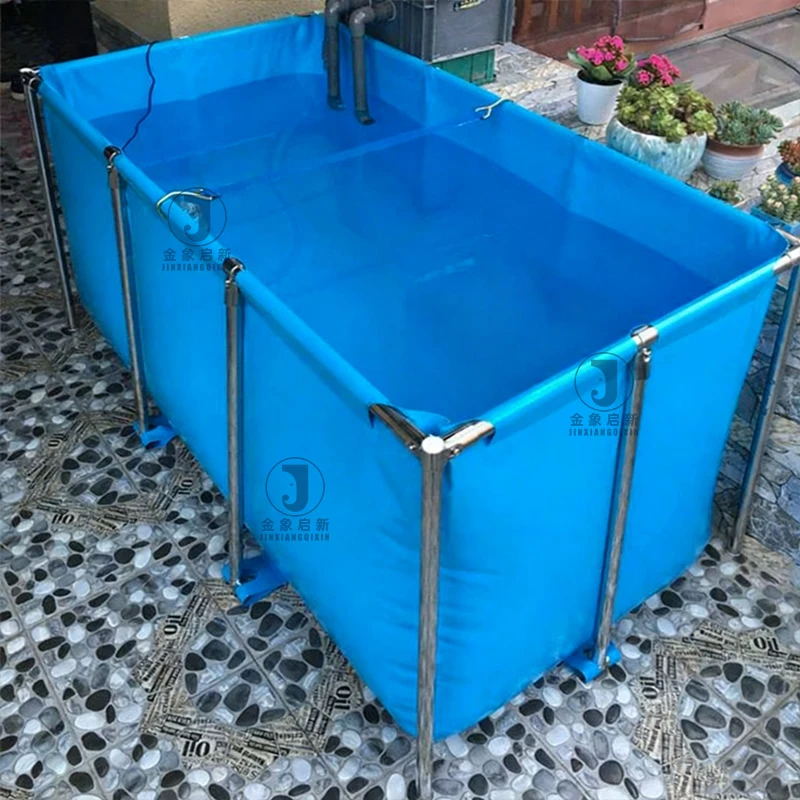
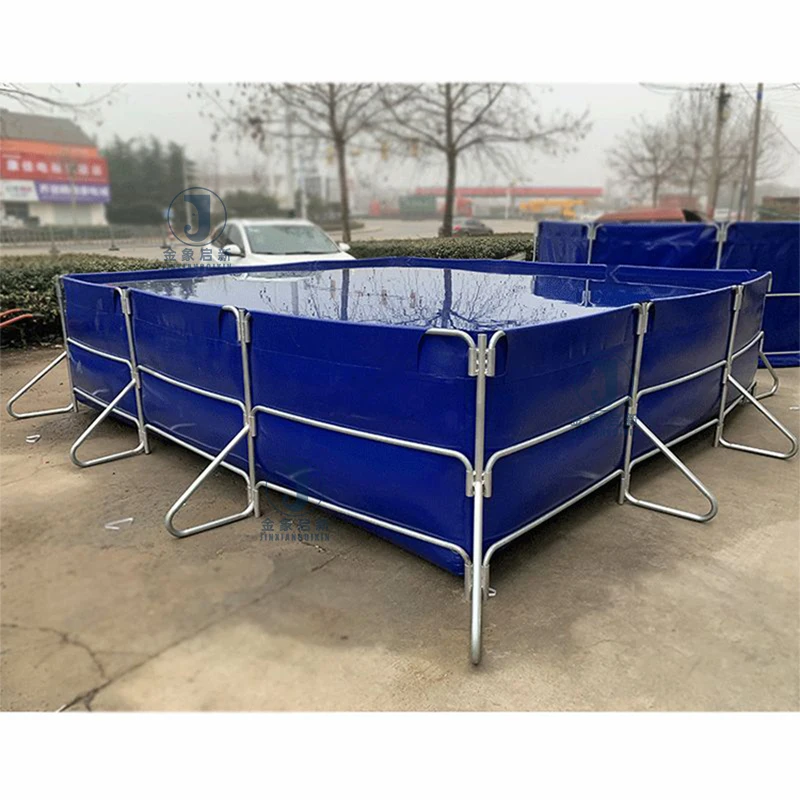
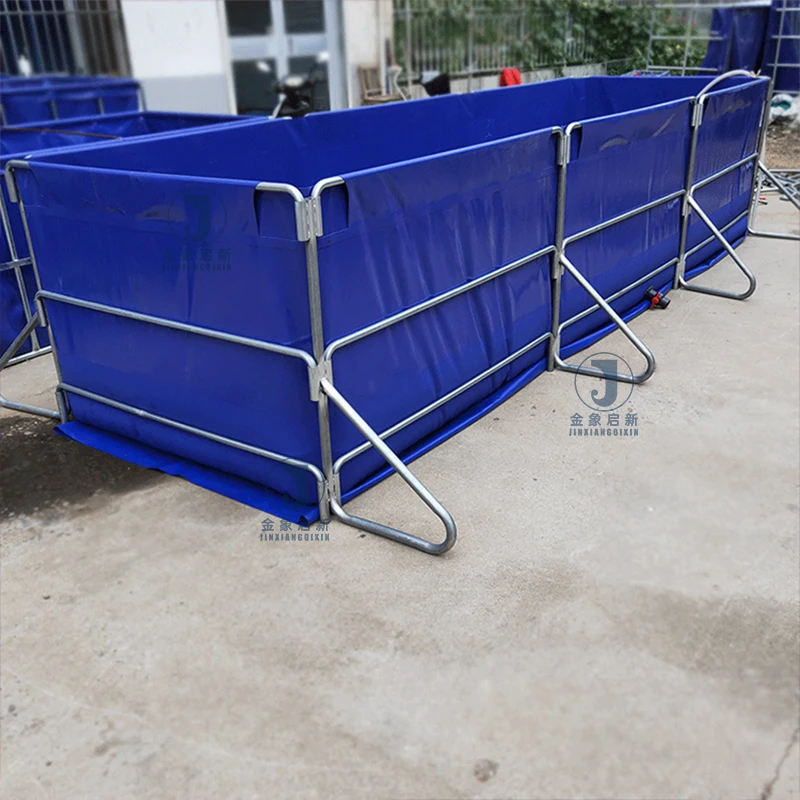
| Foldable Above-Ground Pond Tanks | Repeated folding and deployment, flex stress at corners, structural load when filled |
Why Generic Pond Liners Fail at the Seams
Generic pond liners crack under sun exposure, leak at stitched seams, and cannot be field-repaired — costing aquaculture operators downtime, water loss, and stock mortality. Our integrated pressing construction eliminates stitched seams entirely, removing the most common failure point in liners exposed to constant water load and flex stress.
Aquaculture operators specifying PVC Fish Pond Liner for aquaculture often discover that welded seams fail before the fabric itself does, particularly at points where the load flexes most or where hydrostatic pressure concentrates. This creates emergency patching scenarios mid-season when pond drainage is not an option. [NEED_CITE: tensile and tear test methods for coated fabrics per ISO 1421]
Engineered for Sustained Water Containment
The 500D×500D polyester base fabric provides the tensile foundation needed to resist sustained hydrostatic pressure without stretching or deforming. Double-sided PVC coating delivers complete waterproof sealing — water cannot migrate through the material or escape at panel joints when the liner is properly heat-welded during installation. This construction method suits both in-ground pond excavation linings and above-ground tank configurations where structural integrity under fill load is non-negotiable.
Field Repairability Without Full Replacement
When punctures or abrasion damage occur during operation — whether from equipment contact, substrate shifting, or biological factors — hot air welding enables on-site repair without draining the pond or replacing entire liner sections. This capability extends operational life and reduces the total cost impact of field damage, particularly for large-format commercial installations where liner replacement would mean significant stock disruption and water treatment restart.
Understanding the Weight-to-Strength Relationship
Specifying by GSM alone without examining the base fabric construction leads to material selection errors. A 650 GSM liner with low-denier yarn may weigh the same as a 650 GSM liner built on 500D×500D polyester, but the tear propagation resistance differs substantially. The base fabric denier and weave density determine how the material handles point loads and abrasion; the PVC coating weight provides waterproof sealing and surface durability. Both parameters must align with your installation method, substrate conditions, and expected service environment. [NEED_CITE: relationship between base fabric denier and tear strength in coated technical textiles]
The Hidden Cost of Underspecified Material
Pond liners ordered based on quotation GSM without verification on arrival frequently weigh less than agreed, resulting in thinner coating and reduced puncture resistance once installed. Operators then face premature failure at stress points, emergency repairs during peak production, and disputes over whether the material delivered matches the specification promised. Batch color variation between rolls in the same order becomes visible once multiple liners are installed side by side across a farm site, creating an inconsistent appearance that signals poor procurement control to visiting buyers or auditors.
Why Procurement Teams Source This PVC Fish Pond Liner for Aquaculture Here
Three full production lines and 36 sets of professional equipment support bulk pond liner orders with reliable on-time delivery, even during peak aquaculture construction seasons. The 10-person R&D team handles custom pond dimensions, irregular shape development, and sample creation within days — allowing you to verify fit and material behavior before committing to full production volume. Dedicated QA/QC inspection at every production stage with 100% pre-shipment verification ensures the GSM stated on your quotation is the GSM you receive on the dock, backed by inspection records. Nearly 30 years of focused coated fabric production provides deep process control over coating weight consistency and adhesion quality across every roll shipped.
Documentation & Verification
- Material specification sheet stating exact GSM, base fabric denier, and coating weight for the grade ordered
- UV treatment test report available upon request to confirm anti-UV performance basis for your climate zone
- ISO and CE certificates covering the production facility and quality management system
- Pre-shipment inspection record documenting weight verification per roll against stated specification
- Roll packing list with individual roll weights and dimensions for receiving verification
Fabrication, Handling & Storage
- Hot air welding parameters must match the 450-900 g/m² thickness range to ensure seam strength equals fabric strength
- Store rolls horizontally on pallets to prevent creasing and permanent deformation of the PVC coating
- Avoid dragging liner material across rough substrate during installation to protect the smooth surface finish
- Clean with mild detergent only — harsh solvents may compromise the PVC coating integrity and surface texture
- Field repairs require compatible PVC welding rod and calibrated hot air gun set to manufacturer-recommended temperature
Specifying Your Pond Liner Requirements
Provide your pond dimensions (length, width, depth, and shape — round, rectangular, or irregular), the substrate type the liner will contact, and your local climate zone so we can recommend the appropriate GSM grade and confirm UV treatment documentation. Indicate whether you need finished cut-to-size liners with reinforced edges or roll stock for on-site fabrication, and specify any color requirements for batch consistency across multiple ponds on the same project. Request sample development to verify material handling, welding behavior, and fit before committing to full production volume.
Frequently Asked Questions
Q: How do I measure irregular pond shapes for accurate liner sizing?
A: Measure the maximum length, width, and depth, then add sufficient overlap for anchoring at the perimeter. For irregular shapes, provide a diagram with key dimensions so we can calculate the flat pattern size needed. Our R&D team develops custom patterns and can produce samples to verify fit before full production, ensuring the PVC Fish Pond Liner for aquaculture installs without tension points or excess material waste.
Q: What GSM weight is recommended for long-term aquaculture use?
A: The 450-900 g/m² range covers different duty levels within this product family. Heavier grades suit permanent in-ground installations with abrasive substrate or high stocking density; lighter grades work for seasonal or above-ground foldable tanks. Request the material specification sheet stating the exact GSM for your selected grade, and verify weight on arrival against the quotation to confirm you received the material specified.
Q: Can the liner be repaired on-site if punctured during operation?
A: Yes, the PVC coated construction is repairable by hot air welding without draining the pond or replacing entire sections. Use compatible PVC welding rod and a calibrated hot air gun. This capability extends service life and reduces the operational impact of field damage from equipment contact or substrate movement, particularly valuable for commercial aquaculture operations where production continuity matters.
Q: Are UV and flame-retardant treatments backed by test reports?
A: Anti-UV treatment and flame-retardant grades are available, but the specific test basis and certification grade must be confirmed for your market requirements. Request the applicable test report before ordering to verify the treatment meets your local compliance standards or insurance requirements. We provide documentation upon request rather than making unsupported performance claims.
Q: What custom shapes and sizes can be manufactured?
A: Round, rectangular, and irregular pond shapes can be custom-manufactured to your exact dimensions, with options for reinforced edges and custom eyelet placement for anchoring systems. Our 10-person R&D team handles pattern development and produces samples within days, allowing you to verify fit and material behavior before committing to bulk production volume for your aquaculture installation.