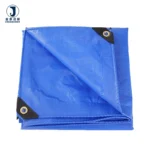
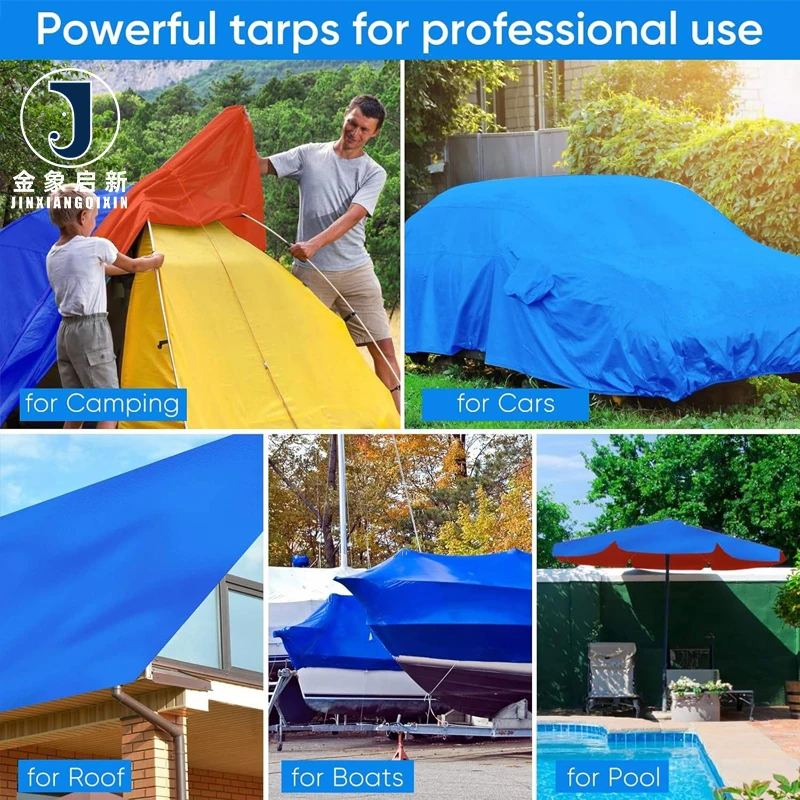
Technical Fabric Reliability — Three full production lines with 36 sets of professional equipment maintain coating weight and lamination consistency across every roll dispatched for industrial and specialist applications.
Technical Specifications
| Parameter | Value |
|---|---|
| Product Type | PE Tarpaulin |
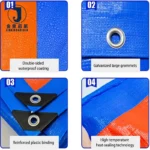
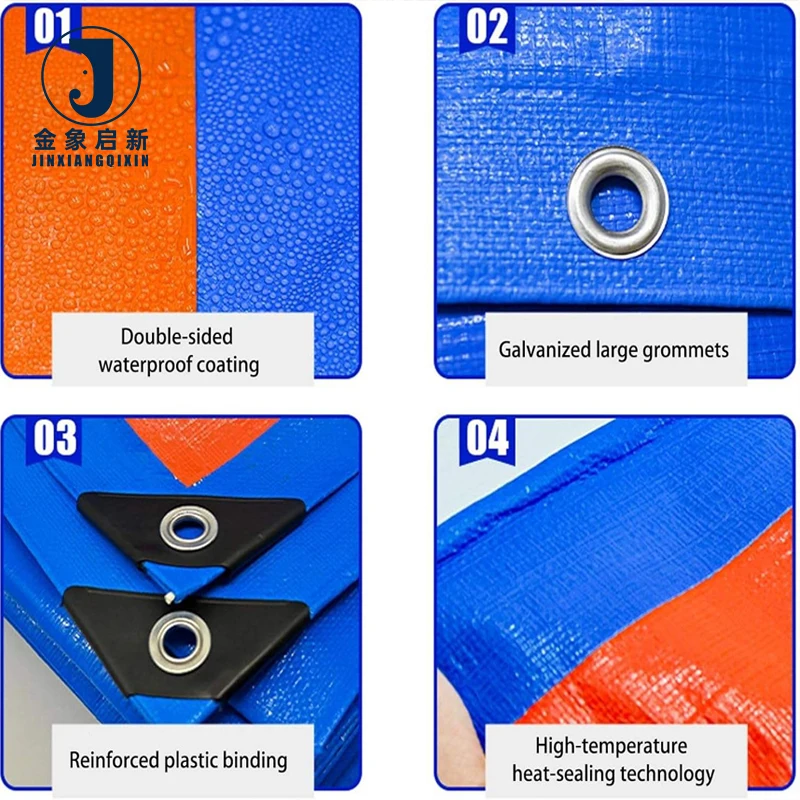
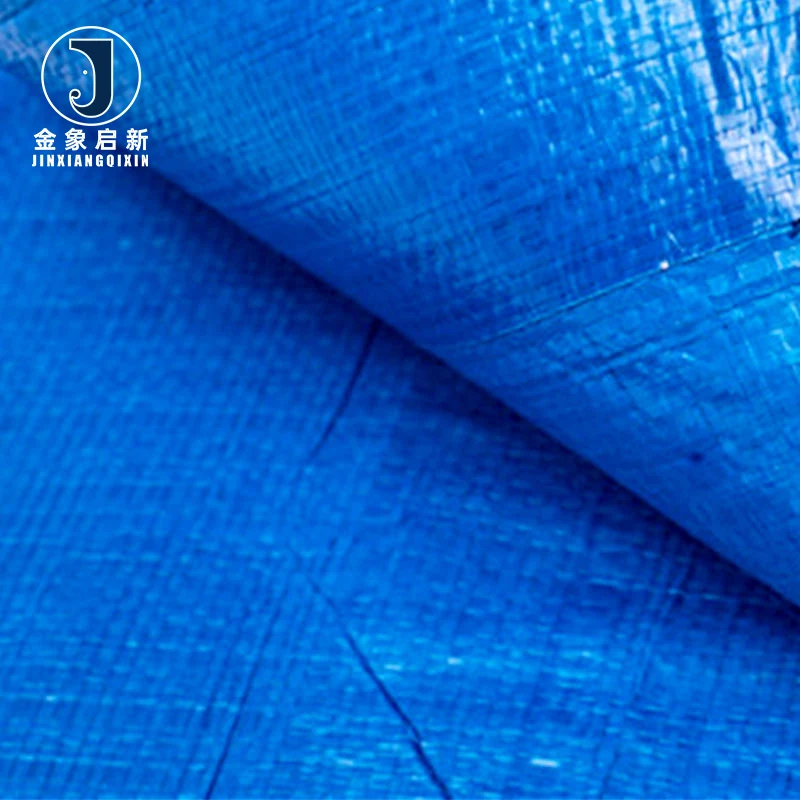
| Material | HDPE weaving with LDPE lamination on both sides |
| Weight (GSM) | 50gr/m2 ~ 220gr/m2 (range covers product family — confirm the grade for this item) |
| Total Thickness | 0.2-0.4mm / 8 mil-16 mil |
| Knitting Density (Lightweight) | 8*8 |
| Knitting Density (Medium) | 10×10 |
| Knitting Density (Heavy-duty) | 12*12 |
| Tensile Strength (Lightweight) | Meridian 300-500 / Latitude 250-450 N/5cm (test basis not stated in source) |
| Tensile Strength (Medium) | Meridian 500-800 / Latitude 400-700 N/5cm (test basis not stated in source) |
| Tensile Strength (Heavy-duty) | Meridian 900-1200 / Latitude 700-1000 N/5cm (test basis not stated in source) |
| Roll Width | 6ft, 8ft, 10ft, 12ft or 2m, 4m, 6m |
| Roll Length | 100 yards, 100 meters, or custom |
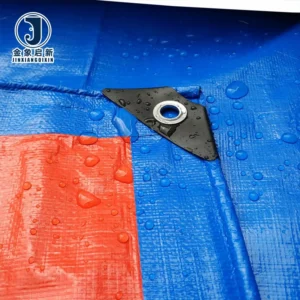
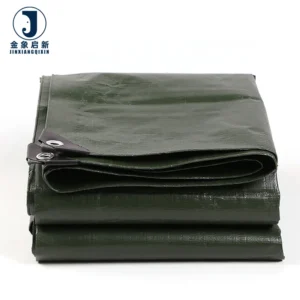
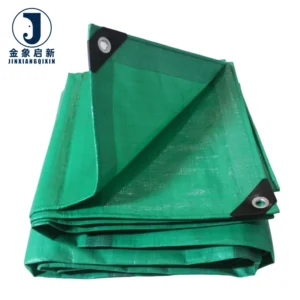
| Color | Blue, Blue/Orange, Green, Grey, Black, Clear, Grey/Green, Orange, or custom |
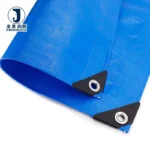
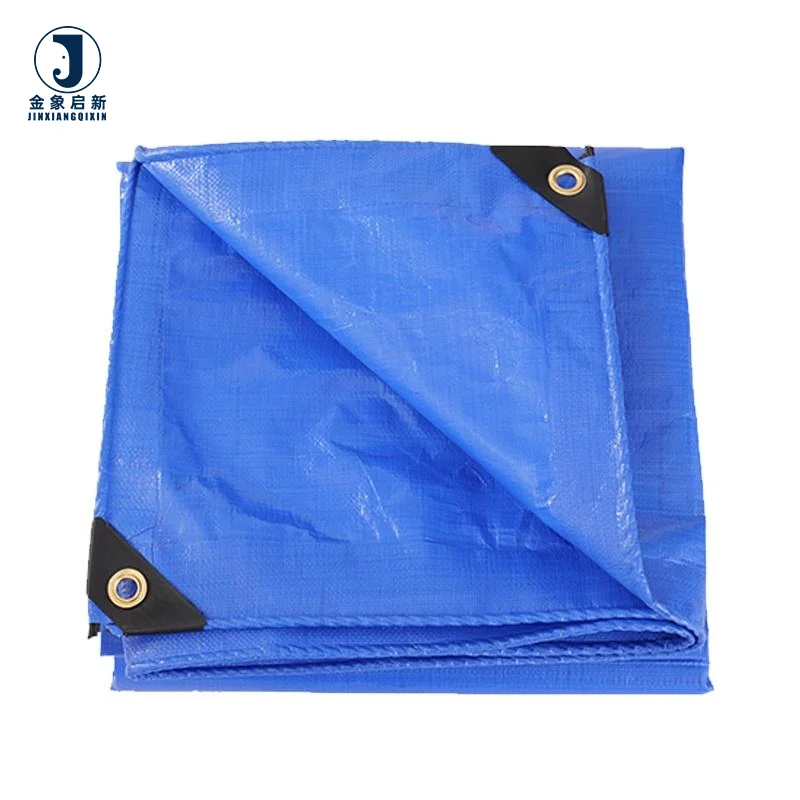
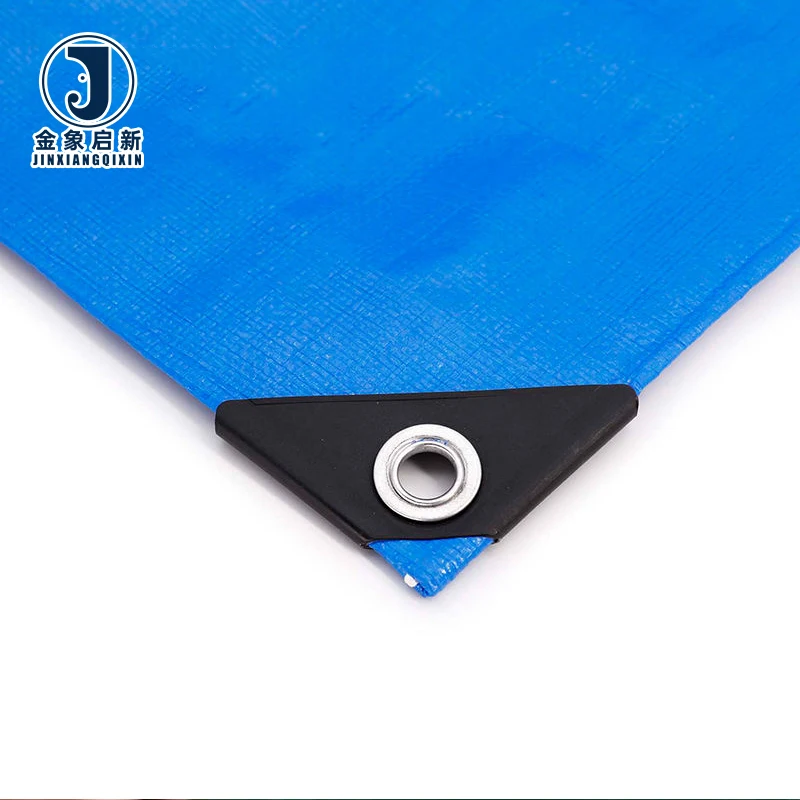
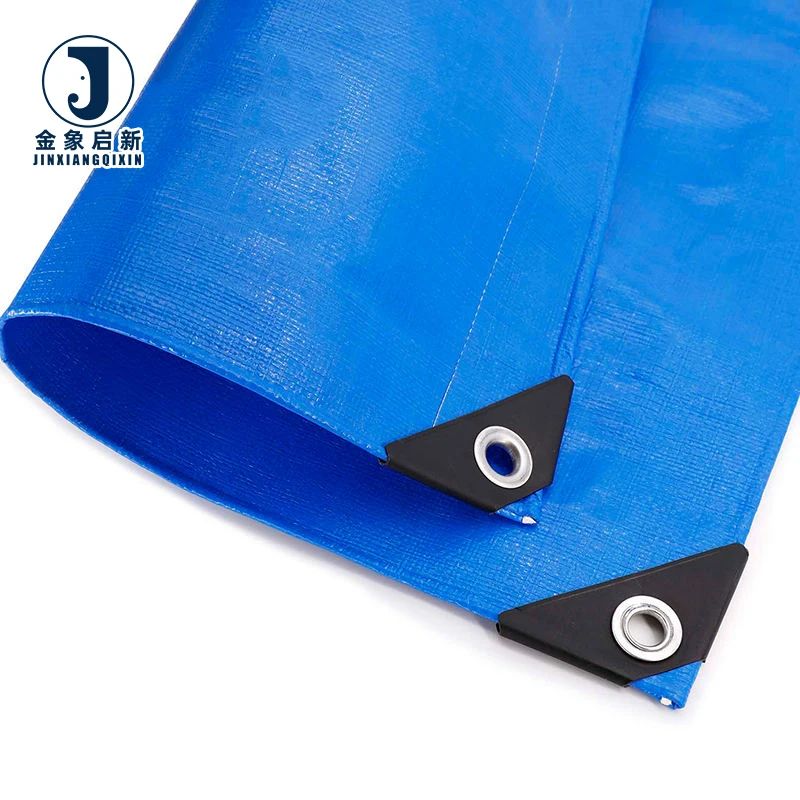
| Edge Reinforcement | PP rope in hem (all four edges) |
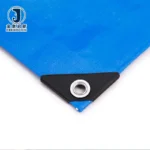
| Eyelets | Galvanized, every 3ft or 1 meter interval |
| Corner Reinforcement | Reinforced plastic corners |
| UV Treatment | Available (test basis not stated in source) |
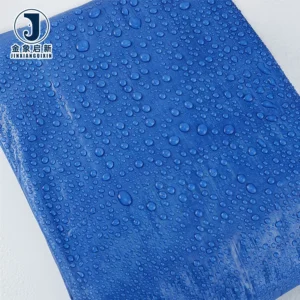
| Waterproof | Yes |
| Tear Resistance | Yes |
| Anti-Mildew / Anti-Aging | Yes |
| Standards | ISO, CE |
Application Suitability
| Application | Exposure & Requirement |
|---|---|
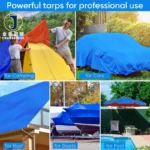
| Specialist structure and ventilation contractor general-purpose covering | Temporary enclosure exposed to weather cycling — confirm fire-retardant and anti-static certification separately for regulated sites |
| Construction and industrial site equipment covers | Outdoor weathering, road dust, mechanical abrasion from handling and tie-down straps |
| Warehouse and stockpile coverage | Waterproof membrane requiring tear resistance under wind load and repeated repositioning |
| Agricultural and aquaculture operations | Pond lining, crop covering, prolonged UV exposure and contact with moisture or organic matter |
Why the Wrong PE Tarpaulin Specification Fails on Technical Sites
Material weight and knitting density must be matched to the mechanical load, not assumed from a catalogue heading.
Ventilation duct and specialist structure contractors often receive fabric that looks correct on the roll but fails when installed under wind load or tension at attachment points. The PE Tarpaulin aftermarket supplier quote states one GSM, yet the material arriving on site feels noticeably lighter. Seams part at flex points long before the base fabric reaches its rated tensile limit. Colour shifts from one roll to the next become visible the moment panels are installed side by side on a structure [NEED_CITE: colour consistency verification methods for coated fabric batches].
How Knitting Density Drives Real-World Performance on Site
The HDPE woven base fabric determines how the PE Tarpaulin for ventilation and specialist application behaves under tension, and knitting density is the structural backbone behind that behaviour. An 8×8 weave delivers a lighter, more flexible sheet suited to temporary agricultural or stockpile covers where extreme tensile loads are not expected. Moving to a 10×10 or 12×12 density increases the number of yarns per unit area, distributing point loads across a broader grid and resisting tear propagation when the fabric is punctured or abraded at tie-down points.
The Role of LDPE Lamination in Waterproof Integrity
Both sides of the HDPE base receive an LDPE lamination layer that seals the weave and prevents moisture penetration through the fabric body. This double-side coating is what gives the material its waterproof classification, but lamination adhesion matters as much as coating presence. When adhesion is inconsistent, the LDPE film can delaminate from the HDPE weave at fold lines or where the fabric is repeatedly flexed during installation and removal [NEED_CITE: peel strength test methods for laminated fabrics per ISO standards]. Specifying the correct GSM grade ensures the lamination thickness is proportional to the base fabric weight, preventing a mismatch where a thin coating on a heavy weave cracks under stress.
Reading Tensile Data Beyond the Number
The tensile strength figures across lightweight, medium, and heavy-duty grades show a clear progression — meridian and latitude values rise together as knitting density increases from 8×8 through 12×12. These N/5cm readings describe how much force the fabric sustains before breaking in a controlled test, but on a construction or transport site the load is rarely uniform. Point loads at eyelets, edge hems, and corners concentrate stress in ways a flat tensile test does not replicate. That is why edge reinforcement with PP rope, galvanised eyelets at regular intervals, and reinforced plastic corners are specified together with the base fabric grade — the finishing details carry load away from the weave and into the attachment hardware [NEED_CITE: tensile and tear test methods for coated fabrics per ISO 1421].
The Hidden Cost of Specifying on Price Per Kilogram
When procurement decisions are driven by unit cost rather than verified GSM, the arriving material is frequently lighter than the quotation stated. A PE Tarpaulin for ventilation and specialist application ordered at a medium-grade specification but delivered at a lightweight GSM will show reduced puncture resistance and a shorter service life under the same exposure conditions. Welded seams on the lighter fabric fail earlier because the thermal bonding zone has less coating material to fuse. On a mining or tunnelling site, a fabric that lacks the fire-retardant or anti-static certification required by regulation can halt an entire project at inspection — a cost that dwarfs any initial material saving [NEED_CITE: fire classification standards for temporary structures on regulated industrial sites].
Why Sourcing Matters at the Technical Specification Level
Dedicated QA/QC at every production stage catches GSM deviation and lamination inconsistency before the roll leaves the facility, not after it arrives at your site. A 10-person R&D team handles material selection and sample development, meaning custom widths, colours, and finishing configurations are developed as engineered specifications rather than generic catalogue substitutions. Three full production lines and 36 sets of professional equipment support bulk capacity while maintaining roll-to-roll consistency — critical when multiple rolls are installed side by side on a single structure. Pre-shipment inspection covers 100 percent of the order, and every dispatched roll is accompanied by a packing list and documentation set. Samples for custom requirements are developed within days, allowing you to verify weight, colour, and lamination quality before committing to a production run.
Documentation & Verification
- Material specification sheet stating exact GSM, HDPE base fabric, and LDPE lamination type per roll
- Pre-shipment inspection record confirming weight and dimension against the purchase order
- Roll packing list detailing width, length, colour, and roll count for container loading verification
- ISO and CE certificates provided to support site compliance and regulatory documentation
- Test reports for UV and flame-retardant grades issued where applicable — confirm the grade required for your market
Fabrication, Handling & Storage
- Heat-seal temperature must suit the LDPE lamination thickness to avoid delamination at seam lines
- Galvanised eyelets at 3ft or 1m intervals distribute tie-down load across the HDPE woven base
- Store rolls flat and avoid stacking heavy loads on top to prevent permanent crease marks in the coating
- Allow cold-stored rolls to reach ambient temperature before unrolling to prevent lamination cracking
- PP rope reinforced hems should bear the primary attachment load, not the field of the fabric
- Cut panels with sealed edges to prevent moisture ingress into the HDPE weave at exposed ends
What We Need to Specify Your PE Tarpaulin Correctly
Provide the exposure conditions the fabric will face — UV duration, wind load, mechanical abrasion, and whether the site requires fire-retardant or anti-static compliance. Confirm the target GSM grade, roll width, and whether you need finished cut sizes with eyelets and hem reinforcement or raw roll stock for your own fabrication. If multiple rolls will be installed side by side, state your colour consistency requirement so batch matching is controlled from production.
Frequently Asked Questions
Q: How is GSM verified on arrival against the quoted PE Tarpaulin specification?
A: Each roll is weighed and recorded during pre-shipment inspection, with a documented inspection record issued before dispatch. On arrival, you can verify by cutting a measured sample and weighing it against the stated GSM. Any deviation outside the agreed tolerance is flagged against the material specification sheet that accompanies the shipment, ensuring the PE Tarpaulin for ventilation and specialist application matches the original quotation.
Q: What UV test basis supports the anti-aging claim on this fabric?
A: UV treatment is available across the range, but the specific test standard and exposure duration must be confirmed for your market and application. Request the test report for the grade you specify — a claim without a documented test basis does not satisfy site compliance. The PE Tarpaulin aftermarket supplier documentation set includes test reports where applicable, and the R&D team can develop samples for your own third-party testing before production.
Q: What fire-retardant and anti-static certifications apply to mining and tunnelling sites?
A: Mining and tunnelling sites typically require fabric to meet specific fire-retardant and anti-static standards set by the regulating authority in that jurisdiction. This PE Tarpaulin range is available in grades that can be formulated for those requirements, but the exact standard must be confirmed at inquiry stage. State your site compliance needs clearly, and the corresponding certification documentation will be supplied with the shipment to support inspection and approval.
Q: Can custom widths and colours be produced with roll-to-roll consistency?
A: Roll widths up to 6m and custom colours are produced across three full lines, with batch consistency controlled through dedicated QA at the coating and lamination stage. When multiple rolls are specified for a single project, colour matching is managed so panels installed side by side show no visible variation. The R&D team develops a sample roll first, allowing you to approve colour, weight, and finish before the full production run begins.
Q: How should eyelet spacing and hem reinforcement be specified for high-wind transport use?
A: Galvanised eyelets are spaced at every 3ft or 1m interval, with PP rope reinforcement in all four hems and reinforced plastic corners to handle concentrated tie-down loads. For high-wind transport applications, the heavy-duty grade with 12×12 knitting density provides the tensile reserve needed at attachment points. Confirm the exact eyelet spacing and hem specification at inquiry so the finishing matches the mechanical load your route and cargo profile demand.