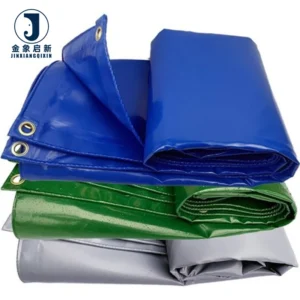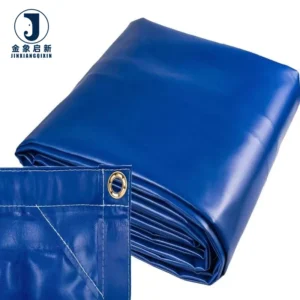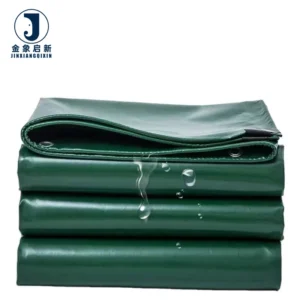
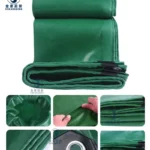
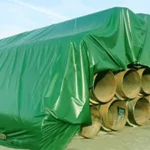
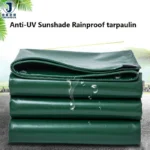
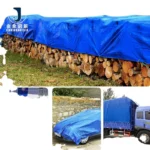

Specialist Coated Fabric Supply — full compliance documentation matched to your project’s fire-retardant and anti-static specification, verified before dispatch.
Technical Specifications
| Parameter | Value |
|---|---|
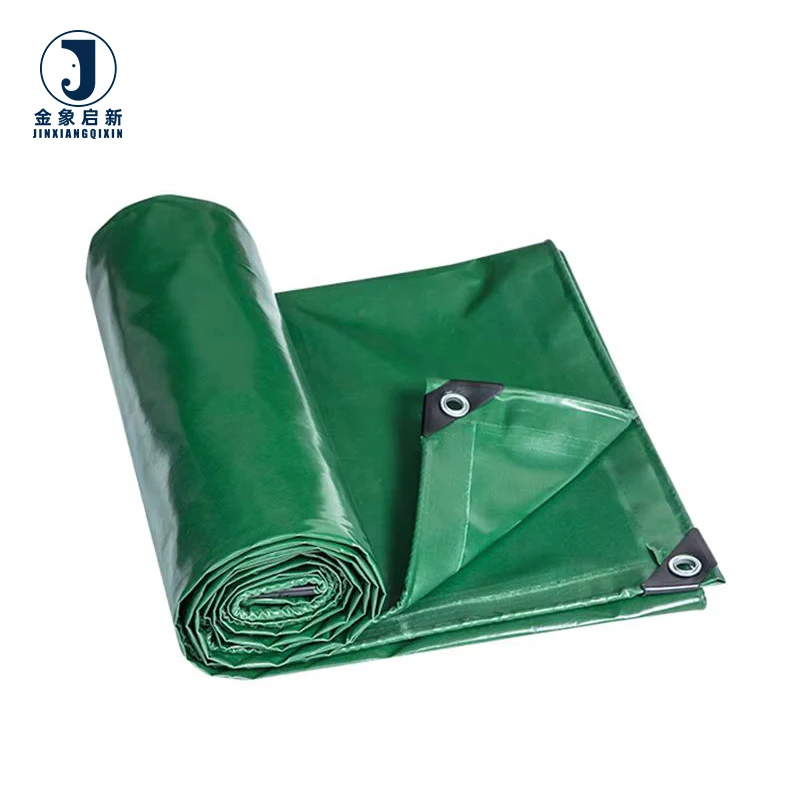
| Product Type | PVC Coated Fabric |
| Material | PVC Vinyl |
| Base Fabric | Woven Fabric |
| Weight | At least 450 grams (source value — verify against manufacturer catalog) |
| Coating Method | Knife Coated |
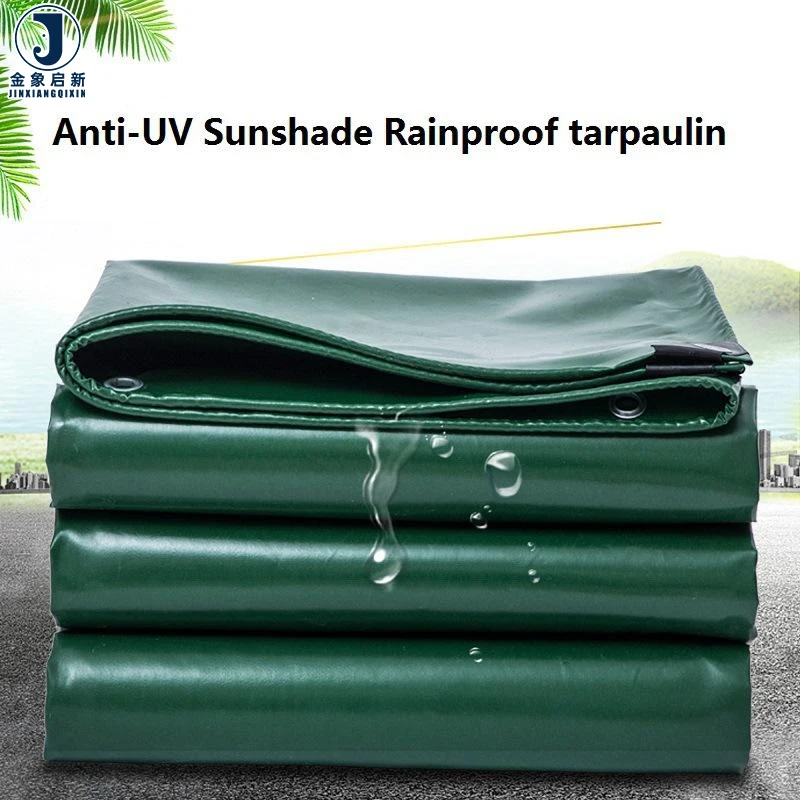
| Waterproof | Yes |
| Flame Retardant | Available in fire-retardant grades — confirm the grade required for your market |
| Anti-Static | Available in anti-static grades — confirm the standard required for your application |
| UV Treatment | Anti-UV coated (test basis not stated in source) |
| Tear Resistance | Tear-resistant (test standard not stated in source) |
| Custom Size | Available |
| Key Features | Waterproof, tear-resistant, anti-UV treated |
Application Suitability
| Application | Exposure & Requirement |
|---|---|
| Mining ventilation duct systems | Continuous airflow load, underground fire safety compliance, mechanical flex at support rings |
| Tunnelling forced-air ducting | High humidity, particulate abrasion, mandatory fire-retardant certification at site inspection |
| Aviation ground support ducting | Anti-static surface requirement, fuel-vapour environment, rapid deployment and retrieval |
| Membrane structure fabric | Wind uplift tension, UV exposure on installed surface, welded seam integrity over span |
| Inflatable structure panels | Internal air pressure load, repeated inflation cycles, puncture and tear propagation resistance |
What "Certified" Means When the Certificate Does Not Match the Site
Fabric supplied without verifiable test reports is a compliance liability, not a cost saving.
Mining and tunnelling sites specify fire-retardant ventilation duct fabric with a named standard — M2, B1, or NFPA 701 — because the safety inspector checks the paperwork before the duct hangs. Aviation ground support demands anti-static PVC coated fabric with a surface resistance reading on file. When the roll arrives with a generic material safety data sheet instead of a grade-specific test report, the entire installation halts until compliant documentation shows up or replacement fabric is sourced. [NEED_CITE: fire classification standards for flexible ventilation materials in underground mining]
Coating Adhesion and Consistent Weight Across the Roll
Knife coated PVC construction deposits the vinyl layer directly onto the woven base fabric under controlled blade gap and tension. This process governs both the coating weight per square metre and the bond between coating and yarn. For ventilation duct fabrication, consistent coating weight means the fabric behaves predictably at the weld line — the heat-activated seam where two panels join. Uneven coating thickness causes hot spots during welding, where one section bonds fully while the adjacent section delaminates under flex load.
Fire-Retardant and Anti-Static Grades With Matched Documentation
The PVC coated fabric range includes fire-retardant and anti-static formulations developed for regulated environments. Each grade must be specified at inquiry stage so the correct additive package enters the coating compound. Fire-retardant grades are available for building and civil compliance frameworks — confirm the grade required for your market before ordering. Anti-static grades target environments where surface charge accumulation creates ignition risk, such as aviation refuelling zones or grain-handling ventilation. [NEED_CITE: surface resistivity test methods for anti-static coated textiles]
How Base Fabric and Coating Weight Interact Under Load
The woven base fabric provides the tensile and tear skeleton of the material. Yarn denier and weave density determine how much mechanical load the structure absorbs before the PVC coating carries the remaining stress. A heavier coating alone does not produce a stronger fabric — a high GSM reading driven by excess PVC on a low-density base will show acceptable weight on the scale but poor tear propagation resistance in the field. Knife coating allows precise control of the PVC layer so the base fabric contribution is not masked by surplus compound. Weld strength depends on the coating reaching consistent melt temperature through its full depth; a balanced coating-to-base ratio ensures the heat-sealed seam performs at or near the parent fabric strength.
The Hidden Cost of Unverified Compliance Grades
A ventilation duct fabricated from fabric labelled "fire retardant" without a matching test report fails at the first site audit, forcing removal and reinstallation with compliant material — doubling labour and downtime cost. Anti-static fabric installed in a classified zone without a documented surface resistance reading exposes the contractor to regulatory liability if an incident occurs. Colour variation between rolls installed side by side on a membrane structure creates a visible patchwork effect that the client rejects at handover. [NEED_CITE: common rejection causes for industrial fabric installations at compliance inspection]
Why This Fabric Source Meets Technical Project Demands
Three full production lines and dedicated equipment sets support batch consistency across the roll quantities that duct and membrane projects require. A ten-person R&D team handles grade selection, custom sizing, and sample development so the specified fire-retardant or anti-static formulation is locked in before bulk production runs. Dedicated quality control inspects every roll before shipment, checking coating weight and visual consistency against the order specification. Material specification sheets accompany each dispatch, stating base fabric construction, coating method, and weight so the receiving team can verify against their purchase order. Custom width and length cutting reduces on-site waste and weld seam count for large-format installations.
Documentation & Verification
- Material specification sheet stating GSM, base fabric denier, and knife coating method per roll
- Fire-retardant test report with stated grade and standard matched to the project specification
- Anti-static surface resistance test result supplied where the grade is specified
- Pre-shipment inspection record confirming weight and visual consistency before dispatch
- ISO and CE certificates available with each shipment for project file compliance
Fabrication, Handling & Storage
- Heat-weld seams using temperature and dwell settings matched to the knife coated PVC thickness for full-depth bonding
- Allow rolled PVC coated fabric to acclimatise before unrolling in cold conditions to avoid coating crack at low temperature
- Store rolls horizontally on racking to prevent flat-spot deformation of the woven base fabric
- Use compatible PVC-based repair patches and solvent cement for field repair of punctures on installed duct runs
- Plan panel cutting layout to minimise offcut waste when working with custom width rolls
Preparing Your Specification for Quotation
Provide the ventilation duct diameter, run length, and operating pressure so the correct base fabric grade is selected. State the fire-retardant or anti-static standard your site inspector requires, including the named test method. Indicate whether you need rolls in standard width or custom-cut panels with welded seams and finished edges.
Frequently Asked Questions
Q: What test reports support the fire-retardant or anti-static claims?
A: Each fire-retardant grade ships with a test report naming the standard and classification achieved. Anti-static grades include a surface resistance measurement. Specify your required standard at inquiry so the correct formulation and matching documentation are prepared for your batch.
Q: Can colour consistency be maintained across multiple rolls in one order?
A: Production runs for a single order are scheduled consecutively using the same coating compound batch. Pre-shipment inspection checks roll-to-roll colour under controlled lighting. For membrane structure projects where panels install side by side, flag this requirement so extra consistency checks are applied.
Q: How is the stated GSM verified before the fabric ships?
A: Every roll is sampled and weighed against the specification sheet before dispatch. The pre-shipment inspection record documents the measured weight. This prevents the common issue where quoted GSM does not match the material received on site.
Q: What documentation is included for fire-retardant ventilation duct fabric?
A: The shipment includes a material specification sheet, the fire-retardant test report with grade and standard, ISO and CE certificates, a packing list by roll, and the pre-shipment inspection record. These documents satisfy most site compliance audits and project handover requirements.
Q: Are samples available before committing to a full production order?
A: Samples are developed within days for custom specifications including fire-retardant or anti-static grades. The sample confirms coating weight, colour, hand feel, and weld behaviour so you can run fabrication trials before bulk production begins.