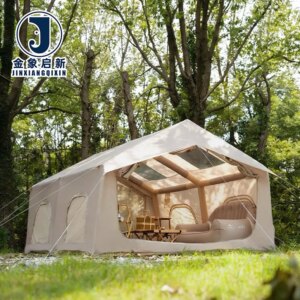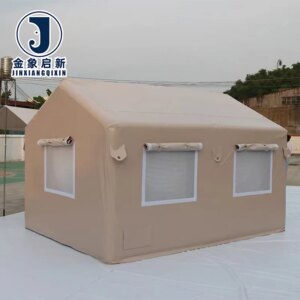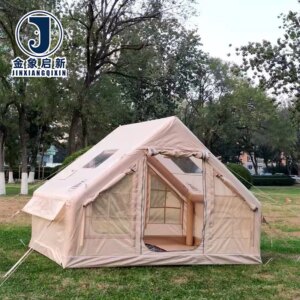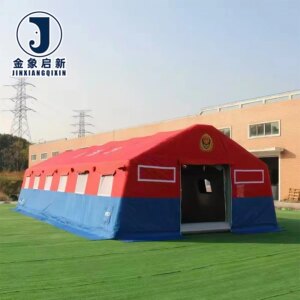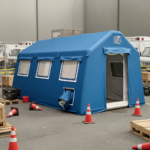
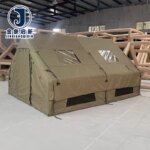
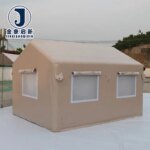
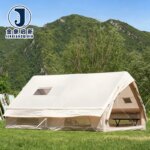

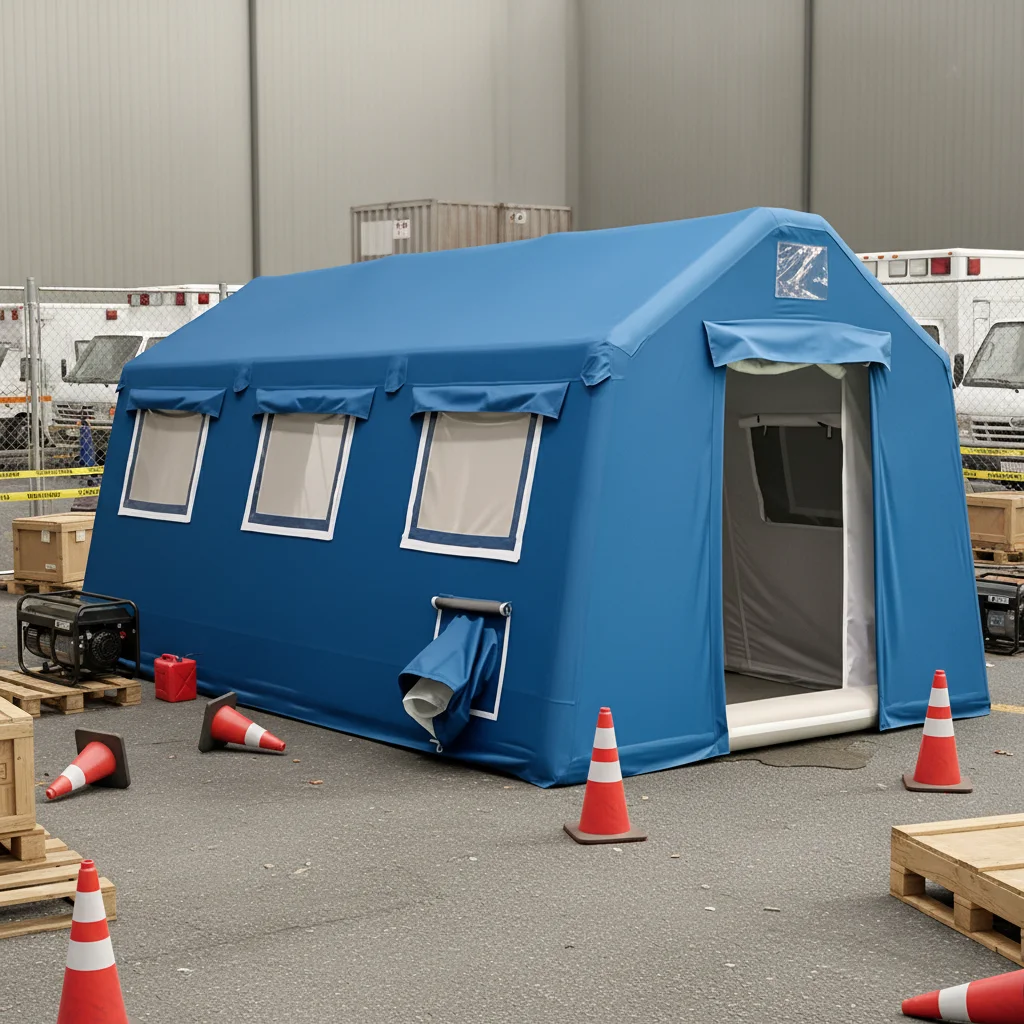
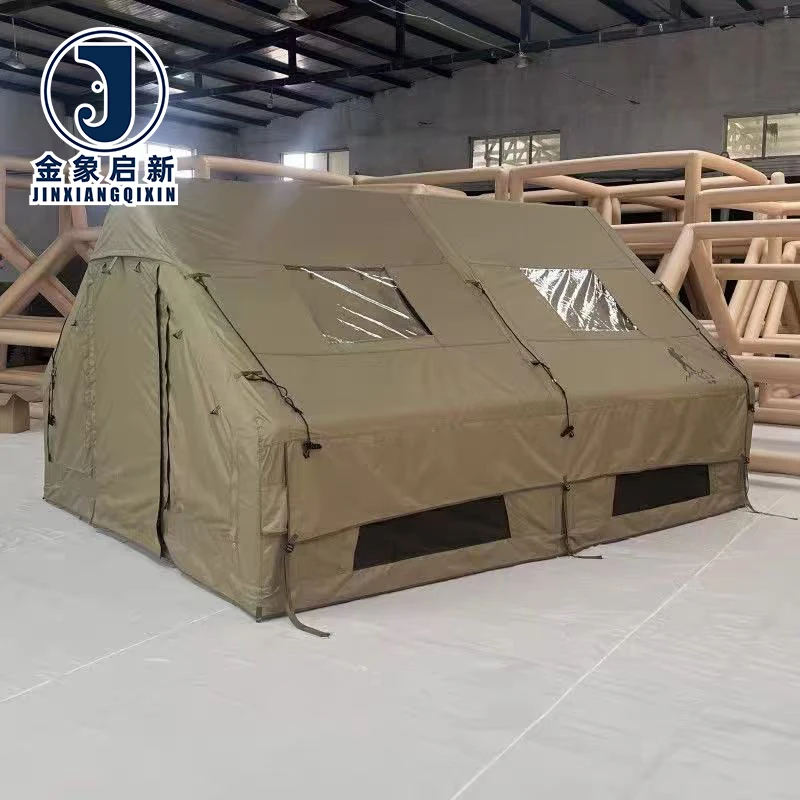
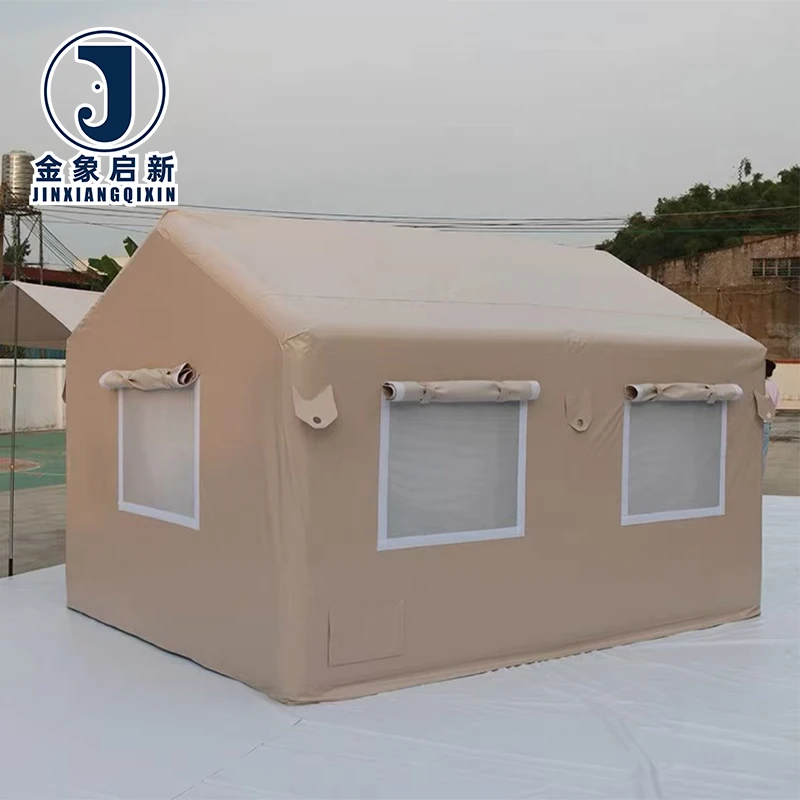
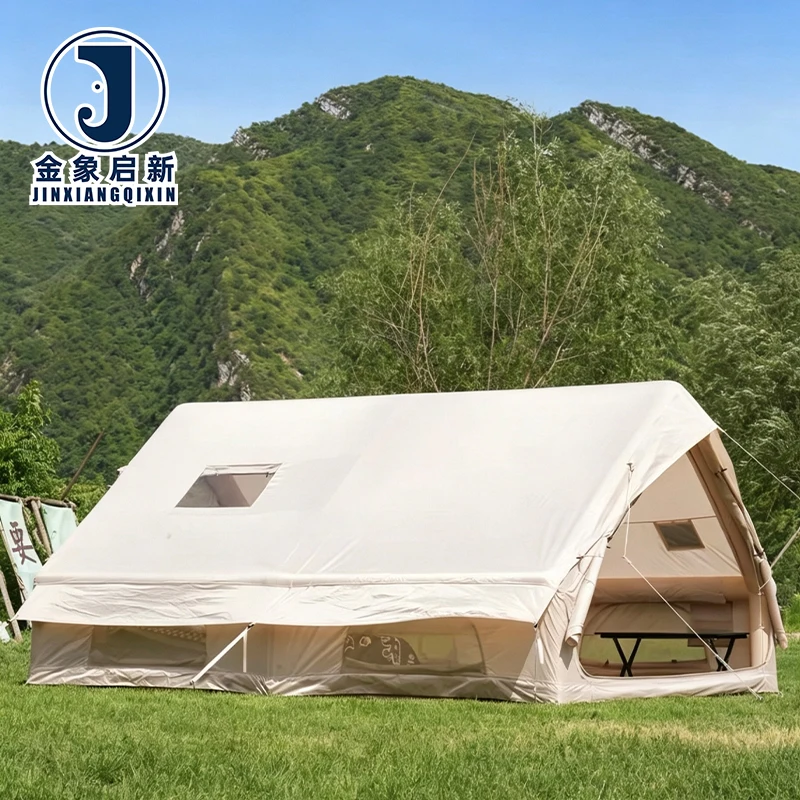
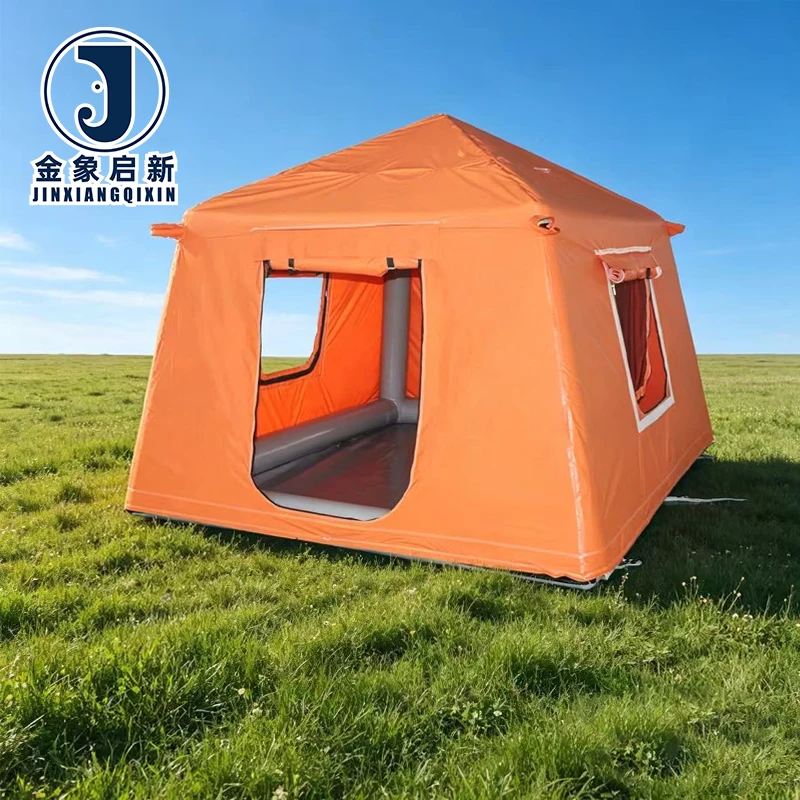
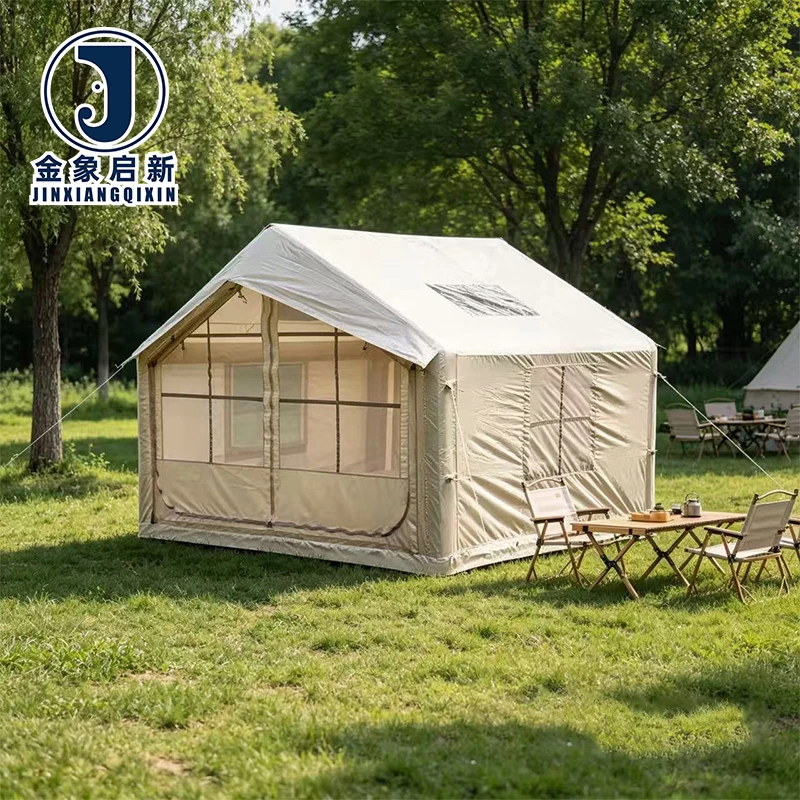
Batch-Tested Compliance — every roll of inflatable tent fabric ships with fire-retardant and air retention verification, backed by a 10-person R&D team developing samples within days for specialist structure projects.
Technical Specifications
| Parameter | Value |
|---|---|
| Product Type | Inflatable Tent Fabric |
| Core Material | PVC tarpaulin |
| Coating Method | PVC knife-coated fabric |
| Key Performance | Waterproof, UV-resistant (test basis not stated in source), tear-resistant |
| Flame Retardant | Flame retardant (grade not stated in source) |
| Product Forms | Quick automatic opening, single layer construction, extended type |
| Customization | OEM & ODM, sample customization, pattern printing |
| Quality Control | Full-process inspection, dedicated QA & QC staff on site |
| Air Pressure Retention Test | Minimum 24 hours inflation integrity verification |
| Seam Strength Evaluation | Standardized tensile testing equipment |
| Environmental Testing | Temperature cycling and UV exposure simulation |
| Standards | ISO 9001, ISO 14001, ISO 45001, CE |
Application Suitability
| Application | Exposure & Requirement |
|---|---|
| Emergency disaster relief shelters | Rapid deployment cycles, unpredictable weather, immediate occupancy safety |
| Mining and tunnelling temporary shelters | Fire-retardant compliance for underground and confined-space environments |
| Emergency response command centers | Continuous inflation pressure, equipment protection, all-weather operability |
| Temporary storage during disaster recovery | Waterproof integrity, inventory and equipment protection from moisture |
| Rapid deployment shelters for infrastructure maintenance | Frequent setup and teardown, wind load resistance, four-season exposure |
| Inflatable membrane structures for specialist contractors | Architectural tension, air-supported stability, long-term UV exposure |
Why Fire-Retardant Certification Matters More Than the Claim Itself
When a mining site or aviation hangar specifies inflatable tent fabric fire retardant compliance, a verbal assurance without a graded test report is an operational liability — not a material specification.
Specify the grade before you approve the sample, and require the test report with every batch.
Inflatable structures used in confined industrial environments carry fire load assumptions that generic "flame retardant" labels do not address. I have seen shelter fabrics pass initial inspection only to fail site safety audits because the documentation did not match the jurisdiction’s required classification [NEED_CITE: fire classification standards for temporary industrial structures]. Procurement teams often discover the gap after the material is already on site, turning a compliance issue into a project delay. The inflatable tent fabric fire retardant grade must be confirmed against your local authority’s requirements before production begins.
Knife-Coated Construction for Repeated Inflation Cycles
The PVC knife-coated fabric process drives coating material into the base weave under blade pressure, producing a bond that resists delamination through repeated inflation and deflation cycles. This matters for inflatable tent fabric used in emergency deployment where the structure may be erected, collapsed, transported, and redeployed across multiple incidents. The coating adhesion directly affects how the material behaves at welded seams — the junction most likely to fail under cyclic air pressure stress.
Air Pressure Retention as a Material Integrity Indicator
Every finished inflatable structure undergoes a minimum 24-hour air pressure retention test before dispatch. This protocol verifies that the inflatable tent fabric and its welded seams maintain inflation integrity under sustained load. The test catches micro-leaks at seam junctions and valve interfaces that visual inspection alone would miss. For emergency and industrial shelters, this verification step distinguishes batch-tested product from fabric that has only passed cosmetic quality checks.
Reading the Specification Sheet Beyond Surface Claims
Coating weight, base fabric denier, and weave density together determine how inflatable tent fabric performs under structural tension — none of these parameters tells the full story alone. Knife-coated PVC achieves higher peel strength than laminated alternatives, which translates to better weld integrity when the fabric is fabricated into air-supported forms [NEED_CITE: peel strength comparison across coating methods for PVC technical textiles]. The base fabric construction governs tear propagation resistance: a heavier coating cannot compensate for a loosely woven base when a puncture initiates a tear line. UV-resistant treatment is available — confirm the specific test basis required for your deployment environment. Flame retardant grades are produced to order, and the applicable standard should be matched to the regulatory framework of the installation site.
The Cost of Undocumented Compliance in Specialist Structures
Specifying inflatable shelter fabric without locking the fire-retardant grade to a named standard creates downstream risk that compounds through the project timeline. Site inspectors in mining and aviation environments routinely reject temporary structures when the batch documentation does not reference the required classification [NEED_CITE: documentation requirements for temporary structures in regulated industrial sites]. A rejected shelter means demobilisation, re-ordering, and schedule delay — costs that dwarf any savings from accepting an unspecified flame retardant claim. Colour inconsistency between rolls in the same order forces visible panel mismatches on membrane structures, requiring selective replacement that disrupts project sequencing. Weld failures that originate from incorrect heat settings for the fabric’s coating weight produce seam breakdowns under inflation pressure, often appearing only after the structure has been in service.
Production Capability Behind Every Batch
Three full production lines and 36 sets of professional processing equipment provide the capacity to fulfil bulk orders for inflatable tent fabric without splitting batches across incompatible machines. The 10-person R&D team develops custom samples — from access configurations to pattern printing — within days rather than weeks, allowing specification lock before full production begins. Dedicated QA and QC staff inspect every production stage, with 100% pre-shipment inspection ensuring that air retention test results, seam tensile data, and coating weight records match the order specification. Environmental simulation testing, including temperature cycling and UV exposure, validates material behaviour before the batch is released for dispatch.
Documentation & Verification
- Material specification sheet stating coating method, base fabric, and performance parameters for each inflatable tent fabric batch
- Fire-retardant grade and test report provided per batch for site compliance verification
- Batch inspection report detailing air pressure retention results and seam tensile test data
- ISO 9001, ISO 14001, ISO 45001, and CE certificates included with every shipment
- Pre-shipment inspection record confirming visual and dimensional compliance before dispatch
Fabrication, Handling & Storage
- Heat weld parameters must match the PVC knife-coated fabric coating weight to prevent seam delamination under inflation pressure
- Store rolls upright in climate-controlled conditions to prevent creasing that weakens the coated surface at fold lines
- Allow cold-transported rolls to reach ambient temperature before unrolling to avoid coating micro-cracking
- Use compatible PVC adhesives for field repairs, matching the knife-coated surface chemistry for proper bond strength
- Plan panel cutting layout to minimise welded seams across high-stress inflation zones of the structure
What to Include in Your Specification Enquiry
To receive an accurate material recommendation, provide your target deployment environment and the fire-retardant classification your jurisdiction requires. Specify whether you need roll stock for your own fabrication or finished inflatable structures with custom access configurations and dimensions. Indicate your annual volume and colour requirements, along with any pattern printing or branding needs, so the R&D team can develop a matched sample before production commitment.
Frequently Asked Questions
Q: What fire-retardant grade does the inflatable tent fabric carry, and which standards does it meet?
A: The fabric is produced in flame retardant grades matched to your project’s regulatory requirements. The specific grade and corresponding test standard are confirmed during the specification phase and documented in the batch test report that ships with every order. Provide your site’s required classification so the correct grade is applied.
Q: Is anti-static treatment available for mining and tunnelling shelter applications?
A: Anti-static treatment can be applied to inflatable tent fabric destined for environments where static discharge poses a risk. Confirm the anti-static standard required by your site safety protocol during the enquiry stage so the treatment and test documentation are aligned with your compliance framework before production.
Q: How is air pressure retention validated before shipment?
A: Each inflatable structure undergoes a minimum 24-hour continuous inflation test monitored by dedicated QA staff. The test verifies that the PVC knife-coated fabric and all welded seams maintain pressure without degradation. Results are recorded in the batch inspection report and included with shipment documentation for your review.
Q: Can custom dimensions and access configurations be produced for specialist structure projects?
A: The R&D team develops custom samples based on your dimensional drawings and access requirements, typically within days. OEM and ODM customisation covers size, configuration, pattern printing, and colour. Sample approval precedes full production to ensure the final inflatable tent fabric meets your project specification.
Q: What compliance documentation ships with each batch for regulatory approval?
A: Every shipment includes a material specification sheet, fire-retardant test report matched to the confirmed grade, batch inspection record with air retention and seam test data, and ISO 9001, ISO 14001, ISO 45001, and CE certificates. This documentation package supports site safety audits and regulatory submissions.