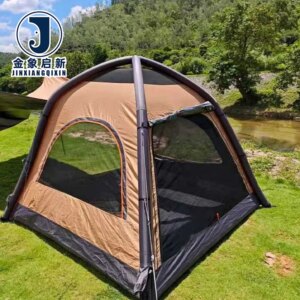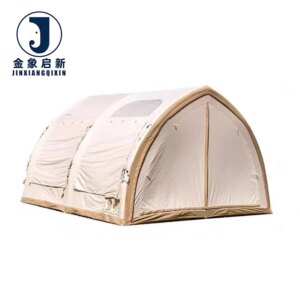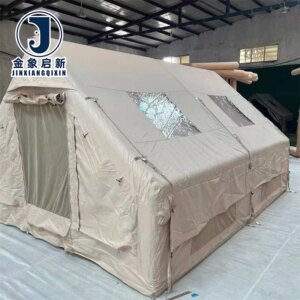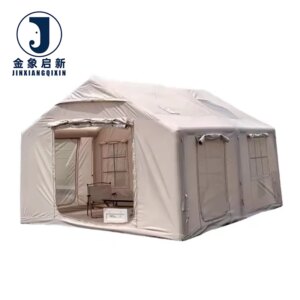
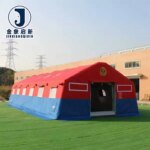
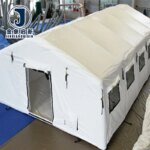
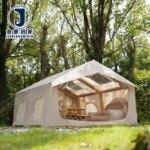
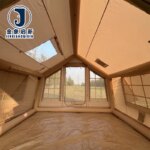

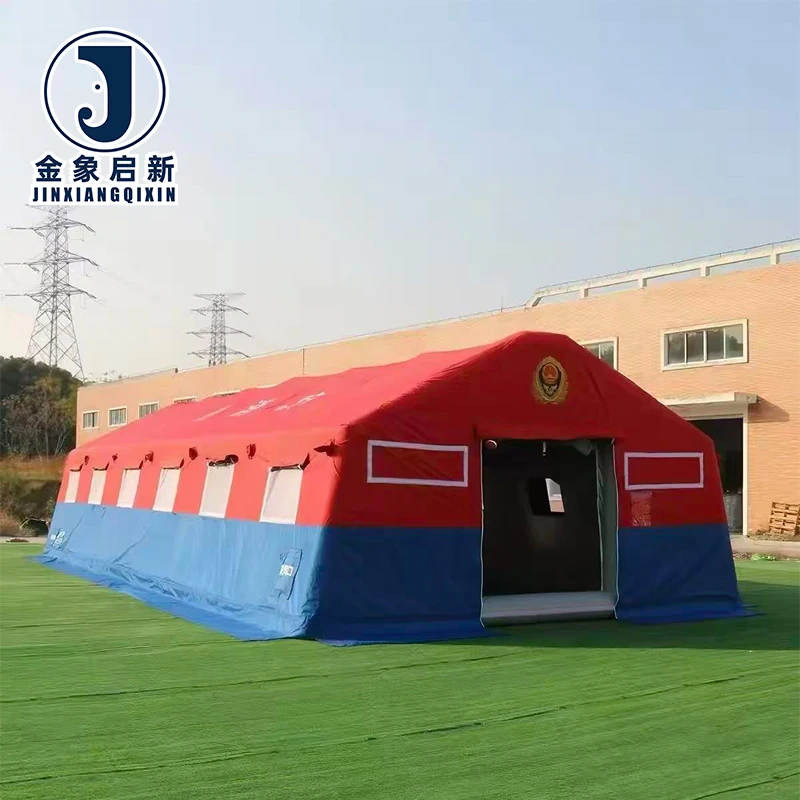
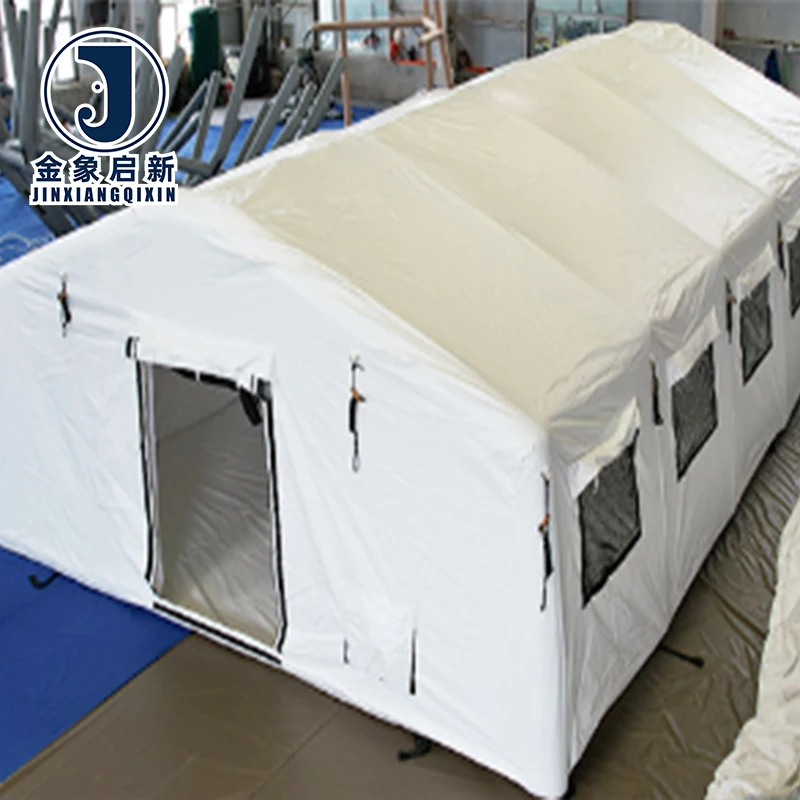
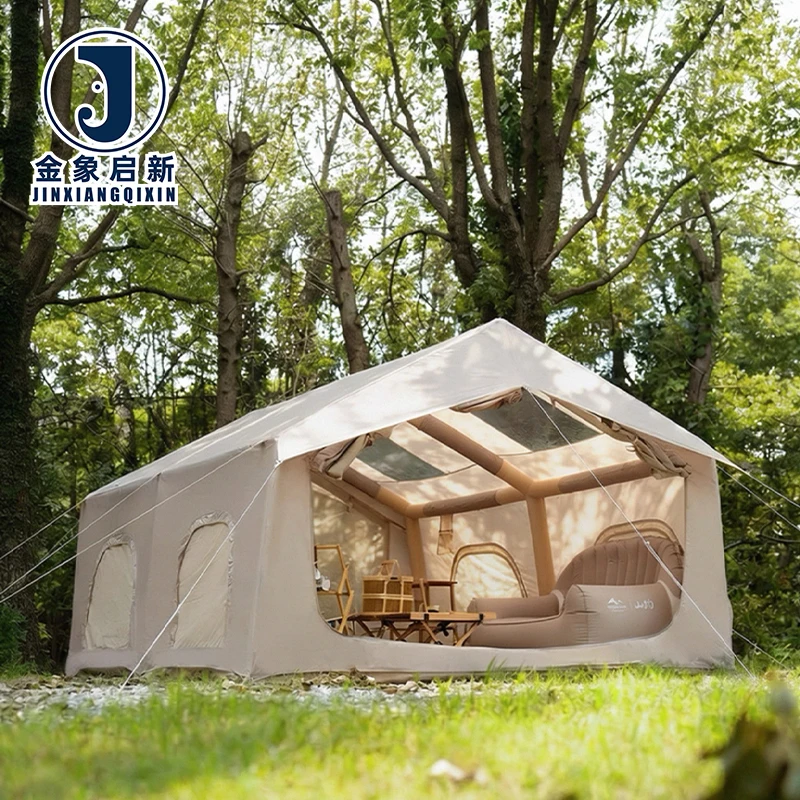
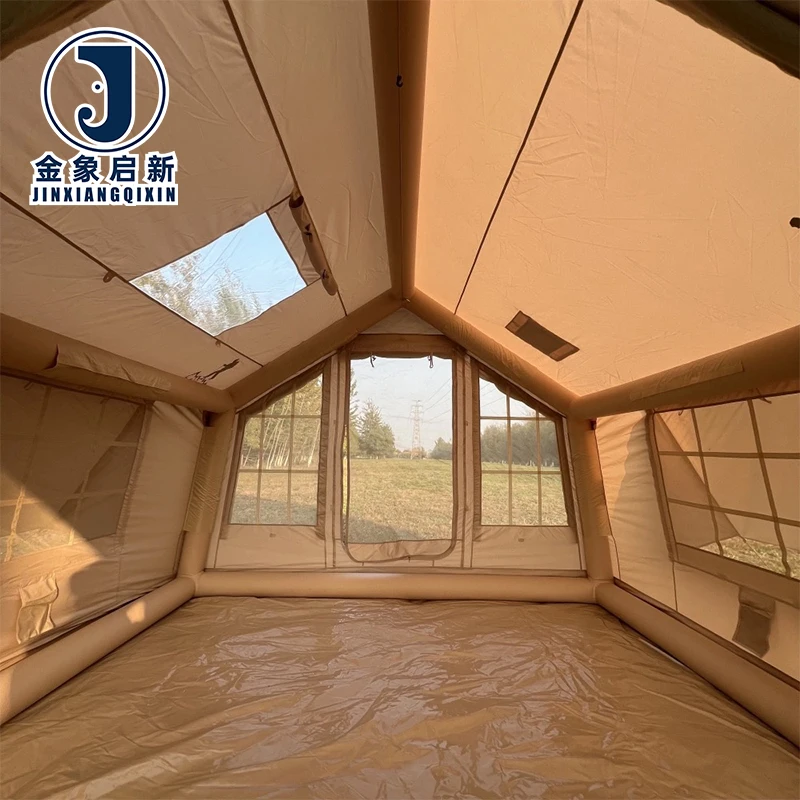
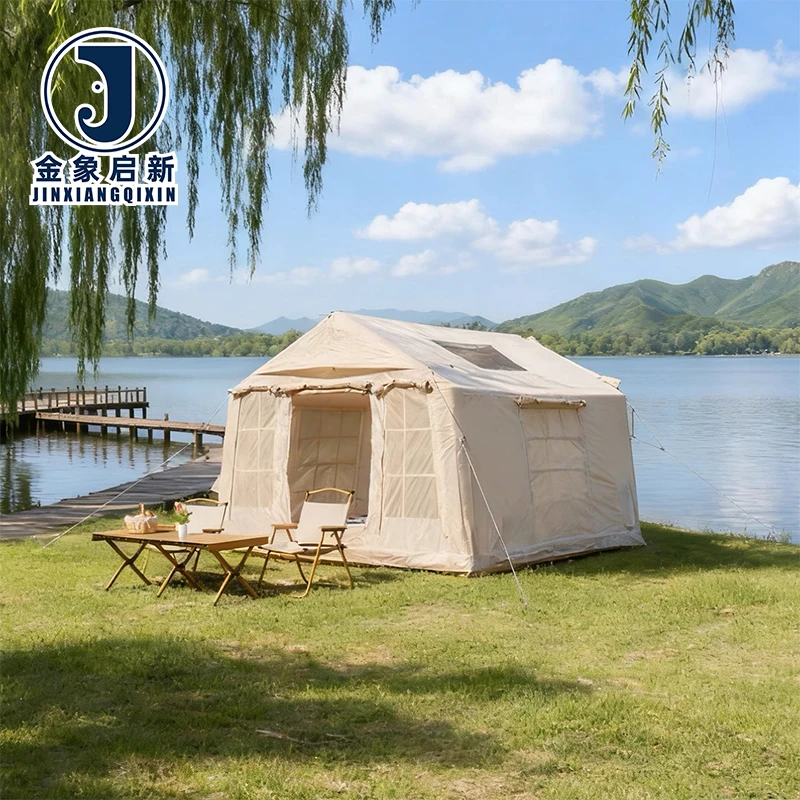
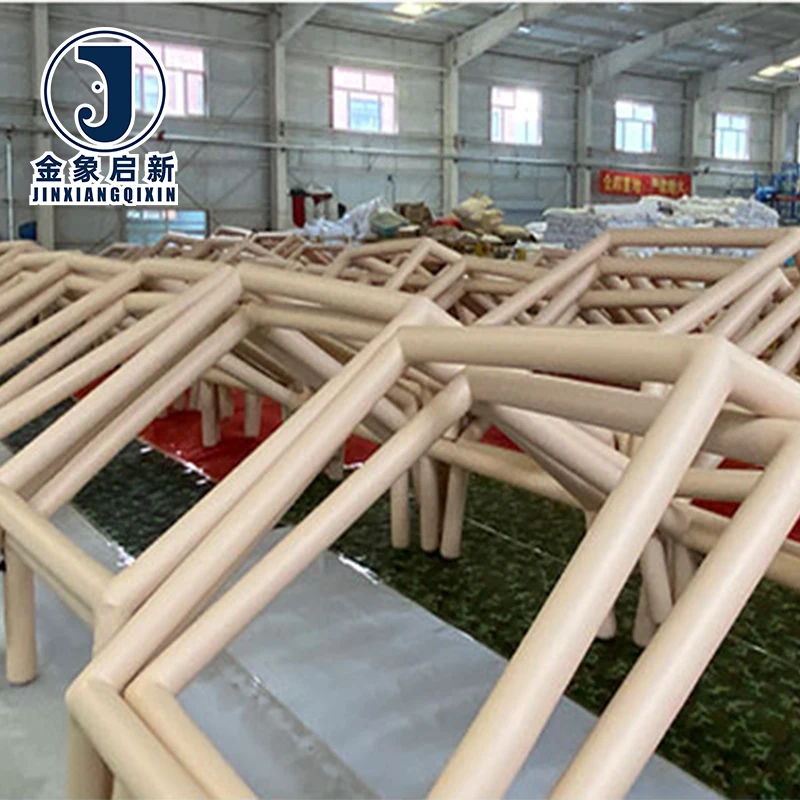
Rapid Deployment Engineering — Every inflatable tent unit undergoes 24-hour pressure retention testing before dispatch, ensuring structural reliability when minutes matter on disaster relief sites.
Technical Specifications
| Parameter | Value |
|---|---|
| Product Type | Inflatable PVC Tent |
| Core Material | PVC Tarpaulin |
| Waterproof Rating | 3000mm |
| Construction | Single Layer |
| Design | Four-Season, Extended Type |
| Opening Mechanism | Quick Automatic Opening |
| Customization | OEM & ODM (size, color, logo printing) |
| Quality Control | Full-Process Inspection with Dedicated QA&QC Staff |
| Pressure Test | 24-hour pressure retention test before shipment |
| Flame Retardant | Available in flame retardant grades — confirm the grade required for your site |
| UV Treatment | Available with UV treatment — test basis confirmed per order |
| Standards | CE, ISO 9001, ISO 14001, ISO 45001 |
Application Suitability
| Application | Exposure & Requirement |
|---|---|
| Disaster relief emergency shelters | Prolonged rainfall, wind loading, rapid deployment within minutes under uncontrolled site conditions |
| Temporary storage at construction sites | UV exposure, dust ingress, repeated inflation cycles across extended project timelines |
| Mobile command centers for infrastructure projects | Temperature fluctuations, generator exhaust proximity, high foot-traffic abrasion at entry points |
| Emergency response for utility maintenance | Wet ground contact, chemical splash risk, requirement for certified materials on regulated sites |
| Mining and tunnelling contractor camps | Fire safety compliance, confined-space ventilation interface, extreme temperature variations |
Why Waterproof Ratings Fail Between Batches — And What Verification Actually Requires
Batch-level waterproof integrity testing is the only reliable way to confirm a 3000mm rating holds across an entire inflatable tent shipment, not just the sample.
Inflatable tent fabric is only as protective as its weakest seam and thinnest coating point. Procurement teams routinely receive documentation stating a waterproof rating that applies to the material in isolation, yet field units fail at welded joints or at zones where coating weight varies across the roll [NEED_CITE: coated fabric waterproof integrity testing per ISO 811]. When inflatable PVC tent units deploy in disaster relief, inconsistent batch performance means some shelters hold through heavy rainfall while others develop leaks within hours. The cost is not replacement fabric — it is operational downtime, displaced personnel, and compromised emergency response. This inflatable tent fabric addresses the verification gap through pre-shipment pressure retention and waterproof integrity checks on every unit, recorded against the order reference for full traceability.
Rapid Inflation Architecture for Time-Critical Deployments
The quick automatic opening mechanism integrated into this inflatable PVC tent reduces deployment from hours to minutes, a critical advantage when disaster relief teams arrive at unprepared sites. The single-layer PVC tarpaulin construction balances structural rigidity with inflation efficiency, allowing standard air compressors to achieve full pressurization without specialized equipment. Each unit is engineered as a four-season extended type, maintaining inflation integrity whether deployed in freezing mountain conditions or high-humidity tropical environments where thermal expansion stresses seam bonds.
Structural Integrity Across Temperature Extremes
Four-season inflatable tent fabric must resist embrittlement in sub-zero conditions while preventing excessive softening under direct solar exposure. The PVC tarpaulin core retains flexibility across a broad temperature range, and the single-layer construction eliminates delamination risk that multi-layer laminates face when thermal cycling occurs repeatedly [NEED_CITE: thermal performance requirements for inflatable structures in emergency applications]. For mining and tunnelling contractors operating across seasonal transitions, this means the inflatable tent maintains its pressure envelope without requiring continuous topping-off or manual adjustment.
Decoding the Specification Sheet: What Matters for Inflatable Shelter Performance
The 3000mm waterproof rating indicates the hydrostatic head pressure the PVC tarpaulin membrane can withstand before water penetrates the coating — for inflatable tent applications, this rating must hold not just on flat material but at welded seams and inflation chambers where stress concentration occurs. The single-layer construction eliminates interlayer adhesion failure points, though it places greater demand on coating uniformity and base fabric integrity. Flame retardant grades are available for sites where fire safety compliance is mandatory, such as aviation hangars and underground mining operations — buyers must confirm the specific grade required for their regulatory environment. UV treatment extends functional service life under continuous solar exposure, though the test basis should be verified against the exposure duration your project demands. OEM & ODM customization allows sizing, color, and logo printing to be matched to project branding or visibility requirements without compromising the structural envelope.
The Hidden Cost of Skipping Pre-Shipment Pressure Verification
When inflatable tent units ship without individual pressure retention testing, field failures surface only after deployment — often at the worst possible moment. Weld seam porosity, valve seat leaks, and coating pinholes remain undetectable through visual inspection alone, yet each defect compromises the shelter’s ability to hold air under load [NEED_CITE: common failure modes in inflatable fabric structures under sustained pressure]. For disaster relief operations, a failed unit means exposed victims and diverted response resources. For construction site command centers, it means project delays and contractual penalties. The 24-hour pressure retention test applied to every inflatable PVC tent before shipment catches these defects at the factory, where rework costs remain manageable and replacement units ship before the departure date.
Why Procurement Teams Source This Inflatable Tent Fabric Here
Nearly 30 years of PVC tarpaulin production provide process control over coating adhesion that newer manufacturers cannot replicate — critical when inflatable tent seams must hold under sustained internal pressure. Three full production lines support volume orders for large-scale disaster relief tenders without sacrificing the 24-hour pressure test on each unit. The 10-person R&D team handles custom sizing, inflation chamber geometry, and OEM branding integration directly, eliminating the communication lag of outsourced engineering. Dedicated QA and QC staff conduct in-process inspection at coating, welding, and assembly stages, not just final audit. Pre-shipment inspection records ship with every order, providing the audit trail that infrastructure contractors and government procurement officers require.
Documentation & Verification
- Material specification sheet confirming PVC base fabric, coating weight, and 3000mm waterproof rating per batch
- CE and ISO certificates (9001 / 14001 / 45001) included with each inflatable tent shipment
- Pre-shipment inspection record with 24-hour pressure retention and waterproof integrity test results
- Test reports for UV and flame retardant grades where applicable, matched to order reference
- Customs documentation including certificate of origin and roll packing list
Fabrication, Handling & Storage
- Heat welding parameters must match the PVC tarpaulin coating weight to prevent seam failure before the fabric reaches its tensile limit
- Store inflatable tent rolls upright in climate-controlled conditions to prevent permanent creasing at the coating surface
- Clean with PVC-compatible detergents only — solvent-based agents degrade the waterproof coating and compromise the 3000mm rating
- Deploy on cleared ground free of sharp aggregate to protect the single-layer construction from puncture at inflation
- Inflate gradually in cold conditions to allow the PVC tarpaulin to reach working flexibility before reaching full pressure
What We Need to Prepare Your Quotation
Provide the deployment environment, expected temperature range, and whether fire safety certification is required for your site or regulatory jurisdiction. Specify unit dimensions, quantity, and whether OEM branding or custom color is needed for project identification. Indicate whether you require finished inflatable tent units or fabric rolls for your own fabrication line. If you have an existing inflation system, share the connector specifications so the valve interface can be matched.
Frequently Asked Questions
Q: What fire-retardant grade is available and does it meet mining or aviation site requirements?
A: Inflatable tent fabric is available in flame retardant grades suited to industrial environments. The specific grade must be confirmed against your site’s regulatory requirements — mining operations typically demand different classifications than aviation facilities. Provide your compliance standard reference and we supply the corresponding test report with shipment documentation.
Q: What certification documents are shipped with each batch of inflatable tent fabric?
A: Every shipment includes CE and ISO certificates covering quality management (ISO 9001), environmental management (ISO 14001), and occupational safety (ISO 45001). Pre-shipment inspection records with pressure retention and waterproof integrity results are included per order reference. Flame retardant and UV test reports are provided where applicable to your specified requirements.
Q: How is the 3000mm waterproof rating tested and verified before dispatch?
A: Each inflatable PVC tent undergoes a waterproof integrity check as part of the pre-shipment inspection process. The 3000mm hydrostatic head rating is verified on the PVC tarpaulin material, and welded seams are inspected to confirm they maintain the same protection level. Results are recorded and shipped with the batch documentation.
Q: What OEM and ODM customization options are available for inflatable tent projects?
A: Custom sizing, color selection, and logo printing are available through OEM and ODM services. Engineering drawings are confirmed with you before production begins. Inflation chamber geometry, valve placement, and entry configurations can be adapted to your deployment requirements and existing equipment interfaces.
Q: How does the QA/QC process ensure batch-to-batch consistency in waterproof performance?
A: Dedicated QA and QC staff conduct full-process inspection from coating through final assembly. The 24-hour pressure retention test is applied to every unit before shipment, catching seam defects and coating inconsistencies that visual inspection alone cannot detect. All results are traceable by order reference for your project records.